
What Is B2B Marketing? Essential Definition
Table of Contents
What is B2B marketing? Business-to-business (B2B) marketing represents a distinct approach where companies sell products or services to other businesses, rather than to individual consumers. Unlike consumer marketing that appeals to personal desires and emotions, B2B marketing addresses rational business needs, including return on investment, operational efficiency, and long-term partnerships.
The fundamental difference lies in the buying process itself. Business purchases involve multiple stakeholders, longer decision-making cycles, and careful evaluation of practical factors, such as cost savings, productivity improvements, and strategic alignment. Marketing to businesses requires proving value with data, building relationships with decision-makers across departments, and demonstrating expertise that reduces perceived risk.
This guide explains exactly what B2B marketing means, why it requires specialised tactics, and how your organisation can implement strategies that generate qualified leads and drive sustainable growth. Whether you’re new to B2B or refining existing programmes, you’ll find actionable insights to improve your marketing effectiveness.
B2B Marketing Definition
B2B stands for “business to business”. This describes commercial transactions in which one business sells products or services to another company, rather than to individual consumers.
These transactions happen constantly across every industry. Manufacturing companies supply materials to other manufacturers. Software providers sell solutions to enterprises. Marketing agencies deliver services to other businesses. In each case, a representative or team from one company evaluates offerings and selects which business to partner with.
The buying process typically involves multiple stakeholders, each with different priorities and concerns. A procurement manager might focus on costs and terms. A technical director examines specifications and compatibility. Senior leadership considers strategic alignment and long-term value.
B2B marketing definition encompasses appealing to both the professional requirements and personal motivations of these decision-makers. Whilst businesses make purchases based on rational factors like return on investment and operational efficiency, the individuals involved remain human. Trust, relationships, and brand perception still influence their choices.
“Business buyers need more than product specifications,” says Ciaran Connolly, Director at ProfileTree. “They want partners who understand their industry challenges and can demonstrate measurable impact on their bottom line.”
B2B Marketing Examples
Examining successful campaigns reveals how major brands connect with business buyers.
IBM’s Let’s Put Smart to Work Campaign
IBM combines entertainment with education in their approach. Their ‘Let’s Put Smart to Work’ video campaign uses short, engaging content to explain complex technology concepts while positioning IBM as an innovative brand. The videos clarify what their artificial intelligence and cloud computing solutions accomplish, making technical products accessible to non-technical decision-makers.
Salesforce for Small Business
Salesforce structures its landing pages around data and proof. Their B2B marketing messages emphasise quantifiable improvements in sales productivity, supported by customer statistics and case studies. They offer free trials to remove barriers to adoption and break down their extensive product suite, allowing prospects to identify relevant solutions quickly.
The platform demonstrates how B2B buyers prioritise concrete evidence over emotional appeals. Every claim is directly tied to measurable business outcomes.
Inmarsat Aviation Augmented Reality
Trade shows remain vital for B2B companies, but demonstrating certain products in a limited exhibition space presents challenges. Inmarsat solved this by marketing its in-flight Wi-Fi systems through its “Bring It On” campaign. They created an augmented reality experience that guided visitors through a simulated flight to Barcelona, allowing prospects to experience how passengers would benefit from the technology without needing an actual aircraft on the exhibition floor.
B2B vs B2C Marketing
B2C marketing, or business-to-consumer, targets individuals making purchases for personal use. This fundamental difference shapes every marketing decision.
Consumer marketing on platforms like Instagram, through native advertising, and television commercials relies heavily on evoking emotions. The messaging emphasises lifestyle benefits, social status, and personal growth. Purchasing this product can make you more attractive, successful, or happy. These appeals are effective because consumers make buying decisions that are partly driven by emotional responses and aspirational desires.
Business buyers approach decisions differently. They must justify purchases to colleagues, demonstrate return on investment, and consider long-term implications for their organisation. A procurement team won’t authorise a contract because a product made them feel good.
Key Differences Between B2B and B2C Marketing
Understanding these distinctions enables businesses to craft effective strategies.
Buyer Characteristics
- B2B buyers are professional purchasers focused on organisational needs and business objectives rather than personal consumption
- Larger groups participate in decisions, including procurement teams, executives, IT departments, and finance.
- Average deal sizes are substantially higher with longer-term contracts
Messaging Approach
- B2B messaging centres on product specifications, data security, support quality, and reliability rather than lifestyle branding
- Thought leadership and expert perspectives resonate with B2B buyers looking to reduce risk.
- Content demonstrates industry knowledge and problem-solving capabilities
Marketing Channels
- Events, trade publications, and consultative selling are dominant in B2B, while social media and mass advertising are more effective for B2C.
- Personalised advertising, including account-based approaches and targeted paid social campaigns
- Email marketing and professional networks play larger roles.
However, these categories increasingly overlap. Internet access enables consumers to research purchases thoroughly, leading them to seek the same certifications, reviews, and testing data that businesses demand. Meanwhile, business buyers continue to be influenced by personal factors. People want to feel confident in their decisions and appear competent to colleagues.
This convergence explains why B2B marketing has adopted social media and other channels that were once considered exclusively consumer-focused.
What B2B Customers Prioritise
Business buyers ask practical questions before committing to partnerships. How long will this product last? How do prices compare to competitors? What certifications and compliance standards do you meet? What do other businesses say about working with you? Can we depend on you for ongoing support?
These concerns require marketing that emphasises data, proves value, and builds confidence in long-term relationships. Flashy campaigns with minimal substance don’t persuade professional buyers. They want detailed information, transparent pricing, and unmistakable evidence that you understand their challenges.
B2B marketing must demonstrate expertise whilst remaining accessible. Technical accuracy matters, but overwhelming prospects with jargon creates barriers. The most effective approach strikes a balance between comprehensive information and clear communication.
Effective B2B Marketing Strategies
Modern B2B companies deploy multiple tactics to reach decision-makers throughout the buying journey.
Free Trials and Product Samples
Offering no-obligation trials allows prospects to experience your solution before committing to a budget. This approach removes risk and builds confidence in your offering.
Free trials provide two additional benefits beyond demonstration. First, they reduce friction in the conversion process. When potential customers already use your services, the psychological barrier to becoming a paying customer shrinks considerably. Second, trials serve as powerful lead magnets that encourage email signups and entry into your marketing automation.
Trade Show Demonstrations
Physical events allow hands-on product experiences that digital channels cannot replicate. Trade shows excel for construction, manufacturing, and technology companies that need to demonstrate durability, functionality, or user experience. Face-to-face conversations at exhibitions foster relationships more quickly than remote communication.
Video Demonstrations
When trade shows aren’t available, video content bridges the gap. Videos reach broader audiences whilst showing exactly how products or services work. They answer questions, showcase current projects, and give prospects insight into your company’s personality and expertise.
Video production offers substantial advantages over traditional events. After investing in quality video content, you can distribute it repeatedly without additional costs. Each trade show requires flights, accommodation, promotional materials, and staff time. A well-produced video keeps working indefinitely.
ProfileTree creates video content that explains complex services clearly whilst positioning brands as industry authorities. Our video production and YouTube strategy services help B2B companies leverage this cost-effective channel.
Influencer Partnerships
While influencer marketing originated in consumer markets, B2B companies are increasingly partnering with industry bloggers and professional social media creators. These influencers develop content for their established audiences that features or recommends your brand.
Selecting the right influencers requires matching their audience demographics and industry focus with your target market. A successful partnership can rapidly generate qualified leads from communities already interested in your sector.
Thought Leadership Content
Publishing original analysis establishes your organisation as an industry expert. Share insights on market trends, pricing patterns, regulatory changes, and emerging technologies. LinkedIn works well for shorter thought leadership pieces, while your blog and downloadable resources are better suited for longer analyses.
Content marketing demonstrates expertise that influences purchase decisions. When prospects research solutions, they notice which companies provide valuable information freely and which simply promote themselves. Thought leadership positions you as a trusted advisor rather than just another vendor.
ProfileTree develops comprehensive content marketing strategies that build authority whilst driving organic search traffic. Our approach combines keyword research, content creation, and SEO to help businesses rank for terms that matter to their customers.
Email Newsletters
Email marketing consistently delivers a strong return on investment for B2B companies. Regular newsletters maintain relationships with prospects who aren’t ready to buy immediately. Product announcements reach existing customers who might benefit from new offerings. Sales promotions can accelerate decision-making for prospects in the consideration stage.
Effective email marketing requires growing your subscriber list through website signup forms, content downloads, and event registration. Once built, this owned audience provides a direct communication channel independent of algorithm changes or platform policies.
Professional Social Networks
Business buyers increasingly use social media platforms to research potential partners, check reviews, and connect with industry peers. LinkedIn dominates B2B social media, with 98% of B2B marketers focusing their efforts specifically on this platform.
However, successful B2B companies maintain a presence across multiple channels. Research shows 77% also use Twitter, while 73% leverage Facebook. Multi-channel approaches yield better results than platform exclusivity.
Social media enables organic relationship building that can convert into sales opportunities. Regular participation in discussions, sharing valuable content, and engaging with prospects’ posts keeps your brand visible to decision-makers.
B2B Marketing Channels
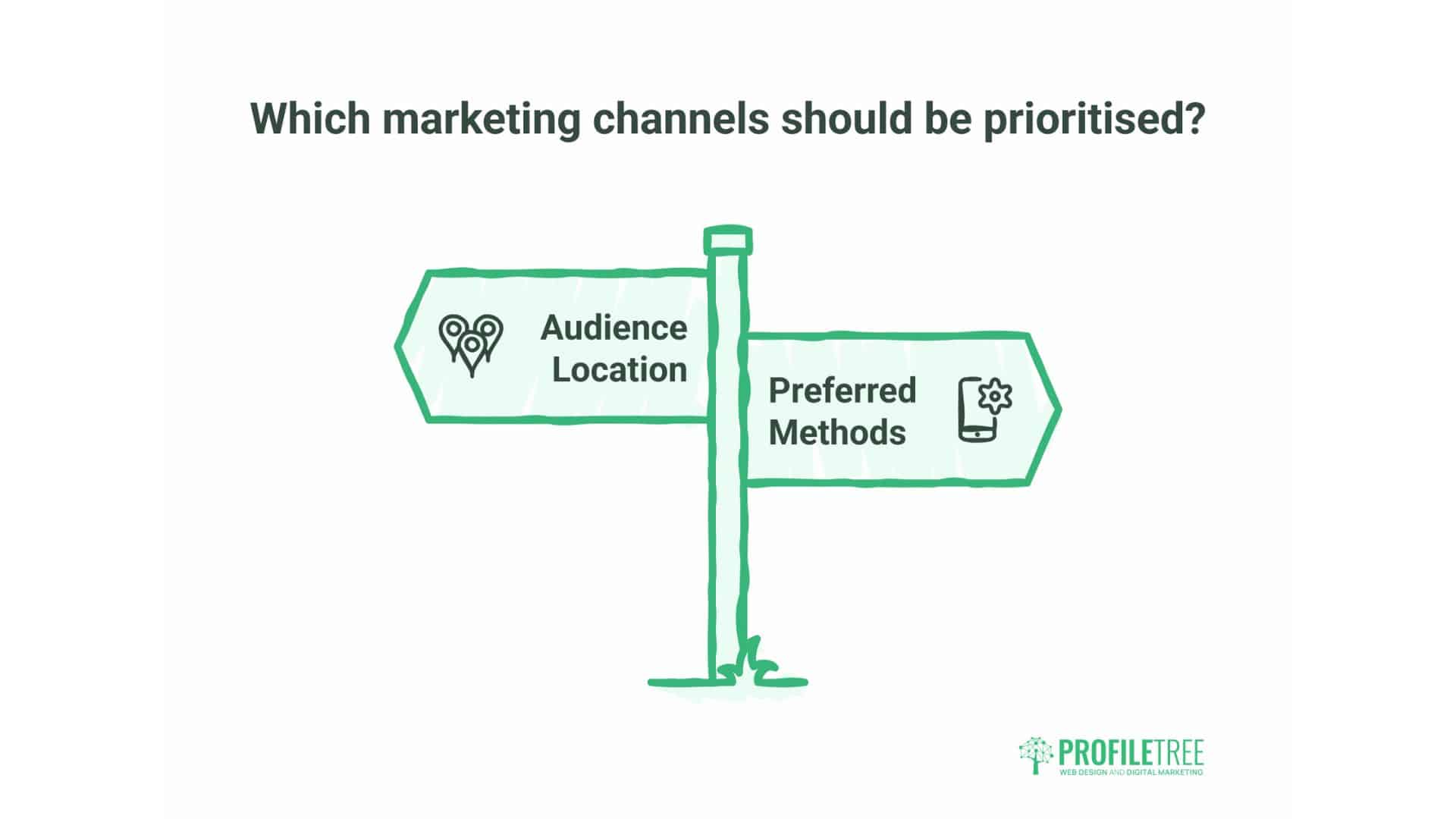
Selecting the proper channels depends on where your target audience spends time and how they prefer to consume information.
Paid Search Marketing
Google Ads and similar platforms enable B2B brands to reach commercial buyers who are actively searching for solutions. Keyword targeting puts your message in front of prospects researching specific problems or comparing vendors.
Campaigns optimised around buyer funnel stages— from early research through final vendor comparisons—deliver better results than generic advertising. Landing pages should address specific use cases and buyer personas to provide immediately relevant information.
ProfileTree’s SEO services help businesses rank organically for commercial keywords whilst complementing paid search efforts with strong on-page optimisation.
Targeted Social Media Advertising
LinkedIn provides precise targeting based on job titles, company size, industry, and other professional attributes. Sponsored content appears in feeds to raise awareness, while customised InMail builds direct relationships with decision-makers.
Other platforms offer value for B2B brands despite their consumer focus. Facebook and Instagram advertising can reach business owners and executives during personal browsing time, when they may be more receptive to discovery.
Trade Publications and Industry Media
Specialist publications target professionals with a focus on specific sectors. Thought leadership articles build credibility whilst display advertising maintains brand awareness amongst relevant audiences. Many trade publications offer visitor retargeting, enabling you to display ads to individuals who have visited key industry websites, even after they leave.
Professional Events and Conferences
Industry conferences put you directly in front of target buyers. Speaking opportunities position your team as experts, while sponsorships raise brand visibility. Networking at these events fosters relationships that can translate into valuable business opportunities.
The UK’s B2B marketing landscape includes numerous sector-specific conferences that provide access to concentrated groups of decision-makers. Regional business events also offer networking opportunities with local companies seeking partnerships.
Content Hubs and Resource Centres
Your website should function as a destination for prospects seeking information. Comprehensive resource centres, featuring guides, templates, case studies, and research reports, attract organic traffic while demonstrating expertise. Gated content captures lead information in exchange for valuable resources.
ProfileTree develops website designs optimised for lead generation, with clear pathways from initial visit through conversion. Our WordPress development ensures fast loading, mobile responsiveness, and search engine compatibility.
Digital Marketing Growth Data
Investment in B2B digital marketing continues to accelerate as companies recognise the effectiveness of online channels.
US B2B paid search spending exceeded £11 billion in 2022, growing over 15% year-over-year. This reflects increasing competition for commercial keywords and growing recognition that search advertising delivers qualified leads efficiently.
B2B social media advertising grew six times faster than B2C social spending in 2021. This dramatic shift indicates businesses are finding success reaching decision-makers on platforms traditionally viewed as consumer-focused.
Overall, US B2B digital advertising spend reached over $ 15 billion in 2023, more than doubling since 2017. UK spending follows similar trajectories as digital channels prove their value for reaching business buyers.
Platform Preferences
LinkedIn dominates B2B social media strategy, with 98% of B2B marketers prioritising this platform. The professional network’s targeting capabilities and business-focused audience make it indispensable for reaching decision-makers.
Despite LinkedIn’s dominance, diversification remains essential. Research shows 77% of B2B marketers also use Twitter, and 73% maintain a Facebook presence. Lead generation and professional networking rank as primary objectives across all platforms.
These statistics reveal that B2B marketing has firmly embraced digital channels whilst recognising that each platform serves different purposes within an integrated strategy.
Implementing B2B Marketing for Growing Businesses
New B2B companies face unique challenges when establishing marketing operations. These priorities help organisations build effective programmes from the ground up.
Prioritise Lead Generation
Growing businesses need qualified prospects to fuel sales pipelines. Focus initial marketing efforts on activities that capture leads and build your database. Content offers, free trials, webinar registrations, and consultation requests all generate leads whilst providing value to prospects.
Modern marketing automation platforms efficiently manage large contact databases at a cost-effective rate. Tools like HubSpot, Marketo, or Pardot enable small teams to nurture hundreds of leads simultaneously through segmented email campaigns and targeted content.
ProfileTree implements AI solutions that help businesses automate lead qualification and personalised follow-up, allowing marketing teams to focus on strategy whilst technology handles repetitive tasks.
Assign Specialist Roles
Effective B2B marketing requires a diverse set of skills, including SEO, content creation, graphic design, video production, analytics, and campaign management. New teams often lack expertise in every area.
Assign team members to specific disciplines based on their existing skills and interests. This focused approach enables individuals to develop expertise rapidly, rather than spreading their attention across too many responsibilities. Someone passionate about writing can focus on content, while another team member with visual skills handles design and video production.
Cross-training can occur gradually as the team matures and individuals become proficient in their primary disciplines. Initially, specialisation accelerates capability development and improves output quality.
ProfileTree’s digital training programmes help teams build skills in critical areas, including SEO fundamentals, content strategy, and AI adoption. Our workshops provide practical knowledge that marketing teams can implement immediately.
Participate in Industry Conversations
LinkedIn discussions, forum threads, and comment sections on industry articles offer opportunities to showcase expertise and establish brand awareness. Contribute valuable insights rather than promotional messages to establish credibility.
These organic interactions often lead to direct business relationships. Prospects notice companies that consistently provide helpful information and thoughtful perspectives. When they need services, they remember brands that added value without asking for anything in return.
Regular participation also keeps your team current on industry challenges, emerging trends, and competitor activities. This intelligence informs content creation and strategic planning.
B2B Marketing for Professional Services
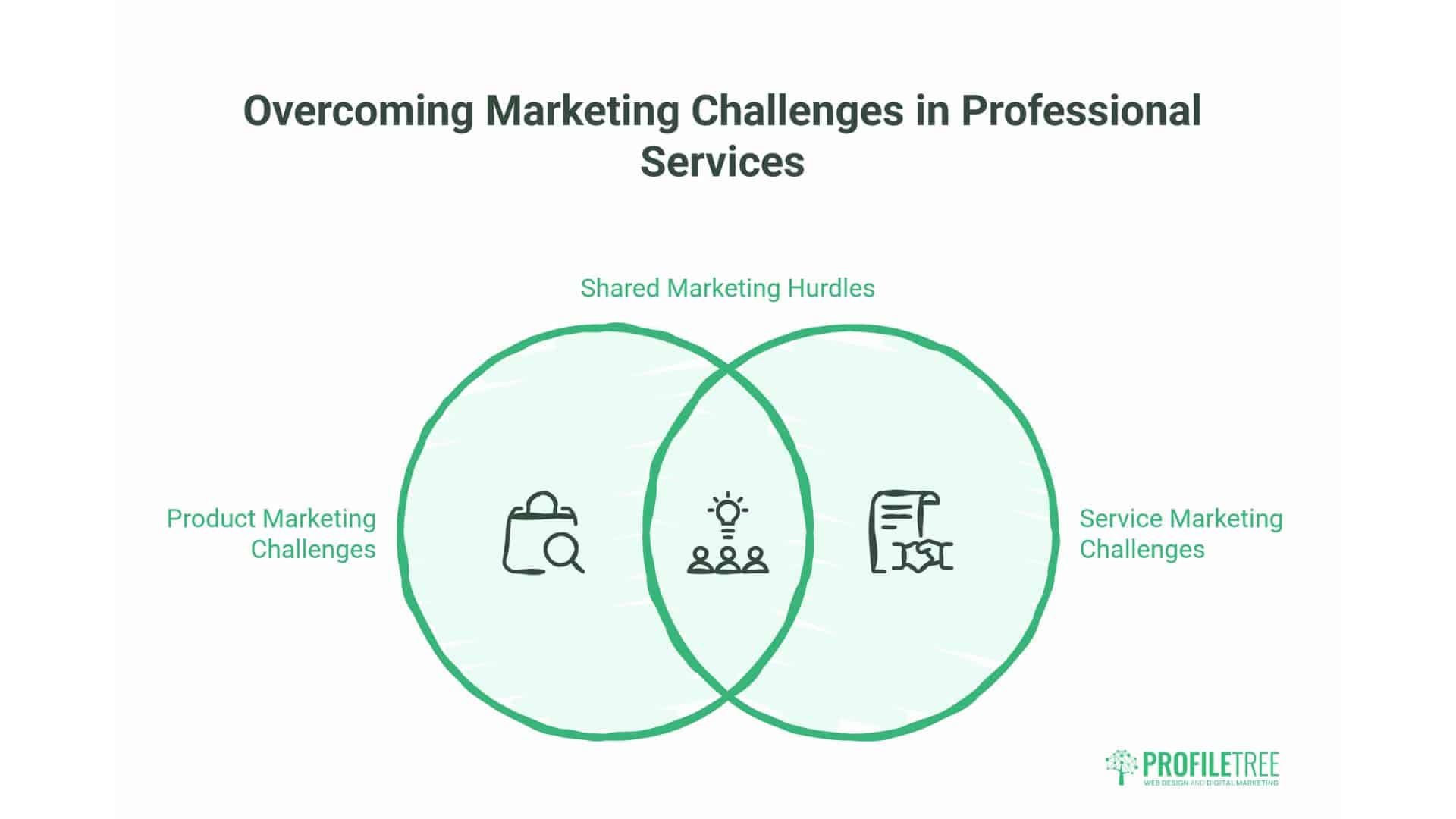
Agencies and consultancies face specific challenges when marketing their services. Unlike product companies with tangible offerings, professional services firms sell expertise, relationships, and outcomes that prospects cannot physically touch or test before making a purchase.
Demonstrating Capability Through Case Studies
Detailed case studies provide the closest equivalent to product demonstrations for service businesses: document specific client challenges, your strategic approach, implementation details, and measurable results. Quantify outcomes wherever possible using metrics such as revenue increase, cost reduction, or efficiency improvements.
ProfileTree showcases our web design projects with before-and-after examples that illustrate how strategic redesigns improve user experience and conversion rates. Our SEO case studies showcase the ranking improvements and traffic growth achieved for clients in various industries.
Building Authority Through Content
Service businesses benefit substantially from thought leadership content. Publishing analysis, frameworks, and strategic guidance demonstrates the expertise clients will access when hiring your firm. This content serves dual purposes by attracting organic search traffic while demonstrating your capability to prospects who are already considering your services.
Website development, AI implementation, and digital strategy represent complex services that require significant explanation. Comprehensive guides that break down processes, address common concerns, and provide actionable advice to help prospects understand what they’re buying and why your approach delivers results.
Highlighting Team Expertise
Professional services depend on people. Feature your team prominently through detailed biography pages, video introductions, and content authorship. When prospects can connect with the actual individuals who will work on their projects, trust develops more quickly.
Team profiles should emphasise relevant experience, qualifications, and industry knowledge rather than just listing credentials. Explain how each person’s background contributes to client success and what unique perspectives they bring to projects.
Regional Considerations for UK B2B Marketing
Companies operating in the United Kingdom must consider specific factors that impact the effectiveness of B2B marketing.
Regulatory Compliance
UK businesses in specific sectors are subject to strict regulations that impact their marketing activities. Financial services companies must comply with Financial Conduct Authority guidelines. Healthcare and pharmaceutical firms navigate NHS procurement processes and MHRA regulations. Data-driven marketing must align with UK GDPR requirements.
Working with agencies that understand these compliance frameworks reduces risk and ensures campaigns meet legal standards. ProfileTree serves UK clients across regulated industries, building campaigns that deliver results whilst respecting necessary constraints.
Regional Business Networks
The UK’s geography creates distinct business communities. London-based companies often prefer working with London agencies due to proximity for meetings and shared understanding of the capital’s business environment. Northern Ireland, Scotland, Wales, and the English regions outside London each have unique business cultures and networking opportunities.
ProfileTree, headquartered in Belfast, understands the Northern Ireland business landscape whilst serving clients throughout Ireland and the broader UK. We recognise how regional considerations influence B2B marketing effectiveness and adapt strategies accordingly.
UK Business Language and Culture
Marketing copy for UK audiences should reflect British English spelling, punctuation, and terminology. American marketing colloquialisms often feel incongruous to British business buyers. References to UK-specific regulations, business structures, and cultural contexts demonstrate local market understanding.
Tone preferences also vary between regions. Professional services marketing in London typically employs more formal language than similar content targeting businesses in Northern Ireland or Scotland, where slightly warmer tones often prove more effective.
Future Trends in B2B Marketing
Several emerging developments will transform the way businesses connect with commercial buyers.
Artificial Intelligence Integration
AI tools are transforming B2B marketing efficiency and personalisation. Predictive analytics identify prospects most likely to convert. Chatbots automatically qualify leads and schedule meetings. Content generation tools help teams produce more material faster.
However, AI adoption requires a strategy to deliver value rather than just novelty. ProfileTree offers AI training and implementation services tailored specifically for SMEs. We help businesses identify which AI applications will genuinely enhance marketing performance and provide hands-on training, enabling teams to utilise these tools effectively.
Account-Based Marketing Expansion
Account-based marketing (ABM) treats individual high-value prospects as markets of one, creating personalised campaigns for specific target accounts. This approach delivers strong results for B2B companies pursuing large enterprise clients where single deals justify substantial marketing investment.
ABM requires coordination between marketing and sales teams to identify target accounts, research stakeholders, and craft customised messaging. Technology platforms help manage these campaigns at scale whilst maintaining personalisation.
Video and Interactive Content Growth
Business buyers increasingly prefer video content over text-based resources. Product demonstrations, customer testimonials, and educational series engage prospects more effectively than written equivalents.
Interactive content, including calculators, assessments, and configurators, provides immediate value whilst capturing lead information. These tools help prospects understand potential returns before contacting sales teams.
ProfileTree’s video production services help B2B companies create professional content that explains complex services clearly while building brand authority. We develop video strategies that support multiple marketing objectives from awareness through conversion.
Privacy-First Marketing
Declining cookie availability and stricter data regulations push B2B marketers toward first-party data collection and contextual targeting. Building owned audiences through email lists and community platforms becomes increasingly valuable as third-party tracking becomes less effective.
Content marketing and SEO gain importance as privacy changes limit the precision of paid advertising. Businesses that attract prospects organically through valuable content will maintain a competitive advantage over those relying exclusively on paid channels.
Conclusion: What Is B2B Marketing?
Business-to-business marketing requires an understanding of organisational decision-making processes and commercial purchasing priorities. Success depends on demonstrating measurable value, building credibility through expertise, and maintaining relationships throughout extended sales cycles.
Companies that treat B2B marketing as relationship building rather than transactional promotion achieve sustainable growth. Focus on solving genuine business problems, providing educational resources, and earning trust before requesting commitments.
Start by auditing your current marketing activities against the strategies outlined here. Identify gaps where competitors provide better information or more compelling proof points. Develop content that addresses these gaps while highlighting your unique capabilities and experience.
B2B marketing continues evolving as digital channels mature and buyer expectations rise. Businesses that combine traditional relationship-building with modern digital tactics position themselves for long-term success in competitive markets.
ProfileTree helps businesses develop and implement effective B2B marketing strategies across web design, SEO, content marketing, and digital transformation. Contact our team to discuss how we can support your growth objectives with practical, results-focused marketing programmes.
FAQs
What are the most critical metrics for B2B marketing?
Pipeline contribution measures how marketing activities fill sales pipelines with qualified opportunities—track marketing-influenced deals and revenue rather than just lead volume. Sales-accepted lead conversion rates indicate the effectiveness of marketing in qualifying prospects before passing them to sales. Customer acquisition cost based on total marketing spend indicates efficiency and helps justify budgets.
How long do B2B sales cycles typically last?
Complex enterprise sales involving multiple stakeholders and significant investments often require six to twelve months from initial contact through contract signing. Simpler B2B product sales may close within weeks or months. Software-as-a-service subscriptions typically fall in the middle with two to four month sales cycles.
Should B2B marketing focus on branding or direct response?
Successful B2B programmes balance both approaches. Brand marketing builds awareness and establishes credibility with prospects early in their research process. Direct response tactics convert prospects who have progressed through consideration stages and are ready to engage. Focusing exclusively on either brand building or conversion optimisation limits overall effectiveness.
What social platforms should B2B brands prioritise?
LinkedIn delivers the strongest results for most B2B companies, thanks to its professional audience demographics and robust targeting capabilities. However, Twitter provides value for thought leadership and real-time industry conversations. Facebook reaches business owners during personal browsing time when they may be more receptive to discovery. Platform selection should align with where your specific target audience spends their time, rather than following generic advice.