
E-Learning & Training Video Services for Irish Businesses
Table of Contents
Irish businesses lose €4.2 billion annually to ineffective training, with 67% of employees forgetting traditional training content within one week. Video-based training reduces this knowledge loss by 83% whilst cutting training costs by up to 50%. After producing hundreds of training videos for organisations from Belfast to Cork, ProfileTree has developed proven frameworks that transform complex information into engaging visual learning experiences.
The shift from classroom to screen isn’t just about convenience – it’s about effectiveness. Manufacturing companies in Derry report 92% reduction in safety incidents after implementing video training. Belfast tech firms onboard new staff 60% faster using structured video programmes. Dublin financial services achieve 100% compliance training completion rates through engaging video content.
This guide reveals exactly how Irish businesses can implement professional training video programmes, from internal communications to comprehensive e-learning platforms. We’ll share specific production techniques, platform considerations, and measurement strategies that deliver measurable ROI across every sector.
The Business Case: Why Video Training Dominates Traditional Methods
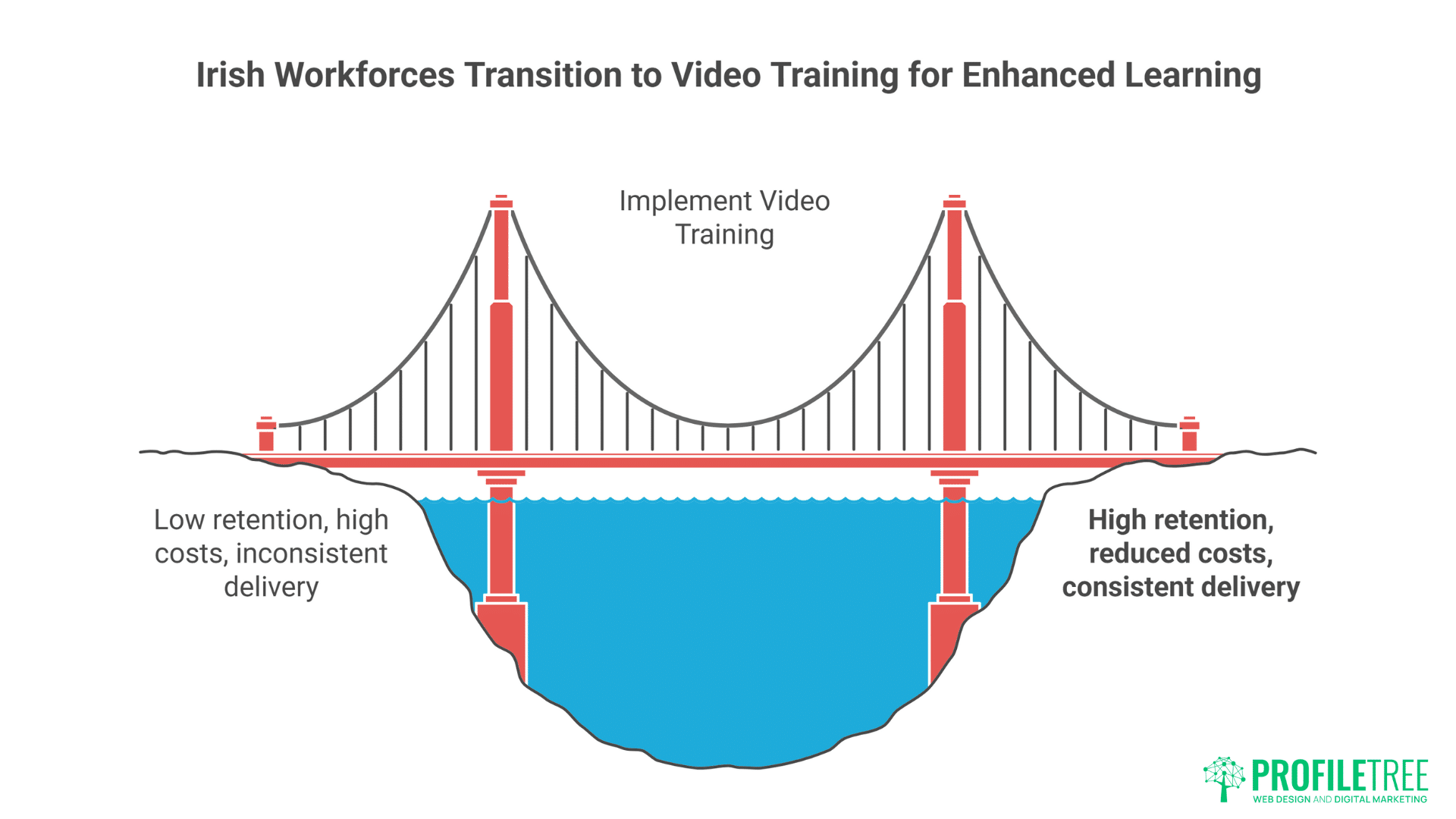
Traditional training methods fail modern Irish workforces. Gathering staff for in-person sessions disrupts productivity. Printed materials become outdated instantly. PowerPoint presentations induce cognitive overload. Meanwhile, employees expect Netflix-quality learning experiences accessible on any device, anywhere, anytime.
Video training delivers measurable advantages across every metric. Retention rates jump from 10% with reading to 95% with video. Training time reduces by 40-60% when visual demonstration replaces written instruction. Consistency improves dramatically – every employee receives identical high-quality training regardless of location or trainer availability.
Cost reduction proves equally compelling. A Belfast manufacturing firm spending £50,000 annually on external trainers now invests £15,000 in video production for content lasting five years. Updates cost pennies rather than thousands. Scale becomes irrelevant – training 10 or 10,000 employees costs the same.
The accessibility benefits particularly matter for distributed Irish workforces. Remote workers in Donegal receive the same training quality as Dublin headquarters staff. Night shift workers access content when convenient. Part-time staff complete training without scheduling conflicts. This democratisation of learning opportunities improves both employee satisfaction and operational efficiency.
Compliance and audit advantages seal the business case. Video training provides irrefutable evidence of training completion. Analytics show exactly who watched what, when, and for how long. Knowledge assessments integrated with video platforms prove comprehension. When regulators request training documentation, comprehensive digital records replace filing cabinets of signatures.
Internal Communications: Building Connected Remote Teams
Internal communication videos solve the engagement crisis facing Irish businesses. Email announcements achieve 23% open rates. All-hands meetings exclude remote workers. Company newsletters gather dust. Video messages from leadership achieve 92% view rates with 8x higher message retention.
CEO and Leadership Updates
Leadership visibility drives employee engagement, yet traditional town halls limit reach. Video updates enable authentic leadership communication at scale:
Production approach: Simple, authentic presentation trumps polished corporate videos. Leaders speaking directly to camera from their actual office build trust. Professional lighting and audio matter more than expensive locations.
Content structure:
- 30-second hook explaining why this matters to employees
- 2-3 key messages maximum
- Specific examples and stories
- Clear call-to-action
- Total length: 3-5 minutes maximum
Distribution strategy: Upload to internal platforms, embed in emails, share via Slack/Teams. Track viewing statistics to measure engagement.
Change Management Communications
Organisational changes fail when communication breaks down. Video ensures consistent messaging whilst addressing emotional aspects of change:
- Merger and acquisition announcements: benefit from leadership explaining rationale, addressing concerns, and painting future vision. Seeing executives’ conviction reduces anxiety.
- Restructuring communications: use animation to visualise new structures, making complex organisational charts understandable. Employee testimonials from pilot departments build confidence.
- Technology rollouts: combine screen recordings with presenter explanations. Showing actual workflows eliminates confusion and accelerates adoption.
Culture and Values Reinforcement
Company values posted on walls mean nothing. Values demonstrated through video stories inspire behavioural change:
- Employee spotlight videos: showcase colleagues embodying company values. Real stories from peers resonate more than corporate messaging.
- Customer success stories: shared internally remind staff why their work matters. Seeing customer impact motivates far beyond monetary incentives.
- Innovation showcases: highlight creative problem-solving across departments. Cross-pollination of ideas accelerates organisational learning.
Staff Onboarding: First Impressions That Accelerate Productivity
New employee onboarding determines long-term success. Poor onboarding leads to 50% of new hires leaving within 18 months. Video-based onboarding programmes reduce time-to-productivity by 60% whilst improving retention by 82%.
Pre-Arrival Onboarding Videos
Start onboarding before day one. Welcome videos sent after offer acceptance build excitement and reduce first-day anxiety:
- Welcome message from CEO/team: creates personal connection. Seeing future colleagues generates belonging before arrival.
- Office tour videos: familiarise new hires with workspace layout. Knowing where to park, enter, and find facilities reduces stress.
- Culture introduction videos: set behavioural expectations. Understanding unwritten rules prevents cultural missteps.
- Administrative preparation guides: ensure paperwork completion. Visual instructions for benefits enrolment and system access prevent delays.
Day One Orientation Programme
Replace overwhelming information dumps with structured video learning paths:
- Company history and mission: videos provide context without lecture fatigue. Animation explaining company evolution engages better than PowerPoint.
- Product/service demonstrations: ensure every employee understands offerings. Sales staff explaining products to new colleagues builds cross-functional understanding.
- Systems training screencasts: walk through essential software step-by-step. Pauseable, replayable instructions accommodate different learning speeds.
- Compliance and policy training: becomes engaging through scenario-based videos. Dramatised situations demonstrate policy application better than rulebook reading.
Role-Specific Training Paths
Generic onboarding wastes time. Video enables personalised learning paths by role:
- Technical positions: receive detailed process walkthroughs filmed from practitioner perspective. Seeing exact procedures eliminates ambiguity.
- Customer-facing roles: watch recorded customer interactions with expert commentary. Real examples prepare for actual situations.
- Management positions: access leadership development content immediately. Starting leadership journey from day one accelerates effectiveness.
The 30-60-90 Day Video Framework
Structure ongoing development through milestone-based video content:
- 30-day check-in videos: address common early challenges. Hearing from recent hires who overcame similar obstacles provides reassurance.
- 60-day skill development: modules introduce intermediate concepts. Building complexity gradually prevents overwhelm.
- 90-day integration assessments: combine video reviews with interactive evaluations. Confirming comprehension before independent work reduces errors.
Safety Training: Compliance and Culture Through Visual Learning
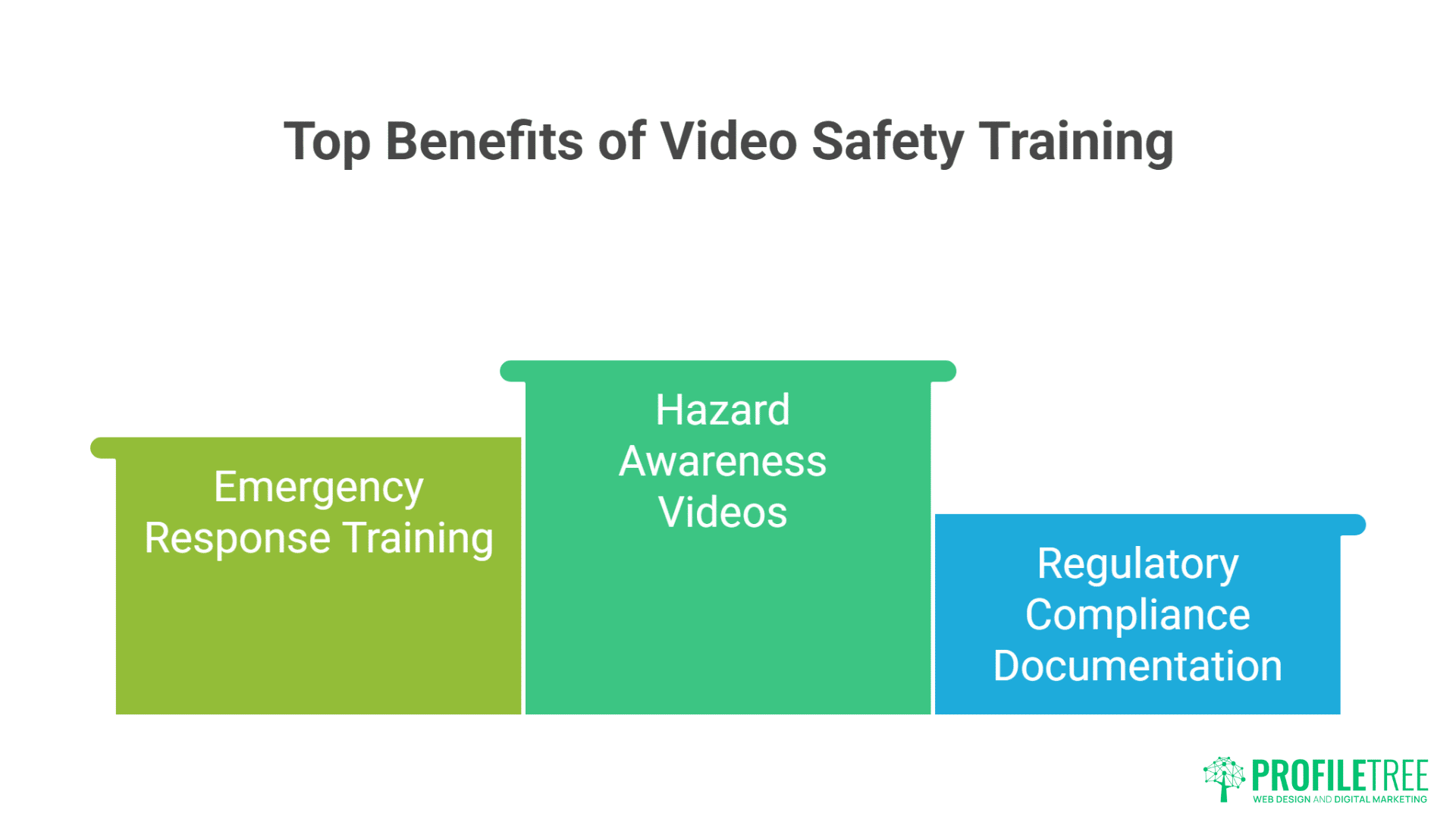
Safety training saves lives and money. Irish businesses face average injury costs of €67,000 per incident. Video safety training reduces incidents by 70% whilst ensuring HSA compliance. Visual demonstration of hazards and procedures creates lasting behavioural change impossible through written instructions.
Hazard Awareness Videos
Showing dangers visually impacts behaviour more than describing risks:
- Equipment-specific safety videos: demonstrate proper operation and common mistakes. Filming actual equipment in your facility increases relevance.
- Environmental hazard tours: walk through facilities highlighting risks. First-person perspective creates immersive awareness.
- Near-miss recreations: dramatise actual incidents without naming individuals. Learning from others’ mistakes prevents repetition.
- Personal protective equipment demonstrations: show correct usage. Close-ups of proper fitting and common errors improve compliance.
Emergency Response Training
Crisis preparation requires muscle memory. Video training builds automatic responses:
- Evacuation procedure walkthroughs: film actual routes from every area. Multiple perspectives ensure complete coverage.
- Fire extinguisher training: demonstrates PASS technique with different fire types. Seeing proper technique builds confidence.
- First aid response videos: show step-by-step procedures. Professional medical consultation ensures accuracy.
- Chemical spill procedures: safely demonstrate containment and cleanup. Animation explains risks without actual exposure.
Regulatory Compliance Documentation
Video provides indisputable training evidence:
- Timestamped viewing records: prove individual completion. Analytics dashboards simplify compliance reporting.
- Interactive assessments: embedded within videos confirm understanding. Automatic scoring and certification reduces administrative burden.
- Version control: ensures everyone receives current training. Updating one video updates all employees simultaneously.
- Multi-language options: ensure comprehension for diverse workforces. Subtitles and voiceovers accommodate all employees.
Sector-Specific Applications and Case Studies
Different industries require tailored video training approaches. Understanding sector-specific needs ensures maximum impact.
Manufacturing and Production
Challenge: Complex machinery operation, strict safety requirements, shift work complications
Video Solutions:
- Machine operation tutorials filmed from operator perspective
- Maintenance procedure videos accessible via QR codes on equipment
- Quality control standards demonstrated visually
- Lean manufacturing principles explained through animation
Results: Belfast aerospace manufacturer reduced training time from 6 weeks to 3 weeks whilst improving first-time quality rates by 34%.
Healthcare and Medical
Challenge: Life-critical procedures, regulatory compliance, continuous professional development
Video Applications:
- Clinical procedure demonstrations for standardisation
- Patient interaction training for soft skills
- Infection control protocol reinforcement
- Medical equipment operation guides
Outcomes: Cork hospital group achieved 100% compliance training completion and reduced medication errors by 67%.
Financial Services
Challenge: Complex regulations, security requirements, frequent updates
Video Programmes:
- Anti-money laundering scenario training
- Customer interaction simulations
- Product knowledge modules
- Cybersecurity awareness campaigns
Impact: Dublin investment firm reduced compliance violations by 89% whilst cutting training costs by €200,000 annually.
Retail and Hospitality
Challenge: High turnover, seasonal staff, brand consistency
Video Training:
- Customer service excellence demonstrations
- Point-of-sale system tutorials
- Brand standard visualisations
- Upselling technique examples
Results: National retail chain reduced onboarding from 5 days to 2 days whilst improving customer satisfaction scores by 23%.
Technology and Software
Challenge: Rapid product changes, remote workforce, technical complexity
Video Content:
- Software feature demonstrations
- Coding best practices workshops
- Agile methodology explanations
- Cybersecurity protocol training
Achievements: Belfast software company improved developer onboarding efficiency by 75% whilst reducing initial project errors by 45%.
Production Considerations: Quality, Budget, and Timeline
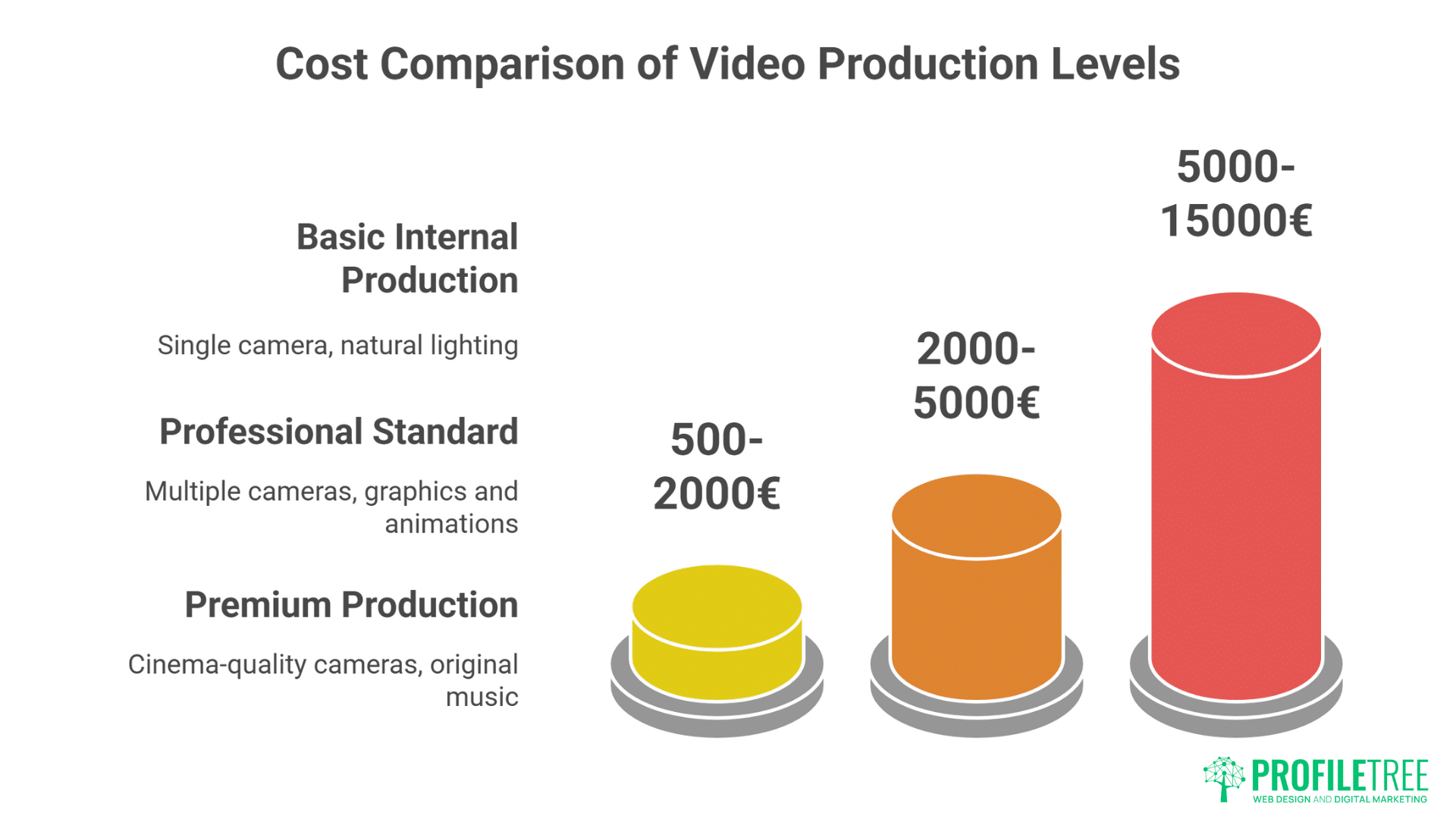
Professional training videos require balancing quality needs with budget reality. Understanding production variables enables informed decisions.
Production Quality Levels
Basic Internal Production (€500-2,000 per video):
- Single camera setup
- Natural lighting
- Basic editing
- Suitable for internal updates and simple procedures
Professional Standard (€2,000-5,000 per video):
- Multiple cameras
- Professional lighting and audio
- Graphics and animations
- Motion graphics and titles
- Ideal for onboarding and safety training
Premium Production (€5,000-15,000 per video):
- Cinema-quality cameras
- Professional actors/presenters
- Custom animations
- Original music
- Multiple locations
- Perfect for flagship training programmes
Budget Optimisation Strategies
- Batch Production: Filming multiple videos simultaneously reduces per-unit costs by 40-60%.
- Template Development: Creating reusable graphics and intro/outro sequences maintains consistency whilst reducing costs.
- Internal Talent: Using employee experts rather than professional presenters saves money whilst increasing authenticity.
- Location Efficiency: Filming at actual work locations eliminates studio rental whilst increasing relevance.
Timeline Planning
Pre-Production (2-4 weeks):
- Script development
- Storyboarding
- Location scouting
- Talent scheduling
- Equipment preparation
Production (1-5 days):
- Filming
- Audio recording
- B-roll capture
- Pickup shots
Post-Production (2-4 weeks):
- Editing
- Colour correction
- Audio mixing
- Graphics integration
- Review cycles
Distribution (1 week):
- Platform upload
- Access configuration
- Communication planning
- Analytics setup
Platform Selection: Choosing the Right Distribution System
Training video effectiveness depends on accessibility. The right platform ensures employees can access content when, where, and how they need it.
Learning Management Systems (LMS)
Enterprise Solutions:
- Cornerstone, SAP Litmos, TalentLMS
- Comprehensive tracking and reporting
- SCORM compliance
- Integration with HR systems
- Cost: €5,000-50,000 annually
Mid-Market Options:
- LearnUpon (Irish company), Teachable, Thinkific
- Balance of features and affordability
- Good analytics and user management
- Mobile accessibility
- Cost: €500-5,000 monthly
Video Hosting Platforms
Professional Platforms:
- Vimeo Business, Wistia, Brightcove
- Advanced analytics and security
- Customisable players
- Marketing integrations
- Cost: €50-500 monthly
Internal Solutions:
- Microsoft Stream, Google Drive
- Included with existing subscriptions
- Basic functionality
- Limited analytics
- Cost: Included with office suites
Custom Development
Bespoke Platforms:
- Tailored to specific needs
- Complete control over features
- Integration with existing systems
- Higher initial investment
- Cost: €20,000-100,000 development
Measuring Success: KPIs and ROI Tracking
Video training investment requires measurable returns. Tracking the right metrics proves value and guides improvement.
Engagement Metrics
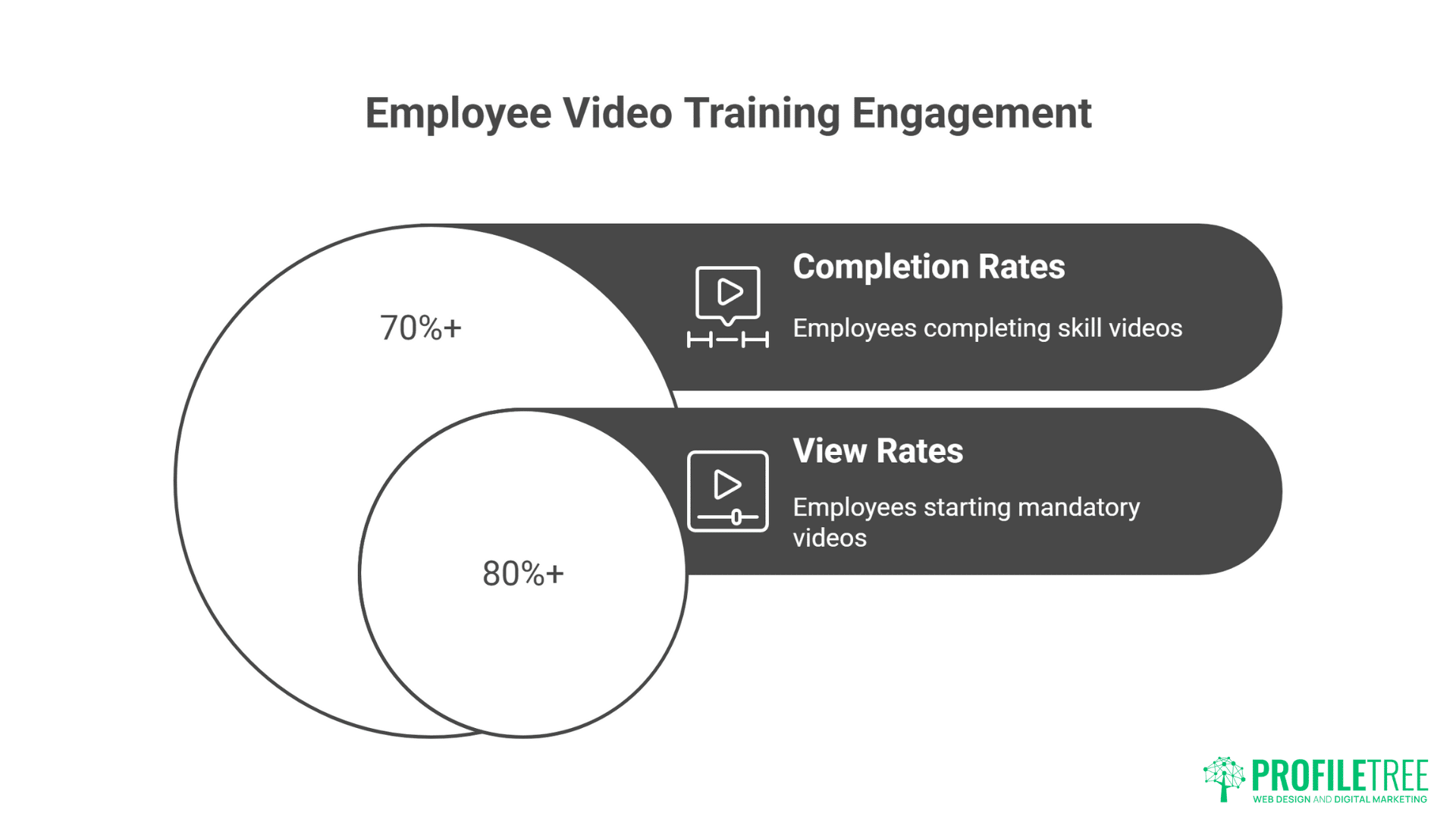
View Rates: Percentage of employees who start videos
- Target: 80%+ for mandatory training
- 50%+ for optional content
Completion Rates: Percentage who finish entire videos
- Target: 90%+ for compliance training
- 70%+ for skill development
Engagement Patterns: Where viewers pause, rewind, or drop off
- Identifies confusing sections
- Guides content improvement
Learning Effectiveness
Knowledge Assessments: Pre/post training test scores
- Target: 40%+ improvement
- 80%+ pass rates
Skill Demonstrations: Practical application evaluation
- Video submissions of learnt skills
- Peer review systems
Behaviour Change: Observable workplace improvements
- Incident reduction rates
- Productivity metrics
- Quality improvements
Business Impact
Cost Savings:
- Reduced trainer fees
- Lower travel expenses
- Decreased time away from work
- Fewer compliance violations
Revenue Impact:
- Faster time-to-productivity
- Improved customer satisfaction
- Reduced errors and rework
- Higher employee retention
ROI Calculation:
ROI = (Gain from Investment – Cost of Investment) / Cost of Investment × 100
Example:
– Training cost savings: €100,000
– Productivity improvements: €200,000
– Video production investment: €50,000
– ROI = (€300,000 – €50,000) / €50,000 × 100 = 500%
The ProfileTree Advantage: Your Training Video Partner
- ProfileTree’s video marketing services transform Irish businesses through engaging visual content that drives real results. Our Belfast studio combines creative excellence with technical expertise, producing training videos that employees actually want to watch.
- Our content marketing approach ensures training videos align with broader communication strategies, maximising impact across all channels.
- Digital strategy consultation identifies training video opportunities that deliver maximum ROI for your specific needs.
“Great training videos don’t just transfer information – they transform behaviour,” explains Ciaran Connolly, ProfileTree founder. We’ve seen manufacturers reduce incidents by 90%, tech companies cut onboarding time in half, and retailers achieve perfect brand consistency across hundreds of locations. The key is understanding that effective training videos are about psychology, not just production.”
Common Mistakes and How to Avoid Them
Even the best training and e-learning videos can underperform if common production mistakes go unnoticed. These missteps can limit effectiveness and reduce the return on your investment. By identifying them early, Irish businesses can create videos that achieve stronger impact and lasting results.
Mistake 1: Information Overload
- Problem: Cramming too much into single videos causes cognitive overload and poor retention.
- Solution: Follow the 5-minute rule. Break complex topics into digestible segments. Create learning paths rather than marathon videos.
Mistake 2: Ignoring Mobile Viewers
- Problem: Desktop-only video formats exclude mobile workforce majority.
- Solution: Design for mobile first. Ensure text remains readable on small screens. Test on various devices before deployment.
Mistake 3: One-Size-Fits-All Content
- Problem: Generic training fails to address specific role needs.
- Solution: Create modular content allowing personalised learning paths. Film department-specific examples and scenarios.
Mistake 4: Launch and Abandon
- Problem: Creating videos without ongoing support and updates.
- Solution: Plan for maintenance from the start. Schedule regular reviews and updates. Gather continuous feedback for improvement.
Mistake 5: Poor Audio Quality
- Problem: Excellent visuals ruined by echo, background noise, or inconsistent levels.
- Solution: Invest in proper audio equipment. Record in controlled environments. Always use external microphones, never camera built-ins.
Future Trends: Preparing for Tomorrow’s Training
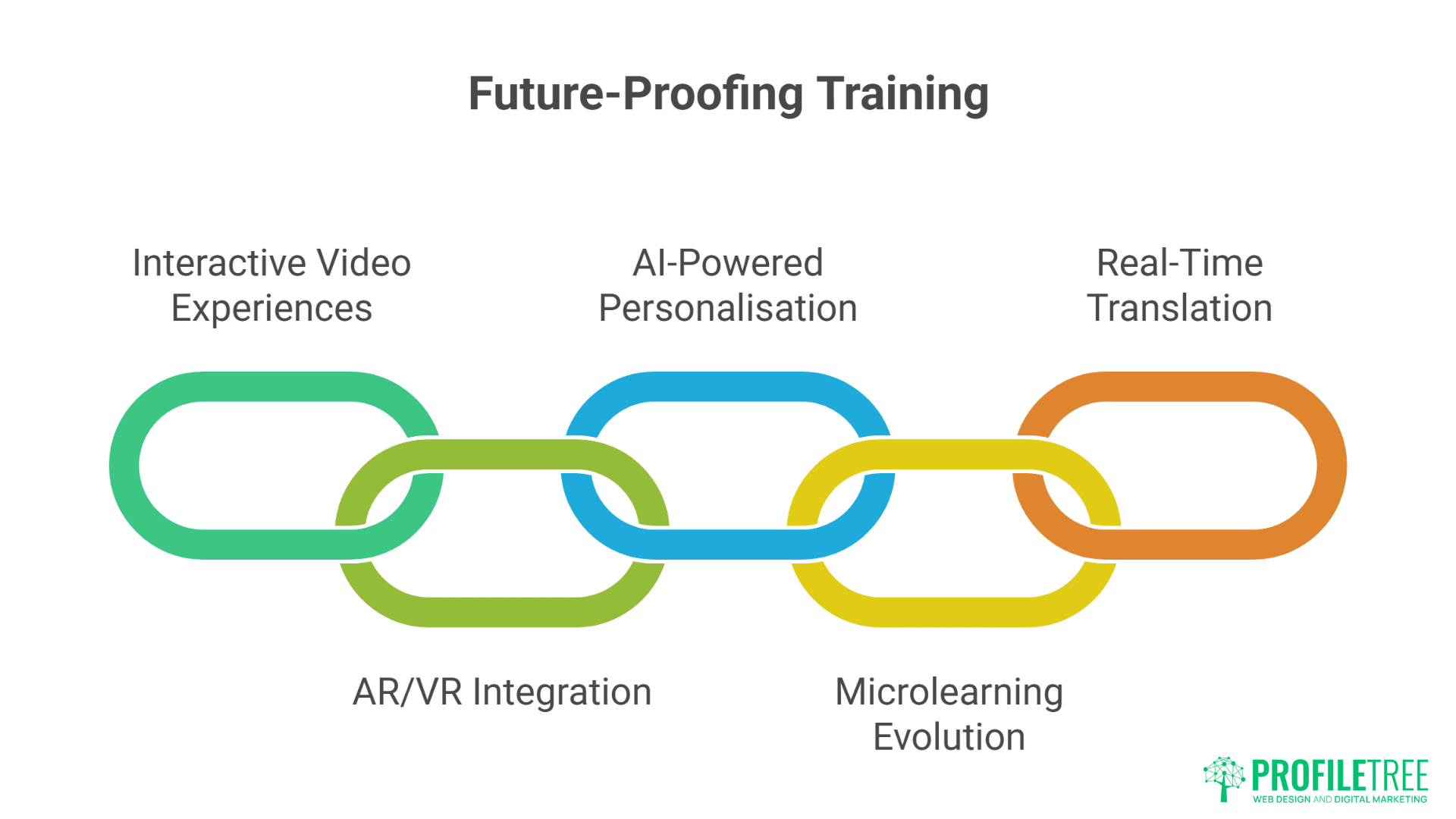
The world of training and e-learning is evolving rapidly, driven by new technologies and changing learner expectations. Staying ahead means anticipating how formats, delivery methods, and engagement strategies will adapt. By preparing now, Irish businesses can future-proof their training content and remain competitive in a shifting landscape.
Interactive Video Experiences
Branching scenarios let viewers make decisions, seeing consequences play out. This gamification increases engagement whilst providing assessment data.
AR/VR Integration
Augmented reality overlays training onto real equipment. Virtual reality enables risk-free practice of dangerous procedures.
AI-Powered Personalisation
Machine learning adapts content based on individual learning patterns. Struggling employees receive additional support automatically.
Microlearning Evolution
30-second daily videos replace lengthy sessions. Spaced repetition improves long-term retention.
Real-Time Translation
AI generates multilingual versions instantly, ensuring global workforce inclusion.
Implementation Roadmap: Getting Started
Launching effective training and e-learning videos begins with a clear, step-by-step roadmap. An organised approach helps businesses move smoothly from planning to production and delivery. This section outlines the key stages to set a strong foundation and ensure lasting impact.
Week 1-2: Needs Assessment
- Identify training gaps
- Survey employee preferences
- Audit existing materials
- Define success metrics
Week 3-4: Strategy Development
- Prioritise video topics
- Create content calendar
- Select platform solution
- Establish budget parameters
Month 2: Pilot Production
- Produce 2-3 test videos
- Gather feedback
- Refine approach
- Calculate initial ROI
Month 3: Full Rollout
- Scale production
- Launch platform
- Train administrators
- Communicate programme
Ongoing: Optimisation
- Track metrics
- Gather feedback
- Update content
- Expand coverage
FAQs
What’s the minimum budget for professional training videos?
Basic professional videos start around €2,000 each. However, batch production significantly reduces per-video costs. Most Irish SMEs invest €10,000-30,000 for comprehensive training libraries.
How long should training videos be?
Optimal length is 3-7 minutes for maximum retention. Complex topics should be broken into multiple short videos rather than single long ones.
Can we produce training videos internally?
Yes, with proper equipment and training. However, professional production ensures quality that reflects your brand and maintains viewer engagement.
What equipment is essential for internal production?
Minimum: good external microphone (€200), LED lights (€300), HD camera or smartphone with tripod (€100). Total investment around €600-1,000.
How often should training videos be updated?
Review quarterly, update annually or when significant changes occur. Compliance and safety videos may require more frequent updates based on regulatory changes.
Which platform is best for Irish businesses?
LearnUpon (Irish-based) offers excellent features for SMEs. Larger enterprises might prefer Cornerstone or SAP Litmos. Consider existing technology stack for integration.
How do we ensure employees actually watch training videos?
Combine mandatory viewing with engaging content. Track completion, integrate assessments, and tie to performance reviews. Most importantly, create videos worth watching.
Taking Action Today
Start small but start now. Identify one critical training need that video could address. Whether it’s reducing safety incidents, accelerating onboarding, or improving customer service, video training delivers measurable improvements.
Contact ProfileTree to discuss your training video needs. Our experience across every Irish industry sector ensures we understand your challenges and opportunities. From single videos to comprehensive e-learning platforms, we deliver training solutions that transform organisational capability.
Remember: every day without effective training costs money, risks safety, and limits growth. Video training isn’t an expense – it’s an investment in your organisation’s future. The question isn’t whether to implement video training, but how quickly you can start benefiting from its advantages.