
YouTube Premium: What You Get, What It Costs and Is It Worth It
Table of Contents
YouTube Premium is a paid membership that removes ads, adds offline downloads and background play on mobile, and includes YouTube Music Premium in the same subscription. Whether it earns its place in your monthly spending depends on three things: how often you watch, what device you watch on, and whether you already pay for music streaming somewhere else. This guide answers all three, and covers what the membership means for businesses producing video marketing and production work for the platform.
Is YouTube Premium Worth It? The Short Answer
YouTube Premium is a paid YouTube membership that removes advertising, allows offline downloads and background play on mobile devices, and includes a full YouTube Music Premium subscription at no extra charge. In the UK the individual plan costs £12.99 a month, with a family plan at £19.99 for up to six people at one address, student and Premium Lite tiers at £7.99, and a pre-paid annual individual plan at £129.99.
It pays for itself if you watch YouTube most days, listen to music or podcasts on a phone, or would otherwise pay separately for a music streaming service, because the music subscription alone accounts for most of the monthly fee. It does not pay for itself if you watch a few videos a week on a desktop computer, where background play and downloads matter least. UK prices were checked on 17 September 2026, and YouTube adjusts pricing market by market, so confirm the current figure before you subscribe.
What Is YouTube Premium, and What Do You Get for the Money?
A YouTube Premium membership covers five things. Ads are removed across YouTube, including pre-roll, mid-roll and banner overlays. Videos and playlists can be downloaded to a phone or tablet for offline viewing. Background play keeps audio running when you lock the screen or switch apps. YouTube Music Premium is included in full, which covers ad-free music, offline songs and background listening. A small number of legacy YouTube Originals titles remain behind the paywall.
Beyond those five, YouTube Premium has added a set of smaller benefits that its help documentation on Premium benefits sets out in detail. Jump Ahead uses aggregate viewing data to skip to the point most viewers fast-forward to, and it works on mobile, web, smart TVs, streaming devices and games consoles. It is worth knowing the limits: Jump Ahead only appears on supported languages, and never on Shorts, premieres, live streams, music, films or shows.
1080p Premium gives members a higher-bitrate version of the standard 1080p stream, which shows up most on a large screen. Playback speed runs to 4x in fine increments, with an auto speed setting that adjusts as the video goes along. Audio on official music videos and Art Tracks runs at 256kbps. Shorts get picture-in-picture and smart downloads.
The service started life as YouTube Red in 2015 and took the YouTube Premium name in 2018. The Originals programme that once justified part of the price has since been wound down in favour of paying creators directly, so treat exclusive shows as a minor benefit rather than a reason to subscribe.
“YouTube Premium is more than ad-free viewing. It changes how people take in content across different settings: active viewing at home, background listening on the move, or offline access while travelling,” says Ciaran Connolly, founder of ProfileTree.
How Much Does YouTube Premium Cost in the UK?
YouTube Premium is sold on five plans in the UK. The figures below were checked on 17 September 2026. YouTube raises prices unevenly across markets, so the current rate on the official sign-up page is the one that counts.
| Plan | UK price | Ad-free video | YouTube Music | Downloads and background play |
|---|---|---|---|---|
| Individual (monthly) | £12.99 a month | Yes | Yes | Yes |
| Individual (annual, pre-paid) | £129.99 a year, about £10.83 a month | Yes | Yes | Yes |
| Family, up to six people | £19.99 a month | Yes | Yes | Yes |
| Student | £7.99 a month | Yes | Yes | Yes |
| Premium Lite | £7.99 a month | Most videos | No | No |
The annual plan is pre-paid and does not renew automatically. Twelve months at the monthly rate comes to £155.88, so paying up front saves £25.89, a little under 17%. It cannot be paused, and YouTube’s guidance on joining Premium confirms pre-paid access is only sold to individual users, for up to 24 months.
Family plan members must all live at the same address as the plan manager, and each keeps a separate account, watch history and recommendations. YouTube tightened household checks in 2025 and has kept enforcing them, so a plan split across two households is likely to stop working. Split six ways, £19.99 works out at roughly £3.33 a head.
Student places are verified by SheerID, last up to four years and are re-checked annually. Since January 2026, memberships that pass the four-year cap or fail re-verification convert to the full individual rate rather than lapsing quietly, so the expiry date is worth putting in a calendar.
YouTube also lists a two-person plan alongside the family plan in its official documentation, though availability varies by country and it has not appeared in every market. One further cost trap: subscribing through the Apple App Store or Google Play can cost noticeably more than subscribing in a web browser, because app-store commission gets passed on.
How Do You Work Out Whether YouTube Premium Pays for You?
Three questions settle it faster than any feature list.
Do you already pay for music streaming? This is the one that decides most cases. Spotify Premium Individual costs £12.99 a month in the UK, the same as YouTube Premium Individual, according to Spotify’s UK pricing page. If you pay that already, moving to YouTube Premium gets you ad-free video for no additional outlay. If you have no music subscription and do not want one, the sum changes completely: the gap between Premium Lite at £7.99 and full Premium at £12.99 is £5 a month, or £60 a year, and that £5 is essentially what you are paying for YouTube Music, downloads and background play.
Do you watch on a phone or on a computer? Background play and offline downloads are the two benefits with no free workaround, and both are strongest on mobile. A desktop-only viewer is buying ad removal and little else, which is what Premium Lite exists for.
How many hours a week do you actually watch? Rather than trusting an average, count the ads in one typical hour of your own viewing and multiply by your weekly hours. Someone watching an hour a night is reclaiming real time. Someone watching three videos a week is not.
| Your situation | Plan that fits | UK monthly cost |
|---|---|---|
| You pay for music streaming and watch YouTube daily | Individual, or annual if you are confident | £12.99, or £10.83 pre-paid |
| You want ads gone and nothing else, and keep your existing music service | Premium Lite | £7.99 |
| Two or more people at the same address watch regularly | Family | £19.99, about £3.33 each at six |
| You are a verified full-time student | Student | £7.99 |
| You watch a few videos a week, mostly on a laptop | Stay on the free tier | £0 |
When Is Free YouTube Good Enough Without Premium?
Free YouTube is the right answer more often than YouTube Premium sign-up pages admit. Light viewers lose little time to ads. Desktop viewers get no background play and limited benefit from downloads. Households already carrying several streaming subscriptions may get more back from cancelling one than from adding another.
Ad-blocking extensions such as uBlock Origin do remove ads in a desktop browser, and it is worth being straight about the trade-offs rather than pretending they do not work. They are desktop-only, they give you no downloads or background play, they break YouTube’s terms of service, they cut off the creators you watch from advertising income, and YouTube has tightened detection to the point where they are less dependable than they were. Third-party apps promising ad-free access carry account-suspension and security risk on top of that.
How Does YouTube Premium Compare with Spotify and Prime Video?
The comparison only makes sense once you decide what you want the subscription to do. YouTube Premium and Spotify Premium cost the same in the UK, but they cover different ground.
| Feature | YouTube Premium | Spotify Premium |
|---|---|---|
| UK monthly cost, individual | £12.99 | £12.99 |
| Ad-free coverage | Video and music | Music and podcasts |
| Video content | The full YouTube catalogue | Video podcasts only |
| Offline downloads | Music and video | Audio |
| Household plan | £19.99 for six | £21.99 for six |
| Two-person plan | Listed officially, availability varies | £17.99 Duo |
| Student rate | £7.99 | £5.99 |
Prime Video sits in a different category again. It comes bundled with Amazon Prime, which Amazon prices at £8.99 a month or £95 a year in the UK, with a half-price rate for students and 18 to 24 year olds. That fee buys delivery benefits as much as streaming, and Prime Video now carries ads by default with an ad-free add-on charged monthly on top. The catalogue is professionally produced film and television rather than creator content, so the two services rarely compete for the same viewing hour.
Put simply: pick YouTube Premium if you watch creator content and tutorials daily and want music in the same subscription. Pick Spotify if audio and playlist discovery are what you care about. Pick Prime if you order from Amazon regularly and treat the video catalogue as a bonus.
What Did the 2026 Price Rise Change for YouTube Premium?
YouTube Premium prices rose in the US in 2026, the first increase there since 2023. The individual plan went from $13.99 to $15.99 a month, the family plan from $22.99 to $26.99, and both Premium Lite and the student rate from $7.99 to $8.99. New subscribers paid the higher rate from April, and existing subscribers saw it from their June billing date.
UK rates were not changed at the same time, which points to a staggered rollout by market rather than a single global move. Past UK increases have tended to follow US ones by several months to just over a year, and not always at the same percentage. If you budget for subscriptions annually, leave some headroom rather than assuming the current UK figure holds. The pre-paid annual plan locks your rate for its full term, which is one practical reason to consider it if you already know you will keep the membership.
Which Devices Support Which YouTube Premium Features?
YouTube Premium removes ads everywhere you sign in. The two benefits people most often assume are universal are not.
| Feature | Mobile | Desktop browser | Smart TV | Streaming devices and consoles |
|---|---|---|---|---|
| Ad-free viewing | Yes | Yes | Yes | Yes |
| Offline downloads | Yes | Supported browsers | No | No |
| Background play | Yes | No | Not applicable | Not applicable |
| YouTube Music | Yes | Yes | Limited | Limited |
| Jump Ahead | Yes | Yes | Yes | Yes |
A YouTube Premium membership is tied to a Google account and travels across devices with a single sign-in. Family plans are linked through Google Family Sharing, so each member uses Premium independently while billing sits with the plan manager.
What Does YouTube Premium Mean If You Produce Video?
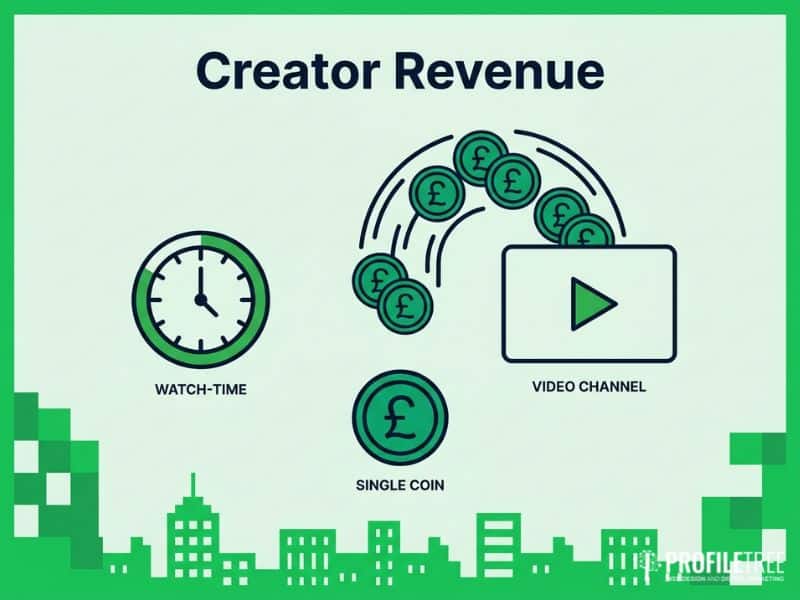
There is one consequence that changes media planning rather than viewing habits: YouTube Premium subscribers cannot be reached by YouTube advertising at all. No pre-roll, no mid-roll, no banner placement. YouTube’s own announcement put the combined Music and Premium base above 125 million subscribers globally in March 2025, including trials, and Alphabet has since reported record quarterly growth in non-trial subscribers.
A business buying only paid placement is therefore buying access to the ad-supported audience and nothing else, while the group demonstrably willing to pay for a better experience sits outside that spend entirely. The only route to those viewers is content they choose to watch. That argues for treating the platform as a search and content channel, with owned video planned into the digital strategy from the start.
Creator revenue works differently too. YouTube Premium subscription income is shared according to watch time from paying members, so the longer a subscriber stays with your channel, the larger the share it receives. That rewards content holding attention across its full length rather than clips that open strongly and lose people. It also raises expectations on production quality, because paying subscribers notice the difference. If you are starting from first principles, our guide to what YouTube is and how businesses use it covers the groundwork, and the way the YouTube algorithm ranks and recommends videos determines whether any of it gets found. Traffic earned that way still needs somewhere to land, which is where website design turns viewers into enquiries.
YouTube Premium: Frequently Asked Questions
How much is YouTube Premium in the UK?
The individual plan is £12.99 a month, or £129.99 for a pre-paid year, which works out at about £10.83 a month. The family plan covers up to six people at one address for £19.99 a month, and both the student rate and Premium Lite are £7.99. These figures were checked on 17 September 2026 and YouTube changes them by market, so check the sign-up page before you commit.
Is YouTube Premium worth it, or am I better off just using an ad blocker?
An ad blocker removes ads in a desktop browser and costs nothing, so if that is genuinely all you watch on, it does the job. It gives you no background play, no offline downloads and nothing on your phone, which is where most people watch, and YouTube has become considerably better at detecting blockers. The other honest point is that blocking removes the creator’s income from your viewing, whereas Premium pays them from your subscription.
I already pay for Spotify. Does it make sense to switch to YouTube Premium?
For a lot of people, yes. Spotify Premium Individual and YouTube Premium Individual both cost £12.99 a month in the UK, and YouTube Premium includes the full YouTube Music service on top of ad-free video, so you are getting more for the same figure. The catch is catalogue and interface preference rather than price: if Spotify’s playlists and discovery are what keep you there, that is a reasonable thing to pay for, and Premium Lite at £7.99 removes video ads without touching your music setup.
Why is YouTube Premium so expensive when I only want the ads gone?
The frustration is fair, and YouTube has effectively acknowledged it. Premium Lite exists precisely for people who want ad removal without paying for the music service, and at £7.99 it takes £5 a month off the bill. What you give up is YouTube Music, offline downloads and background play, and Lite removes ads from most videos rather than all of them.
Can I share YouTube Premium with my family?
Yes, on the family plan, which covers up to six household members aged 13 or over for £19.99 a month. Every member has to live at the same residential address as the plan manager, and YouTube runs a periodic electronic check to confirm it, so sharing across two homes is not workable.
Does YouTube Premium work on all my devices?
Ad-free viewing works on phones, tablets, computers, smart TVs, games consoles and streaming devices. Background play is mobile-only, and offline downloads work on mobile and in supported desktop browsers but not on TVs or streaming sticks. If background play is your main reason for subscribing, check that your main viewing device is a phone or tablet before you pay.
Can I get YouTube Premium free?
New subscribers usually get a one-month free trial, and YouTube occasionally runs longer promotional trials. A payment method is required up front, so the trial converts to a paid membership unless you cancel before it ends. There is no permanently free ad-free tier.
How do I cancel YouTube Premium?
Cancel from your Google account under paid memberships, or in the YouTube app under your profile. Access continues until the end of the billing period you have already paid for, then the account reverts to the free ad-supported experience. Pre-paid annual plans are handled separately and need a support request if you want to end access early.
Will YouTube Premium prices go up in the UK?
Probably, though nothing has been confirmed. US prices rose in 2026 and UK rates were left alone at that point, which fits a pattern of staggered increases market by market rather than a single global change. Past UK rises have followed US ones by several months to just over a year, so budgeting with a little headroom is sensible.
Making the YouTube Premium decision
YouTube Premium is worth paying for if you watch most days, watch on a phone, or would otherwise pay for music streaming separately. It is not worth paying for if you watch occasionally on a desktop, and Premium Lite covers the middle ground where ads are the only real annoyance. Run the three questions above against your own habits rather than a general recommendation, and check the current UK price before you sign up, because it moves.
For businesses, the more useful conclusion is about reach rather than personal spending. A growing, high-intent audience has removed itself from advertising entirely, and the only way to reach it is content people choose to watch. Making that content is the work of our Belfast video production team, and ProfileTree’s search engine optimisation services help it get found.
Does youtube offer senior discount?