
Small Business Marketing Budget: How Much Should You Spend?
Table of Contents
Determining the right small business marketing budget involves more than following textbook formulas. While industry standards suggest allocating 7-12% of gross revenue to marketing, this generic advice ignores market realities, growth stages, and geographical differences. After working with hundreds of SMEs across Belfast, Northern Ireland, Ireland, and internationally, ProfileTree has found that effective marketing spend depends more on strategic alignment than arbitrary percentages.
The question isn’t simply how much to spend, but how to allocate limited resources for maximum impact. A Belfast retailer targeting local customers needs different investment strategies than a SaaS startup pursuing global markets. Currency differences, market maturity, and customer acquisition costs vary dramatically between the UK, European, and US markets.
Marketing investment represents growth capital, not operational expense. Understanding optimal spend levels, allocation strategies, and market-specific considerations transforms marketing from a cost centre to a revenue driver.
Industry Standards and Revenue-Based Models
Traditional marketing budget guidelines suggest 5-7% of revenue for established businesses maintaining market position, while growth-focused companies invest 10-20%. These benchmarks provide starting points but require adjustment for business reality.
B2B companies typically spend 2-5% of revenue on marketing, reflecting longer sales cycles and relationship-driven growth. Professional services, manufacturing, and wholesale businesses often thrive with minimal marketing spend, investing instead in sales teams and account management.
B2C companies require a minimum of 5-10% due to broader audience targeting and shorter purchase cycles. Retail, hospitality, and consumer services need consistent visibility to maintain customer flow. E-commerce businesses often push toward 15% during growth phases.
Startups and scaling businesses break conventional models entirely. Pre-revenue startups might invest 50-100% of funding in marketing to achieve market penetration. Scaling businesses commonly invest 20-30% of revenue while establishing market position.
Industry competition levels drastically affect requirements. Saturated markets demand higher investment to maintain visibility. A digital marketing agency in competitive Belfast markets needs greater investment than rural consultancies with limited competition.
Product margins determine sustainable marketing spend. High-margin software businesses can invest 30% of revenue profitably. Low-margin retailers struggle to justify 5% without careful targeting. Understanding unit economics prevents unsustainable marketing investment.
Market maturity influences optimal spend levels. Established markets require differentiation investment. Emerging markets reward first-mover advantages through aggressive spending. Geographic expansion multiplies requirements as businesses tackle new territories.
UK Market Specifics: Pound Sterling Considerations
UK small businesses face unique marketing cost structures shaped by market characteristics and pound sterling dynamics. Average UK SMEs spend £3,000-10,000 annually on marketing, though effective strategies start from £500 monthly for local businesses. (Approximate range based on Xero and British Business Bank SME spending surveys.)
Digital advertising costs in the UK typically run £0.50-2.00 per click for Google Ads, with competitive industries like insurance or legal services reaching £20+ per click. (Figures based on WordStream’s Google Ads industry benchmarks; costs vary by keyword competitiveness and campaign quality score.) Facebook advertising averages £0.20-0.80 per click, making social media attractive for budget-conscious businesses.
Traditional marketing remains relevant for local UK businesses. Local newspaper advertising costs £200-2,000 per placement. Radio advertising on regional stations ranges from £250-1,000 per week. These channels particularly benefit businesses targeting older demographics or regional markets.
Agency costs vary significantly across UK regions. London agencies charge £100-250 hourly, while Northern Ireland agencies such as ProfileTree offer comparable expertise at £50-150 hourly. This regional variation makes location-based supplier selection important for marketing budget optimisation.
VAT considerations affect UK marketing budgets significantly. The 20% VAT on most marketing services means businesses must budget accordingly. VAT-registered businesses reclaim this, but smaller companies below the £90,000 threshold face additional cost burdens.
Brexit impacts have shifted UK marketing dynamics. Reduced EU market access encourages domestic focus for many SMEs. Currency fluctuations affect international advertising costs. Supply chain marketing requires adjustment for new trade relationships.
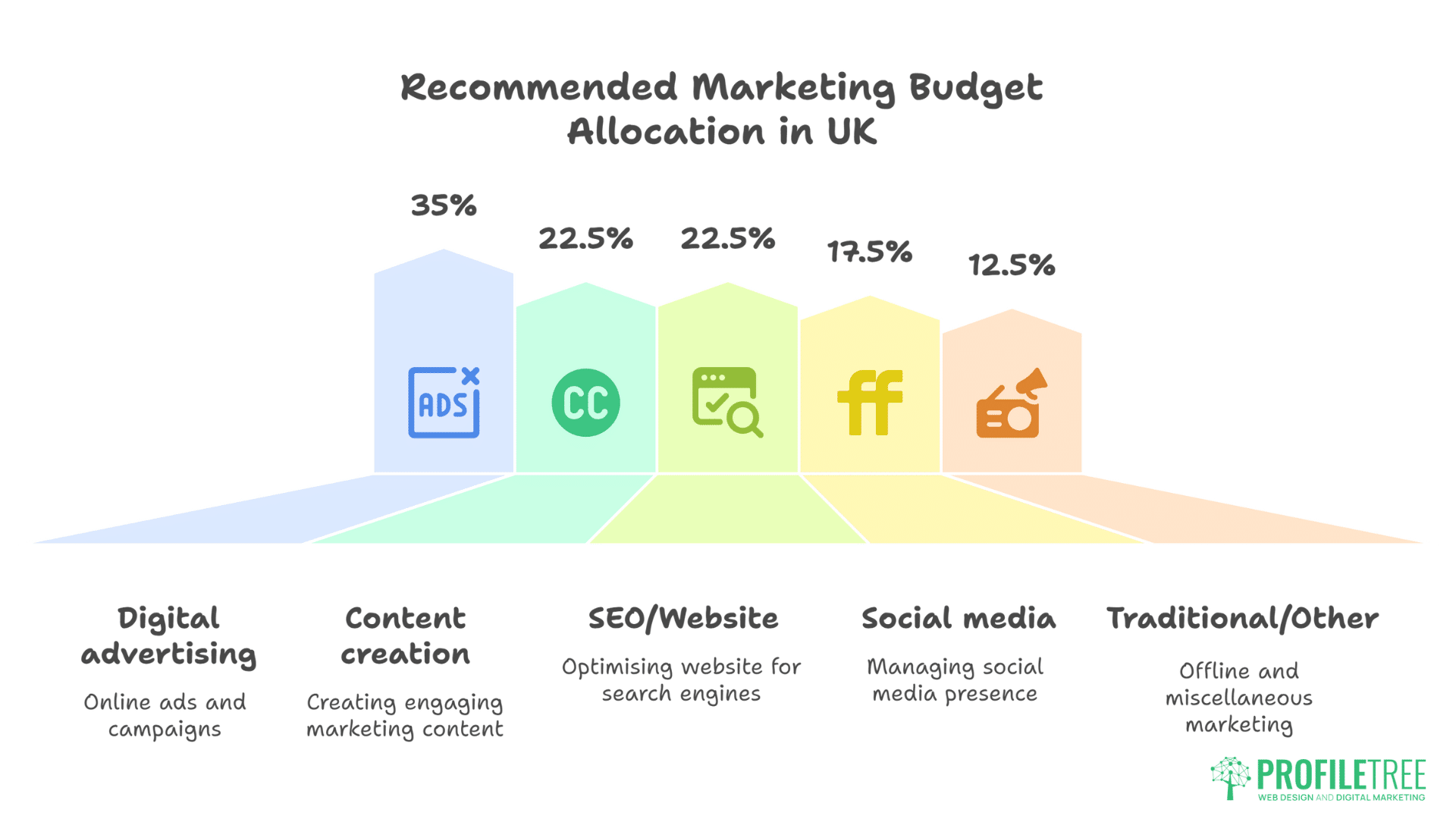
Recommended UK budget allocation:
| Channel | Percentage | Approximate Annual Spend |
| Digital advertising | 30-40% | £900-4,000 |
| Content creation | 20-25% | £600-2,500 |
| SEO/Website | 20-25% | £600-2,500 |
| Social media | 15-20% | £450-2,000 |
| Traditional/Other | 10-15% | £300-1,500 |
European Market (Euro) Dynamics
European small businesses navigate diverse markets with varying cost structures and cultural expectations. Average European SMEs invest €4,000-15,000 annually, with significant variation between Western and Eastern European markets. (Indicative range; refer to European Commission SME performance reports for sector-specific data.)
Digital advertising costs across Europe average €0.40-1.50 per click on Google Ads, with Northern European markets commanding premium prices. (Google Ads cost-per-click benchmarks by country; figures reflect 2024 averages across mixed industries.) German and French markets particularly demand higher investment due to market size and competition levels.
Language localisation multiplies European marketing costs. Translating content, adapting campaigns, and managing multilingual customer service adds 20-40% to baseline marketing budgets. Irish businesses targeting both English and Irish-speaking audiences understand this complexity.
GDPR compliance affects digital marketing strategies significantly. Cookie consent requirements reduce tracking capabilities. Email marketing faces stricter consent requirements. These regulations level playing fields but require careful campaign structuring.
Cross-border considerations within the EU create opportunities and challenges. Single market access enables broader reach without customs barriers. However, cultural adaptation, payment preferences, and shipping logistics require additional investment.
Regional funding opportunities offset marketing costs for European SMEs. EU structural funds, national grants, and regional development programmes often include marketing support. Irish businesses particularly benefit from Enterprise Ireland marketing assistance.
Market fragmentation requires careful budget allocation. A €10,000 budget targeting one country deeply outperforms scattered investment across multiple markets. Focus strategies yield better returns than broad, shallow approaches.
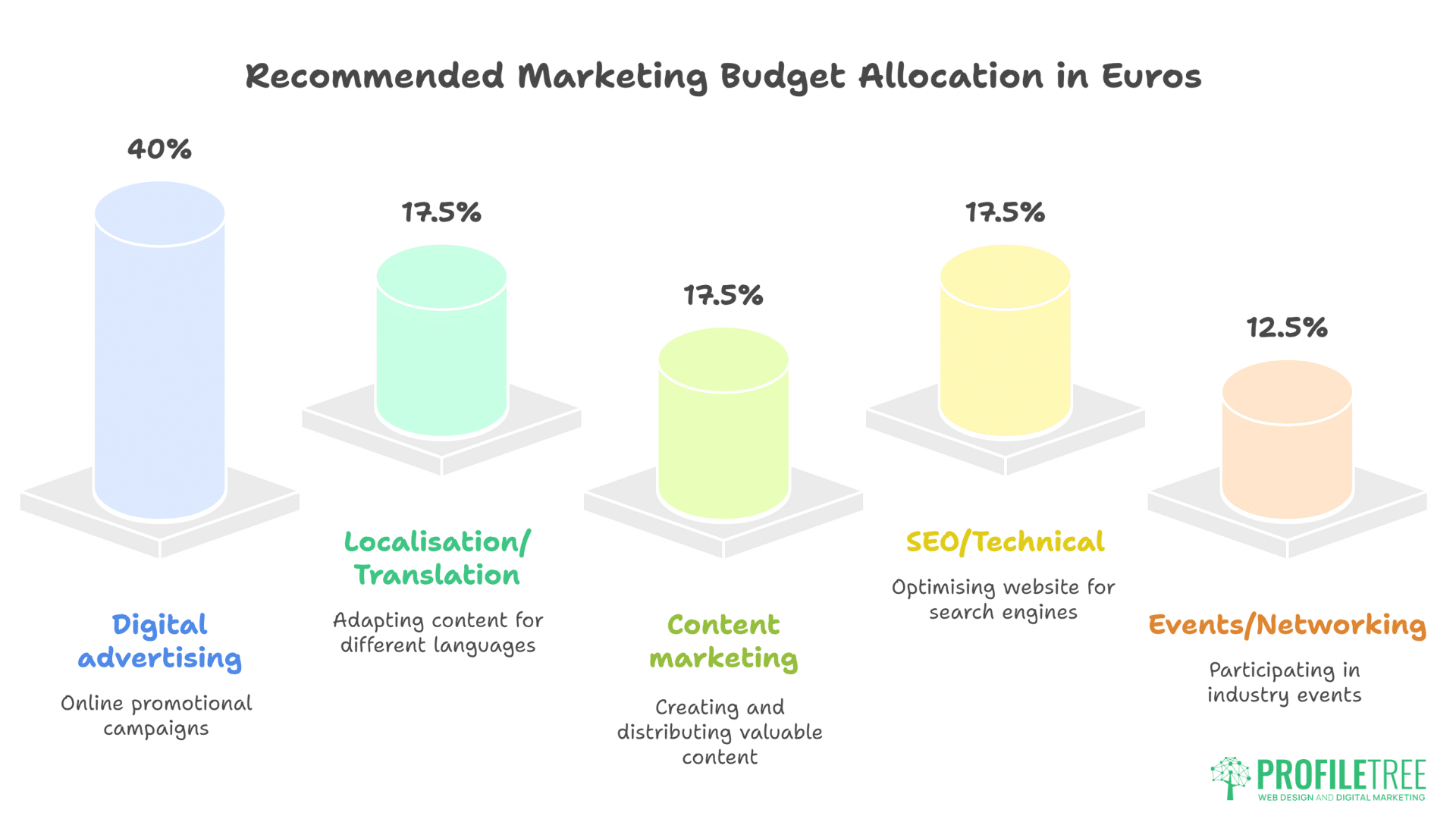
Recommended Euro budget allocation:
| Channel | Percentage | Approximate Annual Spend |
| Digital advertising | 35-45% | €1,400-6,750 |
| Localisation/Translation | 15-20% | €600-3,000 |
| Content marketing | 15-20% | €600-3,000 |
| SEO/Technical | 15-20% | €600-3,000 |
| Events/Networking | 10-15% | €400-2,250 |
US Market (Dollar) Investment Requirements
American small businesses operate in the world’s most competitive marketing environment, demanding strategic budget allocation. US SMEs typically spend $5,000-20,000 annually, with successful businesses often investing significantly more.
Digital advertising premiums reflect market competitiveness. Google Ads average $1-3 per click nationally, reaching $50+ for competitive keywords. (WordStream’s PPC benchmark data; legal, finance, and insurance verticals drive the upper range.) Facebook advertising costs $0.50-2.00 per click, with precise targeting essential for efficiency.
Content marketing investment drives American digital strategies. Quality blog content costs $100-500 per article. Video production ranges from $1,000 to 10,000 per video. These investments generate long-term organic traffic, offsetting paid advertising costs.
Marketing technology stack requirements add complexity. CRM systems ($50-300 monthly), email automation ($50-500 monthly), and analytics tools ($100-1,000 monthly) become essential for competitive operation. Integration costs multiply platform expenses.
Geographic scale affects US marketing budgets dramatically. Local businesses might thrive with $5,000 annual budgets. National ambitions require $50,000+ for meaningful impact. State-by-state variation creates 50 distinct markets within one country.
Aggressive competition demands differentiation investment. Saturated markets require creative approaches, superior execution, or significant spend to achieve visibility. Small businesses must choose battles carefully, focusing resources where competitive advantages exist.
Sales tax variations complicate budget planning. Marketing services face different tax treatments across states. Digital advertising taxes emerging in certain states add unexpected costs.
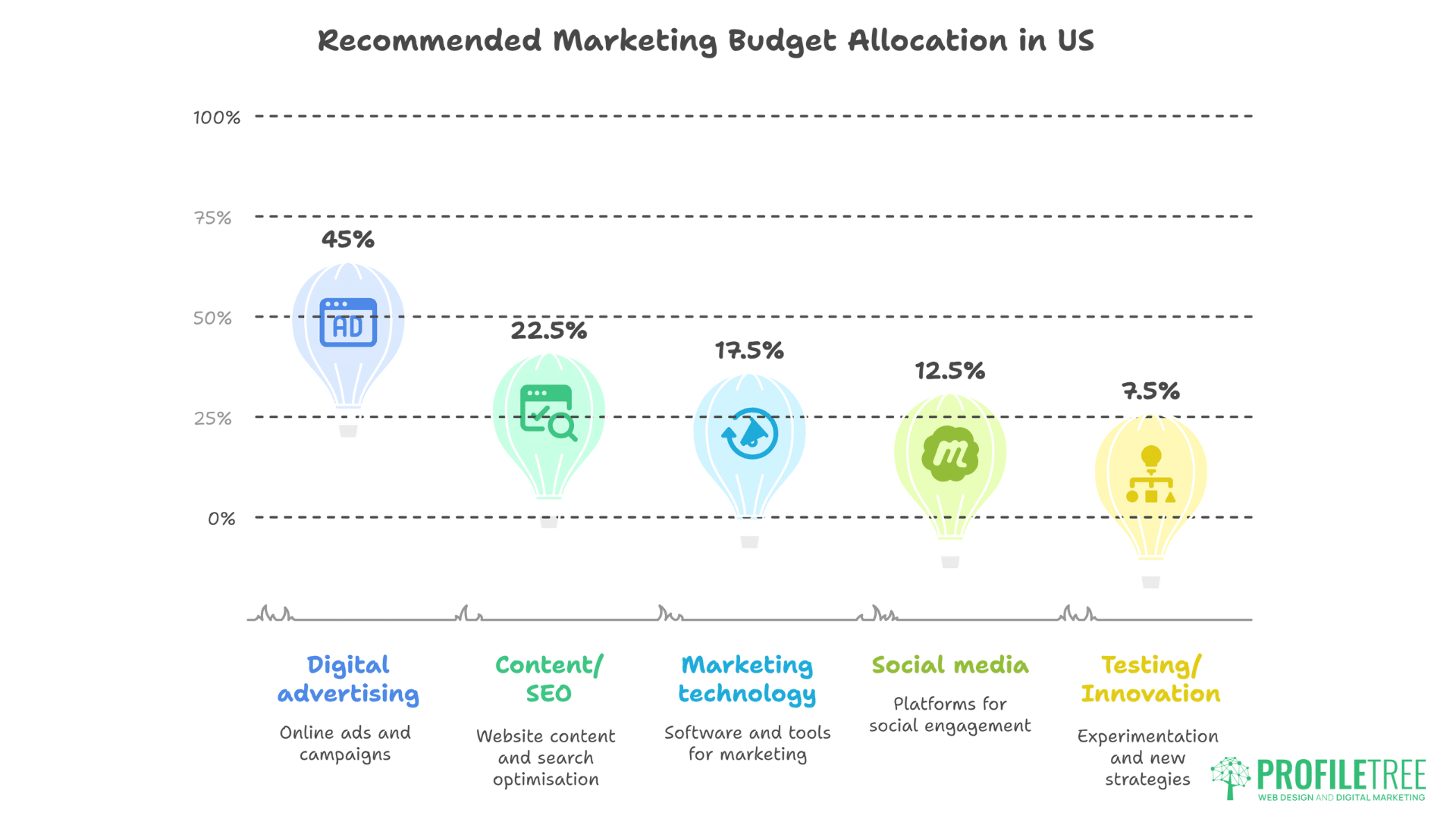
Recommended USD budget allocation:
| Channel | Percentage | Approximate Annual Spend |
| Digital advertising | 40-50% | $2,000-10,000 |
| Content/SEO | 20-25% | $1,000-5,000 |
| Marketing technology | 15-20% | $750-4,000 |
| Social media | 10-15% | $500-3,000 |
| Testing/Innovation | 5-10% | $250-2,000 |
Digital vs Traditional Marketing Allocation
The digital-traditional split varies by target audience, industry, and geographic focus. B2B companies typically allocate 70-80% of their marketing budget to digital channels, reflecting professional audiences’ online research habits. LinkedIn advertising, search marketing, and content marketing dominate B2B strategies.
B2C businesses balance 60-40 digital-traditional splits depending on demographics. Younger audiences demand 80%+ digital focus. Older demographics still respond to traditional channels, particularly local newspapers and radio.
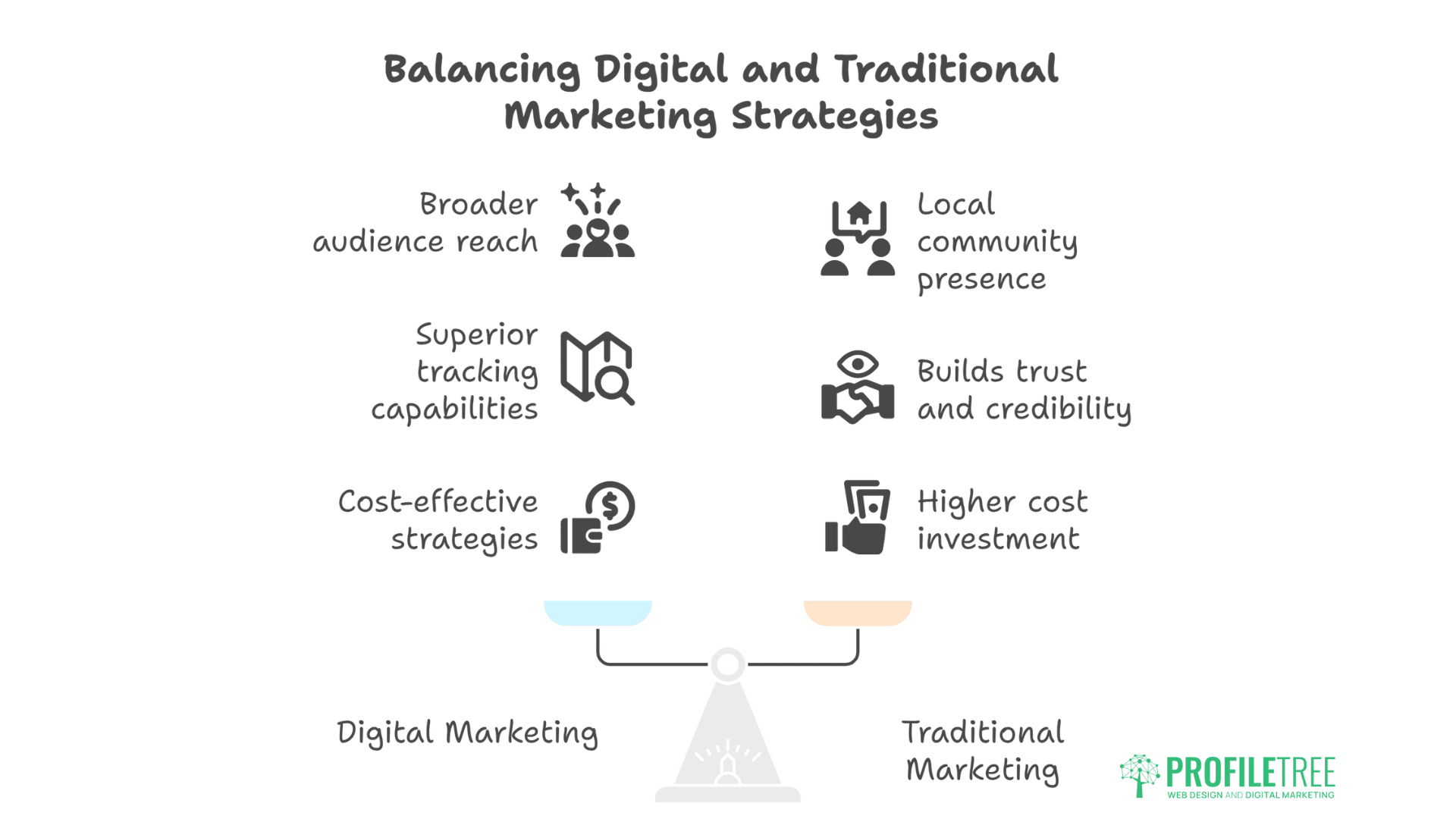
Local businesses benefit from hybrid approaches. Digital provides measurable results and precise targeting. Traditional marketing builds community presence and trust. Belfast restaurants combining Instagram marketing with local press coverage outperform single-channel strategies.
Print advertising still delivers value for specific audiences. Trade publications reach niche B2B audiences effectively. Local newspapers connect with older consumers. Magazine advertising suits luxury brands targeting affluent demographics.
Radio advertising offers unique advantages for time-sensitive promotions. Drive-time slots reach commuter audiences. Local stations provide geographic targeting. Podcast advertising emerges as a modern radio alternative.
Television advertising remains powerful but expensive. Local cable advertising costs £500-5,000 per campaign. National advertising exceeds most SME budgets. Connected TV advertising offers a compromise between reach and cost.
Digital channels provide superior tracking and optimisation capabilities. Real-time performance data enables rapid adjustment. Attribution modelling clarifies customer journeys. Testing capabilities improve campaign efficiency continuously.
Growth Stage Budget Adjustments
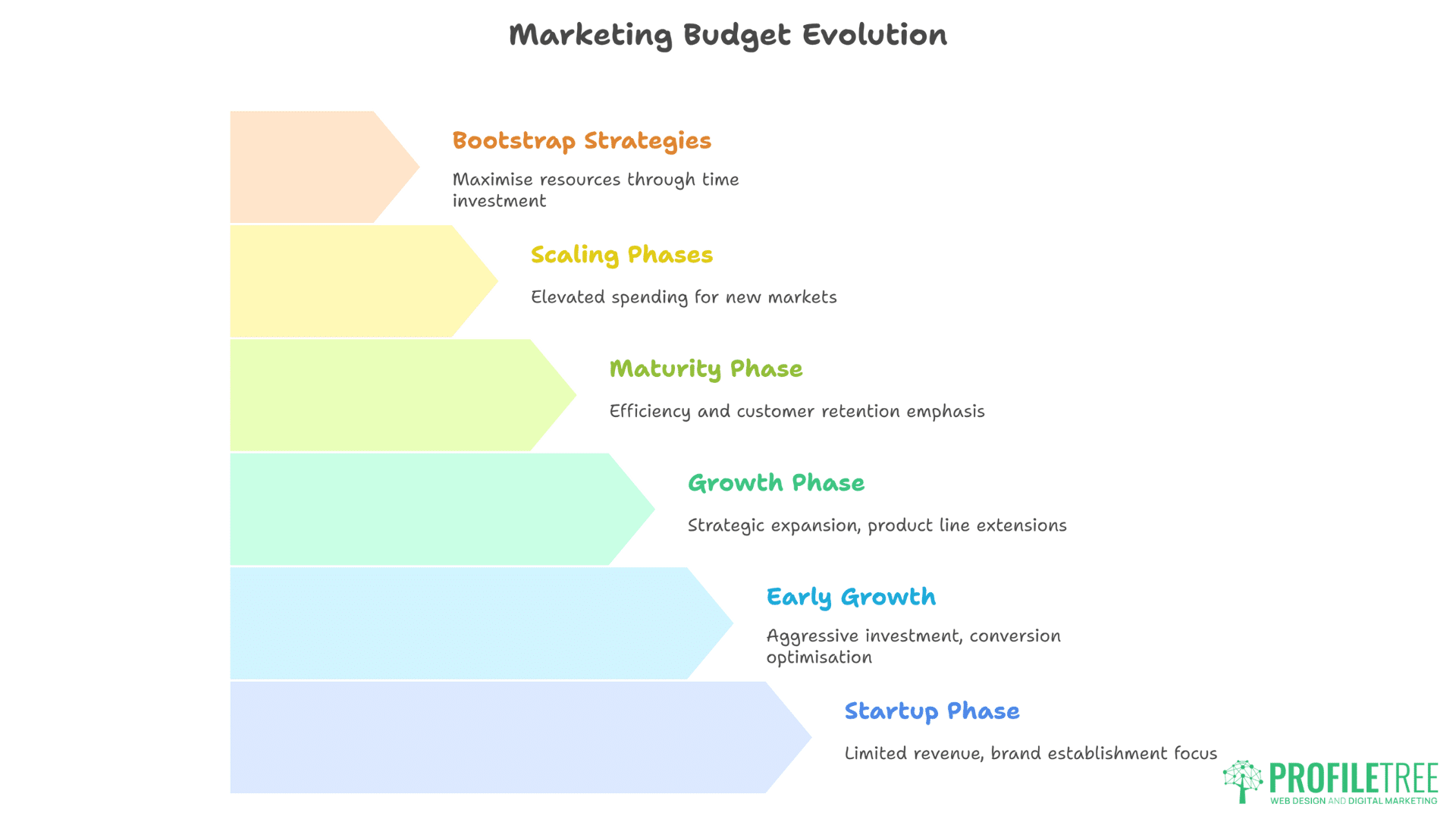
The business lifecycle stage fundamentally determines appropriate marketing investment levels and strategies. Understanding growth stage requirements prevents under- or over-investment mistakes.
Startup phase businesses (0-1 year) face unique challenges. Limited revenue prevents percentage-based budgeting. Investment focuses on brand establishment and initial customer acquisition. £1,000-5,000 seed marketing budgets typically support launch activities.
Early growth stage (1-3 years) demands aggressive investment. Customer acquisition costs exceed lifetime value initially. 15-25% of revenue investment builds market presence. Focus shifts from awareness to conversion optimisation.
Growth phase (3-5 years) enables strategic expansion. Established customer bases provide stable revenue for reinvestment. 10-15% revenue allocation supports geographic expansion or product line extensions.
Maturity phase (5+ years) emphasises efficiency and retention. Marketing spend stabilises at 5-10% of revenue. Investment shifts toward customer retention, upselling, and competitive defence.
Scaling phases require budget surges. Entering new markets demands 6-12 months of elevated spending. Product launches need concentrated investment periods. Geographic expansion multiplies baseline requirements.
Seasonal businesses adjust budgets cyclically. Tourism operators invest heavily pre-season. Retailers increase spending before peak periods. Service businesses maintain steady investment throughout the year.
Bootstrap strategies maximise limited resources through time investment. Content marketing, social media engagement, and networking replace paid advertising. Sweat equity substitutes for financial investment during the early stages.
ROI Expectations and Measurement
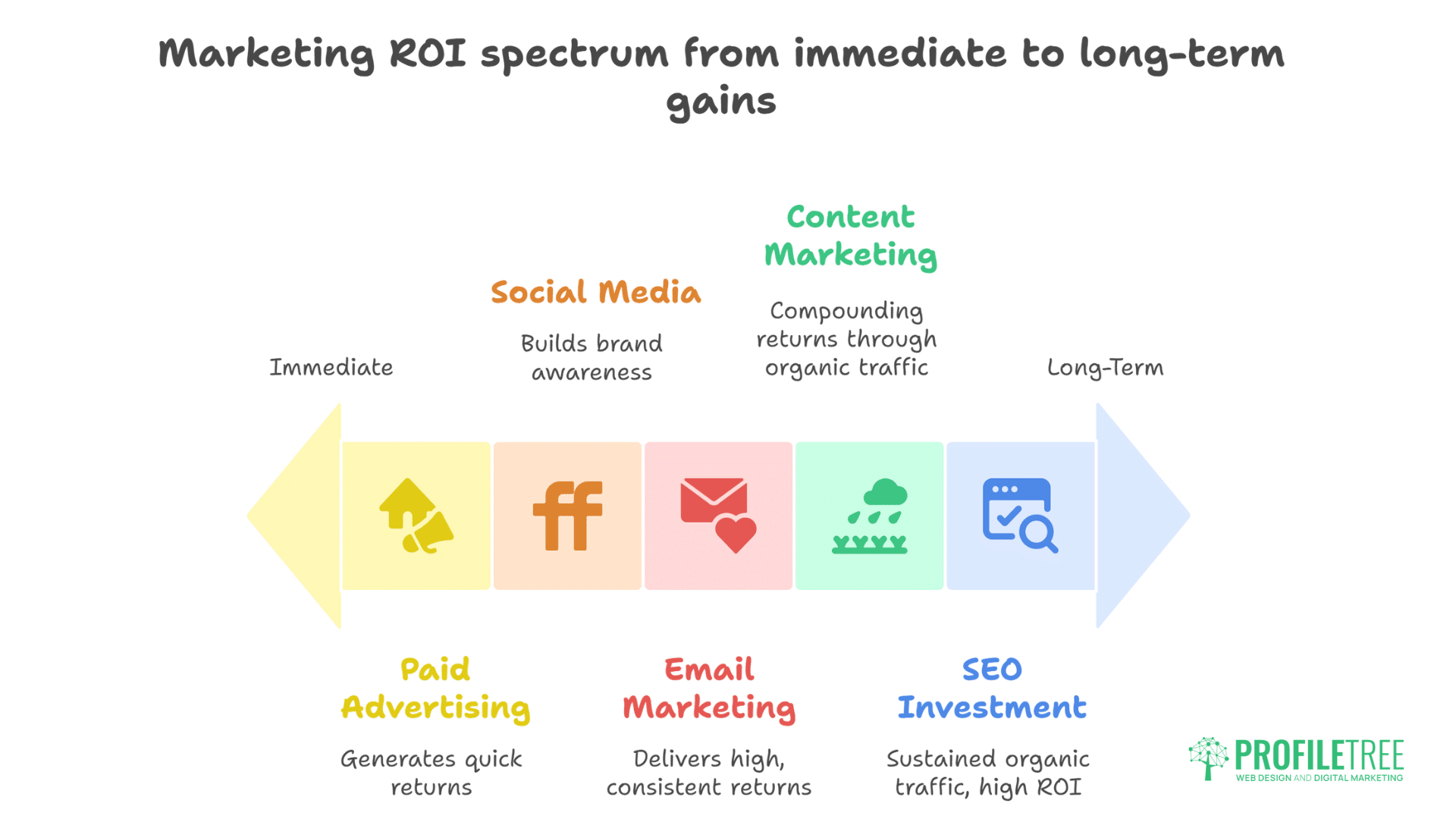
Marketing ROI varies dramatically by channel, timeline, and measurement methodology. Immediate returns from paid advertising typically generate 2:1 to 5:1 ROI. Exceptional campaigns achieve 10:1 or higher. Poor targeting produces negative returns.
Content marketing ROI develops over time. Initial investment shows minimal returns. Year two typically reaches break-even. Year three forward generates compounding returns through organic traffic growth. Content marketing strategies require patience but deliver sustainable results.
SEO investment follows similar delayed gratification patterns. Six months minimum before significant results. 12-18 months for competitive keywords. Long-term ROI often exceeds 10:1 through sustained organic traffic. Professional SEO services accelerate the timeline but require an upfront investment.
Social media ROI proves difficult to measure directly. Brand awareness, customer service, and community building provide indirect value. Direct sales attribution typically shows 1:1 to 3:1 returns. Social media marketing services help quantify and improve these metrics.
Email marketing consistently delivers the highest ROI, averaging £42 return per £1 invested, according to the DMA’s Email Benchmarking Report. List quality matters more than size. Segmentation and personalisation multiply effectiveness.
Attribution modelling reveals true marketing impact. Last-click attribution undervalues awareness campaigns. Multi-touch attribution provides realistic contribution analysis. Customer lifetime value calculations justify higher acquisition costs.
Measurement infrastructure requires investment. Analytics tools, tracking systems, and reporting processes cost money but enable optimisation. Without measurement, marketing becomes expensive guesswork.
Cost-Effective Strategies for Limited Budgets
Small marketing budgets demand creative resource allocation. Content marketing offers exceptional value for time-rich, cash-poor businesses. One well-researched guide generates traffic for years. Video marketing extends impact through engagement and shareability.
Local SEO delivers disproportionate returns for geographic businesses. Google My Business optimisation costs nothing but time. Local citations and reviews build authority without advertising spend. Belfast businesses competing nationally benefit from local strength.
Partnership marketing multiplies resources through collaboration. Joint ventures, cross-promotions, and referral programmes work from existing relationships. Supplier co-op programmes provide additional funding.
Guerrilla marketing tactics generate attention without traditional spend. Creative stunts, viral content, and community involvement build awareness economically. Success requires creativity over capital.
Email marketing remains incredibly cost-effective. Email platforms cost £20-200 monthly. Content creation requires time but minimal cash. Automation multiplies efficiency without adding cost.
Organic social media builds audiences without advertising spend. Consistent posting, engagement, and community building create loyal followings. Platform algorithms reward quality engagement over paid reach.
Digital training programmes teach internal marketing capabilities. Initial investment in training provides ongoing returns through improved execution. DIY approaches become viable with proper education.
Market Entry Strategies by Geographic Target
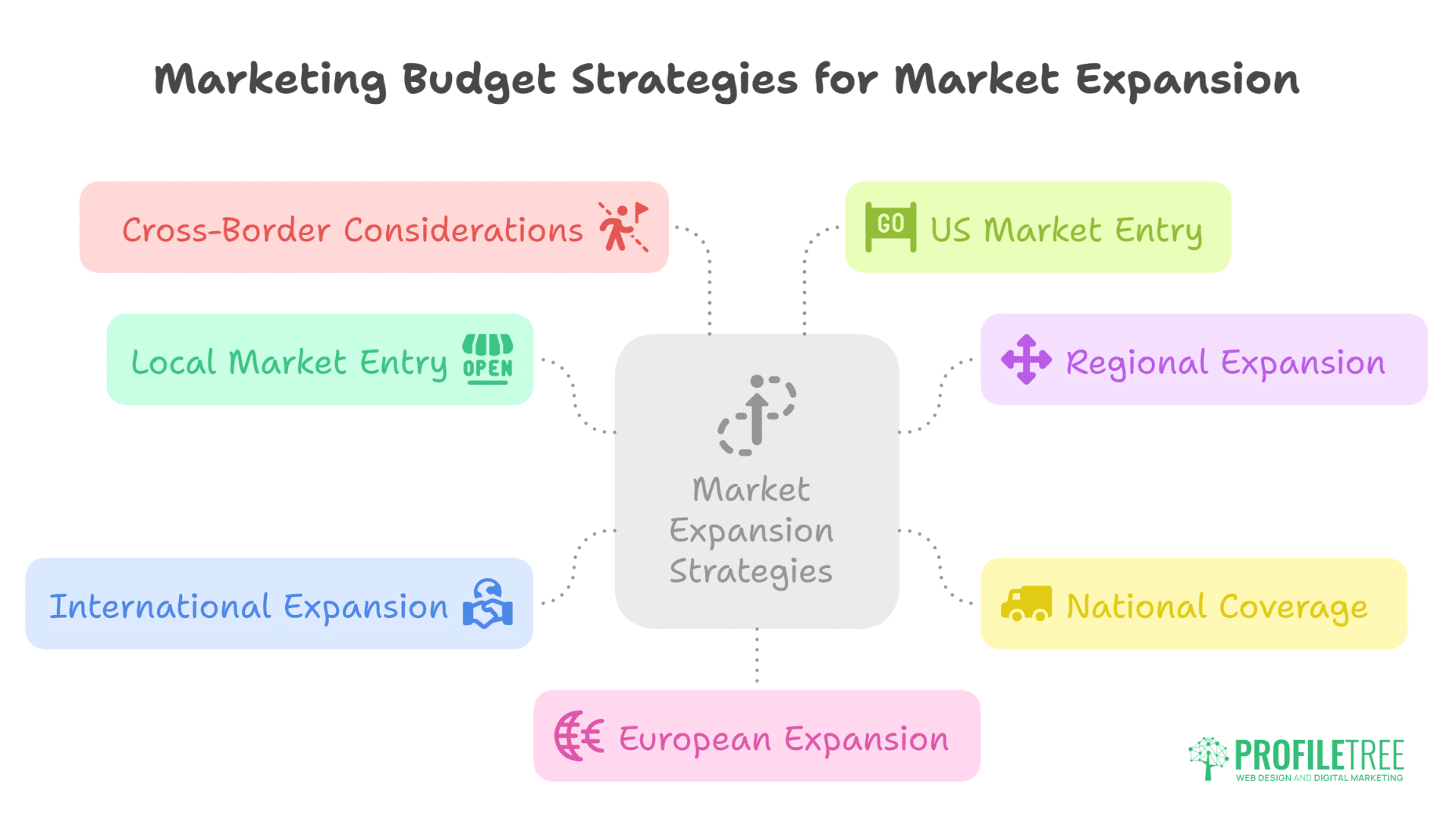
Geographic expansion strategies require different investment approaches and budget considerations. Understanding market entry requirements prevents costly over- or under-investment.
Local market entry (single city/region) requires concentrated investment. £500-2,000 monthly establishes local presence. Focus on local SEO, community engagement, and targeted advertising within a 10-mile radius.
Regional expansion (multiple cities/counties) multiplies requirements. Each new market needs 70% of the original market investment. Phased rollouts prevent resource dilution. Northern Ireland businesses expanding to Dublin face similar costs to the original Belfast launch.
National coverage demands strategic choices. Blanket coverage exceeds most SME budgets. City-by-city expansion provides controlled growth. Digital-first strategies enable broader reach economically.
International expansion introduces complexity beyond simple marketing budget multiplication. Currency hedging, cultural adaptation, and legal compliance add 30-50% to baseline costs. Language localisation alone can double content expenses.
Cross-border considerations between the UK and Ireland create unique opportunities. Shared language reduces barriers. Cultural similarities simplify messaging. However, currency differences and regulatory variations require careful planning.
US market entry from a UK/European base requires substantial investment. Minimum $20,000 annually for meaningful impact. Time zone differences demand automated systems or local resources. Cultural adaptation proves more significant than language translation.
European expansion from a UK base faces post-Brexit complexities. Each country represents a distinct market. EU digital services taxes affect advertising costs. GDPR compliance adds technical requirements.
Small Business Marketing Budget Allocation Frameworks
The 70-20-10 rule provides baseline allocation guidance. 70% proven channels, 20% emerging opportunities, 10% experimental initiatives. This framework balances stability with innovation.
Customer acquisition cost (CAC) modelling determines sustainable spend levels. Calculate an acceptable CAC based on customer lifetime value. Allocate budget proportionally across channels based on CAC efficiency.
Marketing funnel allocation splits the marketing budget by customer journey stage. 40% awareness, 30% consideration, 20% conversion, 10% retention provides a balanced approach. Adjust based on funnel weaknesses.
The channel performance framework allocates budget based on historical ROI. High-performing channels receive increased investment. Underperforming channels face reduction or elimination. Regular rebalancing maintains efficiency.
Seasonal adjustment models front-load investment before peak periods. Retail businesses invest 40% of their annual budget in Q4. Tourism operators concentrate their spending in the pre-season. Service businesses maintain steadier allocation.
The test-and-scale approach starts with minimum viable budgets. £100-500 monthly tests validate channels. Successful tests receive graduated increases. Failed tests terminate quickly.
Common Budget Mistakes to Avoid
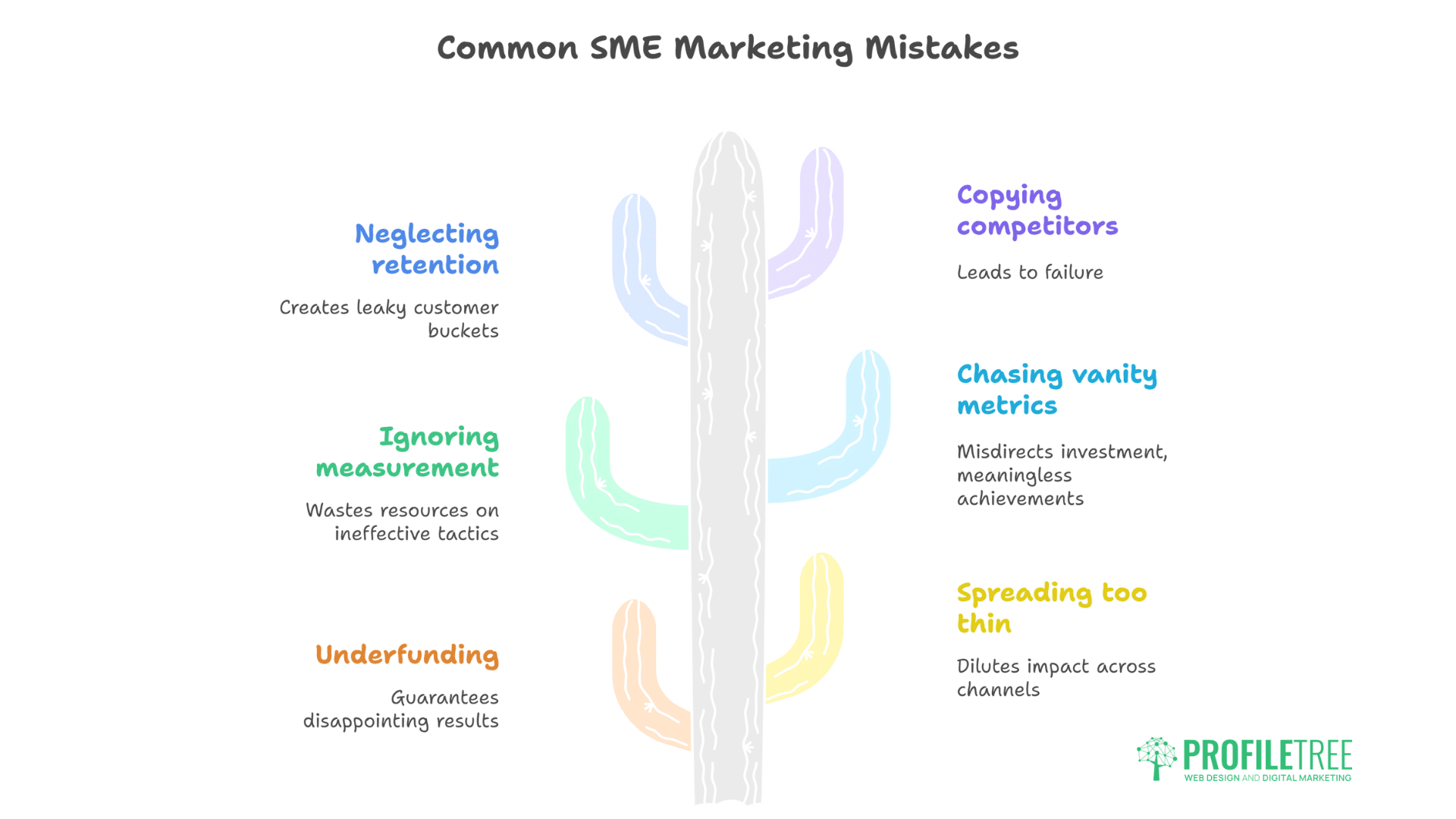
Understanding typical budget allocation errors helps small businesses avoid expensive mistakes. These common pitfalls often undermine otherwise sound marketing strategies.
Underfunding marketing represents the most common SME mistake. Expecting significant results from token investment guarantees disappointment. Minimum viable budgets vary by industry but typically start at £500 monthly.
Spreading the budget too thin dilutes the impact across channels. Better to dominate one channel than dabble in five. Focus investment where target audiences concentrate.
Ignoring measurement wastes limited resources on ineffective tactics. Without tracking, optimisation becomes impossible. Invest in analytics before scaling spend.
Chasing vanity metrics misdirects investment toward meaningless achievements. Social media followers who don’t engage provide no value. Focus on metrics tied to business outcomes.
Neglecting retention while pursuing acquisition creates leaky buckets. Existing customer marketing costs 5x less than new acquisition. Balance growth with retention investment.
Copying competitor strategies without understanding context leads to failure. What works for established brands might bankrupt startups. Develop strategies aligned with your specific situation.
Seasonal misalignment wastes budget during low-demand periods. Investing heavily off-season depletes resources for peak times. Align spending with customer buying patterns.
Currency and Cross-Border Considerations
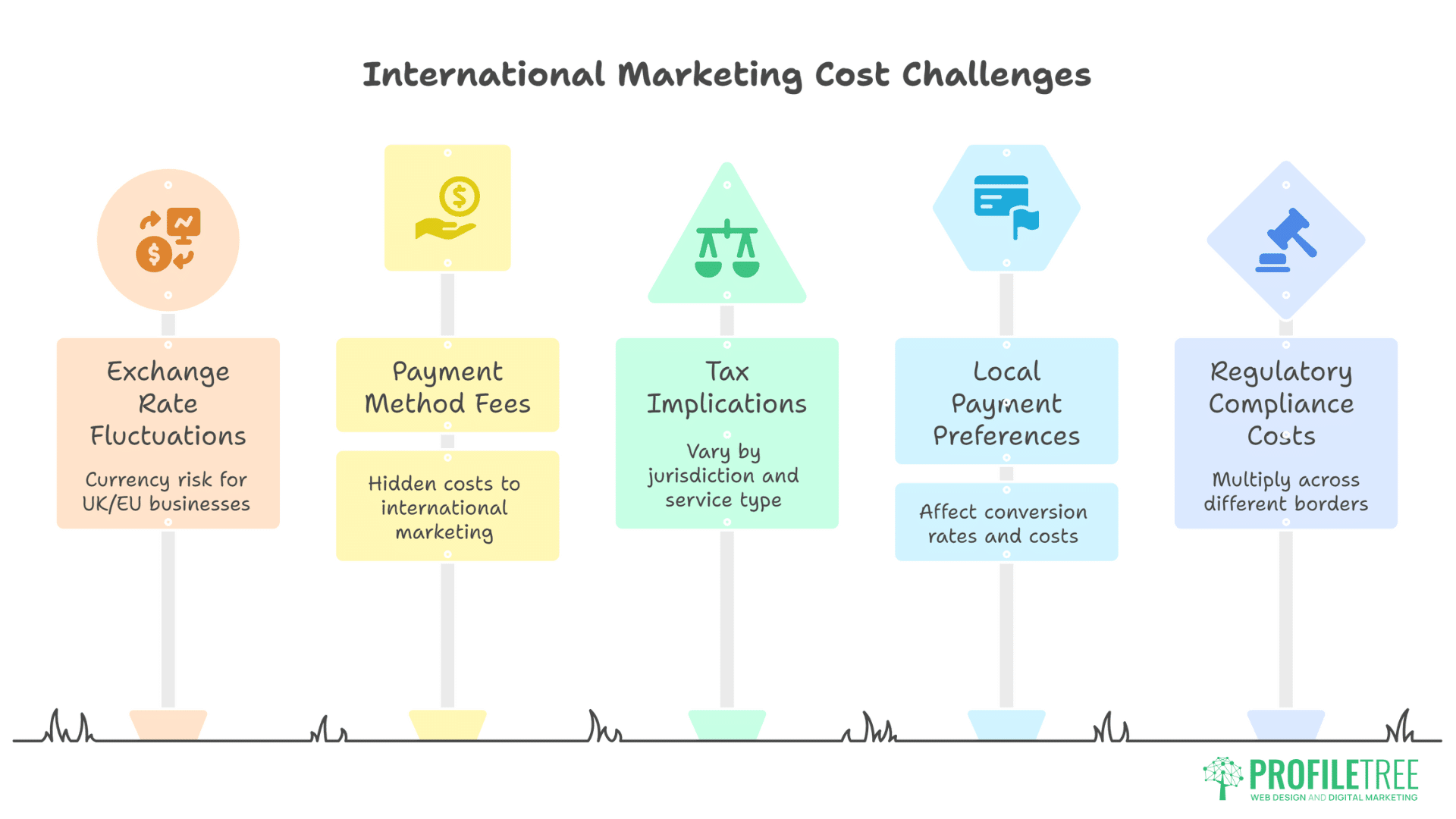
International marketing introduces additional complexity beyond simple budget scaling. Currency and regulatory factors significantly impact cross-border marketing investment requirements.
Exchange rate fluctuations affect international marketing costs significantly. USD-denominated advertising platforms create currency risk for UK/EU businesses. Budget 10% buffer for currency movements.
Payment method fees add hidden costs to international marketing. Credit card processing, wire transfers, and currency conversion fees accumulate. Factor 2-3% additional costs for cross-border payments.
Tax implications vary by jurisdiction and service type. Digital services taxes in certain European countries add 2-3% to advertising costs. VAT treatment differs between B2B and B2C transactions.
Local payment preferences affect conversion rates and costs. UK customers expect pound pricing. Europeans prefer euro transactions. Payment gateway fees vary by currency and method.
Regulatory compliance costs multiply across borders. GDPR in Europe, CCPA in California, and various national regulations require legal review and technical implementation.
Time zone management for international campaigns requires additional resources. 24/7 monitoring and response capabilities increase operational costs. Automation becomes essential for efficiency.
Professional Service Integration
Strategic marketing investment often benefits from professional guidance. Digital strategy consultation identifies optimal marketing budget allocation based on business objectives and market analysis.
Website development represents a foundational marketing investment. Professional sites cost £2,000-10,000 but provide platforms for all digital marketing efforts.
AI-enhanced marketing services multiply marketing budget efficiency through automation and optimisation. Initial setup costs deliver ongoing returns through improved performance.
“Marketing budgets should reflect growth ambitions rather than industry averages,” advises Ciaran Connolly, founder of ProfileTree. “We’ve seen businesses transform through strategic 15% investment while others waste 5% on unfocused tactics.”
Professional training programmes build internal capabilities, reducing long-term agency dependence. Investment in skills development provides compounding returns.g long-term agency dependence.
Scaling Strategies for Growth
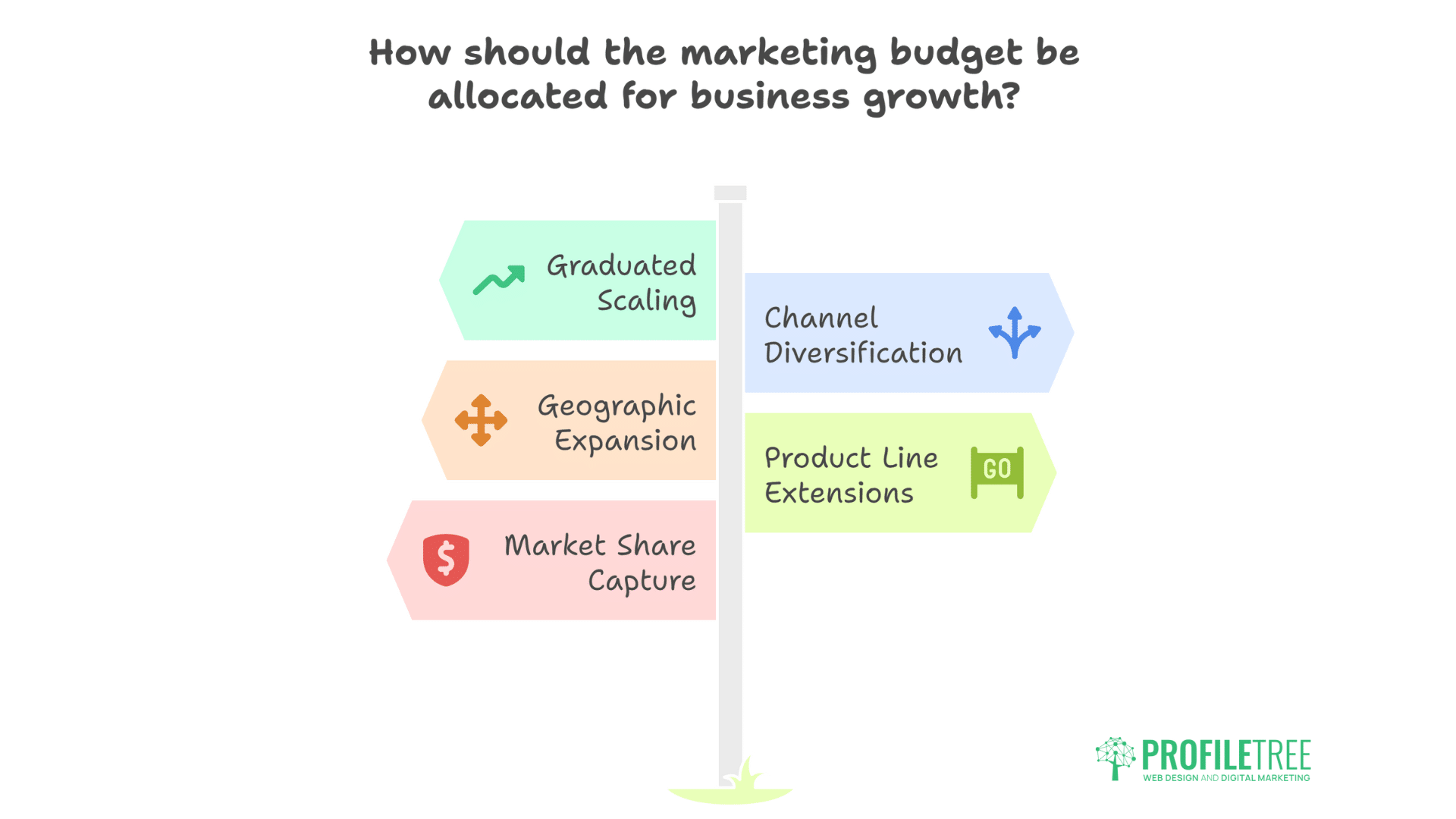
Business growth requires systematic budget scaling approaches that align investment with expansion objectives. Strategic scaling prevents resource allocation mistakes during growth phases.
- Graduated scaling increases the budget proportionally with revenue growth. Start with a 10% investment, scale to 15% during growth, and stabilise at 7-8% at maturity.
- Channel diversification reduces single-point dependency. Begin with one core channel, add complementary channels at 20% of primary investment.
- Geographic expansion requires front-loaded investment. Budget 6-12 months of aggressive spending for new market entry.
- Product line extensions need dedicated launch budgets. Allocate 20-30% of projected first-year revenue for new product marketing.
- Market share capture during competitor weakness demands budget flexibility. Maintain reserve funds for opportunity investment.
Taking Action: Your Marketing Budget Planning
Calculate your current revenue and growth targets. Determine acceptable customer acquisition costs based on lifetime values. Identify primary target markets and channels where they concentrate.
Assess internal capabilities honestly. Decide between DIY execution, professional services, or hybrid approaches. Factor in learning curves and opportunity costs.
Start with focused investment in proven channels. Test new opportunities with small budgets. Scale successful tests gradually while maintaining measurement discipline.
Review and adjust quarterly based on performance data. A digital marketing strategy built around realistic budget allocation is far more likely to deliver results than one pegged to industry averages. Small business marketing budgets should evolve with business growth and market conditions. Flexibility and responsiveness beat rigid adherence to initial plans.
Marketing investment drives growth. Underfunding it to save money typically costs more through missed opportunities. Invest strategically, measure consistently, and optimise continuously for sustainable success.
Frequently Asked Questions
What’s the minimum marketing budget for a small business?
The absolute minimum starts at £300-500 monthly for local businesses. National ambitions require £1,000+ monthly. International scope demands £5,000+ monthly for meaningful impact.
Should startups spend more on marketing than established businesses?
Yes, startups typically invest 15-25% of funding or revenue versus 5-10% for established businesses. Market entry costs exceed maintenance costs significantly.
How do I know if my marketing spend is working?
Track customer acquisition cost, lifetime value, and ROI by channel. If CAC exceeds lifetime value or ROI falls below 2:1, an adjustment is needed. Monthly performance reviews identify trends.
Is it better to hire an agency or build internal capabilities?
This depends on budget and growth stage. Agencies provide immediate expertise but carry ongoing costs. Internal capabilities require upfront investment but provide long-term control. Hybrid approaches often work best.
How should seasonal businesses budget for marketing?
Concentrate 60-70% of the annual budget during 3-4 months before peak season. Maintain minimal presence off-season. Build reserves during peak for next year’s marketing.
What if I can’t afford traditional marketing budget percentages?
Focus on time-intensive, cost-minimal strategies: content marketing, SEO, social media engagement, and networking. Bootstrap through sweat equity until revenue supports financial investment.