
Fair Use Copyright Laws: Essential Guide for Digital Marketers
Table of Contents
Copyright law presents ongoing challenges for business owners and marketing professionals. When creating digital content, designing websites, or producing video marketing campaigns, understanding fair use copyright becomes essential for protecting your business while maintaining creative freedom.
Fair use copyright provides legal exceptions that allow limited use of copyrighted material without permission from rights holders. For digital marketing agencies like ProfileTree, which work across web design, content creation, video production, and SEO services, this knowledge protects both the agency and clients from costly legal disputes.
This guide addresses the practical applications of fair use in digital marketing, from social media campaigns to website content, video production, and AI-generated materials.
Understanding Fair Use Copyright
Fair use copyright functions as a legal doctrine within copyright law, creating flexibility that prevents restrictions from contradicting freedom of expression and creativity. This principle allows people to use copyrighted material without seeking permission from the author, but only under specific, limited circumstances.
The law deliberately avoids defining exact cases where copyrighted material can be used freely. Instead, it establishes measurements to judge whether a specific use qualifies fairly. Every day fair use situations include commentary, criticism, education, news reporting, and parody.
For digital marketing professionals, fair use matters significantly because the industry involves substantial intellectual property usage. Web designers analyse competitor sites, content marketers quote industry research, video producers incorporate trending clips for commentary, and social media managers share news articles with audiences.
“Understanding fair use isn’t optional for modern marketing agencies—it’s fundamental to operating ethically and protecting our clients,” says Ciaran Connolly, Director of ProfileTree. We’ve built our practice around creating original content, but knowing when and how to reference existing works legitimately gives our clients competitive advantages whilst maintaining legal compliance.
Fair use particularly matters for agencies offering AI implementation services. AI system training data often includes copyrighted material, and outputs may reference existing works. Understanding these boundaries helps businesses adopt AI responsibly while avoiding legal complications.
The Four Factors: Fair Use Copyright Assessment
Judging fair use copyright proves complex because each case differs substantially. The law provides guidelines through four measurement scales that evaluate whether use qualifies as fair. These factors are purpose, nature, amount, and effect.
Any case requires evaluation across all four scales, not just one. Understanding each factor in depth helps marketing professionals, business owners, and agency teams make informed decisions about content usage.
Purpose and Character of Use
This factor examines what the copyrighted work is used for. Purposes qualifying as fair use typically involve educational, non-commercial activities that enrich and add value to the original work.
For educational and non-profit purposes, fair use is generally supported. Commercial activities and entertainment purposes oppose it. If the purpose denies credit to the original author, that contradicts fair use principles.
Digital Marketing Example (Likely Fair Use): A digital marketing training course uses screenshots from various brand websites to teach web design principles and analyse user experience patterns. The educational, transformative nature supports fair use.
Digital Marketing Example (Unlikely Fair Use): A web design agency copies a competitor’s entire homepage layout and colour scheme for a client website without adding transformative elements or new expression.
This becomes trickier when considering purposes like criticism or parody. Writing a blog post about video marketing trends might require including clips from commercial campaigns. Since analysing these examples would be impossible without showing them, excerpts could constitute fair use for critical commentary.
Nature of the Copyrighted Work
The nature of the work used significantly affects fair use evaluation. Two crucial factors reflect the work’s nature: publication status and factuality.
Highly creative or unpublished material receives stronger protection and opposes fair use more strongly than factual, published works.
Digital Marketing Example (More Likely Fair Use): A content marketing article references published statistics from an industry report to support claims about digital marketing trends.
Digital Marketing Example (Less Likely Fair Use): A video production company uses substantial portions of an unpublished screenplay in promotional materials without permission.
Understanding this factor helps agencies providing SEO services build content strategies. Citing published research and statistics strengthens articles while staying within fair use boundaries, whereas incorporating creative works requires more careful consideration or licensing.
Amount and Substantiality Used
This scale evaluates how much copyrighted material was used or quoted. Copying the entire work or large portions counts against fair use. Additionally, using the core or most significant part of a piece may count against fair use even if the portion is relatively small.
Digital Marketing Example (More Likely Fair Use): A blog post quotes two sentences from a lengthy research paper to support a point about website optimisation techniques.
Digital Marketing Example (Less Likely Fair Use): A video marketing campaign uses the entire chorus and hook from a popular song as background music throughout a commercial advertisement.
For video production services, this factor proves particularly important. Short clips for analysis or commentary might qualify as fair use, whilst extended sequences likely require licensing.
Effect on the Market or Value
This factor evaluates fair use from an economic perspective, considering how using copyrighted material affects the market for the original work.
If use might replace the original work’s sales or involves making numerous copies that harm the market, this opposes fair use. This factor often receives the most weight in legal determinations.
Digital Marketing Example (More Likely Fair Use): Creating a parody video of a famous commercial for social media marketing purposes. The parody wouldn’t realistically compete with or reduce demand for the original advertisement.
Digital Marketing Example (Unlikely Fair Use): Using stock photography without licensing because doing so eliminates the need for clients to purchase licenses, directly impacting the photographer’s revenue.
ProfileTree’s approach to content creation prioritises originality whilst respecting intellectual property. When our web design team needs reference images, we use properly licensed stock photography or create original visuals. Our video production service licenses music appropriately or uses royalty-free alternatives.
Fair Use Examples in Digital Marketing Contexts
Understanding fair use through practical examples helps marketing professionals make better decisions. The scenarios below illustrate how these principles apply across various digital marketing activities.
Commentary and Criticism in Content Marketing
Commentary discusses opinions about creative works—books, films, poems, articles, or other media. Criticism interprets works or passes judgment on them.
Both activities may require quoting or sampling the work being criticised. This use generally qualifies as fair.
Practical Application: A digital marketing blog analysing competitor video marketing campaigns might include screenshots and brief clips to illustrate specific techniques. The transformative, critical nature supports fair use.
For ProfileTree’s content marketing services, we create original analyses while referencing industry examples appropriately. Our blog posts examining web design trends, SEO techniques, or video marketing strategies incorporate examples that educate readers while respecting copyright boundaries.
Fair Use Copyright for Education and Research
Educational settings allow teachers and trainers to regularly use copyrighted material samples such as books, films, criticisms, and articles. They can make copies for students, applying fair use copyright to education and research purposes.
This exception proves valuable for digital marketing training programmes and workshops. Training materials might include case studies using real brand examples, screenshots from websites demonstrating principles, or video clips showing marketing techniques.
Practical Application: ProfileTree’s digital training and AI training programmes incorporate real-world examples to teach SEO basics, web design principles, and AI implementation strategies. Using these examples for educational purposes falls within fair use guidelines.
News Reporting with Copyrighted Materials
News reporting resembles commentary as it analyses events and comments on current affairs. News agencies may include copyrighted material in their programmes when covering stories.
This principle extends to digital marketing content reporting industry news, product launches, or business developments.
Practical Application: A digital agency’s social media account shares a news article about algorithm updates, including the article’s featured image and excerpt. The news reporting purpose supports fair use.
Transformative Use: The Additional Scale
Transformative use represents a recent addition to copyright law, examining copyrighted work differently. The term “transformative” means the work has been used in completely unexpected or different ways from the original.
Parody provides an excellent example. The nature of parody requires borrowing substantial portions of the original work, so even when contradicting the four traditional factors, it may not violate copyright regulations.
Fair Use Example: KFC’s Game of Thrones-inspired advertisement used recognisable elements from the popular series to create humorous marketing content. KFC clearly didn’t claim this work as their own—instead, it was a parody allowed under fair use. HBO couldn’t demand payment because the transformative, parodic nature created a new expression.
However, if KFC attempted to replace the Colonel as its mascot with a Game of Thrones character for ongoing commercial use, that would exceed fair use boundaries.
Creating audio and video remixes introduces original work in transformative forms. This application proves relevant for video production and social media marketing, where remixing trending content creates engagement.
ProfileTree’s video production approach balances creativity with copyright respect. When producing content for clients, we assess whether intended use qualifies as transformative or requires licensing.
Understanding Fair Dealing: The UK Approach
Fair dealing represents the UK’s approach to copyright exceptions, differing from US fair use principles. Understanding fair dealing is essential for businesses operating in Northern Ireland, Ireland, or the broader UK market.
The Copyright, Designs and Patents Act 1988 (CDPA) governs fair dealing in the UK. Unlike the flexible four-factor test used for fair use, fair dealing specifies particular categories of permissible use.
Fair Dealing Categories and Marketing Applications
UK copyright law recognises specific fair dealing purposes that allow limited use of copyrighted material without permission:
Research and Private Study: Using copyrighted material for genuine research, including market research and competitive analysis that informs business strategy.
Criticism or Review: Quoting or using portions of works for critical analysis or review purposes, provided sufficient acknowledgement accompanies the use.
News Reporting: Incorporating copyrighted material when reporting current events, excluding photographs.
Caricature, Parody, or Pastiche: Creating works that imitate others for humorous or satirical purposes.
Practical UK Fair Dealing Examples
Web Design Context: A web design portfolio includes annotated screenshots of previous client websites, explaining design decisions and demonstrating expertise. The criticism/review exception supports this use when properly attributed.
Content Marketing Context: A blog post analyses video marketing trends by discussing specific campaigns, using brief quotes and descriptions. The criticism exception permits this use with proper acknowledgement.
Social Media Marketing Context: Sharing a news article about algorithm changes with commentary on implications for businesses. The news reporting exception allows this sharing when linking to original sources.
ProfileTree operates primarily in Northern Ireland and serves clients across the UK and Ireland. Our understanding of fair dealing principles informs how we create content, design websites, and produce video materials for clients in these jurisdictions.
Fair Use for Social Media and Digital Content
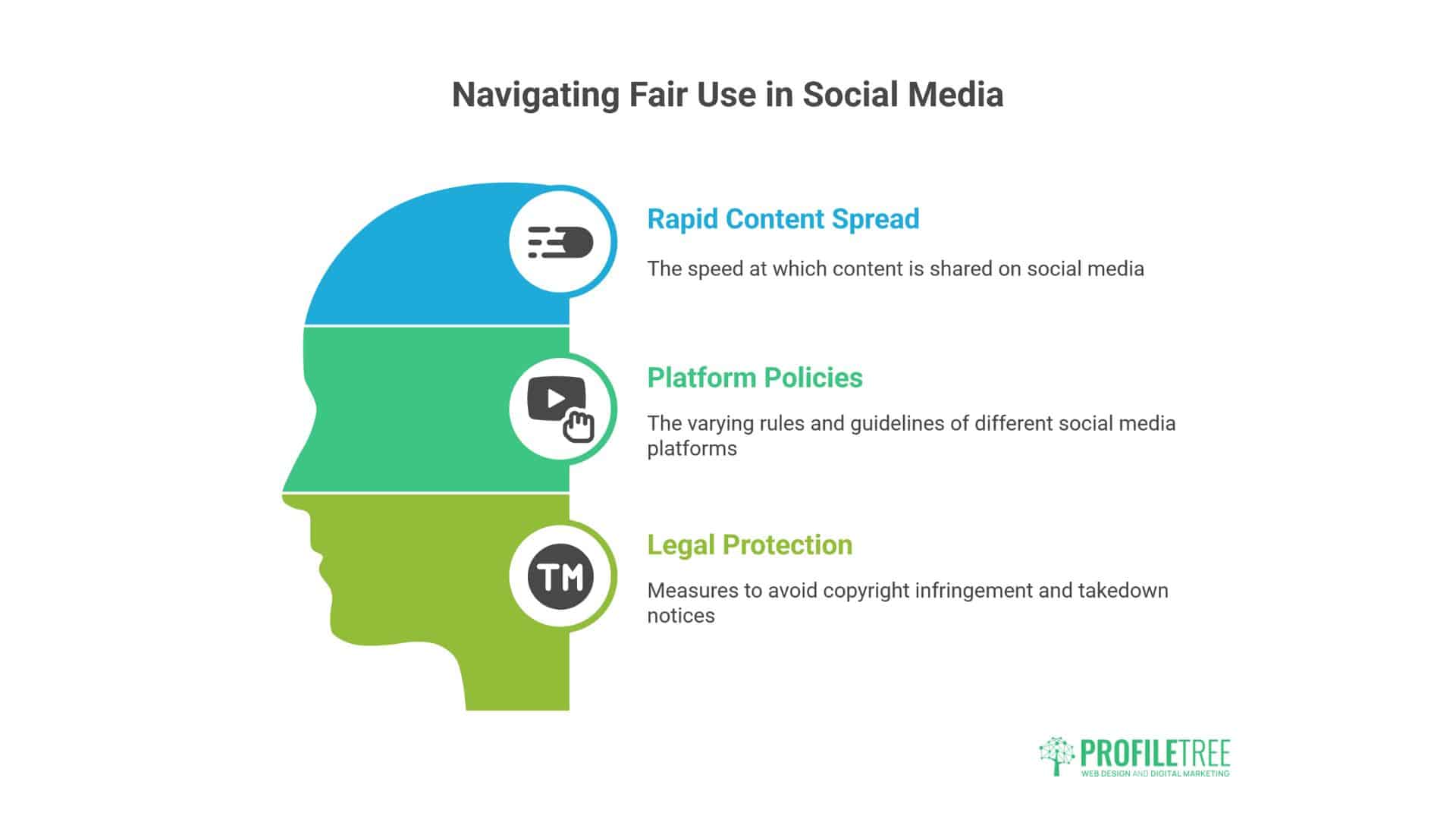
Social media presents unique challenges for fair use because content spreads rapidly and platforms have varying policies. Understanding when sharing, reposting, or incorporating others’ content remains legal protects businesses from takedown notices.
Sharing News and Industry Content
Sharing news articles with brief commentary generally falls within fair use for news reporting purposes. However, copying entire articles rather than linking with excerpts exceeds these boundaries.
Best Practice: Share articles using platform-native sharing features that link to sources, adding original commentary or analysis.
User-Generated Content
Reposting user-generated content (UGC) presents complications. Even when users tag brands or use branded hashtags, copyright remains with content creators unless explicitly transferred.
Best Practice: Obtain explicit permission before reposting UGC to business accounts.
When ProfileTree manages social media accounts or provides digital marketing training, we educate clients about proper UGC usage. Obtaining permission protects businesses while building positive relationships with community members.
Memes and Trending Content
Memes often incorporate copyrighted images or video clips. While their informative nature might support fair use claims, commercial accounts face greater scrutiny than personal accounts.
Best Practice: Create original meme content using licensed or royalty-free images rather than copying trending memes that incorporate copyrighted material.
Fair Use in Website Design and Video Production
Web design and video production involve numerous copyright considerations. Understanding fair use in these contexts protects agencies and clients from infringement claims.
Website Content and Imagery
Using images found through search engines without permission constitutes infringement regardless of whether copyright notices appear prominently.
Best Practice: Use properly licensed stock photography, commission original photography, or create custom graphics for website projects.
Our website development service includes guidance on content licensing. We help clients source appropriate imagery or create original visual content that strengthens brand identity whilst avoiding copyright complications.
Video Production and Music Licensing
Music licensing proves particularly important in video production. Using commercial music without permission violates copyright regardless of video length or platform.
Best Practice: License music specifically for commercial use, use royalty-free music libraries, or commission original scores for video projects.
ProfileTree’s video production service includes proper audio licensing in project planning. We help clients understand music costs and alternatives, selecting options that fit budgets whilst maintaining legal compliance.
Reference and Inspiration vs. Copying
Web designers regularly research competitor sites and industry examples for inspiration. Viewing websites and analysing techniques for learning purposes falls under fair use for research.
However, directly replicating layouts, copying code, or reproducing design elements without permission constitutes infringement.
Acceptable Practice: Analysing competitor websites to understand industry standards, then creating original designs informed by this research.
Infringement: Copying HTML/CSS code from competitor sites or reproducing layouts with minimal changes.
Fair Use Considerations for AI Implementation
Implementing AI introduces novel copyright questions as technology outpaces legal frameworks. Businesses adopting AI must understand current interpretations and monitor developments.
AI Training Data
AI models often train on large datasets that may include copyrighted material. The legality of this practice remains actively debated, with ongoing litigation examining whether such use constitutes fair use.
Best Practice: When implementing AI solutions, understand how models were trained and what data they incorporate.
ProfileTree’s AI training and implementation services include discussions about these considerations. We help SMEs adopt AI responsibly whilst remaining aware of evolving legal landscapes.
AI-Generated Content
Questions about who owns AI-generated content remain partially unresolved. Current understanding suggests that purely AI-generated content might not qualify for copyright protection, though human-guided AI work might.
Best Practice: Review and edit AI-generated content substantially before use, adding human creativity and judgement.
When providing AI implementation for content marketing, we educate clients about treating AI as a tool that augments rather than replaces human creativity.
When to Seek Permission or Use Alternatives
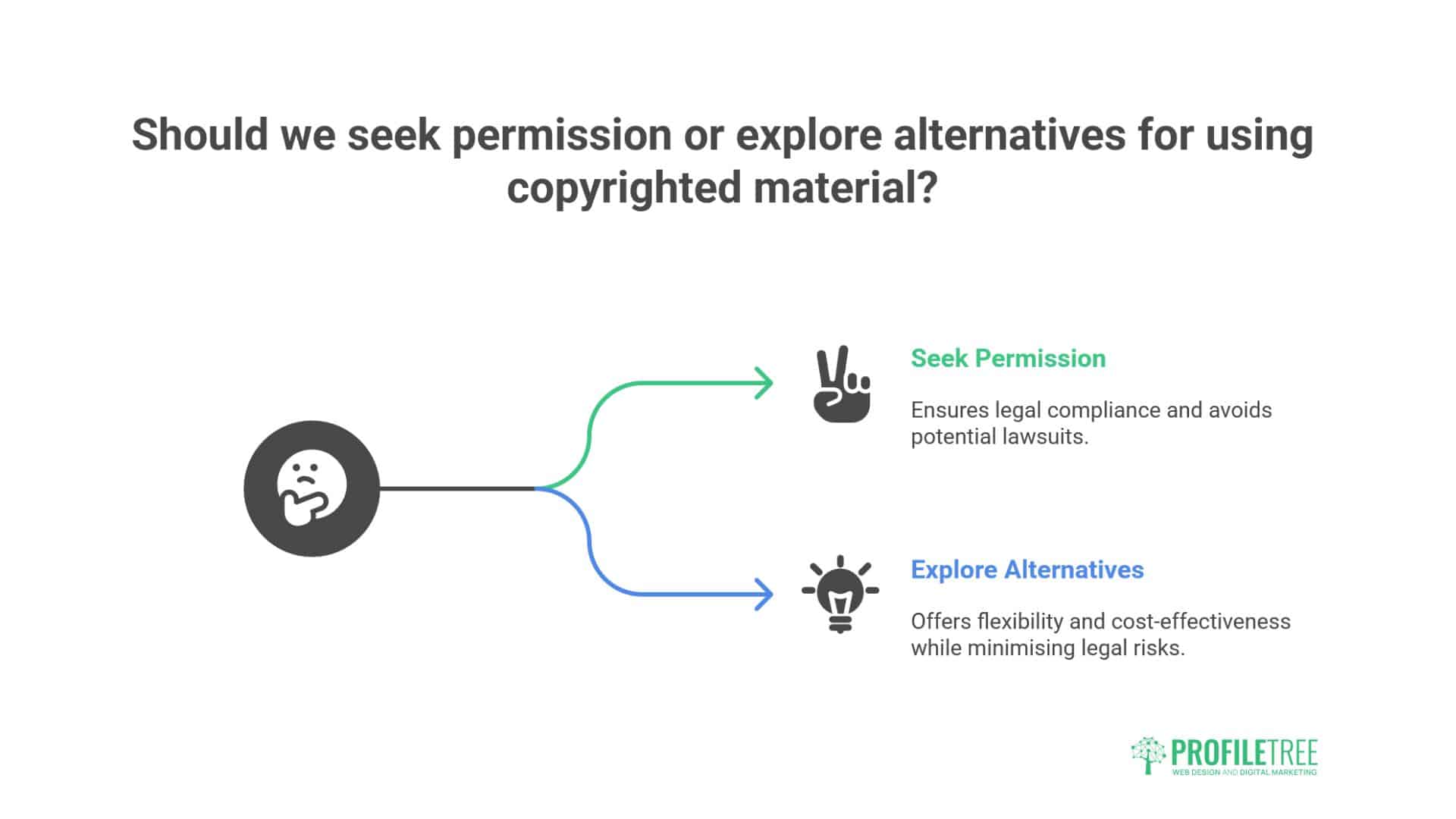
Fair use provides valuable flexibility, but many situations require seeking permission or using alternatives. Understanding when to pursue licensing protects businesses from legal complications.
Situations Requiring Licensing
Commercial use of copyrighted material generally requires licensing unless clearly transformative.
Scenarios Requiring Permission:
- Using songs in commercial video projects
- Incorporating substantial portions of written works in marketing materials
- Reproducing artistic photographs beyond brief critical use
- Using branded content in ways that might suggest affiliation
Creative Commons and Public Domain Resources
Creative Commons licenses provide alternatives to fully copyrighted content. These licenses allow creators to specify how others may use their works.
Key License Types:
- CC0: Public domain dedication allowing any use
- CC BY: Attribution required but allows commercial use
- CC BY-NC: Non-commercial use only with attribution
Public Domain Works: Content with expired copyrights can be used freely. This includes older films, books, music, and images beyond copyright terms.
Stock Media Libraries
Stock photography, video, and music libraries provide affordable alternatives to custom creation or expensive licensing.
Recommended Practices:
- Read licensing terms carefully
- Keep licensing documentation for records
- Understand the differences between editorial and commercial licenses
- Verify attribution requirements
Our web design and video production services include guidance on selecting appropriate stock media.
Risk Mitigation and Best Practices
Protecting businesses from copyright complications requires systematic approaches combining education, process, and documentation.
Documentation and Attribution
Maintaining records of licensing agreements, permissions, and fair use reasoning protects if questions arise.
Documentation Recommendations:
- Save copies of licenses and permission emails
- Document reasoning for fair use determinations
- Record sources for all third-party content
- Maintain creator attribution information
Attribution Best Practices:
- Clearly identify original creators and sources
- Link to original content where possible
- Specify license type for Creative Commons material
Our content marketing and SEO services incorporate proper attribution standards. Citing sources strengthens content credibility whilst respecting intellectual property.
When to Consult Legal Professionals
Complex situations warrant professional legal advice rather than relying solely on fair use assessments. Consultation proves particularly valuable for:
- International campaigns spanning multiple jurisdictions
- High-value campaigns with substantial risk exposure
- Situations involving well-known brands or properties
- Uncertainty about whether use qualifies as fair
Taking Action: Implementing Copyright Best Practices
Understanding fair use copyright is just the beginning. Implementing systematic practices protects your business whilst enabling creative digital marketing.
Start by auditing existing content across websites, social media, and marketing materials. Identify potentially problematic copyright usage and address issues through licensing, permissions, or content replacement.
Develop internal processes for evaluating copyright questions before publishing. Create checklists based on fair use factors that team members can reference when uncertainty arises. Document reasoning for fair use determinations and maintain records of all licensing agreements.
Invest in proper content resources. Budget for stock media licensing, commission original photography and videography, and build libraries of owned content for reuse across campaigns. Educate your team about copyright basics relevant to their specific roles.
ProfileTree’s digital marketing training and web design services include copyright guidance for specific business needs. Whether building websites, launching video campaigns, or implementing AI solutions, understanding these principles protects your business while maintaining creative freedom.
FAQs
What is fair use in copyright law?
Fair use is a legal doctrine allowing limited use of copyrighted material without permission for criticism, commentary, news reporting, teaching, and research. Four factors determine whether specific use qualifies as fair: purpose and character of use, nature of copyrighted work, amount used, and effect on the work’s market value.
What are examples of fair use?
Fair use examples daily include quoting brief excerpts from books in critical reviews, using screenshots of websites for educational presentations, incorporating short film clips in video essays analysing cinematography, and creating parody advertisements that comment on popular commercials.
How much copyrighted content can I use under fair use?
No specific amount or percentage automatically qualifies as fair use. Courts examine whether the quantity used was reasonable for the intended purpose and whether it included the “heart” of the work. Using minimal necessary portions for transformative purposes receives more favourable consideration than extensive reproduction.
Is commentary fair use?
Commentary typically qualifies as fair use when it adds transformative criticism or analysis to copyrighted material. Using portions of works to illustrate points in analytical content generally falls within fair use boundaries, particularly when the commentary adds substantial original insight.