
Animation Services in Ireland: 2D, 3D & Motion Graphics for Business
Table of Contents
Animation converts complex business communications into compelling visual narratives that capture audience attention while facilitating deeper message comprehension. Irish enterprises increasingly recognise animated content’s superior performance to traditional video formats when explaining sophisticated services, conducting employee training, or establishing distinctive brand positioning within competitive market environments.
From Dublin’s emerging technology sector to Belfast’s established financial services industry, companies document measurable returns through animation implementation, including enhanced audience engagement metrics, improved message retention rates, and increased conversion performance. Animation Services in Ireland encompass comprehensive solutions that address business communication challenges while delivering quantifiable commercial outcomes.
ProfileTree specialises in 2D animation production that clarifies complex conceptual frameworks while preserving authentic brand personality and cultural resonance essential for the Irish audience connection. Experience across Northern Ireland and the Republic demonstrates that effective business animation transcends technical execution, requiring a strategic understanding of audience psychology, brand voice consistency, and clearly defined business objectives.
The Animation Services in Ireland marketplace offers diverse approaches spanning streamlined motion graphics to sophisticated 3D visualisation systems. Each animation style serves distinct strategic purposes and accommodates varied budget parameters, yet businesses frequently encounter difficulty identifying optimal approaches for their specific communication objectives and organisational requirements.
This comprehensive analysis examines animation service options available to Irish businesses, providing decision-makers with practical frameworks for understanding production processes, evaluating service providers, and establishing realistic outcome expectations that align with strategic business goals and available resources.
Understanding Animation Types for Business Applications
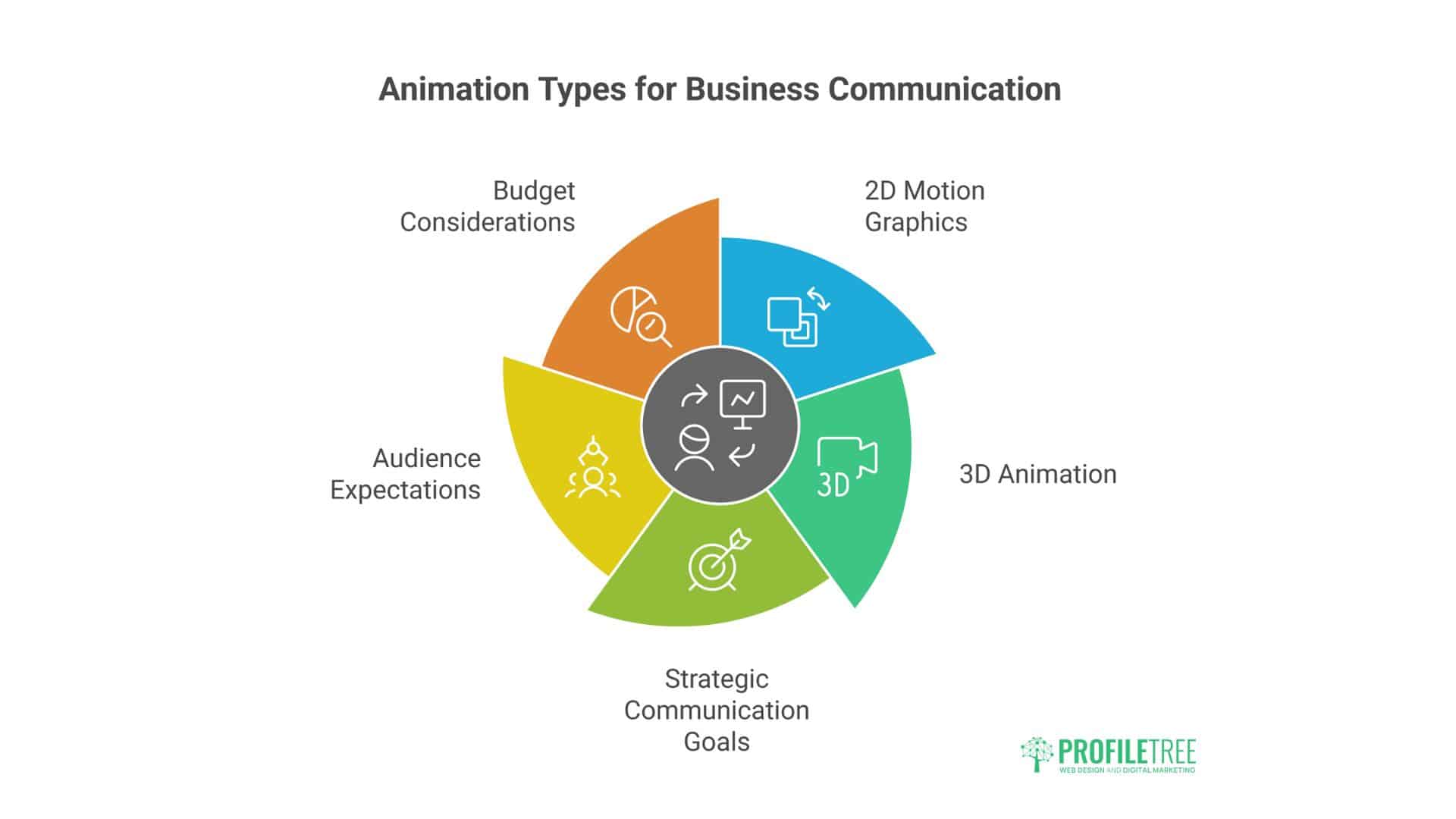
Business animation encompasses distinct categories that serve specific communication objectives, from 2D motion graphics that excel at data visualisation and process explanation to 3D animations that demonstrate complex product functionality and architectural concepts. Understanding these animation types enables businesses to select appropriate formats based on message complexity, audience expectations, and budget considerations rather than making decisions based purely on aesthetic preferences that may not align with strategic communication goals.
2D Animation: The Versatile Powerhouse
Two-dimensional animation remains the most versatile and cost-effective option for business communications. This approach encompasses simple character animations to sophisticated explainer videos that break down complex processes into digestible visual narratives.
Traditional 2D animation creates warmth and personality that particularly suits brands wanting to appear approachable and human. Irish financial services companies use 2D character animation to demystify products like mortgages and pensions, making intimidating topics feel accessible. The hand-crafted aesthetic builds trust while maintaining professional credibility.
Vector-based 2D animation offers scalability and flexibility that suits multi-platform distribution. Content in vector format maintains quality across everything from mobile screens to billboard displays. This technical advantage proves valuable for businesses requiring consistent brand presentation across diverse marketing channels.
Kinetic typography combines text animation with visual design to create dynamic presentations that hold the viewer’s attention. Professional services firms across Dublin use kinetic typography to present statistics, testimonials, and key messages in memorable ways that static text never achieves.
ProfileTree’s content marketing services include 2D animation production that aligns with broader content strategies. Our approach ensures animated content supports rather than distracts from core business messages.
Cut-out animation techniques enable rapid production of character-based content without sacrificing quality. This method works particularly well for series content like training modules or social media campaigns where consistency and speed matter more than elaborate movement.
The accessibility of 2D animation extends beyond production costs to include modification ease. When businesses must update statistics, swap products, or translate content for different markets, 2D animation allows changes without complete reproduction. This flexibility proves invaluable for businesses operating in dynamic markets.
3D Animation: Depth and Dimension
Three-dimensional animation creates photorealistic or stylised representations that showcase unprecedented detail in products, environments, and processes. While ProfileTree focuses on 2D animation, understanding 3D’s capabilities helps businesses make informed decisions about their animation investments.
Product visualisation through 3D animation allows businesses to showcase items before physical production. Irish manufacturing companies use 3D animation to present prototypes to investors, demonstrate functionality to customers, and train staff on equipment operation before delivery.
Architectural visualisation brings building projects to life before ground breaks. Property developers across Ireland use 3D walkthroughs to sell off-plan developments, while architects present designs to planning committees through immersive animated presentations.
Medical and scientific animation explains complex biological or technical processes with accuracy impossible through traditional filming. Irish pharmaceutical companies and medical device manufacturers rely on 3D animation to demonstrate how products work at the molecular level.
The production complexity of 3D animation requires specialised skills and extended timelines. Rendering realistic 3D scenes demands powerful computing resources and meticulous attention to lighting, texturing, and physics simulation. These requirements translate to higher costs that must align with project value.
Industrial applications of 3D animation include safety training, assembly instructions, and maintenance procedures. 3D animation provides safe, repeatable alternatives that improve learning outcomes when physical demonstration proves dangerous, expensive, or impossible.
Motion Graphics: Dynamic Information Design
Motion graphics occupy the space between traditional graphic design and full animation, bringing static designs to life through movement and transition. This approach presents data, highlights features, and creates branded content that maintains visual consistency.
Logo animations establish brand presence at the beginning or end of video content. These brief animations, typically 3-5 seconds, create memorable brand moments that reinforce identity across all video communications. Belfast agencies report that consistent logo animation significantly improves brand recall.
Infographic animation transforms static data visualisations into engaging narratives that guide viewers through complex information. Irish organisations presenting annual reports, research findings, or market analysis find animated infographics generate higher engagement than traditional presentations.
Social media motion graphics optimise for platform-specific requirements while maintaining brand consistency. Square formats for Instagram, vertical for Stories, and widescreen for YouTube all require different approaches that motion graphics accommodate efficiently.
Title sequences and lower thirds provide professional polish to video content without the costs of full animation production. These elements frame content, introduce speakers, and highlight key information while maintaining visual interest.
Transition animations connect different content sections smoothly, maintaining viewer engagement through visual continuity. Professional transitions distinguish amateur content from professional productions, justifying premium pricing for business services.
Video marketing strategies increasingly incorporate motion graphics elements to improve retention and engagement.
Corporate Animation Applications
Corporate animation addresses diverse business communication needs, including internal training modules that improve knowledge retention by 65%, investor presentations that clarify complex financial data, and client onboarding processes that reduce confusion and support requests. Strategic corporate animation applications span employee education, stakeholder communication, process documentation, and brand storytelling initiatives, transforming dry corporate information into engaging visual content that maintains professional credibility while enhancing message comprehension and audience retention.
Explainer Videos That Actually Explain
Business explainer videos distil complex propositions into clear, engaging narratives that prospects understand immediately. The most effective explainers focus on customer problems rather than product features, using animation to visualise solutions in relatable contexts.
Software demonstrations through animation avoid the confusion of cluttered interfaces and edge cases that complicate screen recordings. Animated software demos highlight core functionality while maintaining narrative flow that engages viewers through complete explanations.
Service explanations benefit particularly from animation’s ability to visualise intangible concepts. Consultancies, agencies, and professional services firms use animation to make abstract services feel concrete and valuable.
Process visualisation helps businesses demonstrate efficiency, quality control, and customer journey stages. Manufacturing companies show production processes, while service businesses illustrate customer experiences from initial contact through ongoing support.
Problem-solution narratives structure explainer videos around customer pain points, positioning products or services as logical solutions. This storytelling approach, enhanced through animation’s visual metaphors, creates emotional connections that lists never achieve.
Call-to-action integration within animated explainers guides viewers toward desired next steps without feeling pushy. Animation allows a creative CTA presentation that maintains narrative flow while clearly indicating how viewers should proceed.
Training and Educational Animation
Employee onboarding animations standardise training delivery while reducing trainer time investment. New staff receive consistent information presentation regardless of when they join or who conducts their induction.
Compliance training through animation makes mandatory education more engaging and memorable. Health and safety procedures, data protection protocols, and regulatory requirements become easier to understand and retain when presented through visual narratives.
Product training for sales teams consistently uses animation to demonstrate features, benefits, and use cases. Sales staff develop deeper product understanding when complex functionality is broken down through visual explanation.
Customer education animations reduce support burden by preemptively answering common questions. These animations live on websites, in help centres, and within products themselves, providing immediate assistance when customers need it.
Soft skills development through scenario-based animation helps employees practice interpersonal interactions safely. Customer service training, management development, and communication skills all benefit from animated scenario presentation.
Digital training programmes increasingly incorporate animated content to improve engagement and retention. ProfileTree’scomprehensive digital marketing training demonstrates how animation enhances learning experiences.
Marketing and Advertising Animation
Television advertising in Ireland increasingly features animation due to production cost advantages and creative flexibility. Animated commercials stand out in ad breaks while avoiding expensive location shoots and talent fees.
Social media advertising using animation generates higher engagement rates than static images or live-action video. The thumb-stopping nature of animation captures scrolling users’ attention, improving ad performance metrics.
When properly optimised, email marketing animations increase click-through rates without significantly impacting deliverability. Animated GIFs demonstrating products or highlighting offers outperform static email designs.
Trade show presentations incorporating animation attract booth visitors and maintain engagement during demonstrations. Large screen animations create focal points that draw attendees and facilitate conversation starts.
Website hero animations immediately communicate value propositions while maintaining fast load times. Typically, 10-15 seconds, these animations establish quality expectations influencing entire site experiences.
Retargeting campaigns using animated ads remind website visitors about abandoned carts, viewed products, or incomplete actions. Animation’s visual impact improves recall and encourages return visits.
The Animation Production Process
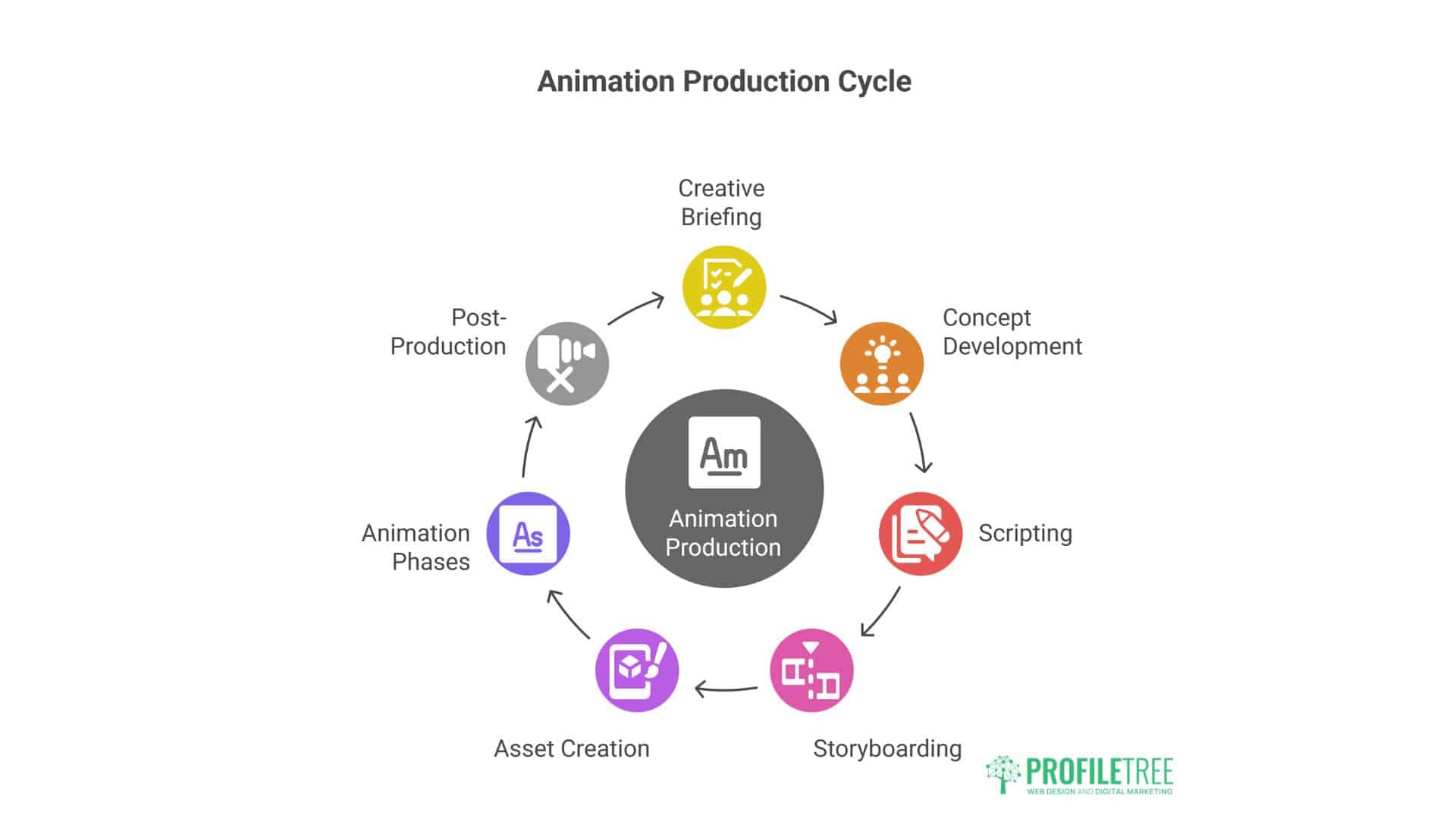
Animation production follows a structured workflow, beginning with creative briefing and concept development and progressing through scripting, storyboarding, asset creation, animation phases, and final post-production refinement. This systematic process typically spans 4-10 weeks, depending on complexity and scope, requiring consistent client collaboration at key milestones to ensure creative direction aligns with business objectives, brand guidelines, and technical distribution requirements across intended platforms and presentation contexts.
Discovery and Strategy Phase
Initial consultations establish project objectives, target audiences, and success metrics. Understanding business goals ensures animation serves strategic purposes rather than existing as standalone creative exercises.
Audience research identifies viewer preferences, pain points, and content consumption habits. Irish B2B audiences often prefer different animation styles than consumer markets, requiring careful audience analysis.
Competitive analysis reveals what animation approaches work within specific industries while identifying differentiation opportunities. Understanding competitor content helps position animated content uniquely.
Message architecture development ensures animated content communicates clearly without overwhelming viewers. Complex topics require a careful information hierarchy that animation visualises effectively.
Platform requirements influence animation decisions from the earliest planning stages. Content destined for LinkedIn requires different approaches than TikTok or traditional television.
Budget alignment ensures project scope matches available resources without compromising essential elements. Transparent discussion about costs prevents disappointment and provides realistic expectations.
Script and Storyboard Development
Scriptwriting for animation differs from writing for live-action videos. Every visual element requires description, timing consideration, and coordination with voiceover or music. Professional animation scripts balance detail with flexibility.
Voice and tone establishment ensure animated content reflects the brand personality consistently. Whether authoritative, friendly, or playful, maintaining aan ppropriate tone throughout animation requires conscious effort.
Storyboarding visualises scripts before animation begins, identifying potential issues while changes remain inexpensive. Professional storyboards communicate timing, composition, and narrative flow clearly.
Feedback incorporation at the script and storyboard stages prevents expensive revisions during animation production. Transparent approval processes ensure stakeholder alignment before significant resource investment.
Character development, when required, establishes visual personalities that represent brands appropriately. Character design influences audience perception significantly, requiring careful consideration of demographics and cultural sensitivities.
Visual metaphor selection helps communicate abstract concepts through concrete imagery. Choosing appropriate metaphors requires understanding audience reference points and cultural contexts.
Animation Production
Asset creation forms animation’s foundation, whether designing characters, backgrounds, or graphic elements. Professional asset development ensures visual consistency while enabling efficient animation workflows.
The selection of animation techniques influences production timelines and costs significantly. Frame-by-frame animation creates fluid movement but requires more time than motion tweening or rigged animation.
Voiceover recording coordination ensures animation timing aligns with narration pacing. Professional voiceover artists understand animation requirements and deliver consistent pacing that facilitates synchronisation.
Sound design enhances animation impact through effects, ambience, and musical accompaniment. Subtle audio elements add professionalism that distinguishes amateur content from commercial productions.
Review cycles during production allow stakeholder feedback while maintaining project momentum. Structured review points prevent scope creep while ensuring the final animation meets expectations.
Quality control maintains consistency across scenes, ensuring colour accuracy, smooth transitions, and proper timing. Professional studios implement rigorous QC processes that catch issues before delivery.
Post-Production and Delivery
Colour grading ensures visual consistency across entire animations while establishing an appropriate mood. Irish businesses often require brand colour accuracy that demands careful colour management.
Format optimisation produces versions suitable for different platforms without quality compromise. This includes resolution variants, aspect ratios, and compression settings appropriate for intended use.
Subtitle and caption creation improves accessibility while supporting international distribution. Professional captioning goes beyond transcription, ensuring readability and timing optimisation.
Different markets’ versions might include language translations, cultural adaptations, or duration adjustments. Planning for versioning during initial production reduces adaptation costs significantly.
Archive preparation ensures future access to project files for updates or adaptations. Professional studios maintain organised archives that facilitate efficient revisions years after initial production.
Performance tracking setup enables measurement of animation effectiveness against established objectives. This includes implementing analytics, creating benchmarks, and establishing review schedules.
Budgeting for Animation Projects
Animation project budgets vary significantly based on complexity, duration, and production quality requirements. Simple 2D motion graphics start around €2,000-€5,000, while comprehensive 3D animations can range from € 10,000- € 50,000+, depending on technical sophistication and timeline constraints. Effective budget planning allocates approximately 60% for production costs, 25% for pre-production development, and 15% for revisions and post-production refinements, while factoring in additional expenses such as voiceover talent, music licensing, and format variations required for distribution platforms.
Cost Factors and Pricing Models
Animation pricing varies dramatically based on style complexity, duration, and production timeline. Simple motion graphics might cost €1,000-2,000 per minute, while complex character animation ranges from €5,000-15,000 per minute.
Duration significantly impacts costs, though not always linearly. Longer animations benefit from asset reuse and established workflows, reducing per-minute costs for extended projects.
Revision rounds included in initial quotes prevent budget surprises. Professional studios typically include 2-3 revision rounds, with additional changes incurring extra charges.
Rush delivery commands premium pricing due to resource reallocation and overtime requirements. Planning adequate production timelines helps control costs while ensuring quality output.
Rights and licensing agreements affect pricing, particularly for exclusive ownership or extensive usage rights. Understanding intended animation use helps negotiate appropriate licensing terms.
Hidden costs often surprise first-time animation buyers. These might include voiceover talent, music licensing, translations, or platform-specific adaptations. Comprehensive quotes prevent budget overruns.
ROI Calculation
Engagement metrics demonstrate animation’s ability to maintain viewer attention longer than alternative content formats. Higher completion rates translate to improved message delivery and conversion probability.
Conversion improvement from animated explainer videos on landing pages often justifies entire production costs. Even modest conversion increases generate significant returns for businesses with established traffic.
Training cost reduction through animated content provides measurable savings. Reduced trainer time, consistent delivery, and improved retention rates all contribute to training ROI.
Support ticket reduction from educational animations frees customer service resources for complex issues. Self-service animation resources improve customer satisfaction while reducing operational costs.
While harder to quantify, brand value enhancement through professional animation influences customer perception and pricing power. Businesses using professional animation reports have improved their ability to command premium pricing.
Content longevity extends animation value beyond initial deployment. Well-produced animations remain relevant for years, providing ongoing returns that improve cost-per-use calculations.
Digital strategy consultation helps businesses understand how animation investments align with broader marketing objectives and expected returns.
Choosing Animation Partners in Ireland
Selecting animation partners in Ireland requires evaluating technical capabilities, industry experience, and project management processes alongside practical considerations like communication styles, revision policies, and timeline reliability that ensure successful collaboration. Irish animation studios vary significantly in specialisation and approach: some excel at corporate explainer content while others focus on creative marketing campaigns. Partner selection is dependent on specific project requirements, budget constraints, and the level of strategic input versus pure execution services your business needs.
Evaluation Criteria
Portfolio assessment should focus on relevant work rather than impressive but unrelated projects. Look for animations targeting similar audiences, explaining comparable complexity, or achieving parallel objectives.
Process transparency indicates professional operation. Established studios clearly communicate their workflow, timeline expectations, and revision policies before project commencement.
Communication quality during initial discussions predicts project experience. Responsive, clear communication suggests professional project management that prevents misunderstandings.
Technical capability assessment goes beyond creative quality to include format knowledge, platform understanding, and delivery reliability. Modern animation requires technical expertise alongside artistic skill.
Cultural understanding matters particularly for Irish market content. Local studios understand cultural nuances, regulatory requirements, and market expectations that international providers might miss.
Scalability has potential benefits for businesses planning multiple animations. Partners capable of handling increased volume while maintaining consistency provide long-term value.
Red Flags to Avoid
Template-only approaches that limit customisation suggest a lack of creative capability. While templates reduce costs, complete reliance on them indicates an inability to create custom solutions.
Unclear pricing structures that hide costs until project completion create budget uncertainty. Professional studios provide detailed quotes breaking down all cost components.
Limited revision policies forcing additional payments for minor changes indicate problematic partnerships. Reasonable revision allowances should accommodate regular feedback cycles.
Portfolio inconsistency, suggesting outsourcing or multiple creators, raises quality control concerns. Consistent style and quality indicate reliable internal production capabilities.
Communication delays during sales processes predict project management issues. If securing initial quotes proves difficult, project communication will likely prove worse.
Lack of strategic input, treating animation as a purely creative exercise, misses business value opportunities. Professional partners contribute strategic thinking alongside creative execution.
Animation Trends and Technologies
Animation technology advances rapidly through AI-powered motion capture, real-time rendering engines, and interactive animation platforms that enable dynamic content creation and personalised viewer experiences. Current trends include micro-animations for user interface enhancement, data-driven animation that responds to real-time business metrics, and immersive technologies like augmented reality overlays that transform static presentations into interactive experiences that engage audiences beyond traditional passive viewing formats.
Current Trends in Business Animation
Micro-animations for user interfaces improve digital experience without overwhelming users. These subtle movements guide attention, indicate interactivity, and provide feedback during user actions.
Interactive animations allow viewer participation and increase engagement beyond passive viewing. Choose-your-own-adventure training, clickable infographics, and exploratory product demos all benefit from interactivity.
Personalised animation using data inputs creates unique experiences for individual viewers. Dynamic content insertion allows single animations to effectively serve multiple audience segments.
Mixed media combining animation with live-action footage creates visual interest while controlling costs. This hybrid approach maintains human connection while using animation for complex explanations.
An accessibility focus ensures animations serve all audiences, including those with disabilities. Proper captioning, audio description, and reduced-motion options expand animation’s reach.
AI-enhanced marketing increasingly incorporates animated elements to visualise data insights and automate content creation.
Emerging Technologies
AI-assisted animation accelerates production through automated in-betweening, lip-sync, and motion capture. While not replacing animators, AI tools improve efficiency for certain animation aspects.
Real-time rendering enables live animation adjustments during presentations or broadcasts. This technology allows immediate response to audience feedback or event developments.
Augmented reality animation overlays digital content onto physical environments through mobile devices. Irish retailers use AR animation to demonstrate products in customer homes before purchase.
Virtual production techniques borrowed from the film industry enable complex animation scenarios previously impossible for business budgets. LED volume stages and real-time compositing expand creative possibilities.
Web-based animation technologies enable rich animated experiences without plugins or downloads. Modern browsers support complex animations that previously required standalone applications.
Making Animation Work for Your Business: Animation Services in Ireland
Animation offers Irish businesses powerful communication tools that transcend traditional content limitations. The key lies in selecting appropriate animation styles, working with capable partners, and integrating animated content strategically within broader marketing efforts.
Start by identifying communication challenges that animation uniquely solves. Whether explaining complex services, training distributed teams, or differentiating in crowded markets, clear objectives guide successful animation projects.
Budget realistically for quality animation that represents your brand professionally. While cost matters, choosing purely on price often results in content that damages rather than enhances brand perception.
For businesses seeking professional 2D animation services, ProfileTree’s content marketing team creates engaging animated content that clarifies complex messages while maintaining brand personality. Our Belfast-based team understands Irish market requirements while applying international best practices.
Explore ProfileTree’s approach to commercial video production to understand how animation integrates with broader video strategies. Animation isn’t just about pretty pictures – it’s about achieving business objectives through strategic visual communication.
The animation landscape continues evolving, but fundamental principles remain constant: clarity, engagement, and strategic alignment determine success. Irish businesses that understand these principles and work with capable partners find animation delivers measurable returns while building lasting brand assets.
FAQs
What’s the typical turnaround time for business animation projects in Ireland?
Simple motion graphics are delivered within 2-3 weeks, standard explainer videos require 4-6 weeks, and complex character animations might take 8-12 weeks. Rush delivery is possible but commands premium pricing and may impact quality.
Should we choose 2D or 3D animation for our business video?
2D animation suits most business applications, offering cost-effectiveness, faster production, and easier updates. Choose 3D only when photorealistic product visualisation or complex spatial relationships require three-dimensional representation.
How long should business animation videos be?
Explainer videos perform best at 60-90 seconds, training animations can extend to 3-5 minutes per module, while social media animations should stay under 30 seconds. Attention spans decrease rapidly after two minutes.
Can we update animations after production completion?
2D animations allow relatively easy updates for statistics, products, or branding. 3D animation updates prove more complex and costly—plan for potential updates during initial production to minimise future modification costs.
What makes Irish animation services different from overseas options?
Irish animation services understand local market nuances, cultural references, and regulatory requirements. Local providers offer easier communication, timezone alignment, and recourse if issues arise. While overseas options might cost less, hidden costs often eliminate savings.
How do we measure animation effectiveness?
Track view duration, completion rates, and engagement metrics for immediate impact. Monitor conversion rates, support ticket reduction, and training outcomes for business impact. Establish baseline metrics before animation deployment for accurate comparison.