
Price: The Second P in Your Marketing Mix for Maximum Business Impact
Table of Contents
Pricing Strategies
1. Cost-based Pricing
2. Competition-based Pricing
3. Customer-based Pricing
Value-based Pricing: The Modern Approach
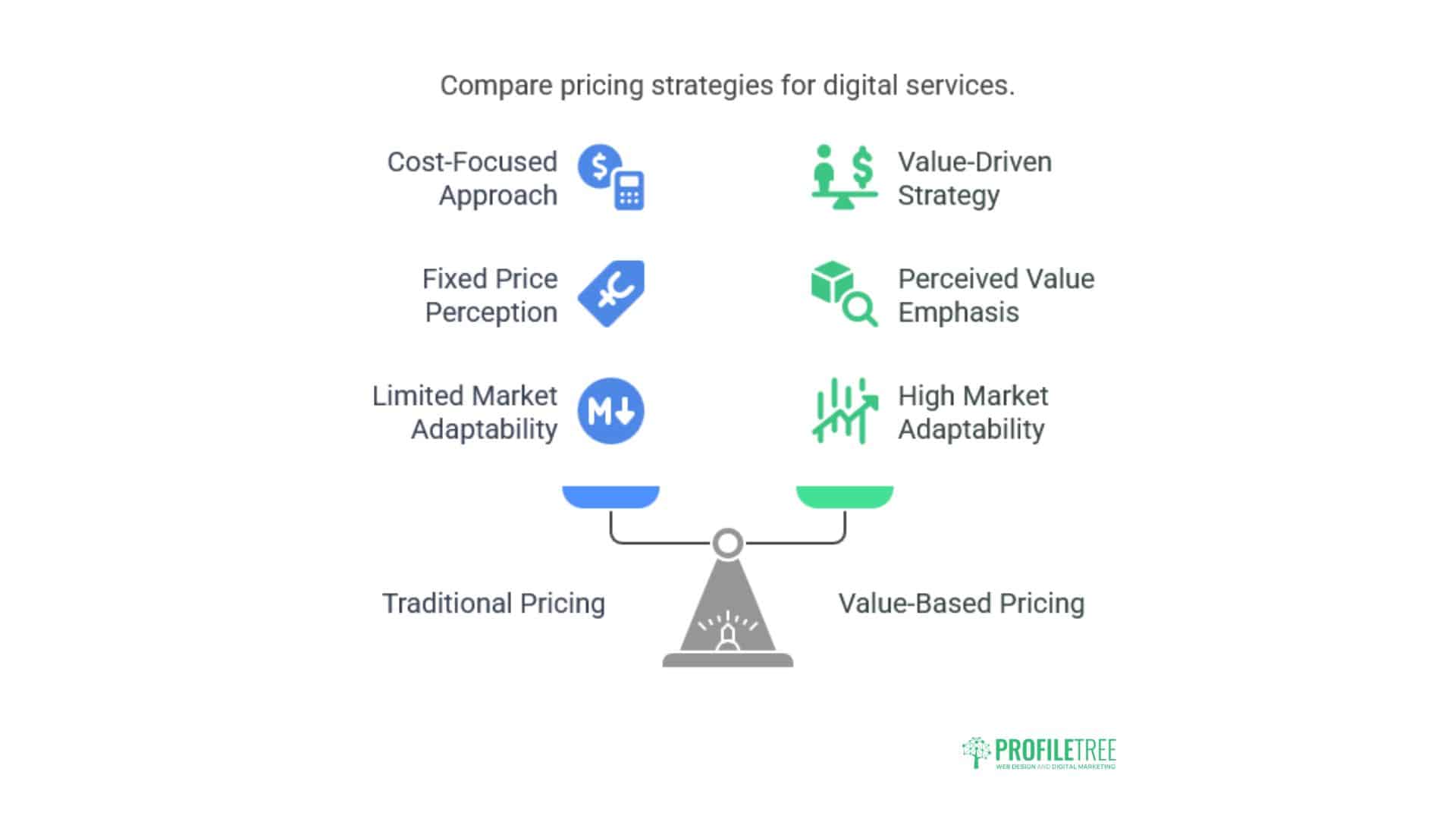
Beyond traditional methods, value-based pricing focuses on the perceived value your product or service delivers to customers. This approach considers features, benefits, brand reputation, and competitive advantages.
Value-based pricing works exceptionally well for digital services where the outcome—increased revenue, improved efficiency, or enhanced brand recognition—far exceeds the service cost.
“Value-based pricing allows agencies to align their success with client outcomes, creating partnerships rather than vendor relationships. When clients see measurable results, price becomes less of a concern than value delivery,” explains Ciaran Connolly, Director of ProfileTree.
Companies can also employ various tactical approaches:
- Bundling: Offering multiple services at a discounted rate encourages higher-value purchases whilst simplifying customer decision-making.
- Skimming: Launching with premium pricing to capture early adopters, then gradually reducing prices to reach broader markets.
- Penetration Pricing: Setting lower initial prices to gain market share, often followed by gradual increases once customer loyalty is established.
B2B and B2C companies require different pricing approaches. B2B transactions typically involve complex negotiations, service contracts, and volume discounts tailored to specific client needs. B2C pricing focuses on individual consumer purchases with more straightforward pricing structures.
Internal Business Considerations
Internal business considerations refer to the factors, aspects, and decisions a company or an organisation addresses within its operations and structure. These considerations are often within the company’s control and directly impact its performance, efficiency, and overall success. Here are some of these considerations:
1. Marketing Goals
Pricing must align with broader marketing objectives and company positioning. Businesses typically set prices to achieve specific goals:
- Profit Maximisation: Setting prices to generate maximum short-term financial returns, often used for products with limited competition or high demand.
- Market Share Leadership: Pricing aggressively to capture market share, accepting lower margins in exchange for volume and market position.
- Quality Leadership: Premium pricing that reflects superior quality, extensive research and development, or exceptional service levels.
- Competitive Avoidance: Pricing strategies designed to avoid direct competition, often through differentiation or niche targeting.
- Market Stability: Pricing that maintains stable market conditions and preserves industry-wide profitability.
For digital agencies, pricing goals might include establishing thought leadership, building long-term client relationships, or penetrating new market segments. These objectives influence whether agencies pursue premium positioning or competitive pricing strategies.
“The biggest mistake I see businesses make is focusing solely on cost rather than value creation. When we work with clients on their marketing mix strategy, we always start with understanding their business goals first, then align pricing models that reflect the value we’re delivering. Price isn’t just a number—it’s a strategic tool communicating your market position,” explains Ciaran Connolly, Director of ProfileTree.
2. Financial Factors
Understanding cost structures is fundamental to effective pricing. Fixed costs remain constant regardless of production or service delivery volume, whilst variable costs fluctuate with activity levels.
Digital agencies face unique cost considerations:
- Staff salaries and benefits (typically the most significant expense)
- Technology and software subscriptions
- Office space and equipment
- Professional development and training
- Marketing and business development costs
Management must understand how costs change with different client loads and service volumes. As fixed costs are spread across more clients, the per-client cost decreases, allowing for more competitive pricing or improved margins.
3. Organisational Factors
Pricing responsibility varies significantly between organisations. Small businesses often centralise pricing decisions with senior management, whilst larger corporations may delegate pricing authority to divisional managers or product specialists.
In digital agencies, pricing decisions might involve:
- Senior partners set the overall pricing strategy
- Account managers negotiating specific client terms
- Project managers determine resource requirements
- Finance teams are calculating profitability thresholds
Industrial markets often permit salespeople to negotiate within predetermined ranges, whilst consumer markets typically maintain fixed pricing structures.
External Environmental Influences
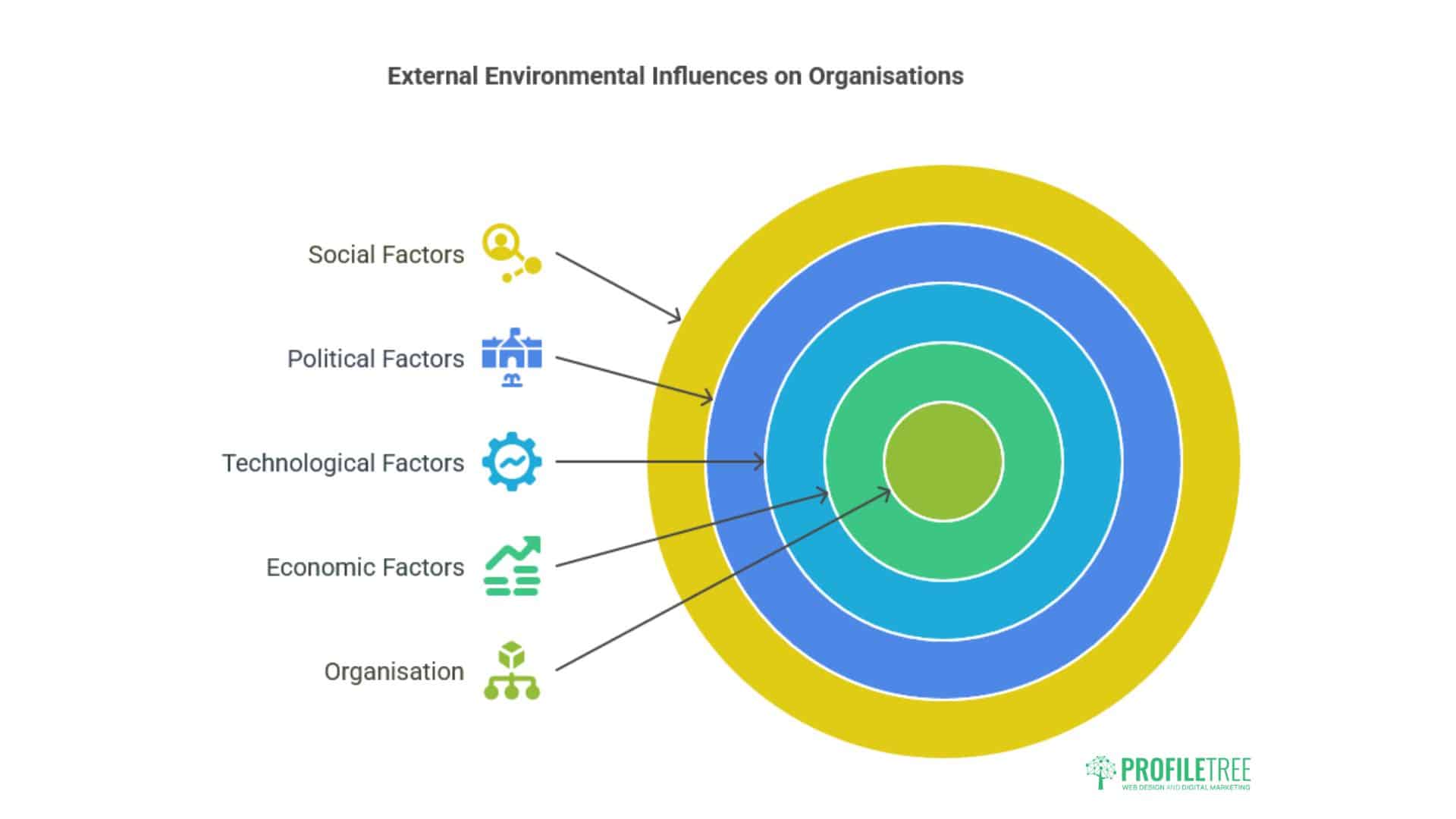
External environmental influences are the factors, conditions, and events outside an organisation that significantly impact its operations, performance, and decision-making. These influences are often beyond the organisation’s control but must be considered when planning, strategising, and managing operations. Here are some of them:
1. Supply and Demand
2. Competitors’ Prices
Price Adjustment Techniques
1. Psychological Pricing
2. Segmentation Pricing
3. Discount
4. Allowance Pricing
5. Geographical Pricing
6. International Pricing
Examples of a Brand Using Pricing to Support its Marketing Efforts
Value-based pricing and additional pricing strategies come alive when applied to real-world scenarios. Let’s explore how well-known brands leverage these approaches and explore some B2B vs. B2C pricing considerations.
Value-based pricing
- Rolex: This luxury watch brand exemplifies value-based pricing. While the production cost of a Rolex is significant, the price also reflects the brand’s heritage, craftsmanship, prestige, and status symbol association. Customers pay a premium for the perceived value and exclusivity that a Rolex represents.
- Tesla: Tesla’s electric vehicles are priced based on their perceived value proposition of innovation, environmental friendliness, and advanced technology. While some competitors offer cheaper electric cars, Tesla focuses on the value proposition of owning a trendsetting and high-performance electric vehicle.
Pricing Tactics
- Bundling: Microsoft Office offers a bundled subscription that includes various software programs like Word, Excel, and PowerPoint at a lower cost than purchasing them individually. This incentivises customers to buy the entire suite rather than specific programs.
- Skimming: Apple is known for skimming with new iPhone releases. The initial launch price is high, targeting early adopters who value having the latest technology. Later, Apple often lowered the cost of reaching a broader customer base.
- Penetration Pricing: Many streaming services, like Netflix or Disney+, initially offered low introductory pricing to gain subscribers and establish a user base. They might gradually increase subscription fees after securing a critical mass of users.
B2B vs. B2C considerations
- B2B (GE Healthcare): General Electric negotiates complex service contracts with hospitals for their medical equipment. Pricing considers specific equipment, maintenance needs, and volume discounts for bulk purchases.
- B2C (Amazon): Amazon employs dynamic pricing, frequently adjusting prices based on real-time factors like competitor offerings, product demand, and customer behaviour. This approach is more common in B2C settings where individual consumer purchases are the focus.
Additional Considerations
- Psychological Pricing: Many retailers use this tactic. For example, pricing an item at $9.99 instead of $10 creates a perception of a lower price point.
- Loss Leaders: Grocery stores might sell certain items at a loss to attract customers who will likely purchase other higher-margin products.
Measuring Pricing Success: ROI and Performance Metrics
Effective pricing strategies must be measurable. Return on Investment (ROI) provides the most unambiguous indication of whether your pricing decisions drive business success.
Calculating Marketing Mix ROI
For businesses investing in comprehensive marketing strategies, ROI calculation involves several key metrics:
Revenue Attribution: Track which marketing channels and pricing strategies generate the highest revenue. This might include:
- Direct sales from specific campaigns
- Lead generation and conversion rates
- Customer lifetime value improvements
- Market share growth
Cost Analysis: Understanding actual costs beyond obvious expenses:
- Customer acquisition costs (CAC)
- Retention and service costs
- Opportunity costs of different pricing strategies
- Long-term brand value impacts
Performance Benchmarks: Establishing baseline measurements to evaluate pricing effectiveness:
- Profit margins across different pricing models
- Customer satisfaction scores at various price points
- Competitive position relative to pricing changes
- Market penetration rates
ROI Considerations for Service-Based Businesses
Digital agencies and professional service providers face unique ROI measurement challenges:
- Intangible Benefits: Services often deliver value that’s difficult to quantify immediately, such as improved brand recognition, better search rankings, or enhanced customer relationships.
- Long-term Value Creation: Many digital marketing efforts compound over time, potentially misleading short-term ROI calculations.
- Client Success Metrics: For agencies, ROI often depends on client success rather than internal metrics alone. Successful client outcomes lead to retention, referrals, and premium pricing opportunities.
- Investment Recovery Periods: Understanding how long it takes different pricing strategies to generate positive returns helps inform pricing decisions and client expectations.
Conclusion
Price is a critical element of the marketing mix that influences how customers purchase from a business. It is essential to compare pricing tactics and techniques to ensure the company’s prices are reasonable and in line with customers’ expectations. There are three primary pricing techniques: cost-based, competition-based, and customer-based.
Internal business considerations include marketing objectives, monetary concerns, organisational issues, and environmental influences. Companies should set prices to achieve marketing objectives such as maximising short-term earnings, retaining market share domination, and setting the bar for product quality. Fixed and variable costs are also financial elements that impact pricing at various output levels.
To explore the third and fourth Ps in the marketing mix, read Place: The Third P in The Marketing Mix | Promotion: The Fourth P in The Marketing Mix
Ready to Apply Strategic Pricing to Your Digital Marketing?
Understanding pricing theory is one thing—implementing it effectively is another. At ProfileTree, we don’t just talk about value-based pricing; we live it. Our digital marketing strategies are designed to deliver measurable results that justify every pound invested.
Whether you need SEO to drive qualified traffic, web design to convert visitors into customers, or AI training to transform your business operations, we align our pricing with the value we create for your business.
Our Value-Driven Services Include
- Strategic Web Design – Websites that communicate your value and convert at higher rates
- Professional Video Production – Content that demonstrates your expertise and justifies premium pricing
- Content Creation & Strategy – Messaging that reinforces your value proposition across all channels
- AI Implementation & Training – Smart tools for pricing analysis, customer insights, and operational efficiency
- SEO & Local SEO – Visibility strategies that position you as the premium choice in your market
- Digital Training & Workshops – Empower your team with pricing psychology and digital marketing skills
Get started with a free digital strategy consultation where we’ll:
- Analyse your current marketing mix effectiveness
- Identify pricing opportunities in your market
- Recommend strategies tailored to your business goals
- Show you exactly how our services deliver measurable ROI
Don’t leave your digital success to chance. Contact ProfileTree today and discover how strategic pricing and expert digital marketing can accelerate your business growth.