
SEO Firms: Google Analytics Setup & ROI Tracking
Table of Contents
Your marketing generates thousands of website visits monthly, yet you can’t answer the most basic question: which campaigns actually drive revenue? This knowledge gap costs Irish businesses millions in wasted advertising spend and missed opportunities, not because the data doesn’t exist, but because Google Analytics is unconfigured, underutilised, or completely misunderstood by the businesses that need it most.
ProfileTree’s analytics configuration services transform Google Analytics from an overwhelming dashboard of meaningless numbers into a strategic decision-making engine. We’ve configured tracking systems for hundreds of businesses across Belfast, Dublin, and throughout Ireland, consistently discovering that proper analytics setup increases marketing ROI by 40-60% within six months—not through spending more, but by understanding what works.
The difference between businesses thriving with data-driven marketing and those guessing their way forward isn’t about budget or sophistication. It’s about having Google Analytics configured correctly, with conversion tracking, goal funnels, and custom reporting that answers your specific business questions rather than Google’s generic defaults.
Why Most Google Analytics Setups Fail Businesses
The default Google Analytics installation provides surface-level vanity metrics that impress nobody and inform nothing. Page views, sessions, and bounce rates tell partial stories without context or actionable insight. Business owners stare at these numbers, wondering what they mean for revenue, customer acquisition costs, or campaign performance. The dashboard might as well display random numbers for all its strategic value.
The fundamental problem stems from treating Google Analytics as a website counter rather than a business intelligence platform. Most installations track what happens, but not why it matters. Visitors arrive, pages load, and sessions end—but which visitors become customers? What content influences purchases? Which traffic sources deliver profitable customers versus time-wasters? Without proper configuration, these critical questions remain unanswered.
Technical implementation errors compound the problem. Duplicate tracking codes inflate visitor numbers. Missing e-commerce tracking hides revenue data. Incorrectly configured goals count meaningless actions as conversions. Cross-domain tracking failures fragment the customer journey. These technical mistakes create false confidence in flawed data, leading to disastrous marketing decisions based on fiction rather than fact.
Internal traffic pollution corrupts data accuracy. Your team’s daily website visits, testing activities, and administrative tasks mix with genuine customer behaviour. Development environments feed test data into production reports. Bot traffic inflates engagement metrics. Without proper filtering, your analytics reflect internal activity more than market reality, rendering insights worthless for strategic planning.
Privacy compliance adds another layer of complexity. GDPR requirements demand careful configuration to respect user consent whilst maintaining data utility. Cookie banners must integrate with tracking systems. Data retention settings need adjustment. IP anonymisation requires activation. Many businesses ignore these requirements (risking penalties) or overcomplicate implementation (destroying data quality).
The Real Cost of Poor Analytics Configuration
Marketing waste accumulates silently when analytics can’t identify performing campaigns. Businesses continue investing in channels that appear successful through vanity metrics but deliver zero profitable customers. Meanwhile, genuinely effective campaigns receive insufficient budget because their actual value remains hidden. This misallocation compounds monthly, with businesses paying to acquire unprofitable traffic whilst starving successful channels.
Customer acquisition costs become impossible to calculate accurately without proper tracking. You might know total marketing spend and total customers, but which specific campaigns, keywords, or content pieces drove those conversions? This attribution blindness prevents optimisation, forcing businesses to maintain broad, inefficient marketing approaches rather than focusing resources on proven performers.
Strategic decision-making suffers when executives lack reliable data. Should you expand into new markets? Invest in content marketing? Increase advertising budgets? Without trustworthy analytics, these become guessing games rather than calculated risks. Competitors with proper analytics configuration make informed decisions, while you rely on intuition and hope.
Opportunity identification becomes impossible when customer behaviour remains opaque. Which products do visitors research before purchasing? What content indicates purchase intent? Where do high-value customers originate? These insights drive product development, content strategy, and market positioning—but only when analytics captures and surfaces them effectively.
Team productivity decreases as staff waste hours extracting insights from misconfigured systems. Marketing managers manually compile reports from multiple sources. Sales teams can’t identify warm leads. Customer service lacks visibility into user journeys. This operational inefficiency costs more than an analytics configuration, yet businesses tolerate it rather than fix the root cause.
ProfileTree’s Professional Analytics Setup Process
Our configuration process begins with business objective mapping, not technical implementation. What decisions do you need data to inform? Which KPIs determine success? How do customers typically interact with your business? This strategic foundation ensures every technical configuration serves specific business purposes rather than collecting data for its own sake.
Account structure design follows strategic planning. We create logical property and view hierarchies that match your business structure. Testing environments separate from production data. Regional views isolate geographic performance. Department-specific views provide relevant insights without overwhelming detail. This organisational approach ensures everyone accesses appropriate data without confusion or conflict.
Conversion tracking implementation captures every valuable customer action. E-commerce transactions track with full product detail. Lead form submissions trigger goal completions. Phone calls from websites get attributed to traffic sources. Newsletter signups, downloads, video views—every meaningful interaction becomes measurable. We configure both macro conversions (purchases) and micro conversions (engagement indicators) providing complete funnel visibility.
Custom dimensions and metrics extend Google Analytics beyond standard capabilities. We track customer lifetime value, lead quality scores, content engagement depth, and business-specific attributes that standard analytics ignores. These customisations transform generic analytics into business intelligence platforms tailored to your specific needs and industry requirements.
Advanced features activation unlocks Google Analytics’ full potential. Enhanced e-commerce tracking reveals shopping behaviour patterns. User ID tracking connects multi-device journeys. Remarketing audiences enable targeted advertising. Custom alerts notify you of significant changes. Search Console integration connects SEO performance with user behaviour. These features exist in every account but require expert configuration to deliver value.
Essential Components of ROI-Focused Analytics
The goal funnel configuration reveals where potential customers abandon their journey. Each step from awareness through purchase is tracked and analysed. We identify friction points causing abandonment, such as technical issues, confusing messaging, or missing information. This visibility enables systematic conversion rate optimisation, often doubling conversion rates without increasing traffic.
Attribution modelling accurately assigns credit across marketing touchpoints. Last-click attribution oversimplifies customer journeys, hiding the value of awareness and consideration phase marketing. We configure data-driven attribution models that reflect actual contribution patterns. This accurate attribution prevents undervaluing content marketing, social media, and other top-funnel activities that genuinely influence purchases.
Audience segmentation separates valuable customers from casual browsers. Not all traffic deserves equal attention or investment. We configure segments identifying high-value customers, repeat purchasers, engaged researchers, and qualified leads. These segments inform targeting strategies, content development, and resource allocation. Marketing becomes precise rather than scattershot.
Custom reporting dashboards answer specific business questions instantly. Instead of clicking through multiple reports seeking insights, executives access single dashboards displaying KPIs that matter. Real-time performance monitoring. Campaign comparison views. Revenue attribution reports. These custom dashboards save hours weekly whilst ensuring consistent, accurate reporting across your organisation.
Cross-platform tracking connects offline and online customer interactions. Phone call tracking links store visits to online research. CRM integration connects sales outcomes to marketing sources. Point-of-sale systems feed transaction data into analytics. This holistic view reveals true customer value and journey complexity that single-channel analytics miss entirely.
E-commerce Analytics Configuration Excellence
Product performance tracking goes beyond basic sales metrics. We configure analytics to reveal product page engagement, cart addition rates, checkout abandonment points, and cross-sell effectiveness. This detailed product analytics informs inventory decisions, pricing strategies, and merchandising approaches. Irish retailers using properly configured product tracking typically see 20-30% revenue increases through optimisation alone.
Shopping behaviour analysis uncovers purchasing patterns and preferences. Session recordings show exact user interactions. Heat maps reveal attention patterns. Form analytics identify field-level friction. These behavioural insights inform design decisions, content placement, and user experience improvements directly impacting conversion rates and average order values.
Revenue attribution connects specific marketing activities to pounds and pence. Every email campaign, social post, and advertising pound gets tracked to revenue generation. This financial visibility transforms marketing from a cost centre to a profit driver. Marketing teams gain credibility through demonstrated ROI whilst receiving budget increases justified by proven performance.
Customer lifetime value tracking extends analytics beyond individual transactions. We configure systems that track customer behaviour over time, identifying high-value customer characteristics and acquisition sources. This long-term view shifts focus from cheap acquisitions to profitable relationships, fundamentally changing marketing strategy and budget allocation.
Promotional effectiveness measurement quantifies discount and offer performance. Which promotions drive incremental revenue versus cannibalising full-price sales? What discount levels optimise profitability? When should promotions run for maximum impact? Proper analytics configuration answers these questions with data rather than assumptions.
Lead Generation Analytics for B2B Companies
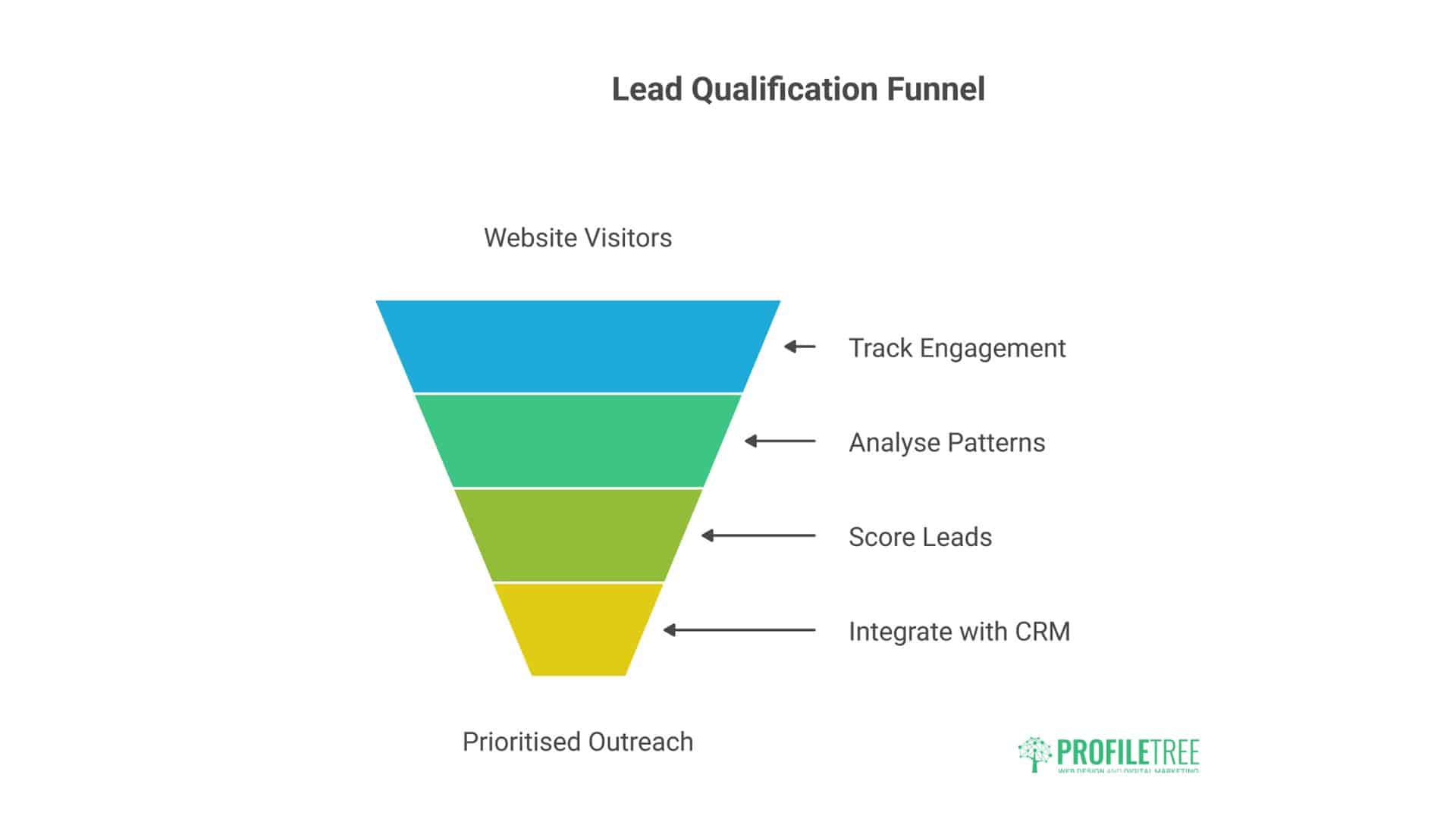
Lead quality scoring differentiates tyre-kickers from genuine prospects. We configure analytics to track engagement patterns that indicate purchase intent: specific page visits, content downloads, time on site, and return frequency. These behavioural scores integrate with CRM systems, enabling sales teams to prioritise outreach effectively.
Multi-touch attribution for long B2B sales cycles requires sophisticated configuration. Initial awareness might occur months before conversion, with dozens of touchpoints in between. Standard analytics loses this journey complexity. We implement tracking that maintains visibility across extended timelines, revealing which content and campaigns genuinely influence complex B2B purchases.
Account-based tracking aggregates individual user behaviour into company-level insights. Multiple stakeholders research from different devices and locations. Our configuration connects these disparate sessions into unified account profiles. Sales teams see complete company engagement rather than fragmented individual interactions.
Content engagement analytics reveals which resources drive pipeline development. Whitepapers, case studies, webinars, and blog posts serve different buyer journey stages. We track not just downloads but actual engagement: reading time, scroll depth, and return visits. This insight informs content strategy and lead nurturing approaches.
Sales enablement reporting bridges marketing and sales analytics. Configured dashboards show sales teams which leads are engaged with what content, enabling personalised outreach. Marketing sees which leads convert to opportunities and revenue, validating campaign effectiveness. This shared visibility aligns historically disconnected departments.
Mobile App Analytics Integration
App behaviour tracking captures in-app actions that drive business value. User registrations, feature usage, purchase flows, and engagement patterns are measurable. We configure Firebase Analytics integration with Google Analytics, providing unified reporting across web and app channels. This holistic view reveals actual cross-platform customer behaviour.
Attribution across app and web requires careful configuration to maintain accuracy. Users might discover your business online, download your app, and purchase in-store. Standard analytics fragments this journey. We implement measurement protocols and user ID tracking that connect touchpoints regardless of platform or device.
App performance metrics extend beyond downloads to meaningful engagement. Daily active users, session length, screen flow patterns, and feature adoption rates indicate actual app value. We configure custom events and parameters that track business-specific actions, moving beyond generic app analytics to strategic insights.
Push notification effectiveness tracking quantifies message impact on user behaviour. Which notifications drive app opens? What messaging increases purchase rates? When should notifications be sent for maximum engagement? Proper configuration answers these questions, optimising your mobile marketing strategy.
App store optimisation insights connect discovery to installation and engagement. We track which keywords, screenshots, and descriptions drive qualified installers who become valuable users. This intelligence informs app store listing optimisation, improving installation rates and user quality.
Google Analytics 4 Migration and Setup
The transition from Universal Analytics to Google Analytics 4 represents more than a technical migration—it’s an opportunity to rebuild analytics properly. GA4’s event-based model, machine learning capabilities, and privacy-centric design require different configuration approaches. ProfileTree guides businesses through this transition, ensuring historical data preservation while capitalising on GA4’s advanced capabilities.
Event tracking architecture in GA4 demands strategic planning. Every user interaction becomes a potential event, but tracking everything creates noise without insight. We design event taxonomies that capture meaningful actions whilst maintaining data clarity. Custom events track business-specific behaviour. Enhanced measurement captures standard interactions automatically. Parameters add context without overwhelming complexity.
Predictive metrics activation reveals future customer behaviour. GA4’s machine learning predicts purchase probability, churn likelihood, and revenue potential. We configure these predictive audiences for remarketing campaigns and personalisation strategies—Irish businesses using predictive analytics report 25-35% improvement in marketing efficiency through better targeting.
Privacy-safe configuration ensures compliance whilst maintaining data utility. GA4’s cookieless tracking options, consent mode implementation, and data retention controls require careful configuration. We balance privacy requirements with business needs, ensuring legally compliant analytics that still provide actionable insights.
With GA4’s unified approach, cross-platform tracking becomes seamless. Web and app data combine naturally. Google Ads integration improves. YouTube tracking enhances. This ecosystem integration provides comprehensive visibility across Google’s platforms while maintaining data accuracy and attribution precision.
Custom Reporting and Dashboard Development
Executive dashboards distil complex data into actionable insights. CEOs don’t need to understand sessions, bounce rates, or attribution models—they need to know revenue trends, campaign ROI, and growth opportunities. We create simplified dashboards that answer strategic questions without requiring analytics expertise.
Department-specific views provide relevant metrics without distraction. Marketing sees campaign performance and content engagement. Sales views lead quality and pipeline influence. Customer service accesses support metrics and satisfaction indicators. These focused views prevent information overload while ensuring teams access the needed insights.
Automated reporting saves hours of manual compilation weekly. Scheduled reports deliver insights directly to stakeholders’ inboxes. Anomaly alerts notify of significant changes immediately. Performance summaries compile automatically. This automation frees teams from report generation and lets them focus on insight application and strategy development.
Data visualisation best practices ensure insights are communicated clearly. We select appropriate chart types for different data stories. Colour coding maintains consistency and meaning. Interactive elements enable exploration without confusion. These design principles ensure that reports are informative rather than confusing, regardless of the audience’s analytical sophistication.
API integrations extend reporting beyond Google Analytics alone. CRM data, advertising platforms, email systems, and business intelligence tools connect through custom integrations. This unified reporting eliminates the need to check multiple platforms, providing single-source-of-truth dashboards that inform confident decision-making.
Technical SEO and Analytics Alignment
Search performance tracking connects SEO efforts with business outcomes. Organic traffic volume matters less than organic conversion value. We configure analytics to track rankings, traffic, and revenue from organic search. This financial visibility justifies SEO investment and informs strategy priorities.
Landing page performance analysis reveals which pages drive valuable actions. High-traffic pages might generate zero conversions, while low-traffic pages drive significant revenue. Our configuration identifies these performance patterns, informing content optimisation and internal linking strategies. SEO shifts from traffic generation to value creation.
Technical issue identification through analytics prevents revenue loss. Slow page loads increase abandonment. Broken forms avoid conversions. Mobile issues frustrate users. We configure alerts and reports that identify technical problems impacting business performance, enabling rapid resolution before significant damage occurs.
Core Web Vitals tracking connects user experience with business metrics. Page speed, interactivity, and visual stability affect SEO rankings and conversion rates. Our analytics configuration tracks these metrics alongside business KPIs, quantifying the revenue impact of technical improvements.
Search Console integration enriches analytics with search performance data. Keywords driving traffic, click-through rates, and ranking positions combine with conversion data. This integration reveals which search terms deliver customers versus visitors, informing content strategy and SEO prioritisation.
Ciaran Connolly on Analytics-Driven Business Growth
“Businesses often tell me they don’t understand their Google Analytics, but the real problem is their analytics doesn’t understand their business,” explains Ciaran Connolly, ProfileTree founder. “Proper configuration transforms random data into strategic intelligence. We’ve seen Belfast SMEs outperform larger competitors simply because they knew exactly where to invest their limited marketing budgets based on accurate analytics.”
This philosophy drives ProfileTree’s approach to analytics configuration, ensuring that every implementation serves specific business objectives rather than collecting meaningless metrics.
Ongoing Optimisation and Support Services
Analytics configuration isn’t a one-time project but an evolving system requiring regular refinement. Business objectives change, new marketing channels emerge, and customer behaviour shifts. We provide ongoing optimisation services that ensure your analytics evolve with your business, maintaining relevance and accuracy over time.
Monthly audits identify configuration drift and data quality issues. Tracking codes break, filters need adjustment, and new site features require tracking updates. Regular audits catch these issues before they corrupt data or miss essential insights. Prevention costs far less than retroactively fixing months of bad data.
Training and knowledge transfer empower internal teams. We don’t just configure analytics—we ensure your team understands how to use it effectively. Custom training sessions cover report interpretation, basic troubleshooting, and insight extraction. This knowledge transfer prevents dependency while ensuring maximum value from your analytics investment.
Strategic consulting translates data into action. Raw analytics data doesn’t automatically generate a strategy. We provide ongoing consultation that interprets findings, identifies opportunities, and recommends specific actions. This strategic layer transforms analytics from a reporting tool to a competitive advantage.
Performance benchmarking compares your metrics against industry standards. Are your conversion rates competitive? Is your customer acquisition cost sustainable? How does your engagement compare to that of successful competitors? We provide context that makes metrics meaningful, identifying where you excel and where improvement opportunities exist.
Common Analytics Configuration Mistakes to Avoid
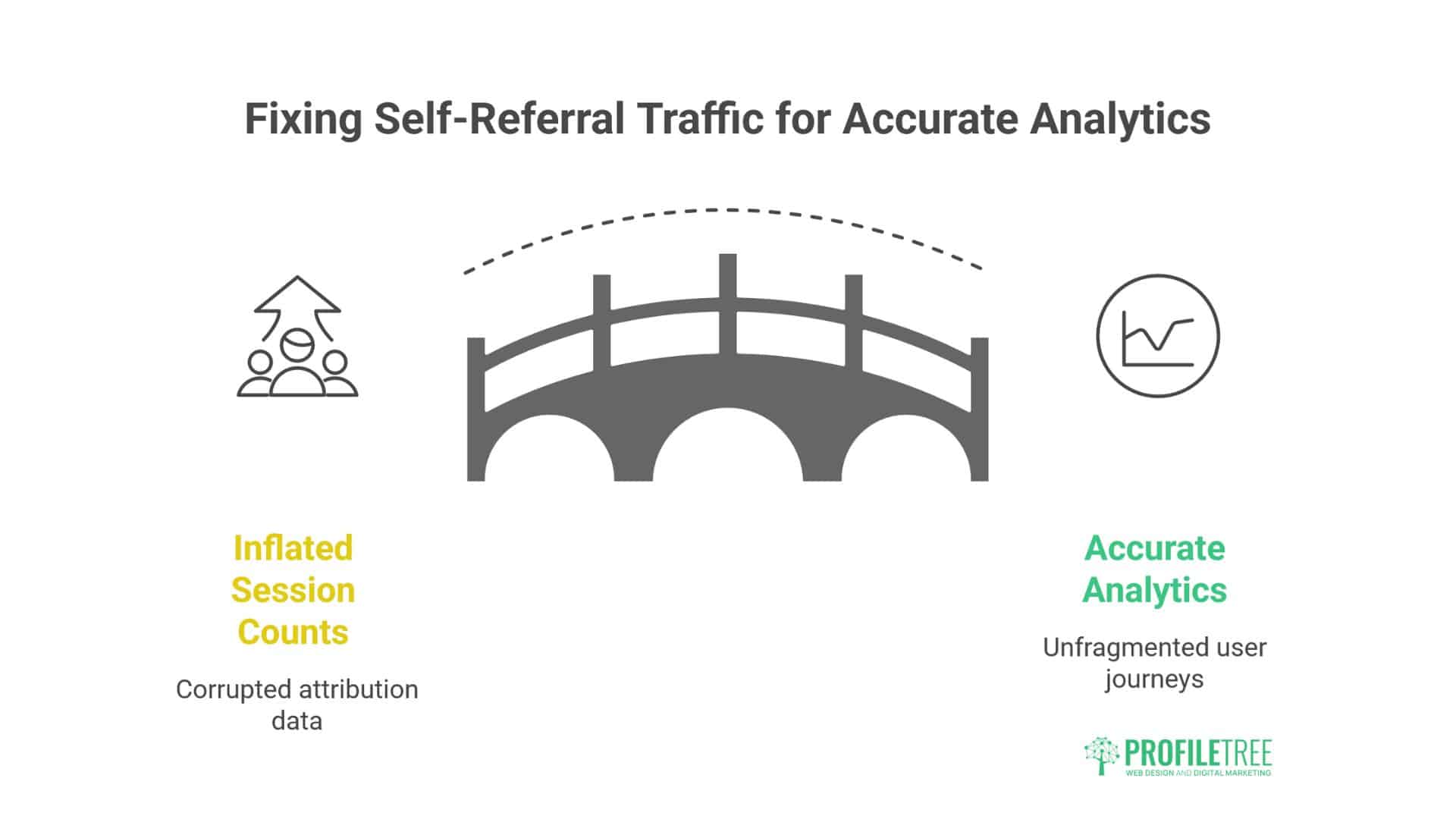
When improperly configured, self-referral traffic inflates session counts and corrupts attribution. Your domain appearing as a traffic source indicates configuration errors fragmenting user journeys. We implement proper exclusion lists and cross-domain tracking to maintain session continuity across your digital properties.
Goal value configuration errors destroy ROI calculations. Arbitrary values, incorrect currency settings, or missing e-commerce tracking make financial analysis impossible. We ensure every conversion tracks with accurate monetary values, enabling genuine ROI assessment rather than meaningless conversion counting.
Sampling issues in high-traffic sites reduce data accuracy. Google Analytics samples data above certain thresholds, potentially hiding important patterns in aggregated approximations. We implement solutions that minimise sampling impact: strategic view configuration, API access for unsampled reports, and Google Analytics 360 when necessary.
We filter mistakes and permanently delete valuable data. Overly aggressive filters might exclude legitimate traffic. Incorrect filter order corrupts data before it’s stored. Missing filters allow spam and bot traffic to pollute reports. We implement careful filter strategies that clean data without destroying insights.
Time zone misconfigurations cause reporting inconsistencies. When analytics time zones don’t match business operations, daily reports split transactions incorrectly. Campaign performance appears shifted, and real-time monitoring becomes useless. We ensure all temporal settings align with your business reality and reporting needs.
Industry-Specific Analytics Requirements
Retail businesses require sophisticated e-commerce tracking beyond basic transaction recording. Product list performance, internal promotion effectiveness, checkout behaviour, and refund tracking all need configuration. We implement enhanced e-commerce tracking that reveals merchandising insights and shopping patterns, driving revenue optimisation.
SaaS companies need recurring revenue analytics that standard configurations ignore. Trial conversions, churn prediction, feature adoption, and expansion revenue require custom tracking. We configure analytics tracking subscription lifecycles, enabling data-driven retention and growth strategies.
Professional services firms must track long sales cycles crossing multiple touchpoints. Initial consultations, proposal views, contract negotiations, and project completions span months with numerous interactions. Our configuration maintains visibility throughout these extended journeys, revealing which marketing investments generate profitable clients.
Healthcare organisations balance analytics needs with privacy requirements. Patient journey tracking must respect confidentiality whilst providing operational insights. We implement privacy-safe analytics that inform service improvements without compromising patient data protection.
Educational institutions track unique conversion paths from interest through enrollment. Information sessions, campus visits, application starts, and enrollment confirmations require careful tracking. We configure funnels that reveal which recruitment activities drive qualified applications and successful enrollments.
FAQs
What makes ProfileTree’s Google Analytics setup different from a basic installation?
Basic installation tracks generic metrics that don’t answer business questions. ProfileTree configures comprehensive tracking systems that measure what matters: revenue attribution, customer journey mapping, conversion optimisation opportunities, and ROI calculation. We transform Google Analytics from a traffic counter into a business intelligence platform that drives strategic decisions and measurable growth.
How long does a professional Google Analytics configuration take?
Initial configuration typically requires 2-3 weeks, including discovery, implementation, testing, and training. Complex e-commerce sites or multi-platform businesses might need 4-6 weeks. However, basic tracking improvements delivering immediate value often go live within days. The investment of time upfront saves months of guessing and missed opportunities.
Can existing Google Analytics installations be fixed, or should we start fresh?
Most existing installations can be salvaged and improved without losing historical data. We audit current configurations, identify issues, and implement fixes that preserve data continuity. However, severely misconfigured accounts sometimes benefit from fresh starts, especially when migrating to GA4. We assess each situation individually, recommending approaches that balance data preservation with configuration quality.
What technical access does ProfileTree need for analytics configuration?
We require Google Analytics admin access and Google Tag Manager container access. For comprehensive configuration, website backend access helps implement server-side tracking and advanced features. We work within your security requirements, using temporary access when necessary and documenting all changes for your technical team’s review.
How much should businesses budget for a professional analytics setup?
Professional Google Analytics configuration typically costs £2,000-£- £ 5,000 for standard business websites. Complex e-commerce platforms or multi-property enterprises might require £5,000-10,000. However, proper analytics configuration typically returns investment within 2-3 months through improved marketing efficiency and conversion optimisation insights.
What ongoing maintenance does Google Analytics require after initial setup?
Google Analytics needs monthly auditing to ensure continued accuracy. New website features require tracking updates. Marketing campaigns need UTM parameter configuration. Goals and segments need refinement as the business evolves. Most companies benefit from quarterly reviews and updates, with monthly monitoring for critical implementations.
Transform Your Data Into Competitive Advantage
The difference between market leaders and struggling businesses increasingly comes to decision quality. Companies with proper analytics make informed strategic choices, while competitors guess. Daily without a configured Google Analytics means decisions are based on assumptions rather than evidence, costing money and missing opportunities.
ProfileTree’s Google Analytics configuration services transform overwhelming data into clear business intelligence. Our proven methodology, refined through hundreds of implementations across Belfast, Dublin, and throughout Ireland, ensures your analytics serves strategic objectives rather than collecting meaningless metrics.
Investing in professional analytics configuration returns multiples through improved marketing ROI, reduced waste, and discovered opportunities. More importantly, it provides confidence that business decisions rest on solid data foundations rather than wishful thinking.
Stop guessing what works. Start knowing. Contact ProfileTree today to discuss how professional Google Analytics configuration can transform your marketing effectiveness and drive measurable business growth throughout Ireland and the UK.