
Free Social Media Tools That Transform Your Marketing Strategy
Table of Contents
Managing multiple social media accounts without proper tools is like trying to run a marathon in flip-flops—technically possible, but unnecessarily complicated. For marketing managers and business owners, free social media tools have become essential infrastructure rather than optional extras.
The digital marketing landscape has undergone a dramatic shift. What once required expensive software subscriptions and dedicated staff can now be accomplished with innovative tool selection and strategic implementation. However, the proliferation of free tools creates its own challenge: choosing the right ones for your specific business needs.
At ProfileTree, we’ve worked with businesses across Northern Ireland, Ireland, and the UK to implement social media strategies that drive measurable results. Through this experience, we’ve identified which free tools deliver genuine value and which create more work than they solve. This guide examines the tools that have proven most effective for businesses seeking to establish their online presence without overspending.
The question isn’t whether you need social media tools—it’s which ones will actually move the needle for your business.
Understanding Free Social Media Management Tools
Free social media management tools automate the repetitive tasks that consume hours of your week. They handle scheduling, monitoring, analytics, and publishing across multiple platforms, allowing you to focus on strategy and content creation rather than manual posting.
These tools have matured significantly. Early versions offered basic scheduling with limited functionality. Modern free tools provide sophisticated features that were once exclusive to enterprise-level software, including bulk scheduling, social listening, and detailed analytics.
The distinction matters for business owners making platform decisions. Free social media tools can be categorised into several groups, each addressing specific marketing needs. Understanding these categories helps you build a tool stack that complements your existing workflow rather than complicating it.
The Business Case for Tool Investment
Time savings represent the most immediate benefit. A marketing manager spending three hours daily on manual social media tasks can reclaim that time for strategic work. Tools automate posting, track mentions, and generate reports that would otherwise require manual compilation.
However, the deeper value lies in consistency and data. Tools maintain regular posting schedules regardless of holidays, busy periods, or staff changes. They capture engagement data that reveals which content resonates with your audience and which falls flat. This information transforms social media from a guesswork-driven channel into a data-driven one.
For businesses working with ProfileTree on comprehensive digital strategies, social media tools integrate with broader marketing efforts. They connect content marketing initiatives, SEO campaigns, and website analytics into a cohesive system that tracks how social channels contribute to business objectives.
Essential Free Social Media Tool Categories
The social media tool landscape can be divided into five primary categories, each serving distinct functions within your marketing operations. Understanding these categories helps you select tools that complement rather than duplicate each other.
Content Creation and Design Tools
Visual content drives engagement across every social platform. Content creation tools provide the design capabilities to produce professional graphics without expensive software or design training.
These platforms offer template libraries, drag-and-drop interfaces, and brand kit functionality that maintains visual consistency. For businesses managing multiple social accounts, design tools standardise brand presentation while allowing flexibility for platform-specific requirements.
The best content creation tools understand platform specifications. They provide templates sized correctly for Instagram stories, LinkedIn posts, Facebook cover photos, and other format-specific needs. This eliminates the guesswork around image dimensions and ensures your content displays properly across channels.
ProfileTree’s video production and animation services often work alongside these tools. While professional video content requires expert production, content creation platforms handle the daily graphics, social cards, and promotional images that fill your content calendar.
Key Capabilities to Expect
Modern content creation tools include photo editing, video trimming, animation features, and asset libraries. Many offer AI-powered suggestions for layouts, colour schemes, and design elements based on your brand guidelines.
The free versions typically limit the number of designs you can create monthly or restrict access to premium templates and stock imagery. However, for most small to medium businesses, these limitations don’t significantly impact daily operations.
Community Management and Engagement Platforms
Community management tools centralise conversations happening across your social channels. Instead of logging into each platform separately to respond to comments and messages, these tools aggregate everything into a unified inbox.
This centralisation matters more than it initially appears. Response time has a significant impact on customer satisfaction and brand perception. When someone asks a question on your Facebook page and you wait hours for a response because you haven’t checked that platform, it creates frustration. Community management tools eliminate this gap.
Social listening capabilities extend beyond direct mentions. These tools monitor keywords, competitor activity, and industry conversations. This intelligence informs content strategy and identifies opportunities to join relevant discussions.
For businesses running comprehensive digital marketing strategies, community management tools integrate with customer relationship management systems. This connection ensures that social interactions feed into your broader understanding of customer needs and preferences.
The Strategic Value of Social Listening
Monitoring brand mentions provides an early warning of potential issues and highlights satisfied customers who may be willing to give testimonials or case studies. It also reveals gaps in your content—topics your audience discusses that you haven’t addressed.
ProfileTree’s content marketing strategies often begin with social listening data. Understanding what your audience already discusses online ensures your content addresses real questions rather than assumed interests.
Social Advertising Management Tools
Paid social advertising requires different tools from organic content management. Advertising platforms need campaign creation interfaces, audience targeting capabilities, budget management, and performance tracking.
Most social networks provide native advertising tools through their business managers. Facebook Ads Manager, LinkedIn Campaign Manager, and Twitter Ads serve as the primary interfaces for running paid campaigns on those platforms.
The advantage of using platform-native tools is direct access to all targeting options and ad formats. Third-party advertising tools often simplify the interface but may not support every available feature.
For businesses new to social advertising, native tools provide the most control and flexibility. As campaigns become more sophisticated, third-party management platforms can streamline the coordination of multi-channel campaigns.
Understanding Campaign Performance
Social advertising tools provide detailed metrics on ad performance, including impressions, clicks, conversions, and cost per result. This data reveals which audiences respond to which messages, allowing you to refine targeting and creative over time.
ProfileTree’s digital marketing training covers social advertising fundamentals, helping businesses understand how to structure campaigns, set appropriate budgets, and interpret performance data for continuous improvement.
Analytics and Reporting Solutions
Analytics tools transform raw data into actionable insights. They track follower growth, engagement rates, reach, impressions, website clicks, and other metrics that indicate the effectiveness of social media.
The best analytics platforms contextualise data within your business objectives. Raw follower counts mean little without understanding whether those followers engage with content or convert into customers. Proper analytics connect social metrics to business outcomes.
Custom reporting capabilities allow you to generate reports tailored to different stakeholders. Executives need high-level performance summaries, while marketing teams require detailed breakdowns of which content types perform best on which platforms.
Integration with Google Analytics provides deeper insight into how social channels drive website traffic and conversions. This connection reveals the whole customer journey from social engagement to business action.
Data-Driven Decision Making
Regular analysis of social performance data should inform adjustments to content strategy. If video content consistently outperforms static images, that insight should shift your content creation priorities. If posting times correlate with engagement rates, schedule adjustments follow naturally.
For businesses working with ProfileTree on SEO and content strategies, social analytics provide valuable insights into content topics that resonate with their audiences. This information guides the development of content calendars across all channels.
Scheduling and Automation Tools
Scheduling tools allow you to plan and queue content, maintaining a consistent presence across platforms without requiring real-time posting. This capability is particularly valuable for businesses operating across time zones or maintaining a presence outside standard working hours.
Bulk scheduling features enable you to upload an entire week or month of content at once, then let the tool handle publishing. This approach transforms social media management from a daily interruption into a weekly planning session.
Intelligent scheduling suggests optimal posting times based on when your audience is most active. While you can override these suggestions, they provide a data-driven starting point for businesses unsure when to post.
Queue systems offer another scheduling approach. Rather than assigning specific publish times to each post, you create time slots and let the tool select content from your queue. This method works well for evergreen content that doesn’t require specific timing.
Automation Limitations and Considerations
While automation handles posting, it cannot replace human engagement. Scheduled posts maintain visibility, but responding to comments, joining conversations, and providing customer service require human attention.
Balance automation with authenticity. Over-reliance on scheduled content creates a robotic presence that audiences quickly recognise and disengage from. Utilise scheduling to maintain consistency while allowing for genuine interaction.
Top Seven Free Social Media Tools Worth Using
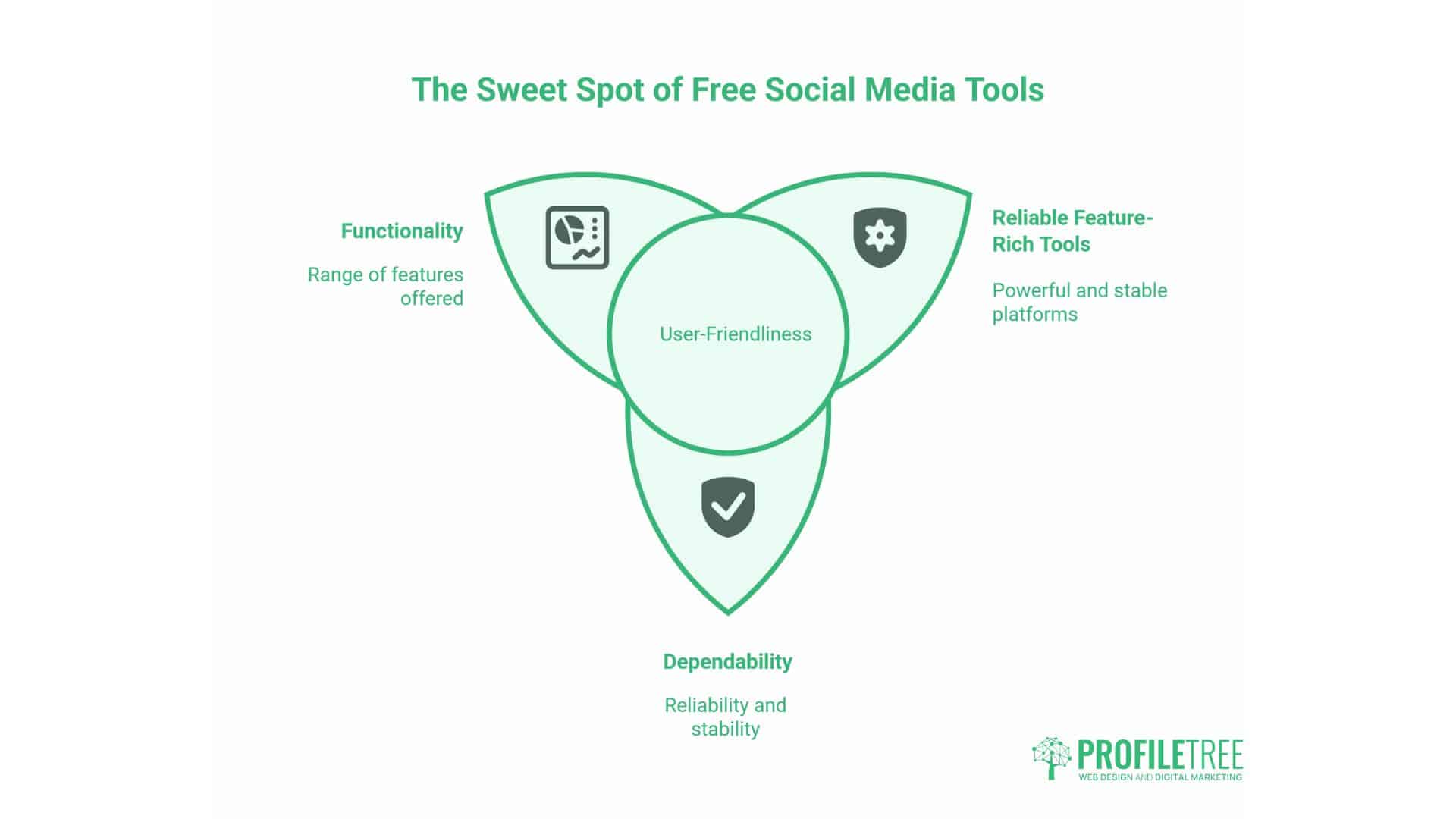
Based on extensive testing with businesses across various sectors, these tools provide the best combination of features, reliability, and usability within their free tiers.
Hootsuite: Comprehensive Twitter Management
Hootsuite built its reputation on Twitter management and continues excelling in that space. The platform enables the simultaneous management of multiple Twitter accounts, allowing for scheduling of up to thirty posts in advance.
The free plan supports three social profiles and allows for thirty scheduled messages at any given time. While these limitations may feel restrictive for agencies managing numerous clients, they work well for individual businesses that operate their own presence.
Hootsuite’s stream-based interface organises information into columns displaying different feeds, mentions, scheduled posts, and analytics. This layout provides at-a-glance awareness of social activity without requiring multiple tabs.
The analytics dashboard tracks follower growth, engagement metrics, and post performance. While not as comprehensive as paid analytics platforms, the free tier provides sufficient data for basic performance monitoring.
When Hootsuite Makes Sense
Businesses heavily invested in Twitter find Hootsuite particularly valuable. If Twitter drives significant business results or serves as a primary customer service channel, Hootsuite’s focused functionality justifies its place in your tool stack.
The platform also serves as a good entry point for businesses new to social media management tools. Its interface is straightforward, and the limitations in the free plan aren’t as restrictive when you’re just starting.
Social Pilot: Multi-Account Coordination
Social Pilot positions itself as a comprehensive management platform for businesses handling multiple social accounts. The tool supports Facebook, Twitter, LinkedIn, Instagram, Pinterest, and TikTok from a single interface.
Bulk scheduling capabilities enable you to upload large quantities of content simultaneously, then assign posts to specific accounts and time slots. This feature significantly reduces the time investment required for content calendar management.
The free plan includes two social accounts and ten scheduled posts per day. While modest, these limits accommodate small businesses managing a presence on just a couple of platforms.
Collaboration features enable team coordination. Multiple users can access the same account, with defined roles controlling who can create, approve, and publish content. This workflow prevents publishing errors and maintains quality control.
Social Pilot’s Practical Applications
Businesses working with external agencies or consultants benefit from Social Pilot’s collaboration model. Business owners often use similar tools to maintain oversight of their social accounts while we handle day-to-day management.
The bulk scheduling feature particularly appeals to businesses with consistent content themes. If you share blog posts, industry news, or recurring promotional content, queuing everything at once saves a substantial amount of time.
Zoho Social: Single-Brand Focus
Zoho Social takes a different approach by focusing on comprehensive management for a single brand rather than spreading functionality across multiple accounts. This concentration offers more advanced features within its free tier than platforms attempting to serve all use cases.
The tool includes bulk scheduling, client database access, and detailed analytics for every connected social profile. However, the single-brand limitation means agencies or businesses managing multiple divisions cannot use the free version effectively.
Real-time monitoring tracks brand mentions and relevant keywords across social platforms. This listening capability helps businesses identify opportunities to join conversations and address customer concerns promptly.
Collaboration features support team workflows with approval processes and shared calendars. Multiple team members can contribute content while maintaining centralised control over what actually publishes.
Ideal Use Cases
Zoho Social works best for established businesses with dedicated social media staff or marketing teams. The single-brand focus offers sufficient functionality for professional management without the expense of premium tools.
Businesses already using other Zoho products may find the integration with Zoho CRM and other suite applications particularly valuable. This ecosystem approach creates seamless data flow between social activity and broader business operations.
BuzzSumo: Content Research and Analysis
BuzzSumo approaches social media from a research perspective, helping you understand what content performs well so you can create your own effectively. The platform analyses Facebook engagement, identifying which content types, topics, and formats resonate most with audiences.
Content discovery features reveal trending topics within your industry. This intelligence informs content calendar planning, ensuring you create content about subjects people actually care about, rather than guessing at their interests.
Competitor analysis shows which content performs best for competitors. While you shouldn’t copy their approach, understanding their successful content provides benchmarks and identifies gaps in your own strategy.
The free version limits searches, but provides sufficient access for occasional research purposes. For businesses developing quarterly content strategies, periodic BuzzSumo research provides direction without requiring paid subscriptions.
Strategic Content Planning
BuzzSumo data answers critical questions about content length, format, and topic selection. If long-form content consistently outperforms short posts in your industry, that insight should inform your content creation approach.
ProfileTree’s content marketing services often incorporate BuzzSumo-style research to ensure client content aligns with proven performance patterns. This data-driven approach reduces the risk of investing resources in content that won’t resonate with the target audience.
BoardReader: Forum and Discussion Monitoring
BoardReader searches forums and discussion boards across the internet, finding conversations about your brand, products, or industry. This capability extends beyond mainstream social platforms to capture discussions happening in niche communities.
Forum mentions often provide more detailed feedback than social media comments. People discussing products in dedicated forums typically offer thoughtful analysis rather than quick reactions. This feedback can inform product development and marketing messaging.
The platform generates charts visualising mention volume over time. These visualisations help identify emerging issues or sudden interest spikes that warrant attention.
Competitive intelligence gathered through forum monitoring reveals how people compare your offerings to alternatives. This unfiltered feedback highlights your actual competitive position rather than the position you assume you hold.
Practical Applications
Businesses in technical or specialised fields find particular value in forum monitoring. If your customers gather in industry-specific forums or technical communities, BoardReader ensures you’re aware of those conversations.
For ProfileTree clients in sectors such as web development or AI implementation, forum discussions often reveal questions and concerns that should be addressed through targeted content marketing and educational resources.
Mention: Brand Monitoring Across Channels
Track brand mentions across social media, news sites, forums, blogs, and other web properties. This comprehensive monitoring ensures you’re aware of all online conversations about your business, regardless of where they occur.
Multi-language monitoring supports businesses operating internationally. The platform tracks mentions in over forty languages, translating them for review. This capability is significant for companies serving diverse markets.
Team coordination features distribute monitoring responsibilities across staff members. You can assign mentions to specific team members for response, ensuring nothing falls through the cracks.
Analytics track mention volume, sentiment, and source. This data reveals whether online conversations about your brand are increasing or decreasing, and whether those conversations are positive or negative.
Managing Online Reputation
Proactive mention monitoring allows you to address negative feedback before it amplifies and to capitalise on positive mentions by thanking customers or sharing testimonials.
For businesses working with ProfileTree on comprehensive digital strategies, mention monitoring feeds into broader reputation management efforts. Social mentions often serve as early indicators of issues that may escalate if left unaddressed.
Making Smart Tool Selections for Your Business
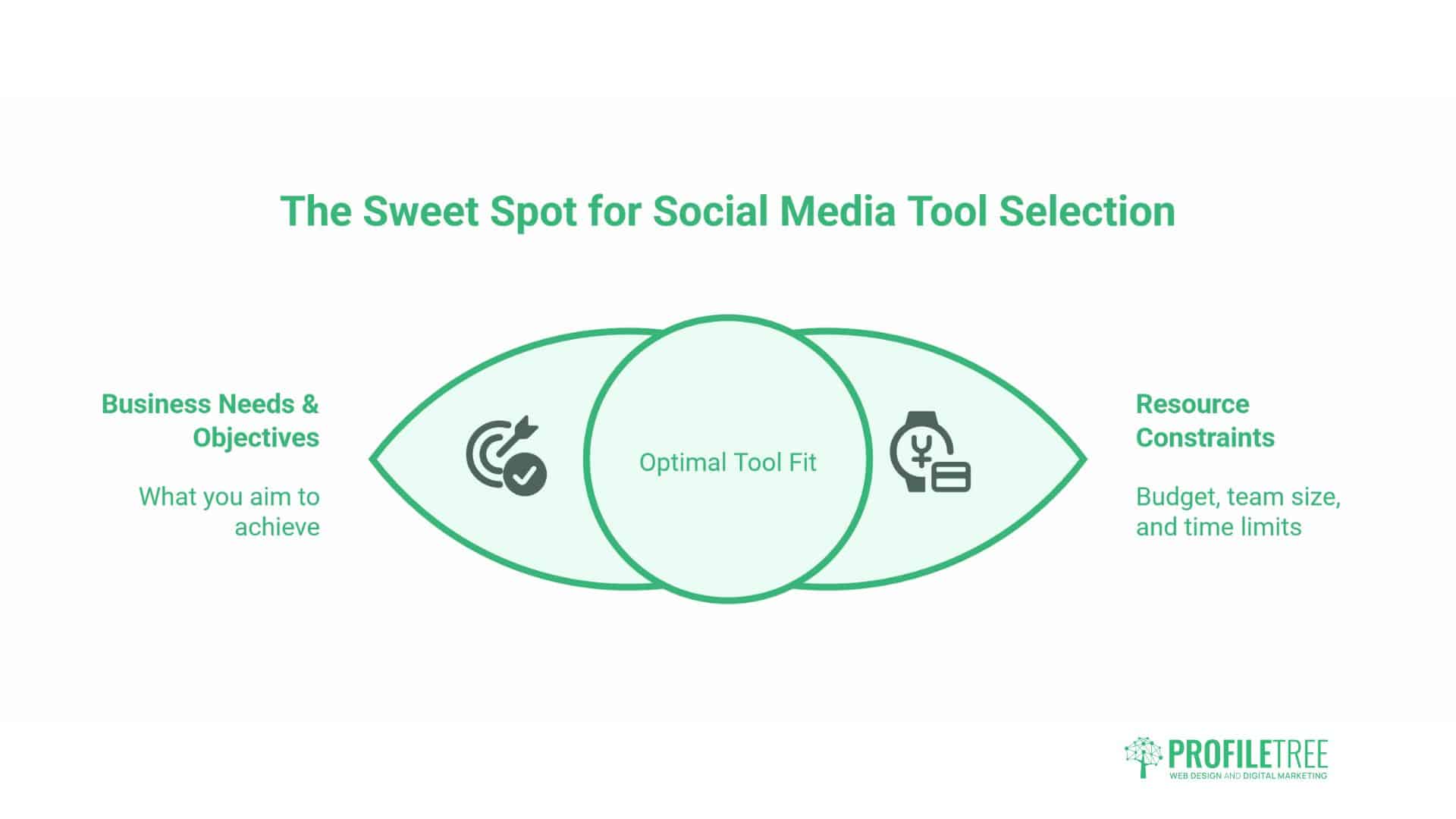
Choosing social media tools requires understanding your specific needs, constraints, and objectives. The best tool for one business may be entirely wrong for another, even if they operate in the same industry.
Start by auditing your current social media workflow. Identify which tasks consume the most time, where errors commonly occur, and which platforms drive the most business value. This assessment reveals where tools can provide the most significant impact.
Consider your team structure. Solo business owners need different tools than marketing teams of five or ten people. Collaboration features matter little if you’re working alone, but become essential in team environments.
Platform priorities should drive tool selection. If Instagram generates the majority of your social traffic, prioritise tools with strong Instagram capabilities over those optimised for Twitter—match tool strengths to your actual business priorities.
The Trial and Error Reality
Expect to test multiple tools before finding the right combination. Free tiers exist partly to facilitate this experimentation. Invest time in proper testing rather than committing to the first tool you encounter.
Set specific evaluation criteria before beginning trials. Define what success looks like—such as time saved, improved engagement, and enhanced team coordination—then assess whether each tool delivers against these criteria.
“The businesses that succeed with social media aren’t necessarily the ones with the biggest budgets,” notes Ciaran Connolly, Director of ProfileTree. “They’re the ones that choose tools aligned with their actual workflow and then use those tools consistently. A simple tool used well beats a sophisticated platform left unutilised.”
Integration Considerations
Tools that integrate with your existing systems provide more value than standalone platforms. If you’re using specific email marketing software, CRM systems, or analytics platforms, verify whether social tools can integrate with them.
ProfileTree’s approach to digital strategy emphasises connected systems over isolated tools. When web analytics, social media data, email performance, and SEO metrics feed into unified reporting, you gain a clearer understanding of how different channels work together to drive business results.
The Strategic Context: Tools Within Broader Digital Marketing
Social media tools shouldn’t operate in isolation from your other digital marketing efforts. They’re most effective when integrated into comprehensive strategies that connect content creation, search visibility, and conversion optimisation.
For businesses building an online presence, social media tools work in conjunction with SEO efforts, content marketing, and website development. Social signals contribute to search rankings, social content drives website traffic, and website content provides material for social sharing.
This interconnected approach requires thinking about tools as part of a larger system rather than isolated solutions. When selecting social media tools, consider how they’ll work with your website platform, email marketing system, and other digital infrastructure.
Building a Cohesive Digital Strategy
ProfileTree’s work with businesses across Northern Ireland, Ireland, and the UK consistently demonstrates that isolated tactics produce limited results. Social media posting without corresponding website content to share, SEO without social amplification, or content creation without a distribution strategy leaves value on the table.
Effective digital strategies treat each channel as part of a coordinated system. Social media tools facilitate this coordination by automating posting, tracking engagement, and measuring the impact of social activity on broader business objectives.
The goal isn’t simply social media presence—it’s business growth. Tools should be selected and used based on their ability to contribute to that ultimate objective.
Common Pitfalls and How to Avoid Them
Even with excellent tools, several common mistakes can limit the effectiveness of social media. Understanding these pitfalls helps you avoid wasting time on activities that don’t contribute to business growth.
Over-Automation at the Expense of Authenticity
Scheduling tools enable consistent posting, but overreliance on automation can create a robotic presence. Audiences quickly recognise when they’re interacting with scheduled content rather than real people.
Balance scheduled content with live engagement. Utilise automation to maintain a baseline presence while reserving time for genuine interactions. Respond personally to comments, join relevant conversations, and share real-time content when appropriate.
Measuring Activity Instead of Results
Follower counts and post frequency measure activity, not results. The question isn’t how many followers you have—it’s whether those followers take actions that benefit your business.
Focus on metrics that connect to business objectives. Website clicks, contact form submissions, demo requests, and sales provide better measures of social media effectiveness than vanity metrics.
Platform Proliferation Without Purpose
Being present on every social platform dilutes effort without corresponding benefit. Different audiences congregate on other platforms, and your business doesn’t need to be everywhere.
Concentrate on platforms where your actual customers spend time. A B2B professional services firm may find LinkedIn far more valuable than TikTok. A visual consumer brand might see strong returns from Instagram and Pinterest while getting little from Twitter.
Ignoring Negative Feedback
Social media monitoring tools surface negative comments and complaints. Ignoring this feedback damages reputation and loses opportunities to demonstrate customer service excellence.
Develop clear protocols for addressing and responding to negative feedback. Quick, professional responses to complaints often transform critics into advocates. Public problem resolution demonstrates your commitment to customer satisfaction.
Future-Proofing Your Social Media Approach
The social media landscape continues to evolve, with new platforms emerging and existing platforms modifying their algorithms and features. Building a sustainable approach requires adaptability rather than rigid commitment to specific tactics.
Staying Current Without Constant Reinvention
Monitor platform changes and emerging trends, but avoid chasing every new feature or platform. Evaluate new developments in relation to whether they align with your business objectives and audience preferences.
The businesses that succeed in the long term maintain core strategic principles while adjusting their tactics as circumstances change. A consistent brand voice, valuable content, and genuine engagement remain essential, regardless of which specific platforms dominate.
Investing in Learning and Development
The effectiveness of social media marketing correlates strongly with knowledge and skill. Investing in training—whether through formal courses, industry resources, or professional development—pays long-term dividends.
ProfileTree’s digital training programmes address this need, helping marketing teams and business owners develop the strategic understanding necessary to make informed decisions about tools, tactics, and resource allocation.
Building Systems Rather Than Dependencies
The most resilient social media operations are those built on systems and processes rather than individual tool dependencies. If a particular tool disappears or undergoes significant changes, well-designed systems enable you to switch tools without disrupting your entire operation.
Document your workflows, maintain content libraries outside of social tools, and ensure key data isn’t locked exclusively within any single platform. This approach provides flexibility and reduces risk.
FAQs
What’s the main advantage of using free social media tools?
Time savings and consistency represent the primary benefits. Free social media tools automate scheduling, centralise management of multiple accounts, and maintain regular posting regardless of busy periods. They free marketing teams to focus on strategy and content creation rather than manual posting tasks.
How do I choose between different free social media tools?
Start by identifying your specific needs. If you primarily use Twitter, tools optimised for that platform make sense. If you manage multiple accounts across different networks, look for tools with strong multi-platform support. Test several options using their free tiers before committing to any particular tool.
Do free versions provide enough functionality for businesses?
For small to medium businesses, free versions often provide sufficient functionality. Limitations typically involve the number of accounts you can manage, the number of scheduled posts allowed, or the number of team members supported. Evaluate whether free tier restrictions align with your actual needs before assuming you need paid features.
What are the risks of using free social media tools?
Data privacy represents the primary concern. Some free tools collect and use your information for their own purposes. Security vulnerabilities may also exist in free tools that lack the resources for robust security measures. Review privacy policies and security practices before connecting business accounts to any tool.
Taking Action: Next Steps for Your Business
Understanding tools provides little value without implementation. Transform this information into business results through systematic action.
Begin with a social media audit. Document which platforms you currently use, how much time you spend on social media tasks, and what results you’re achieving. This baseline measurement enables you to assess whether tool adoption enhances performance.
Select one tool to implement first. Rather than attempting to adopt multiple tools simultaneously, focus on implementing one tool well. Once that tool becomes part of your routine, add others as needed.
Establish clear success metrics before implementation. Define what improvement looks like—such as time saved, increased engagement, or generated leads—so you can objectively assess whether the tool delivers value.
Working with Digital Strategy Professionals
For businesses seeking comprehensive digital growth, social media tools represent a key component of a broader strategy. ProfileTree works with companies across Northern Ireland, Ireland, and the UK to develop integrated approaches connecting web design, SEO, content marketing, and social media into cohesive systems.
Our expertise in AI training and implementation enables businesses to understand how emerging technologies will transform social media marketing. From AI-powered content creation to predictive analytics, understanding these developments positions your business to capitalise on opportunities others miss.
Whether you need hands-on implementation support, strategic guidance, or skills development for your team, the path to effective social media marketing begins with understanding how tools and strategy work together to drive business growth.
The tools exist. The platforms are accessible. The question is whether you’ll use them strategically or let social media remain an unfocused activity, consuming time without delivering results. The choice, and the opportunity, is yours.