
5 Ways to Use AI for Smarter Keyword Research and Clustering: A Guide
Table of Contents
AI for Smarter Keyword Research and Clustering has become essential as the digital marketing landscape has dramatically shifted. While businesses once competed for a handful of obvious keywords, they now navigate a complex ecosystem where understanding user intent, predicting search behaviour, and mapping intricate topic relationships determine success. For marketing managers and business owners, this complexity presents both a challenge and an opportunity—those who master advanced keyword strategies gain a decisive advantage over competitors still relying on outdated approaches.
Artificial intelligence has emerged as the definitive solution to this complexity. By processing vast amounts of search data, identifying patterns invisible to human analysts, and continuously adapting to algorithm changes, AI-powered keyword research tools deliver insights that transform digital marketing effectiveness. The difference between AI-enhanced keyword strategies and traditional methods isn’t incremental—it’s transformative, often representing the difference between digital irrelevance and market leadership.
For organisations across Northern Ireland, Ireland, and the UK, implementing AI-driven keyword research isn’t merely about technical SEO—it directly impacts business outcomes. Companies that leverage these advanced approaches experience significantly higher visibility in relevant searches, more qualified traffic, improved conversion rates, and clearer attribution of marketing activities to revenue. This guide examines how forward-thinking businesses are implementing AI for keyword research and clustering to drive measurable growth in increasingly competitive digital markets.
Understanding the Evolution of AI for Smarter Keyword Research
Before diving into AI applications, it’s essential to recognise how keyword research has evolved over the past decade. This evolution provides context for why AI tools have become not just helpful but necessary for businesses seeking to optimise their digital presence.
Traditional keyword research once involved simple brainstorming sessions and basic keyword tools that provided search volumes and competition metrics. Marketers would target exact-match keywords, often at the expense of natural-sounding content. This approach has become increasingly outdated as search engines have developed a more nuanced understanding of user intent and context.
From Basic Metrics to User Intent
The first significant shift in keyword research came with the recognition that understanding user intent is far more valuable than simply tracking search volume. Keywords began to be categorised into informational, navigational, transactional, and commercial investigation types. This categorisation required a deeper analysis of how users interact with search engines and what they truly want when entering specific queries.
The Rise of Long-Tail Keywords and Natural Language
With the growth of voice search and conversational AI assistants, users began searching in more natural, question-based formats. Long-tail keywords—longer, more specific phrases with lower search volume but higher conversion potential—gained prominence. This shift demanded more sophisticated approaches to keyword discovery and organisation.
Semantic Search and Topic Clusters
Google’s algorithm updates, particularly Hummingbird in 2013 and BERT in 2019, dramatically changed how search engines interpret queries. These updates allowed Google to understand the context and relationships between words, rather than simply matching terms. As a result, SEO strategies evolved toward topic clusters and semantic relevance rather than isolated keywords.
How AI Transforms Keyword Research and Analysis
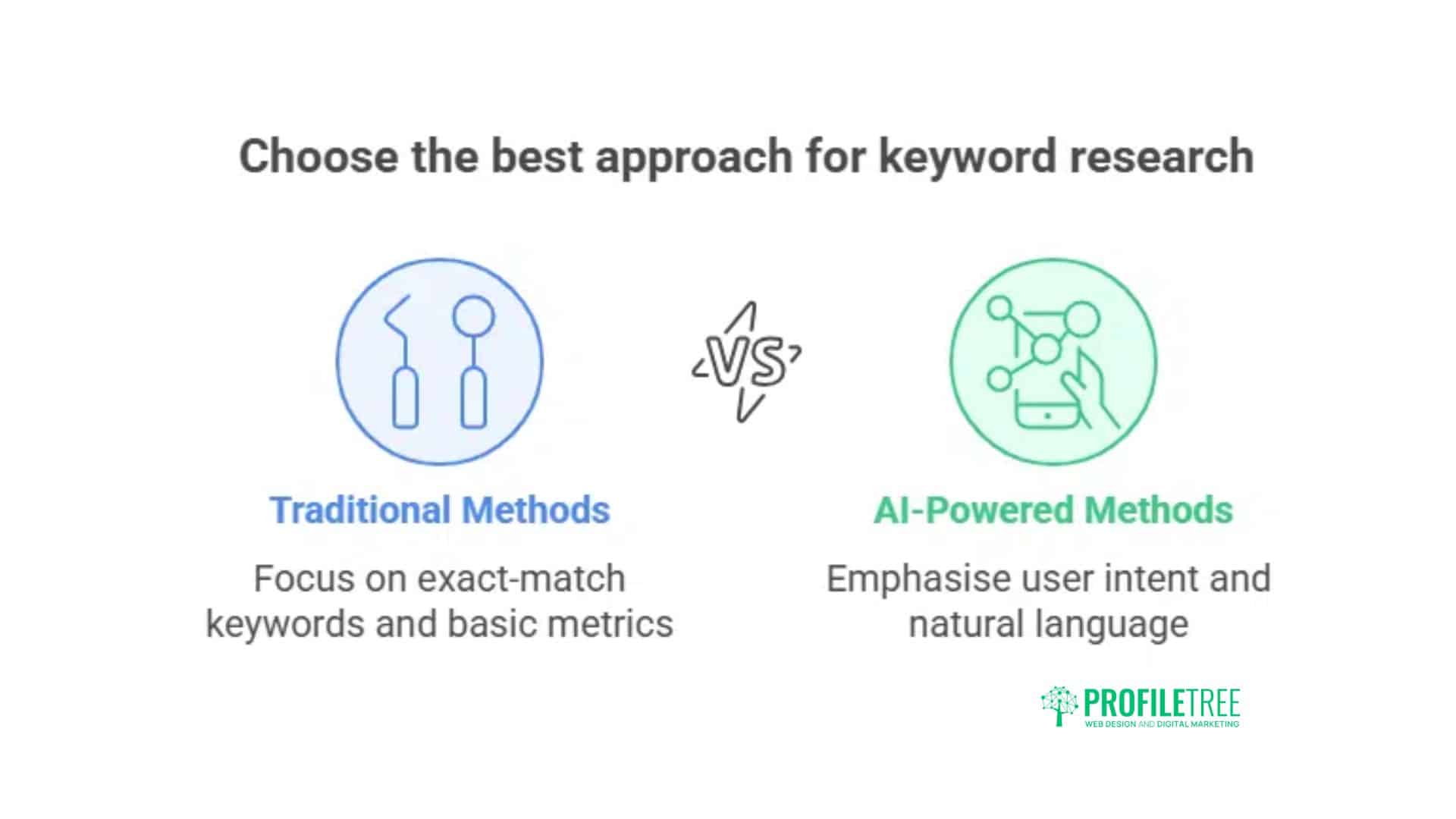
Artificial intelligence has revolutionised keyword research by bringing unprecedented processing power, pattern recognition, and predictive capabilities to this critical marketing function. Rather than replacing human marketers, AI serves as a powerful ally, handling the data-intensive aspects of keyword research while allowing strategists to focus on creative implementation.
The transformation is particularly relevant for businesses in competitive markets across the UK and Ireland, where slight advantages in search visibility can translate to significant business opportunities.
Natural Language Processing for Better Keyword Discovery
Natural Language Processing (NLP) algorithms can analyse vast amounts of text data to identify patterns, relationships, and contextual meanings that would be impossible for humans to process manually.
NLP-powered tools can:
- Identify semantic relationships between terms that may not be obvious
- Recognise variations in how different user segments phrase similar queries
- Extract relevant keywords from competitor content and industry publications
- Predict emerging search trends by analysing changes in language patterns
Machine Learning for Predictive Keyword Insights
Machine learning algorithms go beyond historical data analysis by identifying patterns and making predictions about future search behaviour. This predictive capability is invaluable for staying ahead of trends rather than merely reacting to them.
AI doesn’t just help businesses understand what keywords are working today—it helps them anticipate what keywords will drive traffic tomorrow,” explains Ciaran Connolly, Director of ProfileTree. This forward-looking approach gives our clients a significant competitive advantage, particularly in fast-evolving industries.
Machine learning applications in keyword research include:
- Forecasting seasonal search trends with greater accuracy
- Identifying emerging topics before they reach peak search volume
- Predicting which keyword variations will generate the highest conversion rates
- Automatically adjusting keyword strategies based on performance data
AI-Powered Competitor Analysis
Understanding competitor keyword strategies has always been valuable, but AI takes this analysis to new levels of depth and insight.
Advanced AI tools can:
- Map competitor keyword landscapes across hundreds or thousands of terms
- Identify keyword gaps and opportunities that manual analysis might miss
- Analyse the content quality and relevance factors that help competitors rank
- Recommend specific content improvements to outperform competing pages
Implementing AI Tools for Advanced Keyword Clustering
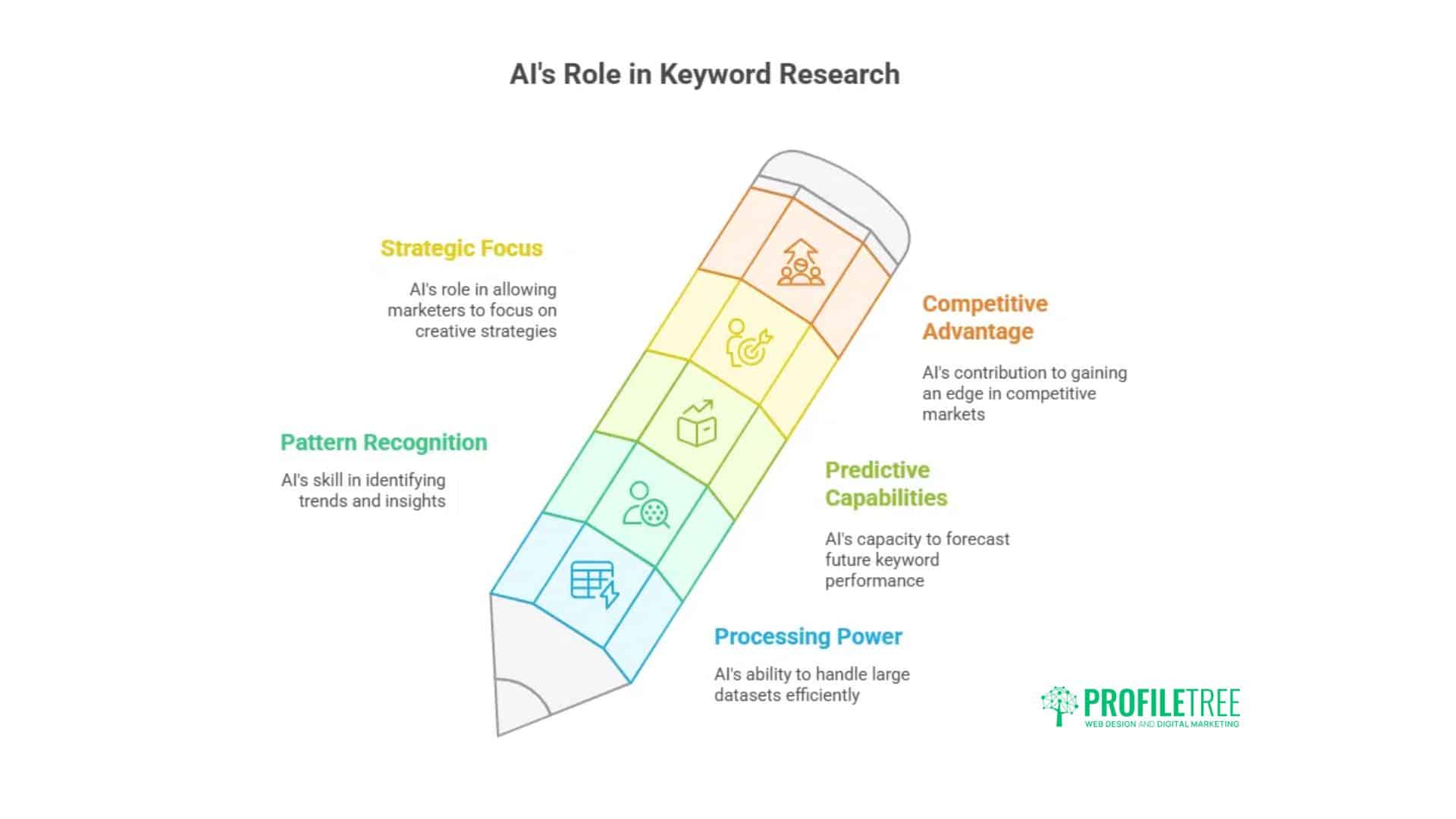
Keyword clustering—the process of organising keywords into thematically related groups—has become essential for content planning and site architecture. AI dramatically improves this process through more sophisticated pattern recognition and relationship mapping than was previously possible.
For businesses with large websites or complex product offerings, AI-driven clustering can uncover opportunities that would be nearly impossible to identify manually.
Semantic Clustering Beyond Simple Word Matching
Traditional keyword clustering often relies on simple word matching or broad categorisation. AI-powered semantic clustering goes much deeper by understanding the contextual relationships between terms.
Examples of advanced semantic clustering include:
- Identifying clusters based on shared user intent rather than shared words
- Recognising when apparently different keywords actually address the same user need
- Creating multi-dimensional clusters that account for industry, location, and user demographics
- Automatically generating topic structures that align with how search engines understand content relationships
Dynamic Cluster Adjustment Based on Performance Data
AI systems can continuously refine keyword clusters based on actual performance data, creating a feedback loop that improves results over time.
This adaptive approach includes:
- Automatically reorganising clusters based on changing user behaviour
- Identifying when formerly related terms begin to diverge in intent or audience
- Suggesting content adjustments when specific cluster elements underperform
- Highlighting opportunities to expand content around high-performing cluster components
Localised Clustering for Regional Businesses
For businesses serving specific regions in Northern Ireland, Ireland, or elsewhere in the UK, AI can identify subtle variations in how local users search for products or services.
Localised clustering benefits include:
- Identifying regional terminology differences that affect search behaviour
- Recognising local concerns or priorities that influence keyword selection
- Mapping competitors within specific geographic markets
- Combining location data with search intent for more targeted content
Practical Applications for Businesses of All Sizes
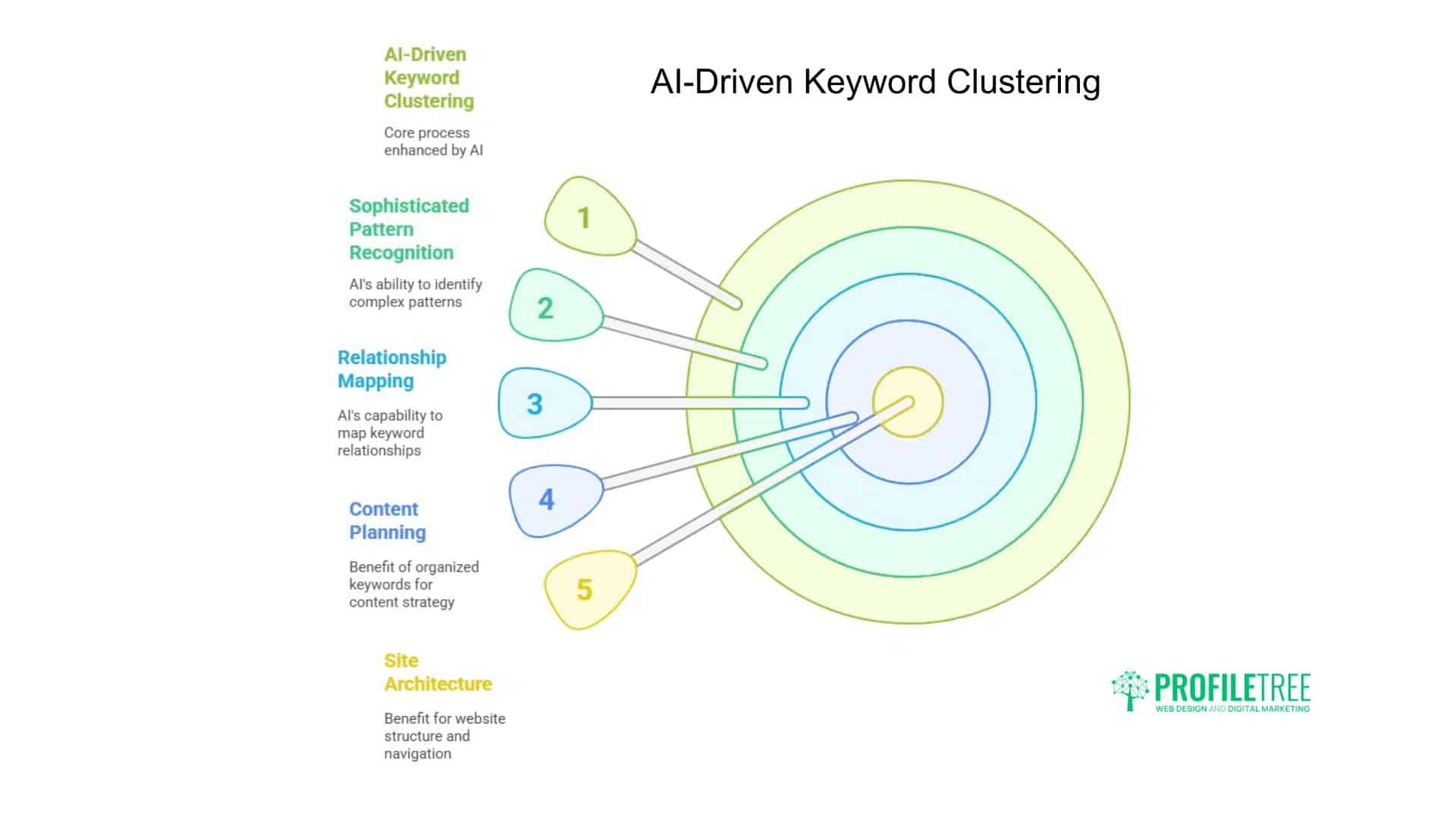
The power of AI in keyword research isn’t limited to large enterprises or digital-native companies. Businesses of all sizes across Northern Ireland and beyond can implement AI-enhanced keyword strategies to improve their visibility and marketing effectiveness.
These practical applications make AI keyword research accessible and valuable regardless of your organisation’s size or technical resources.
Optimising Local SEO for Regional Businesses
For small and medium businesses serving local markets, AI can dramatically improve local search visibility by identifying the specific terms and questions that drive local customers to businesses like yours.
Local SEO applications include:
- Identifying neighbourhood-specific search patterns
- Recognising service area variations in keyword usage
- Mapping keyword opportunities to Google Business Profile optimisation
- Connecting online search behaviour to offline customer journeys
Content Calendar Planning with AI-Driven Insights
Content marketing becomes more effective when it’s driven by data rather than guesswork. AI-powered keyword research provides a foundation for content planning that addresses actual user needs throughout the year.
Content planning applications include:
- Identifying seasonal keyword opportunities months in advance
- Mapping keyword clusters to specific buyer journey stages
- Prioritising content topics based on potential traffic and conversion value
- Creating balanced content plans that address various audience segments
E-commerce Product Page Optimisation
Online retailers can leverage AI keyword insights to ensure product pages target the most relevant and valuable search terms, improving both visibility and conversion rates.
E-commerce applications include:
- Identifying specific product feature terminology that drives searches
- Recognising question patterns that indicate purchase intent
- Mapping keyword variations to different product categories
- Optimising category structure based on user search patterns
Measuring Success with AI-Powered Keyword Strategies
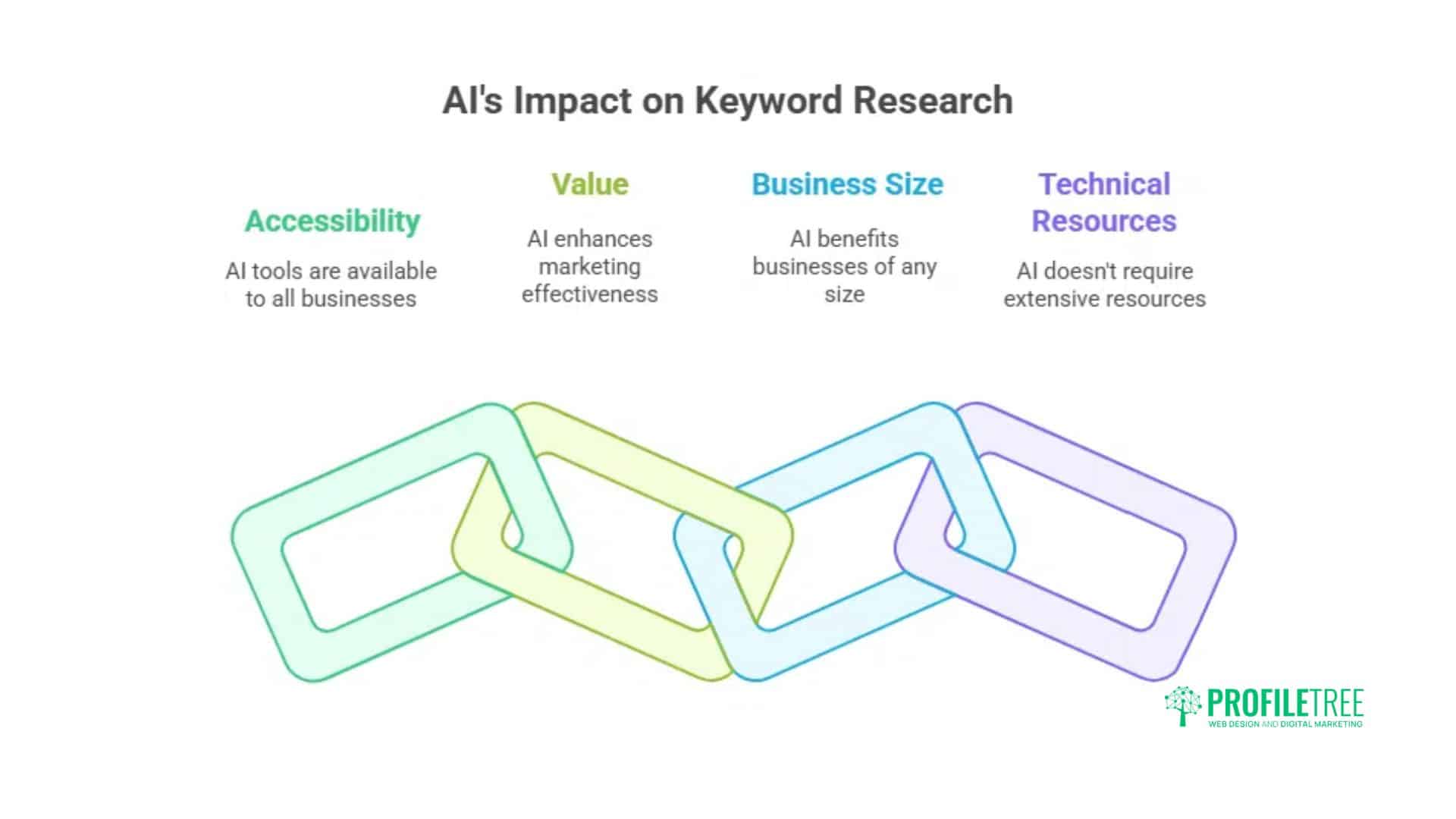
Implementing AI for keyword research is just the beginning. Measuring and optimising your approach ensures continuous improvement and maximum return on your marketing investment.
With the proper measurement framework, businesses can demonstrate clear connections between keyword strategy improvements and business outcomes.
Beyond Rankings: Comprehensive Performance Metrics
While keyword rankings remain important, AI allows for more sophisticated performance measurement that connects keyword strategy to business results.
Advanced metrics include:
- Search visibility within topic clusters rather than individual keywords
- Content engagement patterns across keyword-driven entry points
- Conversion path analysis from specific keyword categories
- Return on investment calculations for content developed around AI-identified opportunities
Competitive Benchmarking with AI-Enhanced Precision
Understanding your performance relative to competitors provides essential context for your keyword strategy. AI tools offer deeper competitive insights than traditional approaches.
Competitive benchmarking applications include:
- Topic authority comparisons across key content areas
- Share of voice measurements for specific keyword clusters
- Content gap analysis with prioritised opportunity scoring
- Predictive modelling of competitive landscape changes
Continuous Optimisation Through Machine Learning
The most powerful AI keyword tools incorporate learning loops that continuously improve results based on performance data.
Optimisation applications include:
- Automated content recommendations based on keyword performance
- Dynamic adjustment of topic priorities based on changing search patterns
- Personalised keyword strategies for different audience segments
- Predictive content scoring to focus resources on high-potential topics
Implementing AI Keyword Research in Your Business Strategy
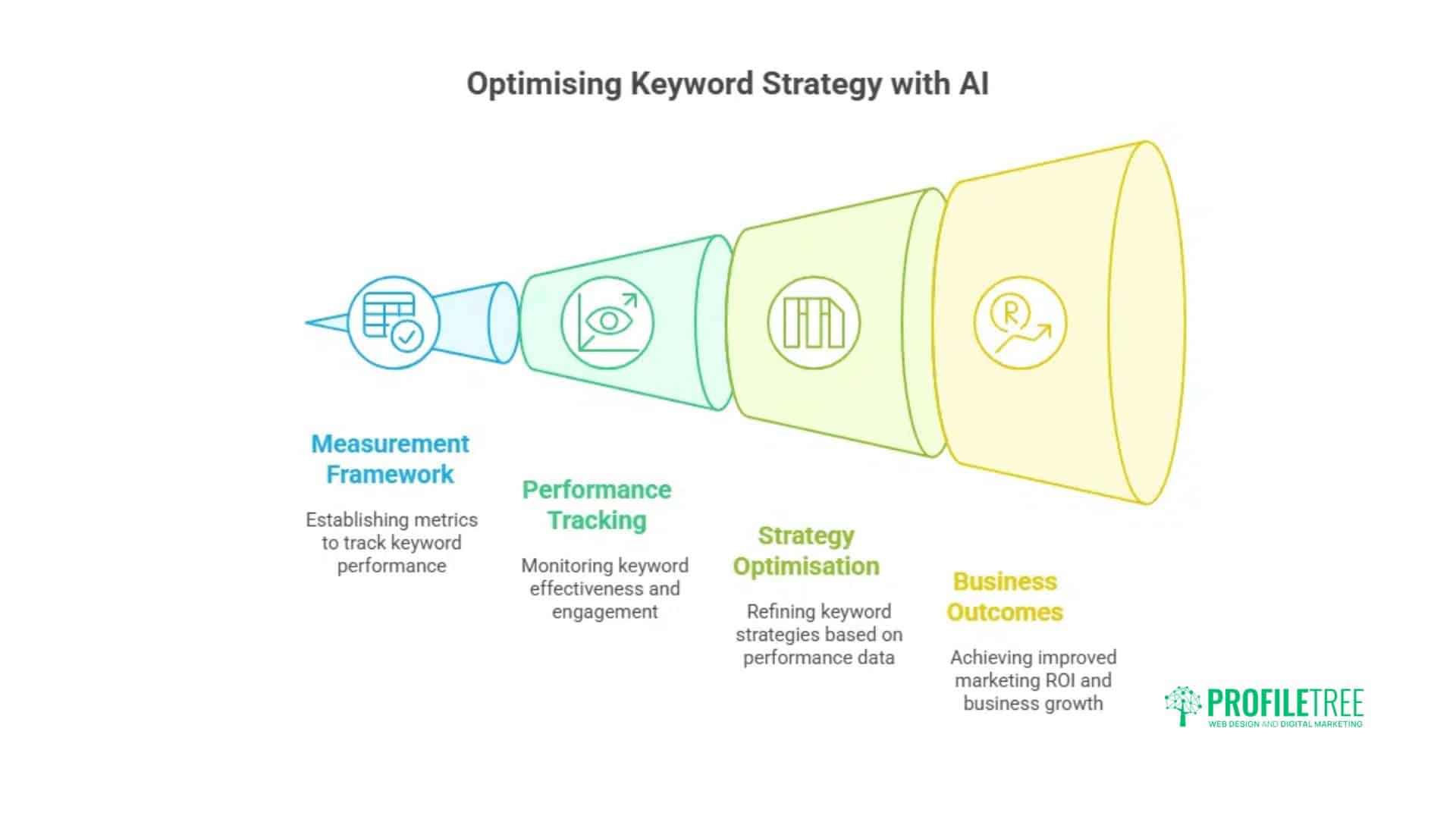
Moving from theory to practice requires a systematic approach to integrating AI-powered keyword research into your broader business and marketing strategy.
For organisations in Northern Ireland, Ireland, and the UK looking to enhance their digital marketing effectiveness, these implementation steps provide a roadmap for success.
Auditing Your Current Keyword Approach
Before implementing new AI tools, it’s essential to understand your current keyword landscape and identify specific improvement opportunities.
Audit components should include:
- Evaluation of existing keyword targets and their alignment with business goals
- Assessment of content gaps relative to your keyword strategy
- Analysis of current keyword performance across owned properties
- Review of manual processes that could benefit from automation
Selecting the Right AI Tools for Your Needs
The marketplace offers numerous AI-powered keyword and SEO tools, ranging from comprehensive enterprise platforms to focused solutions for specific tasks. Selecting the right tools depends on your business needs, technical capabilities, and budget.
Selection criteria should include:
- Alignment with your specific industry and content types
- Integration capabilities with your existing marketing technology stack
- Learning curve and training requirements for your team
- Scalability to accommodate business growth
- Cost relative to expected return on investment
Building Internal Capabilities and Processes
Successfully implementing AI keyword research requires not just tools but also the right skills and processes to leverage these tools effectively.
Capability development should focus on:
- Training content creators to work with AI-generated keyword insights
- Establishing workflows that incorporate AI recommendations into content planning
- Developing interpretation skills to translate AI data into strategic decisions
- Creating feedback mechanisms to continuously improve AI recommendations
The Future of AI in Keyword Research and SEO
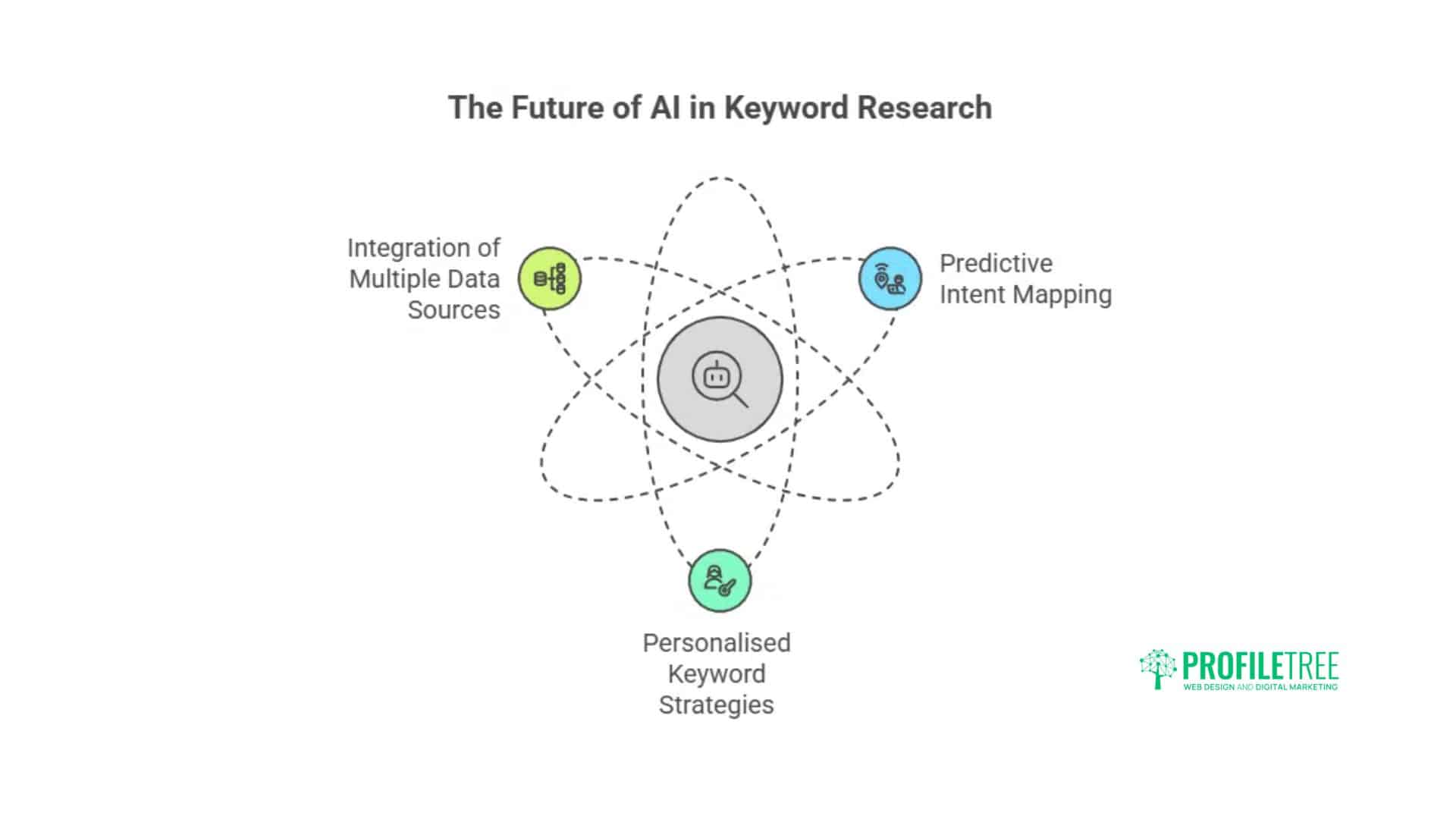
As AI technology continues to evolve, keyword research will become increasingly sophisticated, predictive, and personalised. Staying informed about emerging trends helps businesses prepare for future opportunities and challenges.
The next frontier of AI keyword research will likely include several transformative developments worth monitoring.
Predictive Intent Mapping
Future AI systems will likely move beyond understanding current search patterns to predicting how user intent will evolve, allowing businesses to prepare content before search trends fully materialise.
Predictive capabilities may include:
- Early identification of emerging questions within topic areas
- Forecasting of terminology shifts before they appear in search data
- Prediction of new topics sparked by industry developments or news events
- Anticipation of seasonal trends with increasing precision
Personalised Keyword Strategies at Scale
As AI systems gather more data about specific user segments, keyword strategies will become increasingly personalised while remaining manageable at scale.
Personalisation applications may include:
- Segment-specific keyword recommendations based on past behaviour
- Dynamic content adjustment based on user entry points
- Personalised topic clustering based on audience interests
- Custom measurement frameworks for different business objectives
Integration of Multiple Data Sources
Future AI keyword systems will likely incorporate diverse data sources beyond traditional search data, creating richer contextual understanding of user needs and behaviour.
Integrated data may include:
- Social conversation analysis alongside search behaviour
- Customer support interactions and common questions
- Review and feedback content from across the web
- Industry publications and emerging terminology
How Can ProfileTree Help?
ProfileTree specialises in implementing AI-powered keyword research and SEO strategies for businesses across Northern Ireland, Ireland, and the UK. Our Belfast-based team combines technical AI expertise with practical business understanding to deliver measurable results for organisations of all sizes.
We focus on making enterprise-level AI accessible to SMEs through custom tool integration that works with existing systems, comprehensive staff training on AI-powered keyword research tools, and automated workflow development that continuously monitors performance and identifies new opportunities.
Our comprehensive approach covers an advanced SEO strategy beyond traditional optimisation by combining technical SEO knowledge with AI-powered insights, using machine learning tools for technical audits and developing semantic SEO strategies that build topic authority.
Additionally, our content marketing services are fundamentally enhanced by AI keyword research, creating strategically aligned content through AI-driven planning, video production and animation services that target specific keyword opportunities, and continuous content optimisation using AI performance analysis.
ProfileTree also offers digital training workshops that help businesses build internal AI and SEO capabilities through practical sessions focused on immediate applications rather than theory, covering AI adoption, SEO fundamentals, and comprehensive digital strategy development aligned with business objectives.
Contact ProfileTree to discover how AI-powered keyword research can transform your digital marketing effectiveness and drive measurable business growth.
Conclusion: Taking the Next Step with AI-Powered Keyword Research
AI has fundamentally transformed keyword research from a periodic, manual process to a continuous, intelligent system that adapts to changing user behaviour and business needs. For businesses in Northern Ireland, Ireland, and across the UK, embracing these advances isn’t optional—it’s essential for maintaining competitive advantage in increasingly sophisticated digital markets.
The organisations that will thrive in this environment are those that combine powerful AI tools with strategic human insight, creating keyword strategies that not only drive traffic but connect with users at a deeper level.
Whether you’re just beginning to explore AI applications or looking to enhance your existing approach, remember that successful implementation is a journey rather than a destination. Start with clear business objectives, select appropriate tools, build necessary skills, and commit to continuous learning and improvement.
By doing so, you’ll position your business to benefit from the full potential of AI-powered keyword research—not just today, but as this technology continues to evolve in the years ahead.
ProfileTree specialises in helping businesses across Northern Ireland, Ireland, and the UK implement effective AI solutions for SEO, content marketing, and digital strategy. Our team combines technical expertise with strategic insight to deliver measurable results for organisations of all sizes. Contact us to learn how AI-powered keyword research can transform your digital marketing effectiveness.