
What Is Quality Assurance? Thriving for Perfection
Table of Contents
What is quality assurance? Quality assurance is a systematic approach to preventing defects and maintaining consistent standards across products, services, and business processes. Unlike reactive methods that fix problems after they occur, quality assurance focuses on prevention—establishing procedures and policies that stop issues from reaching customers in the first place. The industrial revolution first highlighted the need for quality assurance when manufacturing shifted from small-scale craft production to mass production systems, creating new challenges around consistency and reliability that required systematic solutions.
Understanding what quality assurance is becomes even more critical in today’s digital landscape. Modern businesses operate across multiple channels simultaneously: websites, social media platforms, email campaigns, and digital advertising. Each touchpoint represents an opportunity to build trust or damage reputation, with consumer expectations rising accordingly—a single poor experience can result in lost customers and negative reviews that spread instantly across social networks.
Quality assurance is the foundation for building customer confidence and business credibility. It represents a proactive commitment to excellence that distinguishes successful organisations from their competitors. This comprehensive guide explores quality assurance principles, practical applications, and implementation strategies across traditional business operations and modern digital marketing environments.
Understanding Quality Assurance Fundamentals
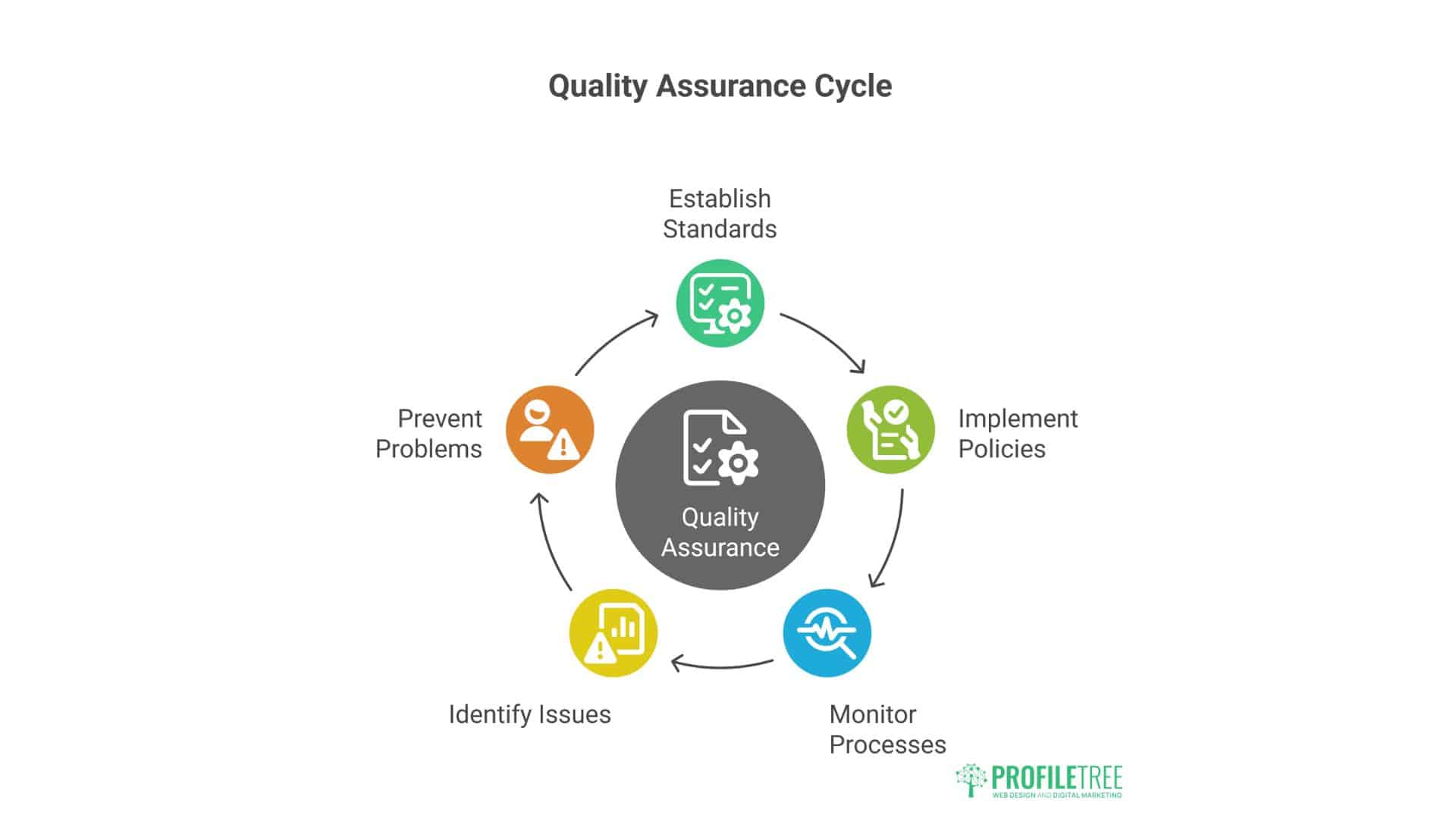
Quality assurance encompasses systematic policies and procedures to guarantee that products and services meet predetermined standards. Unlike reactive approaches that address problems after they occur, QA operates on prevention principles, identifying potential issues before they impact customers.
The methodology combines two essential approaches: preventive and corrective measures. Preventive strategies establish regulations and protocols that minimise error rates and eliminate common mistakes. Corrective measures define actions required when errors occur, including immediate response protocols and damage mitigation procedures.
Quality assurance extends beyond physical products to encompass services, digital experiences, and customer interactions. This includes website functionality, content accuracy, campaign performance, and user experience consistency for digital agencies and modern businesses.
The Business Case for Quality Assurance
Customer expectations have fundamentally shifted. Modern consumers research extensively before purchasing, compare options across multiple platforms, and share experiences publicly through reviews and social media. In this environment, quality becomes a primary differentiator.
Quality assurance directly impacts business outcomes through:
- Brand Protection: Consistent quality delivery builds reputation and customer loyalty. Each positive interaction strengthens brand equity, while quality failures can cause lasting damage beyond individual transactions.
- Financial Performance: Quality issues create hidden costs through customer complaints, refunds, rework, and lost opportunities. Systematic QA prevents these expenses while improving operational efficiency.
- Competitive Advantage: Businesses with robust quality systems deliver more reliable experiences than competitors. This reliability becomes a key factor in customer decision-making processes.
- Risk Management: Quality assurance identifies potential problems before they escalate into crises. This proactive approach protects businesses from regulatory violations, safety issues, and reputation damage.
Quality Assurance Applications Across Industries
Quality assurance principles adapt to different business contexts while maintaining core objectives of prevention and consistency. Understanding these applications helps organisations develop appropriate quality frameworks for their specific circumstances.
Traditional Manufacturing and Product Quality
Manufacturing environments require comprehensive quality control covering design, materials, production processes, and finished products. Design errors can create safety hazards or functional failures that affect thousands of customers. Material quality directly impacts product performance and durability. Production process variations can introduce defects that compromise product integrity.
Manufacturing quality assurance includes supplier qualification, incoming material inspection, in-process monitoring, and final product testing. These systematic checkpoints prevent defective products from reaching customers while identifying process improvements that enhance overall quality.
When design flaws or manufacturing defects are discovered after product launch, quality assurance protocols require immediate action. This includes product recalls, customer notification, corrective actions, and compensation for affected customers.
Service Industry Quality Management
Service businesses face unique quality challenges because services are intangible, variable, and consumed simultaneously with production. Quality depends heavily on employee performance, customer interactions, and consistent execution.
Service quality assurance focuses on standardising procedures, training staff, monitoring customer interactions, and measuring satisfaction. Clear service standards define expected performance levels across all customer touchpoints. Regular training programmes develop employee skills and reinforce quality expectations.
Customer feedback systems capture quality perceptions in real-time, enabling rapid response to service failures. Mystery shopping programmes and customer surveys provide objective quality measurements that guide improvement initiatives.
Human Error Prevention
Human errors occur in every business environment, regardless of industry or company size. These errors range from minor inconveniences to serious safety hazards or financial losses. Quality assurance systems acknowledge human fallibility while implementing safeguards that minimise the impact of errors.
Effective error prevention combines system design, process documentation, training programmes, and verification procedures. System design incorporates alerts and warnings that prevent common mistakes. Process documentation provides clear instructions that reduce confusion and inconsistency.
Training programmes develop employee competencies while reinforcing quality expectations. Verification procedures create checkpoints that catch errors before they affect customers. When errors do occur, incident analysis identifies root causes and prevents recurrence.
Digital Marketing Quality Assurance
Digital marketing quality assurance has become critical for businesses operating in online environments. The complexity of digital campaigns, multiple platform integration, and real-time customer interactions creates numerous opportunities for errors that can damage brand reputation and waste marketing budgets.
“Digital marketing without proper quality assurance is like driving with your eyes closed—you might reach your destination, but the risks far outweigh any potential benefits,” explains Ciaran Connolly, Director of ProfileTree. “We’ve seen businesses lose thousands of pounds through simple mistakes that could have been prevented with basic QA processes.”
Website and Content Quality Control
Website quality assurance encompasses technical functionality, content accuracy, user experience, and performance optimisation. Broken links frustrate users and damage search engine rankings. Outdated content misleads customers and reduces credibility. Slow loading speeds increase bounce rates and decrease conversion rates.
Comprehensive website QA includes:
- Technical Testing: Regular checks for broken links, form functionality, payment processing, and mobile compatibility. Automated tools can monitor website health continuously, alerting teams to issues before they impact users.
- Content Review: Systematic proofreading, fact-checking, and brand voice consistency across all website content. This includes product descriptions, blog posts, landing pages, and customer support materials.
- User Experience Validation: Testing navigation paths, conversion funnels, and accessibility standards. User testing sessions reveal issues that automated tools might miss.
- Performance Monitoring: Tracking page load speeds, server response times, and database performance. Performance issues directly impact user satisfaction and search engine rankings.
Search Engine Optimisation Quality Management
SEO quality assurance prevents technical issues that can devastate organic search performance. A single robots.txt error can block search engines from crawling entire websites. Duplicate content issues can trigger penalties that reduce visibility. Missing meta descriptions waste valuable search result real estate.
SEO QA processes include regular technical audits, content optimisation reviews, and competitor monitoring. Technical audits identify crawling issues, indexing problems, and site structure concerns. Content reviews check keyword implementation, meta tag optimisation, and internal linking strategies.
Link quality assessment prevents association with low-quality or spam websites that can trigger search engine penalties. Regular ranking monitoring identifies performance changes that require investigation and response.
Pay-Per-Click Campaign Quality Control
Due to direct budget impact and immediate visibility, PPC campaigns require rigorous quality control. Misconfigured targeting wastes advertising spend on irrelevant audiences. Broken tracking codes prevent accurate performance measurement. Poor landing page experiences increase costs and reduce conversion rates.
PPC quality assurance includes campaign setup verification, ad copy review, landing page testing, and performance monitoring. Campaign verification checks targeting settings, budget allocation, and bid strategies. Ad copy review addresses accuracy, compliance, and brand consistency.
Landing page testing verifies functionality, loading speed, and conversion tracking. Performance monitoring identifies declining metrics that require immediate attention and optimisation.
Email Marketing Quality Standards
Email marketing quality failures can damage sender reputation, reduce deliverability rates, and frustrate subscribers. Broken links waste engagement opportunities. Personalisation errors create negative impressions. Non-compliant unsubscribe processes violate regulations and risk penalties.
Email QA protocols include template testing, content review, deliverability checks, and compliance verification. Template testing covers rendering across different email clients and devices. Content review addresses accuracy, personalisation, and call-to-action effectiveness.
Deliverability testing identifies potential spam triggers that could reduce inbox placement rates. Compliance verification covers data protection requirements, unsubscribe functionality, and advertising regulations.
Social Media Quality Management
Social media mistakes can spread rapidly and cause significant brand damage. Incorrect information, inappropriate content, or poor customer service responses become public immediately. Response consistency across platforms affects brand perception and customer expectations.
Social media QA includes content approval processes, response guidelines, and monitoring systems. Content approval prevents the publication of inappropriate or incorrect material, and response guidelines maintain a consistent brand voice across all customer interactions.
Monitoring systems track mentions, comments, and messages to identify issues requiring immediate attention. Crisis response procedures address negative situations quickly and professionally.
Quality Assurance vs Quality Control: Understanding the Difference
Quality assurance and quality control are frequently confused terms that serve different functions within comprehensive quality management systems. Understanding these distinctions helps organisations implement appropriate strategies for their specific needs.
Quality assurance focuses on process prevention—establishing systems that prevent defects from occurring. It’s strategic, proactive, and concerned with process design and implementation. QA asks: “Are we following the right processes to achieve quality outcomes?”
Quality control focuses on product detection—identifying finished product or service defects. It’s tactical, reactive, and concerned with testing and inspection. QC asks: “Does this specific output meet our quality standards?”
Both functions are necessary for comprehensive quality management. Quality assurance creates the framework for consistent performance, while quality control verifies that the framework produces acceptable results.
Implementation Framework for Your Business

Implementing quality assurance requires systematic planning, clear objectives, and organisational commitment. Success depends on leadership support, employee engagement, and a culture of continuous improvement.
Defining Quality Objectives and Standards
Quality implementation begins with defining what quality means for your specific business context. Generic quality statements provide insufficient guidance for practical implementation. Specific, measurable quality objectives create actionable targets that employees can understand and achieve.
Quality objectives should align with business goals, customer expectations, and industry standards. Customer feedback, competitor analysis, and regulatory requirements inform quality definition processes. Regular review and updates keep quality standards relevant as business conditions change.
Documentation makes quality standards accessible and consistent across the organisation. Written procedures reduce variation in implementation while providing training resources for new employees. Clear quality metrics enable objective performance measurement and improvement tracking.
Establishing Roles and Responsibilities
Successful quality assurance requires clear accountability structures that assign specific responsibilities to individuals or teams. Quality cannot be “everyone’s responsibility” because this typically results in no one taking ownership when problems occur.
Quality responsibilities vary by organisation size and structure. Larger organisations may have dedicated quality managers or departments. Smaller businesses often distribute quality responsibilities across existing roles while designating overall quality leadership.
Key quality roles include:
- Quality Leadership: Responsible for quality strategy, policy development, and performance monitoring. This role typically reports to senior management and has the authority to implement necessary changes.
- Process Owners: Responsibility for quality within specific business processes or departments. Process owners implement quality procedures, monitor performance, and identify improvement opportunities.
- Quality Champions: Frontline employees who promote quality awareness, identify issues, and support improvement initiatives. Champions serve as quality advocates within their respective teams or departments.
Regular communication between quality roles maintains alignment and identifies cross-functional issues that require coordination. Quality meetings, reports, and training programmes support collaboration and knowledge sharing.
Quality Management System Development
Quality management systems provide the framework for implementing and maintaining quality assurance across organisations. These systems document procedures, define responsibilities, establish metrics, and create improvement mechanisms.
“After working with hundreds of businesses across the UK and Ireland, I’ve seen firsthand how a solid quality assurance framework separates thriving companies from those that struggle,” notes Ciaran Connolly, Director of ProfileTree. “The businesses that invest time in building proper QA systems—whether for their websites, marketing campaigns, or customer service—consistently outperform competitors who rely on reactive problem-solving.”
Effective quality systems balance standardisation with flexibility. Standardisation creates consistency and reduces variation in critical processes, while flexibility allows adaptation to changing circumstances and continuous improvement initiatives.
System components include:
- Policy Documentation: High-level quality commitments and principles that guide decision-making across the organisation.
- Procedure Manuals: Step-by-step instructions for critical processes that affect quality outcomes.
- Work Instructions: Detailed guidance for specific tasks or activities within broader procedures.
- Quality Records: Documentation that demonstrates quality system implementation and performance.
Regular system reviews identify outdated procedures, missing documentation, and improvement opportunities. Employee feedback highlights practical implementation challenges that may not be apparent from management perspectives.
Building Your Quality Assurance Strategy
Strategic quality assurance development requires systematic analysis of current capabilities, identification of improvement priorities, and implementation of sustainable enhancement programmes.
Assessment and Analysis
Quality strategy development begins with a comprehensive assessment of existing quality practices, performance levels, and improvement opportunities. This analysis provides baseline measurements that guide strategy development and track improvement progress.
The current state assessment examines:
- Process Documentation: Reviewing existing procedures to identify gaps, inconsistencies, and outdated practices.
- Performance Metrics: Analysing quality indicators to understand current performance levels and trending patterns.
- Customer Feedback: Evaluating complaints, surveys, and other customer input to identify quality perception issues.
- Employee Input: Gathering frontline perspectives on quality challenges, improvement opportunities, and implementation barriers.
- Competitive Benchmarking: Comparing quality practices and performance against industry leaders and direct competitors.
Gap analysis identifies specific areas where current practices fall short of desired quality levels. Priority assessment considers business impact, implementation complexity, and resource requirements to sequence improvement initiatives effectively.
Technology and Tool Selection
Modern quality assurance benefits significantly from technology tools that automate routine checks, monitor performance continuously, and provide real-time alerts when issues occur. Tool selection should align with business needs, technical capabilities, and budget constraints.
Quality technology categories include:
- Monitoring Systems: Automated tools that continuously check website functionality, performance metrics, and user experience indicators.
- Testing Platforms: Software that validates functionality across different devices, browsers, and operating systems.
- Analytics Tools: Solutions that track quality metrics, identify trends, and provide performance insights.
- Collaboration Platforms: Systems that facilitate quality communication, documentation, and improvement project management.
- Training Systems: Platforms that deliver quality education, track competency development, and maintain certification records.
Integration capabilities enable quality tools to work together effectively, sharing data and providing comprehensive visibility across quality management activities.
Continuous Improvement Culture
Sustainable quality assurance requires an organisational culture that values improvement, learning, and innovation. This culture encourages employees to identify problems, suggest solutions, and participate actively in quality enhancement initiatives.
Culture development strategies include:
- Leadership Commitment: Visible senior management support for quality initiatives through resource allocation, participation, and recognition programmes.
- Employee Empowerment: Authority for frontline staff to stop processes, report issues, and implement immediate corrections when quality problems occur.
- Learning Orientation: Treating quality failures as learning opportunities rather than blame opportunities, encouraging open communication about problems and solutions.
- Recognition Systems: Acknowledging and rewarding quality contributions, improvements, and achievements to reinforce desired behaviours.
- Communication Programmes: Regularly share quality performance, success stories, and improvement initiatives to maintain awareness and engagement.
Measurement systems track culture development through employee surveys, suggestion rates, improvement participation, and quality performance trends.
Quality Assurance Certification and Standards
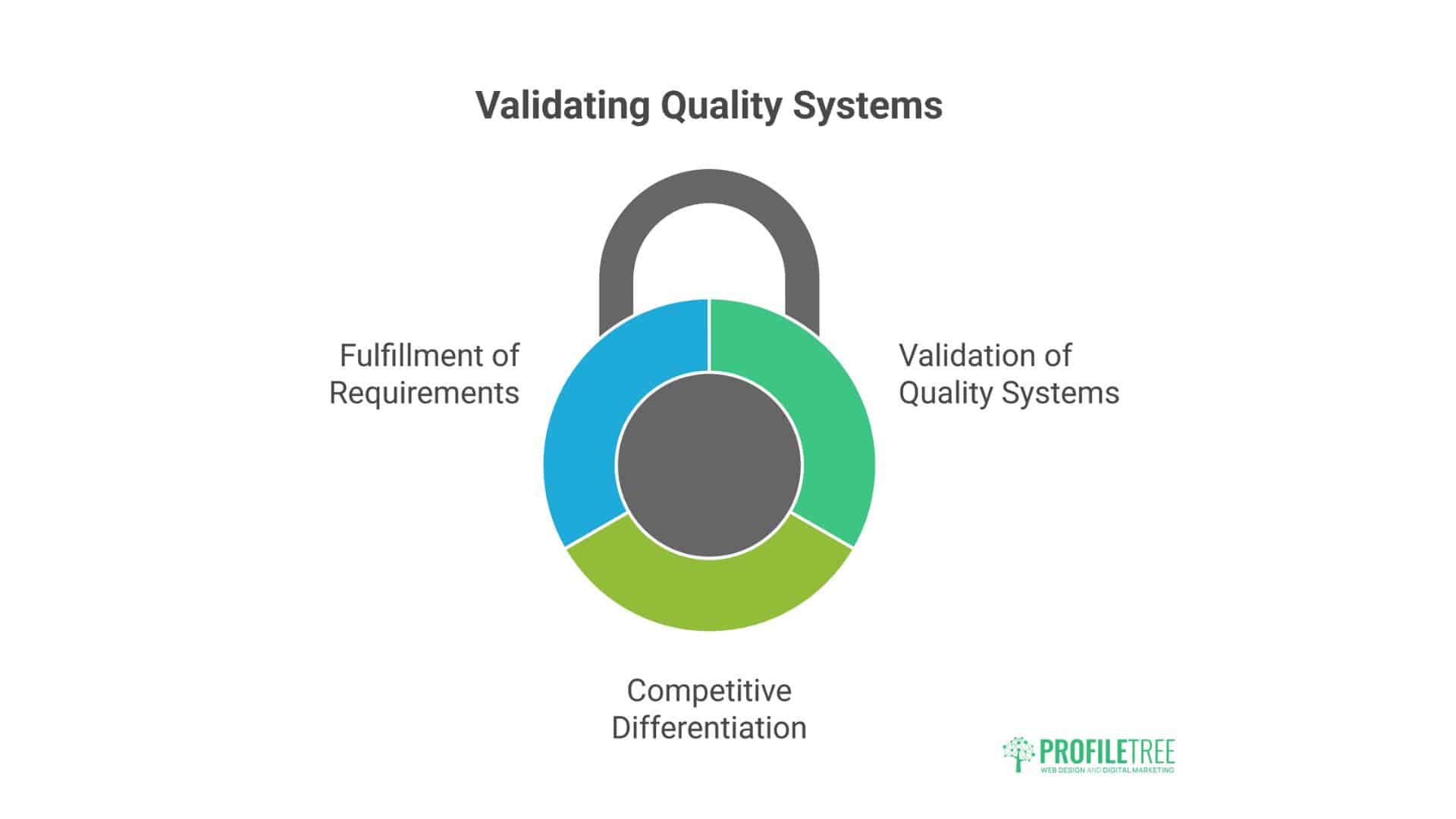
Third-party certification validates quality systems while demonstrating commitment to quality excellence. Certification can differentiate businesses in competitive markets and meet customer or regulatory requirements.
ISO Quality Standards
The International Organisation for Standardisation (ISO) develops globally recognised quality standards that provide frameworks for quality management system implementation. ISO 9001 is the most widely adopted quality standard, applicable across industries and organisations of all sizes.
ISO 9001 focuses on customer satisfaction, continuous improvement, and process-based management. It requires organisations to document quality procedures, monitor performance, and implement corrective actions when problems occur. Regular audits verify ongoing compliance and identify improvement opportunities.
Other relevant ISO standards include ISO 27001 for information security management, ISO 14001 for environmental management, and industry-specific standards for sectors like healthcare, automotive, and food safety.
Industry-Specific Certifications
Many industries have developed specialised quality standards that address sector-specific risks, regulations, and customer expectations. These standards often build upon ISO foundations while adding industry-relevant requirements.
Certifications related to accessibility (WCAG compliance), data protection (GDPR compliance), and security standards can benefit the digital marketing and web development industries. These certifications demonstrate technical competence and commitment to best practices.
Professional certifications for individuals complement organisational standards by developing employee capabilities and demonstrating expertise to clients and partners.
Ten Steps to Create a Strong Quality Assurance Strategy
Building an effective quality assurance strategy requires a systematic approach that addresses planning, implementation, and continuous improvement. These ten steps provide a practical framework for developing comprehensive quality systems that prevent problems, protect your brand reputation, and drive business growth. Whether starting from scratch or improving existing processes, this structured approach will help you create sustainable quality improvements that deliver measurable results.
1. Define Quality Objectives
Establish measurable quality goals that align with business objectives and customer expectations. Quality objectives should be achievable but challenging, providing clear targets for improvement efforts.
2. Identify Key Performance Indicators (KPIs)
Develop metrics that accurately measure quality performance and warn early about potential problems. KPIs should be relevant, actionable, and regularly monitored.
3. Analyse Current Processes
Conduct a comprehensive review of existing processes to identify strengths, weaknesses, and improvement opportunities. Process analysis should include customer touchpoints, internal handoffs, and support activities.
4. Develop Quality Management Plan
Create a detailed implementation roadmap that defines activities, timelines, responsibilities, and resource requirements. The plan should address both immediate improvements and long-term quality development.
5. Implement Quality Standards
Establish precise quality requirements for all business processes and outputs. Standards should be documented, communicated, and consistently applied across the organisation.
6. Train and Educate Team Members
Develop employee capabilities through training programmes that cover quality principles, specific procedures, and improvement methodologies. Training should be ongoing and updated as processes evolve.
7. Establish Quality Control Procedures
Implement checking and verification processes that catch problems before they affect customers. Control procedures should be efficient and integrated into everyday workflows.
8. Perform Regular Audits and Assessments
Schedule systematic reviews of quality performance, process compliance, and improvement opportunities. Audits should be objective, thorough, and result in actionable recommendations.
9. Collect and Analyse Data
Gather quality information from multiple sources and analyse trends, patterns, and root causes. Data analysis should guide improvement priorities and measure strategy effectiveness.
10. Foster Continuous Improvement
Create culture and systems that support ongoing quality enhancement through employee suggestions, process refinement, and innovation initiatives.
Conclusion
Quality assurance represents organisational commitment to excellence that differentiates successful businesses in competitive markets. The digital transformation has amplified the importance of quality, creating new challenges and opportunities for businesses across traditional operations and digital channels.
Implementation requires systematic planning and a continuous improvement mindset, but delivers measurable returns through reduced costs, improved customer satisfaction, and enhanced competitive positioning. Quality assurance becomes a fundamental aspect of brand identity that transcends individual products or services.
FAQs
What is quality assurance in simple terms?
Quality assurance is a systematic approach to preventing problems and maintaining consistent product, service, or process standards. It focuses on doing things right the first time rather than fixing problems after they occur.
How does quality assurance differ from quality control?
Quality assurance prevents problems through good processes, while quality control detects problems in finished products. QA is proactive and process-focused; QC is reactive and product-focused.
Why is quality assurance important for small businesses?
Quality assurance helps small businesses build customer trust, reduce costs from errors and rework, comply with regulations, and compete effectively against larger competitors through superior service quality.
What are some common examples of quality assurance in business?
Common examples include proofreading marketing materials before publication, testing website functionality before launching, verifying order accuracy before shipping, and checking customer service response quality.
Ready to Transform Your Business?
Don’t let preventable mistakes drain your marketing budget. ProfileTree helps businesses across the UK and Ireland implement digital marketing quality assurance systems that protect investment and accelerate growth.
What you get:
- Comprehensive digital audits and QA frameworks
- Ongoing monitoring and team training
- Proven methodologies from experienced professionals
Your competitors are investing in quality assurance. Will you lead or follow?
Contact ProfileTree or call 028 9568 0364 for your free consultation.