
External Workshops for Internal Training: A Practical Guide for SMEs
Table of Contents
External workshops bring specialist skills into a business that its own team cannot deliver alone. For most SMEs in Northern Ireland, Ireland, and the UK, the question is rarely whether to use external training, but how to integrate external agency insights into internal strategy workshops without wasting budget or staff time.
This guide covers what external workshops add to an internal training programme, how to choose the right provider, and how to fold the learning back into day-to-day work. It is written for the people making the decision: business owners, marketing managers, and HR leads who need a clear answer rather than theory.
If your team needs to close a specific skills gap fast, an external workshop is usually the quickest route. The detail below shows how to make that investment count.
What Are External Workshops and When Do They Make Sense?
External workshops are training sessions run by an outside provider, an industry expert, or a specialist agency rather than an in-house trainer. They make sense when the skill you need does not already exist inside the business, or when an internal trainer is too close to the problem to teach it well.
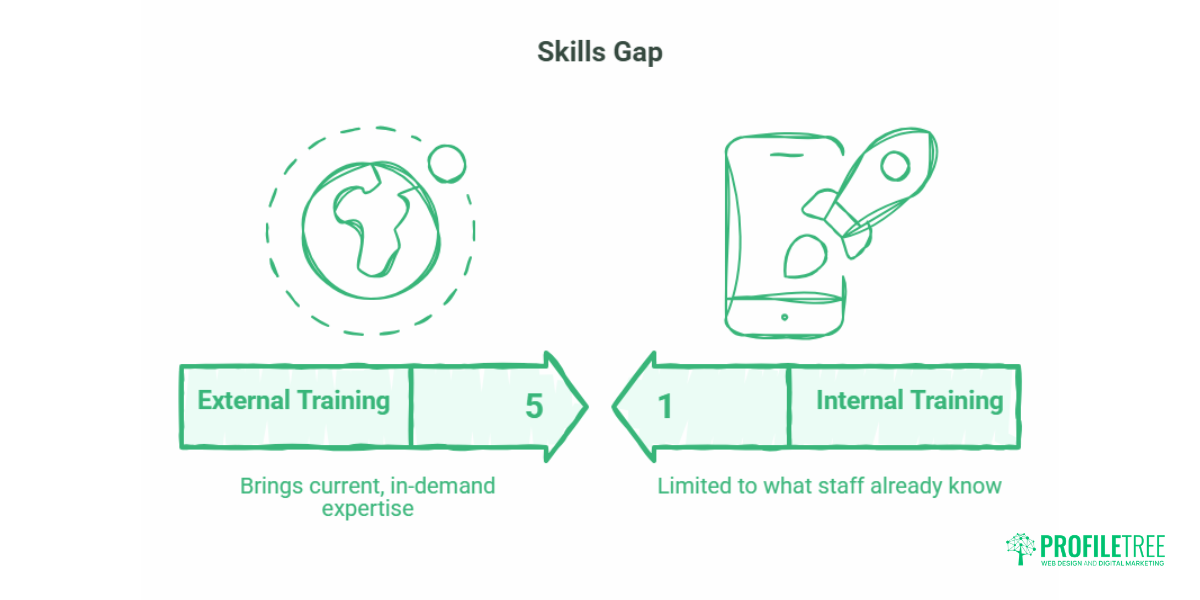
The choice between internal training and external training is not either/or. The strongest internal training programmes use both: in-house sessions for company-specific processes, and external workshops for specialist or fast-moving subjects. A short comparison makes the trade-off clear.
When external training wins
| Factor | Internal training | External training |
|---|---|---|
| Specialist skills (SEO, AI, paid ads) | Limited to what staff already know | Brings current, in-demand expertise |
| Cost for one-off needs | Lower if the skill exists internally | More cost-effective than a permanent hire |
| Fresh perspective | Constrained by internal habits | Introduces methods staff have not seen |
| Company-specific processes | Strong | Weaker without a tailored brief |
| Speed to deploy a new skill | Slow if no internal expert exists | Fast |
The skills internal teams most often lack
Most SMEs hit the same gaps. Digital marketing moves quickly, so internal staff rarely keep pace with search and paid-media changes on their own. A workshop on current SEO practice, run by a working practitioner, gives a team the up-to-date approach it needs. The same applies to AI adoption, where almost no SME has the in-house expertise to train staff safely. ProfileTree’s digital training workshops are built around these exact gaps for businesses across Northern Ireland and the UK.
Matching the workshop to a real business problem
Before booking anything, name the problem in plain terms. “Our enquiries from Google have dropped” points to an SEO workshop. “Staff are pasting client data into free AI tools” points to an AI governance session. Tying the workshop to a business symptom, rather than a vague wish to upskill, is the single biggest predictor of whether the training pays off.
How to Integrate External Agency Insights Into Internal Strategy Workshops
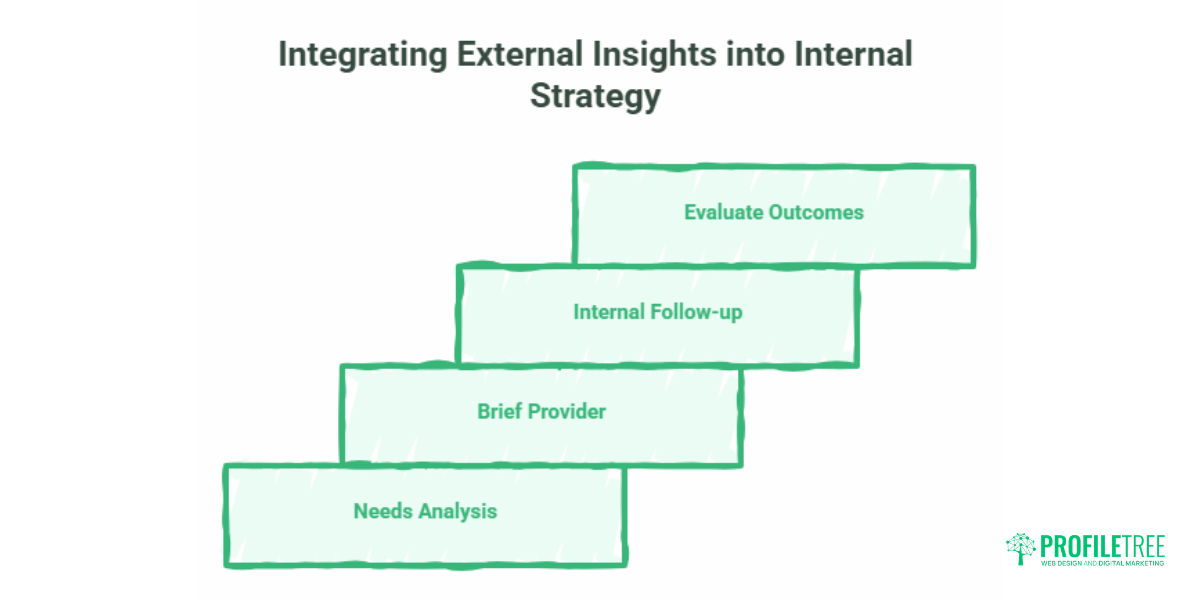
The value of an external workshop is lost if the learning stays with the people who attended. Integration means building a deliberate path from the external session into your internal strategy work, so the whole team benefits and the new approach actually changes how work gets done.
This is where many businesses go wrong. They book a good session, the attendees enjoy it, and three months later, nothing has changed. A structured integration plan prevents that.
Run a needs analysis first.
Identify the specific skills or knowledge gaps before you bring anyone in. A short needs analysis through staff surveys, manager interviews, or a review of recent performance shows where an external workshop will have the most effect. Set measurable outcomes at this stage so you can judge later whether the session worked. This diagnostic step mirrors the approach in our guide to personal and professional development, which sets out how to map individual skills against business goals.
Brief the provider on your context.
An external trainer who understands your sector, your tools, and your customers delivers far more than one running a generic deck. Give the provider your context: the platforms you use, the audience you serve, and the internal processes the new skill has to fit. A good provider will tailor the session rather than repeat a standard course.
Built in internal follow-up
Pair every external workshop with an internal follow-up. After the session, give attendees time to reflect and a forum to apply what they learned: a team discussion, a mentoring pairing, or a short internal write-up of the key points. This is also how you answer the common question of how to integrate internal subject experts with an external content team, by giving both sides a shared reference point to work from. Turning workshop notes into a short internal video or a written playbook is a job our content marketing and video production teams handle regularly.
Evaluate against the outcomes you set
Measure the result against the goals from your needs analysis. Pre- and post-session assessments, staff feedback, and a check on whether the new skill is being used in real work all show the return on investment. An honest evaluation tells you whether to repeat the format or change providers next time.
What Role Do Workshops Play in Upskilling Internal Marketing Teams?
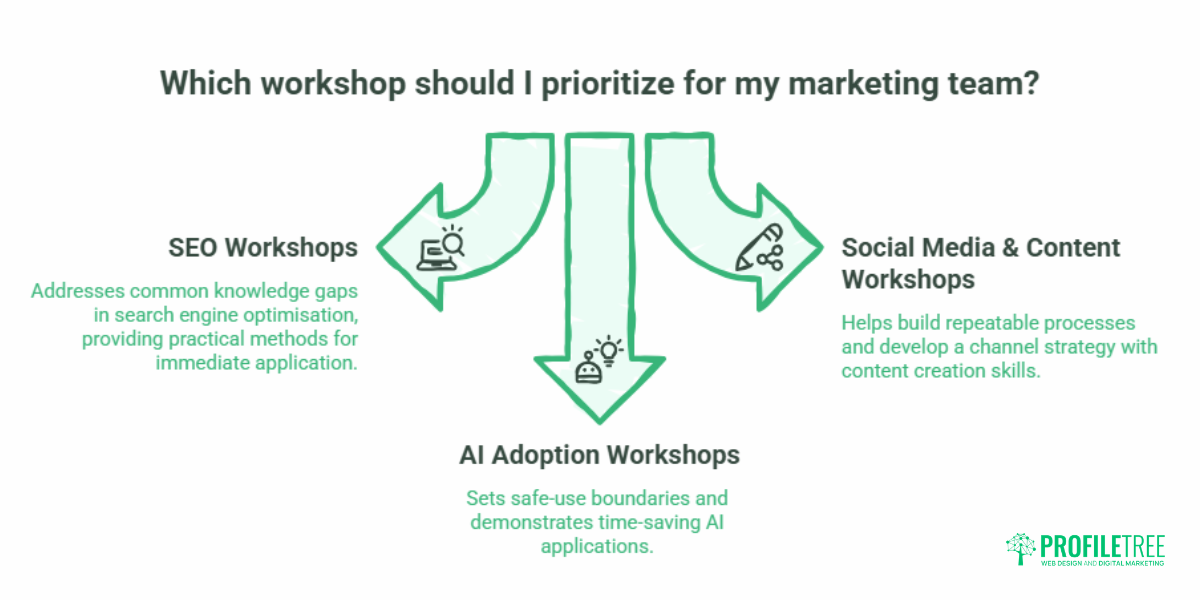
Workshops give marketing teams direct access to current practice without the cost of hiring a specialist for every discipline. A small in-house marketing team cannot be an expert in SEO, paid media, content, video, and AI all at once. Targeted external workshops fill the gaps that the team cannot fill itself.
For an SME marketing manager, the practical value is speed. Search and social platforms change constantly, and a half-day session with a working practitioner closes a knowledge gap faster than months of self-directed learning.
SEO and search workshops
Search is the area internal teams most often fall behind on. A workshop covering current ranking practice, technical basics, and local search gives a marketing team a working method it can apply straight away. Our search engine optimisation specialists run these sessions for SME teams, and you can see the kind of mistakes they correct in our breakdown of examples of a marketing audit.
Social media and content workshops
A focused social media workshop helps an internal team build a repeatable posting and engagement process rather than reacting day to day. Pair this with a content session, and the team leaves with both a channel strategy and the skills to produce for it. ProfileTree runs through its social media marketing practice.
AI adoption workshops
This is the newest and most urgent gap. Staff are already using AI tools, often without guidance on data privacy or accuracy. A practical AI workshop sets safe-use boundaries and shows the team where the tools genuinely save time. Our guidance on how to train your staff on AI tools covers the ground that a good session should include, and our AI training service delivers it directly.
Choosing the Right External Training Provider
Pick a provider based on proven expertise, sector relevance, and the ability to tailor content, not on price alone. The success of a workshop depends almost entirely on the trainer, so this decision deserves real attention.
A short checklist keeps the choice objective rather than driven by a good sales call.
Check credentials and recent work.
Look for a provider that does the work, not just teaches it. A working SEO agency teaching SEO carries more weight than a trainer who left the field years ago. Review credentials, recent client work, and testimonials before committing. ProfileTree has delivered digital projects for businesses across Northern Ireland, Ireland, and the UK, and brings that live experience into every session.
Confirm they will tailor the content.
A provider that adapts the session to your tools and audience delivers more than one running a fixed course. Ask directly how they will tailor the material to your business before you book.
Make sure it fits your existing structure.
The workshop has to slot into your wider development plans, not sit apart from them. Confirm the provider understands where the session fits in your internal training programme and how the follow-up will work.
Ciaran Connolly, founder of ProfileTree, puts it plainly: “The businesses that get the most from external training are the ones that treat the workshop as the start, not the finish. They brief us properly, they free up their team to apply what they learned, and they check the results. That is when an external session changes how a company actually works.”
Conclusion
External workshops strengthen internal training when they target a real skills gap, fit your existing structure, and come with proper follow-up. Choose a provider with live experience in the area you need, brief them on your business, and measure the result against clear goals. ProfileTree runs digital training workshops for SMEs across Northern Ireland and the UK. Get in touch to discuss the gap you need to close.
FAQs
What is external training?
External training is any learning delivered by a provider outside your business, such as an industry expert or specialist agency. It is used to bring in skills or perspectives that internal staff do not already have.
What is the difference between internal and external training?
Internal training is delivered by your own staff and suits company-specific processes. External training is delivered by an outside provider and suits specialist or fast-moving subjects where in-house expertise is limited.
When should a business use external workshops?
Use external workshops when the skill you need does not exist internally, when staff are too close to a problem to teach it, or when you need a current approach quickly. They work best alongside, not instead of, internal training.
How do you choose an external training provider?
Check that the provider has proven, recent experience in the subject, that they will tailor the content to your business, and that the session fits your existing development plans. Credentials and client testimonials are a good guide.
What are the benefits of external training for clients?
External training gives clients access to specialist expertise without a permanent hire, introduces fresh methods, and can be more cost-effective for one-off skills gaps. It also exposes staff to wider industry practice.