
Perplexity AI for Market Research: SME Guide
Table of Contents
Market research that once cost thousands and took weeks now happens in minutes for under £20. Perplexity AI’s August 2025 updates have transformed it from a clever search tool into a comprehensive market intelligence platform that gives small businesses the research capabilities previously exclusive to enterprises with dedicated analyst teams.
But here’s what most SMEs miss: Perplexity isn’t just faster Google—it’s a fundamentally different approach to gathering, synthesising, and understanding market intelligence. With its Pro Search feature now handling complex multi-step research, real-time web access providing current data, and citation-backed responses ensuring accuracy, Perplexity delivers actionable insights that drive genuine business decisions.
ProfileTree has conducted hundreds of market research projects using Perplexity AI, discovering techniques that extract insights competitors miss. This guide reveals advanced strategies that transform Perplexity from simple question-answering into strategic intelligence gathering that positions your business ahead of larger competitors.
Understanding Perplexity’s August 2025 Capabilities
Perplexity’s transformation into a comprehensive market intelligence platform stems from several key capability upgrades. These enhancements move beyond simple search functionality into strategic business intelligence gathering.
The Pro Search Revolution
Perplexity’s Pro Search has evolved dramatically since early 2025. The system now conducts genuine research rather than simple retrieval. When you ask complex business questions, Pro Search breaks them into components, searches multiple angles, synthesises findings, and presents comprehensive analysis with full source attribution.
The August update introduced “Research Threads”—persistent investigations that build knowledge over time. Start researching your market on Monday, add competitor analysis on Tuesday, incorporate customer insights on Wednesday, and by Friday, you have comprehensive market intelligence that traditional research firms would charge £10,000 to deliver.
Multi-modal analysis now processes images, PDFs, spreadsheets, and websites simultaneously. Upload your competitor’s annual report, their website screenshots, and industry data—Perplexity analyses everything together, identifying patterns and insights humans would miss. This capability transforms how SMEs approach competitive intelligence.
The new “Focus” modes prove particularly valuable for business research. Academic mode searches peer-reviewed papers and industry journals. Reddit mode uncovers authentic customer discussions. News mode tracks current developments. YouTube mode analyses video content for insights. Each mode serves specific research needs.
Real-Time Market Intelligence
Unlike ChatGPT’s knowledge cutoffs or Google’s overwhelming results, Perplexity provides current, synthesised intelligence. The system searches live web data, verifies information across sources, and updates findings as markets change.
The “Collections” feature has become essential for ongoing market monitoring. Create collections for competitors, industry trends, customer segments, or regulatory changes. Perplexity continuously updates these with relevant findings, essentially providing an AI-powered market intelligence department.
Source transparency sets Perplexity apart. Every claim links to original sources, enabling verification and deeper investigation. This credibility proves essential when presenting research to stakeholders, investors, or team members who need evidence supporting strategic decisions.
The August 2025 pricing remains remarkably accessible: The Free tier provides 5 Pro searches daily, while the Pro subscription at £20 monthly offers unlimited searches, advanced AI models, and file analysis. For SMEs, this represents a 99% cost reduction compared to traditional market research.
Integration and Workflow Capabilities
Perplexity now integrates with business tools through API access and Zapier connections. Research findings flow directly into CRM systems, strategy documents update automatically, and insights trigger workflow automations. This transforms isolated research into integrated intelligence operations.
The Chrome extension has evolved beyond simple searching. Highlight any text on any website to instantly research context, verify claims, or explore related topics. Reading competitor websites, industry reports, or customer reviews becomes active intelligence gathering rather than passive consumption.
Mobile apps enable research during meetings, conferences, or client visits. Voice input allows natural conversation with Perplexity, making complex research accessible without typing lengthy queries. Location-aware searching provides local market intelligence relevant to your geographic markets.
Our digital strategy services incorporate Perplexity research into comprehensive planning that drives growth.
Strategic Market Research Frameworks
Effective market research requires structured approaches that extract maximum value from available tools. These proven frameworks transform random searching into systematic intelligence operations.
Competitor Intelligence Gathering
Perplexity AI excels at comprehensive competitor analysis that reveals strategic opportunities:
The Deep Dive Framework:
“Analyse [Competitor Name]’s digital marketing strategy, including their SEO performance, content themes, social media engagement, and paid advertising focus. Include recent changes in their approach and apparent strategic priorities.”
This single query generates insights that would take days of manual research. Perplexity examines their website, social profiles, advertising platforms, and public statements to build comprehensive competitive intelligence.
The Weakness Identification Method:
“Search Reddit, Trustpilot, and Google Reviews for complaints about [Competitor]. Identify recurring issues, unmet customer needs, and service gaps we could exploit.”
This uncovers opportunities your competitors’ polished marketing hides. Real customer frustrations reveal market gaps your business can fill.
The Innovation Tracking System:
“What new products, services, or features has [Competitor] launched in the past 6 months? Include beta tests, job postings suggesting new directions, and patent applications indicating future plans.”
Stay ahead by understanding where competitors are heading, not just where they are today.
Customer Insight Discovery
Understanding customers deeply drives successful marketing and product development:
The Pain Point Excavation:
“Analyse discussions in [Industry] forums and communities about challenges with current solutions. Focus on emotional language indicating frustration, workarounds people have created, and wishes for better alternatives.”
This reveals genuine customer needs rather than assumed problems. Emotional insights drive better messaging and product development.
The Journey Mapping Approach:
“How do SME owners in manufacturing typically research and purchase inventory management software? Include information sources, evaluation criteria, common objections, and decision triggers.”
Understanding complete buyer journeys enables targeted intervention at crucial moments.
The Segment Analysis Method:
“Compare priorities and pain points between small (1-10 employees) and medium (11-100 employees) UK accounting firms. Focus on technology adoption, service expectations, and budget considerations.”
Detailed segmentation enables precise targeting rather than generic marketing.
Our content marketing services use these insights to create content that resonates with specific audiences.
Industry Trend Analysis
Perplexity’s ability to synthesise multiple sources makes it exceptional for trend identification:
The Macro Trend Investigation:
“Analyse emerging trends in sustainable packaging for the food industry, including regulatory changes, consumer preferences, technology innovations, and cost implications. Focus on UK and EU markets.”
This comprehensive view helps position your business ahead of industry shifts.
The Technology Impact Assessment:
“How is artificial intelligence affecting small law firms in the UK? Include adoption rates, specific use cases, benefits realised, and implementation challenges.”
Understanding technology impacts helps plan strategic investments and positioning.
The Regulatory Horizon Scan:
“What regulatory changes are coming for UK e-commerce businesses in the next 18 months? Include data protection, consumer rights, sustainability requirements, and tax implications.”
Advance warning of regulatory changes enables proactive compliance and competitive advantage.
Advanced Research Techniques

Moving beyond basic queries requires sophisticated research methodologies. These advanced techniques build a comprehensive understanding through systematic investigation approaches.
The Layered Intelligence Method
Build a comprehensive understanding through progressive research:
Layer 1—Market Landscape: “Provide an overview of the UK digital marketing agency market, including size, growth rate, major players, and key trends.”
Layer 2—Competitive Dynamics: “Analyse competitive positioning of mid-sized (10-50 employee) digital agencies in Northern England. Include service offerings, pricing models, and differentiation strategies.”
Layer 3—Customer Perspectives: “What do SME owners say about working with digital agencies? Include selection criteria, satisfaction factors, and common complaints from actual reviews and discussions.”
Layer 4—Opportunity Identification: “Based on the above research, what underserved niches or unmet needs exist in the UK digital agency market?
Each layer builds on previous findings, creating intelligence depth impossible through single queries.
The Cross-Reference Validation
Ensure research accuracy through systematic validation:
“Compare information about [Topic] from academic sources, industry reports, news articles, and user discussions. Identify consensus points and conflicting information.”
This approach reveals reliable insights while flagging uncertain areas requiring further investigation.
The Scenario Planning Method
Use Perplexity to explore potential futures:
“If UK interest rates rise to 6% by 2026, how would this affect small retail businesses? Consider consumer spending, inventory financing, property costs, and competitive dynamics.”
Scenario planning helps prepare for various market conditions rather than assuming linear progression.
The Innovation Scouting Technique
Discover emerging opportunities before competitors:
“Identify startups and new technologies addressing [Problem] in [Industry]. Include funding rounds, pilot programmes, and early customer feedback. Focus on solutions applicable to SMEs.”
Early awareness of innovations provides first-mover advantages in adopting new solutions or partnerships.
Practical Research Applications

Research value emerges through practical application to real business challenges. These specific use cases demonstrate how strategic intelligence gathering drives measurable business outcomes.
New Market Entry Research
Before entering new markets, Perplexity provides essential intelligence:
Market Viability Assessment:
“Analyse demand for eco-friendly cleaning services in Manchester. Include market size, competitor density, pricing ranges, customer demographics, and growth projections.”
Regulatory Requirements:
“What licenses, certifications, and compliance requirements exist for starting a food delivery service in Dublin? Include timelines, costs, and common challenges.”
Channel Strategy Research:
“How do B2B software companies successfully enter the German market? Include distribution channels, partnership requirements, and localisation needs.”
This research prevents costly market entry mistakes while identifying success factors.
Product Development Intelligence
Inform product decisions with market research:
Feature Prioritisation:
“Analyse customer reviews of the top 5 project management tools to identify the most requested features and biggest frustrations. Focus on SME users.”
Pricing Intelligence:
“Compare pricing strategies for cloud-based accounting software targeting small businesses. Include pricing models, average costs, and value perception factors.”
Launch Strategy Research:
“How have successful B2B SaaS companies launched new products to existing customers? Include communication strategies, beta programmes, and pricing approaches.”
Our website development services incorporate market research to create solutions that meet genuine market needs.
Content Strategy Research
Perplexity transforms content planning from guesswork to intelligence-driven strategy:
Topic Opportunity Analysis:
“Identify content gaps about [Industry Topic] by analysing what questions people ask but find inadequately answered. Include search volumes and competition levels.”
Audience Intelligence:
“What content formats and topics generate the highest engagement for CFOs in manufacturing companies? Analyse LinkedIn, industry publications, and webinar attendance.”
Competitive Content Audit:
“Analyse content strategies of top 3 competitors, including publishing frequency, topics covered, content types, and engagement metrics.”
This research ensures content investment delivers measurable results.
Sales Intelligence Gathering
Arm sales teams with intelligence that wins deals:
Prospect Research:
“Provide background on [Company Name], including recent news, strategic initiatives, leadership changes, and potential pain points based on industry challenges.”
Objection Preparation:
“What are common objections to purchasing [Product/Service] in [Industry]? Include underlying concerns and successful counter-arguments from case studies.”
Negotiation Intelligence:
What pricing and terms are standard for enterprise software contracts in UK financial services? Include payment structures, SLA expectations, and common negotiation points.”
Building Research Workflows
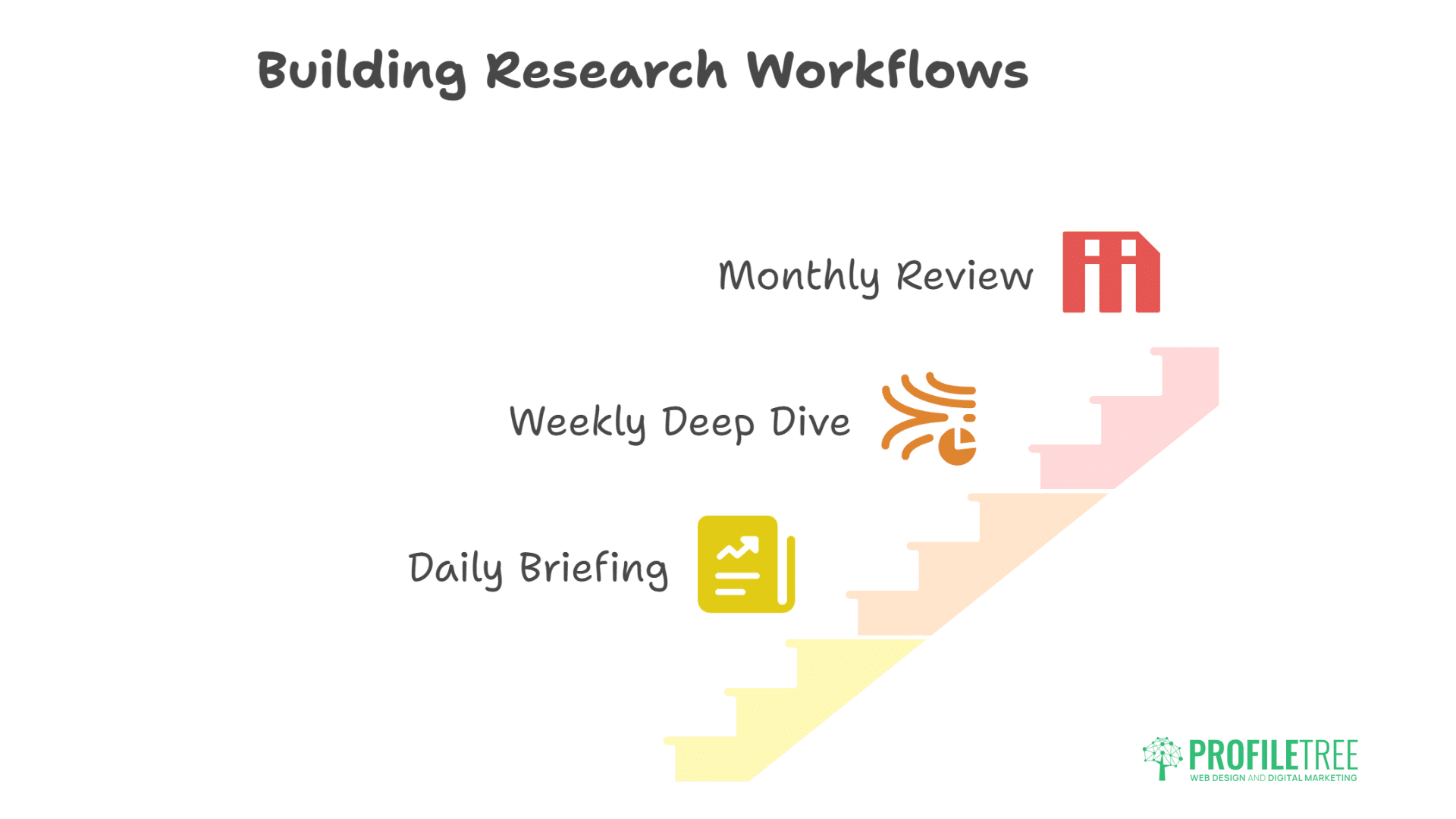
Sustainable research capabilities require systematic workflows rather than ad-hoc investigation. These structured approaches maintain continuous market awareness without overwhelming time investment.
Daily Intelligence Briefing
Create systematic intelligence gathering:
Morning Scan (5 Minutes):
“What significant developments occurred overnight in [Industry]? Include competitor announcements, regulatory changes, and market movements.”
Competitive Update (5 Minutes):
“Any new content, products, or announcements from [Competitor List] in the past 24 hours?”
Customer Pulse (5 Minutes):
“What are customers discussing about [Product Category] on Reddit and X/Twitter today?”
This 15-minute daily routine maintains market awareness without overwhelming time investment.
Weekly Deep Dive
Conduct a thorough analysis weekly:
- Monday—Competitive Analysis: Research one competitor comprehensively, including recent changes, customer feedback, and strategic moves.
- Wednesday—Customer Research: Investigate a specific customer segment or pain point deeply, uncovering insights for product and marketing.
- Friday—Trend Analysis: Explore emerging trends or technologies affecting your industry, assessing implications and opportunities.
This structured approach ensures continuous learning while preventing research paralysis.
Monthly Strategic Review
Comprehensive monthly intelligence gathering:
- Market Dynamics: “How has [Industry] evolved in the past month? Include major developments, shifting customer preferences, and competitive landscape changes.”
- Performance Benchmarking: “Compare our digital presence and market position against the top 5 competitors. Include website traffic, social engagement, and review scores.”
- Opportunity Assessment: “Based on market developments and competitive moves, what new opportunities or threats should we address?”
Our SEO services use competitive intelligence to identify ranking opportunities.
Research Quality Optimisation

Research effectiveness depends on methodology quality rather than just tool access. These optimisation strategies extract maximum value from every investigation while maintaining accuracy standards.
Prompt Engineering for Business Research
Effective prompts extract maximum value from Perplexity:
- Specificity Drives Quality: Instead of: “Tell me about digital marketing” Use: “Analyse digital marketing budget allocation by UK SMEs with 10-50 employees, including channel priorities and ROI expectations”
- Context Enhances Relevance: “From the perspective of a Belfast-based B2B software company targeting financial services, analyse…
- Action-Oriented Queries: “Identify specific strategies we can implement” rather than “Provide overview”
Source Quality Assessment
Not all sources carry equal weight:
High-Value Sources:
- Government statistics and reports
- Industry association research
- Academic studies and journals
- Established trade publications
- Verified company reports
Moderate-Value Sources:
- News articles from reputable outlets
- Well-documented blog posts
- Conference presentations
- Analyst reports
- Expert LinkedIn articles
Lower-Weight Sources:
- Random forum posts
- Unverified social media claims
- Promotional content
- Outdated information
- Biased sources
Perplexity shows sources, but interpreting their reliability remains your responsibility.
Research Documentation
Transform research into actionable intelligence:
Create Research Briefs:
- Executive summary of key findings
- Supporting data and sources
- Implications for business
- Recommended actions
- Further research needs
Build Knowledge Libraries:
- Save important findings in Collections
- Tag research by topic and date
- Create research templates
- Share insights with the team
- Track research impact on decisions
Avoiding Research Pitfalls
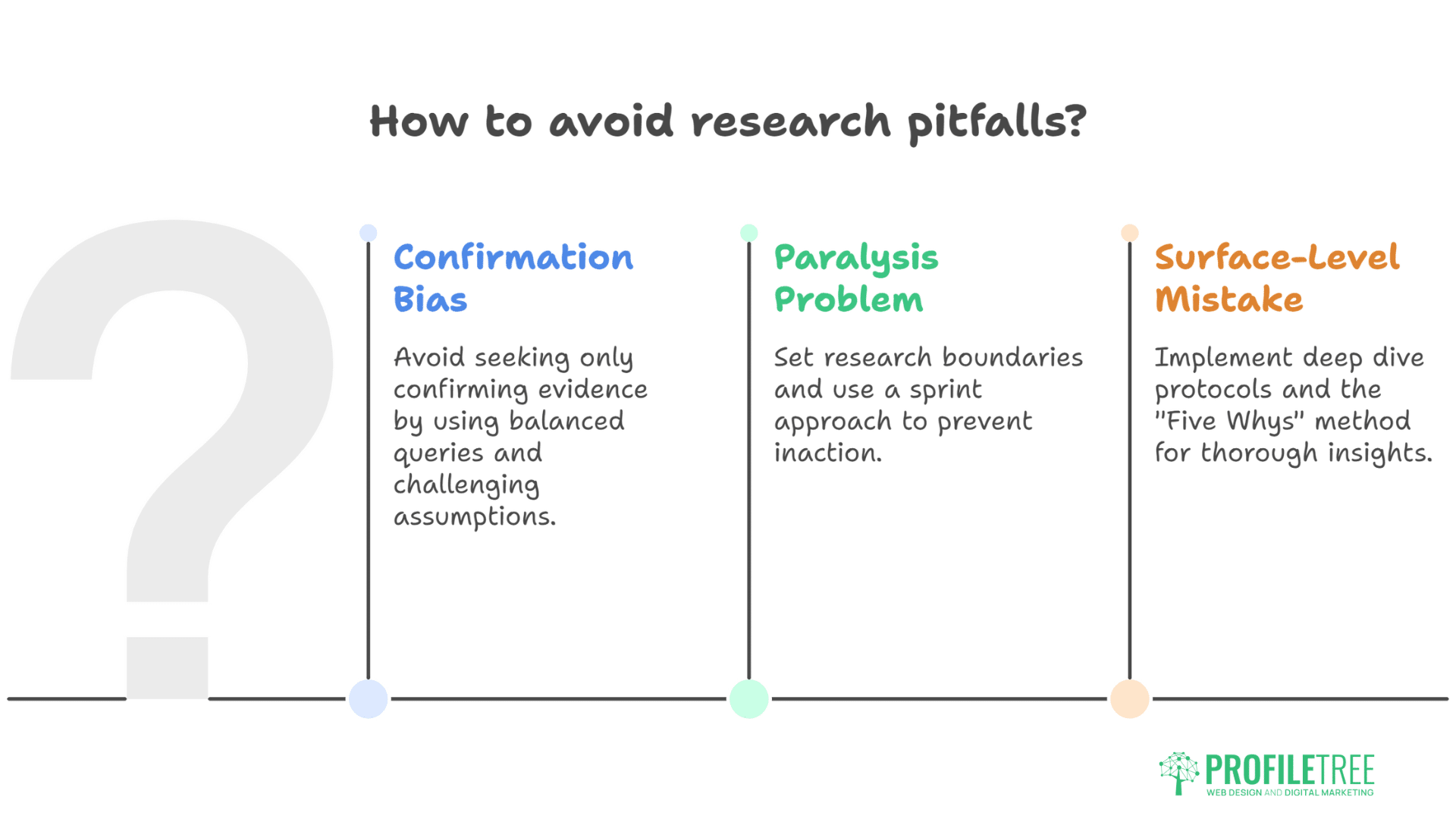
Common research mistakes can undermine strategic value and waste valuable time. Understanding these pitfalls helps maintain research integrity while avoiding analysis paralysis.
The Confirmation Bias Trap
Perplexity finds information supporting any position. Avoid seeking only confirming evidence:
- Balanced Queries: “Arguments for and against expanding into European markets, with evidence supporting each position”
- Challenge Assumptions: “Evidence contradicting the assumption that SMEs prefer subscription pricing models”
- Seek Disconfirming Data: “Cases where digital transformation failed to deliver ROI for small manufacturers”
The Paralysis Problem
Infinite research possibilities can prevent action:
Set Research Boundaries:
- Time limits for research phases
- Specific questions requiring answers
- Decision criteria upfront
- Action triggers defined
- Good-enough thresholds
Research Sprint Approach:
- 2 hours initial research
- Document findings
- Make a preliminary decision
- Validate with targeted research
- Adjust based on results
The Surface-Level Mistake
Quick searches provide shallow insights:
Deep Dive Protocols:
- Follow up on initial findings
- Explore contradictions
- Investigate outliers
- Verify surprising claims
- Seek root causes
The “Five Whys” Method:
“Why are customers leaving competitor X?” “Why does their support frustrate customers?” “Why can’t they resolve issues quickly?” [Continue until reaching actionable insights]
Measuring Research ROI
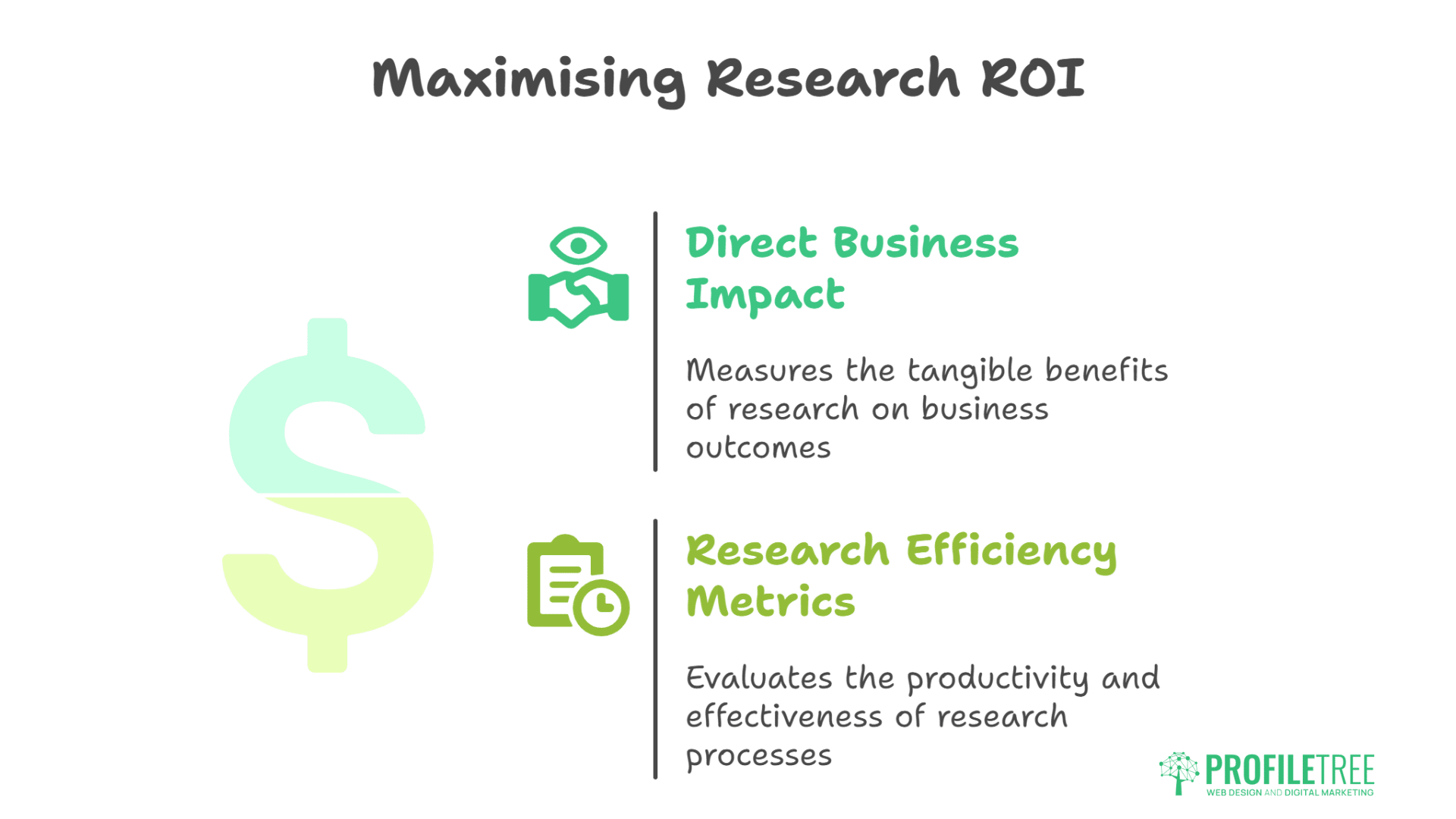
Demonstrating research value requires quantifiable metrics that connect intelligence gathering to business outcomes. These measurement approaches prove ROI while identifying areas for research process improvement.
Direct Business Impact
Track how Perplexity research affects outcomes:
Decision Quality:
- Better informed strategic choices
- Reduced risk from market entry
- Improved product-market fit
- More effective competitive positioning
Time Savings:
- Hours saved versus manual research
- Faster decision-making
- Reduced consultant fees
- Quicker market responses
Revenue Impact:
- New opportunities identified
- Customer needs addressed
- Competitive advantages gained
- Market gaps exploited
Our clients report an average 10x ROI on Perplexity investment through better decisions and time savings.
Research Efficiency Metrics
Monitor research productivity:
Query Effectiveness:
- Insights per search
- Action items generated
- Decisions influenced
- Problems solved
Time Efficiency:
- Research time per project
- Time to actionable insights
- Iteration requirements
- Validation needs
Quality Indicators:
- Source reliability
- Insight uniqueness
- Competitive advantages gained
- Prediction accuracy
Case Studies: Perplexity AI in Action
Real-world applications demonstrate Perplexity’s strategic value beyond theoretical benefits. These case studies show measurable business outcomes from intelligence-driven decision making.
The Market Entry Success
Belfast software company entering the London market:
Challenge: Understanding the complex competitive landscape and customer expectations
Perplexity Research:
- Analysed 20 competitors’ positioning
- Identified underserved niches
- Discovered pricing expectations
- Found partnership opportunities
Results:
- Secured 3 enterprise clients in the first quarter
- 40% higher prices than originally planned
- Partnership with an established integrator
- £500K revenue in year one
Research investment: £20 monthly.
Revenue generated: £500,000.
The Product Pivot
Manchester e-commerce tool discovering a new direction:
Challenge: Declining sales despite product improvements
Perplexity Research:
- Analysed customer complaints across the industry
- Identified emerging needs from job postings
- Discovered regulatory changes creating demand
- Found early adopter communities
Results:
- Pivoted to a compliance-focused solution
- 230% growth in six months
- £2M funding round closed
- Market leader in a new niche
The research revealed an opportunity invisible through traditional analysis.
The Competitive Win
Dublin consultancy winning against larger competitors:
Challenge: Competing against established firms with bigger resources
Perplexity Research:
- Deep analysis of competitor weaknesses
- Customer frustration points identified
- Unmet needs in specific segments
- Pricing model innovations researched
Results:
- Won 5 major accounts from competitors
- 67% win rate improvement
- 45% higher margins
- Recognised as an industry challenger
Intelligence-driven strategy defeated resource advantages.
Our digital training services teach teams to conduct effective market research using AI tools.
Advanced Collection Strategies
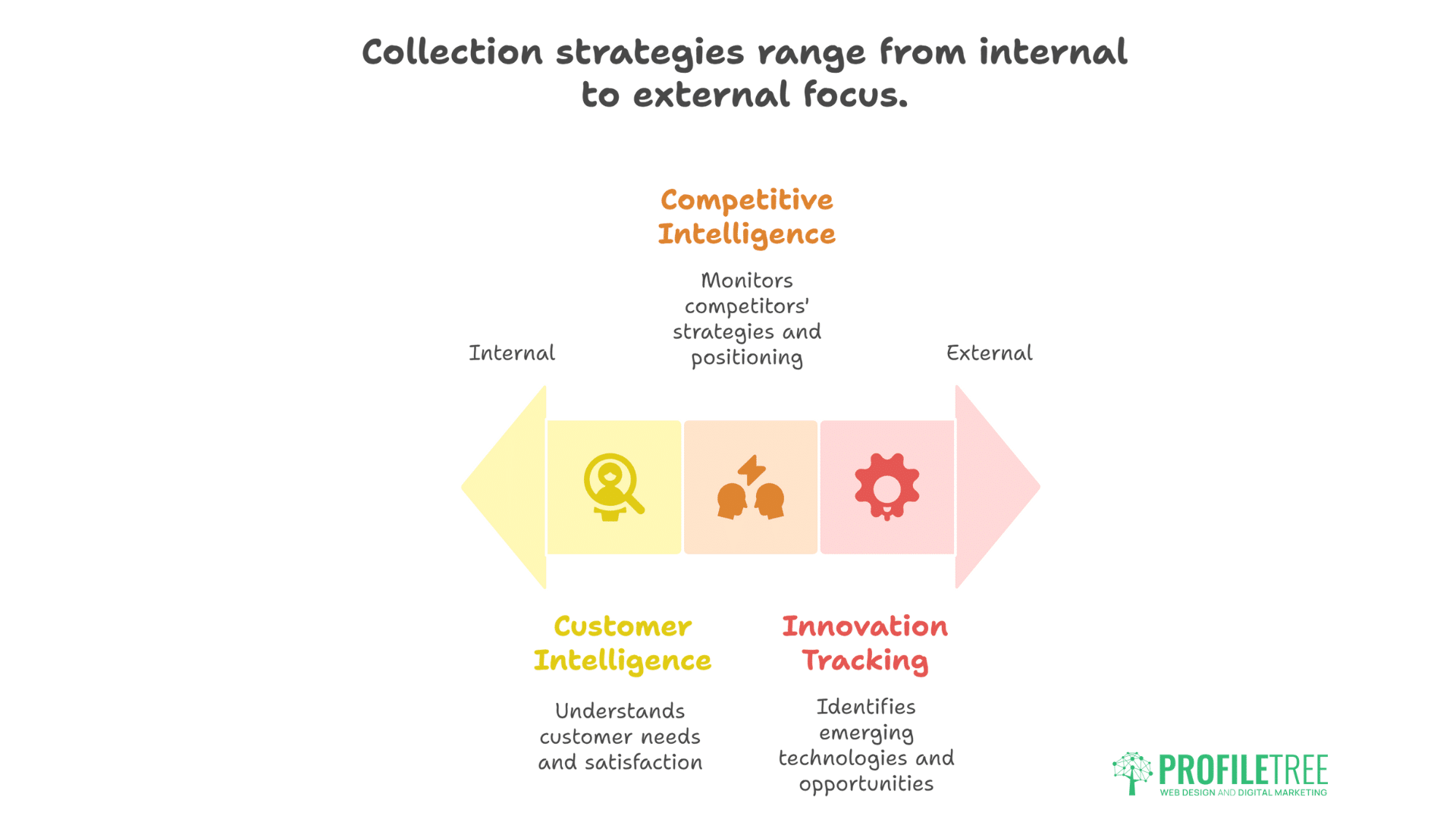
Systematic information gathering requires structured collection strategies that maintain relevance over time. These advanced approaches create sustainable intelligence operations.
The Competitive Intelligence Collection
Build comprehensive competitive monitoring:
Setup:
- Create a collection for each major competitor
- Add their websites, news mentions, job postings
- Include customer review sites
- Monitor social media mentions
- Track patent filings and trademarks
Maintenance:
- Weekly review of new intelligence
- Monthly competitive positioning update
- Quarterly strategy adjustment
- Annual comprehensive analysis
The Customer Intelligence Collection
Understand customers deeply:
Components:
- Industry forums and communities
- Review sites and feedback platforms
- Social media discussions
- Support ticket trends
- Survey results and studies
Analysis:
- Identify recurring themes
- Track sentiment changes
- Spot emerging needs
- Monitor satisfaction drivers
- Predict future requirements
The Innovation Tracking Collection
Stay ahead of industry changes:
Monitoring:
- Startup funding announcements
- University research papers
- Patent applications
- Beta programmes and pilots
- Technology conference presentations
Application:
- Identify partnership opportunities
- Spot disruption threats early
- Find inspiration for innovation
- Understand investment priorities
- Predict industry direction
Integration with Business Tools
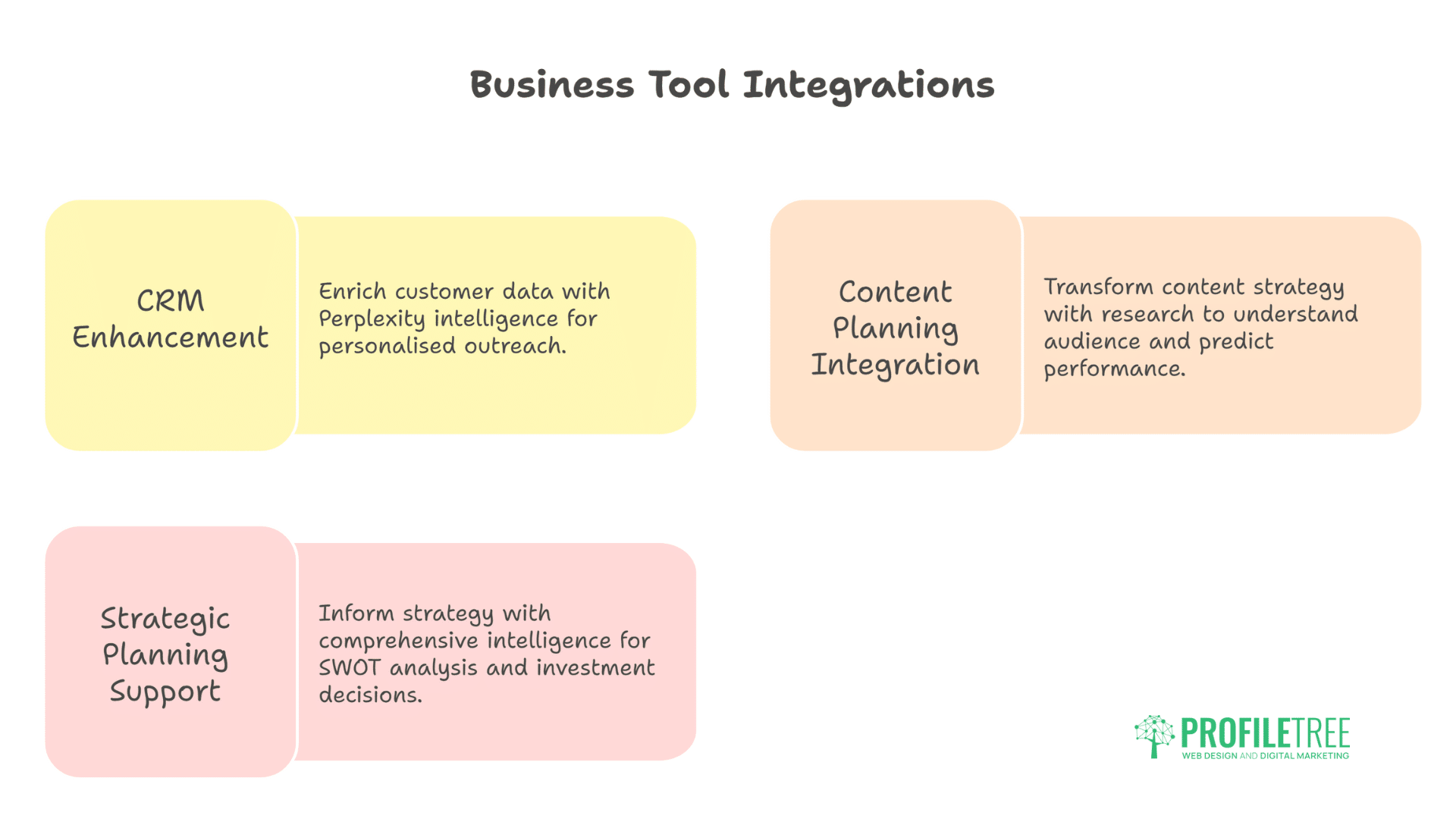
Research value multiplies when intelligence integrates seamlessly with existing business operations. These integration strategies transform isolated insights into actionable business intelligence.
CRM Enhancement
Enrich customer data with Perplexity intelligence:
- Prospect Research: Before calls, research prospects’ companies, challenges, and initiatives. Add insights to CRM for personalised outreach.
- Account Intelligence: Monitor existing customers for expansion opportunities, risk factors, and engagement triggers.
- Industry Context: Add market intelligence to customer records, enabling contextual conversations and relevant recommendations.
Content Planning Integration
Transform content strategy with research:
- Topic Validation: Research topic demand, competition, and angle opportunities before content creation.
- Audience Intelligence: Understand what resonates with target segments, informing tone, format, and distribution.
- Performance Prediction: Analyse similar content performance to predict success and optimise approach.
Our content marketing services combine research with creative execution.
Strategic Planning Support
Inform strategy with comprehensive intelligence:
- SWOT Analysis: Research-backed strengths, weaknesses, opportunities, and threats rather than assumptions.
- Scenario Planning: Explore multiple future scenarios with data supporting each possibility.
- Investment Decisions: Research market opportunity, competitive dynamics, and success factors before major investments.
Building Your Research Team
Scaling research capabilities beyond individual efforts requires structured team approaches. These frameworks establish sustainable research operations that grow with business needs.
Roles and Responsibilities
Research Lead:
- Develops research strategies
- Creates prompt templates
- Validates findings
- Trains team members
Daily Analyst:
- Conducts routine monitoring
- Maintains collections
- Produces regular reports
- Flags important developments
Project Researcher:
- Handles deep-dive projects
- Validates findings thoroughly
- Creates comprehensive briefs
- Presents recommendations
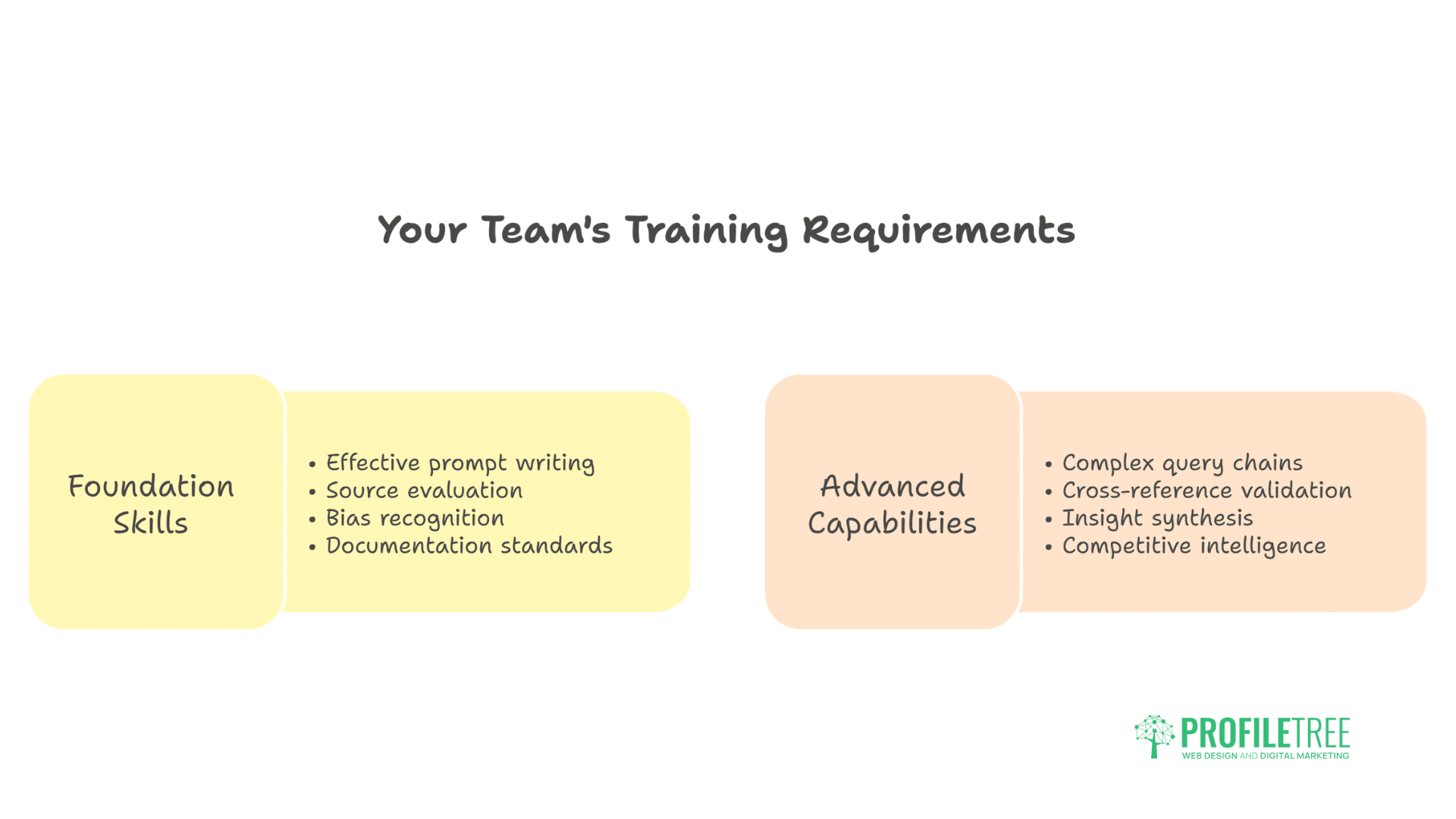
Training Requirements
Foundation Skills:
- Effective prompt writing
- Source evaluation
- Bias recognition
- Documentation standards
Advanced Capabilities:
- Complex query chains
- Cross-reference validation
- Insight synthesis
- Competitive intelligence
Research Governance
Quality Standards:
- Minimum source requirements
- Verification protocols
- Documentation templates
- Review processes
Ethical Guidelines:
- Respect intellectual property
- Avoid industrial espionage
- Maintain confidentiality
- Use public information only
Perplexity vs Alternative Research Tools
Understanding tool capabilities helps select appropriate research methods for specific situations. These comparisons clarify when Perplexity provides optimal value versus alternative approaches.
Perplexity vs ChatGPT
Perplexity Advantages:
- Current information with sources
- Transparent attribution
- Web-connected always
- Research-focused interface
ChatGPT Advantages:
- Better creative analysis
- Stronger reasoning capability
- Code and data analysis
- Broader knowledge base
Verdict: Perplexity for research, ChatGPT for analysis
Perplexity vs Google
Perplexity Advantages:
- Synthesised answers vs link lists
- Source compilation automated
- Natural language queries
- Research threads maintain context
Google Advantages:
- More comprehensive results
- Direct access to sources
- Advanced search operators
- Free unlimited searches
Verdict: Perplexity for efficiency, Google for completeness
Perplexity vs Traditional Research
Perplexity Advantages:
- 95% cost reduction
- 10x speed improvement
- 24/7 availability
- Broader source access
Traditional Advantages:
- Human insight and intuition
- Primary research capability
- Deep industry relationships
- Custom methodologies
Verdict: Perplexity for most needs, traditional for specific deep research
Common Mistakes and Solutions
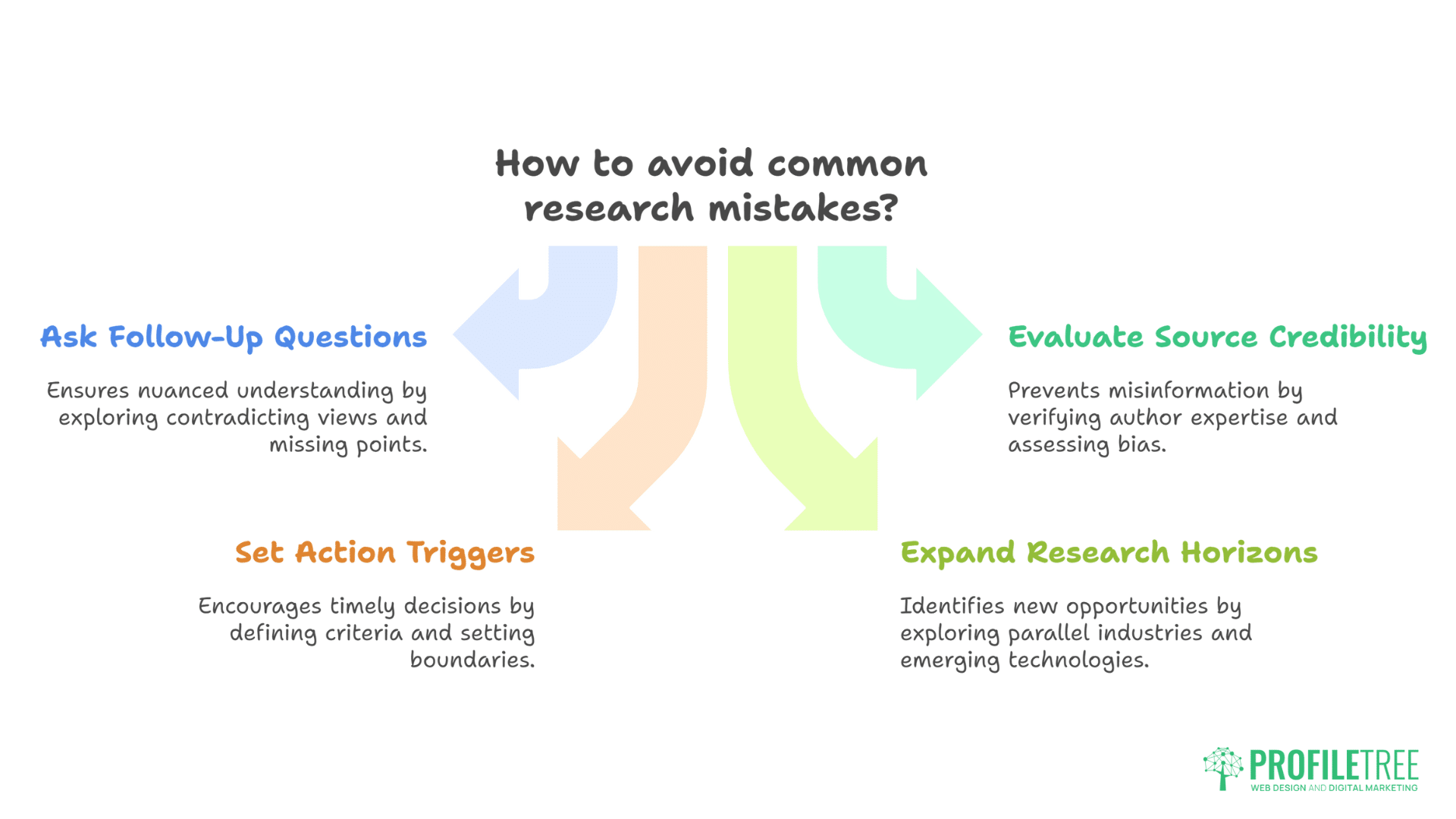
Even powerful research tools can produce poor outcomes through improper application. These common mistakes and their solutions help maintain research effectiveness.
Mistake 1: Accepting First Answers
Problem: Initial responses may miss nuances
Solution: Always ask follow-up questions:
- “What contradicting views exist?”
- “Dig deeper into the third point”
- “What are we missing here?”
Mistake 2: Ignoring Source Quality
Problem: All sources treated equally
Solution: Evaluate source credibility:
- Check publication date
- Verify author expertise
- Assess potential bias
- Cross-reference claims
Mistake 3: Research Without Action
Problem: Endless research preventing decisions
Solution: Set action triggers:
- Define “good enough” criteria
- Set time boundaries
- Create decision frameworks
- Force regular decisions
Mistake 4: Narrow Research Scope
Problem: Missing adjacent opportunities
Solution: Expand research horizons:
- Research parallel industries
- Explore international markets
- Investigate emerging technologies
- Consider non-obvious connections
Ciaran Connolly, ProfileTree founder, observes: “Perplexity has democratised market intelligence in ways we couldn’t imagine two years ago. Our clients now conduct research that would have cost tens of thousands with traditional firms. But the real value isn’t just cost savings—it’s the ability to make rapid, informed decisions based on current data. We’ve seen small Belfast companies outmanoeuvre London corporations simply because they could research, understand, and act faster. The businesses winning today aren’t those with biggest research budgets but those using tools like Perplexity most strategically.”
Your 30-Day Research Transformation
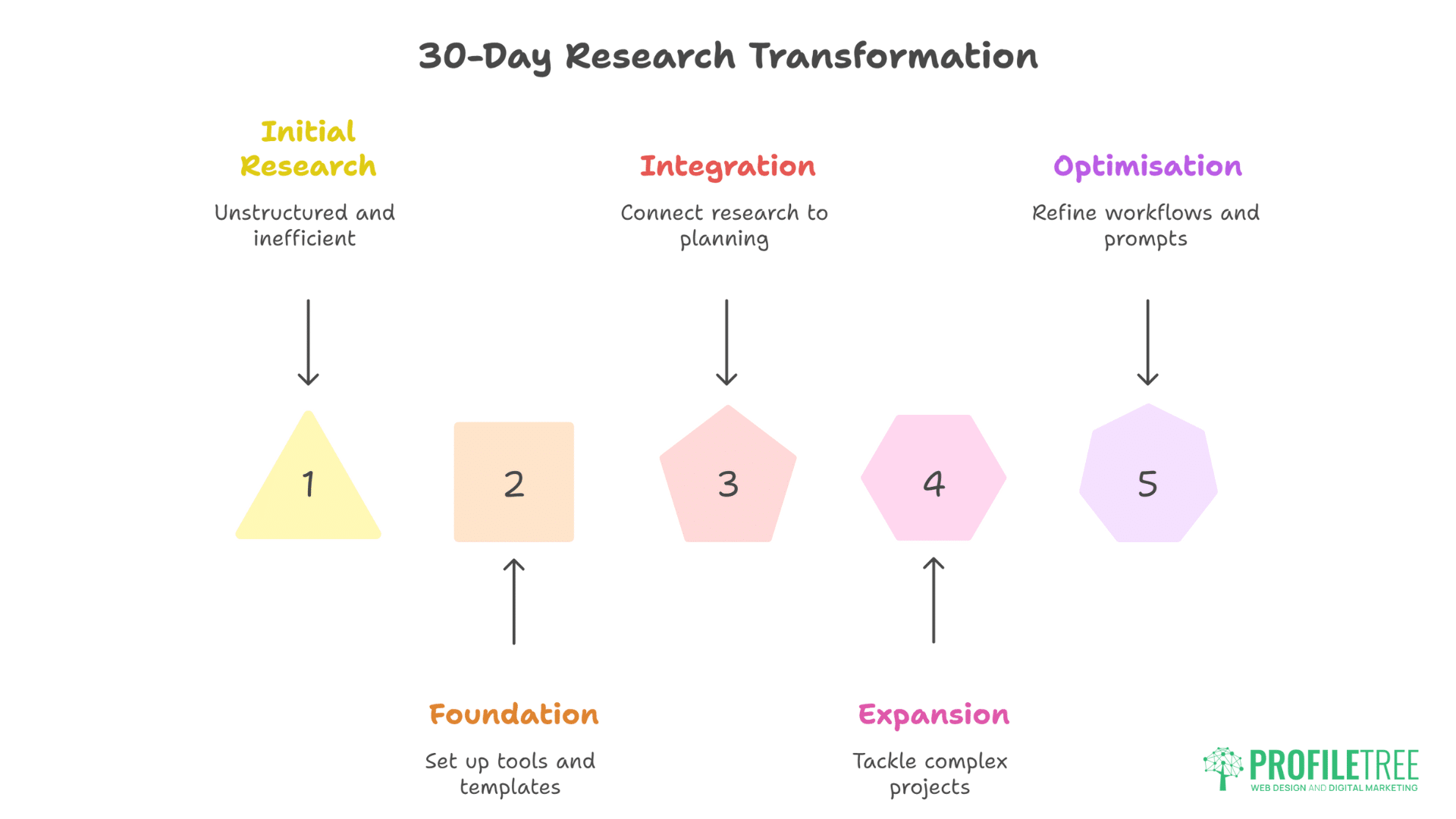
Implementing comprehensive research capabilities requires structured progression through skill development phases. This timeline provides practical steps for building market intelligence capabilities.
Week 1: Foundation
- Set up a Perplexity Pro account
- Create initial Collections
- Develop research templates
- Practice effective prompting
Week 2: Integration
- Connect research to planning
- Train team members
- Establish research routines
- Document early findings
Week 3: Expansion
- Tackle complex research projects
- Develop competitive intelligence
- Create customer insight systems
- Measure research impact
Week 4: Optimisation
- Refine research workflows
- Improve prompt effectiveness
- Streamline documentation
- Calculate ROI
Ongoing: Excellence
- Maintain daily intelligence gathering
- Conduct weekly deep dives
- Review monthly performance
- Continuously improve methods
Frequently Asked Questions
Is Perplexity’s free tier sufficient for SME market research?
The free tier’s 5 Pro searches daily work for basic needs, but serious research requires a Pro subscription at £20 monthly. The unlimited searches, file uploads, and advanced models justify the investment immediately through time savings alone.
How accurate is Perplexity’s information?
Perplexity provides source links for verification, making accuracy transparent. Cross-reference important findings and verify surprising claims. Accuracy typically exceeds manual research because Perplexity synthesises multiple sources, reducing single-source bias.
Can Perplexity replace market research agencies?
For most SME needs, yes. Perplexity handles desk research, competitive analysis, and trend identification excellently. Agencies remain valuable for primary research, deep interviews, and complex custom studies. Most businesses find Perplexity handles 80% of research needs at 5% of agency costs.
How do we avoid information overload?
Set specific research objectives, time boundaries, and decision criteria before starting. Focus on actionable insights rather than interesting information. Create structured workflows that transform research into decisions, not just knowledge.
What about confidential or proprietary information?
Perplexity searches public information only. For internal data analysis, combine Perplexity’s market context with your proprietary information separately. Never input confidential information into Perplexity queries.
Conclusion: Your Research Advantage Awaits
Market research no longer requires enormous budgets, specialist teams, or months of work. Perplexity AI has transformed intelligence gathering into an accessible, rapid, and actionable process that gives SMEs the insights previously exclusive to enterprises.
The businesses succeeding with Perplexity aren’t those doing the most research, but those transforming research into strategic action. They’ve learned to ask better questions, validate findings efficiently, and convert insights into competitive advantages that drive real growth.
Success requires more than just Perplexity access—it demands systematic approaches, quality standards, and integration with business operations. The investment in developing these capabilities returns immediate value through better decisions, faster responses, and deeper market understanding.
ProfileTree helps businesses maximise research capabilities through our digital strategy services, training programmes, and comprehensive marketing services that transform insights into growth.
The market intelligence advantage is available to any business willing to embrace new approaches. While competitors rely on assumptions and outdated information, you can operate with current, comprehensive intelligence that guides every decision.
Don’t let research paralysis or tool intimidation prevent you from accessing these capabilities. Start simple, build systematically, and watch as better intelligence transforms your business outcomes.
Contact ProfileTree today to develop your market research capabilities. Whether you need training, strategic support, or complete research services, we’ll ensure you extract maximum value from Perplexity and transform market intelligence into market leadership.