
Zero-Click Content and AI: Why Owning the Audience Matters
Table of Contents
The digital marketing game has fundamentally changed. Where businesses once focused on driving clicks to their websites, a new reality has emerged: zero-click content. Search engines now display AI-generated summaries, featured snippets, and knowledge panels that answer user queries directly on the results page. Social platforms keep users within their walled gardens with native content experiences. The result? Your potential customers get their answers without ever visiting your website.
For SME business owners across Northern Ireland, Ireland, and the UK, this shift presents both a challenge and an opportunity. The question isn’t whether zero-click content will affect your business—it already is. The real question is how you’ll adapt your digital strategy to thrive in this new environment.
The Zero-Click Content Reality: What It Means for Your Business

Zero-click searches now account for over 65% of all Google searches. When someone searches for “best restaurant Belfast” or “how to improve website SEO,” they increasingly find their answer without clicking through to any website. Google’s AI Overviews, featured snippets, and People Also Ask boxes deliver instant information. LinkedIn shows full articles in-feed. Instagram and TikTok have become search engines in their own right, with users never leaving the platform to find what they need.
This transformation impacts businesses in three critical ways. First, traditional website traffic metrics become less reliable indicators of reach and influence. Your content might reach thousands while your analytics show declining visits. Second, the customer journey fragments across multiple touchpoints, making attribution and conversion tracking more complex. Third, and most importantly, the relationship between brands and audiences becomes intermediated by platform algorithms.
Consider the local Belfast café that invested heavily in SEO for their website. They rank first for “coffee shops Belfast city centre,” but Google’s map pack and reviews show all the information searchers need—opening hours, ratings, photos—without a single click. Their visibility has never been higher, yet their website traffic plateaus. This scenario plays out across every industry, from professional services to retail, from B2B to B2C.
Platform Algorithms: The New Gatekeepers
The shift to zero-click content means platform algorithms now control the conversation between you and your audience. These algorithms decide which content surfaces in AI summaries, which businesses appear in local packs, and whose social posts reach their followers. You’re no longer just competing with other businesses; you’re competing for algorithmic favour.
Each platform operates its own complex system. Google’s AI pulls from what it considers authoritative sources, prioritising structured data and clear, direct answers. LinkedIn’s algorithm favours native content over external links, rewarding posts that generate meaningful professional discussions. Instagram and TikTok algorithms prize engagement velocity—how quickly content generates likes, comments, and shares after posting.
For Northern Ireland SMEs, this algorithmic intermediation creates particular challenges. Local market nuances, regional terminology, and specific business contexts might not align with how global algorithms interpret and present information. A Belfast-based consultancy might excel at serving Irish businesses but struggle to surface in AI-generated responses that favour larger, international competitors.
The volatility of algorithmic changes adds another layer of complexity. What works today might not work tomorrow. Businesses that relied heavily on Facebook organic reach learned this lesson painfully when the platform’s algorithm changes decimated their visibility. The same pattern repeats across every platform: build an audience, watch the platform restrict access, then pay to reach the people who already follow you.
Building Direct Relationships: The Strategic Imperative
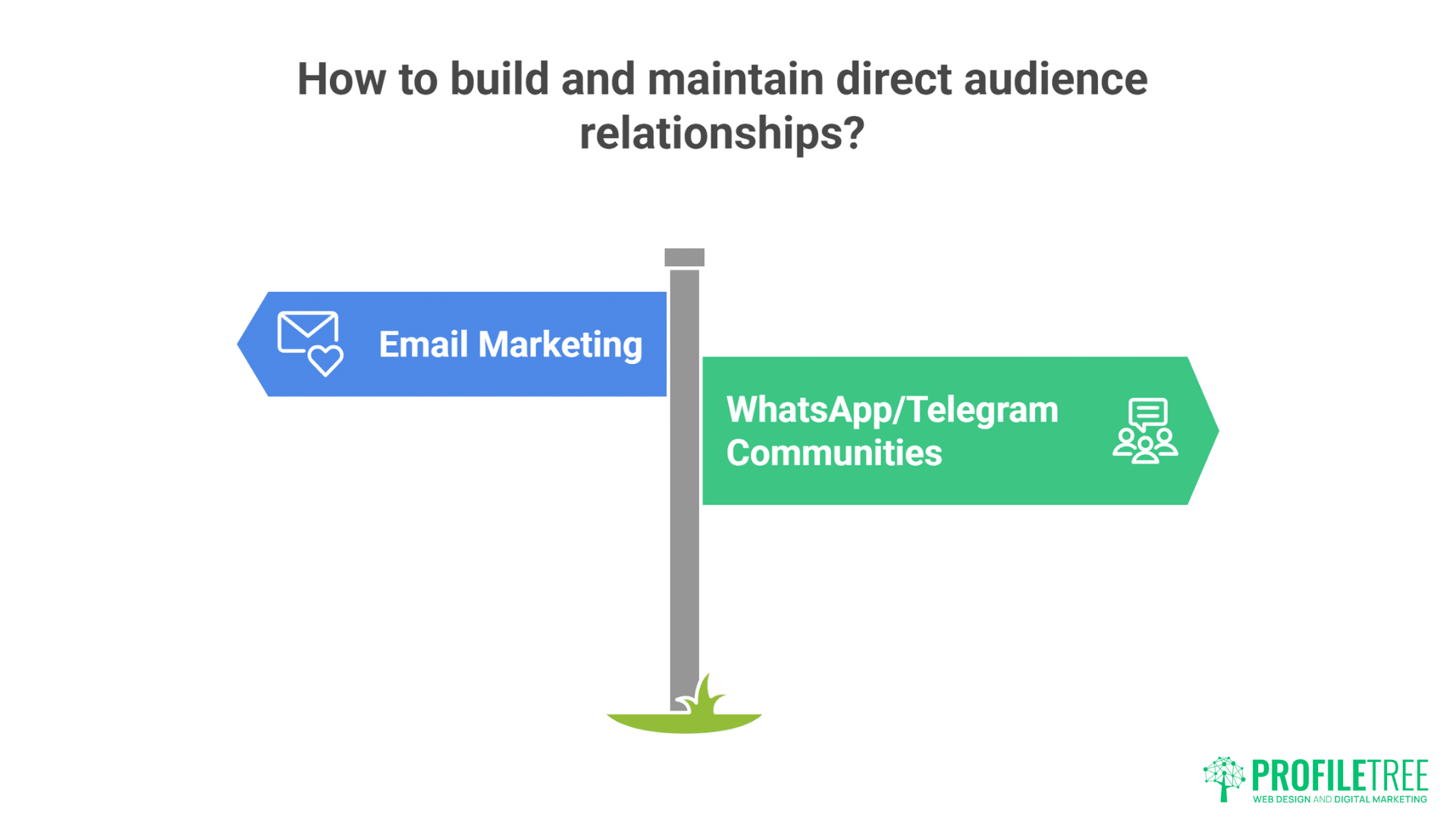
The answer to algorithmic uncertainty isn’t to abandon platforms—it’s to own the relationship with your audience. Direct connections through email lists, WhatsApp communities, podcast subscribers, and membership sites provide the stability that platform-dependent strategies lack. These owned channels deliver consistent reach regardless of algorithm changes.
Email marketing remains the cornerstone of audience ownership. Despite predictions of its demise, email delivers £42 for every £1 spent—a return unmatched by any other digital channel. But modern email strategy goes beyond promotional newsletters. Smart businesses create value-driven email experiences that subscribers actively anticipate. Think weekly industry insights for B2B audiences, exclusive early access for retail customers, or educational content series that position your expertise.
The key lies in the value exchange. People guard their email addresses more carefully than ever. To earn that permission, you must offer something genuinely valuable—not just another promotional channel. A digital strategy consultation can help identify what your specific audience values most and how to deliver it consistently.
WhatsApp and Telegram communities represent the next evolution of owned audiences. These platforms offer the intimacy of direct messaging with the scale of broadcast channels. A fitness studio in Dublin might run a WhatsApp community where members share achievements, get daily workout tips, and access exclusive class bookings. The engagement rates dwarf traditional social media—often exceeding 90% open rates.
Content Formats That Transcend Platforms
Success in the zero-click era requires content formats that work across multiple contexts while building direct audience relationships. Three formats stand out for their effectiveness: podcasts, video series, and interactive tools.
Podcasts create an intimate connection with audiences that text-based content cannot match. Listeners develop parasocial relationships with hosts, building trust and loyalty over time. For B2B companies, podcasts position executives as thought leaders while providing a platform for customer stories and industry insights. The subscription model means listeners opt into regular contact, creating a direct relationship independent of any single platform.
Starting a podcast doesn’t require massive investment. Modern tools make professional-quality recording accessible to any business. The challenge lies in consistency and finding your unique angle. What perspective can your Northern Ireland business offer that others cannot? What conversations happen in your industry that deserve a wider audience? Professional video marketing support can help develop a sustainable podcast strategy that aligns with your broader content goals.
Video series work similarly but with added visual engagement. YouTube subscriptions, for instance, create a direct notification relationship with viewers. But the real power comes from repurposing video content across platforms while maintaining consistent branding and messaging. A single video becomes YouTube content, Instagram Reels, TikTok posts, LinkedIn native video, and email newsletter material.
Interactive tools—calculators, assessments, configurators—provide value while capturing audience data. A mortgage broker might offer a affordability calculator that requires email registration for detailed results. A marketing agency could provide a free website audit tool that identifies improvement opportunities. These tools deliver immediate value while building your owned audience database.
Newsletter Strategy: The Renaissance of Email
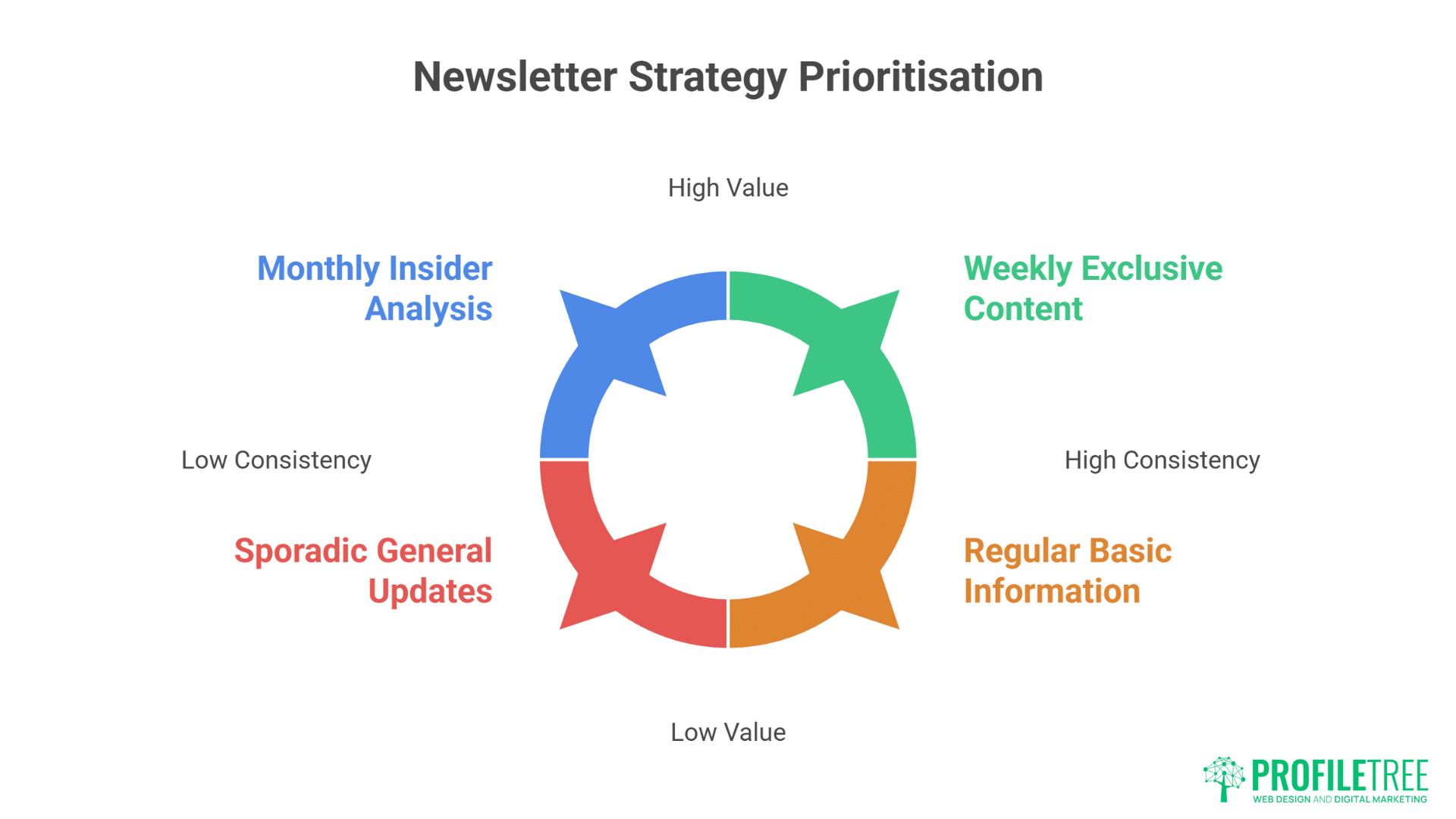
Newsletters have experienced a remarkable renaissance, driven partly by zero-click content concerns and partly by audience desire for curated, trusted information. Successful newsletters share several characteristics that businesses should emulate.
First, they maintain rigid consistency. Whether weekly, fortnightly, or monthly, subscribers know exactly when to expect content. This predictability builds habit and anticipation. Second, they provide exclusive value unavailable elsewhere. This might be insider industry analysis, early access to new products, or member-only discounts. Third, they maintain a distinct voice and perspective that subscribers cannot find elsewhere.
The newsletter format offers unique advantages for relationship building. Unlike social media posts that disappear in the feed, newsletters land directly in the inbox and remain accessible. Readers engage with newsletters in a focused environment, without the distractions of social platforms. The format allows for longer, more nuanced content that builds genuine thought leadership.
For SMEs, newsletters provide a cost-effective way to maintain customer relationships. A content marketing strategy that prioritises newsletter development often delivers better ROI than chasing viral social media moments. The subscribers you build become a valuable business asset—an audience you can reach regardless of platform changes.
Technical implementation matters as much as content strategy. Modern email service providers offer sophisticated segmentation, automation, and personalisation capabilities. But avoid the temptation to over-engineer. Start simple: deliver consistent value to a clearly defined audience. Sophistication can come later.
Community Building in the Digital Age
Communities represent the ultimate form of audience ownership—spaces where your audience connects not just with your brand but with each other. These connections create network effects that transcend any individual platform or channel.
Digital communities take many forms. Private Facebook groups, Discord servers, Slack workspaces, Circle communities, or even old-fashioned forums. The platform matters less than the value members derive from participation. Successful communities solve specific problems for specific people. They provide answers, connections, and belonging that members cannot find elsewhere.
Building community requires different skills than traditional marketing. You become a facilitator rather than a broadcaster. The focus shifts from promoting your business to enabling member success. This indirect approach often generates stronger business results than direct promotion. Members become advocates, referring business and defending your brand without prompting.
The community building process starts with clarity about whom you’re serving and what brings them together. A web design agency might create a community for local business owners navigating digital transformation. An accountancy firm could build a community for startup founders managing their first year of trading. The more specific the focus, the stronger the community bonds.
Moderation and community management require ongoing investment. Communities without active management quickly devolve into spam or toxicity. But this investment pays dividends through customer retention, word-of-mouth marketing, and invaluable customer insights. Community members often become your best customers, highest-value clients, and strongest advocates.
The Podcast Revolution: Audio as Relationship Builder
Podcasting has evolved from niche medium to mainstream marketing channel, with particular relevance for B2B companies and professional services. The intimacy of audio creates connections that written content cannot match. Listeners spend 30 minutes to an hour with your voice in their ears—an attention level increasingly rare in our fragmented media landscape.
The podcast ecosystem offers multiple monetisation and audience-building opportunities beyond the audio content itself. Transcripts become blog posts for SEO. Video recordings create YouTube content. Audiograms generate social media posts. Guest appearances build strategic partnerships. The compound effect multiplies the value of each recording session.
Starting a podcast requires strategic planning beyond equipment and editing. What unique perspective does your Northern Ireland business offer? Which format suits your expertise and resources—solo commentary, co-hosted discussions, or interview-based episodes? How will you maintain consistency when business demands compete for attention? Digital training programmes can help develop the skills needed for sustainable podcast production.
Distribution strategy matters as much as content creation. While Spotify and Apple Podcasts dominate, niche platforms might better serve specific audiences. LinkedIn’s audio events feature connects with professional audiences. Clubhouse, despite its declined hype, maintains engaged communities in specific niches. YouTube’s podcast features make video recording increasingly important for discovery.
The metrics for podcast success differ from traditional content marketing. Download numbers tell only part of the story. Engagement depth—how much of each episode listeners consume—matters more than raw downloads. Subscriber growth indicates audience building success. Most importantly, podcast listeners often become the highest-value customers, justifying the investment even with smaller absolute numbers.
Platform-Agnostic Content Strategy
Success in the zero-click era requires content that transcends individual platforms. This doesn’t mean posting the same content everywhere—each platform has unique requirements and audience expectations. Instead, it means developing core content assets that adapt to multiple contexts while maintaining consistent messaging and value.
The hub-and-spoke model provides a framework for platform-agnostic content. Your owned channels—website, email list, podcast—serve as the hub where detailed, evergreen content lives. Platform-specific content acts as spokes, drawing audiences back to your owned properties. This approach balances platform reach with audience ownership.
Consider how ProfileTree approaches video marketing services. A comprehensive video guide on the website serves as the hub. YouTube videos provide detailed tutorials. Instagram Reels showcase quick tips. LinkedIn posts share industry insights. TikTok content demonstrates creative techniques. Each piece stands alone while contributing to a coherent content ecosystem.
Repurposing requires strategic thinking about content atomisation. A single webinar might generate dozens of content pieces: the full recording, chapter timestamps, quote cards, statistic graphics, FAQ posts, and follow-up articles. This multiplication effect maximises the return on content creation investment while maintaining quality and relevance across platforms.
The key lies in understanding format-specific requirements while maintaining message consistency. A two-minute TikTok video and a 2,000-word blog post might convey the same core message through entirely different approaches. The TikTok version prioritises visual engagement and trending audio. The blog post provides comprehensive detail and search engine optimisation. Both serve the overall strategy of building authority and driving business results.
Measuring Success Beyond Clicks
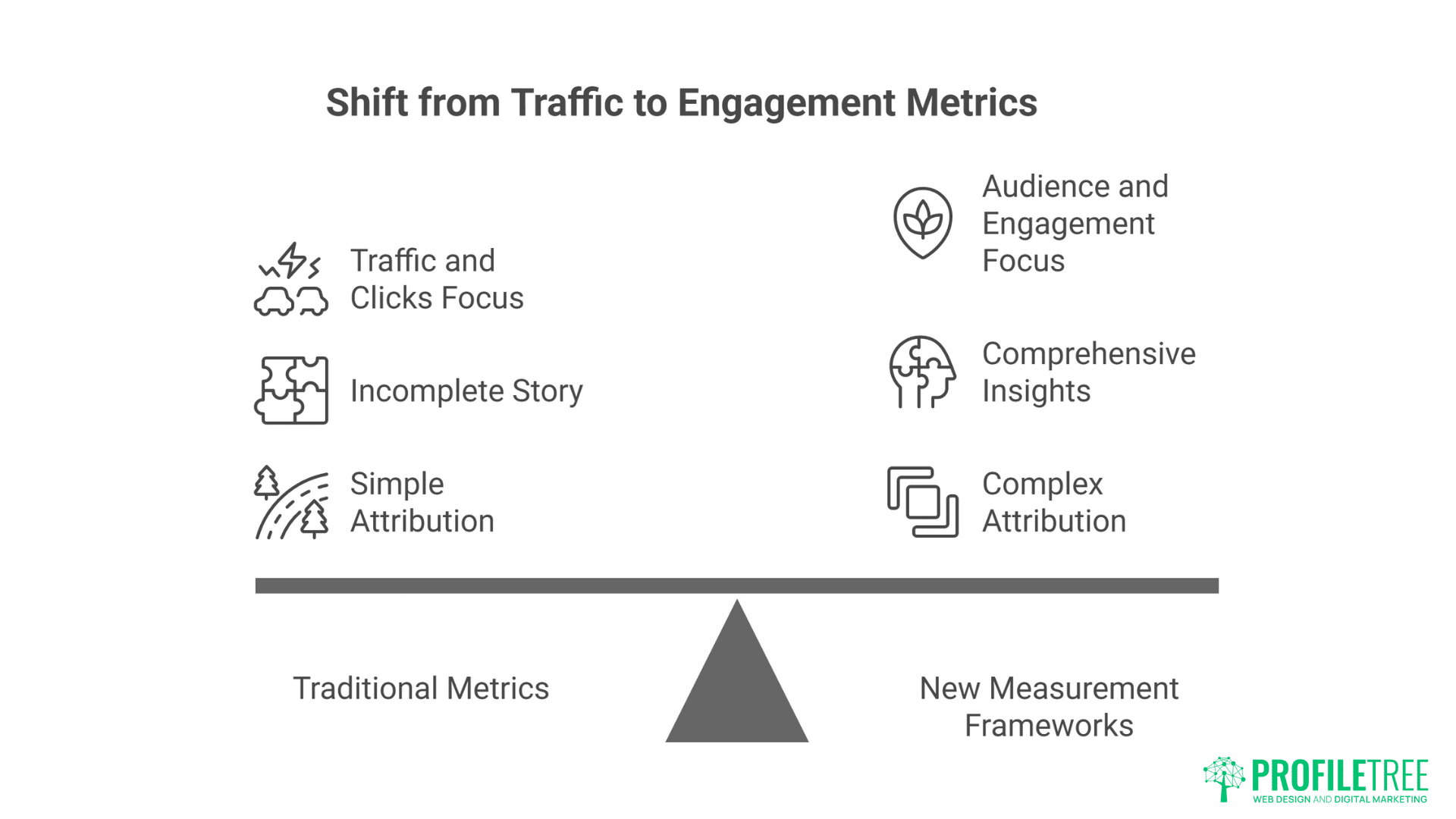
Traditional metrics lose relevance in a zero-click world. Website traffic, click-through rates, and page views tell an incomplete story. New measurement frameworks must account for audience growth, engagement depth, and relationship strength across owned and earned channels.
Audience metrics take precedence over traffic metrics. Email list growth, podcast subscribers, community members, and social media followers (with engagement rates) indicate relationship-building success. These numbers represent people who have explicitly chosen to maintain connection with your brand—a stronger signal than anonymous website visitors.
Engagement depth matters more than reach. A hundred engaged email subscribers who regularly open, read, and act on your content deliver more value than thousands of passive social media followers. Time spent with content, completion rates, and repeat engagement indicate content quality and audience fit.
Business metrics ultimately matter most. How many newsletter subscribers become customers? What percentage of podcast listeners request consultations? How does community membership correlate with customer lifetime value? These connections between audience building and business results justify the investment in owned channel development.
Attribution becomes more complex but not impossible. Multi-touch attribution models account for various touchpoints in the customer journey. Unique tracking codes for different channels identify traffic sources. Post-purchase surveys reveal influence sources that analytics might miss. The goal isn’t perfect attribution but directional accuracy that informs strategy.
Implementation Roadmap for SMEs
Transitioning from click-dependent to audience-owned strategies requires systematic implementation. Start with an audit of your current digital presence. What owned channels already exist? Which platforms drive the most valuable customer relationships? Where do competitors successfully build audiences?
Phase one focuses on email list building. If you don’t have an active email list, this becomes the immediate priority. Create a valuable lead magnet—an ebook, template, calculator, or tool—that solves a specific problem for your target audience. Implement pop-ups, inline forms, and exit intent captures on your website. Most importantly, begin regular email communication that delivers consistent value.
Phase two develops one flagship content format. Choose between a podcast, video series, or newsletter based on your strengths and audience preferences. Commit to consistency for at least six months before evaluating success. Use this flagship content to drive email subscriptions and build your owned audience database.
Phase three explores community building. Start small—perhaps a WhatsApp group for your best customers or a LinkedIn group for industry peers. Learn what creates value for members before scaling. Community building requires different skills than content creation, so invest in learning or hiring appropriate expertise.
Phase four optimises for platform algorithms while maintaining focus on owned channels. Create platform-specific content that drives awareness while encouraging migration to owned properties. Develop systematic repurposing processes that multiply content value across channels. Track both platform metrics and owned audience growth to understand the full impact.
Throughout implementation, maintain focus on value creation over promotional content. The businesses that succeed in building owned audiences are those that genuinely serve their community’s needs. This service-first mentality, combined with strategic channel development, creates sustainable competitive advantage regardless of algorithm changes.
The Role of AI in Audience Building
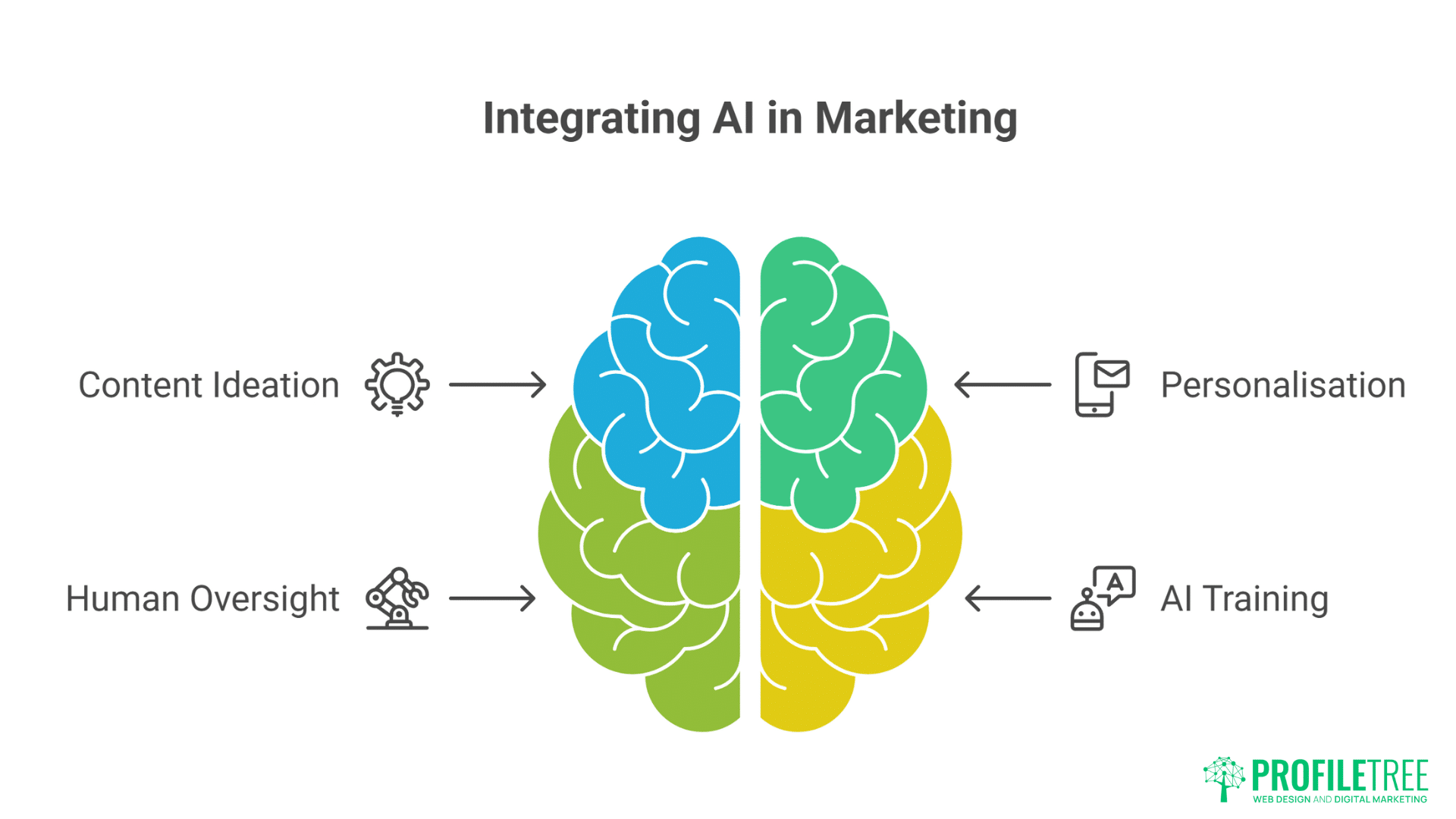
Artificial intelligence tools transform how businesses create content and build audiences. But AI serves best as an amplifier of human strategy and creativity, not a replacement. Understanding how to integrate AI into your marketing strategy while maintaining authentic audience relationships becomes crucial.
AI excels at content ideation and research. Tools can analyse trending topics, identify content gaps, and suggest angles that resonate with specific audiences. This intelligence accelerates content planning while ensuring relevance to audience needs. However, the unique perspective and expertise that builds loyal audiences must come from human insight.
Personalisation at scale becomes possible with AI. Email sequences adapt to individual subscriber behaviour. Content recommendations match user preferences. Chatbots provide instant responses while capturing audience data. These capabilities allow small businesses to deliver experiences previously reserved for enterprise companies.
The danger lies in over-automation. Audiences quickly recognise and reject generic AI-generated content. The businesses that successfully integrate AI maintain human oversight and inject personality into automated processes. They use AI to handle repetitive tasks while focusing human effort on relationship building and strategic thinking.
AI training for businesses helps teams understand both capabilities and limitations. Learning prompt engineering, understanding AI tools’ strengths and weaknesses, and developing governance frameworks ensure responsible AI use that enhances rather than replaces human connection.
Future-Proofing Your Digital Presence
The zero-click trend will accelerate as AI capabilities expand. Search engines will answer increasingly complex queries directly. Social platforms will further restrict organic reach to drive advertising revenue. New platforms will emerge and fragment audience attention. Building owned audiences provides the only reliable defence against these changes.
Web3 technologies might offer new models for audience ownership. Blockchain-based social networks promise user data ownership and portability. NFTs could enable new community membership models. While these technologies remain speculative, forward-thinking businesses should monitor developments and experiment carefully.
The fundamentals, however, remain constant. Businesses that provide genuine value, build authentic relationships, and maintain direct communication channels will thrive regardless of technological changes. The investment in audience building pays dividends not just in marketing effectiveness but in business resilience.
For SMEs across Northern Ireland, Ireland, and the UK, the path forward requires balancing platform participation with audience ownership. Use social media and search engines to build awareness. Convert that awareness into owned relationships through email, communities, and subscription content. Nurture those relationships with consistent value delivery. This strategic approach ensures your business thrives regardless of platform changes or algorithm updates.
FAQs
What exactly is zero-click content and why should SME owners care?
Zero-click content refers to search results where users get their answers directly on the search engine results page without clicking through to any website. This includes featured snippets, knowledge panels, and AI-generated summaries. SME owners should care because over 65% of searches now end without a click, meaning traditional website traffic metrics no longer tell the full story of your online visibility and influence.
How can small businesses with limited budgets build owned audiences effectively?
Start with email marketing, which offers the highest ROI of any digital channel. Create one valuable lead magnet that solves a specific problem for your target audience. Use free tools initially—Mailchimp for email, Canva for design, or smartphone recording for podcasts. Focus on consistency over production value. A weekly email newsletter with genuine insights will build a stronger audience than sporadic, high-production content.
What’s the first step a business should take to move away from platform dependency?
Begin building an email list immediately. Add simple opt-in forms to your website offering something valuable in exchange for email addresses—a guide, template, or exclusive discount. Start sending regular, valuable emails even if your list only has ten subscribers. This foundation becomes the cornerstone of all future audience-building efforts. Every other strategy should ultimately drive people to your email list.
How long does it typically take to see results from audience-building strategies?
Expect a minimum of six months of consistent effort before seeing significant results. Email lists might grow slowly initially—perhaps 10-20 subscribers monthly for small businesses. Podcasts typically need 20-30 episodes before gaining traction. Communities require 3-6 months to develop culture and engagement. The businesses that succeed commit to the long term, understanding that owned audiences are assets that compound over time.
Which platform should businesses prioritise for building communities?
Choose the platform where your target audience already spends time and feels comfortable. B2B companies often find success with LinkedIn groups or Slack workspaces. B2C businesses might prefer Facebook groups or Discord servers. Local businesses could start with WhatsApp groups for their best customers. The platform matters less than providing genuine value and fostering member-to-member connections. Start where you can maintain consistent engagement and moderation.
Ciaran Connolly, ProfileTree founder, notes: “The businesses winning in today’s digital landscape aren’t necessarily those with the most traffic or followers. They’re the ones who’ve built direct, meaningful relationships with their audience. When you own the relationship, you control your business destiny regardless of what Silicon Valley decides next.”
The shift to zero-click content and AI-mediated interactions isn’t a future threat—it’s today’s reality. But rather than seeing this as a challenge, view it as an opportunity to build something more valuable than website traffic: genuine audience relationships. Your email subscribers, podcast listeners, and community members become your most valuable business asset, providing stability and growth regardless of platform changes.
Contact ProfileTree today to develop your audience ownership strategy. Our team helps SMEs across Northern Ireland, Ireland, and the UK build sustainable digital presences that transcend platform dependency. Whether through strategic planning, content creation, or technical implementation, we’ll help you own your audience relationship and secure your digital future.