
Effective Sales Techniques: Close That Deal!
Table of Contents
What separates top-performing sales professionals from average performers? The answer lies in mastering effective sales techniques beyond basic product pitches. Whether you’re selling web design services, digital marketing packages, or AI implementation, closing deals requires a strategic approach built on psychology, technology, and genuine relationship building.
This guide explores practical sales techniques for modern businesses, particularly digital agencies like ProfileTree. From understanding buyer psychology to implementing AI-powered tools, you’ll discover actionable methods to improve conversion rates and grow revenue.
The Psychology Behind Successful Sales Techniques
Before diving into specific tactics, understanding what makes sales techniques effective provides the foundation for success. Modern buyers are sophisticated, well-researched, and sceptical of traditional pushy approaches. This shift demands a more nuanced strategy.
Why Effective Sales Techniques Matter
Sales techniques aren’t about manipulation but creating a conversation structure that benefits both parties. When you apply tested methods, three key advantages emerge:
Reduced Cognitive Load: Preparing responses and frameworks means less mental effort during conversations. You can focus on listening rather than scrambling for what to say next.
Increased Efficiency: Systematic approaches eliminate guesswork. You’re not reinventing the wheel with each prospect. This consistency allows you to refine what works and quickly identify what doesn’t.
Greater Control: Walking into sales conversations without a plan puts you in reactive mode. Strategic sales techniques let you guide discussions towards outcomes that serve your agency and the client’s needs.
These benefits translate directly into higher close rates and shorter sales cycles for digital agencies selling complex services like web development or SEO packages.
The Science of Purchasing Decisions
Research from Harvard Business School reveals that approximately 95% of purchasing decisions occur subconsciously. This finding has profound implications for how we approach sales.
Rather than focusing solely on logical features and specifications, effective sales techniques tap into emotional drivers, social proof, and cognitive patterns. Understanding these psychological principles helps you communicate value in ways that resonate with how people make decisions.
Six Proven Sales Techniques for Digital Services
These battle-tested techniques work across industries but prove particularly effective when selling digital agency services. Each method addresses specific psychological principles that influence buyer behaviour.
Emotional Connection: Building Trust First
The foundation of any successful sale starts with genuine rapport. When selling services like web design or digital marketing, you ask clients to trust you with their business presence.
Creating emotional connections doesn’t mean being insincere. Small gestures make significant differences:
- Reference specific details from their website or social media
- Acknowledge challenges unique to their industry
- Share relevant experience with similar businesses
- Use their preferred communication style
Studies demonstrate that compliments work even when recipients know they may be strategic. The key is authenticity. For ProfileTree’s team, this might mean recognising a client’s existing brand efforts before suggesting improvements.
For Digital Agencies: When discussing web design services, acknowledge business owners’ emotional investment in their brand. Recognise their vision before suggesting technical improvements.
Pattern Interruption: Breaking Through Sales Fatigue
Decision-makers receive countless sales pitches daily. Their brains have developed automatic filters to dismiss standard approaches. Pattern interruption circumvents these defences by doing something unexpected.
Instead of the typical opener: “Hi, I’m calling about your website…”
Try: “I noticed three specific issues affecting your site’s conversion rate. Do you have two minutes?”
This technique works because it:
- Provides immediate value (specific observations)
- Creates curiosity (what are the issues?)
- Respects their time (two minutes)
- Demonstrates expertise (you’ve already researched)
Pattern interruption can be applied throughout conversations. When a prospect asks a predictable question, respond with a question that reframes their thinking. The goal isn’t to be contrarian—it’s to engage their conscious attention rather than triggering automatic dismissal.
For Digital Agencies: When presenting SEO services, don’t start with “We can improve your rankings.” Instead, show them exactly where they’re losing potential customers in search results, then ask what that traffic is worth to their business.
The Choice Framework: Replacing Yes/No with Options
Binary questions invite rejection. Asking “Would you like to proceed?” creates an easy exit. The choice framework eliminates this by presenting multiple paths forward.
Compare these approaches:
Weak: “Are you interested in our web design services?”
Strong: “Would a complete website redesign work better for your goals, or would you prefer to start with conversion optimisation on your existing site?”
The second question accomplishes several things:
- Assumes they’re moving forward
- Demonstrates understanding of different needs
- Positions you as a consultant, not a vendor
- Makes them evaluate which option fits better
Research on decision-making shows that limited options (2-3) lead to better choices than overwhelming prospects with possibilities. This technique works particularly well for digital agencies offering multiple services.
For Digital Agencies: When discussing content marketing, offer choices like “Would you prefer we focus on written blog content to boost SEO, video content for social engagement, or a combination approach?
Social Proof: Letting Results Speak
Prospects trust peer experiences more than sales pitches. Social proof transforms your claims from assertions into validated facts.
Adequate social proof for digital agencies includes:
Client Testimonials: Specific statements about results achieved, not generic praise. “ProfileTree’s SEO work increased our qualified leads by 140% in six months” carries weight.
Case Studies: Detailed narratives showing challenge, solution, and measurable outcomes. These work exceptionally well for complex services like AI implementation or digital strategy.
Industry Recognition: Awards, certifications, or media features that validate your expertise.
Portfolio Demonstrations: Showing rather than telling. For web design, live examples of sites you’ve built speak volumes.
According to BrightLocal research, 79% of consumers trust online reviews as much as personal recommendations. For B2B services, case studies prove that ROI influences 73% of purchase decisions.
For Digital Agencies: Create case studies specific to different industries you serve. When speaking with a legal practice, reference your work with other solicitors rather than generic success stories.
The Rule of Three: Creating Persuasive Patterns
Human brains naturally seek patterns. Three represents the smallest number that creates a pattern, making it psychologically satisfying and memorable.
Structure your communications in threes:
Three Problems: “Many of our clients initially struggled with low website traffic, poor conversion rates, and difficulty tracking ROI…”
Three Solutions: “Our approach focuses on SEO-optimised design, conversion-focused layouts, and integrated analytics…”
Three Benefits: “You’ll see more qualified visitors, higher engagement, and clear data on what’s working…”
This technique appears throughout effective communication—from speeches to advertising to teaching. Research at UCLA confirmed that three-point patterns show higher retention and persuasiveness than other numbers.
For Digital Agencies: When presenting video production services, structure around three phases: strategy and scripting, professional filming, and optimisation for different platforms.
Strategic Humour: Humanising the Conversation
Appropriate humour distinguishes you from automated messages and overly formal competitors. It signals confidence, intelligence, and humanity—qualities that build trust.
Effective humour in sales isn’t about telling jokes. It’s about:
- Self-deprecating comments that show humility
- Observational humour about shared industry challenges
- Playful acknowledgement of common objections
- Light-hearted references to current events
The keyword is “appropriate.” Read the room, respect cultural differences, and avoid anything perceived as offensive or unprofessional.
Ciaran Connolly, Director of ProfileTree, notes: ‘The best sales conversations don’t feel like sales at all. When you can make a prospect laugh while discussing their challenges, you’ve moved from vendor to trusted advisor.’
For Digital Agencies: When discussing website migrations or redesigns, acknowledge common fears with humour: “I know the word ‘migration’ probably gives you nightmares. Rest assured, we’ve never lost a client’s data—though we have lost sleep making sure of it.”
Sales Strategy for Digital Agencies
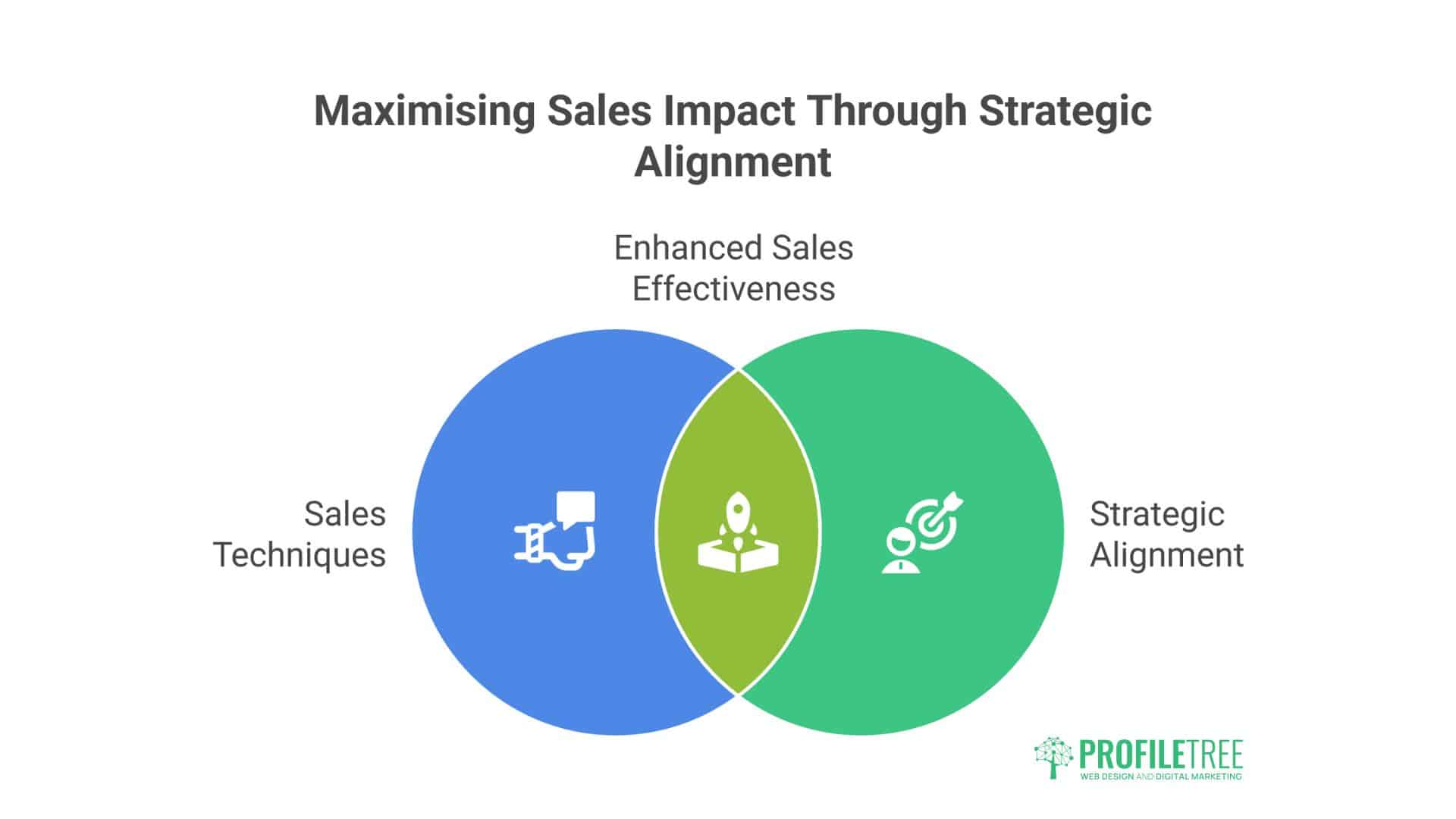
Individual techniques work best within a coherent strategy. Digital agencies need approaches tailored to their service offerings and target markets.
Product-Focused vs. Customer-Focused Approaches
Your sales strategy depends mainly on what you’re selling and to whom.
Product-Focused Sales
This approach works when introducing innovative services. If you’re among the first agencies in Northern Ireland offering AI training for businesses, your strategy centres on creating awareness.
Product-focused sales require:
- Educating prospects about possibilities they hadn’t considered
- Demonstrating capabilities through examples and demos
- Simplifying complex concepts without oversimplifying
- Creating urgency around competitive advantages
For ProfileTree’s AI implementation services, this means showing business owners practical applications rather than abstract benefits. Demonstrate how AI can automate their customer service or content creation, don’t just explain machine learning concepts.
Customer-Focused Sales
When selling established services like web design or SEO, prospects already understand the category. Your challenge is differentiation.
Customer-focused sales demands:
- Deep understanding of the prospect’s specific challenges
- Competitive analysis showing your advantages
- Industry-specific expertise and examples
- Quantifiable outcomes tied to their goals
This approach requires more research before conversations. Study the prospect’s current website, competitors, and market position. When you demonstrate this knowledge, you’re not just another agency—you’re a specialist who understands their world.
Consultative Selling for Complex Services
Digital agency services—whether web development, video production, or digital strategy—are complex, high-consideration purchases. Consultative selling aligns perfectly with these characteristics.
This methodology focuses on:
- Discovery Before Prescription: Ask questions to understand needs before proposing solutions. What are their growth goals? What’s worked or failed previously? What internal resources do they have?
- Co-Creation: Involve prospects in developing solutions. “Based on what you’ve shared, here’s what I’m thinking… What aspects matter most to you?”
- Education: Help prospects make informed decisions, even if it means acknowledging when you’re not the perfect fit. This counterintuitive approach builds tremendous trust.
- Long-Term Perspective: Position yourself as a partner in their growth, not just a project vendor. This mindset shift is significant for services like ongoing SEO or content marketing.
For agencies offering digital training, consultative selling means understanding what skills they need and how training fits into their broader business strategy.
Advanced Sales Technology for Modern Agencies
Technology has transformed sales effectiveness. Digital agencies should leverage these tools not just for clients, but in their own sales processes.
Conversation Intelligence and Call Analysis
AI-powered conversation intelligence tools analyse sales calls to identify patterns in successful interactions. These platforms can:
- Highlight which phrases correlate with closed deals
- Identify when prospects are engaged or losing interest
- Compare your approach to top performers
- Track competitor mentions and objections
- Provide coaching suggestions based on actual conversations
For agencies selling multiple services, this data reveals which positioning works best for different offerings. Perhaps your video production sales succeed when you lead with brand storytelling, while web design closes better when you start with conversion metrics.
Intent Data: Reaching Prospects at Peak Interest
Intent data identifies companies actively researching solutions related to your services. Rather than cold outreach, you contact prospects when they’re already in buying mode.
Sources of intent data include:
- Companies downloading content about topics you specialise in
- Businesses researching competitor keywords
- Spikes in web activity around relevant terms
- Job postings indicating new initiatives
Research shows that contacting prospects with high intent scores improves conversion rates by 2.7x compared to untargeted outreach. Cold calls achieve a roughly 3% success rate, while calls to active researchers succeed 55%.
For ProfileTree, monitoring intent signals around “Belfast web design,” “AI training for SMEs,” or “digital marketing strategy” identifies businesses ready for conversations.
Customer Relationship Management with AI
Modern CRM systems enhanced with AI capabilities provide:
- Predictive Lead Scoring: Algorithms identify which prospects are most likely to convert based on engagement patterns, company characteristics, and historical data.
- Automated Follow-Up Sequencing: Triggered emails, reminders, and content delivery based on prospect actions without manual tracking.
- Sentiment Analysis: Monitoring email and conversation tone to flag at-risk opportunities or detect buying signals.
- Performance Analytics: Tracking which sales techniques, content pieces, and communication channels drive results.
According to Gong’s research, representatives using conversation intelligence and AI-enhanced CRM achieve sales quotas 23% higher than average.
AI-Powered Proposal and Content Generation
Creating customised proposals for web design, digital strategy, or video production projects consumes significant time. AI tools can accelerate this process while maintaining personalisation.
These tools help:
- Generate first drafts of proposals based on discovery information
- Customise case studies for specific industries
- Create personalised follow-up emails
- Develop presentation content tailored to prospect’s needs
The key is using AI for efficiency, not replacing the human elements that build trust. Edit AI-generated content to add personal touches, industry-specific insights, and your agency’s voice.
Sales Techniques for Specific Digital Services
Different services require tailored approaches. Here’s how to adapt core techniques for ProfileTree’s main offerings.
Selling Web Design and Development
Web design sales face unique challenges. Prospects may have had poor experiences with previous agencies, struggle to articulate their vision, or significantly underestimate project complexity.
Effective Techniques:
- Visual Discovery: Use existing sites (theirs and competitors’) as discussion tools. “What do you like about this layout?” proves more productive than abstract questions.
- Conversion-Focused Positioning: Rather than discussing aesthetics, frame conversations around business outcomes. “Our sites are built to turn visitors into customers” resonates more than “We create beautiful websites.”
- Transparent Process: Show exactly how projects progress from discovery through launch. This reduces anxiety about the unknown.
- Portfolio Strategy: Showcase sites similar to their industry or desired functionality. Generic portfolios fail to create a vision for what you can do specifically for them.
Selling SEO and Digital Marketing
SEO and digital marketing services face scepticism from past disappointments with agencies promising unrealistic results.
Effective Techniques:
- Audit-First Approach: Offer a preliminary site audit identifying specific opportunities. This demonstrates expertise and provides tangible value before purchase.
- Realistic Timeframes: Set honest expectations about how long results take. Agencies promising page-one rankings in 30 days damage the industry’s credibility.
- Local Focus: For businesses in Northern Ireland and the UK, emphasise local SEO expertise and understanding of regional markets.
- Ongoing Partnership: Position SEO as continuous optimisation, not a one-time project. This aligns with how search actually works while creating predictable revenue.
Selling AI Training and Implementation
AI services represent novel territory for most SMEs. Sales techniques must address both excitement and anxiety around this technology.
Effective Techniques:
- Practical Demonstrations: Show AI tools solving business problems rather than explaining theoretical capabilities. Let them interact with ChatGPT, which is applied to their content needs.
- Risk Reduction: Acknowledge job displacement, data security, and complexity concerns. Address these proactively rather than avoiding uncomfortable topics.
- Scaled Implementation: Start with one department or process rather than a company-wide transformation. Success breeds expansion.
- Training Emphasis: Position your agency as building internal capability, not creating dependency. Business owners value empowerment over ongoing reliance.
Selling Video Production and Content Services
Video and content services require demonstrating both creative capability and business understanding.
Effective Techniques:
- ROI Framework: Connect video content to specific business objectives—recruitment, customer education, social engagement, or sales enablement.
- Platform Strategy: Show understanding of how video performs differently on YouTube, LinkedIn, Instagram, and websites. One-size-fits-all approaches signal inexperience.
- Production Transparency: Demystify the process. Many prospects imagine video production as more complex and expensive than it is in reality.
- Repurposing Strategy: Demonstrate how one video shoot creates multiple assets across platforms, maximising their investment.
Handling Common Objections in Digital Services Sales
Objections aren’t rejections—they’re opportunities to address concerns preventing prospects from moving forward. Digital agency sales encounter predictable objections that effective techniques can resolve.
“Your Services Are Too Expensive”
Price objections often mask value uncertainty. Prospects don’t doubt what you charge; they question whether results justify the investment.
Effective Responses:
- ROI Reframing: “Our web design projects average £8,000, but our clients typically see a 200% increase in qualified leads within six months. Based on your average customer value, that represents roughly £50,000 in additional revenue. Does that calculation work for your business?”
- Cost of Inaction: “What’s the current cost of your website converting at 1% instead of the 3-4% industry standard? That gap represents real revenue you’re leaving on the table every month.”
- Payment Flexibility: Offer phased approaches or payment plans that make the investment more manageable without discounting your value.
“We Can Handle This Internally”
This objection questions your necessity, not your capability.
Effective Responses:
- Opportunity Cost: “Your team is talented, but while learning video production, what strategic work isn’t getting done? We deliver in weeks what might take months to develop internally, letting your team focus on your core business.”
- Specialist Expertise: “We’ve produced over 200 business videos and know what works across different platforms and industries. That specialised knowledge is difficult to replicate with occasional video creation.”
- Objective Perspective: “Sometimes external agencies spot opportunities internal teams are too close to see. Fresh eyes often identify quick wins.”
“What Guarantees Do You Offer?”
This objection seeks risk reduction. Digital services involve uncertainty that makes prospects uncomfortable.
Effective Responses:
- Process Guarantees: “We guarantee you’ll see designed mockups within two weeks and have three revision rounds included. If you’re unsatisfied at any stage, we pause and address concerns before proceeding.”
- Performance Metrics: “For SEO, we track 15 specific metrics monthly and adjust strategy based on data. While we can’t guarantee page-one rankings—no one ethically can—we do guarantee continuous optimisation based on performance.”
- Client References: “Rather than making promises, let me connect you with three clients in similar situations who can share their experience working with us.”
“We’ve Worked with Agencies Before and Been Disappointed”
Past negative experiences create understandable hesitation. Address this objection with empathy and differentiation.
Effective Responses:
- Understanding: “That’s unfortunately common in our industry. What specifically went wrong? I want to make sure we address those concerns upfront.”
- Process Transparency: “Communication breakdowns cause most agency disappointments. Here’s exactly how we keep clients informed at each stage…”
- Smaller Commitment: “Given your experience, let’s start with a smaller project. If we deliver as promised, we can discuss expanding the relationship.”
Relationship Building and Client Retention
Acquiring new clients costs five times more than retaining existing ones. For digital agencies, client retention directly impacts profitability and creates referral opportunities.
Post-Sale Experience
The sale doesn’t end when the contracts are signed. The onboarding experience sets the tone for the entire relationship.
Key Elements:
- Welcome Package: Provide clear next steps, timeline, and what clients should prepare. Uncertainty breeds anxiety.
- Team Introductions: Connect clients with everyone they’ll work with, not just the salesperson who closed the deal.
- Quick Wins: Identify early achievements to build confidence. For web projects, showing initial designs quickly demonstrates progress.
- Regular Communication: Weekly or biweekly check-ins keep clients informed and engaged. Silence breeds concern.
Value-Add Strategies
Going beyond the contracted scope builds loyalty and creates upsell opportunities.
Effective Approaches:
- Educational Content: Share relevant articles, webinars, or workshops that help clients understand the digital landscape.
- Industry Insights: Alert clients to changes affecting their sector—algorithm updates, competitor strategies, emerging platforms.
- Proactive Recommendations: Don’t wait for clients to ask about expansion. “I’ve noticed three opportunities where video content could boost your social engagement…”
- Exclusive Access: Early access to new services, beta testing opportunities, or priority scheduling makes clients feel valued.
Strategic Upselling and Cross-Selling
Digital agencies offer complementary services that naturally create expansion opportunities.
Logical Progressions:
- Web Design → SEO Optimisation
- SEO → Content Marketing
- Content Marketing → Video Production
- Video Production → Social Media Strategy
- Any Service → AI Implementation
- All Services → Ongoing Digital Strategy
The key is timing and positioning. Introduce additional services when:
- The current project shows success
- Client mentions related challenges
- Industry changes create new opportunities
- Competitive threats emerge
Frame-upsells as natural next steps in their growth journey, not unrelated sales pitches.
Referral Generation
Satisfied clients become your most effective salespeople. However, most don’t think to refer without prompting.
Referral Strategies:
- Direct Requests: After successful projects, simply ask: “Do you know other businesses facing similar challenges who might benefit from our work?”
- Referral Incentives: Offer discounts or service credits for successful referrals. Ensure incentives don’t undermine your positioning.
- Partner Programmes: For clients who refer multiple businesses, create formal partner relationships with ongoing benefits.
- Make It Easy: Provide shareable content, introduction templates, or referral cards that remove friction from the referral process.
Research shows 83% of satisfied customers are willing to refer services, but only 29% do. The gap represents a lost opportunity that simple systems can capture.
Measuring and Optimising Sales Performance
What gets measured gets improved. Digital agencies should track sales metrics as rigorously as campaign performance for clients.
Essential Sales Metrics
- Lead Response Time: How quickly do you respond to inquiries? Research shows that contacting leads within five minutes increases conversion probability by 21x compared to waiting 30 minutes.
- Conversion Rate by Stage: Track what percentage of leads become qualified prospects, then proposals, then closed deals. This identifies where your funnel leaks.
- Sales Cycle Length: How long is the first contact to the closed deal? Shorter cycles improve cash flow and allow more opportunities.
- Average Deal Size: Understanding typical project values helps forecast revenue and identify opportunities to move upmarket.
- Win Rate Against Competitors: How often do you win when you compete directly against other agencies? Low win rates suggest positioning or pricing issues.
- Customer Acquisition Cost (CAC): Total sales and marketing costs divided by new customers. This must be lower than customer lifetime value for sustainable growth.
- Customer Lifetime Value (CLV): Average revenue per client over the entire relationship. Higher CLV justifies higher acquisition spending.
Testing and Iteration
Sales techniques improve through systematic testing, not guesswork.
A/B Testing for Sales:
- Test different email subject lines and opening paragraphs
- Try alternative proposal formats and pricing presentations
- Experiment with various discovery question frameworks
- Compare video proposals versus written documents
Review and Refine:
- Record sales calls (with permission) for self-analysis
- Review lost opportunities to identify patterns
- Analyse which techniques correlate with closed deals
- Solicit feedback from prospects regardless of outcome
Team Learning:
- Share successful approaches across your sales team
- Create playbooks documenting what works
- Role-play objection handling and challenging scenarios
- Celebrate wins while extracting lessons from losses
Future Trends in Sales for Digital Agencies
Sales techniques evolve alongside technology and buyer behaviour. Forward-thinking agencies should prepare for these trends.
AI as Sales Assistant
AI tools are becoming sales partners, not just productivity aids. Expect capabilities like:
- Real-time coaching during calls based on prospect reactions
- Automated research providing conversation insights moments before meetings
- Predictive analytics forecasting which prospects will close
- Personalised content generation for every stage of the sales cycle
Agencies that embrace these tools will significantly outperform those relying solely on traditional methods.
Video-First Communication
Text-based sales communication is giving way to video across the funnel:
- Video proposals create more engaging presentations
- Loom-style screen recordings for product demonstrations
- Short personalised video messages instead of written emails
- Virtual consultations replacing phone calls
This trend creates natural opportunities for agencies already offering video production to demonstrate expertise while selling.
Privacy and Trust
Increasing privacy regulations and consumer awareness make trust more valuable than ever. Sales techniques must adapt to:
- Being transparent about data usage
- Respecting communication preferences
- Providing genuine value before asking for commitments
- Building reputation through content and community participation
Aggressive sales tactics face growing backlash. The future belongs to agencies positioned as trusted advisors rather than pushy vendors.
Outcome-Based Selling
Rather than selling services or deliverables, forward-thinking agencies sell outcomes:
- Not “SEO services” but “qualified lead generation”
- Not “web design” but “conversion optimisation”
- Not “content marketing” but “audience growth and engagement”
- Not “AI training” but “operational efficiency gains”
This shift requires different sales techniques focused on ROI, guarantees, and performance metrics rather than process and features.
Taking Action: Implementing These Sales Techniques
Knowledge without application creates no value. Here’s how to put these sales techniques into practice at your agency.
Start with Assessment
Before implementing new techniques, understand your current state:
- Record your sales conversations to identify patterns
- Calculate your current conversion rates at each funnel stage
- Survey lost opportunities about why they chose competitors
- Review which techniques feel natural versus forced
Prioritise Based on Impact
Don’t try implementing everything simultaneously. Focus on techniques addressing your most significant gaps:
- Low response rates? Improve pattern interruption and initial outreach
- Losing to price objections? Work on value demonstration and ROI framing
- Struggling to differentiate? Strengthen social proof and case studies
- Long sales cycles? Test consultative selling and choice frameworks
Practice and Role-Play
New techniques feel awkward initially. Practice before using them with real prospects:
- Role-play with team members taking prospect roles
- Record yourself delivering pitches and review objectively
- Start with lower-stakes opportunities while building confidence
- Refine based on actual responses and feedback
Measure and Iterate
Track results from technique implementation:
- Which methods improve conversion rates?
- What feels authentic versus forced for your personality?
- How do prospects respond to different approaches?
- Where do you still need improvement?
Sales excellence develops through continuous refinement, not one-time implementation.
Conclusion: Building Your Sales Excellence
Effective sales techniques distinguish agencies that thrive from those that struggle. For digital agencies like ProfileTree, which offers web design, video production, AI implementation, and digital strategy, mastering these methods directly impacts growth.
The techniques outlined here—from emotional connection to AI-powered tools—provide a comprehensive framework for modern sales success. Remember that sales shouldn’t feel like manipulation or pressure. The best sales conversations solve real problems, build genuine relationships, and create value for both parties.
Start by selecting two or three techniques that address your current challenges. Practice them until they become natural parts of your sales process. Measure results, refine your approach, and gradually expand your repertoire.
Whether you’re a seasoned agency owner or just beginning to formalise your sales process, these strategies will help you close more deals, command better prices, and build lasting client relationships.
FAQs
What sales techniques work best for small businesses?
Small businesses benefit from relationship-focused techniques rather than high-pressure tactics. Prioritise emotional connection, social proof through testimonials, and consultative selling that understands specific challenges. For service businesses, referral generation and strategic networking typically outperform cold outreach. The choice framework technique helps prospects feel empowered rather than pressured, which smaller businesses particularly appreciate.
How can I improve my sales techniques quickly?
Focus on three areas for rapid improvement: recording and reviewing your sales conversations to identify gaps, implementing the choice framework to replace yes/no questions, and strengthening your discovery process to understand better prospect needs before pitching. Additionally, developing three solid case studies or testimonials provides immediate social proof. Most sales improvement comes from consistent application of fundamentals rather than advanced tactics.
What’s the difference between sales techniques and sales strategy?
Sales strategy defines your overall approach—who you target, how you position services, and your competitive differentiation. Sales techniques are specific methods used within that strategy to guide conversations, handle objections, and close deals. Strategy is what you do; techniques are how you do it. Digital agencies need a clear strategy around service positioning and practical techniques for individual prospect interactions.
How do I handle price objections effectively?
Price objections usually indicate unclear value perception rather than actual budget constraints. Address them by reframing cost as investment with clear ROI, quantifying the cost of their current situation, and breaking down pricing to show value per component. Avoid immediately discounting, which undermines perceived value. Instead, ask questions to understand their budget parameters and potentially adjust scope rather than price to fit their investment capacity.
Should I specialise in specific sales techniques or learn many?
Start by mastering three to four core techniques that feel natural for your personality and align with your services. Once these become second nature, gradually expand your repertoire. Versatility matters because different prospects respond to other approaches, but authenticity trumps variety. Sales techniques that feel forced or manipulative will undermine trust regardless of their theoretical effectiveness. Build from strengths rather than trying to implement every method simultaneously.
If you want to explore how ProfileTree can help grow your business through expert web design, AI implementation, digital training, or strategic marketing services, contact us today for a consultation. We practice what we teach, and we’d love to demonstrate these techniques while discussing your specific needs.