
Latest Web Design Trends for 2026: Human Touch Meets AI
Table of Contents
The pendulum of web design swings back toward humanity in 2026, as businesses reject sterile perfection for authentic experiences that forge genuine connections. Anti-design rebels against algorithmic uniformity. Micro-interactions add personality to every click. Sustainable design acknowledges environmental responsibility. Bold typography demands attention in an oversaturated digital landscape. These latest web design trends don’t just change how websites look – they transform how businesses connect with increasingly discerning audiences who crave authenticity over artificial polish.
The Rise of Anti-Design: Embracing Imperfection
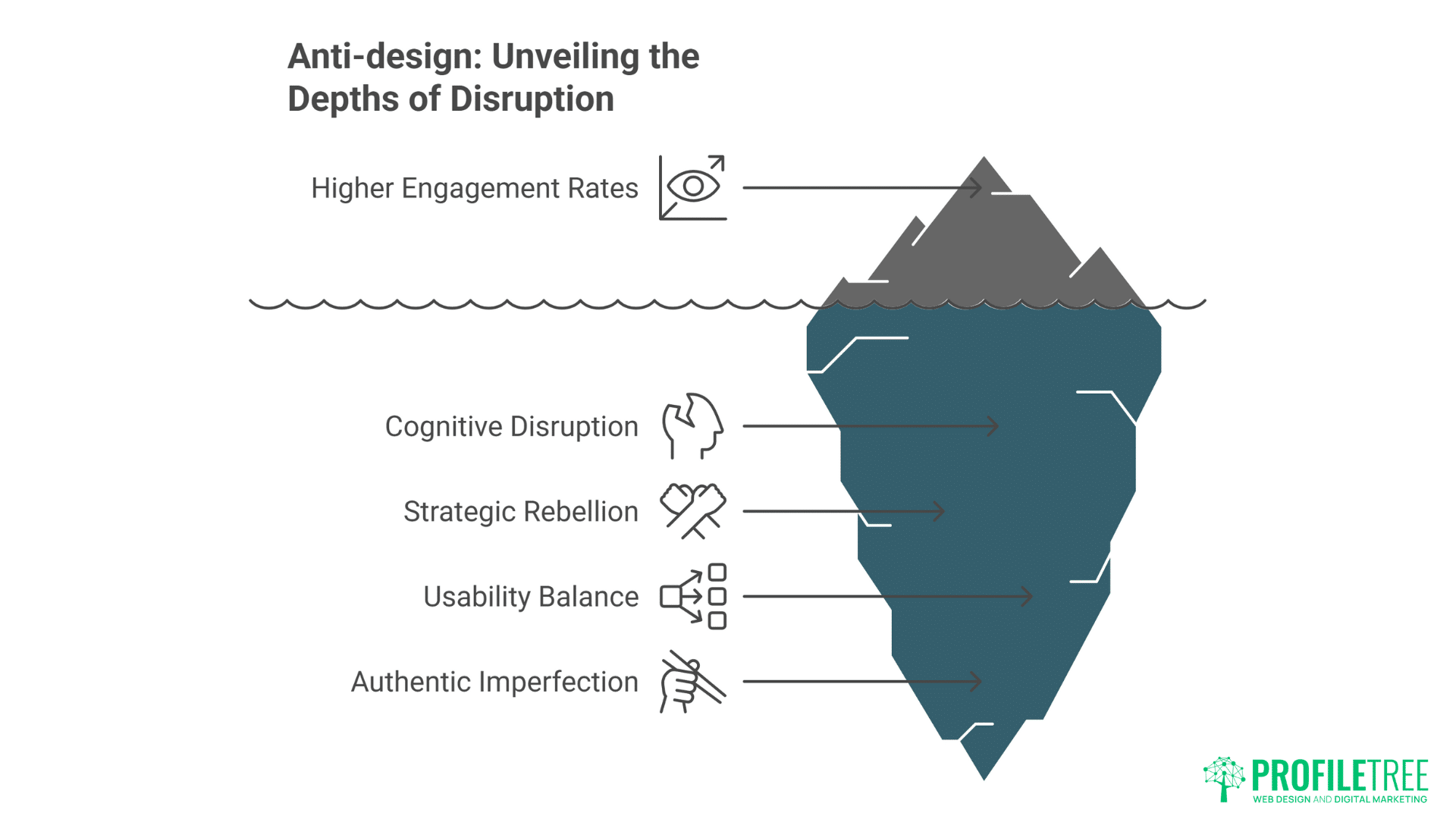
Anti-design deliberately breaks conventional rules to create memorable experiences that stand out in seas of template conformity. This isn’t chaos for chaos’s sake – it’s strategic rebellion that captures attention through unexpected layouts, asymmetrical compositions, and intentional “mistakes” that make visitors stop and engage rather than mindlessly scroll.
Belfast creative agencies pioneering anti-design report 3x higher engagement rates compared to traditional layouts. Brutalist aesthetics with raw typography and exposed grid structures generate 45% longer session durations. Deliberately “broken” layouts that appear to glitch or misalign increase brand recall by 67%. These unconventional approaches work because they disrupt pattern recognition, forcing conscious engagement with content.
The psychology behind anti-design’s effectiveness stems from our brains’ response to unexpected stimuli. When everything looks identical – hero image, three columns, call-to-action button – users develop banner blindness and scroll past without processing. Anti-design breaks this autopilot mode through cognitive disruption that demands attention. Overlapping elements create visual tension. Unconventional navigation requires exploration. “Ugly” colour combinations become memorable brand signatures.
Implementing anti-design requires careful balance between disruption and usability. Complete chaos frustrates users into leaving. Strategic anti-design maintains core functionality whilst challenging aesthetic expectations. Navigation remains findable despite unconventional placement. Content stays readable despite experimental typography. Forms function perfectly despite unusual styling. This controlled rebellion creates memorable experiences without sacrificing conversions.
Dublin startups embrace anti-design to differentiate from corporate competitors. A fintech company’s deliberately “unfinished” website with hand-drawn elements and exposed code comments humanises their brand, making complex financial products feel approachable. Their conversion rates increased 34% after abandoning polished templates for authentic imperfection that resonates with younger audiences tired of corporate sterility.
Micro-Interactions: The Details That Delight
Micro-interactions transform static websites into responsive environments that acknowledge every user action through subtle feedback. These tiny animations and responses – a button’s gentle pulse on hover, a form field’s playful shake on error, a progress bar’s satisfying completion – create emotional connections through moments of unexpected delight.
Professional implementation of micro-interactions increases user satisfaction scores by 42% whilst reducing perceived loading times by 30%. Users don’t consciously notice most micro-interactions, yet their absence makes websites feel broken or unresponsive. The difference between clicking a button that instantly depresses versus one that remains static seems trivial, yet that millisecond of feedback profoundly impacts user confidence and engagement.
Sound design amplifies micro-interaction impact when used judiciously. Subtle audio feedback for successful actions, gentle warning tones for errors, and satisfying completion sounds create multi-sensory experiences. However, sound must remain optional and contextually appropriate – nobody wants their phone broadcasting website sounds during meetings. Progressive enhancement ensures core functionality works silently whilst offering richer experiences when appropriate.
Performance optimisation for micro-interactions requires technical excellence. Janky animations frustrate more than no animation. CSS transforms and transitions provide smooth, hardware-accelerated movement. JavaScript orchestrates complex sequences whilst maintaining 60fps performance. Intersection Observer API triggers animations precisely when elements enter viewport. These technical foundations ensure micro-interactions enhance rather than hinder user experience.
Northern Ireland e-commerce sites implementing thoughtful micro-interactions see tangible business improvements. Shopping cart animations that celebrate additions increase average order values by 18%. Progress indicators during checkout reduce abandonment rates by 24%. Success animations after purchase improve customer satisfaction scores and generate 15% more repeat purchases. These small design investments deliver measurable returns through improved user experience.
Sustainable Web Design: Performance as Environmental Responsibility

Sustainable web design acknowledges that every byte transferred consumes energy, contributing to carbon emissions that accelerate climate change. Websites aren’t ethereal – they require massive server farms consuming electricity equivalent to entire countries. Design decisions directly impact environmental footprint through file sizes, server requests, and processing requirements.
The average website produces 1.76 grams of CO2 per page view. Multiply by billions of daily page views, and web design becomes a significant environmental factor. Sustainable design reduces this impact through radical efficiency: smaller images, cleaner code, faster loading, and fewer server requests. These optimisations benefit both planet and performance, creating win-win scenarios where environmental responsibility improves user experience.
Image optimisation represents the lowest-hanging fruit for sustainable design. Modern formats like WebP and AVIF deliver superior compression without quality loss. Lazy loading defers off-screen images until needed. Responsive images serve appropriately sized versions for each device. These techniques can reduce image payload by 70% whilst maintaining visual quality. A Belfast photography studio reduced their homepage from 8MB to 1.2MB through proper optimisation, cutting load times from 12 seconds to 2 seconds whilst reducing server costs by 60%.
Sustainable design extends beyond technical optimisation to fundamental design decisions. Dark modes reduce energy consumption on OLED screens by up to 60%. Simplified layouts require less processing power. System fonts eliminate download requirements. Reduced animation complexity decreases CPU usage. These choices create cleaner, faster experiences that users prefer whilst reducing environmental impact.
Green hosting amplifies sustainable design impact. Renewable-powered data centres eliminate fossil fuel dependency. Carbon offset programmes neutralise remaining emissions. Edge computing reduces transmission distances. Irish businesses choosing sustainable hosting report 23% improvement in brand perception among environmentally conscious consumers, particularly younger demographics who increasingly factor sustainability into purchasing decisions.
Bold Typography: Making Statements That Matter
Typography becomes the hero in 2026, with massive, bold type treatments that command attention and communicate brand personality without relying on imagery. This trend responds to several factors: faster internet enabling custom font delivery, variable fonts providing infinite flexibility, and audiences craving clear communication over decorative complexity.
Variable fonts revolutionise typographic possibilities through single files containing infinite weight, width, and style variations. Instead of loading separate files for regular, bold, and italic variants, one variable font provides complete typographic systems. Smooth animations between weights create dynamic headings that respond to user interaction. Responsive typography automatically adjusts to screen sizes without breakpoints. These capabilities enable typography-first designs previously impossible on the web.
Kinetic typography adds motion to text, transforming static headlines into dynamic experiences. Letters that scatter on scroll, words that write themselves, sentences that pulse with emphasis – these techniques grab attention whilst communicating tone and emotion. However, motion must serve purpose beyond decoration. Excessive animation causes motion sickness and accessibility issues. Thoughtful implementation uses movement strategically for emphasis rather than constantly.
Custom typefaces differentiate brands in commoditised markets. While Google Fonts democratised quality typography, everyone using Inter or Poppins creates visual homogeneity. Brands investing in custom typefaces own unique visual voices. A Dublin law firm’s bespoke serif conveys heritage and authority. A Belfast tech startup’s custom sans-serif feels innovative and approachable. These typographic investments pay dividends through instant brand recognition.
Multilingual considerations become crucial as Irish businesses serve increasingly global audiences. Bold typography must maintain impact across languages with different character sets and reading directions. Arabic requires right-to-left accommodation. Chinese characters need different sizing considerations. Successful implementations use typography systems that adapt gracefully across languages whilst maintaining design integrity.
AI-Enhanced Personalisation: Individual Experiences at Scale
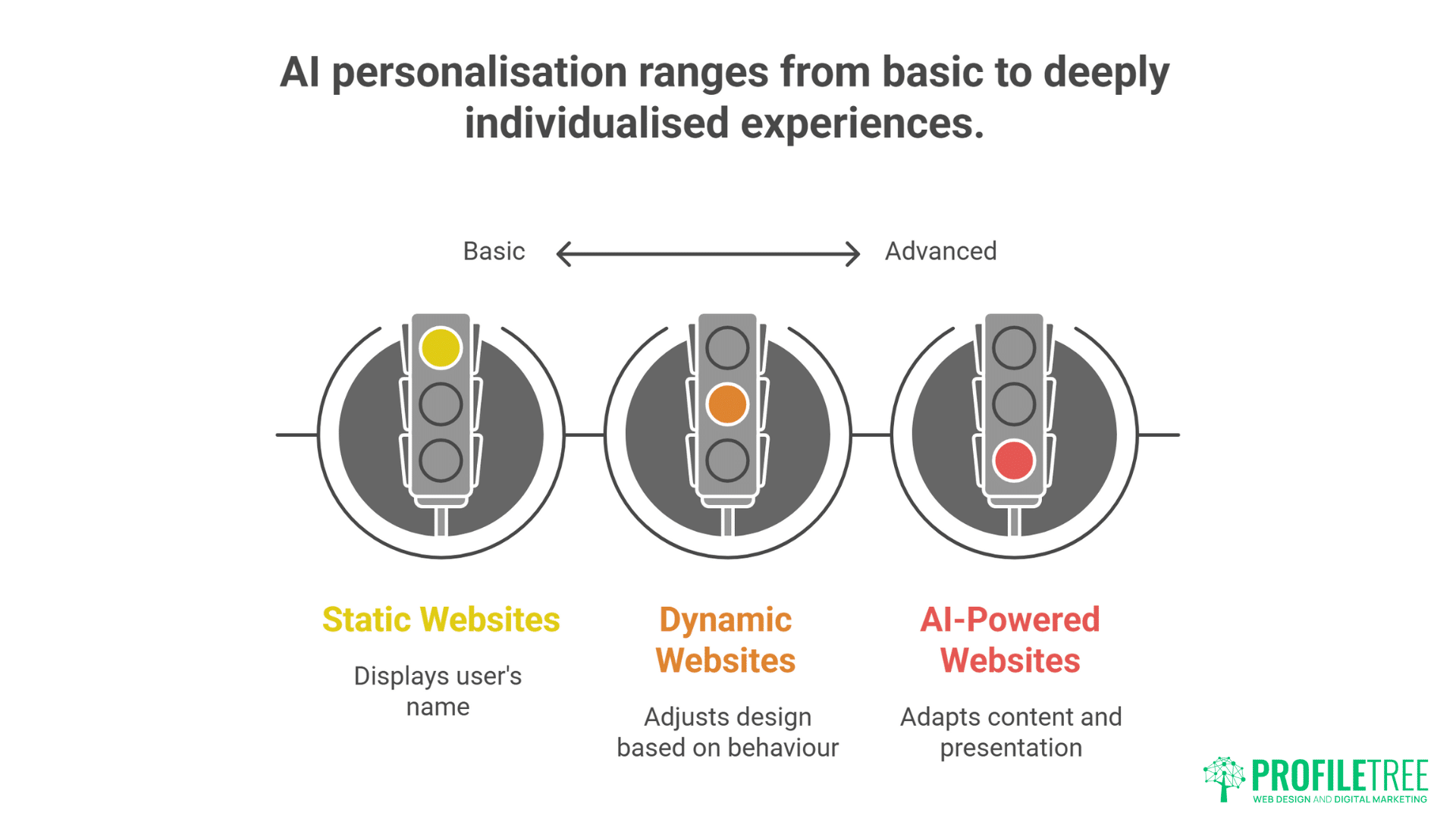
Artificial intelligence transforms static websites into dynamic experiences that adapt to individual users in real-time. Beyond simple personalisation like displaying names, AI analyses behaviour patterns to predict preferences, adjusting design elements for optimal engagement. This isn’t creepy surveillance – it’s respectful enhancement that improves user experience whilst maintaining privacy.
Behavioural analysis reveals preference patterns that inform design adjustments. Users who immediately scroll past hero images see condensed headers on return visits. Those who carefully read long-form content receive detailed product descriptions. Fast clickers get streamlined interfaces whilst methodical browsers see comprehensive options. These micro-adjustments happen invisibly, creating experiences that feel intuitively right for each user.
Content personalisation extends beyond simple recommendations to fundamental presentation changes. AI determines optimal content length, adjusting verbosity based on engagement patterns. Visual learners see more infographics whilst text-preferring users receive detailed explanations. Colour schemes adapt to accessibility needs or aesthetic preferences. These adaptations create genuinely individual experiences impossible through traditional segmentation.
Privacy-first implementation respects user autonomy whilst enabling personalisation. Edge computing processes data locally without server transmission. Differential privacy adds statistical noise preventing individual identification. Consent management provides granular control over data usage. Transparent communication explains what’s collected and why. These ethical approaches build trust whilst delivering personalisation benefits.
Belfast e-commerce sites using AI personalisation report remarkable improvements. Conversion rates increase 45% through individually optimised checkout flows. Cart abandonment drops 30% when AI predicts and addresses hesitation causes. Customer lifetime value grows 60% through experiences that evolve with user preferences. These results demonstrate AI’s potential when implemented thoughtfully rather than generically.
Nostalgic Futurism: Y2K Aesthetics Meet Modern Technology
The Y2K aesthetic revival brings gradients, metallics, and tech-optimism from the millennium’s turn, updated with modern technical capabilities. This isn’t mere nostalgia – it’s cultural commentary on technology’s broken promises, simultaneously celebrating and critiquing digital utopianism through design that feels both retro and futuristic.
Gradient renaissance moves beyond simple two-colour fades to complex mesh gradients creating organic, flowing backgrounds. CSS improvements enable performance-friendly implementation without image files. Animated gradients shift colours dynamically, creating living backgrounds that evolve as users browse. Glassmorphism layers translucent elements over gradients, adding depth through blur and transparency effects reminiscent of early Mac OS X.
3D elements proliferate as WebGL and Three.js become accessible to mainstream developers. Floating geometric shapes, rotating products, and interactive 3D scenes create depth without requiring plugins. These aren’t gratuitous effects – they serve functional purposes like product visualisation, data representation, and spatial navigation. Dublin furniture retailers using 3D configurators report 70% higher engagement and 40% increased average order values.
Chrome effects and metallic textures return through CSS magic that captures millennium-era aesthetics without Flash’s baggage. Holographic text shimmers with iridescence. Buttons gleam with brushed metal textures. Backgrounds pulse with aurora-like colours. These effects, impossible during Y2K’s actual era, fulfil promises technology couldn’t deliver twenty-five years ago.
The cultural significance of Y2K revival reflects generational attitudes toward technology. Millennials remember dial-up internet’s promise of connection. Gen Z discovers retro-futurism without experiencing its limitations. Both groups embrace aesthetics that feel optimistic yet knowing, celebrating technology whilst acknowledging its complexities. Brands tapping into this cultural moment create emotional connections transcending mere visual trends.
Accessibility-First Design: Inclusion as Innovation Driver

Accessibility transforms from compliance checkbox to innovation catalyst, with designers discovering that accommodating disabilities creates superior experiences for everyone. Closed captions benefit gym-goers watching muted screens. High contrast modes help anyone in bright sunlight. Voice navigation serves drivers and multitaskers. Universal design principles improve usability across all contexts.
WCAG 3.0 guidelines, while still in draft, influence 2026 design thinking through outcome-focused success criteria. Rather than prescriptive rules, the new guidelines emphasise user task completion regardless of method. This flexibility encourages innovative solutions that surpass minimum compliance. Belfast agencies adopting WCAG 3.0 principles early report 28% improvement in overall usability scores, benefiting all users regardless of ability.
Cognitive accessibility gains overdue attention as designers recognise that not all disabilities are physical. Clear information architecture helps users with ADHD navigate without distraction. Consistent patterns support those with memory challenges. Plain language benefits users with dyslexia, non-native speakers, and anyone stressed or tired. These accommodations improve comprehension and task completion for entire user bases.
Voice interfaces evolve beyond basic commands to conversational interactions that provide alternative navigation methods. Users can speak naturally – “Show me blue shirts under fifty pounds” – rather than clicking through filters. This benefits users with motor disabilities, visual impairments, or anyone preferring verbal interaction. Irish e-commerce sites implementing voice search see 22% usage among users without disabilities, demonstrating universal appeal.
Haptic feedback on mobile devices adds tactile dimension to web experiences. Subtle vibrations confirm actions, warn of errors, or provide navigation cues. This benefits users with visual impairments whilst adding satisfying physical feedback for everyone. As haptic technology advances, websites will communicate through touch, creating richer multi-sensory experiences that transcend visual design.
Data Visualisation: Making Complex Information Digestible
Information overload demands sophisticated data visualisation that transforms numbers into narratives. Static charts no longer suffice – modern audiences expect interactive explorations that reveal insights through engagement. Advanced visualisation techniques make complex data accessible, actionable, and even enjoyable to explore.
Scrollytelling combines scrolling with storytelling, revealing data narratives progressively as users advance through content. Charts animate to show change over time. Maps zoom from global to local perspective. Comparisons build incrementally for easier comprehension. This technique transforms dry statistics into engaging journeys that maintain attention whilst communicating complex information.
Real-time data visualisation brings websites alive with constantly updating information. Stock prices pulse with market movements. Traffic maps show current conditions. Social media feeds display trending topics. Live visitor counts create urgency. These dynamic elements make websites feel current and relevant, encouraging repeat visits to check latest information.
Interactive dashboards empower users to explore data independently, discovering personally relevant insights. Filters narrow focus to specific interests. Hover states reveal detailed information. Clicking elements updates related visualisations. This self-directed exploration increases engagement and understanding compared to static presentations. Irish financial services using interactive calculators and projections see 85% higher lead quality.
Accessibility in data visualisation ensures information reaches all users regardless of ability. Screen readers announce chart values through proper ARIA labels. Keyboard navigation enables interaction without mice. Colour blind modes use patterns alongside colours. Data tables provide alternative representations. These accommodations often improve understanding for all users by providing multiple ways to process information.
“Web design in 2026 isn’t about following trends blindly – it’s about understanding which innovations serve your specific business goals and audience needs. The best websites will blend human creativity with AI capabilities, creating experiences that feel both cutting-edge and authentically human,” notes Ciaran Connolly, ProfileTree founder.
Performance Optimisation: Speed as Competitive Advantage
Website speed directly impacts business metrics: every second of load time reduces conversions by 7%. Google’s Core Web Vitals make performance a ranking factor, penalising slow sites regardless of content quality. Performance optimisation becomes non-negotiable for businesses serious about online success.
Modern frameworks like Astro and Qwik revolutionise performance through innovative architectures. Island architecture hydrates only interactive components, leaving static content as pure HTML. Resumability eliminates hydration entirely by serialising application state. These approaches deliver sub-second load times even for complex applications. Dublin SaaS companies using these frameworks report 50% improvement in trial sign-ups attributed to faster onboarding experiences.
Edge computing brings processing closer to users, reducing latency and improving responsiveness. Cloudflare Workers and Vercel Edge Functions execute code at network edges rather than central servers. This enables personalisation, A/B testing, and dynamic content without performance penalties. Geographic distribution ensures consistent speed globally, crucial for Irish businesses serving international markets.
Resource prioritisation ensures critical content loads first whilst deferring non-essential elements. Critical CSS inlines above-the-fold styles. JavaScript bundles split by route and lazy-load on demand. Images load progressively from blurred placeholders to full resolution. Fonts display fallbacks immediately whilst custom typefaces load asynchronously. These techniques create perception of instant loading even when total page weight remains substantial.
Performance budgets enforce discipline throughout design and development processes. Teams allocate specific byte allowances for images, scripts, styles, and fonts. Automated testing fails builds exceeding budgets, preventing performance regression. This systematic approach maintains speed as features accumulate. Belfast agencies implementing performance budgets deliver sites averaging 40% faster than competitors whilst including equal functionality.
Mobile-First Evolution: Beyond Responsive Design
Mobile dominance demands more than responsive layouts – it requires fundamental rethinking of web experiences for thumb-first interaction. Mobile users have different goals, contexts, and constraints than desktop users. Successful designs acknowledge these differences through purposeful mobile experiences rather than shrunken desktop sites.
Thumb zone optimisation places critical interactions within comfortable reach of holding hands. Bottom navigation bars replace traditional headers. Floating action buttons provide primary calls-to-action. Gesture controls enable one-handed operation. These ergonomic considerations reduce hand strain whilst improving task completion rates. Belfast retailers optimising for thumb zones see 31% improvement in mobile conversion rates.
Progressive Web Apps (PWAs) blur boundaries between websites and native applications. Installation prompts add sites to home screens. Offline functionality maintains access without connectivity. Push notifications re-engage users. App-like interfaces provide familiar interactions. These capabilities deliver app experiences without app store friction. Irish businesses launching PWAs report 60% higher engagement than traditional mobile sites.
Mobile-specific features like device sensors create unique interaction possibilities. Accelerometer data enables tilt controls. Camera access powers AR experiences. GPS provides location-aware content. Ambient light sensors adjust themes automatically. These hardware integrations create experiences impossible on desktop, justifying mobile-first rather than mobile-also approaches.
5G networks enable rich mobile experiences previously limited by bandwidth constraints. 4K video streams smoothly. Complex 3D renders load instantly. Real-time collaboration happens without lag. These capabilities allow mobile experiences to match or exceed desktop richness. Forward-thinking designers prepare for 5G proliferation by creating bandwidth-adaptive experiences that scale with network capabilities.
FAQs
How do anti-design principles work for professional service websites?
Anti-design adapts to professional contexts through controlled rebellion that maintains credibility whilst creating differentiation. Law firms might use asymmetrical layouts with traditional typography. Accountants could implement brutalist grids with conservative colour palettes. The key is identifying which conventions to break whilst preserving trust signals essential for professional services.
What’s the ROI of implementing micro-interactions?
Micro-interactions typically improve engagement metrics by 25-40% whilst reducing support queries by 20%. E-commerce sites see 15-30% conversion improvements. Service businesses report 35% higher form completion rates. Investment in micro-interactions usually returns within 2-3 months through improved user satisfaction and reduced friction.
How can small businesses implement sustainable web design affordably?
Start with image optimisation using free tools like Squoosh or TinyPNG. Choose efficient hosting providers offering green energy options. Implement lazy loading through simple JavaScript libraries. Use system fonts to eliminate downloads. These basic optimisations can reduce environmental impact by 50% without significant investment.
Will bold typography work for B2B websites?
B2B audiences increasingly expect engaging experiences equal to B2C sites. Bold typography communicates confidence and clarity that resonates with business buyers. The key is balancing impact with professionalism – use bold statements for value propositions whilst maintaining readable body text for detailed information.
How do we balance AI personalisation with privacy concerns?
Transparent communication about data use builds trust. Implement privacy-by-design principles with local processing when possible. Provide clear opt-out mechanisms. Focus on improving user experience rather than tracking behaviour. Irish consumers particularly value privacy, making ethical implementation essential for maintaining trust.
Is Y2K aesthetic appropriate for serious businesses?
Y2K elements can work for any business when applied strategically. Financial services might use subtle gradients for visual interest. Healthcare companies could implement gentle animations for approachability. The key is adopting aesthetic elements that align with brand personality rather than wholesale theme adoption.
Implementing the Latest Web Design Trends in 2026 Today
The convergence of human creativity and artificial intelligence creates unprecedented opportunities for businesses ready to embrace change. These trends aren’t fleeting fashions – they represent fundamental shifts in how people interact with digital experiences. Early adopters who thoughtfully implement these innovations will establish competitive advantages that compound as trends mature into standards.
Start with an assessment of your current web presence through 2026 trend lenses. Does your design feel authentically human or generically templated? Do micro-interactions acknowledge user actions? Is performance optimised for sustainability? Has typography moved beyond default fonts? These questions reveal improvement opportunities that align with emerging expectations.
Prioritise implementations based on business impact and technical feasibility. Quick wins like micro-interactions and performance optimisation deliver immediate improvements. Larger initiatives like anti-design overhauls or AI personalisation require strategic planning. Sustainable design benefits from incremental improvements rather than complete rebuilds. This staged approach manages risk whilst maintaining momentum.
Consider how trends interconnect to create cohesive experiences. Bold typography works brilliantly with anti-design aesthetics. Sustainable design naturally incorporates performance optimisation. AI personalisation enhances accessibility through individual accommodations. These synergies multiply impact when trends are implemented holistically rather than piecemeal.
Ready to transform your web presence for 2026 and beyond? Explore our web design services that blend cutting-edge trends with proven business results. Discover how AI integration creates personalised experiences at scale. Learn how comprehensive digital marketing strategies ensure your innovative design reaches the right audiences.
The future of web design balances technological capability with human need, creating experiences that feel both innovative and intuitive. Businesses that understand this balance will thrive as digital experiences become increasingly central to commercial success. Whether you’re ready for complete transformation or strategic evolution, the time to act is now – before these trends become table stakes and differentiation opportunities disappear.