
Digital Marketing for Law Firms in Ireland: Complete Strategic Guide
Table of Contents
Irish law firms confront a digital transformation that’s reshaping how legal services are discovered, evaluated, and engaged. The traditional model of relationship-based referrals and reputation, whilst still important, no longer suffices when 82% of potential clients research legal services online before making initial contact. From Dublin’s competitive corporate landscape to regional practices serving local communities, successful firms are those adapting their client acquisition strategies to meet modern expectations.
The Irish legal market presents distinct challenges. The Legal Services Regulatory Authority’s advertising regulations, combined with the Law Society’s professional conduct rules, create parameters that demand careful navigation. Add the complexity of serving both domestic and international clients, particularly post-Brexit opportunities, and you have a landscape requiring sophisticated online marketing approaches that balance compliance, professionalism, and commercial effectiveness.
In this guide, we’ll explore digital marketing for law firms. So, let’s hop into it.
Navigating Irish Legal Advertising Regulations
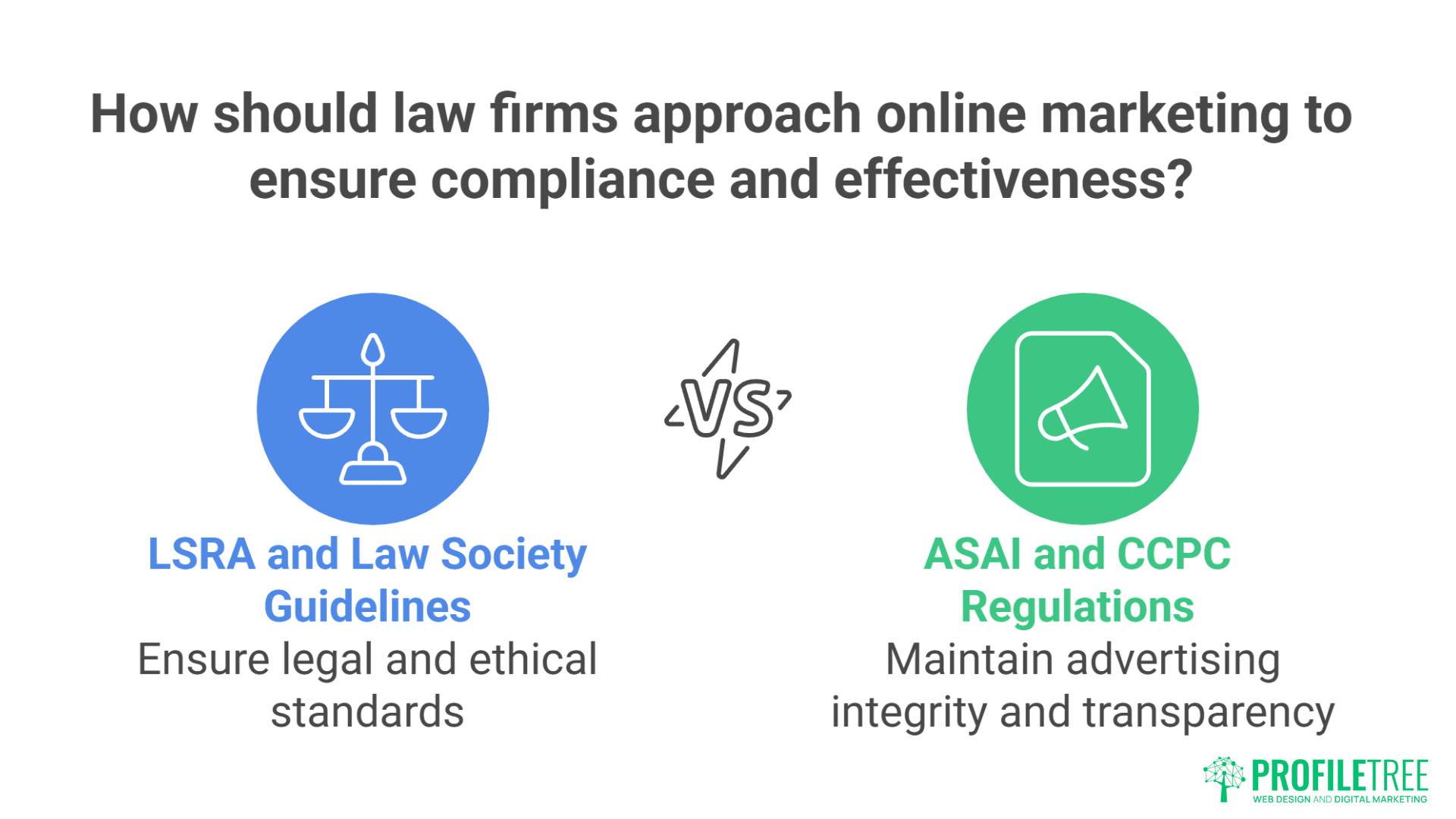
The Legal Services Regulatory Authority (LSRA), established under the Legal Services Regulation Act 2015, fundamentally changed how Irish law firms approach advertising. Every online marketing element, from website content to social media campaigns, must align with both LSRA requirements and Law Society professional conduct guidelines.
The prohibition on false or misleading statements extends beyond obvious exaggerations. Claims about expertise require substantiation through verifiable experience or qualifications. Describing your firm as “Ireland’s premier litigation practice” demands evidence. Using terms like “expert” or “specialist” without appropriate accreditation risks regulatory sanction and reputational damage.
Comparative advertising faces stringent restrictions under both legal regulations and the Advertising Standards Authority for Ireland (ASAI) codes. You cannot make direct comparisons with competitors or claim superiority without robust substantiation. This eliminates many conventional marketing tactics used successfully in other sectors.
Client confidentiality obligations permeate all online activities. Sharing case studies, success stories, or client outcomes requires explicit written permission. Even anonymised examples need careful vetting to prevent indirect identification. This fundamental constraint shapes content strategies differently than industries freely showcasing their work.
Transparency requirements for costs and services affect all fee-related communications. Whether advertising fixed-fee conveyancing or conditional fee arrangements, all potential charges and conditions must be clearly stated. The Competition and Consumer Protection Commission actively monitors legal service advertising for compliance.
Cross-border considerations add complexity for firms serving international clients. Marketing to UK or US markets requires understanding their regulatory frameworks whilst maintaining Irish compliance. This dual compliance challenge affects everything from website disclaimers to social media advertising.
Strategic Digital Marketing for Law Firms
Google commands overwhelming dominance in Irish search behaviour, processing over 90% of legal service queries. Whether someone searches “employment lawyer Dublin” or “property solicitor Cork,” your Google visibility through organic rankings and paid placement fundamentally determines your online reach.
LinkedIn emerges as the critical B2B platform for Irish legal services. Corporate lawyers, tax advisors, and commercial litigation specialists find decision-makers actively networking here. Building authoritative LinkedIn presence generates referrals from accountants, consultants, and other professional advisors whilst establishing thought leadership.
Facebook maintains significant reach across Irish demographics, particularly for consumer-facing practice areas. Family lawyers, personal injury specialists, and residential conveyancing firms effectively reach potential clients through targeted campaigns. However, maintaining professional standards whilst engaging on informal platforms requires careful content curation.
X/Twitter suits rapid commentary and thought leadership, particularly for firms handling media-worthy cases or regulatory changes. Irish legal Twitter remains highly active, with practitioners engaging in professional discourse. Real-time commentary on Supreme Court decisions or legislative developments builds visibility and authority.
Instagram increasingly matters for employer branding and cultural showcase. Firms competing for talent use Instagram to highlight their workplace culture, corporate social responsibility, and team achievements. While direct client acquisition remains limited, Instagram effectively humanises firms for both potential employees and clients seeking approachable legal advisors.
YouTube presents underutilised opportunity for educational content. Irish law firms creating explanatory videos about legal processes, rights, and obligations build trust whilst improving search engine visibility. Video content increasingly appears in search results, providing competitive advantage for early adopters.
Specialisation-Specific Marketing Approaches
Different specialisations require unique marketing approaches to stand out. Tailored strategies help firms connect with the right audience and achieve lasting impact.
Corporate and Commercial Law
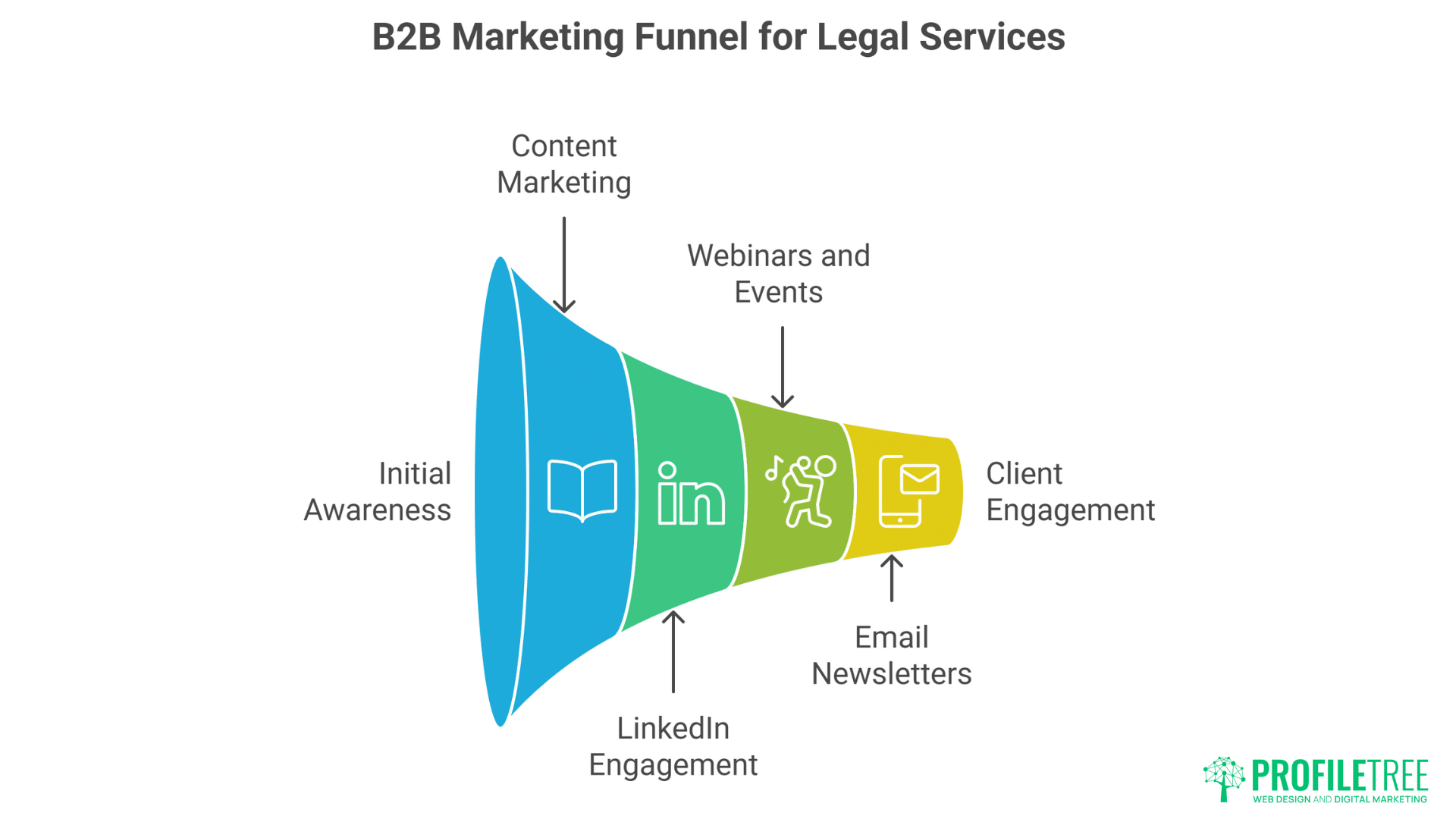
Corporate practices require sophisticated B2B marketing demonstrating sector expertise and commercial awareness. Decision-makers extensively research potential legal advisors, examining thought leadership, deal experience, and team credentials before engaging.
Content marketing proves essential, with regular insights about company law changes, regulatory developments, and sector trends. Articles analysing the Companies (Corporate Enforcement Authority) Act 2021 implications or Brexit’s ongoing impact on Irish business demonstrate expertise whilst providing genuine value.
LinkedIn becomes your primary channel, but success demands more than corporate page management. Individual partners need active profiles, sharing insights, engaging with client industries, and participating in relevant discussions. This personal brand building complements firm-level marketing.
Webinars and virtual events effectively showcase expertise whilst generating qualified leads. Topics addressing current challenges like ESG compliance, data protection, or cross-border transactions attract senior decision-makers actively seeking legal guidance.
Email newsletters targeting specific sectors maintain visibility between instructions. Financial services updates, technology sector briefings, or pharmaceutical industry regulatory alerts keep your firm front-of-mind for when legal needs arise.
Litigation and Dispute Resolution
Litigation marketing balances demonstrating capability whilst respecting case sensitivity and client confidentiality. Your online presence must convey strength and success without compromising ongoing matters or breaching professional obligations.
Search optimisation targets both crisis searches (“urgent injunction lawyer Dublin”) and research queries (“commercial litigation process Ireland”). Creating comprehensive guides about litigation procedures, costs, and timelines captures research traffic whilst establishing expertise.
Thought leadership through commentary on significant cases builds reputation. When the Supreme Court delivers landmark judgments, timely analysis demonstrates expertise whilst driving traffic. However, ensure commentary remains professional and doesn’t prejudice ongoing matters.
Professional referral networks require digital support. When barristers or international firms consider Irish litigation partners, they research online presence. Your website must reinforce credentials through team profiles, sector experience, and appropriate case studies.
Crisis communication preparedness becomes crucial given litigation’s public nature. Establish protocols for managing online commentary about high-profile cases whilst maintaining client confidentiality and professional standards.
Employment Law
Employment law straddles consumer and commercial markets, requiring dual-track online strategies. Employers need proactive compliance guidance, whilst employees seek assistance with workplace disputes.
Create distinct content pathways addressing each audience. Employer-focused material covers hiring practices, disciplinary procedures, and regulatory compliance. Employee content addresses unfair dismissal, discrimination, and workplace rights. Clear navigation prevents confusion whilst serving both markets.
Timing content strategically maximises impact. Redundancy information peaks during economic downturns, workplace rights content surges around legislative changes, and holiday entitlement queries spike seasonally. Content calendars should anticipate these patterns.
Video content particularly suits employment law, explaining complex concepts accessibly. Short videos about “Workplace Investigation Procedures” or “Understanding Protected Disclosures” demonstrate expertise whilst building trust.
Social media requires careful management given employment law’s sensitive nature. LinkedIn works for B2B engagement, whilst Facebook reaches employees facing workplace issues. However, avoid commenting on specific cases or employers to prevent defamation risks.
Property and Conveyancing
Property law marketing must reach direct consumers whilst maintaining estate agent and broker relationships. Digital strategies need dual focus without diluting messaging effectiveness.
Local search optimisation proves paramount as clients prefer nearby conveyancers. Create location-specific pages for each served area with genuine local content, not template pages with swapped placenames. Include local property market insights, development updates, and area-specific considerations.
Online quotation systems address price transparency demands. Interactive calculators showing conveyancing costs, stamp duty, and timelines help capture price-conscious consumers whilst setting realistic expectations.
Review management significantly influences conveyancing choices. Actively encourage satisfied clients to share experiences on Google and Trustpilot. Respond professionally to all feedback, demonstrating commitment to service whilst respecting confidentiality.
Integration with property platforms extends reach. Many estate agents offer preferred solicitor programmes. Ensure your online presence supports these partnerships through co-marketing opportunities and smooth referral processes.
Family Law
Family law demands exceptional sensitivity in online marketing. Individuals facing relationship breakdown need information and support, not aggressive sales messaging. Your digital presence should feel confidential, supportive, and professional.
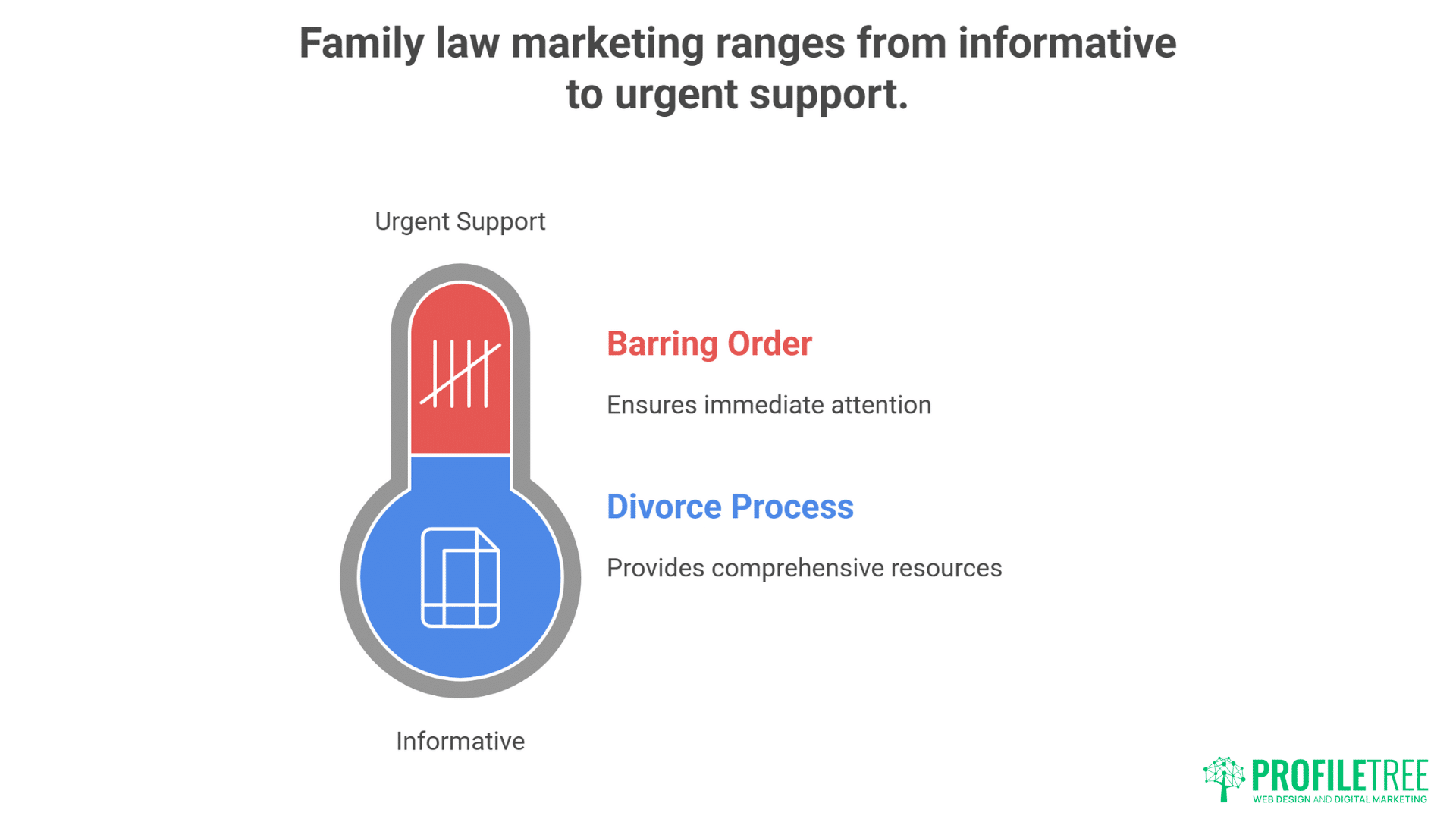
Search intent varies dramatically from information gathering (“divorce process Ireland”) to crisis situations (“emergency barring order solicitor”). Content strategy must address both, providing comprehensive resources whilst ensuring urgent enquiries receive immediate attention.
Privacy considerations influence platform choices. Many potential clients prefer initial contact through discrete channels. Encrypted contact forms, WhatsApp Business, and confidential callback requests increase enquiries from individuals in difficult domestic situations.
Content must acknowledge emotional dimensions whilst remaining professionally appropriate. Articles about “Protecting Children During Separation” or “Financial Planning Through Divorce” demonstrate understanding whilst providing practical guidance.
Local presence matters enormously for ongoing family proceedings. Optimise for neighbourhood-specific searches and ensure accessibility information is comprehensive. Consider creating resources in multiple languages reflecting Ireland’s diverse population.
Content Excellence Within Regulatory Boundaries
Educational content establishes authority whilst avoiding advertising restrictions. Rather than promoting services directly, focus on empowering people with legal knowledge. “Understanding Your Rights as a Tenant,” “Directors’ Duties in Irish Company Law,” or “Navigating Probate in Ireland” provide value whilst demonstrating expertise.
Legislative commentary positions your firm as thought leaders. When the Oireachtas passes significant legislation or European directives affect Irish law, provide timely analysis of practical implications. This demonstrates awareness and expertise whilst generating search traffic.
Practical guides addressing common legal scenarios build trust. Step-by-step explanations of processes like incorporating a company, challenging planning decisions, or pursuing personal injury claims help potential clients understand their journey whilst showcasing your knowledge.
FAQ sections capture valuable search traffic whilst addressing concerns. Questions like “How much does litigation cost in Ireland?” or “What are the time limits for unfair dismissal claims?” attract researching individuals whilst providing helpful information.
Video marketing increasingly dominates engagement. Short explainer videos, partner introductions, and office walkthroughs humanise your firm. Videos also boost website engagement metrics, improving search rankings whilst building trust.
Podcast participation extends reach into new audiences. Whether hosting your own series or guesting on others, audio content allows deep expertise demonstration whilst building personal brands for key partners.
Local Search Domination Strategies
Google My Business optimisation determines local search success more than any other factor. Complete every section meticulously, including services, service areas, and attributes. Regular photo updates showing your office, team, and facilities improve engagement. Respond professionally to all reviews, demonstrating commitment to client service.
City-specific landing pages capture geographic searches. Create unique pages for Dublin, Cork, Galway, Limerick, and other served locations. Include genuine local content like court locations, parking information, and public transport access. Avoid duplicate content through unique value provision for each location.
Local citation building requires systematic approach. Ensure consistent NAP (Name, Address, Phone) across all directories from Golden Pages to Legal Island. Inconsistencies confuse search engines and diminish local rankings.
Schema markup implementation helps search engines understand your local relevance. Deploy LocalBusiness and LegalService schema, including opening hours, service areas, and contact details. FAQ schema increases featured snippet opportunities.
Mobile optimisation becomes non-negotiable for local searches. People searching “solicitor near me” are predominantly on mobile devices, often needing immediate assistance. Ensure lightning-fast loading, prominent contact information, and flawless mobile functionality.
Community engagement earns valuable local links. Sponsoring local charities, participating in business organisations, and contributing to regional publications build both links and reputation. These activities provide content opportunities whilst demonstrating community commitment.
Paid Advertising Excellence and Compliance
Google Ads remains the dominant paid channel, but success requires sophisticated management. Competition drives costs extremely high for commercial terms. “Personal injury lawyer Dublin” can exceed €60 per click, making conversion optimisation absolutely critical.
Ad copy must strictly comply with advertising regulations. Avoid superlatives, unsubstantiated claims, or misleading statements. Focus on factual service information, experience indicators, and accessibility. Include required regulatory disclosures within character constraints.
Landing page optimisation determines campaign profitability. Direct traffic to specific pages addressing the searched query, not generic homepages. Include trust indicators, multiple contact methods, and compelling calls-to-action. Continuous testing improves conversion rates.
Microsoft Advertising offers lower competition and costs whilst reaching different demographics. Many Irish businesses use Bing, making it valuable for B2B legal services. Import successful Google campaigns then optimise for platform differences.
Facebook advertising enables sophisticated demographic targeting for appropriate practice areas. Target business owners for commercial services or specific life events for family law. Ensure targeting doesn’t constitute discrimination under equality legislation.
LinkedIn advertising excels for B2B practice areas. Sponsored content and InMail campaigns reach decision-makers directly. Target by job title, company size, and industry for maximum relevance. Premium pricing justifies through higher-value client acquisition.
Remarketing requires sensitivity given legal service confidentiality. While retargeting website visitors is effective, consider implications of family members or colleagues seeing ads for divorce lawyers or criminal defence solicitors.
Social Media Mastery for Legal Professionals
LinkedIn demands consistent, valuable content sharing. Partners should post weekly about legal developments, case commentary, or industry insights. Authentic engagement with clients’ and referrers’ content builds relationships beyond broadcasting messages.
Twitter suits rapid legal commentary and news engagement. Live-tweeting from Law Society events, sharing perspectives on Supreme Court decisions, or participating in #IrishLegalTwitter discussions builds visibility. Maintain professionalism even in casual interactions.
Facebook requires careful balance between accessibility and professionalism. Share firm achievements, community involvement, and legal updates. Monitor comments diligently, removing inappropriate content promptly. Consider private groups for specific practice areas.
Instagram works primarily for recruitment and culture marketing. Behind-the-scenes content, team celebrations, and CSR initiatives humanise your firm. Young professionals increasingly evaluate potential employers through Instagram presence.
TikTok might seem incongruous but offers opportunity for legal education. Short videos explaining legal concepts, debunking myths, or highlighting rights reach younger demographics. Several Irish firms successfully use TikTok for recruitment and brand building.
Employee advocacy programmes amplify reach authentically. Provide social media guidelines and training, encouraging team members to share firm content and insights. Recognition that personal brands reflect on the firm ensures consistency whilst allowing personality.
Email Marketing That Converts and Complies
Newsletter segmentation dramatically improves engagement. Commercial property clients don’t need employment law updates. Create targeted lists based on practice area interest, enabling relevant communication without overwhelming recipients.
Content calendars ensure consistent valuable communication. Monthly sector updates, quarterly legal briefings, and timely alerts about legislative changes maintain visibility. Balance promotional content with genuine value provision.
Automated nurture sequences guide prospects toward instruction. Someone downloading a “Guide to Irish Employment Law” might receive related content about specific workplace issues over subsequent weeks. Design sequences providing value whilst encouraging consultation.
GDPR compliance demands meticulous attention. Maintain clear consent records, provide straightforward unsubscribe options, and respect data minimisation principles. Regular database hygiene removes inactive subscribers and reduces complaint risks.
Mobile-responsive design is non-negotiable. Over 65% of emails open on mobile devices. Single-column layouts, large CTAs, and concise copy ensure effectiveness. Test across email clients, particularly Outlook’s various versions.
Personalisation increases engagement without compromising professionalism. Use recipient names, reference their industry, and provide relevant content based on previous interactions. However, avoid over-personalisation that might seem intrusive.
Website Architecture for Conversion
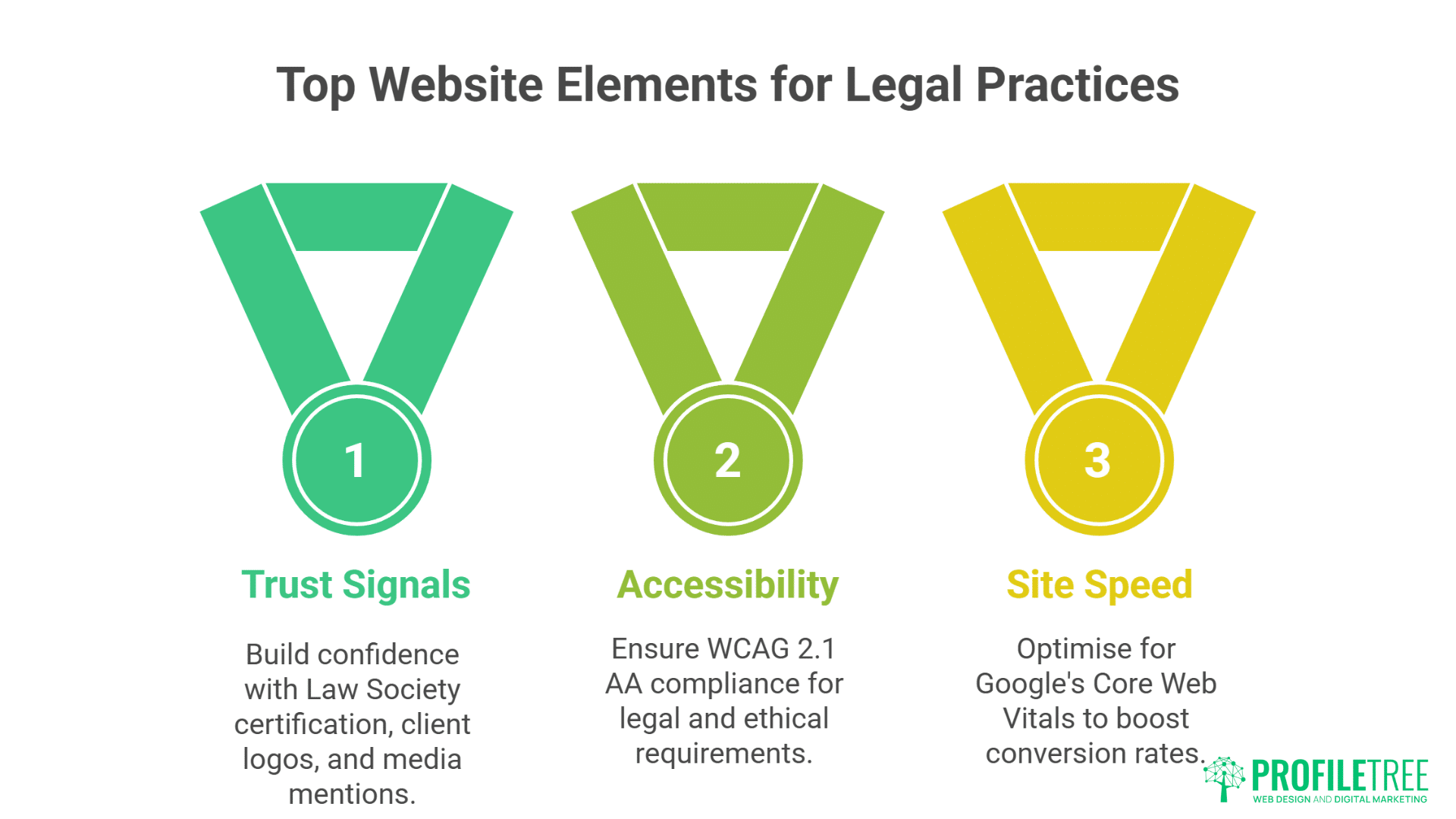
Homepage design must immediately establish credibility and expertise. Clear navigation to practice areas, prominent contact information, and trust signals like Law Society membership build confidence. Avoid overwhelming visitors with dense legal text or excessive options.
Practice area pages require comprehensive depth. Each specialisation deserves detailed explanation including process outlines, typical timelines, fee indicators, and team introductions. Address common concerns directly. Include multiple calls-to-action throughout, not just at page bottom.
Website accessibility isn’t optional – it’s legally and ethically required. Ensure WCAG 2.1 AA compliance through proper heading structure, alt text, sufficient colour contrast, and keyboard navigation. Accessibility improvements often enhance general user experience and search performance.
Site speed directly impacts conversion rates. Every second of delay reduces conversions by approximately 7%. Implement image optimisation, code minification, and content delivery networks. Google’s Core Web Vitals influence rankings, making speed doubly important.
Contact mechanisms must balance information gathering with user friction. Request sufficient information to qualify enquiries without creating barriers. Include GDPR-compliant privacy notices and clear consent mechanisms for marketing communications.
Live chat and chatbots increase conversion when properly implemented. Visitors expect immediate responses during stated hours. Consider hybrid solutions using AI for initial qualification before human handover. Ensure conversation logs maintain confidentiality standards.
Trust signals throughout the site build confidence. Display Law Society certification, professional indemnity insurance confirmation, and relevant accreditations. Client logos (with permission), media mentions, and awards provide social proof.
Online Reputation Stewardship
Review platform management requires systematic attention. Monitor Google, Facebook, Trustpilot, and Legal 500 continuously. Respond promptly and professionally to all feedback. Thank positive reviewers genuinely and address criticism constructively without breaching confidentiality.
Review acquisition needs structured approach. After successful matter completion, request feedback through email or SMS. Provide direct links and clear instructions. Never incentivise reviews as this violates platform policies and professional standards.
Negative review responses demand exceptional care. Never discuss case specifics or breach confidentiality, even when facing unfair criticism. Acknowledge concerns, express regret for dissatisfaction, and invite offline discussion. Professional responses often impress readers more than original reviews.
Crisis preparedness prevents reputation disasters. Establish clear protocols for handling online criticism, media attention, or viral social media situations. Designate response team members and approval chains. Quick, coordinated responses minimise damage.
Proactive reputation building creates resilience. Regular positive content about firm achievements, community contributions, and professional recognition builds reputation equity. When negative content appears, it’s contextualised within broader positive presence.
Media relationship cultivation generates positive coverage. Build relationships with legal correspondents and trade publications. Provide expert commentary on legal developments. Positive media coverage provides powerful third-party endorsement.
Analytics and Performance Measurement
Client acquisition cost by channel reveals true ROI. Calculate total spend including time investment per new client for each marketing channel. Some apparently expensive channels might deliver higher-value clients, justifying investment.
Conversion rate optimisation opportunities hide in analytics data. Track micro-conversions like document downloads, video views, and form starts, not just completed enquiries. Understanding user behaviour enables systematic improvement.
Search visibility tracking monitors competitive position. Track rankings for commercial terms like “corporate lawyer Dublin” and informational queries like “redundancy rights Ireland.” Monitor both branded and non-branded performance.
Engagement metrics indicate content effectiveness. Time on page, scroll depth, and return visitor rates suggest whether content meets user needs. High engagement correlates with improved conversion and search rankings.
Attribution modelling understands complex buyer journeys. Legal service selection involves multiple touchpoints over extended periods. Multi-channel attribution reveals how different activities contribute to eventual instruction.
Lifetime client value influences investment decisions. Transaction-focused practices differ from relationship-based commercial firms. Understanding client value enables appropriate resource allocation across marketing channels.
Traditional and Digital Integration
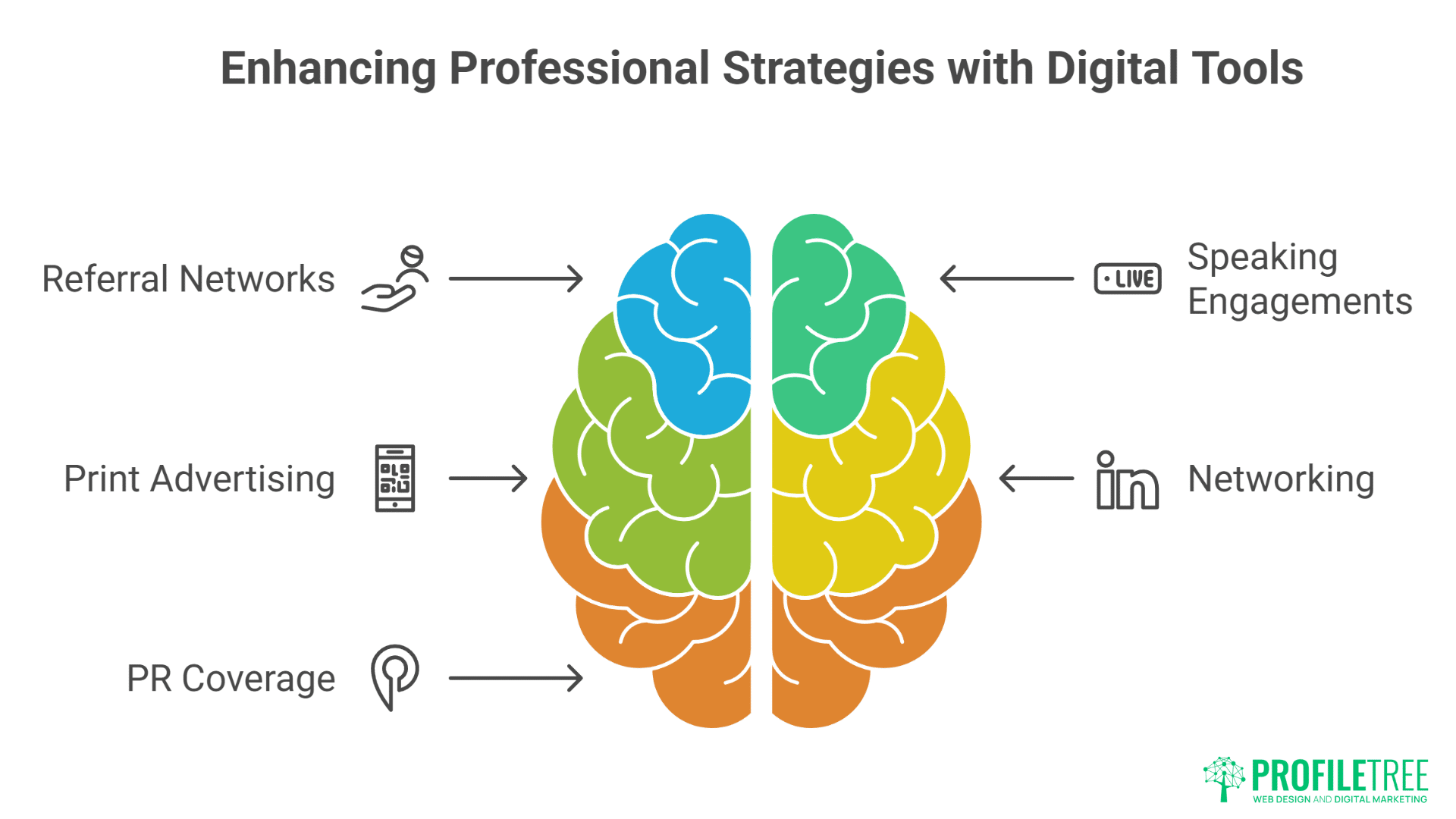
Professional referral networks need digital reinforcement. When accountants recommend your tax services, prospects immediately research online. Your digital presence must support referrer recommendations through visible expertise and credibility.
Speaking engagements gain extended reach through digital amplification. Record presentations for online distribution, share slides on SlideShare, and create follow-up content. This extends impact beyond physical attendees whilst providing ongoing value.
Print advertising increasingly drives online engagement. Include QR codes linking to specific landing pages. Track response rates to optimise both traditional creative and digital destinations. Traditional media credibility combines with digital measurability.
Networking effectiveness multiplies through digital follow-up. Connect on LinkedIn immediately after meeting, share relevant content, and maintain visibility between face-to-face encounters. Digital engagement strengthens relationships initiated offline.
PR coverage requires digital maximisation. Share media mentions across social channels, add to website newsrooms, and create related content. Traditional media coverage provides content and credibility for digital marketing whilst extending reach.
Emerging Technologies and Future Preparation
Artificial intelligence transforms legal marketing through chatbots, content personalisation, and predictive analytics. Early adopters gain competitive advantages through improved efficiency and client experience. Ensure AI usage maintains professional standards and confidentiality.
Voice search optimisation becomes essential as smart speakers proliferate. Optimise for conversational queries like “how do I make a will in Ireland?” or “what are my rights if made redundant?” Structure content providing direct answers suitable for voice responses.
Video content continues explosive growth. Live streaming consultations, video FAQs, and visual case explanations engage audiences expecting multimedia content. Invest in basic video capabilities rather than awaiting perfect production resources.
Privacy regulations will strengthen further. Prepare for stricter consent requirements, enhanced data rights, and increased penalties. Build privacy-first marketing strategies resilient to regulatory evolution.
Personalisation expectations escalate continuously. Visitors expect relevant experiences based on needs and behaviour. Implement progressive profiling and dynamic content whilst respecting privacy regulations and professional standards.
Blockchain technology may revolutionise legal services. Smart contracts, digital identity verification, and transparent transaction records could transform practice areas. Forward-thinking firms should monitor developments and prepare for integration.
Implementation Roadmap for Success
Competitive intelligence gathering provides strategic foundation. Analyse successful firms in your practice areas. Identify traffic sources, content strategies, and social presence. Learn from successes whilst identifying exploitable gaps.
Resource allocation must reflect realistic capabilities. Digital marketing typically requires 7-12% of revenue for growth-focused firms. Include both monetary investment and time commitment in planning. Underinvestment guarantees mediocre results.
Phased rollout prevents overwhelming teams. Select 2-3 initial priorities aligned with practice strengths and client needs. Build success incrementally rather than attempting everything simultaneously. Document learnings for continuous improvement.
Team development ensures sustainable success. Whether through professional training, strategic hiring, or agency partnerships, ensure required capabilities exist. Digital marketing expertise becomes increasingly essential for competitive positioning.
Performance tracking enables continuous optimisation. Establish baseline metrics, set realistic targets, and review progress monthly. Use data to eliminate ineffective tactics and double down on successful strategies.
Strategic partnerships accelerate results. Digital marketing specialists understand platform complexities and regulatory requirements. Whether full outsourcing or specific support, external expertise often prevents costly mistakes whilst accelerating growth.
Ciaran Connolly, ProfileTree founder, observes: “Irish law firms often underestimate the sophistication required for effective online marketing. Success demands more than having a website and LinkedIn profile. The firms winning online are those treating digital marketing as strategic investment, not administrative overhead. They understand that modern clients research extensively before engaging solicitors, and meeting these clients where they search requires comprehensive, compliant, and compelling digital presence.”
FAQs
What budget should Irish law firms allocate to online marketing?
Established firms typically invest 7-12% of revenue in total marketing, with digital comprising 70-85% of that spend. Growth-focused practices might invest 15-20%. Start sustainably and increase investment as returns materialise. Remember that underinvestment often wastes money through ineffective campaigns.
Can small firms compete online against large Dublin practices?
Absolutely. Digital marketing enables David versus Goliath victories through targeted strategies. Small firms often outmanoeuvre larger competitors through agility, specialisation, and personal service. Focus on niche practice areas or geographic regions where boutique expertise provides competitive advantage.
How quickly should law firms expect online marketing results?
Search engine optimisation typically requires 6-12 months for significant impact. Paid advertising generates immediate enquiries but needs optimisation for profitability. Social media builds awareness over 3-6 months. Plan 12-18 month horizons for comprehensive digital transformation.
Should we handle online marketing internally or engage specialists?
Depends on your resources and objectives. Internal handling works if you have dedicated personnel with digital expertise. Most firms benefit from specialist support, whether full-service agency partnership or specific expertise like SEO or paid advertising. Consider hybrid models combining internal ownership with external expertise.
Which online marketing mistakes do Irish law firms commonly make?
Common mistakes include: treating digital as afterthought rather than strategy, copying competitor tactics without understanding context, neglecting mobile users, ignoring local search optimisation, failing to track ROI, and attempting everything simultaneously rather than focusing on what works.
How do we maintain client confidentiality in online marketing?
Never share case specifics without explicit written consent. Use anonymous scenarios for case studies. Implement strict social media policies. Consider remarketing implications carefully. When uncertain, prioritise confidentiality over marketing opportunity. Breaches cause lasting damage exceeding any marketing benefit.
Action Steps for Implementation
Conduct honest digital audit of current presence. Search your firm and key partners online. Review website analytics, social engagement, and search rankings. Document strengths and weaknesses objectively.
Analyse digital competitors thoroughly. Identify who dominates your target keywords. Examine their content strategies, social presence, and user experience. Find gaps to exploit and successful tactics worth adapting.
Define specific, measurable objectives. Rather than vague goals like “improve online presence,” set targets like “generate 20 qualified enquiries monthly from organic search within 12 months.” Clear objectives enable progress tracking.
Develop realistic implementation timeline. Account for learning curves, resource constraints, and market development time. Better to excel at fewer initiatives than fail at many. Build momentum through incremental successes.
Invest in required capabilities. Whether through training, hiring, or outsourcing, ensure necessary skills exist. Digital marketing becomes increasingly sophisticated. Amateur attempts waste resources and opportunities.
Remember that perfect is good’s enemy. Start with foundational improvements rather than awaiting ideal conditions. Learn from results and refine continuously. The law firms winning online are those who started, not those still planning.