
Boost Instagram Engagement: Business Success Guide
Table of Contents
With over 2 billion active monthly users, Instagram has become a critical platform for business growth, yet many companies struggle to generate meaningful engagement. The challenge isn’t simply having an Instagram presence—it’s about creating a strategic approach that drives genuine interaction, builds community, and converts followers into customers.
Instagram engagement represents the quality of connection between your brand and your audience. High engagement rates indicate content that resonates, whilst low engagement often signals misalignment between what you’re posting and what your audience values. For businesses across the UK and Ireland, understanding the mechanics of Instagram engagement can mean the difference between a stagnant social media presence and a powerful lead generation channel.
This guide provides actionable strategies backed by data analysis and platform insights, designed specifically for business owners, marketing managers, and decision-makers seeking measurable results from their Instagram investment.
Understanding Instagram Engagement
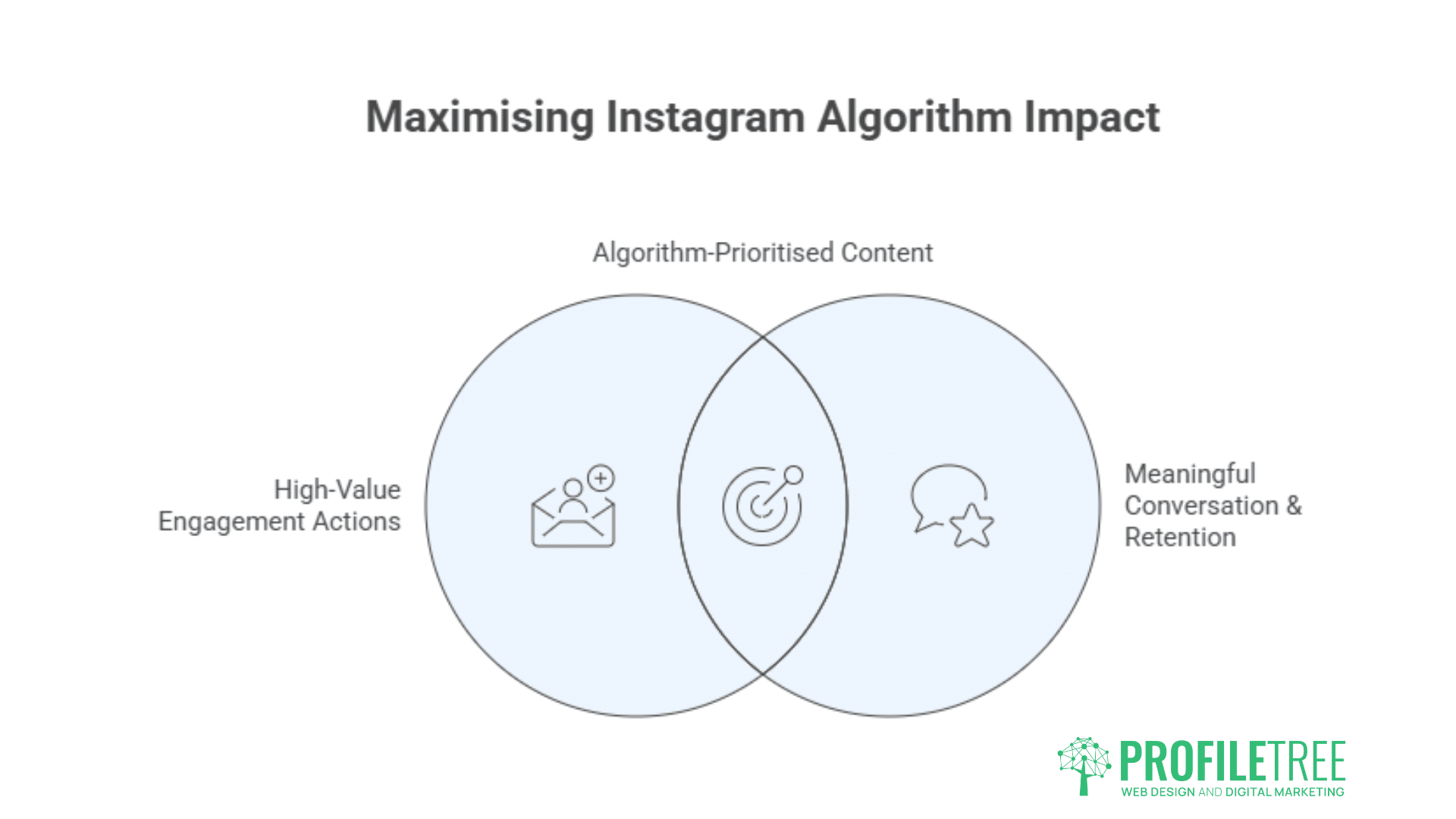
Instagram engagement encompasses all the ways users interact with your content: likes, comments, saves, shares, and story replies. Each interaction type carries a different weight in the platform’s algorithm, with saves and shares now valued more highly than simple likes.
The platform’s 2025 algorithm prioritises content that generates meaningful conversation and keeps users on the platform longer. This means businesses must shift from vanity metrics (follower counts) to performance metrics (engagement rates, reach, and conversion).
Why Instagram Engagement Matters for Business Growth
Strong engagement rates signal to Instagram’s algorithm that your content deserves wider distribution. When your posts receive high engagement within the first 30-60 minutes after posting, the platform pushes that content to more users through the Explore page and recommended content sections.
For businesses, engagement translates directly to visibility, which in turn drives website traffic, enquiry generation, and sales opportunities. Companies with engagement rates above 3% typically see significantly better return on investment from their Instagram marketing efforts.
Measuring Your Current Instagram Engagement Performance
Before implementing new strategies, establish your baseline metrics. Calculate your engagement rate by dividing total engagements (likes + comments + saves + shares) by your follower count, then multiplying by 100. Industry benchmarks vary, but most businesses should aim for 1-5% engagement rates.
Track these metrics weekly using Instagram Insights or third-party analytics platforms. Monitor not just overall engagement, but which content types, posting times, and topics generate the strongest response from your audience.
Audience Analysis Methods
Understanding who follows your brand and what motivates their engagement forms the foundation of any successful Instagram strategy. Without this knowledge, you’re essentially posting blind, hoping content resonates rather than strategically creating content designed to connect.
Data-driven audience analysis removes guesswork and allows you to craft content that speaks directly to your target customers’ interests, pain points, and preferences.
Defining Your Target Audience Profile
Start by identifying the core demographics of your ideal customer: age range, location (particularly important for UK and Irish businesses targeting local markets), profession, and income level. Move beyond basic demographics to psychographics—their values, interests, lifestyle choices, and online behaviour patterns.
Create detailed buyer personas representing different segments of your target audience. For example, a Belfast-based web design agency might have separate personas for startup founders seeking their first website, established SMEs looking to upgrade their digital presence, and marketing managers at larger organisations evaluating agency partners.
Analysing Existing Follower Data
Instagram Insights provides rich data about your current followers. Review the demographic breakdown to see if you’re attracting your intended audience. Check the cities and countries where your followers are located—if you’re targeting Northern Ireland businesses but most followers are from outside your service area, your content strategy needs adjustment.
Examine which posts your existing followers engage with most frequently. Look for patterns in content type (photos versus videos versus carousels), subject matter, and posting style. This data reveals what your audience finds valuable enough to interact with.
Creating Actionable Buyer Personas
Transform your audience research into 2-3 detailed personas that guide your content creation. Include their professional challenges, what success looks like for them, where they seek information, and what objections they might have to your services.
For instance, “David, Marketing Manager” might be a 35-year-old professional at a mid-sized Dublin company, responsible for digital marketing but lacking technical expertise, seeking agencies that explain concepts clearly without jargon, and concerned about budget justification to senior leadership.
Content Strategy Framework
A documented content strategy separates successful Instagram accounts from those posting sporadically without clear purpose. Your strategy should balance educational value, brand visibility, and conversion opportunities whilst maintaining consistent quality and posting frequency.
The most effective Instagram content strategies integrate seamlessly with broader business goals, treating the platform not as an isolated marketing channel but as part of a comprehensive digital ecosystem.
Planning High-Quality Visual Content
Visual quality remains non-negotiable on Instagram. Invest in proper equipment—whether a professional camera or the latest smartphone models with advanced camera systems. Pay attention to lighting, composition, and subject focus to create crisp, professional images that stand out in crowded feeds.
Maintain a consistent visual identity through colour palettes, filters, and editing styles that align with your brand guidelines. This consistency helps users instantly recognise your content as they scroll, building brand recognition over time.
Edit photos and videos using professional tools, adjusting brightness, contrast, saturation, and sharpness as needed. However, avoid over-editing that makes content look artificial or disconnected from reality. Authenticity resonates more strongly than overly polished, stock-photo aesthetics.
Diversifying Content Formats for Maximum Reach
Instagram offers multiple content formats, each serving different purposes in your overall strategy. Static posts work well for announcements and single-message content. Carousels allow for storytelling across multiple images, generating higher engagement as users swipe through.
Reels have become Instagram’s priority format, receiving preferential treatment in the algorithm due to competition with TikTok. Short-form video content that entertains, educates, or inspires can reach audiences far beyond your existing followers. Stories provide ephemeral content perfect for behind-the-scenes glimpses, polls, questions, and direct audience interaction.
Video content generally outperforms static images in reach and engagement. Even simple videos—product demonstrations, client testimonials, or quick tips—can significantly boost your Instagram performance.
Strategic Posting Schedule and Consistency
Consistency matters more than frequency. Posting three times per week on a regular schedule outperforms daily posting that happens sporadically. Create a content calendar planning posts at least two weeks in advance, allowing time for creation, editing, and approval.
Analyse your Instagram Insights to identify when your followers are most active. For UK audiences, engagement typically peaks during lunch hours (12:00-14:00) and evening relaxation time (19:00-21:00), though your specific audience may differ.
Consider seasonal relevance and business cycles in your content planning. A web design agency might increase posting frequency during January (when businesses plan new initiatives) and September (post-summer business pickup), reducing during holiday periods when decision-makers are less active.
Profile Optimisation Tactics
Your Instagram profile serves as your digital storefront—it’s often the first impression potential customers receive of your brand. An optimised profile communicates professionalism, clarity, and credibility within seconds of viewing.
Every element of your profile should work strategically to convert profile visitors into followers, and followers into customers or clients.
Crafting a Conversion-Focused Bio
With only 150 characters, your bio must communicate who you serve and what value you provide with absolute clarity. Avoid vague descriptions like “Digital marketing experts” in favour of specific, benefit-focused statements: “We build websites that generate leads for Belfast SMEs.”
Include relevant keywords that potential customers might search for: “web design Belfast,” “SEO Northern Ireland,” or “digital training UK.” This improves discoverability when users search Instagram for these terms.
Add a call-to-action directing visitors to take the next step—whether that’s visiting your website, booking a consultation, or viewing your latest work. Use the link in your bio strategically, updating it regularly to promote your most current offerings, content, or campaigns.
Profile Picture and Visual Identity
Select a profile picture that’s instantly recognisable at small sizes—typically your company logo on a clean background. Ensure it meets Instagram’s specifications and displays clearly on both mobile and desktop views.
Create branded highlight covers for your Story Highlights that match your visual identity. Organised highlights allow profile visitors to quickly explore different aspects of your business: services, client testimonials, case studies, or team culture.
Maintain visual consistency across your feed so that profile visitors see a cohesive brand presentation. This doesn’t mean every post looks identical, but there should be recognisable brand elements—colour schemes, photography styles, or design treatments—that create visual harmony.
Username and Name Field Optimisation
Your username should be consistent across all social platforms for brand recognition. If your preferred username is unavailable, keep it as close as possible to your primary business name, avoiding excessive numbers or special characters that make you difficult to find.
The “Name” field (separate from username) is searchable on Instagram, making it valuable for SEO. Include a keyword alongside or, instead, your business name if relevant: “ProfileTree | Web Design Belfast” helps users searching for web design services in Belfast discover your profile.
Algorithm Performance Factors
Instagram’s algorithm determines which content users see based on thousands of signals processed through machine learning models. Understanding the key factors that influence algorithmic distribution allows you to engineer content that performs well rather than hoping for visibility.
The 2025 algorithm has shifted significantly towards discovery and search, meaning businesses can now reach potential customers who don’t yet follow them through strategic content optimisation.
Engagement Signals That Matter Most
The algorithm weighs different engagement types differently. Shares (sending posts via DM) now rank as the highest-value engagement signal, indicating content users found valuable enough to recommend to friends. Saves come next, signalling reference-worthy content users want to revisit.
Comments, particularly longer, conversation-starting comments, carry more weight than simple emoji responses. The algorithm can distinguish between meaningful dialogue and generic “great post!” comments. Likes remain the lowest-value currency, though still positive signals.
Time spent viewing content has become increasingly important. If users quickly scroll past your post, the algorithm interprets this as low-quality content. Conversely, posts that stop the scroll and hold attention receive algorithmic boosts.
The Role of Instagram SEO
Instagram has evolved into a search engine, particularly amongst younger users who now search Instagram before Google for recommendations. The platform uses optical character recognition (OCR) to read text in images and natural language processing (NLP) to analyse captions and audio.
Optimise captions with relevant keywords written naturally into your copy. A caption discussing “web design for small businesses in Belfast” performs better than generic text plus hashtags. Include location tags and alternative text descriptions to improve searchability.
The algorithm now prioritises semantic relevance over hashtag usage. Whilst hashtags still have some value, keyword-rich captions, searchable locations, and descriptive alt-text matter more for content discovery in 2025.
Original Content and Authenticity Signals
Instagram now penalises recycled content, particularly videos reposted from other platforms. The algorithm uses visual fingerprinting to detect whether content has appeared on Instagram before. If detected as a repost, content is blocked from Explore page distribution.
Create native content specifically for Instagram rather than cross-posting identical content across multiple platforms. Even when repurposing your own content from TikTok or YouTube, make modifications—edit length, add different music, or alter visual elements to signal originality.
Authenticity indicators include filming within Instagram’s camera, using Instagram’s native editing tools, and creating content that feels personal rather than overly produced. Behind-the-scenes content, team introductions, and genuine customer interactions often outperform polished corporate content.
Audience Engagement Tactics
Posting great content represents only half of the Instagram engagement equation. Active audience engagement—responding to comments, initiating conversations, and building community—amplifies your content’s performance and strengthens relationships with potential customers.
Businesses that treat Instagram as a two-way conversation rather than a broadcast channel consistently achieve higher engagement rates and better conversion outcomes.
Responding to Comments and Messages
Reply to every comment on your posts within the first hour if possible. This window is critical for algorithmic performance—active conversation signals to Instagram that your post is generating valuable interaction worth showing to more users.
Respond with thoughtful replies rather than generic “Thanks!” responses. Ask follow-up questions, provide additional information, or continue the conversation. This encourages the commenter to reply again, generating multiple engagement actions that further boost algorithmic performance.
Set aside dedicated time each day to respond to direct messages. Quick response times (within 1-4 hours) improve your account’s reputation with Instagram and create positive impressions with potential customers exploring your services.
Building Community Through Stories
Instagram Stories offer unique opportunities for real-time engagement. Use interactive stickers—polls, questions, quizzes, sliders—to spark direct responses from followers. These interactions count as engagement and often initiate DM conversations.
Share behind-the-scenes content showing your team, workspace, or creative process. This transparency builds trust and humanises your brand, making followers more likely to engage with and recommend your business.
Respond to Story replies promptly, treating them as conversation starters rather than one-off interactions. These private conversations can lead to business enquiries, partnerships, or valuable feedback about your services.
User-Generated Content and Social Proof
Encourage customers to create content featuring your products or services, then reshare this content to your feed or Stories (with permission). User-generated content serves as authentic social proof whilst delighting customers who receive recognition.
Create branded hashtags that customers can use when posting about your business. Monitor these hashtags regularly and engage with users who employ them. Liking, commenting on, and resharing user-generated content strengthens relationships with existing customers while demonstrating social proof to potential customers.
Feature client testimonials, case study results, or customer success stories in your content. Social proof remains one of the most powerful conversion tools, particularly for service-based businesses where trust is paramount.
Data Analysis and Optimisation
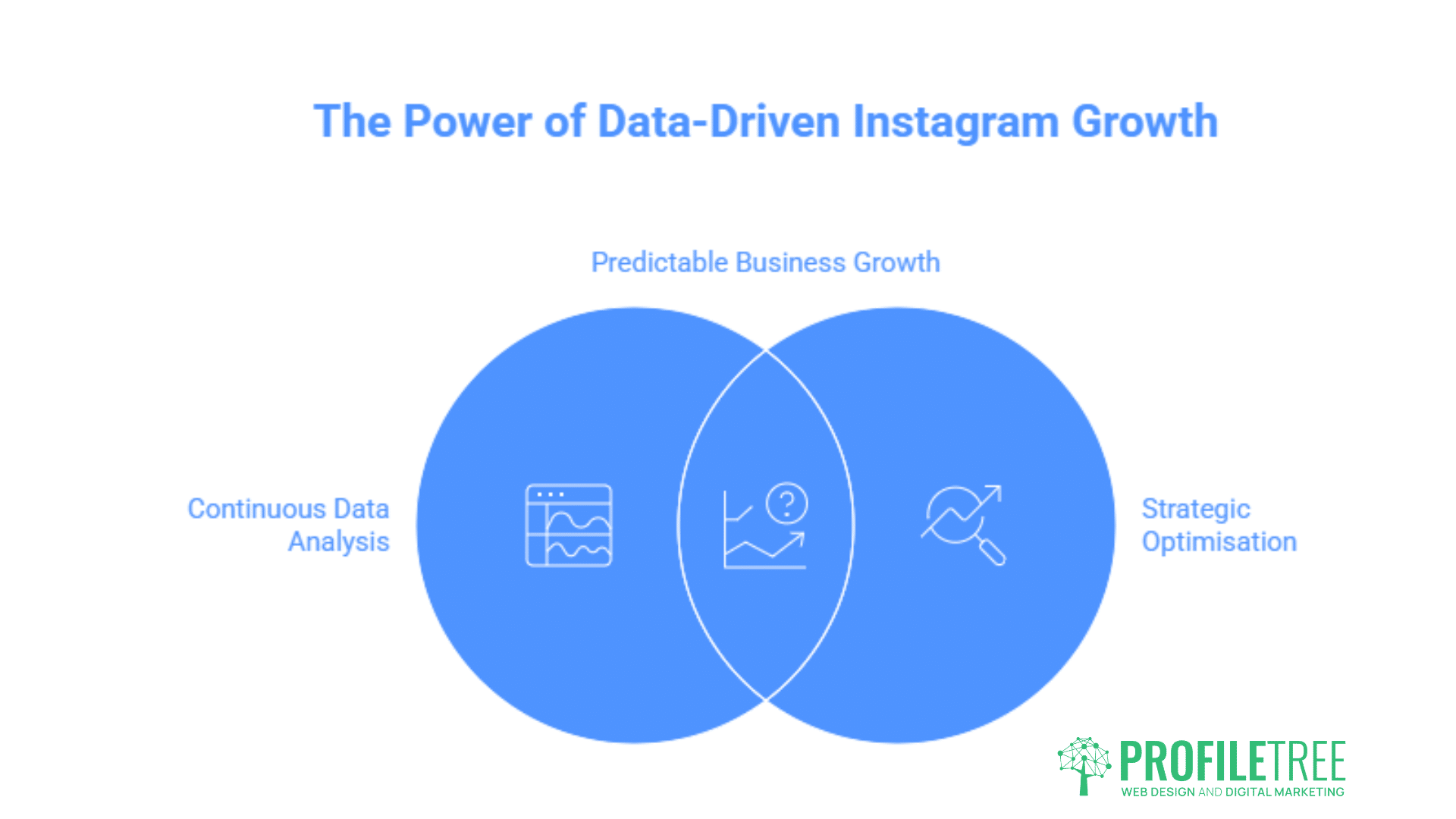
Continuous analysis and optimisation separate high-performing Instagram accounts from those plateauing at mediocre engagement levels. Regular review of performance metrics allows you to identify what’s working, eliminate what isn’t, and refine your strategy based on evidence rather than assumptions.
Data-driven decision-making transforms Instagram from an uncertain marketing channel into a predictable business growth tool.
Tracking Key Performance Indicators
Beyond engagement rate, monitor reach (how many unique users see your content), profile visits (indicating interest in learning more about your business), and website clicks (measuring conversion intent). Track these metrics weekly and monthly to identify trends.
Analyse which content types generate the most saves—content users want to reference later often indicates educational value that positions you as an authority. High save rates typically correlate with increased profile visits and enquiry generation.
Monitor follower growth patterns to understand what content attracts new audience members. Sudden spikes in followers after specific posts reveal content topics or formats that resonate beyond your existing audience.
A/B Testing Content Variables
Test different variables systematically to understand what drives engagement for your specific audience. Try different posting times, comparing engagement rates for content posted at various hours. Test content formats—does your audience prefer carousels over single images, or Reels over static posts?
Experiment with caption lengths, finding the sweet spot between comprehensive information and scannable brevity. Test different call-to-action placements and phrasings to optimise conversion rates.
Run only one test at a time to isolate variables and draw clear conclusions. Document results in a testing log to build institutional knowledge about what works for your audience.
Adapting Strategy Based on Insights
Review your Instagram Insights monthly to identify patterns and opportunities. If certain content topics consistently outperform others, increase the frequency of that content type in your calendar. If engagement drops on specific days or times, adjust your posting schedule accordingly.
Pay attention to which posts drive the most profile visits and website clicks—these represent content that moves users down the funnel towards conversion. Create more content in similar styles or on similar topics to capitalise on these patterns.
Stay alert to shifts in your audience’s behaviour or preferences. As Instagram introduces new features or algorithm changes, be prepared to adapt your strategy quickly rather than rigidly adhering to outdated approaches.
“The businesses that succeed on Instagram are those that listen to their audience and adapt their content strategy based on performance data rather than personal preferences,” notes Ciaran Connolly, Director at ProfileTree. “We work with clients to establish clear metrics, test systematically, and optimise continuously—treating Instagram as a strategic business channel rather than just a creative outlet.”
Advanced Growth Strategies
Once you’ve mastered the fundamentals of Instagram engagement, advanced strategies can accelerate growth and help you reach audiences beyond your existing follower base. These tactics require a more sophisticated understanding of the platform but deliver disproportionate results when executed well.
Advanced Instagram strategies focus on algorithmic optimisation, strategic partnerships, and systematic content frameworks that scale your impact without proportionally scaling your time investment.
Content Pillars and Strategic Themes
Organise your content around 3-5 core themes or “content pillars” that align with your business objectives and audience interests. For a digital marketing agency, these might include: web design trends, SEO tips, client success stories, digital marketing news, and agency culture.
Content pillars create consistency whilst providing variety, making content planning more efficient and helping followers understand what value to expect from your account. Each pillar serves a specific purpose in your overall marketing funnel—awareness, education, consideration, or conversion.
Plan content in batches organised by pillar, filming multiple videos or capturing several images in single sessions. This approach improves efficiency whilst maintaining strategic balance across your content mix.
Collaboration and Cross-Promotion
Partner with complementary businesses or industry peers for content collaborations. Co-created content exposes your brand to each partner’s audience, expanding your reach without paid advertising. Choose partners whose audience overlaps with your target market but who don’t directly compete with your services.
Guest takeovers of Stories or feed posts, collaborative live sessions, or joint educational content all provide collaboration opportunities. These partnerships should provide clear value to both audiences rather than feeling like promotional exchanges.
Tag relevant businesses, clients, or partners in your posts when appropriate. This increases the likelihood of shares and reshares whilst building goodwill and network connections that can lead to referrals.
Paid Promotion and Instagram Ads
Whilst organic growth should remain your primary focus, strategic use of Instagram advertising accelerates results for specific objectives. Promote high-performing organic posts to reach users beyond your current audience with content already proven to resonate.
Use Instagram’s targeting capabilities to reach specific demographics, locations (particularly valuable for local businesses serving Northern Ireland and Ireland), interests, or behaviours. Start with small budgets to test messaging and creative before scaling investment.
Track conversion metrics carefully to calculate return on ad spend. Instagram ads should generate measurable business outcomes—enquiry form submissions, phone calls, or website visits—not just likes and follows.
Frequently Asked Questions
How often should businesses post on Instagram for optimal engagement?
Consistency matters more than frequency. Posting 3-4 times per week on a regular schedule typically outperforms daily posting done sporadically. The key is maintaining a predictable presence so your audience knows when to expect content. Quality always trumps quantity—three exceptional posts per week beat seven mediocre ones.
What’s a good engagement rate for business accounts on Instagram?
Engagement rates vary by industry and follower count, but most businesses should aim for 1-5%. Accounts with 1,000-10,000 followers typically see a higher percentage of engagement than accounts with 100,000+ followers due to more intimate audience relationships. Focus on your engagement trend over time rather than comparing to accounts in different industries or size categories.
Do hashtags still matter for Instagram engagement in 2025?
Hashtags remain useful but less critical than in previous years. The algorithm now prioritises semantic relevance in captions over hashtag strategy. Use 3-5 highly relevant hashtags rather than the maximum 30. Focus on niche, specific hashtags where your content can stand out rather than massive general hashtags where you’ll get lost in the noise.
How can I tell if my Instagram account has been shadowbanned?
Shadowbans (restricted reach without notification) are rare but possible. Signs include sudden engagement drops, your posts not appearing in hashtag searches when logged out, or significantly reduced reach compared to your baseline. To check, use Instagram’s Account Status feature in settings. If restricted, review recent content for policy violations and focus on creating original, policy-compliant content going forward.
What time should I post on Instagram for maximum engagement?
Optimal posting times vary by audience and location. For UK audiences, 12:00-14:00 (lunch hour) and 19:00-21:00 (evening) generally see high activity, but your specific audience may differ. Check your Instagram Insights to see when your followers are most active, then test posting during these windows to find what works best for your account.
Should I use Instagram Reels or focus on static posts and carousels?
Instagram currently prioritises Reels in its algorithm, making them the best format for reaching new audiences. However, a balanced content mix typically performs best. Use Reels for reach and discovery, carousels for educational content that generates saves, and static posts for announcements or single-message content. Let your business goals and content strengths guide format selection.
ProfileTree’s Instagram Marketing and Digital Growth Services
ProfileTree helps UK and Irish businesses build effective Instagram strategies that drive measurable results. Our team combines technical SEO expertise with content marketing knowledge to create Instagram presences that generate qualified leads, not just vanity metrics.
We provide comprehensive digital marketing services, including web design optimised for Instagram traffic conversion, content marketing strategies that integrate social media with broader marketing objectives, and SEO services that connect your Instagram presence with search visibility. Our video production and animation services create engaging visual content specifically formatted for Instagram’s various content types.
For businesses seeking to understand and implement Instagram marketing effectively, we offer digital training programmes covering social media strategy, content creation, and performance analysis. Our AI training services help companies automate aspects of social media management whilst maintaining authentic audience connections.
Whether you need strategic consultation to refine your current approach or full-service Instagram management, ProfileTree brings over a decade of digital marketing experience to help Northern Ireland, Ireland, and UK businesses grow through social media marketing. Contact us to discuss how we can help you transform Instagram from a time-consuming obligation into a consistent lead generation channel for your business.