
WordPress vs Shopify vs Wix: Real Agency Perspective
Table of Contents
After building hundreds of websites for Northern Ireland businesses over the past decade, we’ve witnessed countless business owners struggle with the same fundamental question: which platform will actually deliver results? The choice between WordPress, Shopify, and Wix isn’t just about features—it’s about finding the platform that aligns with your business goals, technical capabilities, and growth trajectory.
Having developed sites across all three platforms for SMEs throughout Belfast, Ireland, and the UK, we’ve seen first-hand how the wrong platform choice can cost businesses thousands in lost opportunities and migration fees. This guide explores WordPress vs Shopify vs Wix, cutting through the marketing noise to deliver practical insights based on real project experience.
The Platform Selection Framework That Actually Works
Choosing a website platform requires more than comparing feature lists. Your decision impacts everything from search visibility to conversion rates, maintenance costs to scalability potential. We’ve developed a practical framework that helps SMEs make informed decisions based on four critical factors: business model alignment, technical requirements, growth potential, and total cost of ownership.
Small businesses often select platforms based on price alone, only to discover hidden costs in functionality limitations, third-party apps, or necessary custom development. Others choose based on ease of use, then find themselves constrained when their business needs evolve. The most successful projects start with a clear understanding of both current needs and future ambitions.
Business model alignment determines whether you need pure e-commerce functionality, content-driven engagement, service booking capabilities, or a hybrid approach. Technical requirements encompass everything from payment processing to multilingual support. Growth potential considers how the platform handles increased traffic, expanded product catalogues, or international expansion. Total cost of ownership includes not just monthly fees, but development costs, maintenance requirements, and opportunity costs of platform limitations.
WordPress: The Power and Complexity Trade-off
WordPress powers over 40% of the web for good reason—it offers unmatched flexibility and control. For Northern Ireland businesses seeking complete customisation and ownership of their digital presence, WordPress remains the gold standard. The platform’s open-source nature means you’re never locked into proprietary systems or limited by artificial constraints.
The real strength of WordPress lies in its extensibility. With over 60,000 plugins available, virtually any functionality you can imagine is achievable. We’ve built everything from complex membership sites for Belfast fitness studios to multilingual e-commerce platforms for Irish food exporters. The WooCommerce ecosystem alone offers more e-commerce flexibility than most businesses will ever need.
When WordPress Makes Business Sense
Professional service firms benefit most from WordPress’s content management capabilities. Law firms, accountancy practices, and consultancies need sophisticated content organisation, multiple user roles, and often complex integrations with case management or CRM systems. WordPress handles these requirements naturally, without forcing businesses into predetermined structures.
Content-driven businesses find WordPress particularly valuable. Publishers, media companies, and organisations with substantial blog content benefit from WordPress’s superior content management tools. The platform’s SEO capabilities, when properly configured, consistently outperform closed systems. We’ve seen Belfast businesses achieve 200% organic traffic increases within six months of migrating from closed platforms to optimised WordPress sites.
E-commerce businesses with unique requirements often choose WordPress with WooCommerce. Unlike rigid e-commerce platforms, WooCommerce allows complete customisation of checkout processes, product configurations, and customer journeys. Irish manufacturers selling customisable products, B2B wholesalers with complex pricing structures, or subscription box services with unique fulfilment needs find this flexibility invaluable.
The Hidden Costs of WordPress Freedom
WordPress’s flexibility comes with responsibility. Unlike hosted solutions, WordPress requires active maintenance, security monitoring, and regular updates. Many SMEs underestimate these ongoing requirements, leading to compromised sites, poor performance, or security breaches.
The platform demands technical knowledge or professional support. While anyone can install WordPress, creating a professional, secure, high-performing site requires expertise. We regularly encounter Belfast businesses who started DIY WordPress projects only to need professional intervention when problems arise. Common issues include plugin conflicts, performance degradation, security vulnerabilities, and update complications.
Hosting quality dramatically impacts WordPress performance. Cheap shared hosting might seem economical, but poor server response times destroy user experience and search rankings. Quality WordPress hosting starts around £30-50 monthly for small sites, with larger e-commerce sites requiring £100+ monthly for adequate resources. Add professional hosting management costs, and the total investment becomes significant.
WordPress Performance Optimisation Realities
Site speed separates amateur WordPress sites from professional builds. Google’s Core Web Vitals now directly impact search rankings, making performance optimisation critical for business success. We’ve seen properly optimised WordPress sites achieve sub-second load times, but this requires deliberate configuration, quality hosting, and ongoing monitoring.
Critical performance factors include hosting infrastructure, caching configuration, image optimisation, code efficiency, and database management. Each plugin adds overhead, making plugin selection crucial. We typically recommend limiting sites to 15-20 carefully chosen plugins, though we’ve successfully managed sites with 40+ plugins through careful optimisation.
Content Delivery Networks (CDNs) become essential for businesses serving multiple geographic markets. Irish businesses targeting UK and European customers benefit significantly from CDN implementation, reducing load times by 50% or more for international visitors.
Shopify: E-commerce Simplicity With Strategic Limitations
Shopify has revolutionised e-commerce accessibility, enabling thousands of UK businesses to sell online without technical expertise. The platform’s focused approach—doing e-commerce exceptionally well while limiting other functionality—creates both its greatest strengths and most frustrating limitations.
The platform’s true value lies in its ecosystem integration. Payment processing, inventory management, shipping calculations, tax handling, and order fulfilment work seamlessly out of the box. For pure e-commerce businesses, this integration saves countless hours of configuration and troubleshooting.
Shopify’s Sweet Spot for Business Success
Direct-to-consumer brands thrive on Shopify. The platform’s checkout optimisation, mobile responsiveness, and conversion-focused features deliver immediate results. We’ve helped Belfast fashion brands launch and scale to six-figure revenues within months using Shopify’s built-in tools and carefully selected apps.
Product-based businesses with straightforward catalogues find Shopify ideal. Whether selling handcrafted goods, importing products, or dropshipping, Shopify’s inventory management and order processing systems handle common scenarios efficiently. The platform’s multi-channel selling capabilities—integrating with Facebook, Instagram, Amazon, and physical point-of-sale systems—create omnichannel opportunities previously reserved for enterprise retailers.
Seasonal businesses particularly benefit from Shopify’s scalability. The platform automatically handles traffic spikes, preventing the crashed sites and lost sales that plague self-hosted solutions during peak periods. Northern Ireland businesses selling Christmas goods, summer equipment, or event-related products gain peace of mind knowing their site won’t fail during crucial selling periods.
Understanding Shopify’s Business Model Constraints
Shopify’s monthly fees represent just the beginning of actual costs. The platform operates on a marketplace model where essential functionality often requires paid apps. A typical Shopify store might need 5-10 apps for email marketing, SEO optimisation, reviews, wishlists, advanced shipping options, and customer service tools. These apps typically cost £10-50 monthly each, quickly escalating total platform costs.
Transaction fees add another layer of expense. Unless using Shopify Payments (not always optimal for UK businesses), you’ll pay additional transaction fees on every sale. These fees, combined with payment processing costs, can significantly impact margins on lower-priced products.
Customisation limitations frustrate growing businesses. While Shopify’s theme system allows visual customisation, structural changes require developer expertise or accepting platform limitations. We’ve encountered numerous businesses outgrowing Shopify’s constraints, facing expensive migrations to more flexible platforms.
The Shopify Plus Decision Point
Shopify Plus, starting at $2,000 monthly, promises enterprise-level capabilities. However, our experience suggests most SMEs never need Plus features. The jump from Shopify’s standard plans to Plus creates an awkward gap where growing businesses need more than standard Shopify offers but can’t justify Plus pricing.
Key Plus advantages include advanced automation, unlimited staff accounts, dedicated support, and API access. For businesses processing thousands of orders monthly or requiring complex B2B functionality, Plus becomes valuable. Most Northern Ireland SMEs, however, find standard Shopify plans sufficient for years of growth.
The migration path from standard Shopify to Plus is relatively smooth, making premature upgrades unnecessary. We recommend starting with standard plans and upgrading only when specific Plus features become business-critical.
Wix: The Visual Builder’s Paradise and Prison
Wix has transformed from a simple website builder into a comprehensive business platform. The visual drag-and-drop interface that made Wix famous remains its core strength, enabling non-technical users to create visually impressive sites without code knowledge.
The platform’s ADI (Artificial Design Intelligence) can generate complete websites in minutes, analysing your business type and preferences to create customised designs. While these AI-generated sites require refinement, they provide solid starting points for time-pressed business owners.
Where Wix Genuinely Excels
Creative professionals and visual-focused businesses find Wix particularly appealing. Photographers, designers, artists, and agencies appreciate the platform’s design flexibility and visual effects capabilities. The ability to position elements pixel-perfectly appeals to those with specific aesthetic visions.
Small service businesses with basic needs often find Wix perfect. Hair salons, restaurants, personal trainers, and local consultants can quickly create professional presences with booking systems, contact forms, and basic e-commerce functionality. Wix’s all-in-one approach eliminates the complexity of managing multiple systems.
The platform’s template quality consistently impresses. Unlike WordPress’s variable template quality or Shopify’s e-commerce focus, Wix offers hundreds of professionally designed templates across all industries. These templates provide strong starting points, though customisation remains essential for brand differentiation.
Wix’s Technical and Business Limitations
The visual freedom that attracts users to Wix becomes its greatest limitation. The platform’s proprietary page builder creates code that search engines struggle to interpret efficiently. While Wix has improved its SEO capabilities, we consistently see Wix sites underperform in competitive search markets.
Site speed remains problematic. Wix sites typically load slower than optimised WordPress or Shopify sites, impacting both user experience and search rankings. The platform’s infrastructure, while reliable, lacks the optimisation options available on other platforms. Belfast businesses in competitive markets often find this performance gap insurmountable.
Migration impossibility creates vendor lock-in. Unlike WordPress or Shopify, you cannot export a Wix site to another platform. When businesses outgrow Wix, they must rebuild from scratch elsewhere. We’ve helped dozens of Northern Ireland businesses through this painful, expensive process.
The Wix E-commerce Reality Check
Wix’s e-commerce capabilities have improved dramatically, but still lag behind dedicated platforms. The system handles basic online selling adequately but struggles with complex requirements like advanced inventory management, B2B pricing, or sophisticated shipping rules.
Payment processing options remain limited compared to Shopify or WooCommerce. While major providers are supported, businesses with specific payment requirements or international selling needs may find Wix restrictive. The platform’s transaction fees, while competitive, apply regardless of payment processor choice.
Product variant handling frustrates sellers with complex catalogues. While Shopify and WooCommerce handle unlimited variants elegantly, Wix’s system becomes cumbersome with multiple product options. Fashion retailers, custom product sellers, or businesses with configurable products often find these limitations dealbreaking.
WordPress vs Shopify vs Wix: Making the Data-Driven Decision
Platform selection impacts every aspect of your digital presence. SEO performance, conversion rates, maintenance costs, and scalability all depend on choosing the right foundation. Our experience across hundreds of projects reveals clear patterns in platform success and failure.
SEO Performance Across Platforms
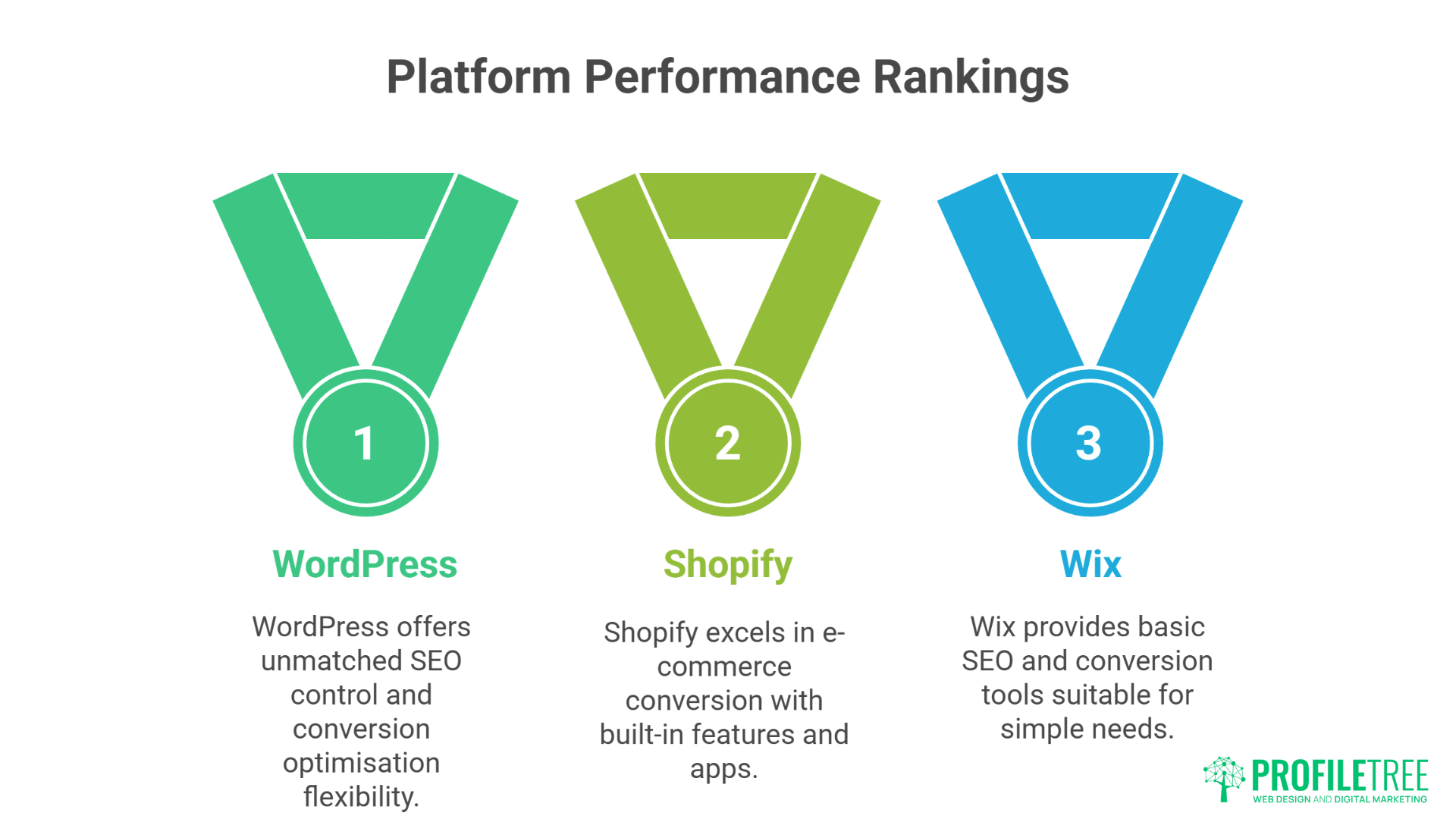
Search visibility drives sustainable business growth. Our analysis of client sites across all three platforms shows consistent patterns in SEO performance, with properly optimised WordPress sites typically achieving the strongest organic rankings.
WordPress’s open architecture enables complete SEO control. From URL structures to meta descriptions, schema markup to page speed optimisation, every element remains configurable. Professional SEO services can implement advanced strategies impossible on closed platforms. We’ve achieved first-page rankings for competitive Belfast business terms using WordPress’s flexibility combined with strategic content development.
Shopify offers solid SEO foundations with notable limitations. The platform handles basic optimisation well, but URL structures remain rigid, and blogging capabilities feel bolted-on rather than integrated. E-commerce-specific SEO features partially compensate, but content-driven SEO strategies face platform constraints.
Wix’s SEO improvements haven’t eliminated fundamental issues. While the platform now supports custom meta tags and basic schema markup, the underlying code structure and performance limitations handicap competitive SEO efforts. Belfast businesses in competitive industries consistently struggle to achieve meaningful organic visibility on Wix.
Conversion Rate Optimisation Capabilities
Converting visitors into customers determines digital success. Each platform offers different optimisation tools and constraints that impact conversion potential.
Shopify leads in e-commerce conversion optimisation. Built-in features like abandoned cart recovery, one-click checkout, and dynamic product recommendations drive measurable results. The platform’s app ecosystem provides advanced tools for A/B testing, personalisation, and behavioural targeting. Our Shopify clients typically see 20-30% higher conversion rates compared to their previous platforms.
WordPress enables unlimited conversion optimisation through plugins and custom development. From sophisticated split testing to personalised user journeys, anything becomes possible with adequate investment. However, achieving Shopify-level e-commerce conversions requires careful optimisation and often significant development work.
Wix provides basic conversion tools suitable for simple needs. Form builders, pop-ups, and basic e-commerce features handle standard requirements. Advanced optimisation, however, requires workarounds or accepting platform limitations. The lack of proper A/B testing tools particularly handicaps data-driven optimisation efforts.
Total Cost of Ownership Analysis
Platform costs extend far beyond monthly subscriptions. Development, maintenance, apps, transaction fees, and opportunity costs create the true total cost of ownership (TCO).
WordPress TCO breakdown:
- Hosting: £30-200+ monthly depending on requirements
- Maintenance and updates: £50-200 monthly (DIY or managed)
- Security monitoring: £20-50 monthly
- Premium plugins: £200-500 annually
- Development costs: £2,000-10,000+ initial investment
- Ongoing development: £500-2,000 annually
Shopify TCO breakdown:
- Platform fees: £25-299 monthly (standard plans)
- Transaction fees: 0.5-2% (if not using Shopify Payments)
- Essential apps: £50-200 monthly
- Theme costs: £150-350 one-time
- Customisation: £1,000-5,000 typical range
- Annual app updates: £200-500
Wix TCO breakdown:
- Platform fees: £14-35 monthly (business plans)
- Transaction fees: 2.9% + 30p per transaction
- Apps and add-ons: £20-100 monthly
- Template: Often included, premium £50-200
- Limited customisation: £500-2,000 if possible
- Migration costs when outgrown: £3,000-10,000+
Platform Migration Strategies and Realities
Changing platforms becomes inevitable for many growing businesses. Understanding migration complexities helps inform initial platform selection and timing future transitions.
When Platform Migration Makes Sense
Business growth often necessitates platform change. Companies starting on Wix frequently migrate to WordPress or Shopify when requiring advanced functionality. Shopify users move to WordPress when content marketing becomes priority. WordPress users occasionally shift to Shopify for simplified e-commerce management.
Warning signs indicating migration need include performance limitations impacting conversions, functionality gaps requiring expensive workarounds, SEO constraints limiting organic growth, and scalability concerns approaching platform limits. Belfast businesses typically recognise these signs 6-12 months before taking action, often costing thousands in lost opportunities.
Migration timing affects business continuity. Planning migrations during quieter periods minimises disruption. For seasonal businesses, completing migrations 2-3 months before peak seasons ensures stability. We recommend allowing 2-3 months for proper migration planning and execution.
The Real Cost of Platform Migration
Migration costs exceed initial development investments. Beyond building the new site, migrations require content transfer, SEO preservation, redirect mapping, customer data migration, and extensive testing. These hidden tasks often double projected timelines and budgets.
SEO impact remains the greatest migration risk. Even well-executed migrations typically see temporary ranking drops. Poor migrations can destroy years of SEO progress. We implement comprehensive redirect strategies, but Google requires time to recognise and credit new site structures.
Customer experience disruption damages brand trust. Login credentials, order histories, wish lists, and subscriptions require careful migration. Communication becomes critical—customers need advance warning and clear guidance through transitions.
Building for Long-term Success
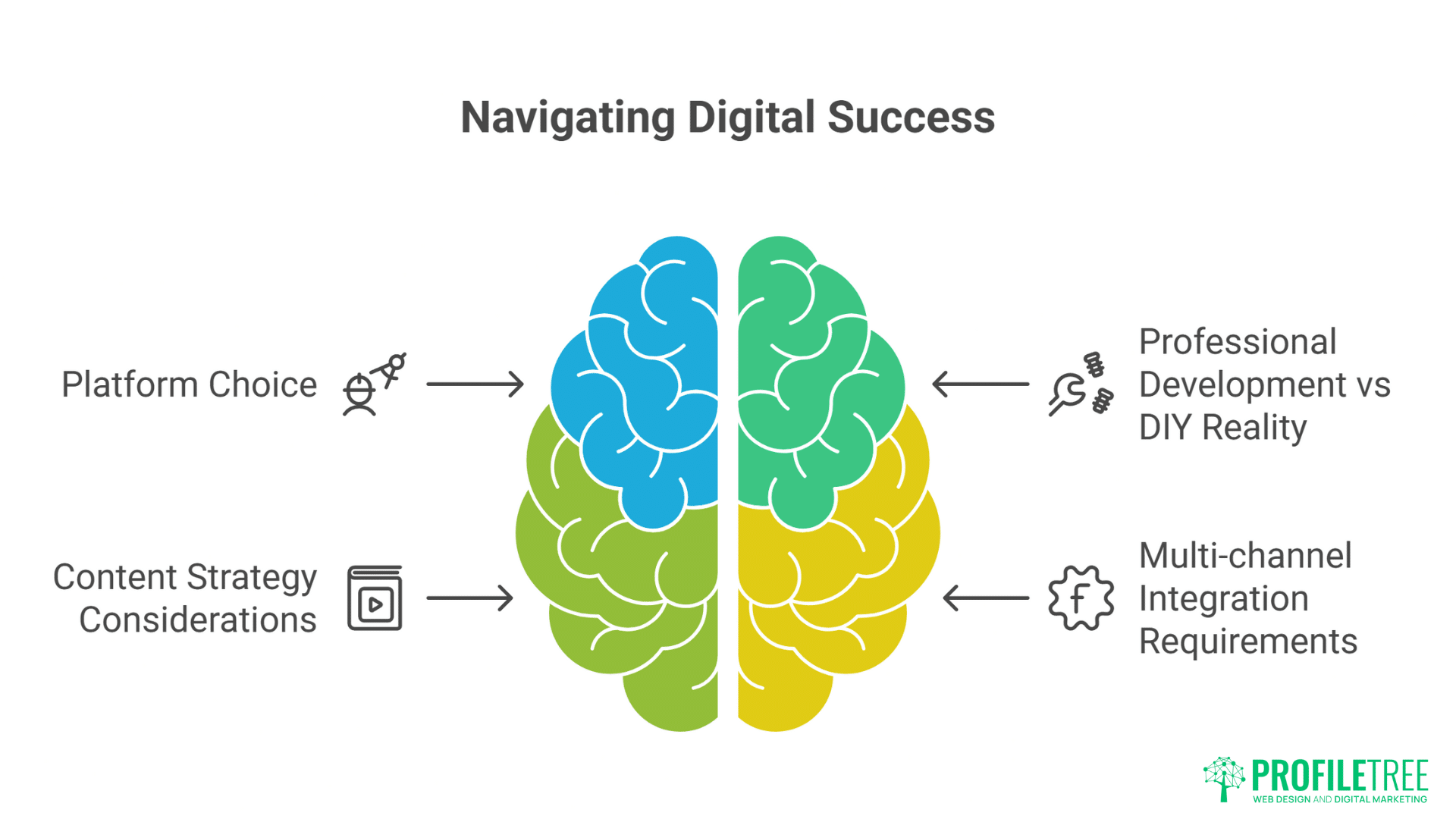
Platform choice represents just the beginning of digital success. How you build, optimise, and evolve your chosen platform determines actual business results.
Professional Development vs DIY Reality
Every platform promises easy DIY website creation. Reality proves different. While basic sites are achievable without expertise, professional results require professional skills. The gap between DIY and professional sites continues widening as user expectations and technical requirements increase.
Professional website development delivers measurable ROI through superior design, optimised performance, strategic functionality, and ongoing support. DIY sites often cost more long-term through lost opportunities, fixing mistakes, and eventual professional intervention.
The expertise gradient varies by platform. Wix requires the least technical knowledge but offers limited professional development opportunities. Shopify sits mid-range, enabling reasonable DIY results with clear professional advantages. WordPress demands the most expertise but rewards it with unlimited possibilities.
Content Strategy Platform Considerations
Content marketing drives sustainable growth across all platforms, but implementation varies significantly. Your content strategy should influence platform selection, not be constrained by it.
WordPress excels at content management. The platform’s blogging roots show in sophisticated content organisation, authorisation workflows, and SEO optimisation. Belfast businesses building authority through content consistently choose WordPress. Our clients using strategic content marketing on WordPress typically see 3-5x higher organic traffic than those on alternative platforms.
Shopify treats content as secondary. While blogging is possible, the platform clearly prioritises product pages. Content organisation remains basic, and SEO options limited. Successful Shopify content strategies often involve WordPress installations on subdomains, adding complexity but enabling proper content marketing.
Wix positions between extremes. The platform handles basic blogging adequately but lacks sophisticated content management features. Growing content libraries become unwieldy, and SEO limitations impact content visibility. Serious content marketers rarely choose Wix long-term.
Multi-channel Integration Requirements
Modern businesses require multi-channel presence. Your website platform should facilitate, not complicate, omnichannel strategies.
Social commerce integration varies dramatically. Shopify leads with native Facebook, Instagram, and TikTok selling capabilities. Products sync automatically, orders process centrally, and inventory updates universally. This integration transforms social media from marketing channels into revenue drivers.
WordPress requires plugins or custom development for social selling. While achievable, the integration lacks Shopify’s elegance. WooCommerce extensions enable functionality, but setup complexity and ongoing maintenance increase accordingly.
Wix offers basic social integration suitable for simple needs. Product catalogues can connect to Facebook and Instagram, but the experience lacks sophistication. Advanced features like dynamic retargeting or social checkout require workarounds or remain unavailable.
Platform-Specific Growth Strategies
Each platform demands tailored approaches to maximise growth potential. Understanding platform strengths enables strategic advantage.
WordPress Growth Acceleration Tactics
WordPress growth strategies centre on content and flexibility. The platform’s strengths in SEO and customisation enable sophisticated growth tactics impossible elsewhere.
Topic cluster strategies work exceptionally well on WordPress. Creating comprehensive content hubs around business themes builds topical authority. We’ve helped Belfast businesses dominate niche markets through strategic content architecture. The platform’s categorisation and tagging systems support complex content relationships that search engines reward.
Custom functionality drives competitive advantage. Whether creating unique calculators, interactive tools, or specialised user experiences, WordPress enables differentiation. These custom elements become valuable assets, attracting links, social shares, and direct traffic.
Integration capabilities expand growth opportunities. WordPress connects with virtually any third-party system through APIs or plugins. CRM integration enables sophisticated marketing automation. Analytics platforms provide deeper insights. Professional digital strategy leverages these integrations for compound growth effects.
Shopify Revenue Optimisation Methods
Shopify growth focuses on conversion optimisation and sales velocity. The platform’s e-commerce focus provides unique revenue acceleration opportunities.
Conversion rate optimisation delivers immediate impact. Shopify’s built-in analytics reveal optimisation opportunities. Cart abandonment sequences, exit-intent popups, and urgency messaging drive measurable improvements. Our Shopify clients typically achieve 15-25% revenue increases through systematic optimisation.
Product discovery features increase average order values. Shopify’s recommendation engines, recently viewed products, and smart search functionality keep customers engaged. Properly configured, these features increase both conversion rates and transaction values.
Subscription commerce thrives on Shopify. The platform’s recurring billing capabilities enable predictable revenue streams. Northern Ireland food producers, beauty brands, and service providers successfully build subscription businesses using Shopify’s native and app-based tools.
Wix Business Building Approaches
Wix growth strategies accommodate platform limitations while maximising available features.
Local SEO becomes critical for Wix success. With organic SEO challenges, local search visibility offers achievable wins. Wix’s Google My Business integration and local schema markup support local optimisation. Belfast service businesses successfully compete locally despite broader SEO limitations.
Paid traffic strategies compensate for organic limitations. Wix sites often require paid advertising for sustainable growth. The platform’s pixel integration and landing page capabilities support paid campaigns. Budget allocation shifts from SEO to paid channels.
Email marketing maximises existing traffic. Since acquiring new organic visitors proves challenging, nurturing existing contacts becomes crucial. Wix’s built-in email marketing tools, while basic, enable customer retention and repeat sales.
Advanced Platform Considerations
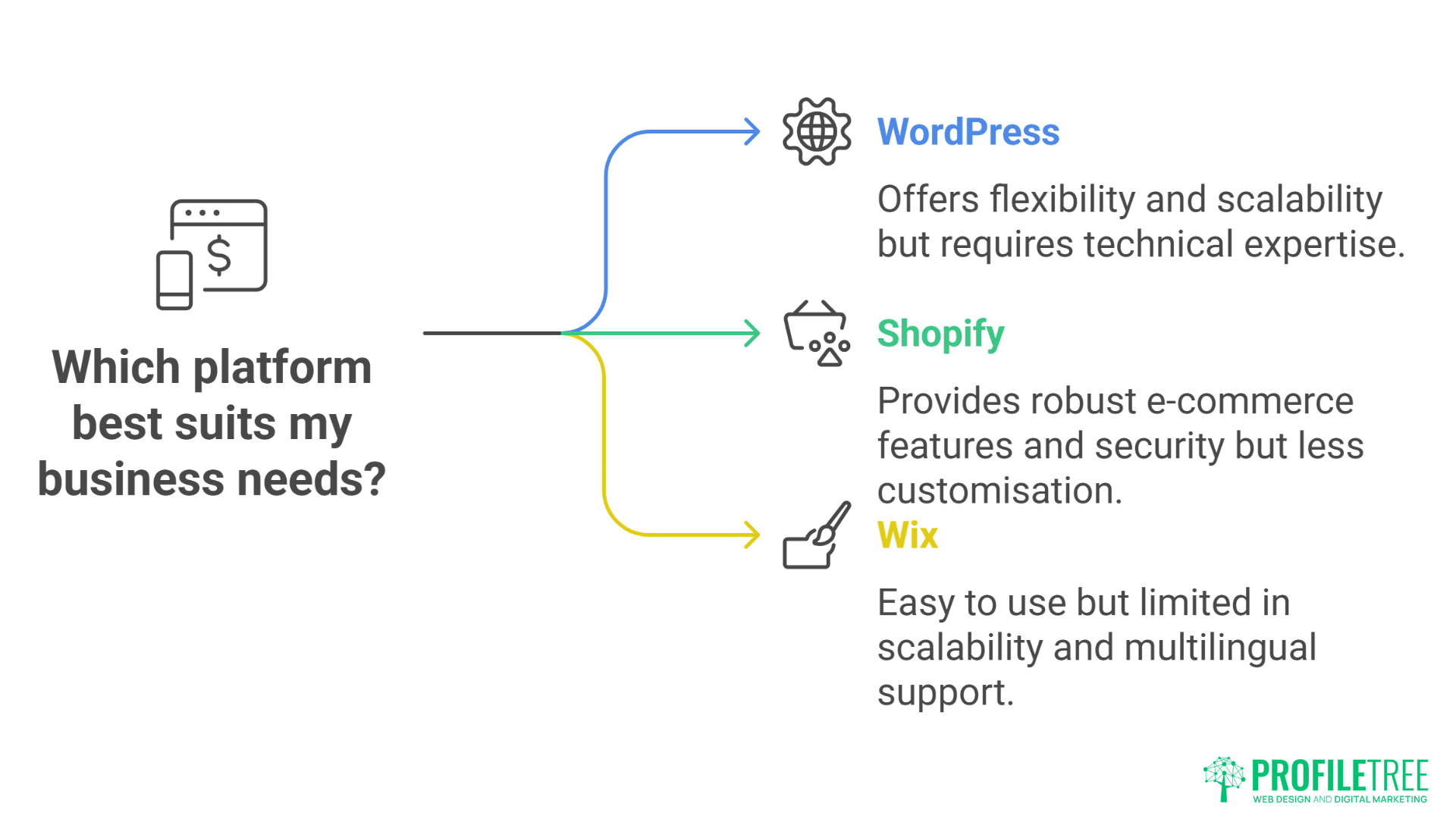
Beyond basic features, advanced requirements often determine platform suitability. Understanding these considerations prevents future limitations.
Multilingual and International Capabilities
International expansion requirements favour certain platforms. WordPress offers complete multilingual flexibility through plugins like WPML or Polylang. Complex international sites with region-specific content, currencies, and functionality become achievable.
Shopify provides solid international commerce features. Multi-currency checkout, international domains, and location-based content work well. However, true multilingual content management requires apps or workarounds. Translation quality and SEO optimisation for multiple languages need careful attention.
Wix’s multilingual system remains rudimentary. While basic translation is possible, managing complex international sites proves cumbersome. SEO for multiple languages particularly suffers, limiting international organic visibility.
Security and Compliance Considerations
Security requirements vary dramatically between platforms. Hosted solutions like Shopify and Wix handle security centrally, providing PCI compliance and SSL certificates automatically. This convenience removes technical burden but also control.
WordPress security depends entirely on implementation. Properly secured WordPress sites match or exceed hosted platform security. However, this requires expertise, quality hosting, and ongoing vigilance. We implement comprehensive security strategies including firewalls, monitoring, and regular updates. Professional hosting management becomes essential for business-critical sites.
GDPR compliance affects all platforms but implementation varies. WordPress offers complete control over data handling and privacy features. Shopify provides good compliance tools but less flexibility. Wix handles basics but advanced requirements may prove challenging.
Performance at Scale
Scalability concerns affect growing businesses. Each platform handles growth differently, with varying success levels.
WordPress scalability depends on architecture and hosting. Properly built WordPress sites handle millions of visitors monthly. However, poor development or inadequate hosting causes performance collapse. We’ve scaled WordPress sites from hundreds to hundreds of thousands of monthly visitors through systematic optimisation.
Shopify’s infrastructure handles scale automatically. Black Friday traffic spikes that crash self-hosted sites don’t affect Shopify stores. This reliability provides peace of mind during critical sales periods. Platform limitations emerge in catalogue size and customisation complexity rather than traffic handling.
Wix struggles with high-traffic scenarios. While the platform remains stable, performance degradation impacts user experience. Load times increase noticeably under pressure, affecting conversions. High-traffic Wix sites often require migration to more robust platforms.
Making Your Platform Decision
The perfect platform doesn’t exist—only the right platform for your specific business needs. Your decision should balance current requirements with future ambitions, technical capabilities with business goals.
Decision Framework for SMEs
Start with your business model. Pure e-commerce businesses selling physical products should seriously consider Shopify. Service businesses prioritising content marketing fit WordPress perfectly. Local businesses needing quick, visual sites might find Wix adequate initially.
Consider your growth trajectory. Rapidly scaling businesses need platforms that grow with them. WordPress and Shopify scale effectively; Wix creates ceiling effects. Investment in the right platform initially prevents expensive migrations later.
Evaluate your resources honestly. WordPress demands technical expertise or professional support. Shopify requires less technical knowledge but more financial investment. Wix minimises both but limits growth potential. Match platform requirements to available resources.
Factor in your competitive landscape. Highly competitive markets demand every advantage. WordPress’s SEO capabilities and customisation options provide competitive edges. Less competitive local markets might succeed with simpler solutions.
“The platform decision isn’t about features—it’s about alignment with business strategy,” notes Ciaran Connolly, ProfileTree founder. “We’ve seen hundred of businesses succeed and fail based on platform choice. The successful ones choose platforms that support their business model, not restrict it.”
Implementation Timeline Considerations
Platform choice affects launch timelines. Wix sites launch fastest, often within days. Shopify stores typically require 2-4 weeks for professional setup. WordPress projects range from 3-8 weeks depending on complexity.
Consider seasonal factors. Launching e-commerce sites before peak seasons requires adequate testing time. Content sites benefit from establishing authority before competitive periods. Plan backwards from critical business dates.
Allow for learning curves. Every platform requires familiarisation. WordPress demands the steepest learning curve but offers the greatest long-term control. Shopify balances usability with functionality. Wix provides immediate usability with limited depth.
Platform Success Stories and Cautionary Tales
Real businesses facing platform decisions provide valuable insights. While we don’t share specific client details, these generalised scenarios reflect common experiences.
The Restaurant Chain That Chose Wisely
A Belfast restaurant group initially built individual Wix sites for each location. As they grew, managing multiple sites became unwieldy. SEO performance disappointed, and online ordering integration proved problematic.
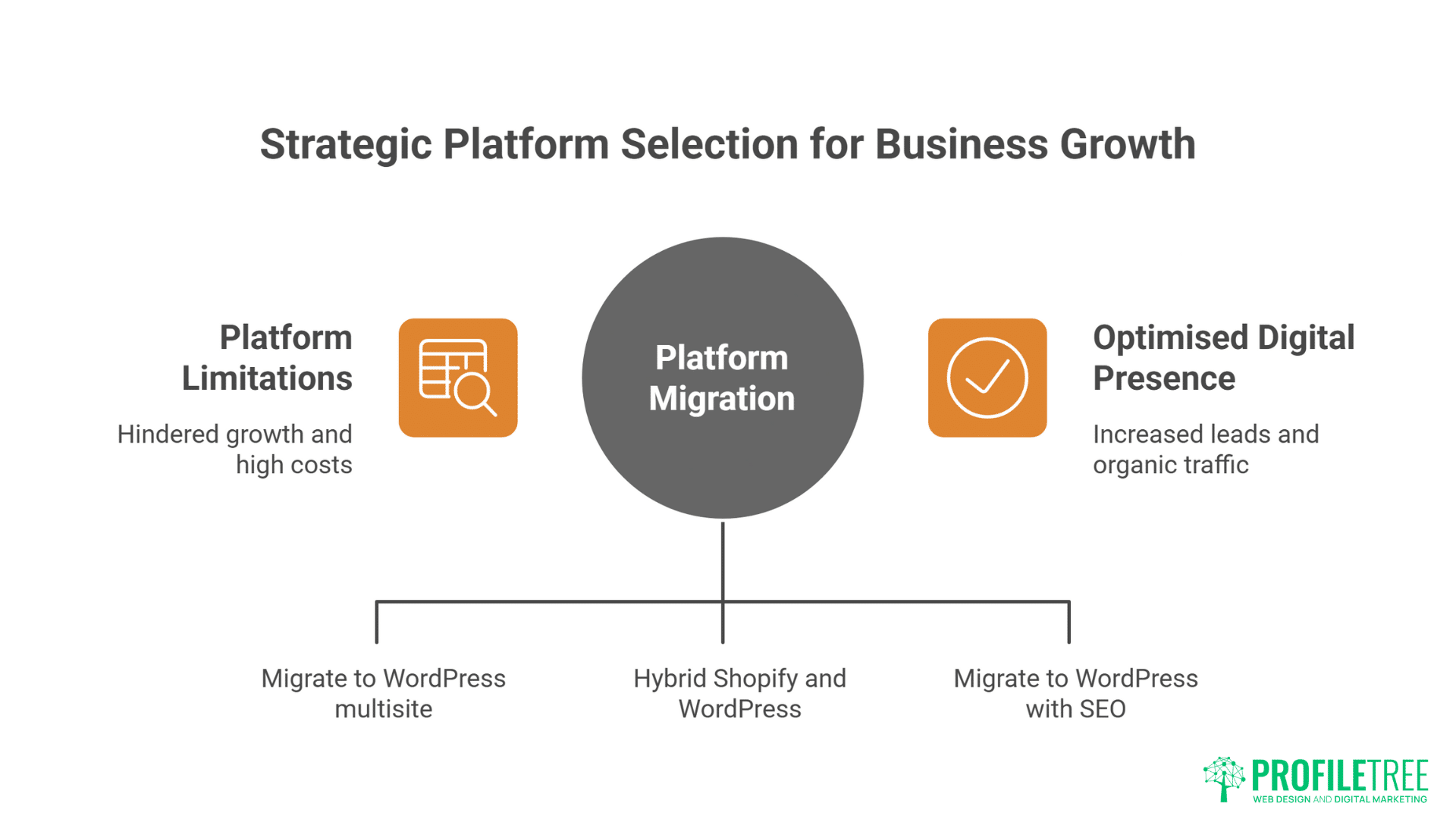
They migrated to WordPress multisite architecture. This enabled centralised management with location-specific content. Advanced booking integration, sophisticated SEO optimisation, and custom functionality transformed their digital presence. Online bookings increased 300% within six months.
The key lesson: anticipated growth should influence initial platform selection. Starting with WordPress would have prevented migration costs and accelerated growth.
The Fashion Retailer’s Platform Journey
An Irish fashion brand started on Shopify, attracted by easy setup and built-in e-commerce features. Initial success validated the choice. However, content marketing limitations and blog functionality frustrated their growth ambitions.
Rather than migrating entirely, they implemented a hybrid solution. Shopify continued handling e-commerce while WordPress powered their content hub on a subdomain. This combination leveraged each platform’s strengths.
The outcome: 400% organic traffic growth through content marketing while maintaining Shopify’s conversion advantages. Sometimes using multiple platforms strategically outperforms single-platform constraints.
The Service Business Scaling Story
A professional services firm chose Wix for quick launch and visual appeal. The site looked impressive and launched within a week. However, SEO limitations meant relying entirely on paid advertising for lead generation.
After two years of mounting advertising costs and minimal organic visibility, they invested in WordPress migration and professional SEO services. The migration took two months and cost £8,000, but organic leads now exceed paid advertising results.
The learning: short-term savings often create long-term costs. Investing in the right platform initially would have generated better returns sooner.
Future-Proofing Your Platform Choice
Technology evolves rapidly. Platform decisions should consider emerging trends and future requirements.
AI Integration and Automation
Artificial intelligence transforms digital marketing. Platforms embracing AI provide competitive advantages. WordPress’s open architecture enables any AI integration through plugins or custom development. AI training for businesses helps leverage these capabilities effectively.
Shopify actively integrates AI throughout its platform. From inventory prediction to customer service automation, AI features multiply. The platform’s app ecosystem includes sophisticated AI tools for personalisation and optimisation.
Wix incorporates AI in design and content creation. The ADI system continues evolving, and content generation tools emerge. However, advanced AI integration remains limited compared to open platforms.
Voice Commerce and New Interfaces
Voice search and commerce grow rapidly. Platform preparation for voice interfaces affects future competitiveness. WordPress enables complete voice optimisation through schema markup and content structure. Custom voice applications integrate easily.
Shopify explores voice commerce through apps and partnerships. While not native, voice ordering and search become possible. The platform’s API enables custom voice solutions for ambitious merchants.
Wix lacks meaningful voice commerce capabilities. Basic voice search optimisation exists, but advanced voice features remain unavailable. Businesses anticipating voice commerce should consider platform limitations.
Headless Architecture Trends
Headless architecture separates front-end presentation from back-end functionality. This approach enables ultimate flexibility and performance. WordPress supports headless configurations naturally, powering applications through its REST API.
Shopify’s headless commerce capabilities continue expanding. The Storefront API enables custom front-ends while maintaining Shopify’s e-commerce engine. This approach suits businesses requiring unique user experiences.
Wix doesn’t support true headless architecture. The platform’s integrated approach prevents separation of concerns. Businesses considering headless futures should avoid Wix entirely.
Professional Support and Platform Expertise
Platform success often depends on professional support quality. Understanding available expertise influences platform viability.
WordPress Professional Ecosystem
WordPress’s massive ecosystem includes thousands of qualified developers, designers, and agencies. Finding professional support remains relatively easy and competitive pricing exists. However, quality varies dramatically, making due diligence essential.
Professional WordPress development requires specific expertise. Many general web developers claim WordPress knowledge but lack deep platform understanding. Verified expertise through certifications, portfolio examples, and client references prevents costly mistakes.
Ongoing support needs vary by site complexity. Simple sites might require minimal maintenance, while complex installations need dedicated support. Budget for professional support when calculating WordPress TCO.
Shopify Partner Network
Shopify’s partner network provides quality-controlled expertise. Shopify vets partners, providing some quality assurance. The Shopify Expert marketplace simplifies finding qualified help for specific needs.
Platform specialisation means Shopify developers understand e-commerce deeply. This focused expertise delivers better results than generalist developers. However, specialisation also means higher costs for custom development.
App developers extend Shopify capabilities significantly. The app ecosystem’s quality generally exceeds WordPress plugins, though costs accumulate quickly. Evaluate app developers carefully, as poor apps can damage site performance.
Wix Professional Limitations
Wix’s professional ecosystem remains limited. Fewer developers specialise in Wix, reducing support options. The platform’s visual builder attracts designers more than developers, affecting technical support availability.
Wix Arena connects businesses with vetted professionals. While convenient, the marketplace remains smaller than WordPress or Shopify alternatives. Complex technical requirements often exceed available expertise.
Platform limitations restrict what professionals can achieve. Even expert Wix developers cannot overcome fundamental platform constraints. Set realistic expectations for professional Wix development.
FAQs
Which platform offers the best value for Northern Ireland SMEs?
WordPress typically delivers the best long-term value for SMEs prioritising growth and flexibility. While initial investment exceeds Wix, and complexity surpasses Shopify, the platform’s unlimited potential and superior SEO capabilities generate stronger returns. For pure e-commerce, Shopify’s focused features might provide better immediate value.
How long does platform migration typically take?
Migration timelines depend on site complexity and data volume. Simple brochure sites migrate in 2-3 weeks. Medium-complexity sites with blogs and basic e-commerce require 4-6 weeks. Complex e-commerce sites with thousands of products, customer accounts, and custom functionality need 8-12 weeks. Proper planning and testing extend timelines but prevent post-migration issues.
Can I use multiple platforms simultaneously?
Yes, many businesses successfully combine platforms. Common configurations include Shopify for e-commerce with WordPress for content marketing, Wix for simple landing pages with Shopify for the main store, or WordPress for the main site with Shopify for merchandise sales. This approach leverages each platform’s strengths but increases management complexity.
What are the biggest mistakes businesses make when choosing platforms?
The most costly mistakes include choosing based on price alone without considering TCO, selecting platforms without evaluating growth limitations, underestimating technical requirements and ongoing maintenance, ignoring SEO implications of platform choice, and failing to consider migration costs when outgrowing platforms. Belfast businesses often discover these mistakes only after significant investment in the wrong platform.
Should I prioritise ease of use or functionality?
Balance depends on your resources and ambitions. Businesses with technical resources or professional support should prioritise functionality—choosing WordPress or Shopify based on needs. Those without technical capabilities might accept Wix’s limitations for immediate usability. However, most successful businesses eventually require functionality over simplicity, making initial platform choice crucial.
How important is platform choice for SEO success?
Platform choice significantly impacts SEO potential. WordPress offers unlimited SEO optimisation possibilities, consistently achieving the strongest organic performance. Shopify provides solid e-commerce SEO with content limitations. Wix’s SEO constraints often prevent competitive organic visibility. For businesses prioritising organic growth, platform SEO capabilities should heavily influence selection.
Your Next Steps Towards Digital Success
Platform selection marks the beginning, not end, of your digital journey. Success requires strategic planning, professional execution, and ongoing optimisation regardless of chosen platform.
Start by documenting your business requirements, growth projections, and resource availability. Evaluate platforms against these criteria rather than feature lists. Consider long-term implications beyond immediate needs.
Seek professional guidance when uncertainty exists. Digital strategy consultation prevents costly platform mistakes. Experienced agencies provide insights from hundreds of similar projects, identifying potential issues before they arise.
Test platforms thoroughly before committing. Most offer free trials or demo periods. Build representative content, test critical functionality, and evaluate user experience. Small investments in testing prevent large mistakes.
Remember that platform choice influences but doesn’t determine success. Professional development, strategic marketing, and ongoing optimisation matter more than platform features. The best platform poorly executed underperforms the adequate platform professionally managed.
Whether you choose WordPress’s flexibility, Shopify’s e-commerce focus, or Wix’s simplicity, commit to maximising your chosen platform’s potential. Invest in professional development, ongoing optimisation, and strategic growth initiatives. Your digital presence deserves the same attention as your physical business.
The Northern Ireland digital landscape continues evolving rapidly. Businesses embracing professional digital strategies consistently outperform those treating websites as digital brochures. Your platform choice should enable, not restrict, your digital ambitions.