
Social Media Tools Guide: Streamline Your Digital Marketing Strategy
Table of Contents
Managing multiple social media channels effectively requires more than just posting content—it demands the right social media tools to streamline your strategy. With over 4 billion users across platforms like Facebook, Instagram, and LinkedIn, businesses need robust social media tools to stay competitive. Whether you’re looking for social media sharing tools, analytics platforms, or comprehensive management solutions, this guide covers everything you need to know about selecting and implementing your organisation’s best social media tools.
Understanding Social Media Strategy Tools
Social media strategy tools form the backbone of successful digital marketing campaigns. These platforms help businesses plan, execute, and measure their social media activities across multiple channels. From social media advertising tools to tracking and optimisation platforms, the right combination can transform how you engage with your audience.
Modern social media tools and techniques have evolved significantly beyond basic posting capabilities. Professional social media strategy tools now integrate advanced features like audience targeting, sentiment analysis, and cross-platform performance tracking. For businesses in Belfast, Northern Ireland, and the UK, selecting strategic social media strategy tools that align with your specific goals is crucial for maximising return on investment.
The challenge many businesses face isn’t the availability of tools—it’s knowing which social media optimisation tools will deliver tangible results. According to Ciaran Connolly, Director of ProfileTree: “The most effective social media strategies aren’t built on the most expensive tools, but on selecting the right combination of platforms that align with your business objectives and team capabilities.”
Top Free Social Media Management Tools
Free social media management platforms provide an excellent starting point for businesses looking to centralise their social media activities without significant financial investment. These tools offer essential features for scheduling content, monitoring engagement, and tracking basic performance metrics across multiple social platforms.
Free Social Media Management Platforms
Hootsuite remains one of the most popular free social media strategy tools available. The platform enables businesses to manage several social media accounts from a single dashboard, offering scheduling capabilities and engagement tracking. The free tier supports up to three social profiles, making it ideal for small businesses and startups testing their social media waters.
Buffer simplifies the process of scheduling posts to multiple platforms whilst providing basic analytics. The free version allows management of three social accounts with up to ten posts planned per channel. Buffer’s clean interface makes it particularly accessible for those new to social media management, though its analytics capabilities are more limited than paid alternatives.
Zoho Social offers a comprehensive free option with features typically found in paid platforms. This social media strategy tool provides posting capabilities, monitoring features, and collaboration tools suitable for small teams. The free tier supports one brand with multiple team members, making it practical for organisations with collaborative workflows.
For businesses managing their social presence, these platforms eliminate the need to log into each platform separately. Whilst advanced analytics and account management capabilities will be limited compared to paid versions, they offer sufficient functionality for developing a consistent posting schedule and monitoring basic engagement metrics.
Later has gained significant traction as a visual-first platform for managing Instagram and Pinterest. The free tier allows scheduling across limited profiles and includes a visual content calendar that helps businesses plan their aesthetic coherence across posts.
Best Social Media Tools for Scheduling Content
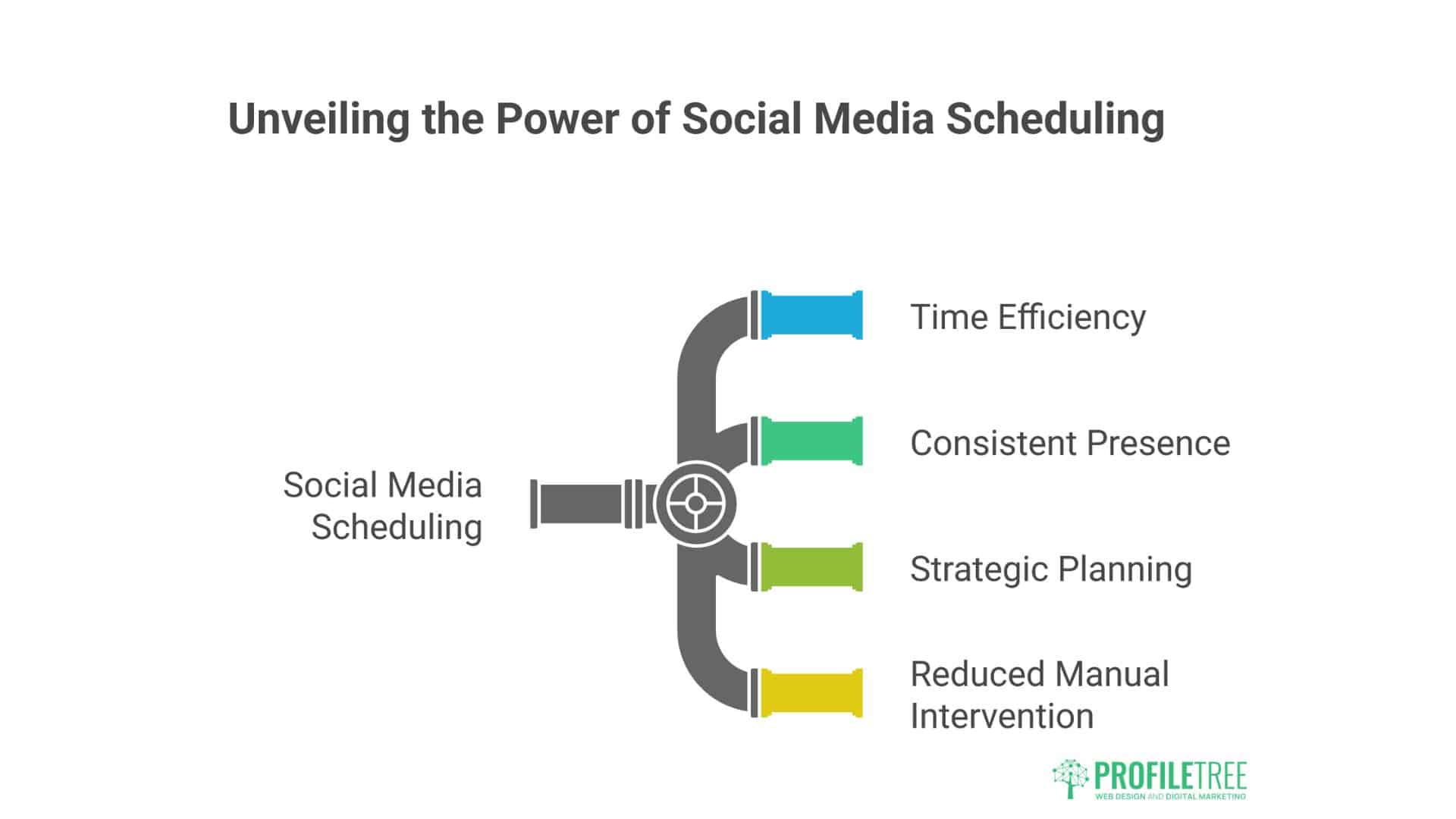
Effective scheduling transforms social media management from a daily reactive task into a strategic, planned activity. Social media scheduling and analytics tools enable businesses to maintain a consistent presence across platforms without manual intervention, freeing time for engagement and strategy development.
Strategic Scheduling Platforms
Planning and queuing content in advance represents one of the most valuable time-saving functions in social media management. Rather than scrambling for content daily, scheduling tools allow you to batch-create posts during dedicated creative sessions, then distribute them strategically across optimal posting times.
SocialPilot is a robust yet affordable scheduling solution for small businesses and agencies. Supporting seven different platforms, it offers bulk scheduling capabilities that allow you to upload multiple posts simultaneously—particularly valuable for campaigns or content series. The tool’s first comment posting feature helps you add supplementary information or calls to action without cluttering the main post. At the same time, its social media analytics provide insight into what content performs best.
Later, it became increasingly adopted for Instagram and Pinterest scheduling, offering features like post scheduling with pre-written captions and hashtags. The visual planning capability lets you preview how your grid will appear before publishing, ensuring aesthetic consistency—particularly important for brand-conscious businesses. Later’s analytics track performance metrics, helping you understand which content types and posting times generate the strongest engagement.
Sendible supports a broader range of platforms, including Facebook, Twitter, and LinkedIn, alongside Instagram. Beyond scheduling, Sendible incorporates social media listening features, allowing you to monitor brand mentions and industry conversations. The team collaboration features enable multiple users to work within the tool, with approval workflows ensuring content meets brand standards before publication.
Hootsuite and Buffer, mentioned earlier for management, also excel at scheduling. Both provide suggested optimal posting times based on your audience’s activity patterns—a data-driven approach to timing that can significantly improve reach and engagement. Paid versions integrate with RSS feeds, enabling automatic content curation from trusted sources, and connect with Google Analytics for deeper performance tracking.
The ability to visually plan and preview scheduled posts gives businesses greater control than manual posting. You can see how your content mix balances across different content types—promotional, educational, entertaining—ensuring variety that keeps audiences engaged rather than overwhelmed by sales messages.
Social Media Analytics Tools: Measuring What Matters
Understanding your social media performance requires moving beyond vanity metrics like follower counts. Practical social media tracking tools provide actionable insights that inform strategy adjustments and demonstrate the business value of your social media investment.
Comprehensive Analytics Platforms
Most social platforms offer native analytics—Instagram Insights, Facebook Insights, and LinkedIn Analytics. These metrics include engagement rates, reach, impressions, and follower demographics. However, dedicated analytics tools offer significant advantages for businesses managing multiple channels through consolidated reporting and deeper analysis.
Sprout Social delivers sophisticated analytics that extend beyond surface-level metrics. The platform tracks engagement patterns, optimal posting times, and audience growth trends across all connected profiles. Its competitive analysis features allow you to benchmark your performance against industry standards or specific competitors, identifying gaps and opportunities in your strategy.
Quintly specialises in social media performance analysis with customisable dashboards that let you focus on the metrics that matter to your specific business objectives. Whether tracking conversion-oriented metrics for e-commerce or awareness metrics for brand-building campaigns, Quintly’s flexibility supports diverse strategic goals. The platform’s data export capabilities facilitate sharing insights with stakeholders or integrating social performance into broader marketing reports.
Hootsuite Analytics (available in paid tiers) provides comprehensive reporting across multiple networks with customisable reports. You can create client-ready presentations that clearly communicate social media ROI to leadership or external stakeholders. The tool’s team performance metrics also help agencies and larger organisations understand the impact of individual contributors.
Benefits of Strategic Analytics Implementation
Understanding Your Audience: Analytics tools reveal demographic information, interest patterns, and online behaviour. This intelligence informs content creation, ensuring your posts resonate with the people most likely to become customers. For instance, discovering your audience engages most actively during evening hours might prompt you to reschedule posts for maximum visibility.
Measuring Campaign Effectiveness: Social media analytics tools quantify campaign performance through metrics like reach, engagement, click-through rates, and conversion tracking. This data-driven approach eliminates guesswork, showing which campaigns drive tangible business results definitively versus those that generate activity without meaningful outcomes.
Informing Data-Driven Decisions: Analytics platforms track performance trends over time and identify patterns that guide future strategy. Perhaps video content consistently outperforms static images, or LinkedIn generates more qualified leads than Twitter for your B2B offering. These insights enable continuous optimisation, ensuring your social media efforts become progressively more effective.
Attribution and ROI Tracking: Advanced analytics tools can track the customer journey from social media interaction through to conversion. This attribution shows how social media contributes to revenue, justifying budget allocation and informing resource decisions.
The value of analytics-focused social media tools lies in transforming raw data into strategic intelligence. Rather than knowing how many people saw your post, you understand what content drives behaviour, which audiences respond to specific messages, and how social media activities contribute to broader business objectives.
Paid Social Media Tools Worth the Investment
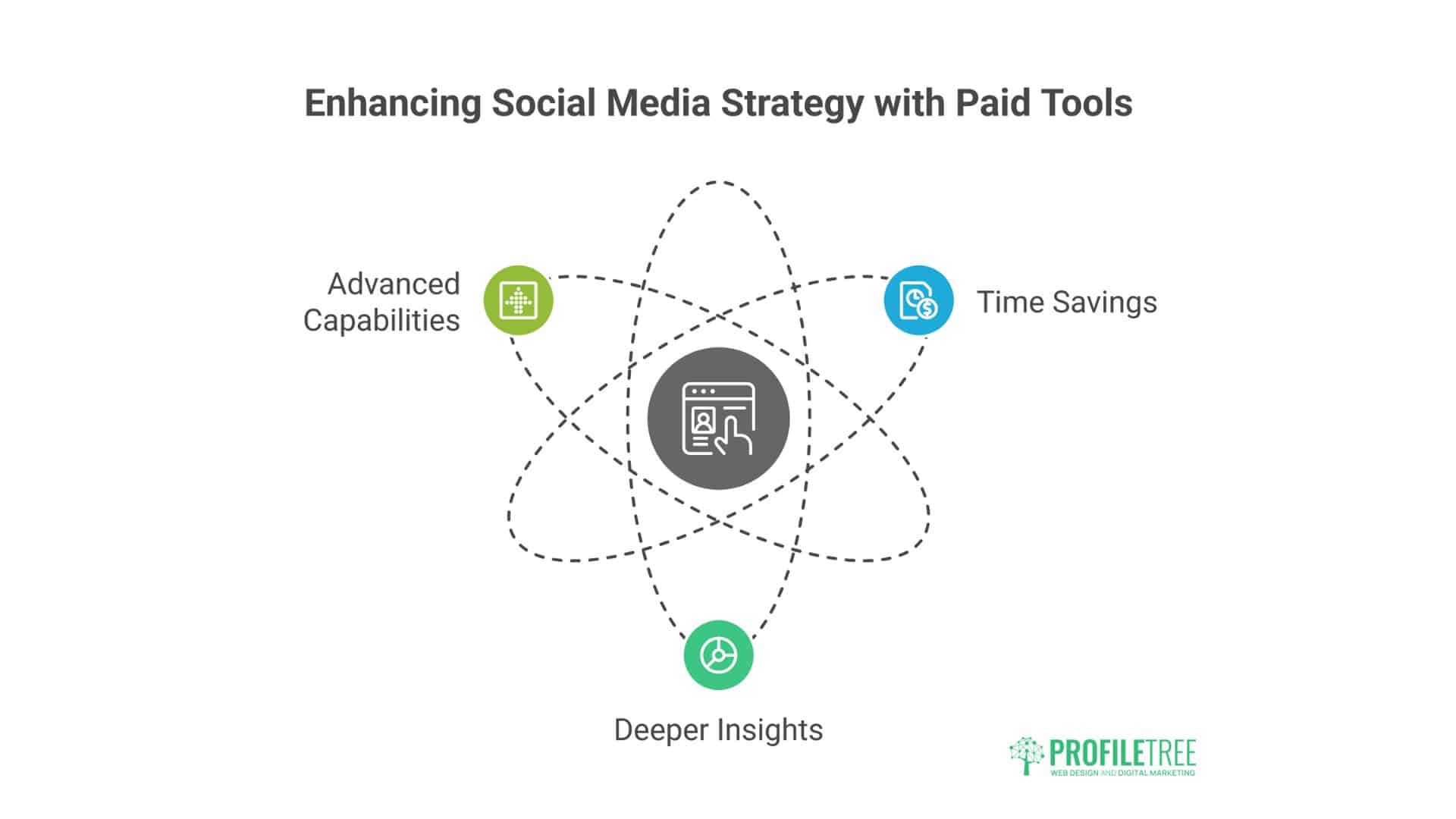
Whilst free social media tools provide solid foundational capabilities, paid platforms unlock advanced features that significantly improve efficiency and effectiveness for growing businesses. Professional social media strategy tools justify their cost through time savings, deeper insights, and capabilities that free versions simply cannot match.
Comprehensive Paid Platforms
Agorapulse offers a powerful all-in-one solution combining management, scheduling, analytics, and engagement features. Its unified inbox consolidates messages, comments, and mentions from all connected platforms, ensuring no customer interaction falls through the cracks. The platform’s social listening capabilities monitor brand mentions across the web, even when you’re not directly tagged, providing valuable insight into brand perception. Team collaboration features include approval workflows and role-based permissions, making it particularly suited for agencies or larger marketing teams.
Sprout Social represents a premium investment that delivers enterprise-grade capabilities. Beyond comprehensive scheduling and analytics, Sprout Social excels at social listening and sentiment analysis. The platform can gauge audience emotions towards your brand, campaigns, or industry topics, providing qualitative insights that quantitative metrics alone cannot reveal. Custom reporting features enable you to create stakeholder-ready presentations that clearly communicate social media’s business impact.
Sendible positions itself as particularly agency-friendly, with features designed for managing multiple client accounts. White-label reporting allows agencies to present analytics under their own branding, while client approval workflows streamline content approval. The platform’s content suggestion features help overcome the perennial challenge of content ideation by recommending relevant articles and posts based on your industry and audience interests.
Key Features Justifying Investment
Advanced Team Collaboration: Paid platforms enable multiple team members to work within the tool simultaneously, with clearly defined roles and permissions. Approval workflows ensure content meets brand standards before publication, reducing risk whilst maintaining quality control.
Comprehensive Social Listening: Moving beyond monitoring direct mentions, paid tools track broader conversations about your brand, competitors, and industry. This intelligence informs content strategy, product development, and customer service improvements.
Detailed Customer Sentiment Analysis: Understanding what people are saying and how they feel about your brand provides crucial context for strategy adjustments. Sentiment analysis identifies potential issues before they escalate and highlights particularly successful initiatives worth replicating.
Dedicated Ad Campaign Management: Many paid tools integrate social media advertising management, allowing you to create, monitor, and optimise paid campaigns alongside organic content within a single platform. This unified approach improves efficiency and provides holistic performance visibility.
Customisable Dashboards and Reporting: Rather than generic reports, paid tools let you configure dashboards displaying the metrics most relevant to your objectives. Custom reports can be automated and scheduled for regular delivery to stakeholders, saving time whilst ensuring consistent communication.
Most paid social media tools offer free trials, enabling you to experience the platform’s capabilities before committing. When evaluating whether paid tools justify their cost, consider the direct efficiency gains—hours saved through automation and centralisation—and the strategic advantages of more profound insights and capabilities that free versions cannot provide.
Selecting the Right Social Media Tools for Your Business
Choosing appropriate social media tools requires understanding your business needs, team capabilities, and strategic objectives. The most effective approach involves matching tool capabilities to your circumstances rather than selecting the most popular or feature-rich platform.
Considerations for Tool Selection
Business Size and Resources: Smaller businesses with limited budgets may start with free tools, gradually transitioning to paid platforms as social media responsibilities grow. Larger organisations or agencies managing multiple clients typically benefit immediately from paid platforms’ advanced features and efficiency gains.
Platform Focus: If your strategy centres on specific platforms—for instance, Instagram and Pinterest for visual brands—specialised tools like Later may serve you better than general-purpose platforms. Conversely, businesses active across numerous channels benefit from tools supporting comprehensive multi-platform management.
Team Structure: Solo entrepreneurs might prioritise ease of use and straightforward scheduling, whilst larger teams require collaboration features, approval workflows, and role-based permissions. Consider who will use the tools and what workflows best support your organisational structure.
Analytics Depth: Businesses focused on brand awareness may suffice with basic engagement metrics, whilst those prioritising conversions need advanced tracking linking social activities to sales outcomes. Ensure your chosen tools provide the depth of analysis your strategy requires.
Integration Requirements: Consider how social media tools will connect with your broader marketing technology stack. Integration with your customer relationship management system, email marketing platform, or website analytics can provide more comprehensive customer journey visibility.
Social Media Advertising Tools and Techniques
Social media advertising has become increasingly sophisticated, with platforms offering granular targeting capabilities and diverse ad formats. These tools help businesses create, manage, and optimise paid campaigns across multiple platforms from centralised interfaces.
Advertising Management Platforms
Facebook Ads Manager remains the foundation for advertising on Facebook and Instagram, offering detailed targeting options based on demographics, interests, behaviours, and custom audiences. Whilst not a third-party tool, understanding Ads Manager is essential for any business investing in Meta platform advertising.
LinkedIn Campaign Manager provides the primary interface for B2B advertising on LinkedIn. The platform’s professional targeting options—by job title, company size, industry, or seniority—make it particularly valuable for businesses targeting decision-makers in specific sectors.
Hootsuite Ads and similar features in comprehensive management platforms allow you to create and monitor paid campaigns alongside organic content. This unified view helps businesses understand the interplay between paid and organic social activities, optimising overall social media investment.
Strategic Advertising Approaches
Effective social media advertising requires more than simply boosting posts. Strategic campaigns define clear objectives—awareness, consideration, or conversion—and design creative and targeting specifically to achieve those goals. Testing different ad variations, audiences, and placements helps identify the most cost-effective approaches for reaching your business objectives.
Retargeting campaigns, which show ads to people who have previously interacted with your brand, typically deliver stronger conversion rates than cold audience targeting. Most social media advertising tools support creating custom audiences based on website visitors, email subscribers, or previous engagement, enabling more sophisticated campaign strategies.
Integrating Social Media Tools Into Your Broader Digital Strategy
Social media tools deliver maximum value when integrated into your comprehensive digital marketing approach rather than operating in isolation. At ProfileTree, we help businesses develop cohesive strategies that connect social media activities with web design, content marketing, SEO, and broader business objectives.
Strategic Integration Approaches
Content Marketing Alignment: Social media scheduling tools should work with your content calendar, promoting blog posts, videos, and other content assets to drive traffic to your website. Tools integrating with content management systems can streamline this process, automatically sharing new content to appropriate social channels.
SEO Synergy: Social signals—while not direct ranking factors—can amplify content reach, generating the visibility that leads to backlinks and brand searches that do impact SEO. Practical social media tools help you identify which content resonates most, informing future content creation that serves social and search objectives.
Video Production and YouTube Strategy: For businesses investing in video content, social media tools should support cross-platform video distribution. What works on YouTube may require adaptation for Instagram Reels or TikTok, but strategic repurposing maximises content investment whilst meeting audience preferences on different platforms.
AI Implementation: Emerging social media tools increasingly incorporate artificial intelligence for content suggestions, optimal posting time recommendations, and automated responses to common customer queries. As ProfileTree specialises in AI training and implementation for SMEs, we help businesses identify opportunities to thoughtfully integrate AI capabilities into their social media workflows without sacrificing the authentic engagement that makes social media valuable.
Website Development Connection: Your social media profiles should seamlessly connect to a well-designed website optimised for converting social media traffic. ProfileTree’s web design and development services focus on creating sites that continue the customer journey initiated through social media engagement, with clear calls-to-action and user experiences that support conversion.
Advanced Social Media Tools and Techniques
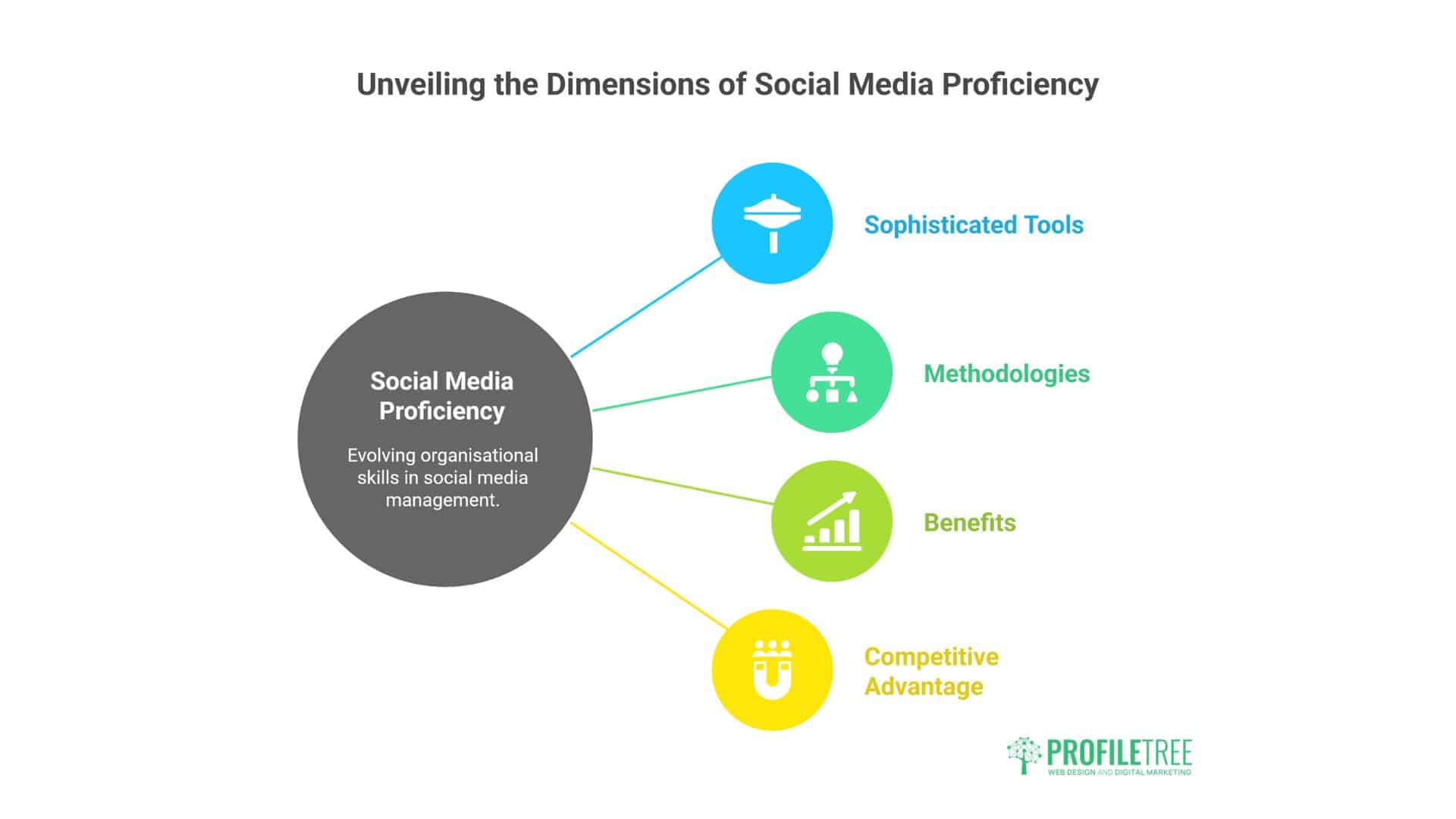
As businesses mature in their social media capabilities, advanced tools and techniques become valuable for extracting additional value from social channels and differentiating from competitors.
Sophisticated Tool Categories
Social Listening Platforms: Tools like Brandwatch or Mention monitor conversations about your brand, competitors, and industry across social media and the broader web. This intelligence identifies emerging trends, potential reputation issues, and opportunities for engagement in relevant conversations.
Influencer Marketing Platforms: Services like AspireIQ or Upfluence help businesses identify appropriate influencers, manage collaborations, and track campaign performance. For brands incorporating influencer partnerships into their strategy, these platforms streamline what can otherwise be a time-consuming manual process.
Social Commerce Tools: As platforms increasingly support direct purchasing, tools that integrate e-commerce capabilities with social media management become valuable. Features like shoppable posts on Instagram or Facebook Shops require coordination between your product catalogue and social presence—advanced tools facilitate this integration.
Employee Advocacy Platforms: Tools like GaggleAMP or EveryoneSocial enable businesses to mobilise employees as brand ambassadors, providing them with approved content to share through their personal profiles. This approach amplifies organic reach whilst humanising your brand.
Advanced Analytics Techniques
Attribution Modelling: Understanding how social media contributes to conversions requires sophisticated tracking that follows customers across multiple touchpoints. Advanced analytics tools provide multi-touch attribution, showing whether social media primarily drives initial awareness or plays a more direct role in conversion.
Predictive Analytics: Some platforms now incorporate predictive capabilities, using historical data and machine learning to forecast future performance or recommend optimal strategies. Whilst still emerging, these features represent the cutting edge of data-driven social media management.
Competitive Benchmarking: Advanced analytics tools enable a detailed comparison of your social performance against competitors, identifying areas where you lead or lag. This competitive intelligence informs strategy, highlighting opportunities to differentiate or improve in areas where you’re underperforming industry standards.
Common Challenges in Social Media Tool Implementation
Even with the right social media tools selected, businesses frequently encounter implementation challenges that prevent them from realising the full value of their investment. Understanding these common obstacles helps you anticipate and address them proactively.
Typical Implementation Issues
Tool Complexity: Many comprehensive platforms offer extensive features that can overwhelm users initially. The breadth of capabilities that make a tool powerful can paradoxically reduce effectiveness if teams struggle with the learning curve. Dedicating time to proper training and starting with core features before expanding into advanced capabilities helps overcome this challenge.
Integration Difficulties: Connecting social media tools with your existing marketing technology stack—website analytics, CRM, email marketing—sometimes proves more complicated than anticipated. Ensuring compatibility before purchase and allocating implementation time for proper integration prevents frustration and data silos.
Data Overload: With comprehensive analytics comes the risk of drowning in data without extracting meaningful insights. Focusing on metrics directly connected to business objectives—rather than tracking everything possible—keeps analysis actionable rather than overwhelming.
Resource Constraints: Tools can amplify team capabilities but cannot entirely replace human effort and strategic thinking. Businesses sometimes purchase sophisticated platforms without allocating sufficient resources for their proper utilisation, resulting in expensive tools that deliver little more value than free alternatives might have provided.
Workflow Adaptation: Successfully implementing social media tools often requires adjusting established workflows and processes. Resistance to change can prevent teams from fully adopting new tools, limiting their effectiveness. Clear communication about why tools were selected and how they’ll improve daily work helps secure buy-in.
Measuring Social Media Tool Effectiveness
Investing in social media tools should deliver tangible benefits—whether time savings, improved engagement, or more direct business outcomes like leads and sales. Measuring tool effectiveness helps justify ongoing investment and identify opportunities for optimisation.
Key Performance Indicators for Tool Evaluation
Time Efficiency: Compare the time spent on social media activities before and after tool implementation. Scheduling features should reduce daily time requirements, whilst analytics automation should eliminate manual reporting efforts. Quantifying hours saved provides clear ROI evidence.
Engagement Improvements: Track whether metrics like comments, shares, and click-through rates improve following tool adoption. Whilst external factors influence these metrics, sustained improvement suggests your tools enable more effective strategy execution.
Audience Growth Quality: Monitor follower counts and engagement rates as your audience grows. Tools that help you identify and reach your target audience should drive growth in engaged, relevant followers rather than simply increasing numbers.
Conversion Tracking: For businesses where social media supports specific conversion goals—lead generation, e-commerce sales, event registrations—tracking how these outcomes change over time provides direct ROI evidence. Advanced tools should enable clearer attribution showing social media’s contribution to these results.
Team Satisfaction: Whilst less quantifiable, understanding whether your team finds tools helpful versus frustrating provides important qualitative feedback. Tools that improve morale and reduce stress deliver value beyond immediate metric improvements.
Social Media Tools for Different Business Types
Different business models and industries have varying social media requirements. Selecting tools that align with your business context improves effectiveness and prevents paying for capabilities you won’t use.
B2B Social Media Tools
Business-to-business organisations typically prioritise LinkedIn while maintaining a presence on other platforms. Tools with strong LinkedIn scheduling and analytics capabilities—like Hootsuite or Sprout Social—serve B2B needs well. Lead generation tracking and integration with CRM systems become particularly important, enabling clear visibility into how social media activities contribute to sales pipeline development.
E-commerce Social Media Tools
Online retailers benefit from tools supporting visual content planning, given the importance of product imagery on platforms like Instagram and Pinterest. Integration with product catalogues for social commerce and direct conversion tracking, showing which social activities drive sales, provides crucial insights for optimising social media investment.
Local Service Business Tools
Businesses serving specific geographic areas—restaurants, professional services, home services—need tools that support local targeting and integrate with Google My Business. Monitoring and responding to reviews across social platforms and sites becomes particularly important for reputation management.
Agency Requirements
Agencies managing multiple client accounts require tools with capabilities beyond what individual businesses need: white-label reporting, client approval workflows, and billing features. Platforms like Sendible or Agorapulse cater specifically to agency needs with features supporting efficient multi-client management.
Future Trends in Social Media Tools
The social media tool landscape continues evolving rapidly, with technological advances and changing platform priorities shaping emerging capabilities. Understanding emerging trends helps businesses make forward-looking tool selections.
Emerging Capabilities
AI-Powered Content Creation: Tools increasingly incorporate artificial intelligence to suggest post copy, generate image variations, or recommend optimal content formats. Whilst human creativity remains essential, AI assistance can accelerate content production and help overcome creative blocks.
Video Editing Integration: As video content dominates social media consumption, tools incorporate editing capabilities that previously required separate software. In-app video editing, subtitle generation, and format optimisation for different platforms streamline video content creation workflows.
Enhanced Social Commerce: The line between social media and e-commerce continues to blur. Future tools will likely offer more sophisticated integration with product catalogues, inventory management, and purchase tracking—making social media an increasingly direct sales channel.
Privacy-First Analytics: As data privacy regulations tighten and platforms limit data access, social media tools must adapt to provide meaningful insights within new constraints. Expect greater emphasis on first-party data and consent-based tracking.
Voice and Audio Content: As audio-based platforms and audio features on existing networks rise, tools supporting podcast-style content scheduling and analytics will become more prevalent.
Conclusion
Social media tools have evolved from simple posting platforms to sophisticated marketing systems supporting everything from scheduling and analytics to advanced advertising and customer service. The right combination of tools, thoughtfully implemented and strategically used, transforms social media from a time-consuming obligation into a powerful business growth channel.
Whether you’re a small business exploring free options or an established organisation investing in comprehensive platforms, success requires matching tool capabilities to your specific needs, providing adequate training and support for users, and continuously optimising based on performance data.
The landscape will continue evolving—new platforms will emerge, existing tools will add capabilities, and best practices will shift. Staying informed about developments while focusing on your core business objectives ensures your social media strategy remains effective regardless of technological changes.
Ready to transform your social media presence with the right tools and strategic support? ProfileTree helps businesses across Northern Ireland, Ireland, and the UK develop and implement effective social media strategies integrated with broader digital marketing objectives. Contact us to discuss how we can help you achieve measurable results from your social media investment.