
Namecheap domain review for UK and Irish businesses
Table of Contents
This Namecheap domain review finds a US-based registrar that suits most UK and Irish small businesses buying a .com or .co.uk, as long as they budget for the renewal price and check how VAT appears on their receipts. ProfileTree, a Belfast web design agency, also advises keeping the domain in the business’s own name from the first day.
What Namecheap does well and who it suits
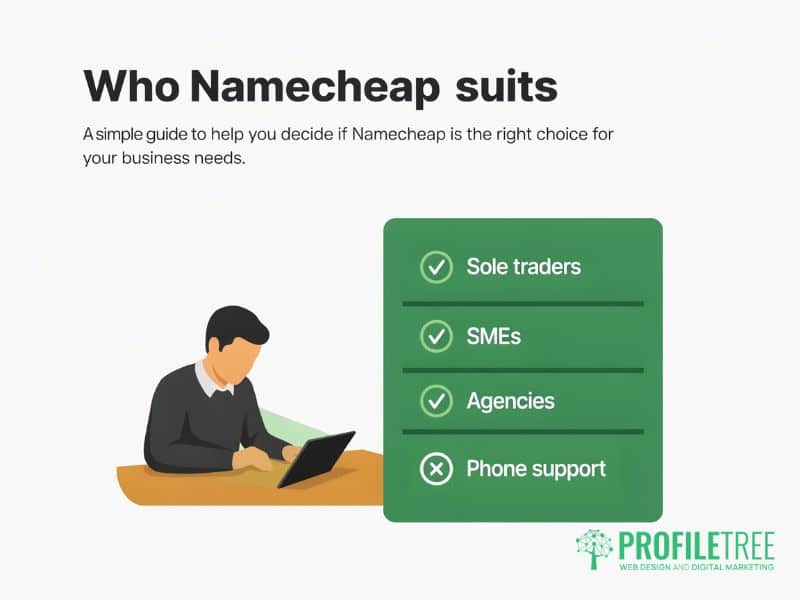
Namecheap is a sound choice for a small business that wants to register a few domains cheaply and manage them from a clear dashboard. It has sold domain names since 2000, and its own help centre describes it as a US-based registrar. A registrar is the company that records your ownership of a domain with the registry that runs the extension, such as Nominet for .uk addresses or Verisign for .com.
That distinction matters more than most buyers expect. The registrar is where the domain is bought and renewed, and it is separate from the company that hosts the site and from the agency that builds it. Plenty of businesses keep their domain with Namecheap and their website somewhere else entirely, and that arrangement works well provided a member of staff holds the login.
For a sole trader or an SME with one to five domains, Namecheap’s strengths are practical. The account area is simple to find your way around, privacy protection is free on the extensions that allow it, two-factor sign-in is available, and agencies or IT providers managing many domains can use its API (a way for software to register and update domains automatically) and its reseller programme.
It is a weaker fit in two situations. Support runs through live chat and tickets with no phone line, so a team that expects to ring someone during an outage should test the chat response before relying on it. Larger organisations that want a named account manager and formal service terms will also be better served by a registrar built around corporate accounts.
If the domain is the first step towards a new website, the platform decision comes next. For most of the businesses we work with across the UK and Ireland, that means WordPress web design on a domain the business controls itself, so the site can move host or agency later without the address moving with it.
We have reviewed other registrars on the same basis. Our Gandi review covers a registrar with stronger security defaults and higher renewal prices, and the GoDaddy page sets out how GoDaddy compares for businesses that want domain, email and hosting under one account. If you have not settled on a name yet, start by choosing a domain name for your business and come back to the registrar once the name is fixed.
Namecheap domain prices and the renewal jump
The first-year price on Namecheap is usually a promotion, and the renewal price is the figure to budget for. A .com bought for a few pounds in year one renews at the standard rate every year after, and some of the newer extensions show a gap of several times between the two. Namecheap’s price list is set in US dollars, so the amount that reaches a card statement in pounds or euros depends on the exchange rate and on any foreign transaction fee your bank charges.
Registrars also change their prices during the year when registries raise the wholesale fee for an extension, so a price checked last spring may not be the price you pay at renewal. Check the current renewal figure on Namecheap’s own price list on the day you buy, and again before each renewal date.
Two habits keep the cost predictable. Paying for several years in advance fixes the price for those years at today’s rate. Registering the .com and the .co.uk together, and pointing one at the other, stops a competitor or a squatter from taking the version you did not buy, and it costs little more than one renewal a year.
The extension you choose also decides which registry rules apply and whether Namecheap’s free privacy service is available at all. The table below sets out the extensions most relevant to businesses in the UK and Ireland.
| Extension | Suits | Registry | Namecheap privacy available |
|---|---|---|---|
| .com | Businesses selling beyond one country | Verisign | Yes, free |
| .co.uk or .uk | Businesses whose customers are mainly in the UK | Nominet | No, restricted by the registry |
| .ie | Businesses with a connection to the island of Ireland | .ie Domain Registry | Depends on the registrar; see the .ie section below |
| .eu | Organisations established in the EU | EURid | No, restricted by the registry |
For most small businesses in Northern Ireland and Great Britain, a .co.uk with a matching .com is the sensible pair. Businesses selling into the Republic of Ireland should consider a .ie as well, which raises the question of where to hold it.
Namecheap VAT and receipts for UK and EU businesses
The receipt is the part of a Namecheap purchase that most often causes trouble later, because it has to satisfy your accountant as well as prove the payment. Namecheap is based in the United States, so a UK or Irish company buying from it is buying a service from abroad, and that changes how VAT is handled.
Checking the VAT treatment on your receipt
Look at the receipt for each order before you file it. Where no UK VAT is shown, a VAT-registered UK business generally accounts for the VAT itself under the reverse charge. HMRC’s guidance on the reverse charge explains that the customer records the VAT as if it had supplied the service to itself and normally reclaims the same amount, so for most businesses there is no net tax to pay. Partly exempt businesses, which make some sales that carry no VAT, can face a real cost, and they should take advice on their own figures.
Irish VAT-registered businesses work under the EU’s equivalent rules for services bought from outside the EU. In either country, ask your accountant to confirm the entries the first time a Namecheap receipt goes through your books, and then follow the same treatment at every renewal.
Before you buy, add your registered business name and VAT number to the billing details in your Namecheap account, so the receipts carry them. Download the receipt for every order and every renewal into the same folder as your other supplier invoices, because a domain that renews automatically for five years produces five receipts nobody looks at until the year end.
Paying in pounds or euros
Use a business card for the account and keep every domain renewing on the same card. A personal card in the name of a director or a former employee puts the domain at risk, since the renewal fails when the card expires and the reminder goes to an inbox nobody reads.
Card fees on dollar transactions vary from bank to bank. If your business card charges a foreign transaction fee, the renewal costs a little more than the price list suggests, which matters little for one domain and adds up across a portfolio.
Can an Irish business register a .ie domain with Namecheap?
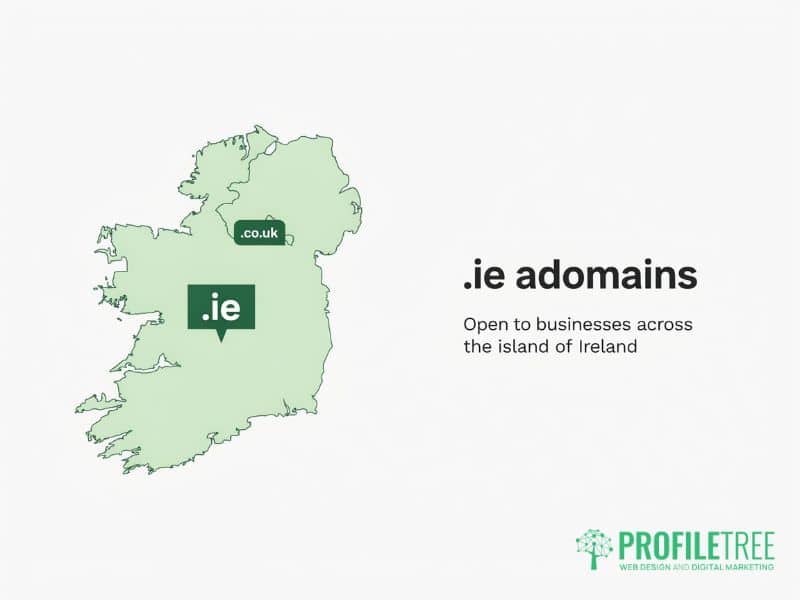
Only if Namecheap appears on the .ie Domain Registry’s list of registrars, because .ie names are sold through the registrars that the registry approves. Check that list on the registry’s website before you plan to hold a .ie and a .com in the same Namecheap account.
The .ie Domain Registry describes .ie as the country code domain for the island of Ireland. That wording matters for businesses in Northern Ireland, which have a connection to the island and can apply for a .ie alongside their .co.uk. Every .ie application needs supporting information showing that connection, which the registrar collects and passes to the registry.
If Namecheap does not offer the .ie you want, a split arrangement works without difficulty. Hold the .ie with a registrar on the registry’s list, keep the .com and .co.uk with Namecheap, and record every domain, its registrar, its renewal date and the card it renews on in one shared document. The split costs nothing extra in search terms, because the registrar has no effect on how a website ranks.
Privacy, account security and transfers
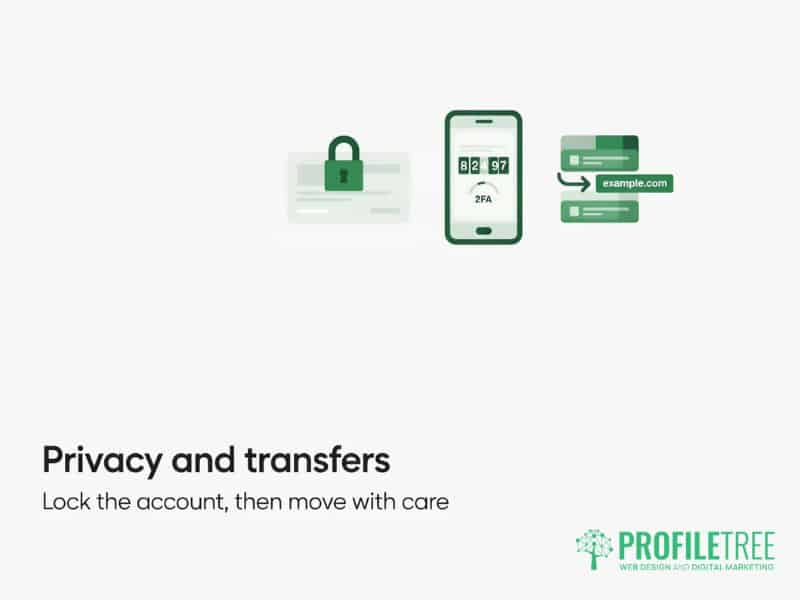
Namecheap’s account controls are good enough for a small business, provided someone switches them on. Left at their defaults, with one person holding the only login, they protect the domain far less than they could.
Domain privacy
WHOIS is the public directory that shows who registered a domain and how to contact them. Namecheap’s privacy service replaces your details in that directory with the details of a privacy provider. Namecheap’s announcement of the change explains that Withheld for Privacy, a provider based in Iceland, replaced the older WhoisGuard service in 2021, that customers see it labelled as Domain Privacy in their account, and that it is free for life with every new registration or transfer.
Several extensions cannot use it because their registries restrict privacy services, and the list includes .uk, .co.uk, .org.uk and .eu. A UK business registering a .co.uk should not expect the privacy option to appear at checkout, and it should use a business address and a shared business email address in the contact details for that reason.
Locking the account down
Turn on two-factor sign-in for the Namecheap account, so a stolen password alone cannot move your domain. Keep the domain lock switched on, which blocks transfers until you turn it off yourself. Set the contact email to a shared business address that more than one person reads, and switch on automatic renewal with a card that will still be valid next year.
Moving a domain to or from Namecheap
Transferring a domain’s registration does not move your website, and it does not affect your rankings while the DNS records stay the same. DNS (the domain name system) is the set of records that tells browsers and email servers where your website and mailboxes live. The risk comes when a transfer and a hosting move happen together, and a record is missed, which is why we treat moving hosting and domain together as a planned job with a checklist.
For a .com or other generic domain, you remove the lock at the current registrar, request an authorisation code, and enter that code at Namecheap. A transfer of this kind usually adds a year to the registration. Domains ending in .uk work differently: the current registrar changes the domain’s tag at Nominet to the new registrar’s tag, and no code is needed. Before either kind of transfer, copy every DNS record from the old account, including the email records, and check them against the new account before you change anything else.
Who should own the domain when an agency builds your website
The business should own its domain, with the registrant shown as the business and the login held by someone inside the business. That one decision prevents most of the disputes and lapses that follow a change of agency or staff.
ProfileTree is a Belfast web design and digital marketing agency, founded in 2011 and based at the McSweeney Centre, and the domain is one of the first things we ask about when a business comes to us for a new website. We use a four-part ownership check because a domain can look owned by the business while one of the four answers points somewhere else.
- The registrant named on the domain record is the business itself, with a director or the business email as the contact.
- The registrar account is in the business’s name, with the password and the two-factor device held by someone who works there.
- The renewal is paid by a business card, and the reminders go to a shared inbox.
- The person or agency managing DNS has been given access through the registrar’s own sharing or delegation settings where these exist, never through the owner’s main password.
If any of the four points to a former designer or to a member of staff who has left, fix it before the website project starts. Recovering a domain from someone who has left the business takes far longer than changing the account details while everyone is still talking to each other.
“Ask any agency three things before you sign a web design contract: who will actually do the work, what you will own when it is finished, and how you will know it worked. The domain belongs in the answer to the second question, and any Belfast business is welcome to put all three to ProfileTree first,” says Ciaran Connolly, founder of ProfileTree.
Putting your Namecheap domain to work on a business website
Once the domain is registered and the ownership check is done, the work moves to the website and the records that support it. That means DNS settings for the site and for email, a security certificate so the site loads over HTTPS (the secure version of a web address), hosting that is backed up and kept up to date, and a renewal date that someone is watching.
Businesses that would like this handled as one job can hand over the technical side through our domain, DNS and hosting management, with the domain itself staying in the business’s own Namecheap account. A new WordPress website from ProfileTree starts at £4,000 plus VAT, and the first conversation always covers who owns the domain and the hosting once the site is live.
FAQs
1. Is Namecheap a good choice for buying domain names?
Yes, for most small businesses buying common extensions such as .com and .co.uk. Pricing is competitive, and privacy protection is free on the extensions that allow it. The trade-offs are support by chat and tickets only, with no phone line, and a renewal price that is often well above the first-year offer, so budget on the renewal figure.
2. How should a UK business handle VAT on a Namecheap receipt?
Check each order’s receipt and ask your accountant to confirm the treatment the first time. Namecheap sells from the US, and where no UK VAT is charged, a VAT-registered UK business generally accounts for it under the reverse charge, which HMRC describes as usually having no net cost. Add your business name and VAT number to your billing details before buying so the receipts carry them.
3. Is Namecheap a domain registrar or a web host?
It is both, and you can use one without the other. Namecheap registers domains and also sells hosting and email, but a domain registered with Namecheap can point at a website hosted anywhere. Many businesses keep the domain at Namecheap and the website with a specialist host or their agency, which also keeps the domain safe if the hosting changes.
4. Can I use a Namecheap domain with a website built elsewhere?
Yes. You either change the domain’s nameservers to those of your web host, or you keep Namecheap’s DNS and add the records your host gives you. Your developer or agency will usually tell you which method suits the site, and the change normally takes effect within a few hours, although it can take longer to reach every network.
5. Is Namecheap’s domain privacy worth turning on?
Yes, where the extension allows it, because it is free and keeps your contact details out of the public WHOIS directory. It is not available on .uk, .co.uk or .eu domains, since those registries restrict privacy services. On those extensions, put a business address and a shared mailbox in the contact details.