
How to Deal with Workplace Stress: Practical Solutions for UK Teams
Table of Contents
Workplace stress represents one of the most significant challenges facing UK organisations. The Health and Safety Executive (HSE) reports that work-related stress, depression, or anxiety accounted for 49% of all work-related ill health cases in 2024. For business owners and managers, addressing this crisis protects your most valuable asset: your people. This guide provides practical, evidence-based strategies for reducing workplace stress while enhancing productivity and employee retention.
Understanding Work Stress
Stress occurs when demands exceed your capacity to cope, triggering psychological and physical responses that affect daily productivity and long-term health outcomes. Modern work environments present unique pressures that make chronic stress increasingly common across UK businesses.
The always-on culture enabled by digital communication means many professionals never truly disconnect. For agencies managing client expectations across multiple time zones, or SMEs competing in saturated markets, the pressure to remain constantly available has normalised chronic stress. Understanding these dynamics helps business owners implement effective interventions.
What Causes Workplace Stress
Every workplace has its own stress profile—the specific combination of factors that create pressure. Understanding these categories helps you identify which stressors are most prevalent in your organisation and where to focus intervention efforts.
Job Content Factors
The nature of work itself often creates pressure. Long hours without adequate breaks, unrealistic workloads, and constant time pressure drain mental resources. In digital marketing agencies, the combination of creative demands and tight client deadlines creates particular intensity.
Complex tasks requiring sustained concentration become exponentially more difficult when interrupted every seven minutes—the average rate of workplace intrusion. For web development teams building WordPress sites or implementing e-commerce solutions, these environmental factors significantly impact both well-being and output quality.
Poor physical conditions compound these pressures. Open-plan offices, inadequate lighting, uncomfortable temperatures, and insufficient personal space all contribute to baseline stress levels that affect performance.
Role-Related Pressures
Ambiguity about responsibilities or conflicting expectations creates persistent anxiety. When team members don’t clearly understand their role boundaries, they experience constant uncertainty. This is particularly common in growing agencies where roles evolve rapidly, but job descriptions remain static.
Job insecurity and lack of development opportunities create chronic background stress. When professionals can’t see a clear path forward or fear their position is vulnerable, they experience sustained stress responses. This is particularly acute in sectors undergoing rapid technological change, including digital marketing and web design.
Organisational Culture
The unwritten rules governing workplace behaviour profoundly influence stress levels. Cultures that expect unpaid overtime, discourage taking holidays, or celebrate “hustle” over balance create environments where stress becomes normalised.
Communication failures amplify stress. When organisations don’t keep staff informed about changes, decisions, or strategic direction, uncertainty fills the gap. During restructuring or service pivots—common in agencies adapting to market changes—poor communication creates far more stress than the changes themselves.
Work-Life Boundary Erosion
The line between work and personal time has become increasingly blurred, creating a particularly insidious form of stress. Unlike discrete workplace challenges that end when you leave the office, boundary erosion means work follows you home—mentally if not physically.
Long or unpredictable hours, working from home, and job relocation all intrude on family and leisure time. For professionals managing international clients or digital marketing campaigns requiring weekend monitoring, truly switching off becomes nearly impossible.
This creates a destructive cycle. When work stress prevents adequate rest and recovery, individuals return to work less resilient, making them more vulnerable to stress. Women disproportionately experience these pressures, as they continue to shoulder more domestic responsibilities despite professional demands.
Younger workers face distinct challenges in achieving work-life balance. More likely to be in insecure employment, they feel pressure to prove themselves by working longer hours and being constantly available.
“The agencies that thrive long-term are those that recognise staff wellbeing as a competitive advantage, not a cost centre,” notes Ciaran Connolly, Director of ProfileTree. “When you invest in reducing stress and supporting work-life balance, you see returns in creativity, client satisfaction, and talent retention that far exceed the investment.”
Recognising Stress Signals
Stress doesn’t announce itself clearly. It accumulates gradually, manifesting in symptoms that people often dismiss as unrelated annoyances. Learning to recognise these signals—both in yourself and colleagues—enables early intervention before stress becomes debilitating.
Physical symptoms often appear before psychological ones become obvious. The body’s stress response system evolved to handle acute threats, not chronic pressure. When activated continuously, it produces symptoms that interfere with daily functioning.
Physical Manifestations of Chronic Stress
Your body provides early warning signals when stress levels become unsustainable. Pay attention to these signals rather than pushing through them.
Tension Headaches and Sleep Disruption
One counterintuitive stress symptom is the “relaxation headache”—migraine that occurs when stress suddenly drops. Many professionals experience these on weekends when cortisol levels decrease rapidly. This indicates stress has become so normalised that its absence causes physical disruption.
Sleep architecture changes under stress. Nightmares, difficulty falling asleep, waking up in the early hours unable to return to sleep, and feeling exhausted despite adequate sleep hours all indicate that stress is disrupting normal sleep processes.
Jaw Pain and Digestive Issues
Bruxism—unconscious teeth grinding—intensifies during periods of stress. A sore jaw upon waking, particularly combined with headaches and tooth sensitivity, suggests stress-related grinding.
The gut-brain connection means that psychological stress has a direct impact on digestive function. Stomachaches, changes in appetite, heartburn, and irritable bowel syndrome all worsen under stress. Research found that those experiencing the highest stress levels were more than three times as likely to suffer abdominal pain.
Skin and Oral Health
Stress hormones suppress immune function, making you more susceptible to infections. Bleeding gums can indicate stress-impaired immunity. Skin conditions such as acne flares, eczema outbreaks, and unexplained itching are all correlated with elevated stress.
Behavioural and Emotional Indicators
Beyond physical symptoms, stress changes how people behave and interact with their work. Watch for changes from someone’s normal baseline rather than comparing them to others.
Changes in Work Performance
Declining quality, missed deadlines, increased errors, and difficulty concentrating all suggest that stress is overwhelming cognitive resources. Presenteeism—being physically present but mentally absent—represents a significant productivity drain, particularly problematic in creative roles like video production or content creation.
For web design teams building client websites, stress-induced errors can lead to missed bugs, accessibility issues, or functionality problems that damage client relationships and require costly fixes.
Social Withdrawal and Emotional Volatility
Reduced interaction with colleagues, declining participation in meetings, and general isolation indicate emotional resources are depleted. For remote workers, reduced communication on project channels or disengagement from video calls warrant attention.
Increased irritability, sudden anger, or mood swings that seem disproportionate suggest stress is depleting emotional regulation capacity. Cynicism and loss of enthusiasm for previously engaging work are indicators of burnout progression.
Practical Management Strategies
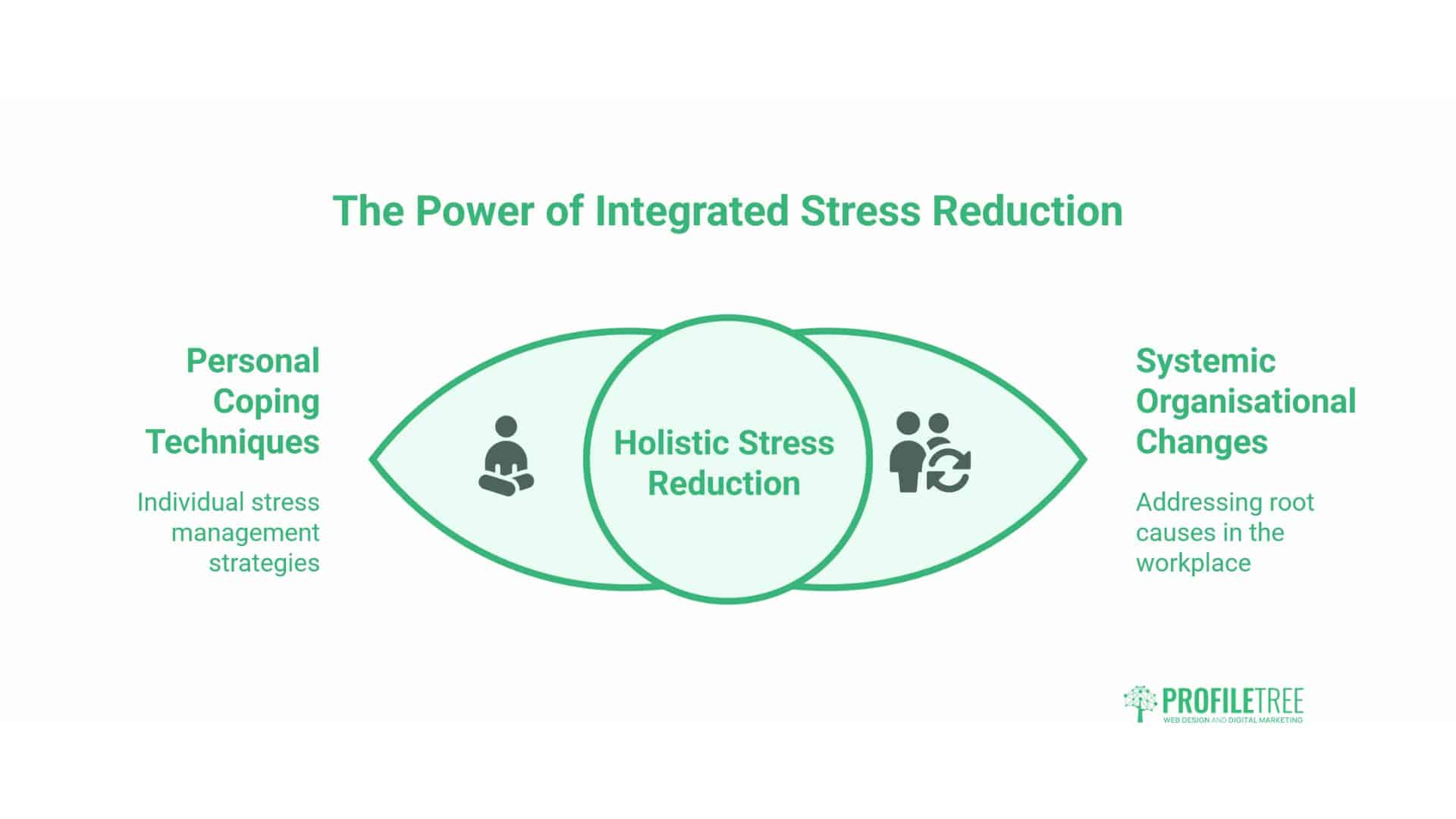
Recognition alone doesn’t solve stress—you need concrete strategies to reduce it. Personal coping techniques give individuals some control over their stress response, whilst systemic organisational changes address root causes. The most effective stress reduction combines both approaches.
Individual Stress Reduction Techniques
Even when organisational factors contribute heavily to stress, individuals aren’t powerless. These techniques provide immediate relief whilst longer-term solutions are implemented.
Identifying Personal Stressors
Keep a stress journal for two weeks, recording situations that trigger stress responses. Document the specific circumstance, physical sensations, emotional responses, and your reaction. Patterns emerge quickly, allowing targeted interventions rather than generic stress management.
For digital marketing professionals, this might reveal that stress peaks during specific client interactions, particular project phases, or when juggling multiple deadlines. This awareness enables proactive planning.
Building Sustainable Habits
Physical activity is one of the most effective ways to manage stress. Exercise doesn’t need to be intense—yoga, walking, or swimming all reduce cortisol levels and boost mood-enhancing endorphins. For desk-based professionals working on web development or SEO projects, regular movement breaks improve both well-being and concentration.
Getting enough quality sleep is imperative. Limit caffeine after midday, avoid screens before bedtime, and maintain a consistent sleep schedule. When you’re well-rested, the same pressures feel more manageable.
Establishing Clear Boundaries
Digital connectivity creates expectations of constant availability. Establish boundaries through deliberate decisions: refrain from checking emails after 7 pm or before 9 am, disable work notifications on weekends, create autoresponders that set realistic expectations, and use a separate work phone that you can put away.
For client-facing roles in digital agencies, set clear expectations with clients about availability—most people respect reasonable limits when they’re communicated clearly. This protects both your well-being and the quality of your work.
Mindfulness Practices
Mindfulness—paying attention to the present moment without judgement—interrupts the stress cycle. Start with five minutes daily, focusing on breath, eating without multitasking, or walking whilst noticing sensory details. This creates space between the stimulus and the response, allowing for more constructive reactions to pressure.
Organisational Interventions
Individual coping strategies have limits when organisational practices generate chronic stress. Sustainable stress reduction requires organisations to examine and modify the systems that create pressure.
Workload Management Systems
Sustainable productivity requires an honest assessment of capacity. Effective workload management includes realistic project scoping based on available resources, buffer time between projects, clear prioritisation when multiple demands compete, and permission to decline additional work when at capacity.
For agencies managing multiple client accounts, project management systems that visualise team capacity prevent overcommitment. When planning website development projects or video production timelines, building realistic schedules protects both staff well-being and the quality of delivery.
Communication Infrastructure
People can handle difficult information far better than uncertainty. Effective communication includes regular team updates on organisational direction, clear explanation of reasoning behind decisions, advance notice of changes, and channels for questions and feedback.
During change, communication should increase rather than decrease. For digital agencies pivoting their service offerings or implementing new technologies, such as AI tools, transparent communication about the rationale and implications can reduce anxiety.
Supportive Management Practices
Direct managers have more influence over day-to-day stress than any other factor. Training managers in supportive practices yields significant returns. This includes regular one-to-ones focused on development and wellbeing, specific, timely recognition of good work, fair workload distribution, psychological safety where concerns can be raised, and flexibility around personal circumstances.
Wellbeing Programme Design
Effective initiatives include stress management workshops, mental health awareness training, access to counselling, flexible working arrangements, and protected time for development. The most successful programmes embed wellbeing into culture rather than treating it as a separate entity.
Digital Solutions for Stress
Technology created many modern stressors, but thoughtfully deployed technology can also reduce stress by eliminating administrative friction—digital tools and AI solutions that handle low-value decisions free cognitive resources for high-value thinking.
For organisations looking to reduce workplace stress whilst maintaining productivity, digital solutions offer scalable interventions. ProfileTree helps UK businesses implement these technologies through AI training, digital strategy, and website development that prioritises user wellbeing.
Intelligent Calendar Management
Calendar management consumes more time and creates more stress than most realise. Intelligent schedulers such as Motion and Reclaim.ai use algorithms to automatically distribute tasks across available time, adjusting in real-time as circumstances change.
When meetings run over or urgent requests arrive, these tools instantly recalculate your schedule. This eliminates the anxiety of constant manual replanning. For digital agencies juggling client work, internal projects, and business development, automatic prioritisation prevents reactive work from consuming all available time.
Reclaim.ai excels at defending non-work time. You can designate habits—such as lunch breaks, exercise, or family time—that the system protects on your calendar, enforcing boundaries that individuals often struggle to maintain.
Email Management Systems
Email represents perhaps the most universally stressful tool in the workplace. SaneBox applies AI to your existing email client, learning your patterns and filtering incoming mail into folders like “SaneLater” for non-urgent messages.
The psychological impact of controlled inbox flow is substantial. When you open an email and see only important messages, the stress response isn’t triggered. You feel in control rather than overwhelmed. For professionals managing multiple client accounts or coordinating web development projects, this focus dramatically improves productivity.
AI-Powered Workflow Automation
Workflow automation reduces stress by eliminating repetitive administrative tasks that drain mental energy without adding value. Tools like Zapier and Make.com connect different business systems, automatically moving information between platforms.
For digital marketing agencies, this might mean automatically adding new clients to your project management system, creating standardised folder structures, or generating status reports. Each automation removes a small source of friction that accumulates into significant stress reduction.
Content Creation Support
Writer’s block generates significant stress for content marketers and strategists. AI writing assistants can draft initial content, creating a starting point for editing rather than facing a blank page. The tool eliminates initial friction whilst allowing human judgement to direct final quality.
For web design agencies that produce client content or video production teams that script narratives, AI-assisted drafting reduces time pressure while maintaining quality standards. ProfileTree’s content marketing services integrate these tools to help businesses produce high-quality content efficiently.
SEO and Analytics Automation
Managing SEO campaigns and analysing website performance can create stress through data overload. Automated reporting tools consolidate metrics into digestible insights, highlighting what requires attention rather than overwhelming you with raw data.
For businesses managing WordPress websites or Shopify e-commerce platforms, automated SEO monitoring provides alerts on technical issues, ranking changes, or opportunities, eliminating the need for constant manual checking. This proactive approach reduces the anxiety of wondering whether your website is performing optimally.
Implementation Considerations
UK organisations must verify that AI tools comply with GDPR. This means understanding where data is stored, checking that tools don’t train on your organisation’s data, and providing clear information about how data is used.
Maintain human oversight—calendar tools should suggest rather than automatically accept meetings, email filtering should be reviewable, and content tools should provide drafts for human editing. The goal is augmentation, not replacement.
Introduce one tool at a time through pilot programmes with small groups before rolling out more widely. This measured approach enables evaluation of actual impact whilst building comfort with AI assistance. ProfileTree’s AI training services help UK organisations effectively implement these technologies.
Building Resilient Teams
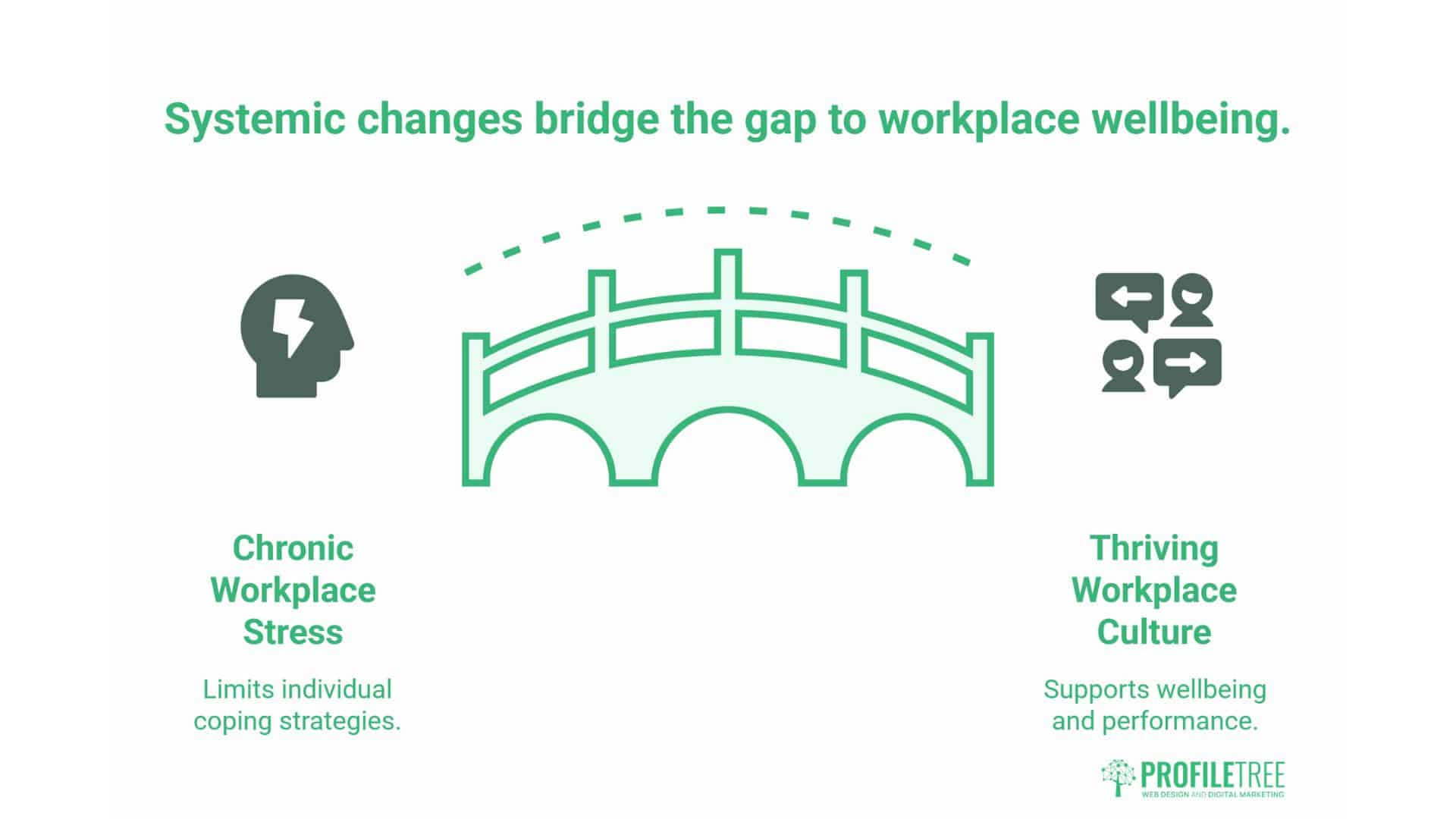
Individual stress management and technological solutions provide essential support, but they reach their limits when organisational culture generates chronic pressure. Creating workplaces where people can thrive requires systemic changes that prioritise wellbeing alongside performance.
The Business Case for Stress Reduction
Stress impairs cognitive function in measurable ways. Working memory, creative problem-solving, and decision quality all decline under chronic pressure. Research finds an inverted U-curve: moderate pressure optimises performance, but beyond that threshold, additional stress reduces output.
For digital agencies delivering creative services, such as web design, video production, and content strategy, cognitive performance directly impacts the quality of deliverables. Stressed teams produce work that lacks innovation, contains more errors, and fails to meet client expectations.
In competitive sectors like digital marketing, talent retention provides a significant competitive advantage. Younger professionals increasingly prioritise workplace wellbeing when choosing employers. Agencies with reputations for sustainable working practices attract stronger candidates.
Creating Psychologically Safe Environments
Psychological safety—the belief that you can speak up or admit difficulty without punishment—fundamentally determines whether people can work effectively under pressure.
Permission to Struggle
Cultures that celebrate constant positivity inadvertently punish honesty about difficulty. When admitting stress seems like weakness, people hide their struggles until they become crises. This requires modelling from leadership. When senior figures discuss their own challenges, they permit others to do likewise.
For digital agencies where client work can be unpredictable and demanding, creating space to acknowledge when projects are challenging prevents problems from escalating.
Fair Workload Distribution
Transparent systems for allocating work prevent perceptions of favouritism. For agencies managing multiple accounts, this may involve rotation systems for challenging clients, clear capacity metrics, and recognition for those who handle complex projects.
When planning website development timelines or video production schedules, distributing work fairly across team members prevents burnout while maintaining quality standards.
Training and Support Infrastructure
Most managers lack training in recognising mental health concerns. Mental health awareness training equips managers to recognise early warning signs, engage in supportive conversations, and direct individuals to appropriate resources.
Employee Assistance Programmes provide confidential counselling, but many employees don’t use available services. Making support accessible requires regular communication, multiple access routes, clear information about confidentiality, and normalisation through usage stories.
ProfileTree’s digital training services help organisations develop internal capabilities for supporting staff wellbeing while building skills in areas such as SEO, content marketing, and AI adoption.
Flexible Working Practices
When organisations measure success by hours worked rather than results achieved, they incentivise presenteeism. For creative roles typical in agencies—such as web design, content strategy, and video production—flexibility about when and where work happens allows professionals to work in ways that suit their productivity patterns.
Four-day weeks or flexible scheduling provide additional recovery time without reducing output. Core hours systems strike a balance between coordination needs and personal autonomy, while maintaining client availability.
Recognition and Appreciation
Recognition that identifies explicitly what someone did well and why it mattered creates genuine motivation. For project-based work, this includes acknowledging problem-solving that prevented client issues, recognising extra effort during challenging periods, and celebrating wins with the team.
Creating channels where colleagues can recognise each other’s contributions builds a positive culture and surfaces good work that managers might miss.
Workplace Stress and Digital Transformation
Digital transformation initiatives can either alleviate or exacerbate workplace stress depending on how they’re implemented. When introduced thoughtfully, new technologies can reduce manual workload and provide better tools for managing pressure. When rushed or poorly communicated, the same technologies become additional stressors.
AI Implementation Without Added Pressure
Introducing AI tools into your organisation requires careful change management. Many employees fear AI will replace their roles or expose their work to excessive monitoring. Transparent communication about how AI will be used, what problems it solves, and how it supports rather than replaces human work reduces anxiety.
ProfileTree’s AI training and implementation services help UK businesses introduce artificial intelligence in ways that genuinely support staff wellbeing. This includes identifying processes where automation reduces tedious work, training teams to use new tools confidently, and maintaining human decision-making for complex judgments.
Website Development That Reduces Admin Stress
For businesses managing their own websites, technical complexity creates ongoing stress. Poorly built WordPress sites that break frequently, require constant updates, or perform slowly add to the workload rather than supporting it.
Working with experienced web development agencies to build robust, well-documented websites reduces this administrative burden. Sites built with clear content management systems, automated backups, and proactive maintenance create fewer emergencies. ProfileTree’s web design services prioritise creating websites that business owners can manage confidently without technical stress.
Video Production and Content Workflows
Content creation deadlines generate significant pressure, particularly when combined with other responsibilities. Establishing efficient workflows for video production, blog content, and social media reduces last-minute scrambles.
This might include content calendars that provide adequate lead time, templates that speed up production, batch recording or writing sessions, and realistic expectations about what can be achieved. ProfileTree’s video production and content marketing services help businesses establish sustainable content workflows that maintain quality without compromising quality or burnout.
SEO Strategies That Work Long-Term
The pressure to rank immediately for competitive keywords can create stress and lead to poor decision-making. Sustainable SEO strategies focus on steady improvement through quality content, technical excellence, and building genuine authority over time.
Understanding that SEO is a long-term investment rather than a quick fix reduces the anxiety of daily ranking fluctuations. Working with experienced SEO consultants who set realistic expectations and implement proven strategies helps business owners feel confident rather than stressed about their digital visibility.
Conclusion
Workplace stress isn’t inevitable—it’s created by how we structure work, which means we can change it. Effective stress reduction requires action at multiple levels: individual strategies such as exercise and boundary-setting, digital tools that eliminate administrative friction, and organisational changes that address root causes.
For business owners and managers, investing in stress reduction yields measurable returns through increased productivity, enhanced creativity, improved talent retention, and better client outcomes. The organisations that thrive in increasingly competitive markets are those that recognise staff wellbeing as fundamental to business success.
ProfileTree helps SMEs across Northern Ireland, Ireland, and the UK implement digital solutions that reduce workplace pressure through web design, website development, AI training, digital strategy, SEO services, content marketing, and video production. Our approach focuses on building sustainable systems that support both business growth and team wellbeing.
The goal is to create work environments where people perform at their best without sacrificing their health. The organisations that achieve this balance will attract better talent, deliver superior client work, and build genuinely sustainable businesses.
FAQs
What are the leading causes of workplace stress?
The primary causes include excessive workloads, tight deadlines, unclear role expectations, lack of control over work, poor management support, job insecurity, and erosion of work-life boundaries. Organisational change, particularly when poorly communicated, also creates significant stress. In digital agencies and SMEs, client demands combined with resource constraints often intensify these pressures.
How can I tell if workplace stress is affecting my health?
Physical signs include persistent headaches, jaw pain from teeth grinding, digestive problems, sleep disruption, and worsening skin conditions. Behavioural changes, such as increased irritability, difficulty concentrating, social withdrawal, and declining work quality, also indicate that stress is impacting you. If you notice several of these symptoms persisting for weeks, speak with your GP.
What should I do if I’m experiencing work stress?
Start by identifying specific stressors through a stress journal. Implement personal strategies like exercise, sleep protection, and clear boundaries. Have an honest conversation with your manager about workload. If stress persists despite these steps, consider professional support through counselling or your GP. Many UK employers offer Employee Assistance Programmes with confidential support.
How can managers reduce team stress?
Managers should provide clear communication, fair workload distribution, regular recognition, and genuine support for well-being. Creating psychological safety where team members can discuss difficulties without fear makes a substantial difference. Training in supportive management practices and modelling healthy work boundaries are equally important.