
How a Strategic Digital Marketing Plan Drives Business Growth
Table of Contents
A well-structured digital marketing plan is the foundation of sustainable business growth. For organisations across Northern Ireland, Ireland, and the UK, implementing a data-driven approach to digital marketing delivers measurable improvements in visibility, lead generation, and revenue. This guide outlines how to develop and execute a digital marketing plan that aligns with your business objectives whilst maximising return on investment.
Whether you’re a marketing manager refining your current approach or a business owner establishing your first formal digital strategy, this article provides the frameworks, insights, and practical steps needed to build a plan that fuels consistent growth.
Why Strategic Planning Matters for Business Growth
Digital marketing without a strategic plan wastes budget and misses opportunities. Businesses that document their digital marketing strategy are 313% more likely to report success than those operating without a formal plan.
A strategic digital marketing plan connects your online activities directly to business outcomes. Rather than scattering efforts across multiple channels with unclear objectives, a documented plan provides focus, allocates resources efficiently, and creates accountability through measurable targets. For small and medium-sized enterprises, particularly those with limited marketing budgets, strategic planning is essential for distinguishing between effective investments and wasteful spending.
Understanding Your Target Audience
Successful digital marketing plans start with a thorough understanding of the audience. Knowing precisely who you’re targeting, what challenges they face, and how they make decisions enables personalised messaging that resonates and converts. This section explores how to research your audience, develop accurate buyer personas, and map their journey from awareness to purchase.
Developing Accurate Buyer Personas
Buyer personas represent your ideal customers based on research rather than assumptions. Start by gathering data from multiple sources: customer interviews, sales team insights, website analytics, social media demographics, and customer service records.
Effective personas go beyond basic demographics to capture psychographic details. Document your audience’s professional responsibilities, business challenges they face daily, information sources they trust, and factors influencing their purchasing decisions. For B2B audiences, understand their position within the buying committee and how decisions flow through their organisation.
“Understanding your audience isn’t about collecting data; it’s about uncovering the genuine challenges your customers face and positioning your services as the solution they’re actively seeking,” notes Ciaran Connolly, Founder of ProfileTree.
Create 3-5 distinct personas representing your primary customer segments. Give each persona a name, role, and a detailed profile that includes their goals, pain points, preferred communication channels, and content preferences.
Mapping the Customer Journey
Your customers progress through distinct stages before making a purchase decision: awareness, consideration, decision, and retention. Each stage requires different content, messaging, and marketing tactics tailored to their current mindset.
During awareness, potential customers recognise they have a problem but may not yet understand the solution. Content should be educational, addressing their challenges without immediately promoting your services. The consideration stage sees prospects actively researching solutions. Case studies, comparison guides, webinars, and detailed service pages help prospects understand how your approach solves their specific challenges.
At the decision stage, prospects are ready to select a provider. Testimonials, pricing information, consultations, and demonstrations help overcome final objections. Post-purchase, retention-focused content helps maintain relationships and identifies potential upsell opportunities.
Identifying Audience Digital Behaviour
Understanding where your audience spends time online determines channel selection and content distribution strategy. Analyse your existing website and social media analytics to identify which platforms drive the most engaged traffic.
Research extends beyond your own properties. Investigate where industry conversations happen, which publications your target audience reads, and which influencers they follow. LinkedIn often dominates for B2B audiences in professional services, whilst Instagram and Facebook may prove more effective for consumer brands.
Setting Measurable Business Goals
Clear objectives transform intentions into results. This section explores how to set SMART goals that align digital marketing activities with business outcomes, fostering accountability and facilitating performance measurement. Without measurable targets, evaluating success becomes impossible, and resource allocation lacks strategic direction.
Establishing SMART Objectives
SMART objectives provide the specificity needed for effective planning and measurement. Specific goals define precisely what you want to achieve. Instead of “increase website traffic,” aim for “increase organic website traffic by 40%.”
Achievable objectives strike a balance between ambition and realism, taking into account your resources, market position, and historical performance. Relevant goals align with broader business objectives. If your business prioritises lead generation over brand awareness, your digital marketing plan should emphasise conversion-focused activities. Time-bound objectives create urgency and enable periodic evaluation.
Aligning Digital Goals with Business Revenue
Digital marketing exists to drive business results, yet many plans focus on vanity metrics disconnected from revenue. Website visits mean little if they don’t convert; social media followers have no value without engagement that drives commercial outcomes.
Structure your objectives around metrics that directly impact revenue. Lead generation targets specify the number and quality of enquiries needed to meet sales goals. Conversion rate objectives focus on turning existing traffic into customers more efficiently.
For service-based businesses, track key metrics such as consultation requests, qualified leads, proposal conversions, and customer lifetime value. E-commerce operations monitor transaction volume, average order value, and repeat purchase frequency.
Creating Accountability Through KPIs
Key performance indicators translate strategic objectives into measurable activities. Each goal requires specific KPIs tracked consistently through your analytics platforms.
Establish baseline measurements before implementing new strategies. Set interim checkpoints on a monthly or quarterly basis, rather than evaluating activities only annually, to allow for course corrections when they underperform. Assign responsibility for each KPI to specific team members to create accountability and ensure effective performance.
Selecting Strategic Marketing Channels
Choosing the proper marketing channels determines where you invest budget and focus creative energy. Not all channels suit every business; effective selection depends on audience behaviour, business goals, and available resources. This section evaluates primary digital marketing channels and provides frameworks for prioritising those most likely to deliver results for your specific situation.
Evaluating Channel Effectiveness
Not all marketing channels deliver equal results for every business. Start by auditing current channel performance. Which channels generate the most website traffic, qualified leads, and conversions? Calculate cost per acquisition for each channel to identify your most efficient marketing investments.
Research where your target personas actively seek information and make decisions. B2B professional services often find LinkedIn and industry publications to be the most effective, while local consumer businesses may succeed through Facebook, Instagram, and local SEO.
Budget and resource constraints matter too. Businesses with limited resources achieve better results by focusing on fewer channels rather than spreading their resources thinly across many platforms.
Search Engine Optimisation for Sustainable Growth
SEO remains fundamental to digital marketing success, driving qualified traffic from prospects actively searching for solutions. Unlike paid advertising that stops delivering results when the budget ends, SEO investment builds lasting organic visibility.
Effective SEO begins with keyword research, which involves identifying the terms your target audience uses when seeking services like yours. Focus on keywords with commercial intent, indicating prospects who are ready to take action. Technical SEO addresses site speed, mobile responsiveness, secure HTTPS connections, and structured data markup.
On-page optimisation aligns individual pages with target keywords by strategically placing them in titles, headings, meta descriptions, and content. Create authoritative content that thoroughly addresses search intent.
Local SEO proves particularly valuable for businesses serving specific geographic areas. Optimise your Google Business Profile with accurate information, photos, and regular updates. For businesses across Northern Ireland and Ireland, local SEO often delivers the highest ROI from organic search investment.
Strategic Use of Paid Advertising
Paid advertising provides immediate visibility and can yield rapid results, while organic strategies foster long-term momentum. Google Ads captures prospects with clear purchase intent, searching for specific solutions.
Social media advertising enables precise audience targeting based on demographics, interests, behaviours, and job titles. LinkedIn advertising excels for B2B services targeting specific industries, company sizes, or job functions.
Successful paid campaigns require continuous optimisation. Test multiple ad variations, landing pages, and audience segments to optimise your campaign. Budget allocation should reflect performance data—scale investment into proven channels that deliver acceptable customer acquisition costs.
Content Marketing and Thought Leadership
Content marketing builds authority, educates your audience, and improves organic search visibility simultaneously. High-quality content addressing customer challenges positions your business as a trusted expert.
Develop a content library that addresses the questions prospects ask at each stage of the customer journey. Educational blog posts answer awareness-stage questions. In-depth guides and case studies serve the research needs of consideration-stage buyers.
Video content drives robust engagement, spanning educational tutorials to customer testimonials. YouTube functions as the second-largest search engine, making video SEO important for discovery.
Email Marketing for Nurturing and Conversion
Build your email list through valuable opt-in incentives: guides, templates, research reports, or exclusive content. Segment your email list based on interests, customer journey stage, engagement level, and purchase history.
Effective email campaigns strike a balance between delivering value and achieving commercial objectives. Educational content maintains engagement whilst promotional messages drive direct commercial response.
Building Your Content Strategy
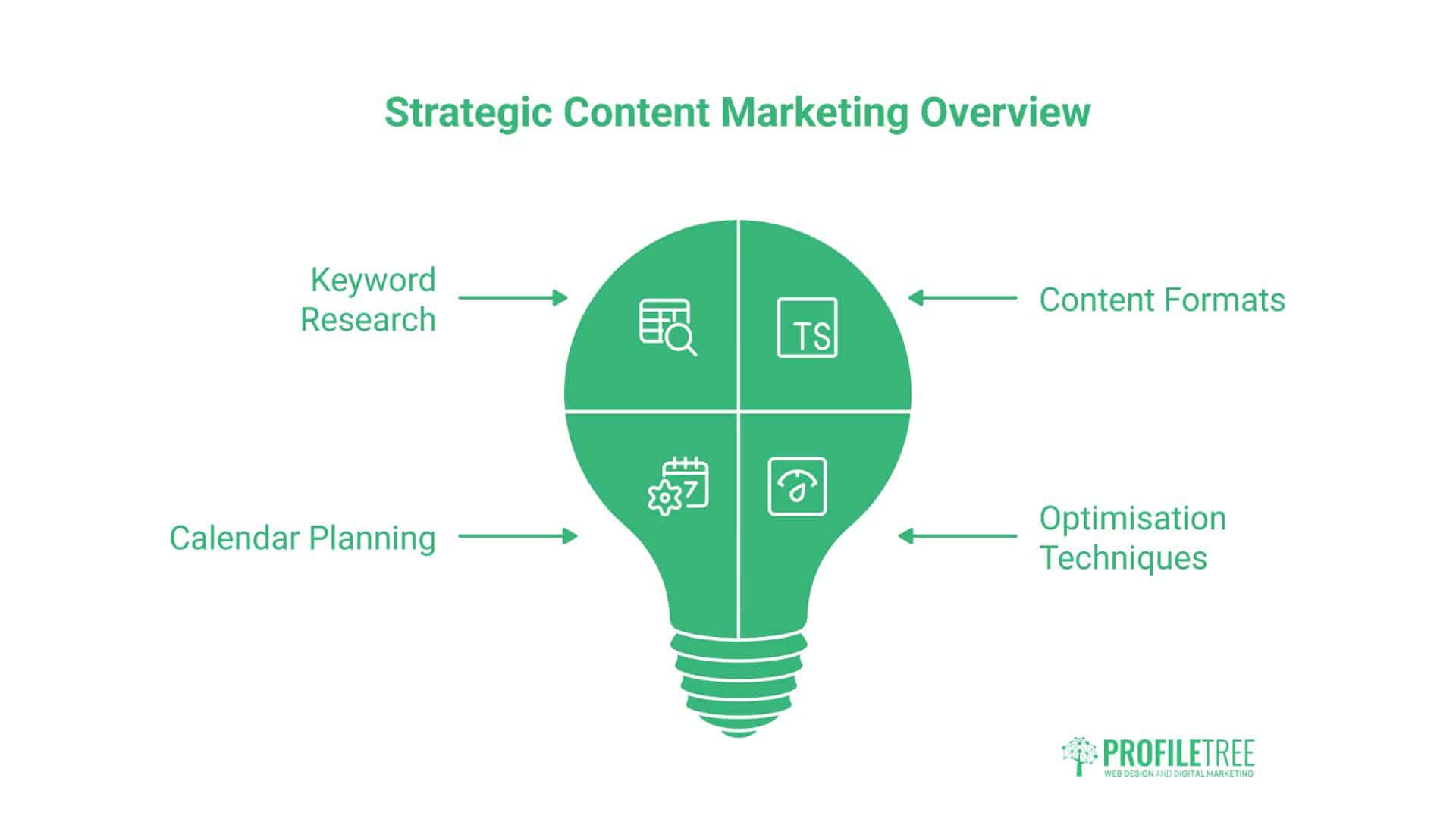
Content fuels digital marketing execution across all channels. A strategic approach to content creation determines what you publish, for whom, and how it supports business objectives. This section covers keyword research, content formats, calendar planning, and optimisation techniques that transform content from a cost centre to a revenue driver.
Conducting Strategic Keyword Research
Keyword research identifies the specific terms and phrases your target audience uses when seeking information or services. This research guides content creation priorities.
Start with broad industry terms, then expand into specific problems, questions, and solution-oriented keywords—Analyse search intent behind each keyword. Informational keywords indicate prospects seeking education; transactional keywords reveal purchase-ready prospects.
Long-tail keywords—specific, multi-word phrases—often prove more valuable than competitive single keywords. “Digital marketing plan for SMEs” attracts more qualified prospects than generic “marketing” searches.
Creating Value-Driven Content
Effective content solves genuine problems, answers specific questions, or provides actionable guidance. Avoid superficial treatment of topics; depth demonstrates expertise and offers real value.
Different content formats serve various purposes. Written articles establish thought leadership and improve SEO. Video tutorials engage visual learners. Infographics simplify complex concepts. Case studies are particularly persuasive for B2B services, as they demonstrate real client results.
Original research, industry surveys, and data-driven insights differentiate your content from competitors—proprietary data positions your business as an industry authority.
Developing a Sustainable Content Calendar
Consistency requires planning. A content calendar maps out publication schedules, topics, formats, and distribution channels weeks or months ahead.
Balance evergreen content that remains relevant long-term with timely pieces addressing current trends or industry developments. Plan content themes on a monthly or quarterly basis, clustering related topics that build upon each other.
Allocate realistic resources to content creation. Exceptional content requires research, writing, editing, design, and promotion time. Build your calendar around what your team can sustainably produce.
Optimising Content for Search and User Experience
Content must serve both human readers and search engine algorithms. Write primarily for your audience whilst incorporating SEO best practices.
Structure content with clear headings that organise information logically. Using short paragraphs, bulleted lists, and visual breaks can improve readability. Internal linking connects related content whilst distributing link equity throughout your site.
Optimise page metadata, including titles, descriptions, and image alt text, with target keywords whilst maintaining natural, compelling copy. Regular content updates maintain relevance and search rankings.
Measuring and Optimising Performance
Measurement separates effective digital marketing from wasted effort. This section examines analytics implementation, performance analysis against objectives, systematic testing, and the adaptation of data-driven strategies. Without rigorous measurement and continuous optimisation, even well-planned strategies underperform their potential.
Implementing Analytics Tracking
Robust analytics infrastructure captures the data needed for informed decision-making. Google Analytics 4 provides foundational website performance insights, including traffic sources, user behaviour, conversion tracking, and audience demographics.
Marketing automation platforms track the performance of email campaigns and the progress of lead nurturing. CRM integration connects marketing activities to sales outcomes. Social media analytics provide insights into post engagement, audience growth, and campaign performance.
Analysing Performance Against Objectives
Regular performance reviews compare actual results against established goals. Monthly analysis enables quick identification of trends, facilitating mid-course corrections; quarterly reviews assess progress toward longer-term objectives.
Traffic analysis reveals which channels drive visitors and how user behaviour varies by source. Conversion analysis tracks goal completions, such as form submissions, consultation bookings, or purchases. ROI calculations connect marketing investment to business outcomes.
Testing and Experimentation
Systematic testing identifies opportunities to improve performance. A/B testing compares two variations to determine which performs better. Test headlines, calls-to-action, page layouts, email subject lines, and landing page designs.
Structure tests properly to generate valid results. Test one variable at a time and run tests long enough to achieve statistical significance. Document test results so learnings influence future campaigns.
Experimentation extends beyond formal A/B tests to trying new channels, content formats, or audience segments. Allocate a portion of the budget to experimental activities that might uncover new growth opportunities.
Adapting Strategy Based on Data Insights
Performance analysis should directly inform strategic adjustments to your digital marketing plan—such as doubling investment in high-performing channels. Pause or restructure underperforming campaigns.
Audience insights may reveal unexpected segments that respond strongly to your marketing. Create personas for these emerging segments and develop tailored content to meet their needs. Market conditions and audience behaviour evolve—annual strategy reviews reassess fundamental assumptions.
Advanced Digital Marketing Planning Considerations
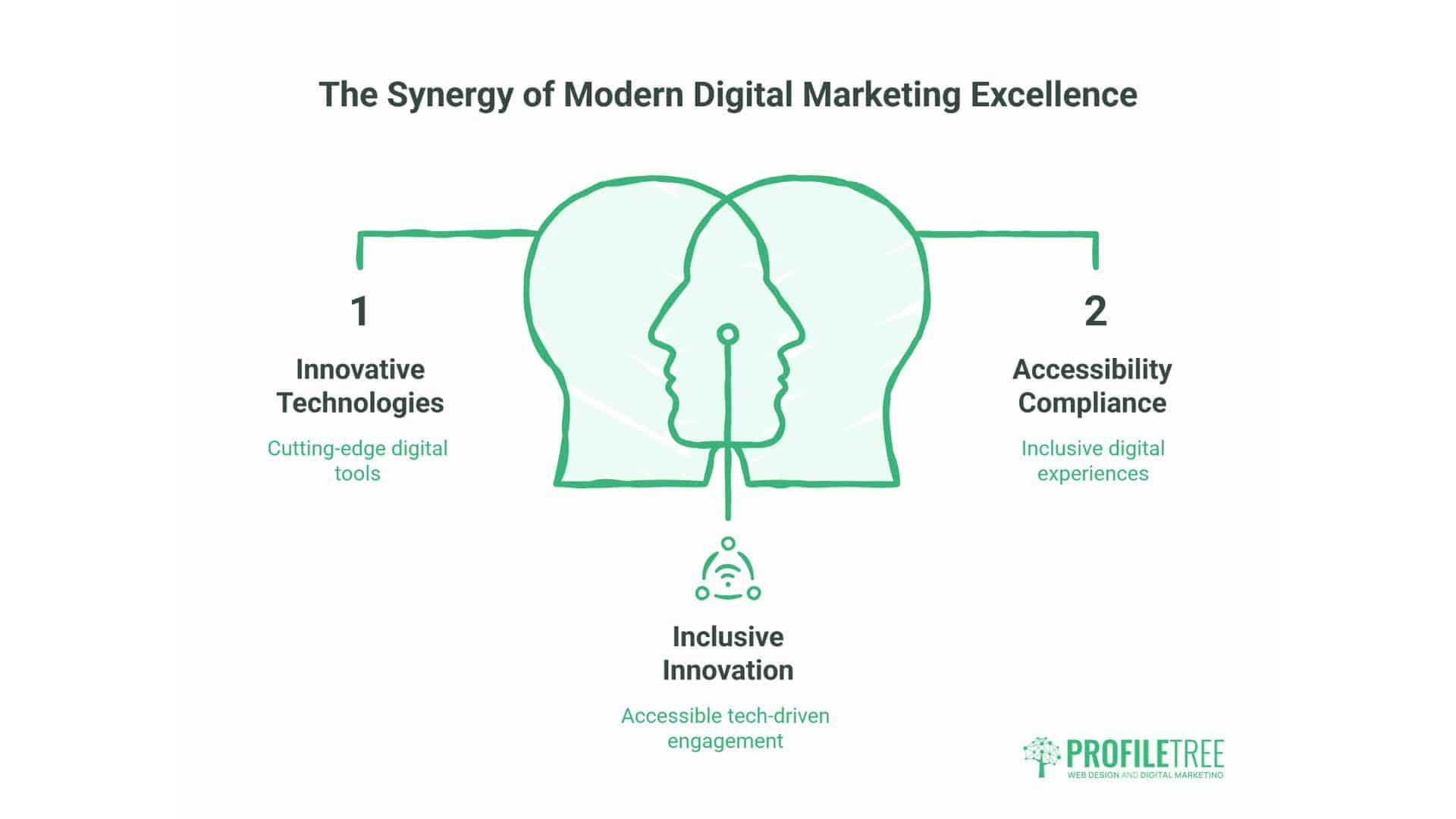
Modern digital marketing extends beyond traditional tactics. Emerging technologies, accessibility requirements, and brand authority building represent advanced considerations that differentiate leading organisations from competitors.
Integrating AI and Automation
Artificial intelligence is increasingly influencing the effectiveness of digital marketing. AI-powered tools enhance audience segmentation, personalise content delivery, optimise advertising spend, and automate repetitive tasks.
Marketing automation platforms nurture leads through personalised email sequences triggered by specific behaviours. Chatbots handle common enquiries instantly, capturing leads outside business hours. AI content tools assist with ideation and initial drafts, though human oversight remains essential.
ProfileTree helps organisations across Northern Ireland and the UK implement AI solutions that enhance marketing effectiveness without replacing human creativity and strategic thinking.
Accessibility and Inclusive Marketing
Accessible digital marketing expands your audience whilst demonstrating corporate responsibility. Web accessibility improves usability for everyone, not just people with disabilities.
Implement proper heading structures, alt text for images, sufficient colour contrast, and keyboard navigation. Captions for video content help deaf and hard-of-hearing audiences while improving engagement for people watching without sound.
Inclusive marketing considers diversity in imagery, language, and representation. Varied imagery showing different ethnicities, ages, body types, and abilities makes marketing more relatable to broader audiences.
Building Long-Term Brand Authority
Digital marketing plans focused exclusively on immediate conversion miss opportunities to build lasting brand authority. Thought leadership positioning attracts higher-quality leads, commands premium pricing, and creates competitive advantages.
Contribute expert commentary to industry publications, speak at relevant conferences, and participate in podcast interviews. Develop resources that serve as industry references—detailed guides or research reports that address everyday problems.
Common Digital Marketing Planning Challenges
Implementation challenges affect even well-designed digital marketing plans. Understanding common obstacles and proven solutions helps organisations navigate practical difficulties that derail marketing effectiveness.
Limited Budget and Resources
Small businesses face particular challenges in implementing digital marketing plans with limited budgets. Rather than attempting poor execution across many channels, focus on fewer channels where you can achieve excellence.
Prioritise activities with the highest ROI potential. Service businesses often find organic content marketing and SEO deliver better long-term returns than paid advertising. Develop systems and templates that improve efficiency.
Consider agency partnerships for specialist capabilities beyond in-house expertise. ProfileTree collaborates with businesses across the UK to deliver solutions, including web design, SEO, video production, and AI implementation.
Keeping Pace with Platform Changes
Digital marketing platforms constantly evolve with new features, algorithm updates, and policy changes. Staying current requires ongoing education and strategic flexibility.
Follow official platform blogs and reputable industry publications. Focus on fundamental principles that remain constant, regardless of platform changes. Build channel diversification into your digital marketing plan to avoid over-reliance on any single platform.
Measuring Attribution Accurately
Understanding which marketing activities drive conversions becomes complex when customers interact with multiple touchpoints before making a purchase. Multi-touch attribution models distribute credit across the customer journey more realistically.
For many businesses, attribution perfection proves impossible and unnecessary. Focus on directional insights showing which channels contribute to conversions. Track metrics appropriate to each campaign’s objectives.
Taking Action: Implementing Your Digital Marketing Plan
Planning without execution delivers no results. This section provides practical guidance for starting your planning process, securing necessary resources and buy-in, and maintaining momentum through consistent implementation despite inevitable challenges.
Starting Your Planning Process
Begin digital marketing planning by documenting your current situation. Audit existing marketing activities, assets, and performance. This baseline assessment informs realistic goal-setting.
Gather your team for collaborative planning sessions. Marketing effectiveness requires coordination across departments. Set realistic timelines for implementation—digital marketing results compound over time.
Securing Resources and Buy-In
Executive sponsorship proves critical for sustained digital marketing investment. Present clear business cases connecting proposed activities to revenue outcomes. Define resource requirements honestly.
Build competencies through training and development. ProfileTree’s digital training programmes help UK businesses build internal capabilities in SEO, content marketing, and AI implementation.
Maintaining Momentum and Avoiding Common Pitfalls
Consistency separates successful digital marketing from abandoned initiatives. Maintain regular publishing schedules and ongoing optimisation efforts even when immediate results seem modest.
Avoid chasing every new platform or tactic that emerges. Document processes and learnings as you execute your plan. Regular strategy reviews prevent stagnation; quarterly reviews assess performance; and annual strategic planning reassesses fundamental assumptions.
Conclusion: Your Path to Sustainable Digital Growth
A well-crafted digital marketing plan turns scattered activities into a coordinated strategy that drives measurable growth. The framework here, audience understanding, clear objectives, strategic channel selection, valuable content, and continuous optimisation, gives you the foundation for that.
Results compound with consistent effort, not sporadic bursts. Start by documenting your current position, defining clear objectives, and prioritising the channels most likely to reach your audience. Implement tracking from day one and refine based on performance data.
For businesses across Northern Ireland, Ireland, and the UK, ProfileTree offers digital marketing services spanning strategic planning, web design and development, SEO, video production, content strategy, and AI integration, combining strategic thinking with practical execution to support sustainable business growth.
FAQs
How long does it take to see results from a digital marketing plan?
It varies by channel. Paid advertising can generate immediate traffic, with optimisation taking 2-3 months. SEO usually takes 6-12 months for substantial organic growth. Content marketing compounds gradually, with results emerging after 6+ months of consistent publishing.
What budget should I allocate to digital marketing?
B2B companies typically invest 2-5% of revenue; B2C often invests 5-10% or more. Rather than relying solely on percentage benchmarks, calculate your customer acquisition costs and lifetime values to set a budget that delivers an acceptable ROI.
Should I focus on organic or paid marketing strategies?
Most effective plans use both. Organic builds lasting assets that compound but takes patience; paid delivers immediate visibility but needs ongoing spend. Use paid for quick lead generation while you build organic capabilities for the long term.
How do I choose between managing marketing internally and hiring an agency?
It depends on the budget, the expertise required, and the strategic importance. In-house offers focus and company knowledge; agencies offer breadth and flexibility. Many businesses run a hybrid strategy: in-house work and specialist work, such as video or technical SEO, outsourced.