
What Is Content Writing? A Practical Guide for Business Owners
Table of Contents
Content writing is the planning, writing and editing of digital text built to attract organic search visitors, inform them, and move them towards a decision. It covers blog posts, service pages, product descriptions and more. Unlike copywriting, which drives immediate action, content writing builds search visibility and trust over time.
Plenty of business owners across Northern Ireland, Ireland and the UK can write a decent email but freeze when faced with a blank web page. That gap is what this guide closes. You will get a clear definition, the skills that separate strong web writing from filler, the formats that matter, and an honest steer on when it makes sense to bring in help.
What Content Writing Is
Content writing is the strategic creation of written material designed to inform, engage and convert a target audience across digital platforms. Every piece earns its place by doing a specific job: pulling in new visitors through search, nurturing leads through email, or helping a prospect choose you through a clear service page.
The work sits at the centre of most digital marketing. Your blog posts need to rank for relevant terms while genuinely answering the reader’s question. Your service pages need to convert while building trust. Social posts need to earn engagement while keeping the brand sounding like itself. Good content writing holds all of that together rather than treating each channel as a separate job.
Content Writing vs Copywriting: The Key Difference
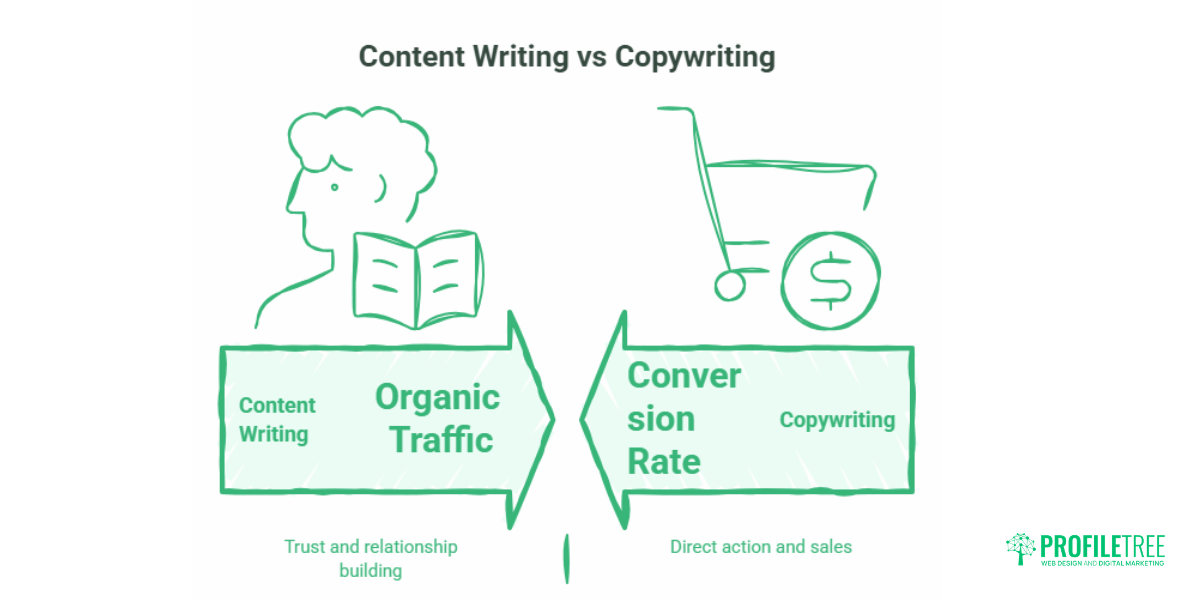
People use these terms interchangeably, but they pull in different directions. Copywriting is built for direct response: sales pages, adverts, email campaigns, where the goal is a click or a purchase now. Content writing covers the wider brief, education, useful guidance and relationship building, alongside the conversion goal. A blog answering “what is content writing” is content writing. A landing page headline pushing a free consultation is copywriting. Most websites need both, working together.
| Variable | Content writing | Copywriting |
|---|---|---|
| Main goal | Organic search value, trust | Direct action now |
| Typical placement | Blogs, guides, service pages | Sales pages, ads, email CTAs |
| Core metric | Organic traffic, time on page | Conversion rate |
| Tone | Helpful, informative | Persuasive, urgent |
What Makes Content Writing Different From Traditional Writing
Traditional writing serves communication and expression. Content writing balances four things at once. It starts audience-first, built on a real understanding of who is reading and what they came to solve. It stays compatible with search, weaving in relevant terms without reading like a keyword list. It guides towards a decision through well-placed calls to action. And it adapts to the platform, because a LinkedIn article and an Instagram caption are not the same job.
This is also where structure meets design. When the team at ProfileTree, a Belfast-based digital agency, builds a site for a client, content shapes the decisions early: navigation, headings, and where a call to action sits. Treating words as an afterthought is how you end up with a good-looking site that does not bring in work. If you are weighing up a build, our website design service plans content and structure together from the start.
The Skills That Matter
Strong content writing rests on a handful of disciplines that general writing does not demand. You do not need all of them on day one, but you need to know they exist.
Search engine optimisation knowledge
Understanding SEO basics is no longer optional for anyone writing for the web. That means keyword research, reading the competition, and getting the technical pieces right.
Keyword use has matured. The old advice of hitting a fixed density is outdated; modern search rewards semantic relevance, covering a topic properly and naturally, rather than repeating one phrase. Search intent is the part people miss most. Someone typing “what is content writing” wants an explanation. Someone typing “content writing services Belfast” wants to hire. The same words, very different jobs, and your content has to match the right one. Title tags, meta descriptions, heading order and internal links all sit under the writer’s remit too. If ranking is the priority, our SEO services handle the technical groundwork alongside the writing.
Diversity and specialisation
The writers who get hired again tend to know a sector. Someone who understands legal, medical, technology or hospitality writes with an authority a generalist cannot fake. Format range matters just as much; a case study, a blog post and an email sequence each ask for a different shape. And tone has to flex to the brand and the audience rather than defaulting to one house voice.
Originality and research
Original content needs proper research behind it and a point of view on top. Every claim, figure and reference should be accurate and current, because one wrong statistic does more reputational damage than ten dull paragraphs. Writers lean on tools like Grammarly and Copyscape to check originality, but those only catch copied text. The real defence against being interchangeable with AI output is a genuine perspective: a real example, a number you gathered yourself, a view that pushes back on the consensus. Source your claims clearly, and your reader trusts the rest of the page.
Readability and length
Clear writing serves readers and search engines together. Aim for a Flesch Reading Ease of 60 to 70, accessible to most adult readers, and lift the complexity only where a technical topic genuinely needs it. Vary sentence length so the rhythm does not flatline. Keep paragraphs to two to four sentences for screen reading, and use headings, lists and white space so people can scan.
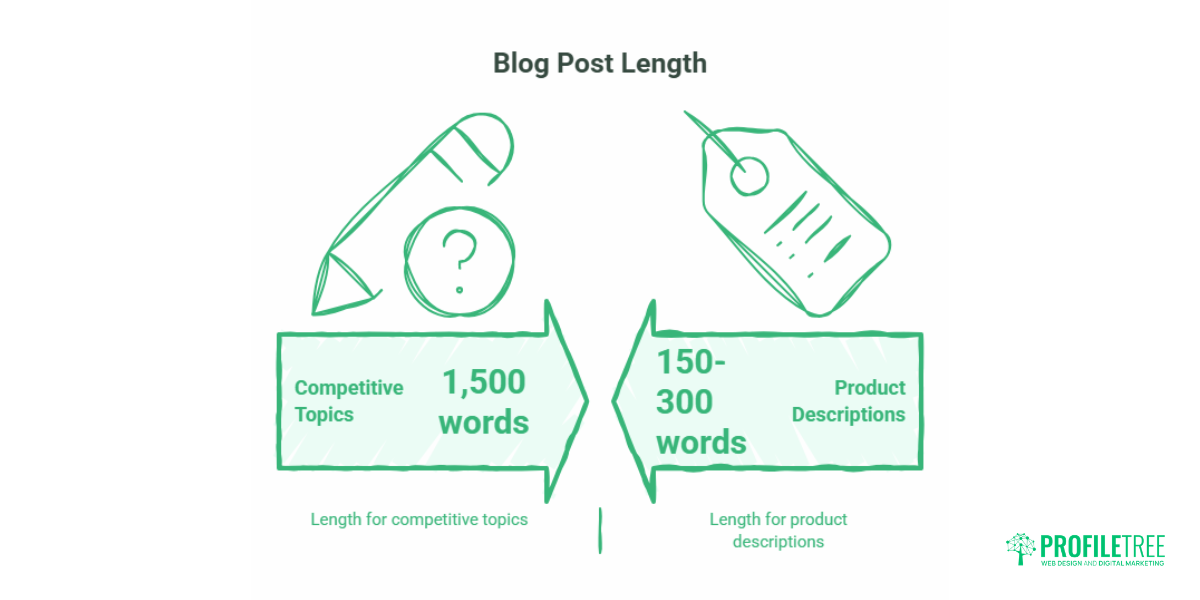
On length, thorough pieces tend to outperform thin ones for competitive terms, but more words is not the goal. A useful rough guide: blog posts run 1,500 words and up for competitive topics, service pages need enough depth to answer real buying questions, and product descriptions usually sit at 150 to 300 words. Past that, value per sentence is what counts, not the total.
Types of Content Writing
Knowing the formats lets you plan content around real business goals and the stages a customer moves through.
Blog posts and articles
Blog content does several jobs: it pulls in organic traffic, shows expertise, nurtures leads and keeps existing customers engaged. Educational how-to pieces attract people looking for answers. Industry analysis signals that you follow your field closely. Case studies give social proof while showing how you actually work.
Website copy and service pages
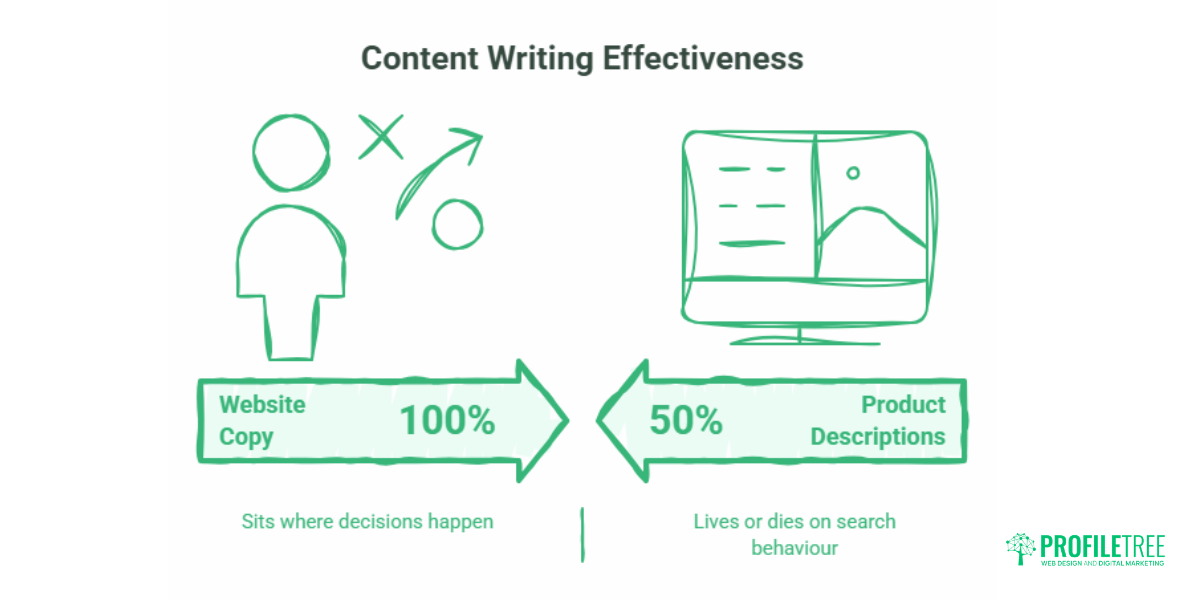
Website content carries more weight than most because it sits where decisions happen. A homepage should make clear within seconds what you do, who you help and why someone would pick you. Service pages work best leading with benefits, then features, backed by proof and a clear next step. About pages build trust through honest storytelling rather than corporate filler. This is detailed, structural work, and it is why our website development service brings writers and developers together rather than bolting copy on at the end.
Product descriptions
E-commerce writing lives or dies on search behaviour and conversion. Specs matter, but people buy on how a product fits their life, so balance the two. Descriptions need relevant search terms worked in naturally, and reviews or ratings alongside them give both buyers and search engines something to trust.
“After helping hundreds of businesses across Northern Ireland and the UK with their digital presence, I have seen how clearly content writing separates the companies that grow online from the ones that stall,” says Ciaran Connolly, founder of ProfileTree. “Content is not about filling pages with words. It is about building assets that work around the clock to attract, engage and convert the right customers. When we build a site, content strategy drives the decisions, from structure right through to how the page feels to use.”
Social media content
Each platform rewards a different approach. A LinkedIn post and an Instagram caption differ in length, tone and visuals, so the same message needs reworking per channel. Social content should invite interaction, comments, shares and saves to widen reach, while a consistent voice keeps the brand recognisable across all of them. Planning this properly is the heart of our social media marketing work.
Email marketing content
Email still returns some of the strongest results in marketing, but only with a strategy behind it. Regular newsletters keep relationships warm and pull traffic back to your site. Automated sequences, welcome series, post-purchase follow-ups, nurture relationships without manual effort. The lift comes from segmentation: content that speaks to a specific group beats one message sent to everyone.
How Content Writing Supports Business Growth
Content creation feeds several parts of a business beyond marketing collateral.
For lead generation, useful content attracts people already searching for what you offer, which makes them warmer than cold prospects. Gated resources like guides and whitepapers capture details from interested readers. For brand authority, consistent quality publishing positions your business as a voice worth listening to, and that reputation compounds. For customer retention, how-to content and best-practice guides help existing customers succeed, which keeps them around and opens natural upsell moments.
For local search, location-specific content helps businesses surface for customers across Northern Ireland, Ireland and the UK. ProfileTree, the Belfast digital agency, builds this kind of regional relevance into client content as standard, because a Lisburn plumber and a Galway accountant are not chasing the same searches.
When to Hire a Content Writer
Most business owners can write. The question is whether writing content is the best use of their time, and whether the output will actually rank. A few signals suggest bringing in help pays off.
Time is the usual one. Researching, writing and optimising content consistently is a real workload, and it is the first thing that slips when the business gets busy. Expertise is the second: SEO, platform changes and AI search move quickly, and keeping current is a job in itself. Scale is the third, and growth means more content across more channels than one person can sustain. And some sectors simply need specialist knowledge that a general staff member will not have.
If you decide to outsource, judge a writer or agency on a few things. Look at a portfolio across industries and formats, not just one polished sample. Check they understand current SEO rather than 2015 tactics. Favour sector experience where you can get it. And get clarity on process, revisions and communication before you commit. For businesses that would rather build the skill in-house, our digital training teaches teams to do this work themselves; for those who would rather hand it over, our content marketing service takes it end to end.
Content Writing and the Wider Digital Mix
Content works hardest when it connects to everything else you do online. Strategy comes first, deciding what to publish and why, which is the backbone of our digital strategy work. From there, written content feeds video: scripts, descriptions and supporting blog posts all start as words on a page, and that overlap is why our video marketing and written content sit in the same team. Paid campaigns lean on the same writing for landing pages and ad copy.
Measuring Whether Your Content Works
Content writing only earns its keep if you measure it. Different formats call for different metrics. Track organic traffic growth for the terms that matter to your business. Watch engagement, time on page, bounce rate, and social shares to gauge whether content lands. Measure lead generation through form submissions, newsletter signups and downloads. And tie content back to conversions: enquiries, sales, the outcomes that pay the bills.
Refreshing existing content often returns more than writing new pieces. Find your top performers and learn what makes them work. Update pages where the information has dated or the SEO has slipped. Repurpose strong posts into videos, infographics or email series. And use search data and customer questions to spot gaps worth filling. Keeping good pages current also helps with AI search, which favours genuinely fresh content over date-tweaked pages, and it is a service we manage through ongoing website management.
Where AI Fits In
AI tools can support content writing, but they need human oversight to be worth using. They are useful for ideation, suggesting topics and angles from keyword and competitor research. They can produce rough first drafts, and then a writer refines and fact-checks. They can flag SEO improvements. What they cannot do is supply genuine expertise, brand judgement or verified accuracy, which is exactly why raw AI output rarely ranks or reads well. The workable approach is hybrid: AI for speed on the mechanical parts, humans for everything that signals real experience. ProfileTree’s AI training and AI for marketing services help teams use these tools without letting quality slip.
Writing for AI Search and Voice
Search is shifting, and content has to keep up. Voice search rewards conversational, question-led phrasing and local relevance. AI Overviews and tools like ChatGPT Search pull from pages structured for clean extraction: a direct answer under a clear question heading, well-built tables, and self-contained sections. Mobile-first formatting is now the default rather than an extra. The same habits that help a human reader scan a page, short paragraphs, clear headings, answers up front, are the ones that help AI systems cite you.
Frequently Asked Questions
What is content writing?
Content writing is the practice of planning, writing and editing digital content to inform readers and attract organic search visitors. It covers blog posts, service pages, product descriptions and more, all written to serve both the reader and the business behind the page.
What is the difference between content writing and copywriting?
Copywriting focuses on persuasion and immediate action, sales pages, adverts and conversion-focused email. Content writing covers a broader brief, including education and trust building over time, alongside conversion. Most websites need both to work together.
How long should website content be?
It depends on the page and the competition. Blog posts targeting competitive topics often perform better at 1,500 words and up, while product descriptions usually sit at 150 to 300 words. Service pages should be detailed enough to answer real buying questions while keeping a clear path to conversion. Depth and usefulness always matter more than raw word count.
How often should I update website content?
Regular updates help both readers and search engines. Publishing new blog content weekly or fortnightly, reviewing service pages each quarter and refreshing the homepage as things change is a reasonable rhythm. Let your analytics guide which pages need attention based on how their performance shifts.
Can I use AI to write my website content?
AI is best treated as an assistant rather than the writer. It is genuinely useful for brainstorming, outlining, and editing, but raw AI output tends to lack the expertise and original perspective that help a page rank and build trust. A hybrid approach, AI for speed, a human for judgement and accuracy, works best.
How much does website content writing cost in the UK?
Costs vary widely depending on scope and expertise. UK freelance writers often work to day rates or per-word pricing, with cost driven by research depth, sector knowledge and the level of SEO involved. Agency support typically bundles strategy, writing and optimisation together, which suits businesses wanting an end-to-end result rather than words alone.