Skip to content

The Evolution of Content Marketing for UK and Irish SMEs

Updated on:
Updated by: Ciaran Connolly
Reviewed byEsraa Mahmoud

The rules of content marketing have shifted significantly over the past decade. What worked in 2012, keyword-heavy blog posts and high-volume publishing schedules, actively work against you now. Google, Bing, and the AI search engines pulling answers into overviews have all moved in the same direction: rewarding depth, trust, and genuine usefulness over output volume.

For SMEs across the UK and Ireland, that shift is both a challenge and an opportunity. Larger brands have publishing teams and ad budgets; smaller businesses have something those teams often cannot manufacture: real expertise, local knowledge, and an actual relationship with their customers.

This guide walks through the four major eras of the evolution of content marketing, explains why several once-reliable tactics are now liabilities, and sets out a practical framework for SMEs looking to build lasting visibility in an AI-shaped search landscape.

The Four Eras of Content Marketing

Content marketing did not arrive fully formed. It evolved through four fairly distinct phases, each shaped by changes in how search engines worked, how audiences behaved, and what technology made possible. Understanding those phases explains a lot about why the industry looks the way it does today.

The SEO Era (2000 to 2010): Keywords and Quantity

The earliest iteration of modern content marketing was, in many ways, a workaround. Google ranked pages largely on keyword frequency and the number of inbound links pointing to them. The logical response from marketers was to produce large volumes of keyword-dense text, stuff those keywords into titles and headings, and build links through directories and article submission sites.

It worked in the same way that cramming for an exam by memorising the marking scheme works. Pages ranked, but they were rarely useful. The gap between what ranked and what actually helped a reader was enormous, and the web was filled with thin, repetitive content as a result.

The Value Era (2011 to 2018): Educating the Customer

Google’s Panda update in 2011 marked the first serious attempt to break the keyword-stuffing model. It penalised thin content and rewarded pages that demonstrated depth and authority. Around the same time, the concept of inbound marketing, producing genuinely educational content to attract customers organically, gained traction through platforms like HubSpot.

For SMEs, this era introduced the business blog as a serious tool rather than an afterthought. Companies that invested in answering real customer questions saw compounding returns: a well-written guide about, say, planning a website redesign could attract qualified leads for years. The rise of video content added another dimension, giving businesses a format that rewarded personality and expertise in equal measure.

The core principle that emerged, produce content your audience actually wants rather than content designed to game an algorithm, still holds. Everything since has been a refinement of that idea.

The Engagement Era (2019 to 2022): Video, Social, and Community

As social platforms matured and video costs dropped, the emphasis moved from traffic to engagement. It was no longer enough to attract visitors; the question became whether those visitors would share, comment, subscribe, or return. Platforms rewarded content that kept users on-site longer, and marketers responded by prioritising formats with inherently high dwell time.

Short-form video exploded as a discovery channel, particularly for younger audiences. Instagram Reels, TikTok, and YouTube Shorts demonstrated that a 60-second clip from a founder or specialist could outperform a polished corporate production. For SMEs, this was genuinely levelling: a business owner who could speak clearly and knowledgeably to camera had a real competitive tool that required almost no budget.

The attention span data from this period is telling. Users who encountered genuinely useful video content stayed significantly longer than those reading text equivalents, a pattern search engines noticed and began to factor into rankings.

The most recent shift is the most disruptive. AI-powered search features, Google’s AI Overviews, Bing’s Copilot integration, and standalone tools like Perplexity and ChatGPT, now answer many queries directly in the search interface without sending users to a website at all. For informational content, click-through rates have dropped sharply on queries where an AI summary appears above organic results.

This is not the death of content marketing; it is a significant change in what content marketing is for. Pages that get cited in AI answers gain brand visibility even when no click occurs. Research from Ahrefs found that pages covering multiple sub-questions within a topic are 161% more likely to appear in AI Overviews. Long-form content with clear, self-contained sections performs well not because it ranks in a traditional list, but because it provides the kind of structured, authoritative answers that AI systems can extract and attribute.

For SMEs, the practical implication is that AI implementation is now a content strategy concern as much as a technology one. The businesses whose knowledge gets cited are those that published clearly sourced, well-structured content before AI search became dominant.

Why the Old Rules Are Failing UK SMEs

The Evolution of Content Marketing for UK and Irish SMEs

Several tactics that delivered results as recently as five years ago are now actively harmful. Recognising which of them you are still using is one of the more valuable audits a small marketing team can run.

The Information Gain Problem

Google’s quality evaluators now assess content against something called information gain: how much does this page add beyond what is already available for this query? If your article about, say, local SEO covers the same ground as every other article on the topic, create a Google Business Profile, get reviews, and use consistent NAP data; it scores poorly regardless of how well it is written or how long it is.

The sheer volume of AI-generated content entering the web has made this worse. When any competitor can produce a competent 1,500-word overview in minutes, a competent overview is no longer a differentiator. The floor has risen dramatically; the bar for what counts as genuinely useful has risen with it.

The fix is not to write longer content. It is to include something that cannot be replicated from a language model: a specific client scenario, a measurement from an actual project, or an opinion grounded in professional experience. The ethics of digital marketing around AI-generated content are still forming, but the practical reality is clear: generic output no longer ranks.

Publishing Volume Without Strategy

Many SMEs ran content programmes in the early 2010s on the logic that more content meant more indexed pages, more indexed pages meant more traffic, and more traffic meant more leads. That chain held reasonably well until Google began penalising sites where a large proportion of pages provided thin or duplicate value.

Raptive’s analysis of the December 2025 core update found that sites where more than 32% of pages had under 500 words showed meaningful traffic declines, while sites where fewer than 7% of pages fell below that threshold held steady. The maths here is straightforward: a library of 40 strong articles outperforms a library of 400 mediocre ones, and the stronger library is a fraction of the cost to maintain.

For a small business with limited writing resources, this is good news. You do not need to publish weekly. You need to publish well, update existing content when the topic changes, and make sure every page you keep indexed is earning its place.

Ignoring Zero-Click Search Strategy

Zero-click search, queries where users get an answer from an AI Overview, a featured snippet, or a knowledge panel without visiting any website, is a growing share of total search volume. Many SMEs still measure content success purely by organic clicks and treat any traffic that does not convert directly as wasted effort.

A more useful frame: appearing in an AI Overview or a featured snippet for a relevant query builds brand recognition even without a click. A prospect who sees your business name, paired with a credible answer, repeatedly across multiple searches,s is a warmer lead than one who finds you for the first time on a product page. Digital campaign ROI increasingly requires measuring assisted awareness rather than last-click attribution alone.

The SME Advantage: Authenticity in an Automated World

The dominance of AI-generated content has created an ironic opening for smaller businesses. At the exact moment when producing passable text became free, the value of content that demonstrably comes from a real person with real experience has increased. This is not a trend driven by sentiment; it is measurable in ranking data.

Founder Brands and Local Authority

Google’s February 2026 core update made author credentials a first-class ranking input, adding an explicit “Authors” section to its Search Central documentation. Pages attributed to named authors with verifiable professional profiles, a LinkedIn page, speaking engagements, and published work elsewhere outperform equivalent anonymous content on competitive topics.

For SMEs, this is a structural advantage. A sole trader or small business owner who has spent fifteen years working in their sector has a credibility that no content farm can manufacture. The key is making that credibility visible: a consistent author bio, a profile that matches what Google finds when it checks the LinkedIn page attached to the byline, and content that reflects the kind of specific, sometimes uncomfortable knowledge that only comes from doing the work.

Ciaran Connolly, founder of ProfileTree, puts it this way: “The businesses we see building real authority online right now are the ones where a real person is visibly attached to the content. It doesn’t have to be polished. It has to be genuine.”

[Note for editor: Ciaran Connolly quote above requires approval before publication.]

Human-in-the-Loop AI Use

The question for most SMEs is not whether to use AI in content production; most already are, at some point in the process, but where to use it without eroding the things that make their content worth reading.

A workable distinction is between AI for efficiency and AI for output. Using an AI tool to generate a first-pass outline, identify gaps in a draft, or suggest FAQ questions draws on genuine utility. Using it to produce finished copy that goes live without substantive human input is where the problems appear: generic phrasing, missing local context, unverifiable claims, and the kind of structural uniformity that increasingly triggers both algorithmic and human quality signals.

The most effective approach is a “write-through” model: a subject-matter expert, the business owner, a specialist team member, provides the core argument and any specific examples, an AI tool helps structure and expand the draft, and a human editor makes the final pass to restore voice, cut banned phrases, and verify every factual claim. The AI content detection landscape is developing fast, and the safest position is content that would pass a human read, whether or not a detector flagged it.

Creating Content That AI Cannot Replicate

There are categories of content that AI genuinely cannot produce: first-hand accounts of specific projects, before-and-after data from real client work, opinions on local market conditions grounded in recent experience, and anything that requires the author to have been physically present. These are also not coincidentally the categories most likely to earn citations in AI search answers.

A practical checklist for evaluating any draft: could this have been produced without access to real project experience? If yes, it needs at least one element that could not. That element does not need to be long. A single specific figure, a specific client scenario described without identifying the client, or a clear professional opinion stated with reasons can be enough to shift a generic piece into one that provides genuine information gain.

See also: creating interactive content as a route to engagement that AI-only production struggles to match.

Regional Context: Content Marketing in the UK and Ireland

The majority of published guidance on content marketing is written from a North American perspective and assumes North American market conditions. For SMEs trading in the UK and Ireland, several important differences apply, and most competing content ignores them entirely.

UK GDPR and Content Distribution

Content marketing is not just about what you publish; it is about how you distribute it. Email newsletters, retargeting audiences, gated content requiring an email address, and social media advertising all interact with UK GDPR requirements that differ in important ways from the US landscape most content guides assume.

Consent mechanisms for email list building, legitimate interest assessments for content retargeting, and transparency obligations around personalisation are not optional considerations for UK-based businesses. The ICO’s enforcement record since 2022 includes several SMEs fined for GDPR breaches relating to marketing communications, not just data breaches. Any content distribution strategy that involves collecting personal data needs to be reviewed against current UK GDPR requirements, not just US-oriented best practice.

Northern Ireland, Ireland, and Regional Trust Signals

Across the UK and Ireland, regional identity carries genuine commercial weight in many sectors. A financial services firm in Belfast, a tradesperson in Cork, or a professional service practice in Manchester has a built-in credibility with local customers that a generic national competitor cannot easily replicate. Content that reflects regional knowledge, local case studies, references to relevant local bodies, and familiarity with local market conditions performs measurably better for local search intent.

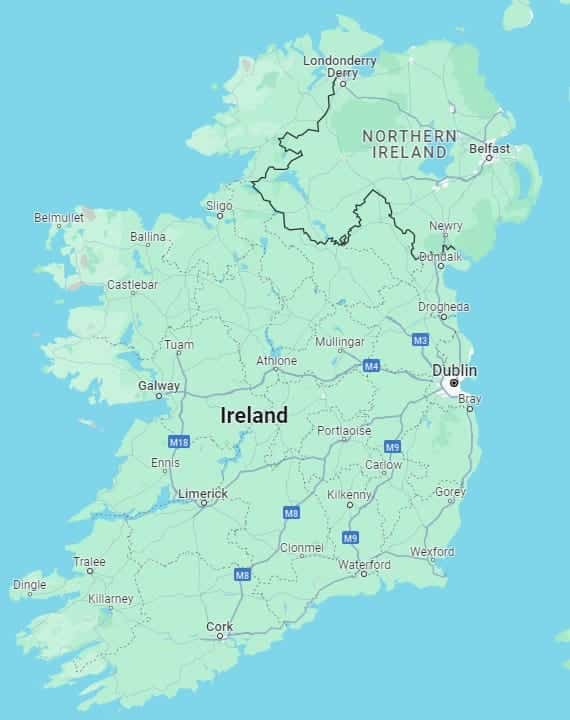
Northern Ireland businesses, in particular, operate in a distinct market that sits between two jurisdictions. Content that acknowledges the specific context, including cross-border trading considerations, the role of Invest NI, and the geography of major population centres, signals authenticity to local audiences in a way that US-origin content templates simply cannot.

Northern Ireland’s vibrant cities, from Belfast to Derry, have distinct business ecosystems and consumer cultures. If you are interested in the broader character of Northern Ireland as a region, a useful context for any tourism or hospitality business producing content about the area, Connolly Cove’s guide to Northern Ireland’s top cities is a useful reference point.

Local Search and the Google Business Profile

For SMEs with a physical presence or a clearly defined service area, local search performance is frequently more commercially valuable than broad keyword rankings. A plumbing company ranking on page one for “emergency plumber Belfast” at 11 pm will win more business from that single ranking than from fifty national-intent positions.

Content marketing supports local SEO not just through location-specific pages but through the broader signals it sends about topical authority and business legitimacy. A business that publishes regular, substantive content on topics relevant to its trade is more likely to appear in local pack results for competitive queries than one whose digital presence consists only of a Google Business Profile listing. The AI approach to local SEO is evolving quickly, and understanding how AI-assisted search handles local queries is increasingly relevant for SMEs in competitive service areas.

A Framework for Modern SME Content Strategy

The Evolution of Content Marketing for UK and Irish SMEs

The following five steps are not a full content strategy; they are the decisions that tend to separate SMEs whose content generates commercial returns from those who publish regularly but see limited results. They are designed to be achievable without a large team or a significant budget.

Step One: Audit for Human Content vs Generic Content

Before adding anything new, review what you already have. For each published page, ask a single question: Is there anything on this page that a capable AI could not have produced without access to your specific business experience? If the answer is no for the majority of your content, you are publishing into an increasingly crowded middle where neither search engines nor readers have a strong reason to choose you.

Pages that fail this test are candidates for consolidation or substantial rewriting rather than deletion. Removing indexed pages can cause short-term traffic loss; improving them is generally the lower-risk option. The content strategy guide on maintaining reader interest covers the mechanics of this kind of audit in more detail.

Step Two: Prioritise High-Intent Local Keywords

Most SMEs have a long list of topics they could write about and a short list of topics that would actually generate enquiries. The gap between the two is often where content budgets disappear without a trace. A regional accountancy firm that writes about pension legislation for Northern Ireland businesses is doing something meaningfully different from one that writes about pension legislation generally; the former is serving a specific, high-intent audience; the latter is competing with national publications on generic ground.

Google Search Console is the most useful tool for identifying where you already have visibility that could be improved. Queries where you appear on page two or three, with reasonable impressions but low clicks, are typically the lowest-risk opportunity for improvement: the intent match is confirmed, the topic is within your existing authority, and a substantive rewrite of the relevant page is likely to move the needle faster than a new page on an untested topic.

Step Three: Build a Content Hierarchy, Not a Content Calendar

A content calendar schedules output. A content hierarchy defines which topics matter most and how pages relate to each other. For SMEs with limited resources, the hierarchy matters more: one strong pillar page on your core service, supported by three to five substantive articles on related subtopics, with consistent internal linking between them, outperforms twenty standalone posts that share no structure or strategic intent.

Every article should link to a service page where the connection is natural. Every service page should link back to relevant supporting content. This structure, sometimes called a topic cluster or hub-and-spoke model, tells search engines that you have depth on a subject, not just breadth. It also makes the internal linking easier to maintain as you add content over time. For social media content strategy, the same hub logic applies: create one strong pillar piece per platform or format, and let supporting content reinforce rather than repeat it.

Step Four: Format for AI Citation

Writing for an AI citation is not the same as writing for a featured snippet, though the two overlap. AI systems extract content from pages that have a clear structure, self-contained sections of roughly 100 to 300 words each, and explicit answers to specific questions early in each section rather than at the end.

Practically, this means starting every major section with a direct, one to two-sentence answer to the question implied by the heading, then providing the supporting detail. It means using tables where a comparison exists, because tables are consistently over-represented in AI citations relative to prose alternatives. It means writing FAQ sections with direct answers rather than answers that require the reader to read the full article to understand.

The customer feedback approach to shaping content structure is particularly useful here: the questions your customers actually ask are the queries your content should answer most directly.

Step Five: Measure the Right Things

The metrics most SMEs track, total sessions, bounce rate, and time on page, are increasingly poor proxies for commercial content performance. Total sessions flatter high-volume, low-intent traffic; bounce rate penalises pages that answer a question so well the user has no reason to go further; time on page rewards long content regardless of whether it converts.

More useful signals: which pages generate enquiries directly or appear in the browsing history of converting users (visible in Google Analytics 4 path analysis); which pages earn citations in AI search tools (trackable manually or through brand monitoring tools); and which queries your brand appears for in zero-click contexts, which indicates AI visibility even without direct traffic.

A UK SME budget allocation guide: All prices and figures in this guide are indicative UK examples and correct at the time of writing; use them as a benchmark rather than fixed quotations. For context, industry benchmarks suggest SMEs allocating 7 to 10% of revenue to marketing typically direct 25 to 30% of that budget toward content production and distribution. At the £1,000 to £2,000 per month range common for growing SMEs, that breaks down to roughly 60% on creation (writing, video, design), 25% on distribution (paid promotion of key pieces), and 15% on measurement and tooling.

Conclusion

Content marketing has moved from volume to value to authenticity. UK and Irish SMEs are well placed for this shift: local knowledge, genuine expertise, and a named author are things larger competitors struggle to manufacture at scale. Build content around those assets, and the compounding authority follows. ProfileTree works with SMEs across Northern Ireland, Ireland, and the UK to develop a digital marketing strategy that earns rankings and generates enquiries.

Ready to build content that actually works for your business? Get in touch with the ProfileTree team to discuss your content strategy.

FAQs

How has content marketing changed for UK small businesses over the last five years?

The biggest shift has been from volume to demonstrated authority. Publishing keyword-optimised blog posts consistently used to build organic traffic incrementally; today, Google’s quality systems and the saturation of AI-generated content have raised the bar considerably. UK SMEs now need content that reflects genuine expertise, links to named authors, and provides specific insights rather than general overviews.

What are the four stages of content marketing evolution?

The four main eras are: the SEO Era (2000 to 2010), defined by keyword volume and link building; the Value Era (2011 to 2018), which shifted focus to educating customers through blogs and longer-form guides; the Engagement Era (2019 to 2022), driven by video, social media, and short-form formats; and the Intelligence Era (2023 to present), shaped by AI-assisted search, personalisation, and zero-click results. Each era built on the last rather than replacing it.

Can SMEs still compete with large brands through content marketing?

Yes, and in some respects more effectively than before. Large brands have publishing scale but often lack the specificity that drives local search performance and AI citation. An SME with genuine expertise in a defined geography can produce content that answers local, high-intent queries with a depth that a national competitor’s templated output cannot match.

Is blogging still effective for SMEs in 2025 and beyond?

Yes, but the format has changed. A blog post that provides a thorough answer to a specific question your customers actually ask continues to generate compounding organic traffic, especially when the author is named and credentialled. What no longer works is the keyword-targeting post written primarily to rank for a phrase rather than to answer a genuine question. Search engines have become effective at distinguishing the two.

How do I measure content ROI without expensive analytics tools?

Track assisted conversions in Google Analytics 4, which shows which pages appeared in a user’s journey before a contact form submission or purchase, even if they were not the last page visited. Pair this with regular Google Search Console checks, noting where impressions have grown without corresponding clicks, which signals AI Overview visibility.

Leave a comment

Your email address will not be published.Required fields are marked *

Join Our Mailing List

Grow your business with expert web design, AI strategies and digital marketing tips straight to your inbox. Subscribe to our newsletter.