
What Is an App? A Complete Guide for Business Owners
Table of Contents
What is an app, and does your business need one? These are two of the most common questions Belfast SMEs raise when thinking about digital investment, and they deserve a straight answer before any budget is committed.
Apps have moved from consumer novelties to core business infrastructure. From the first notification you check in the morning to the last order processed at night, applications underpin almost every digital interaction. For businesses across Belfast, Northern Ireland, and the UK, knowing what an app is and, more importantly, when you need one determines whether app development becomes a valuable investment or an expensive distraction.
This guide explains the different types of apps, how they differ from websites, when custom development makes commercial sense, and how Northern Ireland SMEs can make that decision confidently. Whether you run a hospitality business in Belfast, a professional services firm in Derry, or a manufacturing operation across the UK, the framework below cuts through the noise.
What Is an App? A Simple Definition
Before evaluating whether your business needs one, it is worth being clear about what an app actually is and how the term is used in a business context.
“What is an app?” is a deceptively simple question. App is short for application, a piece of software designed for human interaction, as opposed to system-level software such as device drivers or operating systems that run invisibly in the background. Apps run through web browsers, offline on phones and tablets, or as installed programs on desktop computers. The word entered mainstream use with the launch of Apple’s App Store in 2008, but application software has existed since the earliest personal computers.
The practical definition that matters for business owners: what is an app if not a tool your customer or team actively opens to complete a task? Booking a table, checking an account balance, logging a site visit, and processing an order are all app interactions. If your business involves frequent, task-focused digital interactions, this becomes the first step toward deciding whether to build one.
App vs Website: Which Does Your Business Need?
Once you understand what an app is, the next question is whether it is the right solution or whether a well-built website does the job at a fraction of the cost. This is the most important decision Belfast and Northern Ireland SMEs should settle before spending development budget.
| Feature | Mobile App | Mobile Website |
|---|---|---|
| Requires download? | Yes (native/hybrid) | No |
| Works offline? | Yes (native/PWA) | No |
| Push notifications? | Yes | Limited (PWA only) |
| Access device camera/GPS? | Yes | Limited |
| Development cost? | Higher | Lower |
| Best for? | Daily/weekly interactions | Occasional visits |
The lines between apps and websites have blurred considerably, particularly with the rise of Progressive Web Apps. But the key differences in the table above still drive platform decisions for most UK SMEs.
The rule of thumb: if your customers interact with your business daily or weekly, what an app offers, speed, offline access, and push notifications, adds genuine commercial value. If they visit occasionally to check services or find contact details, a fast mobile-optimised website does the same job for less. A Belfast coffee shop with a regular morning crowd benefits from an app-based loyalty scheme. A solicitor’s practice visited once a year does not.
The Four Main Types of Apps
Knowing what an app is at a definitional level is one thing. Understanding the different categories and the trade-offs each involves is what allows business owners to make informed decisions about development approach, budget, and timeline.
| App Type | Performance | Dev Cost | Works Offline | UK Business Use |
|---|---|---|---|---|
| Native App | Best | Highest | Yes | Loyalty schemes, banking |
| Hybrid App | Good | Medium | Partial | Startups, MVPs |
| Web App / PWA | Good | Lower | Partial | Booking systems, portals |
| Desktop App | Excellent | High | Yes | Accounting, CAD, legal |
Native Apps (iOS and Android)
A native app is built specifically for one operating system, iOS for Apple devices, or Android for everything else. It downloads from the App Store or Google Play and installs directly on the device, giving it full access to hardware features such as the camera, GPS, fingerprint scanner, and push notifications.
When business owners ask what an app that delivers the best possible user experience is, native is the answer. For Belfast retailers with loyalty programmes or hospitality businesses whose customers return daily, native apps justify the higher development cost. The trade-off: building separate iOS and Android versions requires either two codebases or cross-platform native expertise.
Web Apps and Progressive Web Apps (PWAs)
A web app runs in a browser with no download required. Progressive Web Apps (PWAs) extend this with offline functionality, push notifications, and the ability to install to a device’s home screen without going through an app store, making them the answer for businesses that ask what an app experience is without the full cost of native development.
A Belfast restaurant might use a PWA for table bookings and takeaway orders. Customers add it to their home screen; it looks and feels like an app, but the business maintains a single codebase rather than separate iOS and Android versions. PWAs work well for booking systems, customer portals, product catalogues, and quoting tools. The limitation: PWAs cannot access every device feature native apps can, though for most SME use cases, that restriction rarely matters.
Hybrid Apps
Hybrid apps blend web technologies with native packaging. Built with frameworks such as React Native or Flutter, they produce a single codebase for both iOS and Android that can be submitted to app stores. Development is faster and cheaper than two native builds. Many Northern Ireland startups choose hybrid as their first build to reach the market quickly, rebuilding in native later if performance demands it. For most SME applications, hybrid performance is more than adequate.
Desktop Apps
Desktop apps install on a computer and remain the standard for complex tasks requiring large screens, keyboard and mouse input, or local hardware integration. Belfast professional services firms, accountants, solicitors, and architects rely on desktop software for core operations, often pairing these with a mobile or web app for client-facing work. Understanding what an app is across these four categories allows you to match the development approach to the actual requirement.
When Does Your Business Actually Need an App?
Understanding what an app is does not automatically answer whether your business needs one. The strongest signal is usage frequency, specifically, how often your customers or team need to complete a task that a website handles poorly.
Customer-Facing Apps
When business owners ask what an app is good for on the customer side, the clearest answers are booking platforms, loyalty programmes, ordering tools, and membership portals, as well as interactions that happen repeatedly, often on the go, and benefit from personalisation.
What is an app unnecessary for? Businesses where customers interact monthly or less, or where a well-built mobile website handles the same job. The goal is to solve a real problem, not to have an app for its own sake.
Internal Business Apps
Some of the highest-value app investments are tools customers never see. Internal operational apps solve specific workflow problems and deliver measurable efficiency gains. When considering what an app worth building internally is, these use cases consistently deliver strong returns:
- Workforce management apps keep field teams coordinated. Northern Ireland construction firms and delivery services use apps to assign jobs, track progress, and update customers in real time.
- Inventory management apps significantly speed up stocktakes. Retail and wholesale businesses use tablets or phones to scan and update stock in hours rather than days.
- Quality control and compliance apps provide manufacturers with a digital, searchable audit trail, which is important for businesses operating under UK regulatory requirements.
- Care and health sector apps allow staff to log visits and medication in real time, replacing paper systems that are both slow and error-prone.
Custom App Development vs Off-the-Shelf Solutions
Once you are clear on what an app needs to do for your business, the next decision is whether to build a custom app or adapt an existing platform. For most Belfast SMEs, this comes down to process complexity, integration requirements, and long-term cost.
Off-the-Shelf Solutions
Off-the-shelf products such as Calendly, Xero, Shopify, and Slack answer the question of what is an app solution for common business problems at a lower upfront cost, with fast implementation and proven reliability. You adapt your processes to the software’s workflow, accept limited customisation, and pay ongoing subscription fees. For most businesses starting out, this is the right call. The insight gained from using an established product also helps define what a custom build would need to do differently.
Custom App Development
Custom development earns its cost when your processes are genuinely unique, when off-the-shelf solutions do not integrate with your existing systems, or when subscription costs over three to five years exceed the cost of a one-time build. UK development cost benchmarks:
- Basic apps: £30,000 to £150,000, typically delivered in three to six months
- Moderate complexity: £150,000 to £500,000, typically six to nine months
- Enterprise platforms: £500,000 and above, typically nine to eighteen months
Belfast-based development agencies typically offer better value than London equivalents at the same quality level. Work with a team that understands your business model before writing a line of code.
When a Website Does the Job
A recurring question in the conversation about what an app is versus what a website is is whether the distinction even matters anymore. Many modern websites incorporate app-like functionality through single-page applications, WordPress plugins, or e-commerce platforms such as Shopify. A properly built site with PWA capabilities often serves SMEs better than a native app at a fraction of the cost.
Our WordPress development and web design services regularly achieve app-like functionality for SMEs without native development costs.
App Security and UK GDPR Compliance
Any business asking what an app requirement for UK legal compliance is will find data protection at the top of the list. Any app that collects, stores, or processes personal data from UK users must comply with the UK GDPR. Non-compliance risks, fines from the Information Commissioner’s Office (ICO), and reputational damage are reason enough to plan for it from the start of any development project.
UK GDPR Obligations for App Owners
UK GDPR applies to any app handling personal data from UK users, regardless of where the development team is based. The core obligations are:
- Clear consent: users must explicitly agree to data collection before it begins
- Purpose limitation: only collect data you genuinely need to deliver the service
- Right to access and deletion: users can request to see their data or have it removed
- Data protection by design: security must be built into the architecture from the outset, not added later
- Breach notification: You have 72 hours to report a data compromise to the ICO
Apple’s App Store and Google Play both vet apps for security and privacy compliance before publication, but that vetting does not replace your obligations as a data controller.
Trust Signals That Matter to UK Users
App users in the UK are increasingly privacy-conscious. The trust signals that matter are practical: a clear privacy policy in plain English, transparency about what the app collects and why, regular updates, and a responsive support channel. Businesses collecting payment data must also meet PCI DSS requirements. Address this at the architecture stage, not after launch.
The Role of AI in Business Apps
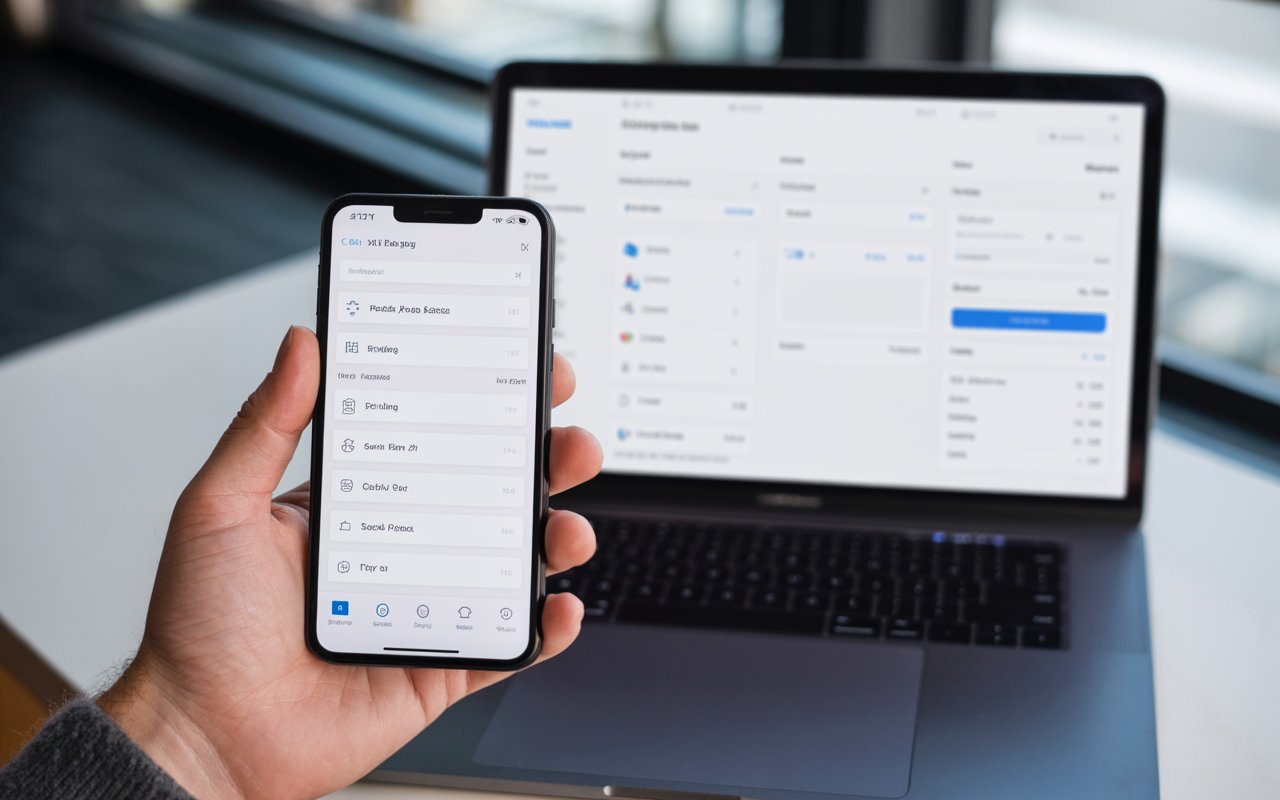
Artificial intelligence is changing what an app can do and how quickly Northern Ireland SMEs can access capabilities once reserved for large enterprises. For businesses evaluating app development, AI integration is worth understanding before commissioning a build.
AI-Powered Chatbots and Customer Service
Customer service is one of the clearest AI applications in business apps. When business owners ask what an app chatbot is worth, the answer depends on enquiry volume. AI chatbots handle repetitive questions around the clock without overnight staffing costs. Modern systems understand context, manage multi-step conversations, and escalate to a human when needed, typically saving businesses meaningful support hours when handling high volumes of similar enquiries. Implementation of a well-scoped integration takes roughly 6 to 8 weeks.
Personalisation and Predictive Features
AI also enables personalisation at scale within the app experience: product recommendations, dynamic pricing, predictive stock management, and personalised content feeds. These features, once the preserve of large platforms, are accessible to SMEs through APIs and off-the-shelf AI components that integrate into custom builds. The practical question is always the same: does the AI feature solve a real problem your customers or team has?
Making the Right Decision for Your Business
What is an app worth building for your business? The answer starts not with the technology but with the problem. Apps have evolved from consumer novelties into essential business infrastructure, but the decision to build one should always be grounded in customer behaviour, usage frequency, and a realistic budget.
For Belfast and Northern Ireland businesses, the most common mistake is choosing a platform before defining what the product needs to do. A well-specified brief produces better outcomes than chasing trends or building an app because a competitor has one.
Understanding what an app is only gets you so far. The real decision for Belfast and Northern Ireland businesses is simpler than the technology suggests: how often do your customers or team need to interact digitally, and what does that interaction need to do? Start with the problem, match the platform to the requirement, and treat off-the-shelf solutions as the default until a custom build clearly justifies the investment. Whether that leads you to a native app, a PWA, or a better-built website, the outcome is the same: a digital tool that works for your business rather than one that looks impressive on paper.
FAQs
1. What is an app, exactly?
An app, short for application, is software designed for human interaction rather than running invisibly in the background. Apps run on mobile devices, desktop computers, or through web browsers, and are built for specific tasks: booking, ordering, managing information, or communicating. What is an app in everyday business terms? It is any digital tool your team or customers actively use to complete a task, from a smartphone loyalty scheme to an internal workforce management platform used by a field team.
2. What is the difference between an app and a website?
Apps are installed software or web apps with app-like functionality that can work offline and integrate with device features such as cameras and GPS. Websites run in browsers, require an internet connection, and suit occasional visits where the user is researching or seeking contact details. The functional overlap is growing, particularly with Progressive Web Apps, but frequency of use and functionality required still determine which is the right answer for most UK SMEs.
3. Does my business need a native app or a PWA?
For most Northern Ireland SMEs, a Progressive Web App is the more cost-effective starting point. A PWA works across all devices, installs to a home screen, and delivers offline functionality and push notifications without the cost of building separate iOS and Android codebases. Native development makes sense when you need deep hardware integration, camera processing, biometrics, augmented reality, or when performance at scale is critical. For most SME use cases, a PWA answers the question of what an app experience is without the full native development cost.
4. How much does app development cost in Northern Ireland?
Basic apps typically range from £30,000 to £150,000 and take three to six months to deliver. Mid-complexity builds booking platforms, customer portals, and internal workforce tools in the £150,000 to £500,000 range over 6 to 9 months. Enterprise platforms are priced at £500,000 or more. Belfast-based agencies typically offer better value than London equivalents at the same quality level. The most important cost consideration, often overlooked when businesses ask what an app is going to cost, is ongoing maintenance: budget 10 to 20 per cent of development cost per year.
5. Should I build a custom app or use an off-the-shelf solution?
Start with off-the-shelf. Products such as Shopify, Xero, Calendly, and Slack solve common business problems at a lower cost with proven reliability. Custom development earns its cost when your processes are genuinely unique, when existing solutions do not integrate with your systems, or when subscription costs over three to five years exceed a one-time build. The insight gained from using an off-the-shelf product first also helps define exactly what an app brief is that a custom build would need to deliver, producing a better product at a lower overall cost.