
The Future of Digital Marketing in the UK: 2025-2030 Predictions
Table of Contents
The next five years represent the most dramatic digital marketing transformation since the internet’s commercial birth. By 2030, artificial intelligence will orchestrate 80% of marketing operations, virtual reality commerce will generate £15 billion across the UK, and traditional advertising channels will become obsolete museum pieces. These projections aren’t speculative wishful thinking—they’re evidence-based forecasts derived from current technological trajectories, emerging platform capabilities, and fundamental shifts in how consumers discover and engage with brands.
The Future of Digital Marketing in the UK is a critical transformation point where strategic foresight determines competitive survival. With UK digital advertising expenditure reaching £29.6 billion in 2025 and accelerating toward £45 billion by 2030, the financial stakes continue escalating exponentially. Organisations anticipating and strategically adapting to these seismic changes will establish market dominance. At the same time, those desperately clinging to outdated methodologies will join the extensive graveyard of digital evolution casualties alongside Blockbuster, Kodak, and countless other former industry leaders.
ProfileTree has invested extensive resources in analysing emerging trends, conducting in-depth interviews with industry visionaries, and rigorously testing cutting-edge technologies to compile these strategic predictions. This comprehensive analysis transcends typical thought leadership content—it’s a practical navigation system for successfully traversing the next half-decade of unprecedented digital marketing evolution and competitive transformation.
The AI Revolution: From Assistant to Architect
Artificial intelligence is transitioning from a marketing assistant role to a strategic architect, autonomously designing campaigns, optimising budgets, and personalising customer experiences at scale with minimal human intervention. This evolution transforms marketing professionals from tactical executors to AI orchestrators, focusing on strategic direction, creative oversight, and ethical guidance. At the same time, machines handle data analysis, content creation, and performance optimisation with unprecedented speed and accuracy.
Autonomous Marketing Systems by 2027
Within two years, AI will transition from marketing tool to marketing teammate. By 2027, autonomous marketing systems will independently manage entire campaigns from conception through optimisation. These systems won’t just execute human strategies—they’ll develop superior approaches humans couldn’t conceive.
Current AI applications merely scratch the surface. Today’s chatbots answer questions; tomorrow’s AI agents will conduct entire sales cycles. Present AI writes social posts; future AI will orchestrate multi-channel campaigns responding to real-time market dynamics faster than human teams could comprehend.
The shift creates existential questions for marketing professionals. Rather than replacement, we’ll witness role evolution. Marketers become AI conductors, setting parameters, ensuring brand alignment, and providing creative vision that machines cannot replicate. The profession transforms from tactical execution to strategic orchestration.
AI training and implementation become mandatory for survival. Businesses that delay AI adoption will fall behind and become competitively extinct. Our Future-Proof Your Business with AI guide provides an essential foundation for this transformation.
Predictive Personalisation at Scale
By 2028, marketing personalisation will achieve prescient accuracy. AI systems will predict customer needs before customers recognise them, delivering solutions at the precise moment of subconscious desire formation. This isn’t manipulation—it’s anticipatory service at unprecedented scale.
Machine learning algorithms will process thousands of behavioural signals—browsing patterns, purchase history, social interactions, environmental factors—creating dynamic customer models that update in real time. Each customer interaction becomes uniquely crafted, with content, timing, and channel selection optimised for individual psychological states.
Privacy concerns will reshape this landscape. The UK’s evolving data protection framework will require transparent AI operations, explicit consent mechanisms, and user control over predictive models. Businesses mastering ethical personalisation will build trust that advantages competitors cannot overcome.
ProfileTree already implements advanced personalisation strategies through our AI-enhanced marketing services. Early adoption provides competitive advantages that compound over time.
Creative AI: The End of Human-Only Content
By 2029, distinguishing AI-generated content from human creation will become impossible. Advanced language models will write compelling narratives, design stunning visuals, and produce emotional video content indistinguishable from human output. The creative industry faces fundamental disruption.
This doesn’t eliminate human creativity but augments it exponentially. Writers become editors of infinite AI drafts. Designers direct AI systems producing thousands of variations. Video producers orchestrate AI-generated scenes that are impossible to film physically. Creative professionals multiply their output a hundredfold.
Copyright law will struggle to accommodate this reality. Who owns AI-generated content? How do we attribute collaborative human-AI creation? These questions will reshape intellectual property frameworks globally. Early movers establishing clear AI content protocols gain significant advantages.
Content marketing strategies must evolve accordingly. Pure content volume becomes meaningless when AI generates millions of articles daily. Quality, authenticity, and strategic distribution become paramount differentiators.
The Immersive Web: Beyond Screens and Clicks
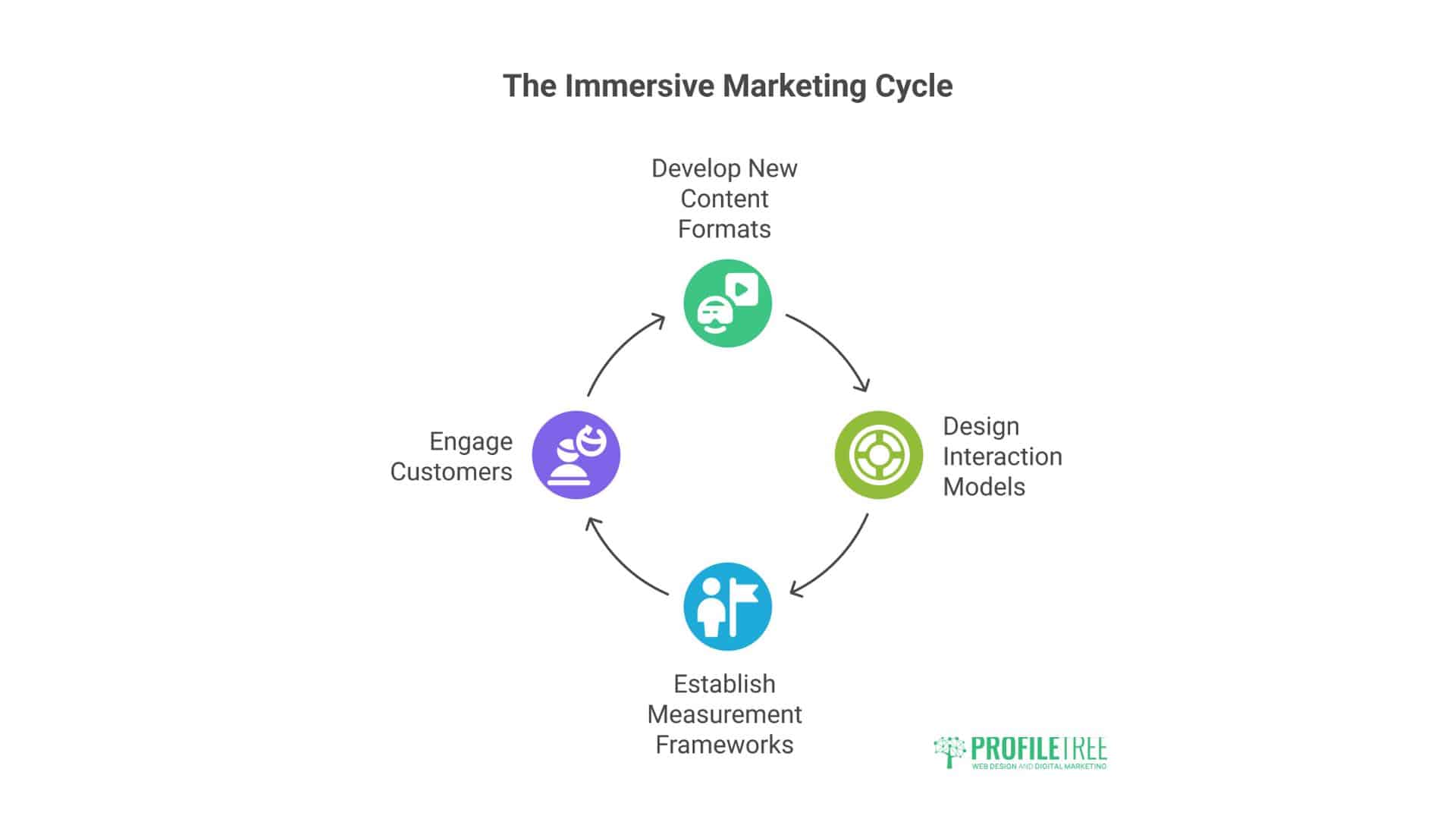
The immersive web will transform digital marketing from screen-based interactions to three-dimensional experiences where customers can virtually try products, attend events, and engage with brands through augmented and virtual reality environments. This evolution beyond traditional clicks and page views requires marketers to develop new content formats, interaction models, and measurement frameworks that capture engagement in spatial computing environments where physical and digital boundaries dissolve completely.
Virtual Reality Commerce Mainstream by 2028
Virtual reality shopping will generate £15 billion in UK sales by 2030. This isn’t niche gaming enthusiasm—it’s fundamental commerce transformation. Consumers will browse virtual stores, examine products in three dimensions, and purchase without leaving their homes.
The technology exists today, but lacks widespread adoption. Apple’s Vision Pro and Meta’s Quest lines demonstrate viable hardware. By 2027, next-generation headsets costing under £500 will deliver experiences indistinguishable from physical reality. Mass adoption follows affordability.
Retail transforms completely. Physical stores become experience centres rather than transaction points. Virtual flagship stores accessible globally eliminate geographic limitations. Brands create impossible shopping environments—underwater boutiques, space station showrooms, historical marketplace recreations—limited only by imagination.
Website development evolves into creating virtual environments. Traditional websites become legacy systems like print catalogues. Businesses require VR-ready digital presences or risk irrelevance as consumers migrate to immersive platforms.
Augmented Reality Integration Everywhere
By 2026, AR will become invisible infrastructure embedded throughout daily life. Smart glasses will replace smartphones as primary digital interfaces. Every surface will become potentially interactive, and the physical and digital worlds will merge seamlessly.
Marketing opportunities multiply exponentially. Products appear in consumers’ actual environments before purchase. Navigation overlays guide customers through stores. Information layers enhance every real-world interaction. Traditional advertising feels prehistoric compared to contextual AR experiences.
The UK’s 5G infrastructure, which will achieve 95% coverage by 2027, enables persistent AR experiences without latency. Real-time rendering, cloud processing, and edge computing create responsive environments that feel native rather than imposed.
Video marketing services must prepare for three-dimensional content. Flat videos on rectangular screens will feel as outdated as black-and-white television. Our team already experiments with volumetric capture and spatial storytelling, preparing for this inevitable shift.
The Metaverse Matures
Despite scepticism, metaverse platforms will host 40% of digital interactions by 2030. These are not Facebook’s singular vision but interconnected virtual spaces where commerce, entertainment, and social interaction converge. The metaverse becomes a parallel digital civilisation.
Successful brands establish persistent metaverse presences—not just advertising but actual utility. Virtual stores, customer service centres, event spaces, and community hubs become standard marketing infrastructure. Digital real estate appreciation makes early investment crucial.
Interoperability emerges as a key challenge and opportunity. Assets, identities, and currencies must transfer between platforms. Brands that create portable value—items, experiences, and relationships transcending individual platforms—build lasting competitive advantages.
ProfileTree’s digital strategy services include metaverse readiness assessment and implementation planning. Early preparation positions businesses for inevitable virtual migration.
Search Evolution: Beyond Keywords and Rankings
Search technology is evolving beyond traditional keyword matching toward conversational AI interactions, voice queries, and predictive search capabilities that anticipate user needs before they’re explicitly expressed. This fundamental shift requires marketers to optimise for search intent, natural language processing, and multi-modal experiences rather than focusing solely on keyword rankings and traditional SEO metrics that are becoming increasingly irrelevant.
Conversational AI Replaces Traditional Search
By 2027, 70% of searches will occur through conversational AI rather than traditional search engines. Users won’t type keywords—they’ll discuss with AI assistants who understand context, intent, and preference history. SEO will transform from keyword optimisation to knowledge graph integration.
Google’s Search Generative Experience and ChatGPT integration into Bing preview this future. Search results become conversational responses synthesising multiple sources rather than ranked link lists. Position one loses meaning when AI provides direct answers.
Businesses must reimagine search visibility strategies. Rather than ranking for keywords, brands must ensure AI systems understand and recommend their offerings. This requires structured data, semantic markup, and comprehensive knowledge base development that AI can interpret and utilise.
SEO services are evolving into AI optimisation. We’re already developing strategies to ensure clients appear in AI responses, not just search results. This forward-thinking approach provides advantages as traditional SEO becomes obsolete.
Visual and Voice Search Dominance
By 2026, visual searches will exceed text queries for product discovery. Consumers photograph desired items, and AI instantly identifies purchase options. Pinterest Lens and Google Lens demonstrate early capability, but future systems will understand context, style, and intent beyond simple matching.
Voice search grows simultaneously, accounting for 60% of all queries by 2028. Smart speakers in every room, voice assistants in every device, and ambient computing everywhere make speaking more natural than typing. Marketing must optimise for conversational queries, natural language, and audio-first experiences.
Local businesses face particular opportunities and challenges. As autonomous delivery and service provision explode, “near me” searches become “bring me” commands. Physical proximity matters less than service speed and quality. Every business becomes potentially global through voice-activated, AI-mediated commerce.
Zero-Click Marketing Reality
By 2029, 80% of searches will resolve without clicking through websites. AI provides complete answers, transaction processes within search interfaces, and users rarely leave their preferred platforms. Traditional website traffic metrics become meaningless.
Businesses must deliver value within search experiences rather than driving traffic to owned properties. Rich snippets, knowledge panels, and integrated commerce capabilities become primary customer touchpoints. The website transforms from a destination to a data source, feeding platform experiences.
This shift demands fundamental strategy revision. Rather than attracting visitors, businesses must push valuable content to platforms where audiences already exist. API-first architecture, headless commerce, and platform-agnostic content strategies become essential.
Social Commerce Revolution
Social commerce is evolving from simple product tags to sophisticated shopping ecosystems where discovery, evaluation, and purchase happen seamlessly within social platforms without ever leaving the user’s feed. This revolution transforms social media from awareness-building channels into complete retail destinations where influencer recommendations, peer reviews, and instant purchasing capabilities merge to create frictionless commerce experiences that bypass traditional e-commerce entirely.
Platform Commerce Exceeds Website Sales
By 2028, social platform sales will exceed traditional e-commerce websites for consumer goods. Instagram, TikTok, and emerging platforms become primary shopping destinations. The distinction between social media and commerce platforms disappears entirely.
Live shopping is exploding, and current experiments are transforming it into a dominant retail channel. Influencers host shopping shows, brands stream product launches, and communities gather for group buying experiences. China’s live commerce market, already worth £400 billion, previews Western evolution.
Social proof mechanisms evolve beyond reviews and ratings. Real-time purchase streams, friend recommendations, and community validation drive buying decisions. Traditional advertising feels inauthentic compared to organic social commerce dynamics.
Social media marketing transforms into commerce orchestration. Our strategies already incorporate shopping features, but future services will manage entire social commerce operations from product presentation through fulfilment.
Creator Economy Maturation
By 2027, the creator economy will employ 10 million UK residents and generate £50 billion annually. Every business becomes a media company, and every professional becomes a content creator. Personal brands carry more weight than corporate identities.
Micro-influencers prove more valuable than celebrities for authentic engagement. AI tools democratise content creation, enabling anyone to produce professional-quality media. The barrier between amateur and professional content creators dissolves.
Brands must navigate this democracy carefully. Authentic partnerships with aligned creators dramatically outperform traditional advertising. However, managing hundreds of creator relationships requires sophisticated systems and genuine community engagement that manufactured campaigns cannot replicate.
Community-Driven Marketing
By 2030, brand communities will drive 60% of marketing impact. These are not followers or subscribers but genuine communities with shared values, mutual support, and collective identity. Successful brands facilitate communities rather than broadcast messages.
Web3 technologies enable community ownership and governance. Token-gated experiences, DAO-structured decisions, and NFT-based memberships create invested stakeholders rather than passive consumers. Traditional customer relationships feel transactional compared to community belonging.
Community building requires long-term commitment and authentic engagement. Brands attempting superficial community creation fail spectacularly. Success demands genuine value creation, consistent presence, and willingness to cede control to community wisdom.
Privacy-First Marketing Paradigm
The privacy-first marketing paradigm represents a fundamental shift from data collection-dependent strategies to value-exchange models where consumers actively choose to share information in return for personalised experiences and tangible benefits. This transformation requires marketers to build trust-based relationships, develop first-party data strategies, and create compelling value propositions that motivate voluntary data sharing rather than relying on invasive tracking technologies rapidly becoming obsolete and legally problematic.
The Cookie-less Future Arrives
Third-party cookies will vanish entirely by 2026. Google’s Privacy Sandbox, Apple’s App Tracking Transparency, and regulatory pressure eliminate traditional tracking. Marketing attribution, audience targeting, and personalisation require complete reimagination.
First-party data becomes invaluable currency. Businesses with direct customer relationships thrive while those dependent on third-party data struggle. Email lists, app users, and membership programmes provide competitive advantages that money cannot buy.
Zero-party data—information customers intentionally share—becomes even more valuable. Progressive profiling, preference centres, and value exchanges encourage voluntary data sharing. Trust becomes a measurable competitive advantage as consumers choose which brands deserve their data.
Digital strategy consultation helps businesses prepare for cookie-less marketing. We implement alternative tracking, build first-party data strategies, and create value exchanges that encourage voluntary data sharing.
Blockchain Identity and Consent
By 2028, blockchain-based identity systems will manage marketing consent across platforms. Users control portable profiles, granting specific permissions to brands for defined periods. Every interaction becomes auditable, consensual, and compensatable.
This transformation benefits both consumers and ethical marketers. Consumers monetise their attention and data. Brands access verified, consented audiences. Fraud diminishes as blockchain verification eliminates bots and false identities. The entire ecosystem becomes more efficient and trustworthy.
Smart contracts automate compliance, ensuring marketing activities instantly respect user preferences. Geographic restrictions, age verification, and consent management execute automatically. Regulatory compliance transforms from a burden to a competitive advantage.
Regulatory Evolution Acceleration
UK data protection laws will strengthen significantly by 2027. Age-appropriate design codes extend to all digital services. Algorithmic transparency requirements expose AI decision-making. Penalties for violations increase to 10% of global revenue.
The implementation of the Online Safety Bill reshapes content moderation, platform liability, and user protection. Marketing must navigate complex requirements around harmful content, age verification, and duty of care—non-compliance risks, existential penalties.
International regulatory divergence creates complexity for global campaigns. UK GDPR, EU AI Act, California privacy laws, and emerging frameworks require sophisticated compliance systems. Businesses mastering multi-jurisdictional compliance gain significant advantages over struggling competitors.
Sustainable and Ethical Marketing
Sustainable and ethical marketing is evolving from optional corporate responsibility to mandatory business practice as consumers increasingly demand transparency, environmental accountability, and authentic social impact from the brands they support. This shift requires marketers to integrate sustainability metrics into campaign planning, demonstrate measurable environmental benefits, and build authentic, purpose-driven narratives that align with genuine business practices rather than superficial greenwashing that modern consumers easily identify and reject.
Environmental Impact Transparency
By 2027, carbon footprint disclosure will become mandatory for digital marketing. Every campaign must report energy consumption, emissions generated, and offset measures. Consumers increasingly choose brands that demonstrate genuine environmental responsibility.
Digital advertising’s environmental impact—currently equivalent to aviation industry emissions—faces intense scrutiny. Programmatic advertising’s inefficiency, video content’s energy consumption, and blockchain’s power requirements demand optimisation. Efficient marketing becomes an ethical imperative.
Green hosting, renewable energy usage, and carbon-negative campaigns become standard. Brands competing on sustainability metrics attract conscious consumers and ESG-focused investors. Environmental responsibility transforms from nice-to-have to business necessity.
Purpose-Driven Brand Imperative
By 2030, 75% of consumers will choose brands based on values alignment rather than product superiority. Authentic purpose, demonstrated through consistent action rather than advertising claims, determines market success. Performative activism gets exposed and punished immediately.
Transparency becomes unavoidable as AI analyses corporate behaviour, blockchain tracks supply chains, and communities share experiences instantly. Brands cannot maintain facades—authentic values shine through while hypocrisy is mercilessly exposed.
Employee activism amplifies this trend. Workers choose employers based on values, publicly criticise misaligned actions, and organise collective responses to corporate decisions. Internal culture becomes external marketing as employees become the most credible brand ambassadors.
Accessibility as Standard
By 2026, UK accessibility laws will match physical world requirements for digital spaces. Websites, apps, and marketing materials must accommodate all disabilities. Non-compliance triggers discrimination lawsuits and regulatory penalties.
This extends beyond technical compliance to inclusive design. Marketing imagery represents diverse populations. Content accommodates neurodivergent processing. Experiences work for all abilities. Inclusion becomes embedded rather than retrofitted.
Through better design, accessibility improvements benefit everyone. Voice interfaces help busy parents, captions assist non-native speakers, and high contrast aids aging eyes. Universal design principles create superior experiences for all users.
Emerging Technologies and Platforms
Quantum Computing’s Marketing Impact
By 2029, quantum computing will revolutionise marketing analytics, enabling currently impossible calculations. Customer journey modelling across infinite variables, real-time optimisation of millions of campaigns simultaneously, and pattern recognition in vast unstructured datasets become routine.
Encryption methods protecting current customer data become vulnerable to quantum decryption. Businesses must implement quantum-resistant security before widespread quantum adoption. Early preparation prevents catastrophic data breaches when quantum computers become accessible.
Quantum machine learning accelerates AI development exponentially. Marketing AI that currently requires months of training will optimise in minutes. The Competitive advantages of AI implementation shrink as quantum-powered systems instantly level the playing field.
Brain-Computer Interfaces
Early brain-computer interfaces will enable thought-based device control by 2030. While full neural integration remains distant, simple BCIs for device navigation, emotional state detection, and attention measurement are becoming commercially available.
Marketing implications prove profound yet concerning. Emotional response measurement enables perfect message optimisation. Attention tracking reveals engagement precisely. Thought-pattern analysis predicts decisions before conscious awareness. Ethical frameworks struggle to address these capabilities.
Consumer protection will require revolutionary approaches. Mental privacy rights, cognitive manipulation prevention, and consciousness sovereignty become critical issues. Brands that navigate these ethically build trust, while those that exploit capabilities face backlash.
Internet of Things Ubiquity
By 2027, UK homes will average 50 connected devices. Every appliance, surface, and object potentially collects data and delivers experiences. Marketing opportunities multiply but require sophisticated orchestration across countless touchpoints.
Ambient computing makes technology invisible yet omnipresent. Homes anticipate needs, cars suggest destinations, and clothing monitors health. Marketing must respect this intimate integration while delivering value. Intrusive advertising in personal spaces triggers immediate rejection.
Edge computing enables real-time personalisation without cloud latency. In-store experiences adapt instantly to customer presence. Innovative packaging provides contextual information. Products become service platforms rather than static objects.
Industry-Specific Transformations
Digital marketing transformation manifests differently across industries, with sectors like retail embracing AR shopping experiences, healthcare navigating AI applications within strict regulatory boundaries, and financial services balancing personalisation with privacy compliance. Understanding these industry-specific transformation patterns enables businesses to prioritise relevant innovations, anticipate sector-specific challenges, and develop competitive advantages through strategic technology adoption that aligns with industry regulations and customer expectations.
Retail’s Digital-Physical Fusion
By 2028, successful retailers will not distinguish between online and offline operations. Stores will simultaneously become fulfilment centres, showrooms, experience spaces, and community hubs. Digital integration will make physical spaces dynamically responsive.
Inventory exists virtually until needed physically. 3D printing and on-demand manufacturing eliminate stock requirements. Personalisation happens in-store through digital configuration. Through AR overlays, every retail space becomes unique to each visitor.
Website development for retail must accommodate this fusion. Digital platforms orchestrate physical experiences while stores generate digital engagement. The distinction between website and store dissolves into a unified commerce experience.
Healthcare Marketing Revolution
Digital health platforms will handle 40% of GP consultations by 2027. Telemedicine, AI diagnosis, and preventive monitoring transform healthcare delivery. Marketing must navigate strict regulations while capitalising on digital transformation.
Wearable devices providing continuous health monitoring create unprecedented data streams. Marketing to healthy individuals about potential conditions raises ethical concerns. Privacy requirements intensify as health data sensitivity increases.
Trust becomes paramount in healthcare marketing. Brands build genuine relationships through education, support, and community thriving. Those treating healthcare as a transaction fail against competitors providing holistic wellness partnerships.
Financial Services Transformation
By 2029, traditional banks will lose 50% of their market share to digital-first challengers. Cryptocurrency adoption has reached 30% of the UK population. Decentralised finance protocols handle significant transaction volumes. Marketing must address the radically different financial landscape.
Open banking enables unprecedented personalisation and competition. Financial products become commodities; service and experience differentiate—marketing shifts from product features to lifestyle integration and value demonstration.
Regulatory technology automated compliance enables smaller players to compete. Marketing must navigate complex requirements while maintaining agility. Those mastering regulatory complexity while delivering superior experience capture shifting market share.
Education Sector Disruption
By 2028, online learning will account for 60% of professional development. Traditional degrees will lose their monopoly as skills-based credentials gain acceptance. Continuous learning will become a lifelong necessity rather than a discrete phase.
Marketing education requires demonstrating immediate value and career impact. Completion rates, employment outcomes, and salary improvements become key metrics. Social proof through alumni success stories outweighs institutional reputation.
Digital training services position ProfileTree at this intersection. Our Digital Marketing Training for Businesses demonstrates the evolution already underway in education.
Measurement and Attribution Evolution
Marketing measurement is evolving beyond last-click attribution toward sophisticated multi-touch, cross-platform analytics that capture customer journeys spanning multiple devices, channels, and extended timeframes using AI-powered attribution modelling. This evolution requires marketers to abandon oversimplified conversion tracking in favour of comprehensive customer lifetime value analysis, brand sentiment monitoring, and predictive analytics that reveal actual marketing impact across increasingly complex digital ecosystems.
Multi-Touch Attribution Complexity
By 2027, customer journeys will average 50+ touchpoints across 15+ platforms before conversion. Traditional attribution models will fail. AI-powered multi-touch attribution will become essential for understanding marketing impact.
Probabilistic attribution replaces deterministic tracking. Statistical models estimate impact when direct measurement is impossible. Marketing mix modelling renaissance occurs as businesses need a holistic understanding beyond digital metrics.
Incrementality testing becomes standard practice. Continuous experimentation reveals actual campaign impact versus correlation. Businesses mastering scientific measurement gain enormous advantages over assumption-based competitors.
Attention Metrics Supremacy
By 2026, attention metrics will matter more than impressions or clicks. How long users engage, emotional response intensity, and memory formation will become primary KPIs, and superficial metrics indicating potential exposure will become worthless.
Eye-tracking, emotion recognition, and biometric monitoring provide rich attention data. Privacy-preserving aggregation enables measurement without individual tracking. Quality of attention matters more than quantity of exposure.
Marketing optimises for sustained engagement rather than initial clicks. Content depth, interactive experiences, and value delivery determine success. Clickbait and interruption marketing become counterproductive as attention metrics reveal their ineffectiveness.
Lifetime Value Revolution
By 2029, customer lifetime value prediction accuracy will reach 90% within the first interaction. AI analyses thousands of signals instantly, determining long-term potential. Marketing investment is allocated precisely based on predicted value.
This transforms acquisition strategies completely. Rather than averaging CAC across segments, businesses invest proportionally to predicted LTV. High-value customers receive premium experiences from first contact. Resource allocation becomes scientifically optimised.
Community value extends beyond individual transactions. Network effects, referral impact, and social proof contribute to expanded CLV calculations. Marketing recognises and rewards complete value contribution rather than direct purchases alone.
Marketing Organisation Transformation
Marketing organisations must transform from campaign-focused departments to agile, technology-enabled teams that blend creative talent with data scientists, AI specialists, and customer experience architects. This organisational evolution requires new hiring strategies, skill development programs, and collaborative frameworks that enable traditional marketers to work effectively alongside emerging technology roles while maintaining creative excellence and strategic thinking capabilities.
Hybrid Human-AI Teams
By 2027, marketing departments will comprise 60% AI agents and 40% humans. This is not replacement but augmentation—AI handles execution while humans provide strategy, creativity, and relationship management. Team dynamics will transform completely.
Marketing roles evolve dramatically. “Prompt engineers” who optimise AI instructions become crucial. “AI trainers” who teach systems brand voice earn premium salaries. Digital ethicists” ensure responsible AI deployment. Traditional roles either evolve or evaporate.
Continuous learning becomes a survival requirement. Marketing professionals must update their skills quarterly rather than annually. Those embracing perpetual education thrive, while those resisting change become obsolete.
Agile Marketing Standard
By 2026, quarterly planning cycles will become extinct. Marketing operates in two-week sprints, daily optimisations, and real-time adjustments. Annual strategies feel geological compared to market velocity.
Cross-functional teams replace departmental silos. Marketing, sales, product, and service merge into unified revenue teams. Artificial boundaries between disciplines dissolve as integration increases effectiveness.
Data democratisation enables everyone to access insights. Self-service analytics, automated reporting, and AI-assisted interpretation make data accessible beyond specialists. Evidence-based decision-making becomes universal rather than exclusive.
Remote-First Reality
By 2028, 70% of marketing professionals will work remotely. Office-centric companies struggle to attract talent demanding flexibility. Global talent pools replace geographic constraints. Time zones matter more than postcodes.
Virtual collaboration tools make remote work more effective than office presence. VR meetings feel more engaging than conference rooms. Asynchronous communication enables deep work. Physical offices become occasional gathering spaces rather than daily destinations.
This transformation benefits agencies like ProfileTree enormously. We access global talent while maintaining competitive costs. Clients receive world-class expertise without London overheads. Geography becomes irrelevant to capability.
Ciaran Connolly, ProfileTree founder, observes: “The next five years will separate digital leaders from digital dinosaurs more dramatically than the past twenty. We’re not approaching gradual evolution—we’re facing revolutionary transformation. Businesses preparing now will thrive in the 2030s landscape. Those waiting for change to arrive will discover they’ve already been left behind. At ProfileTree, we’re not just predicting this future—we’re actively building it with our clients, ensuring they lead rather than follow these transformations.”
Strategic Imperatives for 2025-2030
Immediate Actions Required
Businesses must begin the transformation immediately. Waiting for perfect clarity guarantees obsolescence. Start with foundational elements that remain valuable regardless of specific evolution:
AI Integration:Implement AI tools across marketing operations. Begin with chatbots, content assistance, and analytics. Build AI literacy throughout organisations. Develop ethical AI frameworks before regulations mandate them.
First-Party Data Infrastructure: Build direct customer relationships and generate proprietary data. Implement progressive profiling, preference centres, and value exchanges. Create data assets that provide competitive advantages when third-party data disappears.
Platform Diversification: Establish a presence across emerging platforms before they become mainstream. Experiment with VR experiences, blockchain initiatives, and metaverse activations. Early adoption provides learning advantages and potential first-mover benefits.
Skills Development: Invest in continuous team education, partner with forward-thinking agencies like ProfileTree that understand future requirements, and build learning cultures that embrace rather than resist change.
Medium-Term Investments
By 2027, specific capabilities will become mandatory for competitive participation:
Conversational Commerce: Develop AI assistants capable of complete customer journeys. Build knowledge bases enabling AI representation. Create conversational experiences across all touchpoints.
Immersive Experiences: Invest in AR/VR content creation capabilities. Develop 3D product models and virtual environments. Prepare for screen-free interface futures.
Community Infrastructure: Build genuine communities rather than audience lists. Implement community platforms, governance structures, and value-sharing mechanisms. Foster authentic engagement that transcends transactional relationships.
Measurement Evolution: Implement sophisticated attribution modelling. Develop attention metrics and lifetime value predictions. Build experimentation frameworks enabling continuous optimisation.
Long-Term Positioning
By 2030, market leaders will demonstrate specific characteristics:
Purpose-Driven Operations: Authentic values embedded throughout operations. Transparent impact reporting across environmental and social dimensions. Stakeholder capitalism replacing shareholder primacy.
Ecosystem Orchestration: Platform business models connecting multiple stakeholders. API-first architecture enabling seamless integrations. Value creation through network effects rather than linear transactions.
Adaptive Capabilities: Organisational structures enable rapid pivots. Continuous innovation cultures encourage experimentation and resilience through diversification rather than optimisation.
Human-Centric Technology: AI augments human capability rather than replacing it. Technology serves emotional and social needs beyond functional requirements. Ethics are embedded in technology deployment rather than retrofitted.
Preparing Your Business for 2030
Assessment Framework
Evaluate your current digital marketing against future requirements:
Technology Readiness: Current AI adoption level, data infrastructure quality, platform presence breadth, and innovation pipeline strength indicate the preparation level.
Organisational Agility: Decision-making speed, experimentation culture, learning investment, and change management capability determine adaptation potential.
Customer Relationships: First-party data assets, community engagement depth, trust and loyalty metrics, and value exchange sophistication reveal relationship strength.
Competitive Position: Market share trajectory, differentiation sustainability, innovation leadership, and disruption vulnerability indicate future viability.
Transformation Roadmap
Develop systematic transformation plans addressing identified gaps:
Year 1 (2025-2026): Foundation building through AI implementation, data infrastructure, skills development, and initial experiments.
Year 2-3 (2026-2028): Capability expansion via platform diversification, immersive experiences, community building, and measurement evolution.
Year 4-5 (2028-2030): Market leadership through purpose activation, ecosystem orchestration, continuous innovation, and human-centric excellence.
Partner Selection
Choose partners who understand and prepare for this future:
ProfileTree demonstrates future readiness through current AI implementation, emerging platform expertise, continuous innovation culture, and strategic vision alignment. Our comprehensive services spanning website development, SEO evolution, content transformation, video innovation, social commerce, and AI integration position clients for 2030 success.
Industry Implications and Opportunities
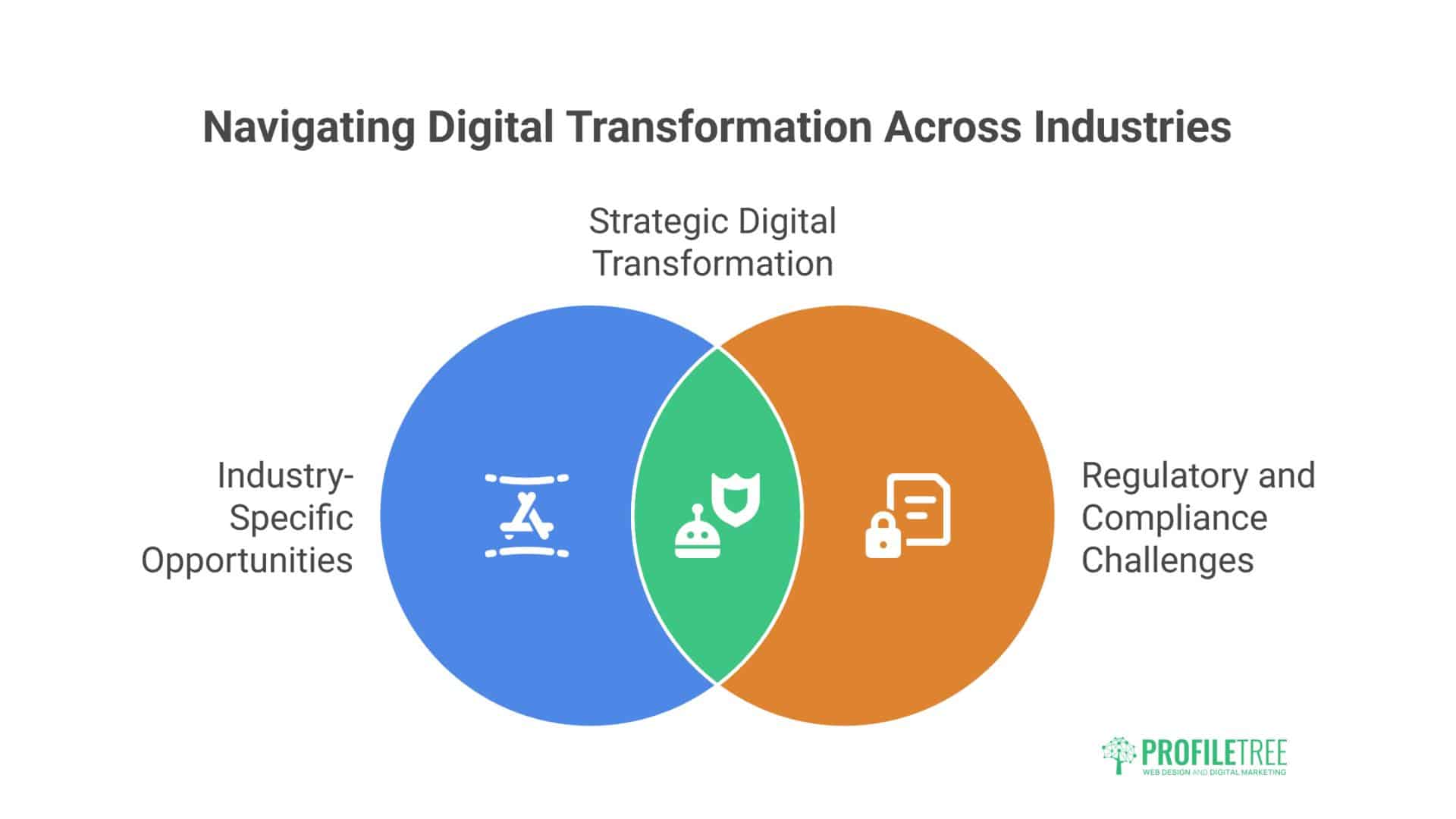
These digital marketing transformations create vastly different implications across industries, with retail and hospitality gaining immediate advantages from immersive technologies. At the same time, financial services and healthcare face complex regulatory challenges that slow AI adoption. Understanding industry-specific opportunities enables businesses to prioritise investments strategically, whether embracing social commerce for consumer brands or developing compliant AI systems for regulated sectors, ensuring transformation efforts align with sector dynamics and competitive realities.
Winners and Losers
Clear patterns emerge identifying future winners and losers:
Winners: Businesses embracing AI augmentation, building genuine communities, investing in immersive experiences, prioritising sustainability and ethics, and maintaining continuous innovation.
Losers: Companies resisting digital transformation, depending on third-party data, maintaining traditional hierarchies, prioritising short-term profits, and ignoring stakeholder voices.
New Business Models
Entirely new business models emerge from technological convergence:
Attention Brokers: Intermediaries managing consumer attention allocation across platforms. Compensating users for engagement while guaranteeing advertisers quality attention.
Reality Architects: Specialists creating immersive brand environments across VR/AR platforms and designing impossible experiences that define brand perception.
Community Orchestrators: Facilitators build and manage brand communities and create value through connection rather than transaction.
AI Interpreters: Specialists ensuring AI systems understand and recommend brands appropriately and optimising for AI discovery rather than human search.
Career Evolution
Marketing careers transform dramatically, requiring new skills:
Rising Roles: AI trainers, prompt engineers, virtual environment designers, community managers, digital ethicists, data storytellers, and experience architects.
Declining Roles: Traditional media buyers, keyword researchers, social media schedulers, email blast managers, and banner ad designers.
Evolved Roles: Strategists becoming AI conductors, creators becoming experience designers, analysts becoming prediction specialists, and managers becoming innovation facilitators.
Global Context and UK Positioning
The UK’s digital marketing landscape must navigate Brexit implications, GDPR compliance, and evolving relationships with global tech platforms while maintaining competitive positioning against EU and US markets under different regulatory frameworks. Understanding this global context enables UK businesses to leverage their unique advantages—including English language dominance, financial sector expertise, and strategic geographic positioning—while adapting to international trends and regulatory changes influencing cross-border digital marketing effectiveness.
UK’s Competitive Advantages
The UK possesses unique advantages for digital marketing leadership:
Regulatory Leadership: Early GDPR implementation, Online Safety Bill innovation, and age-appropriate design codes position the UK as a regulatory pioneer.
Language Advantage: English-language content reaches global audiences. UK creativity exports worldwide. Cultural influence amplifies marketing impact.
Innovation Ecosystem: London’s tech hub, regional digital clusters, university research excellence, and venture capital availability foster innovation.
Cultural Diversity: A Multicultural population provides global insights. International connections facilitate expansion. Diverse perspectives drive creativity.
International Competition
Global competition intensifies, requiring strategic positioning:
US Technology Dominance: American platforms control distribution. Silicon Valley drives innovation. The UK must leverage creativity and regulation rather than competing on technology alone.
Chinese Model Evolution: China’s digital ecosystem provides a future preview. Live commerce, super-apps, and social commerce innovations will eventually reach the UK. Early observation enables preparation.
EU Regulatory Alignment: Despite Brexit, the UK must maintain compatibility with EU frameworks. Divergence creates complexity for international campaigns, while harmonisation provides advantages.
Emerging Market Innovation: India, Southeast Asia, and Africa develop mobile-first solutions. Reverse innovation brings emerging market solutions to developed economies. The UK must remain open to global learning.
Risk Mitigation and Contingency Planning
Digital marketing success increasingly depends on robust risk mitigation strategies that protect against algorithm changes, platform disruptions, data breaches, and economic volatility that can destroy campaigns overnight. Effective contingency planning requires diversified channel strategies, flexible budget allocation models, and crisis response protocols that enable rapid adaptation when external factors threaten marketing performance and business continuity.
Technology Risks
Prepare for potential technology failures or backlash:
AI Winter Possibility: If AI fails to deliver promises, businesses overdependent on AI face a crisis. Maintain human capabilities alongside AI augmentation.
Privacy Backlash: Consumer rejection of surveillance capitalism could eliminate targeting capabilities. Build brand strength beyond algorithmic distribution.
Platform Collapse: A Major platform failure would devastate dependent businesses. Diversify presence across multiple platforms and owned channels.
Cyber Warfare Impact: State-sponsored attacks could cripple digital infrastructure. Develop offline contingencies and resilient systems.
Regulatory Risks
Navigate increasing regulatory complexity:
Compliance Costs: Expanding regulations increase operational burden. Build compliance into operations rather than treating it as overhead.
Innovation Restrictions: Regulations might stifle innovation. Engage with policymakers, ensuring balanced frameworks.
International Fragmentation: Diverging global standards create complexity. Develop flexible systems accommodating multiple frameworks.
Retroactive Enforcement: Past practices might face future prosecution. Document decisions and maintain ethical standards exceeding current requirements.
Economic Risks
Prepare for economic volatility affecting marketing:
Recession Impact: Economic downturns slash marketing budgets. Build efficient operations, surviving budget cuts while maintaining effectiveness.
Inflation Pressure: Rising costs erode marketing purchasing power. Focus on owned media and organic growth, reducing paid media dependence.
Currency Fluctuation: Exchange rate volatility affects international campaigns. Hedge currency exposure and build local market strength.
Market Consolidation: Industry consolidation reduces competition and innovation. Maintain differentiation, preventing commoditisation.
The Call to Action
The future arrives faster than expected. By the time trends become apparent, competitive advantages evaporate. First movers establishing positions in emerging landscapes capture disproportionate value. Followers struggle to catch up as leaders compound their advantages.
This isn’t speculative fiction—it’s a strategic imperative. Every prediction builds on observable trends, emerging technologies, and existing fundamental shifts. The question isn’t whether these changes will occur but how quickly and thoroughly they’ll transform marketing.
Businesses face clear choice: lead or follow, disrupt or be disrupted, evolve or become extinct. The comfortable middle ground disappears as transformation accelerates. Incremental improvement proves insufficient when step-changes redefine entire industries.
Conclusion: Future of Digital Marketing in the UK
The next five years will redefine digital marketing more dramatically than the previous twenty. Technologies we consider experimental will become essential, optimal strategies will become obsolete, and dominant businesses will be disrupted.
Yet within this chaos lies unprecedented opportunity. Never before have businesses possessed such powerful tools for understanding, reaching, and serving customers. Never have barriers to entry been lower or potential for growth higher. Never has creative, strategic thinking mattered more than technological advantage.
ProfileTree stands ready to guide your journey into this transformed future. Our comprehensive services across AI implementation, immersive web development, evolved SEO, next-generation content, revolutionary video, and social commerce position your business for 2030 success.
The future doesn’t wait for preparation. Every day delayed represents a lost competitive advantage. While competitors debate and deliberate, leaders act and adapt. While others fear change, innovators embrace transformation.
Your choice becomes clear: embrace the future or be consumed by it. Lead transformation or follow others who do. Build tomorrow’s business today or watch today’s business become tomorrow’s casualty.
The digital marketing revolution has begun. The question isn’t whether you’ll participate but whether you’ll lead or follow. At ProfileTree, we’re not waiting for the future but building it. Join us in creating digital marketing’s next chapter, where innovation meets execution, strategy meets success, and your business thrives in tomorrow’s landscape.
Contact ProfileTree today. Let’s build your 2030 success story starting now. The future belongs to those who prepare for it today.
FAQs
Which predictions carry the highest certainty for 2025-2030?
AI integration, cookie deprecation, and mobile commerce dominance approach near certainty. These trends show a clear trajectory with minimal reversal possibility. Conversational search, first-party data importance, and video content supremacy demonstrate a high probability. More speculative predictions include the impact of brain-computer interfaces and quantum computing.
How should small businesses prepare for these changes?
Start with foundational elements that provide immediate value regardless of specific evolution. Implement basic AI tools, build email lists and customer databases, establish social commerce capabilities, and invest in video content—partner with forward-thinking agencies like ProfileTree that understand future requirements without enterprise budgets.
What happens if these predictions prove wrong?
Even if specific predictions miss, underlying themes remain valid. Digital transformation accelerates regardless of particular technologies. Customer empowerment continues independent of platforms. Building agile capabilities, customer relationships, and innovation cultures provides value regardless of specific evolution.
Which industries face the most significant disruption?
Retail, media, and financial services face immediate transformation, while healthcare, education, and professional services experience gradual but profound change. Manufacturing, construction, and agriculture digitalise more slowly, but still require digital marketing evolution. No industry remains untouched by these transformations.
How can businesses balance current needs with future preparation?
Adopt a portfolio approach investing across time horizons. Allocate 70% to current performance, 20% to emerging opportunities, and 10% to experimental initiatives. This balance maintains current revenue while building future capabilities. Adjust ratios based on industry dynamics and competitive pressure.