
Self-Motivation: Inspirational Ways To Unlock Your True Potential
Table of Contents
Self-motivation is a time-honoured and much-debated subject you’ll have heard about from coaches, speakers and more. But can it really help you and your business? More importantly, what actionable steps can you take to see concrete benefits through better motivation and work towards a big goal?
Let’s take a closer look at how to become a self-motivator. We will consider what self-motivation is. Is self-motivation truly necessary for accomplishing our business goals? Why do we quickly lose our motivational energy? What can we do to make sure we see our goals through to the end?
Let’s start with the basics.
What Is Self-Motivation?
According to the Business Dictionary, self-motivation is “The ability to do what needs to be done, without influence from other people or situations. Motivated people can find a reason and strength to complete a task, even when challenging, without giving up or needing another to encourage them.”
In consideration of this definition, to be self-motivated is to have a driving force within, regardless of any external factors. However, is that realistic? Can you become isolated from all discouraging external factors? And more importantly, is self-motivation against realism, or can they go hand in hand together?
Self-motivated individuals are not daydreamers or shut away from reality. In fact, the most successful figures are aware of the challenges, risks, and threats surrounding them.
We believe, “Self-motivation is the key to unlocking your true potential. It’s the driving force that allows you to overcome obstacles, achieve your goals, and live a fulfilling life.” Brendon Burchard, motivational speaker and author of “The Charge”
This quote confirms that being a self-motivator is about finding a reason to continue, and believing in the necessity of finding a way through to be the best version of yourself.
Self-Motivation vs Self-Discipline
Self-motivation and self-discipline should work alongside one another. When feeling motivated, we have the force of “passion”, or a sense of duty to run forward. When being disciplined, we have the force of “duty” to push us forward. We call it “we do what we have to do” with a negative connotation.
But in fact, self-discipline is just as necessary as self-motivation. Neither of them can survive without the other. When self-motivation is absent, self-discipline steps in. When self-motivation is there, self-discipline retreats.
Why Do We Run Out of Self-Motivation?
Many people find themselves stuck in a familiar cycle: we listen to powerful motivational speeches, read inspiring quotes, or watch uplifting videos. For a brief moment, we feel energised and hopeful, ready to change our lives. Yet, not long after, that motivation fades, and we are left feeling drained, discouraged, and searching for inspiration once again.
This pattern repeats so often that it becomes frustrating. Over time, some people even abandon the pursuit of self-motivation altogether, believing that motivation simply “doesn’t last” or that something is wrong with them.
At first glance, it’s easy to blame external factors. Daily challenges, negativity, setbacks, and disappointments certainly play a role in wearing us down. However, these are not the core reasons we lose motivation.
The deeper issue is that we often look for self-motivation in the wrong places. We rely on external stimuli, words, speeches, or short bursts of inspiration, to fuel long-term change. These sources create a temporary illusion of hope and positivity, but because they don’t address our internal beliefs, habits, or purpose, the effect quickly disappears.
What we experience, then, is not a lack of motivation, but a reliance on fleeting emotional highs. Like a mirage, this form of motivation feels real in the moment, yet vanishes as soon as life demands consistency, effort, and discipline.
Unleashing The Power of Self-Motivation
Motivational books, talks, quotes, speeches, and stories do, of course, have some value. The problem is that we use them as main dishes, while they are appetisers. As obvious as it is, we fail to grasp that self-motivation comes from the “self”.
That means that being self-motivated is not a one-size-fits-all situation. Rather, it is a customised package of reasons, goals, experiences, and principles. This package varies a lot from one person to another.
Therefore, it should be a personal mission to find true self-motivation that can stand the test of time and defeat. Other external motivational sources are good for guidance; they provide experience from other people’s journeys to finding self-motivation.
But at the end, your own personal journey is different, and you should be the one to discover it solely. Do not expect self-motivation to be delivered at your doorstep. It is a process of self-discovery that comes from within.
Self-Motivation Techniques For Success
I understand that business owners don’t have time for navel-gazing. Instead, you want a reproducible framework that helps you and your employees when you’re working. Of course, this is challenging when self-motivation is a naturally personal process. With that in mind, here are the steps you can take to fast-track the process of figuring out what works for you.
Understanding how to stay motivated is particularly important when undertaking significant business projects. Whether you’re redesigning your website, implementing AI solutions, or developing a content marketing strategy, maintaining momentum through the entire process requires strong self-motivation skills.
Know Yourself
Many of us miss the greatest opportunities due to our lack of self-awareness. We either overestimate or underestimate our capacity and potential. Or even worse, we do not recognise our talents at all.
Knowing where your motivation comes from is the first and most crucial step. Understanding what brings out the best in you is the first step to accessing that extra spark and ability.
While this may take a lifetime to answer because our human nature is in a state of change. There are still some constant traits or preferences that we can discover by observing our behaviour.
The way to find out more about anything is asking questions:
- What are my end goals? Where do I want to be fifty years from now?
- What are my top priorities among these goals? Which are less important?
- How much can I tolerate to achieve these goals?
- What keeps me motivated most in my career? Money, appreciation, personal relationships, dreams, aesthetics, giving back to others?
- The bad habits that negatively affect me are:
- The good habits that I need to do more of are:
- My favourite hobbies and my recreation time is spent doing:
- What is the thing that frustrates me the most about my job?
- What brings me down at work?
- How do I react when I am disappointed?
There are many more questions to add to the list, all of which lead to finding out more about your character and how you can progress toward understanding yourself better.
Discovering Your Intrinsic Drivers
Discovering your intrinsic motivations, the driving forces that stem from within, is crucial for sustainable self-motivation. Here are some ways to identify your personal motivators:
- Reflect on your past experiences: Recall moments when you felt most engaged, energised, and fulfilled. What were you doing? What were the underlying reasons for your satisfaction?
- Explore your passions: What activities or topics ignite your curiosity and enthusiasm? These areas often hold clues to your intrinsic motivations.
- Consider your values: What principles and ideals guide your life decisions and are particularly important to you? Aligning your actions with your core values can fuel self-motivation.
- Seek inspiration from others: Observe individuals whose self-motivation inspires you. What qualities or actions contribute to their drive?
- Engage in self-discovery practices: Mindfulness, journaling, and personality assessments can provide valuable insights into your motivations.
Adopt a Lifestyle that Inspires You
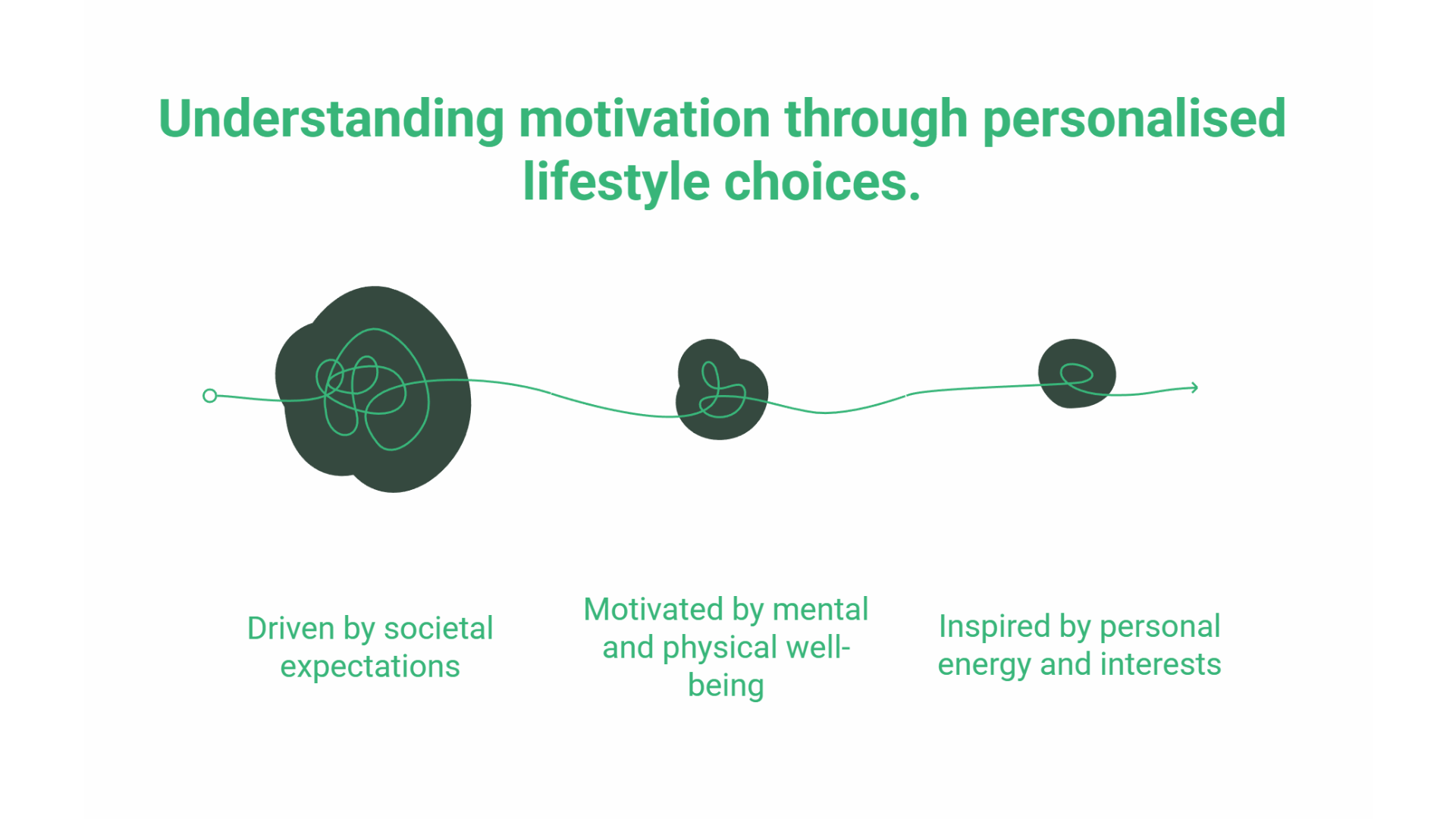
What motivates others may not mean anything to you, and vice versa. Some people wake up at 5am, do not eat meat, and do yoga. This is a great and healthy lifestyle, and it works for many; however, it does not mean it should apply to everyone.
If you have tried it and it did not make you feel better, so what? It does not mean that you failed to live up to the standards. The intersection of well-being looks different to each person.
Some people are night owls who find yoga boring, yet they are still stimulated and energetic. There is no magic recipe for a lifestyle that will make you always feel great about yourself. It varies from one person to another, meaning we need to cultivate a lifestyle that inspires you as an individual.
It’s always easier to motivate yourself when you feel good. Exercise is key here. One of the most popular reasons for maintaining activity is to help your mental health, and this, in turn, helps you to stay motivated while meeting your business goals.
There are “qualities” that we find common among self-motivated people, such as determination, confidence, and self-care. But lifestyle is a flexible dough that each one must shape according to his/her preferences, making progress toward becoming the best version of themselves.
Take Responsibility for Yourself and Your Choices
There’s one trap most of us fall into. We tend to blame others or the circumstances for our own letdowns. We victimise ourselves and refuse to take responsibility or admit that we made a wrong choice.
The problem with this attitude is that circumstances and other hindering factors will never cease to exist. There will always be something to blame, whether this is a lack of resources, enemies, or an unlucky situation.
Self-motivation is born from an “internal” desire to go beyond the difficult surroundings. Even if it is true that an external factor has caused a disaster, self-motivated people would rather focus on learning from that experience than continue to point fingers.
“At ProfileTree, we see this pattern repeatedly,” says Ciaran Connolly, Director of ProfileTree. “Business owners who blame algorithm changes, budget constraints, or market conditions rarely succeed with digital transformation. Those who take ownership of their situation, learn from setbacks, and adapt their approach are the ones who see real results from their website redesigns, SEO strategies, and content marketing efforts.
How to Maintain Long-Term Self-Motivation
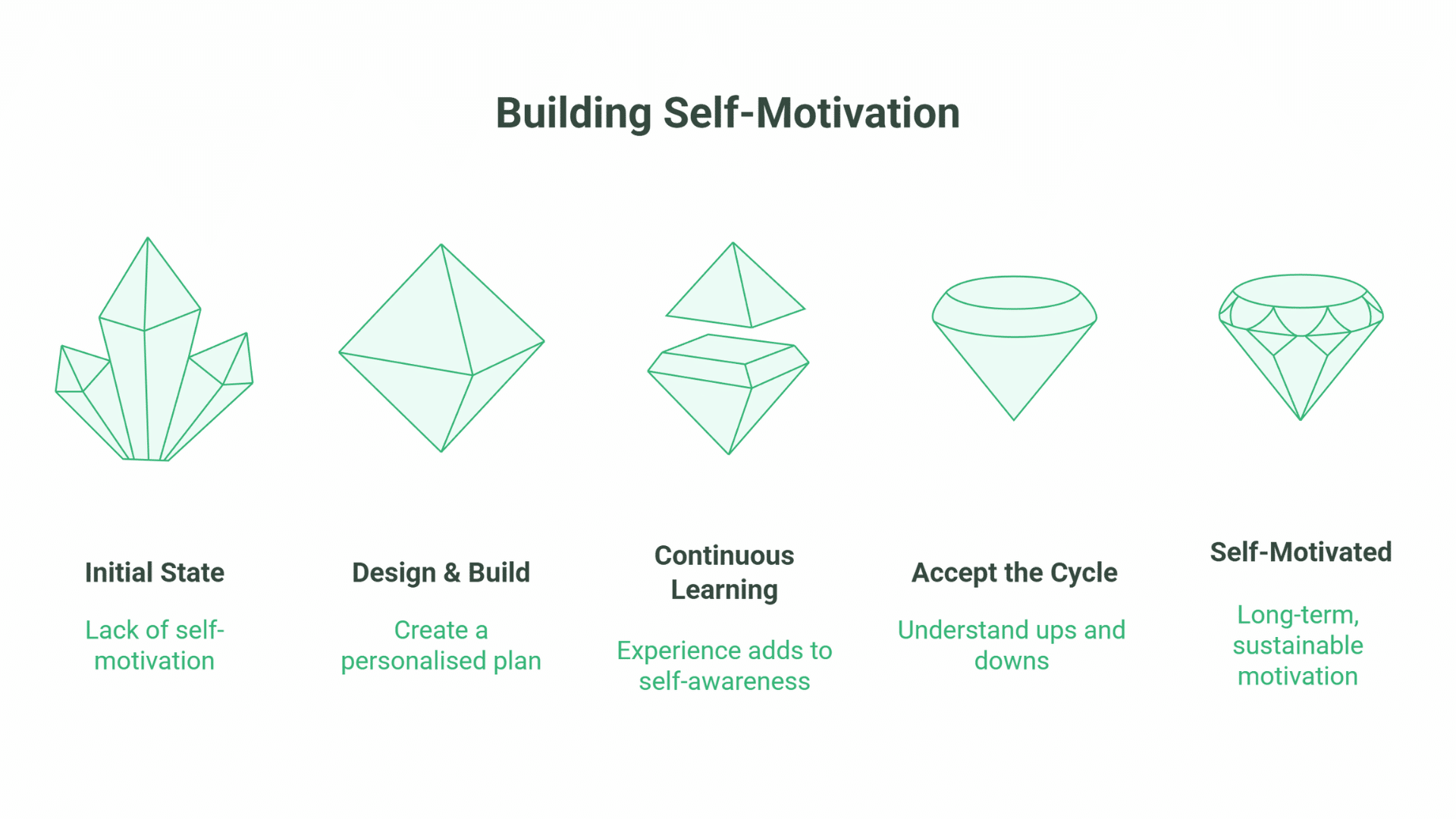
Since self-motivation is based on moral beliefs, lifestyle, and attitude rather than momentary speeches and stories.
Therefore, self-motivation is a long-term process that each individual should design, build, and develop. It is a learning process where your experience adds to your self-awareness, and consequently, your self-motivation grows.
Accept the Cycle
Accepting that self-motivation is a cycle of continuous ups and downs makes things easier. The sooner we understand this cycle, the easier we maintain our self-esteem and confidence during the time when we are down. The acceptance that the circumstances that motivate us are ever shifting and changing gives you space to adjust and shift perspective. We are human beings and therefore, not perfect.
In addition, it motivates us to act because we aim to progress, rather than act out of anxiety about missing a deadline or changing course.
Prepare the Day-to-Day Motivations
It is important to understand that self-motivation is not just about end goals, life achievements or the bigger picture. While these might be important perspectives, we need to understand that we cannot just achieve these overnight. We get by life day to day. Some days we wake up motivated, other days we don’t, and our long-term goals might feel further and further away.
We are all motivated by different things. So prepare a daily routine that motivates you to help with finding motivation. It could be a music playlist, your favourite drink, something to read, an early walk, or a challenging crossword.
Do more of whatever keeps your mind stimulated and your body energetic on a daily basis.
Moreover, do not just set long-term goals and plans. We live every day, not every five years. So, always keep in mind that daily, weekly, and monthly goals matter just as much as long-term plans do.
Reward Yourself
Everyone loves to get recognised and validated by others. Sometimes we forget that self-validation is also central. Sometimes we accomplish tasks that seem regular to others, but only we know how hard we pushed ourselves to finish them.
The best person to know your worth should be you. Use external rewards as a motivator for finished tasks, after a long, productive week, or after accomplishing a huge project.
Do Not Overwhelm Yourself
Sometimes we commit ourselves to more than we can handle, hoping this will help us become motivated and finish more in less time. In many cases, this does not end up nicely.
There’s a misconception that the most successful people are the ones who work the hardest. In reality, the people who work the hardest are often the ones who suffer the most. This can include stress, illness and even death from burnout.
In the best-case scenario, burnout will lead to you losing motivation and failing to meet your business goals. As such, you need to recognise the signs of burnout.
Burnout happens when we become overwhelmed, exhausted, or lose focus. This leads to frustration and loss of any sense of self-motivation. We have different capacities for work based on our schedule, our abilities, and the nature of the task we associate ourselves with.
An important part of knowing yourself is to know how much you can handle at the same time. You should also have a picture of how you work best, whether that be in short bursts or in longer sessions.
Learn to Rest, Not to Quit
When faced with the situation of draining ourselves with work, many of us doubt the purpose of our effort. Many think quitting is the solution. I believe that when you feel tired, the solution is to rest, not to quit. Nurturing the balance and ability to pause, rather than keep pushing, is a practice and takes time to develop.
As you rest, give yourself the chance to think whether this feeling was merely provoked because you overworked your mind, or truly because you are not passionate about what you are doing. Rest will give you the time to think clearly and evaluate the situation.
Do Not Compromise Your Integrity or Values
This is a killer. Working at a company whose core values contradict your principles and moral beliefs destroys your self-motivation. Your mind knows that deep down, you do not believe in what you do.
Why would you be moved to put effort into doing something that you do not believe in in the first place? The “why” behind any business is what sets its vision. If you, as an individual, do not admire that “why,” you would not have any self-motivation to grow your business.
Finding some new inspiration, taking a course or networking with others in your field can help ignite a spark and validate your values.
Create a Support Network
Your work environment may not be positive or too stressful to give you any inspiration. You can create that support circle outside work.
This can happen by making friends with people in the same industry, but not necessarily in the same company. Or you can choose to surround yourself with those of a different mentality at work.
Building this support network serves multiple purposes. It provides accountability, fresh perspectives when you feel stuck, encouragement during setbacks, and exposure to new ideas and approaches.
Building Self-Motivation With Actionable Steps
Self-discovery, motivation, patience, and determination are all difficult qualities to attain, so don’t expect the journey and the need to succeed to happen overnight. However, every little step counts and should be enjoyed and celebrated. That is what makes life and its many goals worthy and enjoyable.
As discussed earlier, procrastination, the tendency to delay tasks, can be a significant barrier to self-motivation. Here are some strategies to overcome procrastination and ensure effective time management:
Identify your procrastination triggers
Understanding the factors that lead to procrastination is crucial for developing effective countermeasures. Keep working to reduce these triggers, especially within your job. This will support your new goals, improving self-motivation at work.
Common procrastination triggers for business owners include task complexity, perfectionism, unclear outcomes, fear of technology, and decision fatigue.
Break down large tasks into smaller, manageable steps
Overwhelming tasks can lead to avoidance. Divide complex projects into smaller, more manageable chunks. For example, if you need to develop a content marketing strategy, break it down:
- Research competitor content (2 hours)
- Identify target keywords for your industry (1 hour)
- Create content topics list (1 hour)
- Outline first three articles (2 hours)
- Write first article (3 hours)
- Edit and publish (1 hour)
This approach works equally well for web development projects, video production timelines, or AI implementation plans.
Set realistic deadlines
Establish achievable deadlines for each task, ensuring they are neither too ambitious nor too lax. This will help you stay motivated in the long term as each manageable task is achieved.
Eliminate distractions
Minimise distractions by silencing notifications, closing unnecessary tabs, and working in a quiet environment.
Self-Compassion
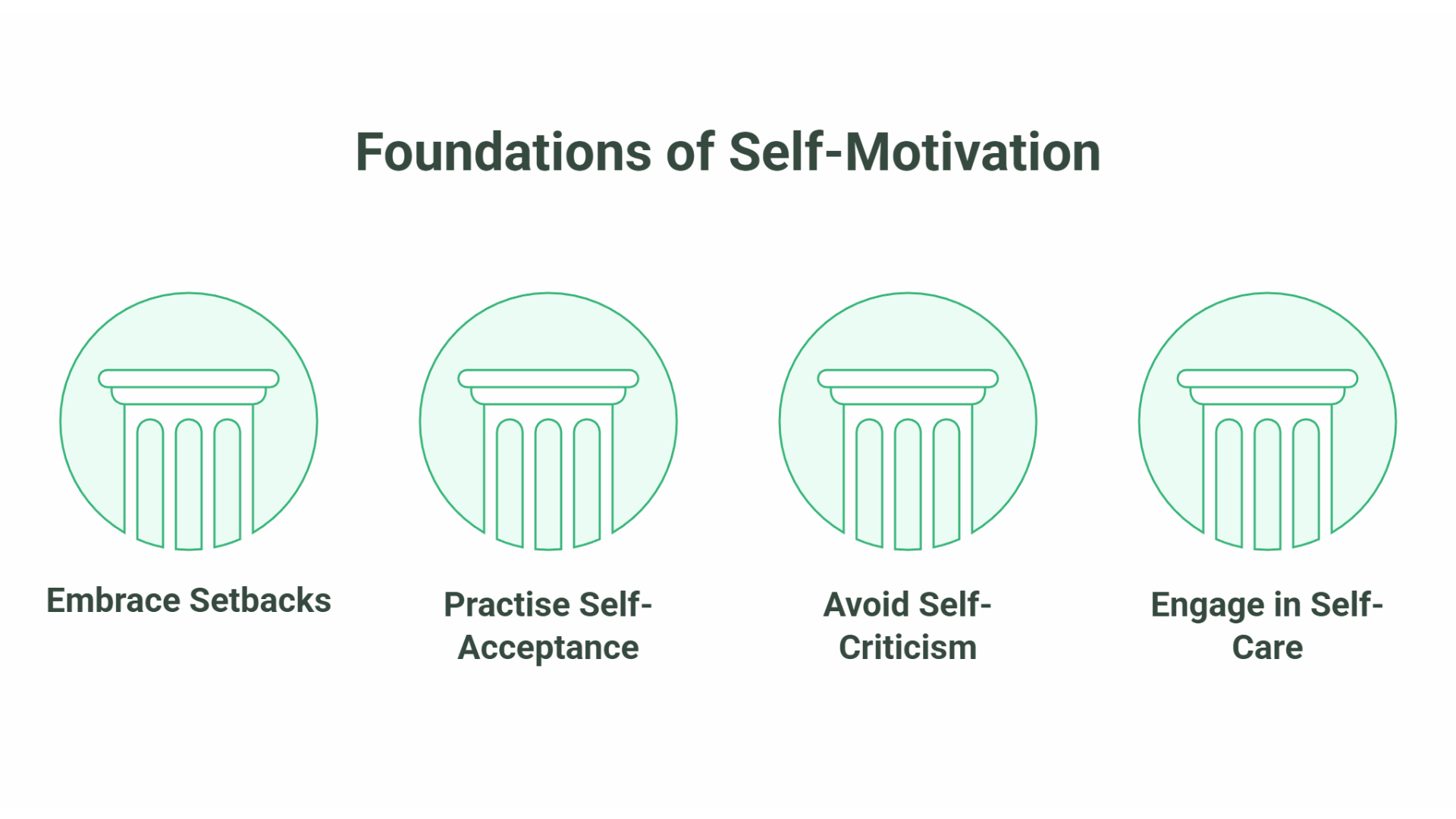
Self-compassion, the practice of treating yourself with kindness and understanding, is essential for helping you achieve self-motivation.
- Embrace setbacks as learning opportunities: View mistakes and progress towards the mindset that failures are opportunities for growth rather than personal shortcomings.
- Practise self-acceptance: Accept yourself with all your imperfections, strengths, and weaknesses.
- Avoid self-criticism: Replace harsh self-talk with positive affirmations and encouragement. Be your own self-motivator!
- Engage in self-care activities: Prioritise activities that promote your physical and mental well-being. Prioritise self-care on your to-do list and make the time to get things done that make you feel happy and fulfilled.
Reward yourself
Recognise and reward yourself for completing tasks; this reinforces positive behaviour and boosts internal motivation.
Set SMART Goals
SMART goals (Specific, Measurable, Achievable, Relevant, and Time-bound) provide a clear roadmap for achieving your objectives and maintaining a sense of motivation and will help you transform your enterprise. They help you focus on the task at hand, taking it in small steps:
- Specific: Clearly define your goal, leaving no room for ambiguity. Instead of “improve our online presence,” specify “redesign our website homepage to highlight our video production services.”
- Measurable: Establish quantifiable metrics to track your progress and determine success. “Increase website traffic by 30% within six months” or “publish two SEO-optimised blog posts per week.”
- Achievable: Set goals that are challenging yet attainable, avoiding unrealistic expectations.
- Relevant: Make certain your goals align with your overall aspirations and values.
- Time-bound: Set deadlines as you work toward a goal, providing a sense of urgency and accountability.
Managing Stress and Anxiety
Stress and anxiety can significantly hinder self-motivation and long-term success. Here are some effective management techniques:
- Identify your stress triggers: Recognise the situations, thoughts, or behaviours that trigger your stress response.
- Practise relaxation techniques: Engage in activities such as deep breathing, meditation, or yoga to calm your mind and body.
- Prioritise sleep: Aim for 7-8 hours of quality sleep each night to improve your mental clarity and resilience.
- Seek professional help if needed: If stress or anxiety becomes overwhelming, consider seeking guidance from a therapist or counsellor.
By incorporating these missing elements, the article “Self-Motivation: The Key to Unlocking Your True Potential and Achieving Your Goals” can provide a comprehensive and actionable guide for readers seeking to enhance their self-motivation and achieve their full potential.
Inspirational Quotes From Influential Figures
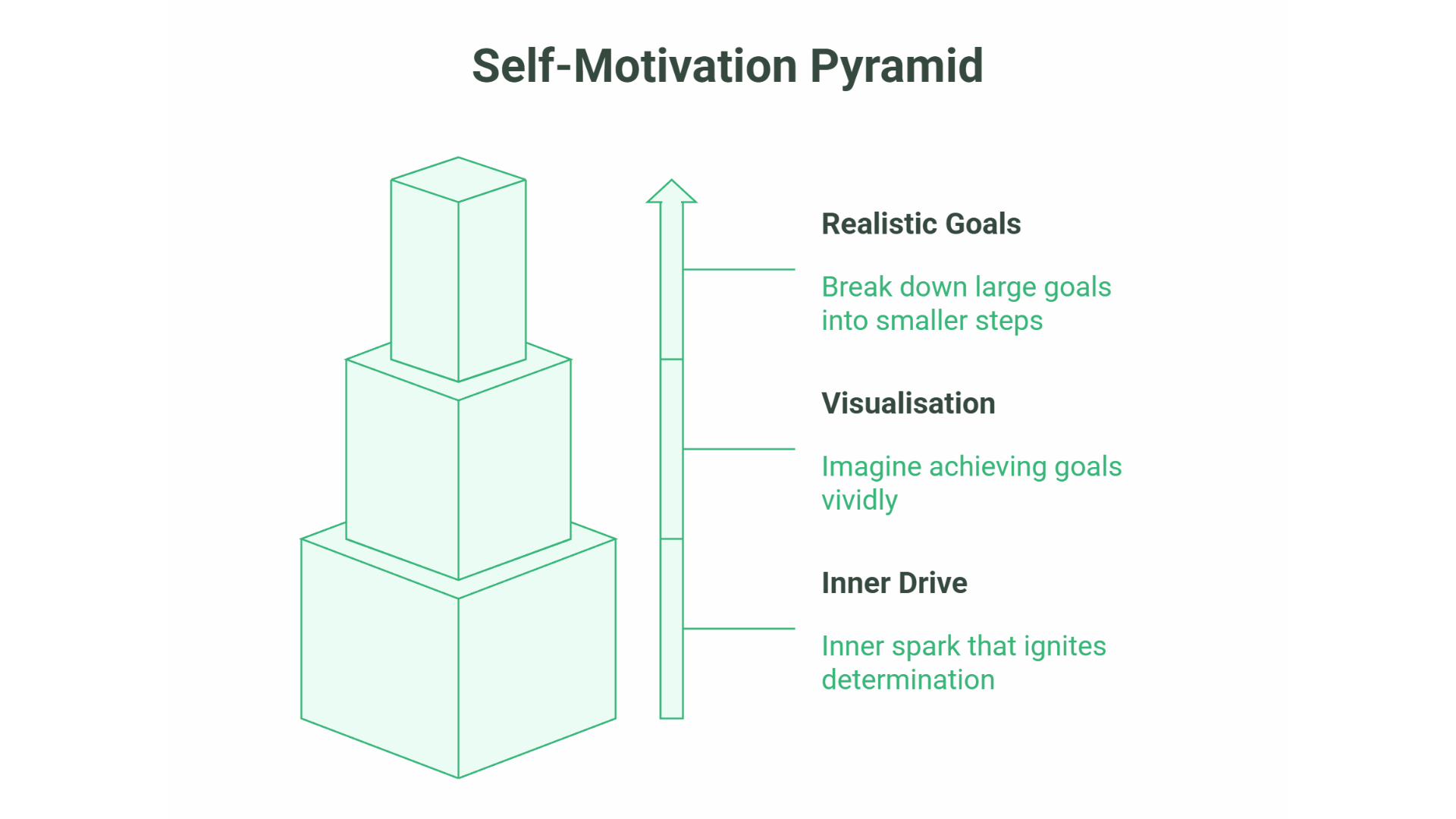
Self-motivation is the driving force behind the ability to achieve our goals and dreams. It’s the inner spark that ignites our determination and propels us forward, even in the face of challenges and setbacks.
Unlocking Your Inner Drive
Self-motivation is the driving force behind the ability to achieve our goals and dreams. It’s the inner spark that ignites our determination and propels us forward, even in the face of challenges and setbacks. While external motivators can play a role, cultivating self-motivation is important for sustained success and personal fulfilment.
Realistic Goal-Setting
“The journey of a thousand miles begins with a single step.” – Lao Tzu
Setting realistic goals is the foundation for self-motivation. When goals are too ambitious or vague, they can lead to discouragement and overwhelm. Instead, break down large goals into smaller, achievable steps. This creates a clear path towards your objectives, providing a sense of progress and accomplishment along the way.
Breaking Down Large Goals into Smaller Steps
“The big things are done by a series of small things brought together.” – Vincent van Gogh
Large, daunting goals can easily paralyse us with fear and procrastination. Tackle these goals by breaking them down into manageable steps, focusing on one step at a time. This approach makes the task less intimidating and allows you to celebrate milestones along the way, keeping you motivated to continue.
Setting Your Mind To Visualise Success
“Imagination is everything. It is the preview of life’s coming attractions.” – Albert Einstein
Visualisation is a powerful tool for self-motivation. Take time to vividly imagine yourself achieving your goals. Picture the details, the emotions, and the sense of accomplishment. This mental rehearsal strengthens your belief in your abilities and fuels your determination to succeed.
Rewarding Yourself for Progress
“Celebration is the finishing touch that makes success feel real.” – Oprah Winfrey
Celebrating your progress, no matter how small, is crucial for maintaining self-motivation and your desire to work toward goals. Consider the type of motivation that drives you and from there consider how you might reward yourself.
The ability to reward yourself reinforces positive behaviour and keeps you engaged in the process of goal accomplishment. Choose rewards that are meaningful to you and align with your overall goals.
Surrounding Yourself with Supportive People
“You are the average of the five people you spend the most time with.” – Jim Rohn
The people you surround yourself with significantly impact your self-motivation. Choose to spend time with positive, supportive individuals who believe in you and your abilities. Their encouragement and inspiration can boost your confidence and keep you motivated to pursue your dreams.
Practising Self-Compassion
“Be kind to yourself.” – Dalai Lama
Self-compassion is essential for self-motivation. Instead of beating yourself up for mistakes or setbacks, practise self-compassion by acknowledging your efforts, learning from your experiences, and continuing to move forward. This approach fosters resilience and keeps you motivated in the face of obstacles.
Focusing on the Present Moment
“The only thing that is real is now.” – Buddha
Dwelling on the past or worrying about the future can hinder self-motivation by creating anxiety and stress. Instead, focus on the present moment and the actions you can take right now to move closer to your goals and create a sense of joy in the present moment. This mindful approach helps you stay grounded, focused, and energised for the journey ahead.
Celebrating Your Accomplishments
“The greatest glory in living lies not in never falling, but in rising every time we fall.” – Nelson Mandela
Taking time to appreciate and celebrate your personal accomplishments or goals at work, big or small, is essential for self-motivation. Recognising your progress reinforces positive behaviour and reinforces the belief in your abilities. This sense of accomplishment fuels your motivation to continue pursuing your goals.
Practising Gratitude
“Gratitude is the heart of all spirituality.” – Meister Eckhart
Cultivating gratitude can significantly boost self-motivation by shifting your focus towards the positive aspects of your life. Expressing gratitude for the good things in your life, even the small ones, can enhance your overall well-being and increase your optimism. I believe that true optimism has the ability to help you reach your full potential. This positive mindset fuels motivation and resilience and pursue goals.
Never Give Up
“Success is not final, failure is not fatal: it is the courage to continue that counts.” – Winston Churchill
Self-motivation is not about avoiding challenges or setbacks; it’s about having the resilience and determination to keep going despite obstacles and setting yourself up to meet your goals. Never give up on your dreams, no matter how difficult the path may seem. Your unwavering determination will eventually lead you to success.
Conclusion
Adopting self-motivation strategies like tracking small wins, connecting your work to a purpose, engaging your interests, and introducing accountability ultimately comes down to realising your time and efforts are precious. By putting some simple habits and mindset shifts into practice, you can take control of your motivation and consistently make progress, even when you don’t “feel” like it. Take the motivation and inspiration from this blog that best resonates with you.
Focus on whichever tactics resonate most with you personally and continue tweaking your approach until you build sustainable momentum. Self-motivation is an essential skill to nurture for any individual, both personally and professionally.
With a little dedication and time investment to develop your self-motivation skills, you will be amazed at what you can achieve.
FAQs
How can I find the motivation to start working when I don’t feel like it?
Making the task more manageable, creating external accountability, connecting it to a bigger purpose, and incorporating some aspects you enjoy can help overcome initial reluctance. Consider the aforementioned Smart Goals and how you can action them in your work.
What if I’m motivated but keep getting distracted from the work I need to do?
Removing distractions, focusing on one task at a time, taking breaks, and tracking progress can boost focus when you feel distracted. As there are many different types of motivators, consider what will help you keep on task. A nice cup of coffee, a fifteen-minute walk? Your day will go much more smoothly and with fewer distractions if you are working towards something that motivates you.
How do I stay motivated if I’m not seeing results from my efforts?
Celebrate small wins, find an accountability partner, make tasks more fun, adjust expectations, and connect efforts to what truly matters to you to persevere. You will have an easier time staying motivated if you are accountable to someone else.
I feel motivated and set goals, but I don’t follow through. What should I do?
Break bigger goals down into bite-sized action steps, schedule tasks and deadlines, eliminate obstacles beforehand, reward yourself for progress, and review goals daily. Find ways to achieve your goals and get rest.
ProfileTree is a Belfast-based digital agency helping businesses across Northern Ireland, Ireland, and the UK through web design, SEO, content marketing, video production, and AI implementation. We partner with motivated business owners to build websites that generate leads, create effective content strategies, and implement AI solutions. Contact ProfileTree today to transform your digital presence.