
X (Twitter) SEO Guide: Master the Algorithm & Trend in 2026
Table of Contents
Update: As of 2023, Twitter rebranded to X, maintaining most features whilst the platform behaviour remains essentially unchanged. Therefore, any advice in this article about ‘how to trend on Twitter’ remains relevant, with Twitter now operating as X.
You want to dominate X? Learning how to trend on Twitter (now X) can transform your business visibility. That visibility translates directly into customer acquisition, brand authority, and measurable growth. Trending on X isn’t about luck—it’s about understanding the algorithm, optimising your profile for search, and creating content that the platform rewards.
X operates as both a social network and a search engine. Your posts can rank in Google searches, appear in X’s ‘For You’ feed, and surface through Grok AI queries. For UK businesses, mastering X SEO means connecting with your target audience through multiple discovery channels simultaneously.
This comprehensive guide provides the technical knowledge and practical strategies you need. We’ll cover profile optimisation, algorithmic ranking factors, video SEO, and the specific techniques that make content trend. Whether you’re a marketing manager at a Belfast SME or running digital strategy for a UK-wide brand, these proven methods will increase your reach and engagement.
Understanding the X Algorithm: How Content Gets Discovered
X functions as two distinct search engines working in parallel. The first handles vertical search—how users discover content within the app through the search bar and ‘For You’ feed. The second manages global search—how Google, Bing, and other search engines index your X profile and posts.
The platform shifted toward semantic search in 2024. Rather than matching exact keywords, X now uses Natural Language Processing to understand topic clusters and account authority. If your business consistently posts about “Belfast web design,” the algorithm associates your profile with that topic cluster, even in posts where those specific words don’t appear.
This semantic understanding changes how you approach X SEO. You’re building topical authority rather than chasing individual keywords. The algorithm evaluates the relevance of your content within specific subject areas, rewarding accounts that consistently demonstrate expertise in their respective fields.
The 2025 Algorithm Hierarchy
According to X’s open-source algorithm release, engagement types carry different weights for ranking. Understanding these weights helps you create content that the algorithm prioritises:
- Reply Interactions: Carry a 75x multiplier compared to standard impressions. Conversations drive visibility more than any other type of engagement.
- Video Views: Weighted heavily in the ‘For You’ feed, particularly completion rates. Videos watched beyond 50% receive significant ranking boosts.
- Retweets with Comments: Valued more than simple retweets, as they indicate meaningful engagement and content amplification.
- Link Clicks: Measured but weighted differently than on-platform engagement. External links can suppress reach if overused.
- Premium Status: Verified accounts receive measurable ranking boosts in search results and reply visibility, though the exact multiplier varies by topic cluster.
The algorithm also evaluates posting consistency, follower-to-following ratios, and account age when determining authority. A six-month-old account with 5,000 engaged followers typically ranks higher than a two-week-old account with 10,000 purchased followers.
Know the Trending Rules
X prevents certain content from trending to maintain platform quality. The platform blocks trends containing profanity, adult references, or content that violates community guidelines. Hatred based on race, ethnicity, national origin, sexual orientation, gender identity, religious affiliation, age, disability, or disease will prevent trending status.
Understanding these restrictions prevents wasted effort. Build your trending strategy around compliant content that algorithms won’t suppress.
Build Your X Following: Foundation for Trending
Trending topics on X require a strong foundation. Before your content can reach trending status, you need an audience primed to engage. Building that audience requires strategic consistency and authentic engagement.
Your follower count matters, but engagement rate matters more. An account with 2,000 highly engaged followers often generates more trending potential than an account with 20,000 passive followers. The algorithm evaluates engagement velocity—how quickly your content receives interactions after posting.
Post Frequency and Timing
Research shows optimal posting frequency sits between three and seven tweets daily for maximum engagement. This cadence keeps your profile active in followers’ feeds without overwhelming them. Consistent posting signals to the algorithm that your account provides regular value.
Timing significantly impacts initial engagement velocity. UK audiences typically show the highest engagement during early mornings (6:00-9:00 AM) and late afternoons (4:00-7:00 PM) on weekdays. Weekend patterns shift slightly later, with peak engagement occurring mid-morning through early afternoon.
For ProfileTree’s Belfast-based clients, we’ve observed that posts on Tuesday through Thursday generate 23% higher engagement than those on Monday or Friday. This pattern likely reflects audience attention spans throughout the working week.
Social scheduling software streamlines consistent posting. Tools allow you to maintain regular content flow without requiring real-time posting. This approach helps UK businesses maintain a presence across different time zones when targeting broader markets.
Visual Content Strategy
Posts containing visual elements receive substantially more engagement than text-only content. Images, videos, GIFs, and infographics all contribute to higher interaction rates. The algorithm prioritises multimedia content in the ‘For You’ feed.
Video content particularly drives engagement. Short-form videos (under 60 seconds) generate the highest completion rates, which the algorithm rewards with increased distribution. For UK businesses, product demonstrations, behind-the-scenes content, and educational videos perform exceptionally well.
GIFs and memes have become standard tools for engagement. Used appropriately, they humanise your brand whilst encouraging shares and replies. However, overuse can diminish professional credibility—balance entertaining content with valuable information.
Hashtag Optimisation for Search
Think of hashtags as SEO for your X profile. They make your content searchable whilst connecting you to broader conversations. Posts with at least one hashtag receive 12.6% more engagement than those without.
For UK businesses, combining broad industry hashtags with location-specific tags increases local discoverability. A Belfast web design agency might utilise #WebDesign and #DigitalMarketing alongside #BelfastBusiness and #NorthernIreland to capture both industry and geographic audiences.
Avoid hashtag spam. Posts with more than three hashtags often appear desperate or seem automated. Select your most relevant tags and use them strategically. X analytics reveals which hashtags drive the most engagement for your specific audience.
Industry hashtags like #SEO, #ContentMarketing, or #DigitalStrategy connect you to professional conversations and discussions. Event-based hashtags, such as those around conferences, award shows, or sporting events, provide temporary trending opportunities. Balance evergreen and timely hashtags in your strategy.
Active Engagement Tactics
Regular engagement with other accounts increases your visibility and builds relationships. Tagging, retweeting, and replying increase the visibility of your profile while demonstrating your active participation in industry conversations.
Strategically tagging relevant brands or influencers can help extend your reach. When you provide genuine value or compliments, tagged accounts often reciprocate with engagement. This mutual support benefits both parties through expanded visibility.
Retweeting your followers’ high-quality content helps build a strong community. It demonstrates that you value their contributions beyond just your own promotion. This approach often encourages those followers to share your content in return, creating organic amplification.
Reply to comments on your posts promptly and meaningfully. The algorithm prioritises content with active conversation threads. When followers see you actively engaging, they’re more likely to join discussions on future posts.
Profile Optimisation Essentials
Your profile serves as your X homepage. Both the algorithm and human visitors evaluate your profile to determine your authority and relevance. Small optimisation details significantly impact discoverability.
Use a high-resolution profile image, such as your company logo or a professional headshot. The algorithm doesn’t directly rank image quality, but human visitors make snap judgements about credibility. Poor image quality suggests a lack of professionalism.
Your bio should clearly communicate what you do, who you serve, and where you operate. Include relevant keywords naturally. A Belfast digital agency might write: “Digital marketing agency in Belfast specialising in SEO, web design, and AI implementation for UK SMEs.”
Add your location with specificity. Rather than just “UK,” specify your city or region. This helps with local search queries and connects you to regional conversations. For ProfileTree, “Belfast, Northern Ireland” targets our primary market.
Link to your website using a clean URL. Google uses this connection to verify the relationship between your X profile and your official website, which contributes to overall digital authority and E-E-A-T signals.
Syncing Contacts and Cross-Platform Promotion
Syncing your contact list to X helps you connect with your existing network. These connections often become your initial engaged audience, which allows new content to gain traction quickly.
Your X profile shouldn’t exist in isolation. Promote it across your website, email signatures, other social platforms, and marketing materials. Add social media buttons to your website and include your X handle in email newsletters.
For UK businesses, LinkedIn cross-promotion works exceptionally well. Your professional network on LinkedIn often overlaps with your ideal X audience. Share key X threads on LinkedIn with commentary that adds context for that platform’s audience.
“Many UK SMEs treat social media profiles as separate entities,” says Ciaran Connolly, Director at ProfileTree. “The most successful businesses integrate their X presence throughout their digital strategy, using each platform to reinforce and amplify the others. Your X profile should be discoverable everywhere your business appears online.”
Choose Topics That Trend: Content Selection Strategy
Perhaps the most straightforward answer to trending on X is selecting topics with trending potential. You need subjects that resonate with your existing audience whilst attracting new followers through search and discovery features.
Before your hashtag trends, your followers see it first. Select topics that your current audience is interested in. If your followers don’t engage, the content won’t reach the broader X community necessary for trending status.
Understanding Your Audience
Analyse your X analytics to identify which topics generate the most engagement. Look beyond vanity metrics, such as likes, to focus on replies, shares, and click-throughs—these signals indicate genuine interest.
For UK businesses, local relevance often outperforms broad topics. A post about “Northern Ireland digital transformation” might generate more meaningful engagement than generic “digital transformation” content, even if the latter has higher search volume.
Consider your audience’s expertise level. Marketing managers need different content than business owners. Technical SEO professionals require a different level of expertise than social media coordinators. Tailor your topic complexity to match your primary audience’s knowledge level.
Survey your followers directly when possible. Ask what challenges they face, what topics they want to learn about, or what content formats they prefer. This direct feedback often reveals trending opportunities competitors miss.
Topic Selection Framework
Choose self-explanatory topics that communicate clearly. Vague or overly clever concepts rarely trend because people don’t understand them quickly enough to engage. The topic should be immediately apparent from a glance.
Select topics you can discuss with authority and depth. Trending requires sustained conversation over hours or days. You need enough expertise to answer questions, respond to comments, and keep the discussion moving forward.
The topic should be connected to current events, industry developments, or seasonal relevance whenever possible. Timely content receives algorithmic boosts. A post about “Year-End SEO Audit” performs better in December than in July.
For ProfileTree’s clients, we recommend the “intersection approach”—identifying where your expertise aligns with current audience needs. A web design agency might focus on “Accessibility in Web Design” when UK regulations change, combining their service offering with timely industry developments.
Creating Relevant, Generic Tags
Your hashtag should be meaningful and relevant to your brand, while remaining broad enough for others to adopt. Particular hashtags rarely trend because they limit participation and engagement.
The goal is to make the hashtag relevant to people beyond your immediate followers. Pick topics that others can feel as strongly about. #UKSMEGrowth works better than #ProfileTreeClients because the former includes a broader community.
Focus on generic tags rather than overly specific ones. #DigitalMarketing attracts more participation than #DigitalMarketingForBelfastRetailers. You can always add specificity through tweet content while keeping the tag accessible.
Hashtag Definition and Description
When launching a new hashtag, provide a clear, concise description. Define what the hashtag represents and how people should use it. This clarity helps others adopt and use it correctly.
Check whether your hashtag already exists before launching. If it does, evaluate whether you can contribute to that existing conversation or if you need to offer a unique perspective. Sometimes joining an existing trend proves more effective than creating a new one.
For UK businesses, consider regional variations of popular hashtags. #DigitalMarketingUK or #BelfastTech creates regional specificity whilst maintaining broad appeal within that geographic area.
Write Your Hashtag Correctly: Technical Formatting
Hashtag formatting has a significant impact on readability and adoption. Minor technical details determine whether people can read, remember, and reuse your tag.
Capitalise the first letter of each word in your hashtag to show word separation. #ContentMarketingStrategy reads more clearly than #contentmarketingstrategy. This PascalCase formatting enhances accessibility for both screen readers and human readers.
Character Count and Word Limits
Limit your hashtag to 20 characters maximum. Longer hashtags consume valuable character space in tweets and become challenging to remember. #DigitalStrategy works better than #DigitalMarketingStrategyForUKBusinesses.
Stick to two keywords maximum in a single hashtag. More words create confusion and reduce adoption. #GunControl communicates clearly, whilst #GunControlInAmericaAndEurope becomes unwieldy and dilutes focus.
Short, memorable hashtags trend more easily than long, complex ones. Consider how the hashtag sounds when spoken aloud—if it’s difficult to say, it’s difficult to remember and share.
Multiple Hashtags Per Post
Use between one and three hashtags per post for optimal performance. Zero hashtags limit discoverability, while more than three start appearing spammy and reduce engagement.
Place your primary hashtag at the beginning of the tweet, ideally woven naturally into the sentence structure. Secondary hashtags can appear at the end, separated from the main content. This approach maintains readability whilst maximising search visibility.
For trending attempts, maintain consistent hashtag usage across all related posts. Don’t switch between #DigitalMarketing and #DigitalMarketingUK randomly—pick your primary tag and stick with it throughout the campaign.
Start Tweeting: Execution Strategy
Once you’ve created your hashtag and developed your topic, systematic tweeting drives trending momentum. This phase requires coordination, timing, and sustained effort to ensure success.
The proper timing of the launch makes a significant difference. Research indicates that the early morning hours (6:00-9:00 AM UK time) generate the highest number of clicks. Start building momentum early in the day, then post your main content during optimal afternoon hours (2:00-4:00 PM).
Pre-Trend Content Seeding
Before attempting to trend, post several tweets introducing your topic and hashtag. These preliminary posts prime your audience and establish context. Jump-starting the conversation with existing content gives followers something to engage with immediately.
Post tweets that discuss relevant aspects of your hashtag without explicitly asking for engagement. Show the hashtag at different positions—beginning, middle, and end of tweets—to test what placement generates the best response.
Invite others to participate through direct messages and email. Your relationship with followers matters significantly here. People who trust you and value your content will be your first amplifiers. Give them advance notice so they can prepare to support your trending attempt.
Begin this process at least a month before your trending attempt. The hashtag needs positive sentiment and recognition within your network before it can break into broader X trends.
Writing Tweets That Promote Trending
The more back-and-forth conversation around your trend, the better. Most of your hashtag usage should include questions that encourage others to respond with the tag in their answer.
Keep the conversation active through sustained responses. Rather than just thanking participants, engage meaningfully with their contributions. Ask follow-up questions, share their insights, and make people feel heard. This approach builds reputation whilst maintaining algorithmic momentum.
Avoid posting only “thank you” tweets to participants. These low-content responses get filtered by the algorithm and don’t contribute to trending status. Every tweet should add value to the conversation.
Influencer and Partner Engagement
Invite an influencer to use your tag early in the campaign. Their reach significantly amplifies your message. Post content that includes your hashtag and tags the influencer. When they share or retweet with their own use of the tag, you access their audience.
Industry partners can also help you trend. If you have business relationships or professional connections, invite them to participate. Offer to reciprocate by supporting their future campaigns—mutual support builds long-term relationships.
Always give followers clear reasons to use your hashtag. Whether it’s a meaningful message they want to support, practical information they find valuable, or contest prizes they want to win, people need motivation to share your tag.
Hosting an X Chat
Creating pre-event excitement through an X chat generates concentrated engagement within a specific timeframe. Choose an interesting topic your audience wants to discuss, then invite expert speakers who can provide valuable insights.
Plan all questions. Share these questions with your guests beforehand so they can prepare thoughtful responses. This preparation yields higher-quality content that fosters greater engagement.
Schedule your X chat when most of your audience is online. Review your analytics to identify when your followers are most active. UK business audiences typically engage most effectively during weekday afternoons, rather than evenings or weekends.
Use visual aids to support your questions. Images, charts, or infographics make questions more engaging whilst providing additional content for participants to share. Tag active community members in early tweets to jumpstart participation.
Promote your X chat through email lists, other social platforms, and website announcements. The more people who know about it in advance, the more initial momentum you’ll generate.
Contest and Giveaway Strategy
Contests around your hashtag expand reach through incentivised participation. Set clear, simple rules: use the hashtag, follow your account, and share specific content. Offer prizes relevant to your target audience.
For UK businesses, prizes might include service discounts, free consultations, or industry-relevant products. ProfileTree often offers free digital strategy sessions or SEO audits as contest prizes—these attract our ideal client profile whilst demonstrating our expertise.
Time contests to coincide with your main trending push. The concentrated activity from contest participants can provide the engagement velocity needed to achieve trending status.
Live Event Coverage
If your hashtag is associated with a physical or virtual event, tweet actively during the first two hours. This initial period is critical for momentum. Upload visual content—such as images and videos from the event—to maintain engagement and provide fresh content.
Tag speakers, sponsors, and attendees throughout the event. This tagging expands your reach to their networks whilst making participants feel recognised. Encourage your audience to tweet as much as possible during those first two hours.
Monitor other trending hashtags during your event. If they’re relevant to your topic, include them in select tweets alongside your primary hashtag. This cross-pollination can expose your content to adjacent audiences.
Maintain professional, responsive communication throughout. Reply to every participant when possible, addressing questions and acknowledging contributions. This level of engagement often impresses attendees enough that they become long-term followers and brand advocates.
Cross-Platform Amplification
Utilise other social media platforms to enhance the performance of your X hashtag. Share key tweets on LinkedIn with additional context. Post Instagram Stories encouraging followers to join the X conversation. Update Facebook pages with highlights from the X discussion.
Email marketing campaigns inform your subscriber base about the hashtag and encourage them to participate. These subscribers often have higher engagement rates than cold audiences because they’ve already demonstrated interest in your content.
For UK businesses with regional audiences, WhatsApp groups and local community forums can drive initial engagement. Just one or two dozen highly engaged local participants can provide enough momentum to reach broader trending status.
Don’t Get Too Attached: Algorithm Timing Realities
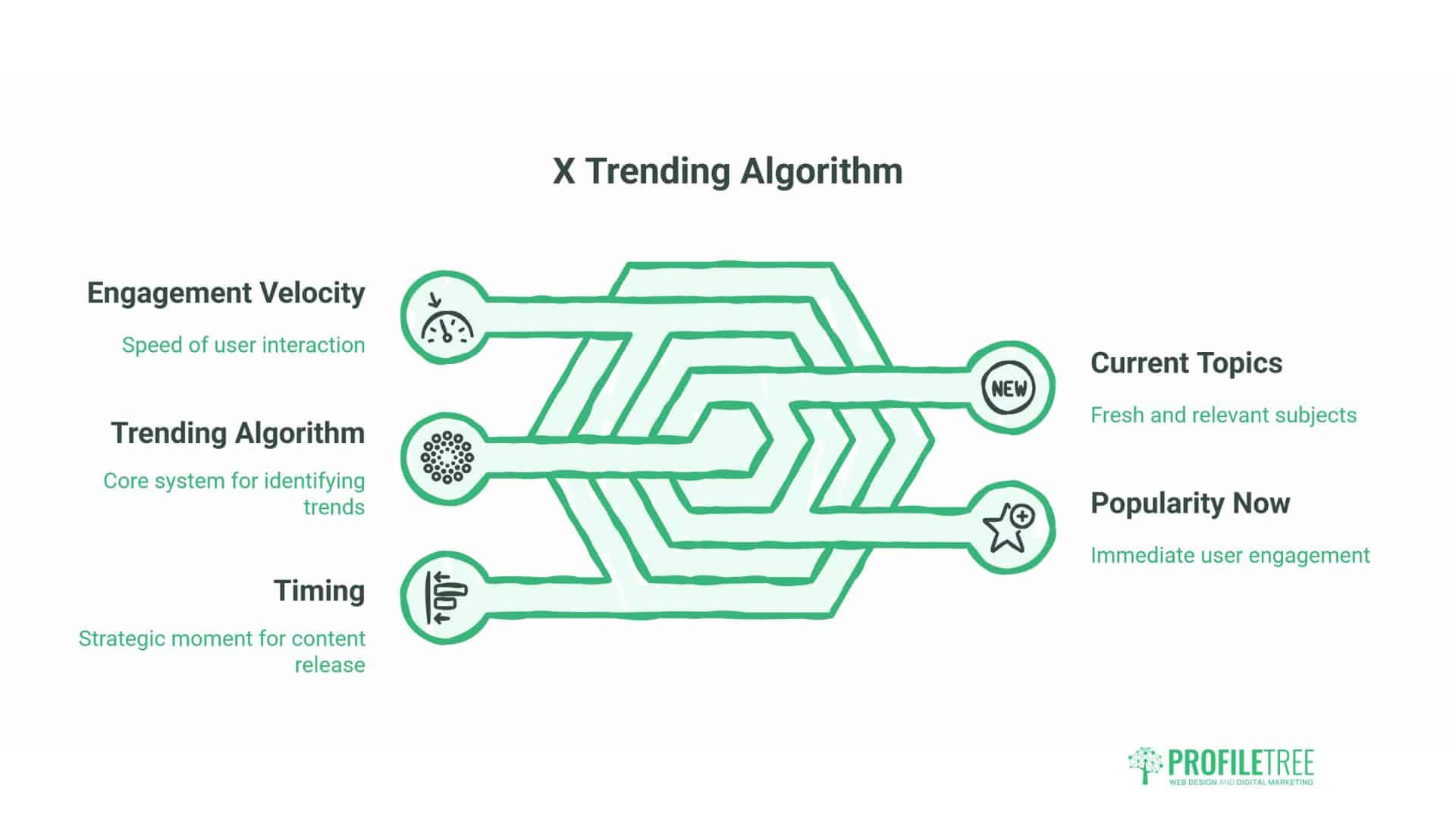
X’s trending algorithm prioritises current, fresh topics over sustained ones. If a trend continues too long, it stops being a “trend” by the platform’s definition. X identifies topics that are popular now rather than topics that have been popular for extended periods.
X prefers trends that last one to two days at most. Some hashtags trend with 8,000 tweets in a day, whilst others receive 30,000 daily tweets without trending—the difference often comes down to timing and engagement velocity.
Recognising When to Move On
If your hashtag doesn’t trend within the first day of concentrated effort, it likely won’t achieve trending status unless you employ paid promotion or radically change your approach. The algorithmic window for organic trending is relatively narrow.
Rather than continuing to push a stalled hashtag, assess what worked and what didn’t. Use those insights to develop your next trending attempt. Persistence matters, but it should be driven by an improved strategy rather than repeating ineffective tactics.
Sometimes a hashtag gains traction in specific geographic regions without gaining national momentum. UK businesses may trend in Northern Ireland or specific UK cities without being reflected in national trends. Regional trends still provide significant value to locally focused firms.
Learning from Failed Attempts
Failed trending attempts provide valuable data. Analyse which tweets generated the most engagement, what times of day performed best, and which calls-to-action motivated participation. These insights inform your next campaign.
Consider whether your topic was too niche, your hashtag too complex, or your timing unfortunate. External factors—such as major news events, competing trends, or platform changes—can sometimes interfere with even well-executed strategies.
Document what you learned. Many businesses achieve trending success on their third or fourth attempt, having refined their approach based on previous results. The key is systematic improvement rather than random repetition.
Pay to Trend: Promoted Trends Strategy
The fastest, most reliable path to trending involves paying for promoted trend placement. Promoted trends appear at the top of the trending topics list and throughout users’ timelines, marked as “Promoted.”
Promoted trends guarantee visibility across all X users during the promotion period. This exposure significantly exceeds what most organic campaigns can typically achieve, particularly for newer accounts or businesses without a large existing audience.
Understanding Promoted Trend Costs
Promoted trends represent X’s premium advertising product, accompanied by premium pricing. Daily costs typically range from £16,000 to £32,000, depending on market competition and the level of targeting specificity. UK businesses often pay toward the lower end of this range compared to US advertisers.
This pricing places promoted trends beyond the budgets of most small businesses. However, for product launches, major announcements, or high-value marketing campaigns, the guaranteed visibility can justify the investment.
Before committing to a promoted trend, calculate your potential return on investment. If trending generates 100,000 impressions and 1,000 website visits, what’s the potential revenue from those visitors? Compare this against your advertising cost to determine whether promoted trends make financial sense.
Alternative Paid Promotion Options
Rather than purchasing a fully promoted trend, consider promoting individual tweets to different audiences. These smaller campaigns run for a few hours or a day, costing substantially less while still expanding reach.
Promoted tweets allow budget flexibility. Start with daily budgets of £50-£100 to test performance, then scale up for high-performing content. This approach provides promoted visibility without the massive cost of trend promotion.
For UK SMEs, promoted tweets often deliver better ROI than promoted trends. You maintain control over targeting, spend, and duration whilst still achieving significant reach beyond your organic audience.
Building Foundation Before Paying
Without a strong account foundation, paid trends tend to fade quickly and fail to generate a lasting impact. Before investing in paid promotion, build your organic presence. Develop a content library, cultivate an engaged follower base, and maintain consistent posting.
Paid promotion works best as an accelerator for already strong content and accounts. If your organic posts receive minimal engagement, paid promotion is unlikely to generate the conversions you expect. First, fix your content strategy, then amplify it with advertising.
Consider paying for promotion only after organic trending attempts provide data about what works. Use paid promotion to scale successful organic strategies rather than compensating for organic failures.
Technical X SEO: Indexing and Search Visibility
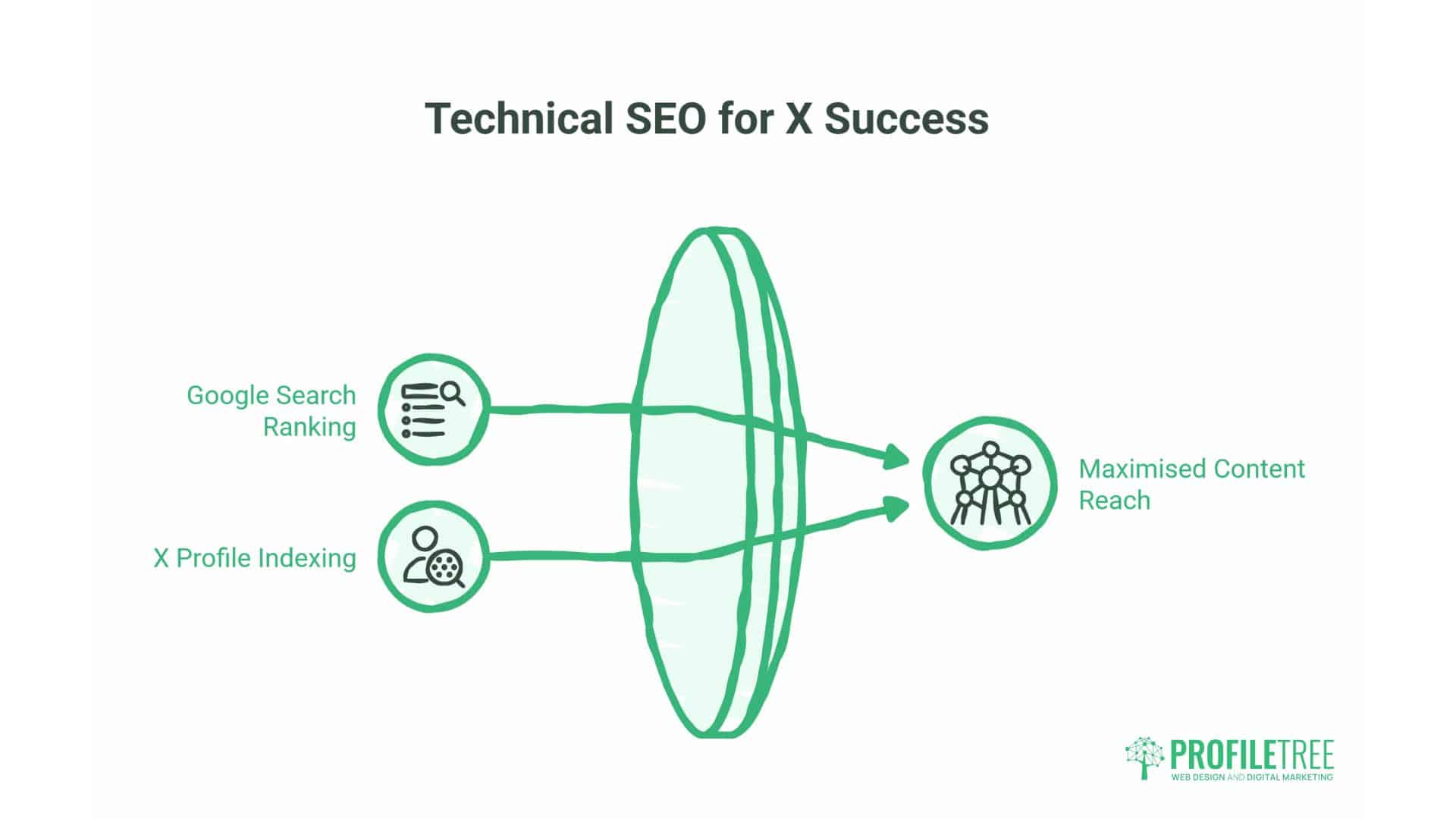
X posts can rank in Google search results, making technical SEO knowledge valuable for maximising your content’s reach. Your X profile functions as a webpage that search engines crawl and index.
The transition from Twitter.com to x.com created technical considerations for SEO. Managing these redirects and maintaining consistent signals helps preserve your search visibility during the platform transition.
Managing Profile Indexing
Google indexes X profiles and individual posts when they meet certain authority thresholds. Profiles with consistent posting, engagement, and follower counts typically achieve indexing faster than sporadic accounts.
Your X bio functions as a meta description for search engines. Write it with both human readers and search algorithms in mind. Include relevant keywords naturally whilst clearly communicating your value proposition.
The pinned tweet on your profile receives extra weight in Google indexing. Use this space for evergreen content that represents your expertise and includes relevant keywords. Update it regularly to maintain freshness signals.
X Card Optimisation
X Cards control how your links appear when shared on the platform. Properly configured cards significantly improve click-through rates by providing rich previews with images, titles, and descriptions.
There are several X Card types: Summary Card, Summary Card with Large Image, App Card, and Player Card. For most UK businesses, the Summary Card with Large Image provides the best results, showing a prominent visual alongside your content description.
Validate your X Cards using X’s Card Validator tool. This tool shows exactly how your links will appear when shared, whilst clearing X’s cache if you’ve made recent changes to your website’s card markup.
Include Twitter Card meta tags in your website’s HTML: twitter:card, twitter:title, twitter:description, and twitter:image. These tags give you control over how your content appears on X rather than leaving it to the platform’s automated parsing.
Link Strategy and External Content
External links suppress reach if overused. X’s algorithm prioritises keeping users on the platform, so it reduces the visibility of posts that contain links. Balance link-sharing with on-platform content.
When sharing links, add substantial commentary or questions that encourage engagement before the link drives traffic away. This approach maintains conversation on X whilst still directing interested users to your website.
For important links, consider posting them in a reply to your main tweet rather than in the original post. This technique maintains the original tweet’s algorithmic performance whilst still providing the link to interested followers.
Use a link shortener sparingly. While services like bit.ly provide tracking data, they can reduce trust and click-through rates. When possible, use your own domain’s clean URLs to maintain brand consistency and credibility.
Video SEO on X
Video content receives preferential algorithmic treatment, but optimisation determines whether that advantage translates to results. Video SEO on X involves metadata, captions, and engagement optimisation.
Upload videos directly to X rather than linking to YouTube or other platforms. Native videos receive significantly more visibility than external video links. This means creating platform-specific content rather than simply cross-posting.
Include captions on all videos. This improves accessibility whilst providing text content that the algorithm can index. Many users watch videos without sound, making captions necessary for comprehension even beyond accessibility considerations.
The first three seconds determine whether viewers continue watching. Hook viewers immediately with compelling visuals, intriguing questions, or clear value propositions. Completion rate significantly impacts algorithmic distribution.
The optimal video length is between 30 and 60 seconds for achieving the highest completion rates. Longer videos are suitable for detailed tutorials or explanations, but shorter content tends to trend more effectively due to higher completion rates.
Geographic Targeting and Local SEO
For UK businesses, geographic specificity improves local discovery. Include your location in your profile, reference local landmarks or events in content, and engage with other local accounts.
Location tags on posts connect you to local trending topics and searches. When posting about business activities, client work, or industry events, tag the relevant UK location to increase regional visibility.
Participate in location-specific hashtags. #BelfastBusiness, #NorthernIrelandTech, or #UKDigitalMarketing connect you to regional conversations whilst maintaining broader industry relevance.
Local SEO on X works similarly to Google local SEO. Consistent NAP (Name, Address, Phone) information, location-specific keywords, and engagement with local community members all contribute to regional authority.
Measuring Success: Analytics and KPIs
Tracking the proper metrics helps you understand what works and refine your approach. Not all engagement carries equal value; focus on metrics that align with your business goals.
X Analytics provides data on tweet impressions, engagement rates, follower growth, and top-performing content. Review these metrics on a weekly basis to identify trends and opportunities.
Key Performance Indicators
Engagement Rate: The total number of engagements divided by impressions shows the percentage of people who see your content and interact with it. Rates above 2% indicate a strong resonance with the content.
Profile Visits: This metric indicates the number of people who clicked through to view your complete profile after seeing your content. High-profile visit rates suggest your tweets create curiosity about your broader expertise.
Link Clicks: For businesses driving traffic to websites, link clicks represent a critical conversion metric—track which types of content generate the most site visits.
Follower Growth Rate: Monitor not only the total number of followers, but also their growth rate. Accelerating growth indicates an improving content strategy, while declining growth suggests the need for adjustments.
Search Impressions vs Feed Impressions: X differentiates between content discovered through search and content shown in feeds. High search impressions indicate strong SEO optimisation and keyword relevance.
Conversion Tracking
Beyond platform metrics, connect X activity to business outcomes. Use UTM parameters on all links to track X traffic in Google Analytics. Monitor which X campaigns drive leads, sales, or enquiries.
For ProfileTree clients, we track consultation requests, contact form submissions, and phone calls that originate from X. These conversions are more important than vanity metrics, such as total impressions or follower counts.
Calculate the cost per acquisition if you’re using paid promotion. Compare X’s CPA against that of other marketing channels to determine an appropriate budget allocation. Not all industries and business models achieve the same ROI from X marketing.
Competitive Analysis
Monitor competitors’ X performance to identify gaps and opportunities. Which of their posts generates the most engagement? What topics do they cover that you don’t? Where do you outperform them?
Use third-party tools like Social Bearing or Followerwonk to analyse competitor strategies. Understanding their approach helps you differentiate whilst learning from their successes.
For UK digital agencies, monitoring competitors reveals industry trends before they become mainstream. Early adoption of emerging topics or formats provides first-mover advantages in capturing audience attention.
AI and the Future: Grok Integration
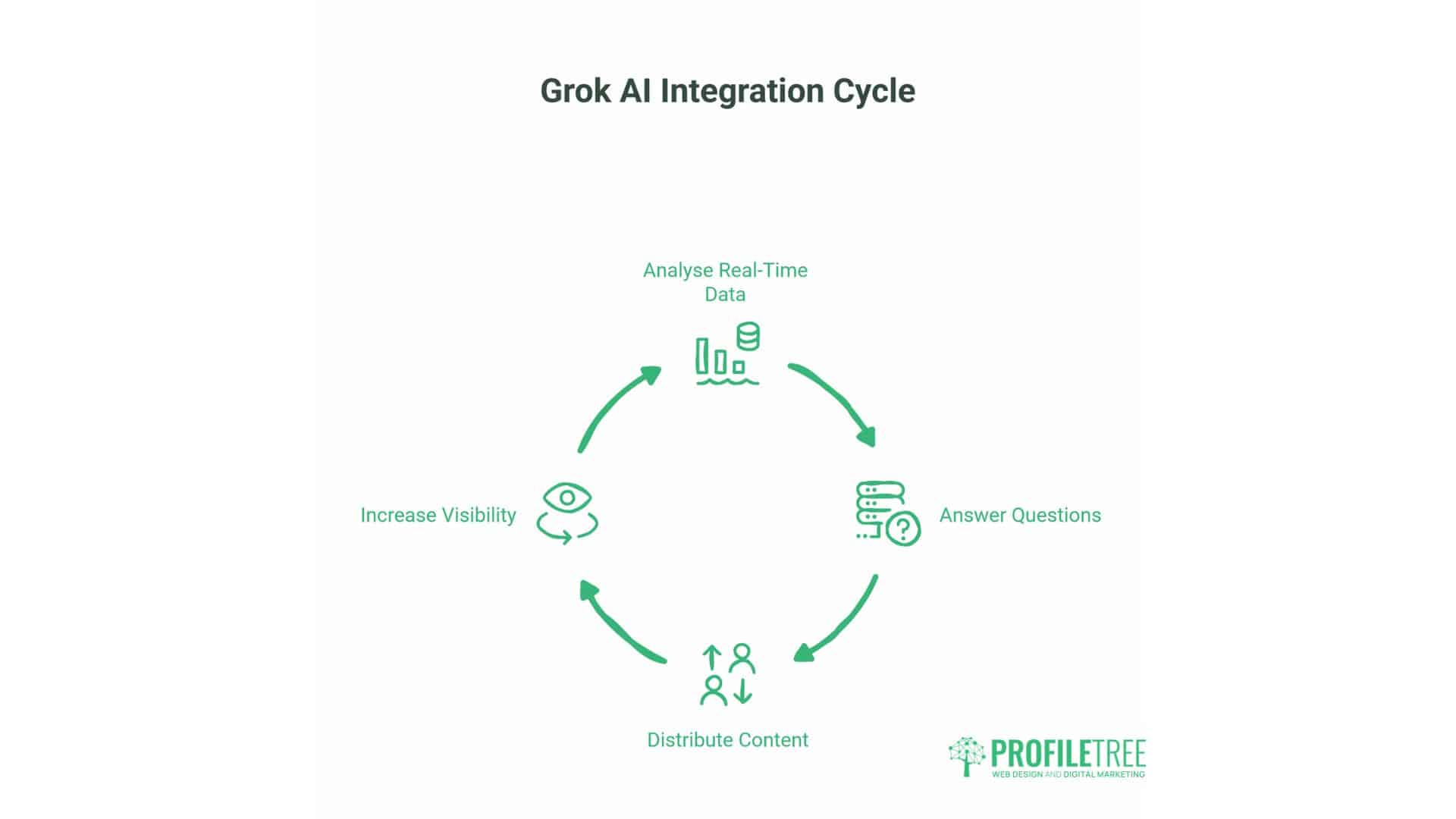
X’s integration of Grok AI fundamentally changes how content gets discovered and distributed. Grok utilises real-time X data to answer questions, allowing your posts to become primary sources for AI-generated responses.
To position your content for Grok discovery, focus on authoritative, factual statements about your area of expertise. Grok prioritises recent, highly-engaged content from accounts with strong topical authority.
Writing for AI Discovery
Structure information clearly with definitive statements. Instead of “Many believe that SEO is important,” write “SEO increases organic website traffic by an average of 34% within six months of implementation.” Specific, factual claims are more effective for AI indexing.
Include relevant data and statistics. Grok seeks quantifiable information to provide in its responses. When you can cite specific numbers, percentages, or research findings, do so.
Create thread-style posts that provide comprehensive information on a single topic. Multi-tweet threads that build a complete argument or explanation give Grok more context and substance to reference.
Use consistent terminology. If you’re establishing expertise in “web accessibility,” use that exact phrase rather than varying between “accessible web design,” “website accessibility,” and “accessible web development.” Consistency helps AI categorise your expertise.
Semantic Search Optimisation
X’s semantic search understands topic relationships and context. Rather than keyword stuffing, create natural conversations around your core topics. The algorithm evaluates your overall topical authority rather than individual keyword density.
Build topic clusters through related content. If you’re a web design agency, posts about UX design, responsive design, website speed, and visual hierarchy all contribute to your web design authority even when they don’t explicitly mention “web design” in every post.
Link related tweets together through replies and quote tweets. This creates a content network that helps both human readers and algorithms understand the relationships between your various posts.
For ProfileTree’s approach to X strategy, we focus on creating comprehensive topic coverage rather than isolated promotional posts. Our content on AI implementation, SEO strategy, and web development builds interconnected expertise that algorithms recognise and reward.
Future-Proofing Your Strategy
X continues evolving rapidly. The platform’s feature set, algorithm, and user behaviour shift regularly. Future-proof your strategy by focusing on principles rather than specific tactics.
Build authentic relationships with your audience. Algorithmic changes come and go, but genuine connections with followers provide consistent value regardless of platform mechanics.
Create quality content that serves your audience. Whether the algorithm prioritises video, text, or something else in six months, valuable content will always find an audience.
Stay informed about platform changes. Follow X’s official announcements and reputable digital marketing sources to stay informed about new features and algorithmic updates as they are released.
Diversify beyond X. While the platform offers significant marketing value, don’t build your entire digital strategy around a single channel. Use X as part of a broader digital marketing approach, including SEO, content marketing, and email.
Taking Action: How to Trend on Twitter (Now X)
You now understand how to trend on Twitter (Now X) through profile optimisation, algorithmic awareness, strategic content, and technical SEO. Implementation determines results.
Start with your profile. Update your bio with relevant keywords, add your specific location, and optimise your pinned tweet. These changes take minutes but improve discoverability immediately.
Audit your current content strategy. Are you posting consistently? Does your content encourage conversation? Are you using appropriate hashtags? Identify gaps between your current approach and the plan outlined in this guide.
Choose one trending topic relevant to your business and expertise. Develop a comprehensive campaign plan, including pre-launch content, main event tweets, and a detailed timeline. Rather than attempting to execute multiple trends simultaneously, focus on executing one campaign exceptionally well.
Set up proper analytics tracking. Configure UTM parameters for your links, monitor X Analytics on a weekly basis, and establish baseline metrics for comparison. You can’t improve what you don’t measure.
For UK businesses requiring professional support, ProfileTree offers comprehensive digital marketing strategy services, including X optimisation, content creation, and algorithm-focused SEO. Our Belfast-based team understands both the technical requirements and the practical business applications of social media marketing.
Schedule a consultation to discuss how X fits into your broader digital strategy. We’ll analyse your current performance, identify specific opportunities, and develop a customised plan for achieving your business goals through social media marketing.
X provides UK businesses with unparalleled direct communication with customers, real-time market insights, and brand-building opportunities. The companies that master X’s algorithmic ranking factors and SEO principles will dominate their industries’ social conversations, whilst those that treat it as an afterthought will struggle for visibility.
Start implementing these strategies today. Your next trending post—and the business growth it generates—begins with your following optimised tweet.