
Web Design Costs in 2026: What You Really Pay For
Table of Contents
The web design industry in 2026 presents businesses with an overwhelming array of pricing options, from £200 DIY templates to £50,000+ enterprise solutions. This vast price range creates confusion for business owners who struggle to understand what they’re actually purchasing and whether the investment will generate meaningful returns.
Recent search data reveals significant demand for web design cost information, with queries about WordPress website costs alone generating over 1,300 monthly searches. This indicates businesses recognise the importance of professional web presence but need guidance understanding the relationship between investment and outcomes.
For Northern Ireland businesses competing in both local and international markets, understanding true web design costs becomes crucial for making informed decisions that support long-term growth rather than short-term savings that ultimately prove expensive through lost opportunities and necessary rebuilds.
This comprehensive guide breaks down exactly what different price points deliver, hidden costs that cheap solutions create, and how to evaluate web design proposals to make decisions that support business objectives rather than just minimise immediate expenses.
The True Breakdown of Professional Web Design Costs in 2026
Professional web design pricing reflects multiple components that work together to create effective business tools rather than just attractive websites. Understanding these components helps businesses evaluate proposals accurately and make informed investment decisions.
Strategic Foundation Development (£500-£2,500)
Professional web design begins with comprehensive business analysis, competitor research, target audience identification, and strategic planning that informs all subsequent development decisions. This foundation phase determines whether your website supports business objectives or just looks professional.
Budget solutions skip this strategic phase, building websites based on generic templates and assumptions rather than specific business requirements. This approach often produces attractive sites that fail to generate leads, support sales processes, or rank well in search results.
Strategic development includes user journey mapping, conversion funnel planning, and competitive analysis that identifies opportunities for differentiation and market positioning. These insights inform design decisions that drive business results rather than just aesthetic appeal.
Design and User Experience (£1,500-£5,000)
Professional design involves custom visual development that reflects brand identity whilst optimising for user engagement and conversion. This includes mobile-responsive layouts, accessibility compliance, and user interface design that guides visitors toward desired actions.
Template-based solutions provide limited customisation options that often result in generic appearances indistinguishable from competitors. Professional custom design creates unique brand presence that builds recognition and trust whilst supporting specific business objectives.
User experience design considers cognitive load, navigation patterns, and psychological triggers that influence visitor behaviour. These considerations significantly impact conversion rates, search engine rankings, and overall business performance.
Technical Development and Functionality (£2,000-£8,000)
Professional technical development includes custom functionality, security implementation, performance optimisation, and scalable architecture that supports business growth. This technical foundation determines long-term website reliability and effectiveness.
Cheap solutions often use outdated technologies, poor coding practices, and security vulnerabilities that create expensive problems over time. Professional development prevents these issues through proper architecture and ongoing maintenance planning.
Technical excellence includes search engine optimisation implementation, site speed optimisation, and integration capabilities that support business systems and marketing activities. These technical elements directly impact search rankings and user satisfaction.
Content Strategy and Implementation (£800-£3,000)
Professional web design includes content strategy that supports search engine optimisation whilst communicating value propositions effectively. This involves keyword research, content architecture planning, and copywriting that drives engagement and conversions.
DIY and budget solutions typically ignore content strategy, resulting in poor search performance and weak conversion rates. Professional content development creates websites that attract relevant traffic and convert visitors into customers.
Content strategy includes ongoing content planning, SEO optimisation, and performance measurement that ensures continued effectiveness and improvement over time.
Hidden Costs of Cheap Web Design That Add Up Over Time

Cheap web design solutions often create expensive problems that exceed the cost of professional development whilst delivering inferior results. Understanding these hidden costs helps businesses make informed decisions about web design investment.
Search Engine Optimisation Failures (£3,000-£10,000+ to fix)
Budget web design typically ignores SEO requirements, resulting in poor search rankings that limit business visibility and lead generation. Fixing SEO problems after launch requires extensive rebuilding that often costs more than initial professional development.
Poor SEO implementation includes slow loading speeds, mobile responsiveness problems, technical errors, and content issues that prevent search engines from ranking websites effectively. These problems compound over time, making recovery increasingly expensive.
Professional SEO implementation during initial development costs significantly less than post-launch remediation whilst delivering better long-term results through proper foundation establishment.
Security Vulnerabilities and Maintenance Issues (£1,500-£5,000+ annually)
Cheap web development often uses outdated technologies, poor security practices, and minimal maintenance planning that creates vulnerabilities to hacking, data breaches, and system failures.
Security problems can result in website downtime, customer data loss, legal liability, and reputation damage that far exceeds initial development savings. Professional security implementation prevents these expensive problems through proper architecture and ongoing maintenance.
Maintenance requirements for poorly built websites often exceed the cost of professional development through constant repairs, updates, and problem resolution that drain resources whilst providing poor performance.
Conversion Rate Problems (Lost revenue potential)
Budget web design typically ignores conversion optimisation, resulting in websites that fail to convert visitors into customers effectively. Poor conversion rates represent ongoing lost revenue that accumulates significantly over time.
Conversion optimisation requires understanding user psychology, testing different approaches, and implementing proven strategies that guide visitors toward desired actions. Budget solutions lack this expertise and testing capability.
Professional conversion optimisation often pays for itself through improved lead generation and sales performance that justify initial investment whilst providing ongoing returns.
Redesign Requirements (£5,000-£20,000+ every 2-3 years)
Cheap web design often requires complete rebuilding within 2-3 years due to technical problems, outdated appearance, poor performance, or business growth that outgrows initial limitations.
Professional web design creates scalable foundations that adapt to business growth whilst maintaining performance and effectiveness over 5-7+ years. This longevity provides better value through reduced total cost of ownership.
Frequent redesigns disrupt marketing efforts, confuse customers, and require repeated investment in training and system integration that professional development handles once.
ROI Calculation Framework for Web Design Investment
Understanding web design return on investment helps businesses evaluate proposals based on business impact rather than just initial cost. Professional web design should pay for itself through improved business performance.
Lead Generation Value Analysis
Calculate the value of additional leads generated through improved search rankings, better conversion rates, and professional credibility that professional web design provides. For most service businesses, just 2-5 additional qualified leads per month justifies professional web design investment.
Compare current lead generation performance against industry benchmarks to identify improvement potential through professional web development. Consider both immediate improvements and cumulative benefits over time.
Include lead quality improvements alongside quantity increases, as professional web design often attracts higher-value prospects who convert at better rates and generate more revenue per customer.
Search Engine Visibility Impact
Professional SEO implementation typically improves search rankings for dozens of relevant keywords, increasing organic traffic that compounds monthly over years. Calculate the advertising cost equivalent of this organic visibility to understand true value.
Search engine visibility improvements often take 6-12 months to reach full potential but continue providing value for years without ongoing advertising costs. This long-term benefit significantly exceeds initial investment.
Consider local search improvements for businesses serving regional markets, as professional local SEO often dominates markets and provides sustainable competitive advantages.
Brand Credibility and Trust Building
Professional web design creates credibility that influences customer decision-making, pricing acceptance, and referral generation. These benefits are difficult to quantify but significantly impact business growth and profitability.
Trust indicators include professional appearance, security features, testimonials integration, and user experience quality that influence prospect confidence and purchase decisions.
Brand credibility improvements often enable premium pricing and reduce sales cycle length through increased prospect confidence in business capability and reliability.
Operational Efficiency Gains
Professional web design includes business process integration, automation features, and user-friendly management systems that reduce administrative workload whilst improving customer experience.
Efficiency gains include automated lead capture, customer self-service capabilities, and streamlined communication processes that free staff time for higher-value activities.
Calculate staff time savings alongside direct revenue improvements to understand total business impact of professional web design investment.
How to Evaluate Web Design Proposals Effectively

Professional web design proposals should demonstrate understanding of business objectives whilst providing clear deliverables, timelines, and success metrics that enable informed decision-making.
Strategic Component Assessment
Evaluate whether proposals include business analysis, competitor research, target audience identification, and strategic planning that addresses specific business challenges and opportunities.
Professional proposals explain how design decisions support business objectives rather than just describing technical features or aesthetic choices. Look for evidence of strategic thinking and business understanding.
Assess whether proposals include conversion optimisation planning, search engine optimisation strategy, and performance measurement approaches that ensure ongoing effectiveness.
Technical Excellence Indicators
Professional proposals specify security implementation, performance optimisation, mobile responsiveness, accessibility compliance, and scalable architecture that supports long-term business growth.
Evaluate coding standards, hosting recommendations, maintenance planning, and integration capabilities that determine long-term website reliability and effectiveness.
Look for evidence of technical expertise through portfolio examples, certifications, and detailed explanations of development approaches that demonstrate competency.
Content and SEO Strategy
Professional proposals include content strategy development, keyword research, SEO implementation, and ongoing optimisation planning that supports search engine visibility and conversion.
Assess whether content strategy aligns with business objectives and target audience needs rather than just filling pages with generic information.
Evaluate SEO approach sophistication, including technical SEO, local search optimisation, and performance measurement that drives ongoing improvement.
Ongoing Support and Maintenance
Professional web design includes training, maintenance planning, security updates, and ongoing support that ensures continued effectiveness and problem prevention.
Evaluate support response times, update procedures, security monitoring, and performance optimisation services that protect investment value over time.
Assess whether ongoing relationships include strategic consultation, performance analysis, and improvement recommendations that support continued business growth.
Platform Comparison: WordPress vs. Custom vs. Template Solutions
Different web design platforms offer varying capabilities, costs, and long-term implications that businesses must consider when making development decisions.
WordPress Professional Development (£3,000-£12,000)
WordPress provides flexibility, scalability, and cost-effectiveness for most business websites when developed professionally with custom themes, security implementation, and performance optimisation.
Professional WordPress development includes custom design, plugin selection, security hardening, and performance optimisation that creates reliable, scalable business tools rather than basic websites.
WordPress advantages include content management ease, plugin ecosystem, SEO capabilities, and ongoing development cost efficiency for businesses requiring regular updates and expansion.
Consider WordPress limitations including security maintenance requirements, plugin compatibility issues, and performance optimisation needs that require ongoing professional management.
Custom Development Solutions (£8,000-£30,000+)
Custom development provides unlimited flexibility and optimal performance for businesses with specific requirements that existing platforms cannot address effectively.
Custom solutions include bespoke functionality, optimal security implementation, performance optimisation, and complete control over all technical aspects that support unique business processes.
Custom development benefits include scalability, security, performance, and competitive differentiation through unique capabilities that provide market advantages.
Evaluate custom development costs against business requirements and long-term value, considering that custom solutions often provide better ROI for larger businesses with specific needs.
Template and DIY Solutions (£200-£2,000)
Template solutions provide basic web presence at minimal cost but typically lack customisation, professional appearance, search optimisation, and scalability that businesses need for growth.
DIY platforms include limited design options, basic functionality, poor SEO capabilities, and minimal support that often creates problems requiring professional remediation.
Template solutions work for businesses needing basic web presence without lead generation, e-commerce, or competitive differentiation requirements, but rarely support business growth effectively.
Consider template limitations including customisation restrictions, SEO weaknesses, security concerns, and scalability problems that may require future rebuilding.
Industry-Specific Web Design Requirements and Costs
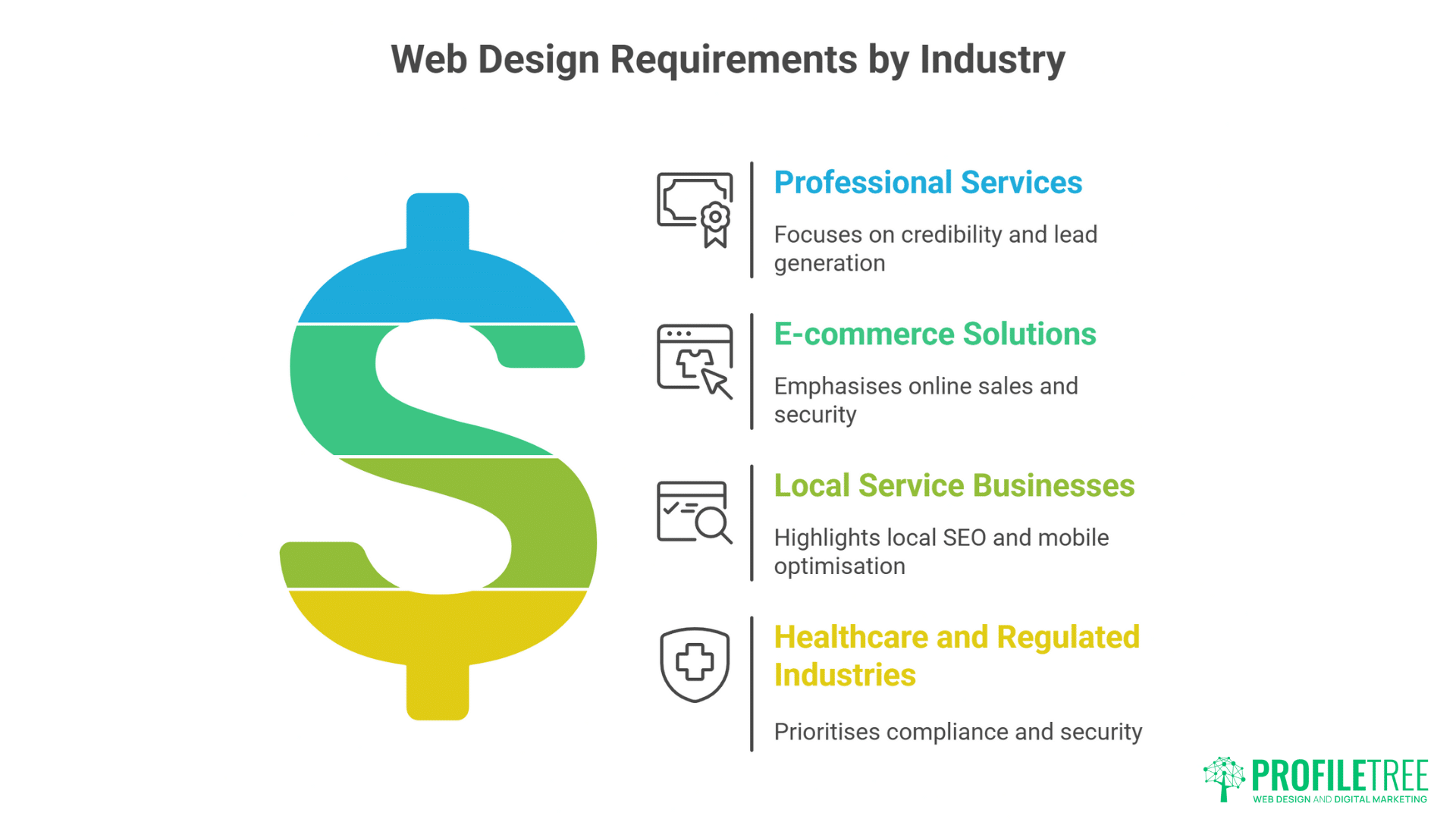
Different industries require specific functionality, compliance features, and user experience elements that influence web design complexity and associated costs.
Professional Services (£4,000-£10,000)
Professional service websites require credibility building, expertise demonstration, case study presentation, and lead generation optimisation that converts prospects into consultation requests.
Professional services web design includes testimonial systems, service explanation, team presentation, and contact optimisation that builds trust and encourages enquiry generation.
Compliance requirements may include accessibility standards, privacy policies, and industry-specific regulations that influence design and development approaches.
Consider ongoing content requirements including blog development, case study creation, and expertise demonstration that support search rankings and credibility building.
E-commerce Solutions (£5,000-£25,000+)
E-commerce websites require product catalogues, payment processing, inventory management, security implementation, and conversion optimisation that supports online sales effectively.
E-commerce functionality includes shopping carts, payment gateways, tax calculation, shipping integration, and customer account management that creates complete online retail experiences.
Security requirements for e-commerce include SSL certificates, PCI compliance, data protection, and fraud prevention that protect customer information and business liability.
Performance optimisation becomes critical for e-commerce success through fast loading speeds, mobile optimisation, and user experience design that reduces cart abandonment rates.
Local Service Businesses (£2,500-£7,000)
Local service businesses require local SEO optimisation, service area coverage, customer review integration, and contact optimisation that drives local lead generation.
Local business web design includes map integration, service area explanation, local testimonials, and call-to-action optimisation that converts local traffic effectively.
Mobile optimisation becomes crucial for local businesses as most local searches occur on mobile devices requiring immediate contact information and service details.
Consider ongoing local SEO requirements including Google Business Profile optimisation, local directory listings, and review management that support continued local visibility.
Healthcare and Regulated Industries (£6,000-£15,000+)
Healthcare and regulated industry websites require compliance features, security implementation, privacy protection, and accessibility standards that meet regulatory requirements.
Compliance considerations include HIPAA requirements, accessibility standards, privacy policies, and security measures that protect patient/client information and business liability.
Content requirements often include educational resources, service explanations, provider information, and appointment scheduling that serve patient/client needs effectively.
Ongoing compliance maintenance includes security updates, policy updates, and regulatory change implementation that ensures continued compliance and protection.
Regional Considerations for Northern Ireland Businesses
Northern Ireland businesses often serve diverse markets across Ireland, the UK, and international customers, requiring web design approaches that address multiple audience needs and regulatory environments.
Cross-Border Business Requirements
Businesses serving both UK and Irish markets need web design that accommodates different currencies, tax systems, delivery options, and regulatory requirements without confusing customers.
Multi-jurisdictional considerations include VAT display, shipping calculations, privacy policy compliance, and payment options that serve different regional requirements effectively.
Language and cultural considerations may include Irish language options, cultural sensitivity, and regional terminology that resonates with different audience segments appropriately.
Local Market Positioning
Belfast-based businesses can differentiate through authentic local presence whilst maintaining professional credibility that serves broader markets effectively.
Local positioning includes area coverage explanation, local partnerships, community involvement, and regional expertise that builds trust with local customers whilst appealing to broader audiences.
Consider local SEO requirements including Google Business Profile optimisation, local directory listings, and regional keyword targeting that dominates local search results.
Competitive Landscape Considerations
Northern Ireland’s competitive landscape often includes both local competitors and larger UK/Irish companies, requiring web design that competes effectively across different scales.
Competitive differentiation through professional web design can provide significant advantages in markets where many competitors rely on basic web presence or outdated websites.
Professional web design enables smaller Northern Ireland businesses to compete effectively against larger companies through superior user experience, local relevance, and conversion optimisation.
ProfileTree’s Transparent Approach to Web Design Pricing
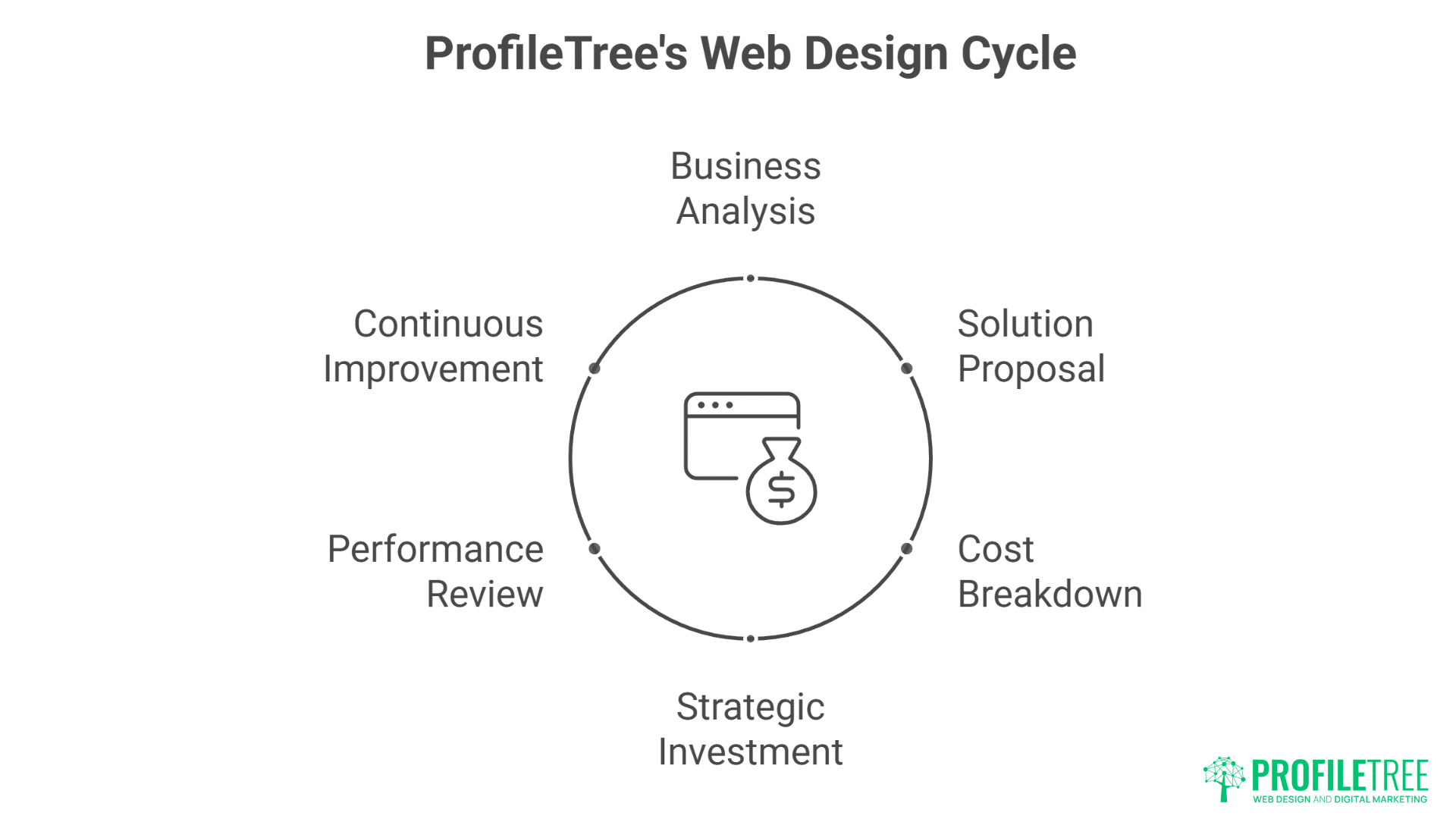
At ProfileTree, we believe in transparent web design pricing that helps businesses understand exactly what they’re investing in and how it supports their specific objectives. Our Belfast-based team serves diverse clients across Northern Ireland, Ireland, and the UK with web design solutions that prioritise business results over aesthetic appeal.
Our approach involves comprehensive business analysis before proposing solutions, ensuring every recommendation addresses specific client challenges and opportunities rather than generic web design requirements. We’ve found that clients achieving the best results treat web design as strategic business investment rather than necessary expense.
We provide detailed cost breakdowns that explain exactly what each component delivers, enabling clients to make informed decisions about feature prioritisation and budget allocation. Our goal is helping businesses understand the relationship between investment and outcomes rather than just minimising costs.
As Ciaran Connolly, our Head of Digital Experience, explains: “The businesses getting the best value from web design investment aren’t just buying websites—they’re investing in strategic business tools that support growth, improve efficiency, and create competitive advantages. Understanding this difference transforms web design from expense to investment.”
We regularly review client website performance to measure actual business impact, using these insights to continuously improve our development approaches and ensure continued value delivery throughout ongoing relationships.
Timing and Budget Planning for Web Design Projects
Effective web design projects require proper timing and budget planning that aligns with business objectives whilst managing cash flow and project expectations appropriately.
Project Timeline Considerations
Professional web design typically requires 8-16 weeks from initial consultation to launch, depending on complexity and client decision-making speed. Rushing development often compromises quality and long-term effectiveness.
Timeline planning should include business review phases, design approval stages, content development periods, and testing phases that ensure quality delivery whilst managing expectations.
Consider seasonal business factors, marketing campaign timing, and business launch requirements that influence optimal project timing and deadline management.
Allow buffer time for revisions, testing, and refinement that ensure final delivery meets business requirements and quality standards before public launch.
Budget Allocation Strategy:
Effective web design budgets typically allocate 60% to initial development, 20% to content creation and optimisation, and 20% to ongoing maintenance and improvement over the first year.
Consider immediate launch requirements versus phased development that spreads costs whilst delivering progressive value and improvement over time.
Budget planning should include ongoing costs for hosting, maintenance, security updates, and performance optimisation that protect initial investment value.
Plan for future enhancement budgets that enable continued improvement and adaptation as business needs evolve and growth occurs.
Return on Investment Timeline
Professional web design typically shows initial returns within 3-6 months through improved search rankings and conversion rates, with full ROI achieved within 12-18 months for most businesses.
Consider cumulative benefits over multiple years when evaluating investment value, as professional web design continues providing returns throughout its effective lifespan.
Plan measurement approaches that track both immediate improvements and long-term business impact to understand true investment value over time.
FAQs
How much should I expect to pay for a professional business website in 2026?
Most businesses should budget £3,000-£8,000 for professional web design that includes custom design, mobile optimisation, SEO implementation, and content management systems. Service businesses typically need £4,000-£7,000, whilst e-commerce sites range from £5,000-£15,000 depending on complexity. Remember that professional development pays for itself through improved search rankings and conversion rates.
Why do cheap web design options often cost more in the long run?
Cheap web design typically creates expensive problems including poor search rankings (costing £3,000+ to fix), security vulnerabilities, slow loading speeds, and conversion problems that reduce lead generation. Most cheap websites require complete rebuilding within 2-3 years, whilst professional development lasts 5-7 years. The total cost of ownership for cheap solutions often exceeds professional development costs whilst delivering inferior results.
What’s the difference between template websites and custom web design?
Template websites use pre-built designs with limited customisation options, typically costing £200-£2,000 but lacking unique branding, SEO optimisation, and scalability. Custom web design creates unique solutions tailored to specific business needs, costing £3,000-£15,000 but providing better search rankings, conversion rates, and long-term value. Custom design supports business growth whilst templates often require replacement as businesses expand.
How do I evaluate web design proposals from different agencies?
Look for proposals that include business analysis, competitor research, SEO strategy, and conversion optimisation rather than just design services. Evaluate technical specifications including security, performance, mobile optimisation, and maintenance planning. Compare long-term value through ongoing support, training, and strategic consultation rather than just initial costs. Choose agencies that demonstrate understanding of your business objectives and provide measurable success criteria.
What ongoing costs should I budget for after website launch?
Plan for annual costs of £500-£2,000 including hosting, security updates, maintenance, and content management. Professional websites require less maintenance than cheap solutions but need ongoing optimisation for continued effectiveness. Budget additional funds for content updates, feature enhancements, and strategic improvements that support business growth. Consider these ongoing costs as business tool maintenance rather than website expenses.
Conclusion
Professional web design in 2026 represents a strategic business investment that pays for itself through improved search rankings, conversion rates, and operational efficiency. Whilst initial costs range from £3,000-£15,000+ for most businesses, the long-term value far exceeds alternatives through better performance, reduced maintenance costs, and sustained competitive advantages.
Cheap web design options often prove expensive through hidden costs, poor performance, and frequent rebuilding requirements that exceed professional development costs whilst delivering inferior results. Understanding true cost implications enables informed decision-making that supports business growth rather than short-term savings.
The key lies in evaluating web design investment based on business impact rather than initial cost. Professional development creates strategic business tools that generate leads, build credibility, and support growth objectives, whilst cheap alternatives typically become expensive problems requiring professional remediation.
For Northern Ireland businesses competing across diverse markets, professional web design provides the credibility and functionality necessary for sustainable growth and competitive success. The businesses that invest strategically in professional development consistently outperform those focusing solely on cost minimisation.
Whether you need a professional services website, e-commerce platform, or local business presence, the principles remain consistent: invest in strategic development that supports business objectives, choose providers who understand your market, and evaluate total value rather than initial cost to make decisions that drive long-term success and sustainable growth.