
The Rise of Headless CMS: Content Decoupled from Presentation
Table of Contents
Traditional content management systems have dominated web development for decades, bundling content storage, management, and presentation into a single platform. However, this monolithic approach increasingly struggles to meet the demands of modern digital experiences that span websites, mobile apps, digital kiosks, and voice assistants. Headless CMS architecture separates the content repository from the presentation layer, offering businesses the flexibility to deliver content across any channel through APIs.
This architectural shift represents more than a technical evolution—it fundamentally changes how organisations manage and distribute digital content. For businesses across Northern Ireland, Ireland, and the UK, understanding headless CMS technology has become essential for maintaining a competitive advantage in an increasingly omnichannel marketplace.
Understanding Headless CMS Architecture
A headless CMS strips away the traditional front-end presentation layer, functioning purely as a content repository with an API layer. The “head”—the presentation layer that users see—exists separately, allowing developers to build custom front-ends using any technology stack. Content stored in the headless CMS can be delivered to websites, native mobile applications, IoT devices, or any platform capable of consuming API responses.
This decoupled architecture contrasts sharply with traditional CMS platforms like WordPress, Drupal, or Joomla, where the content management and presentation layers remain tightly integrated. A traditional CMS dictates how content appears through themes and templates, whilst a headless CMS remains agnostic about presentation, serving structured content that developers can render however they choose.
The technical foundation relies on RESTful APIs or GraphQL endpoints that deliver content as JSON or XML data. Front-end developers query these endpoints to retrieve content, which they then render using frameworks like React, Vue.js, Angular, or even static site generators like Next.js or Gatsby. This separation allows content editors to work within a familiar CMS interface whilst developers enjoy complete freedom in how they present that content.
The Technical Advantages Driving Adoption
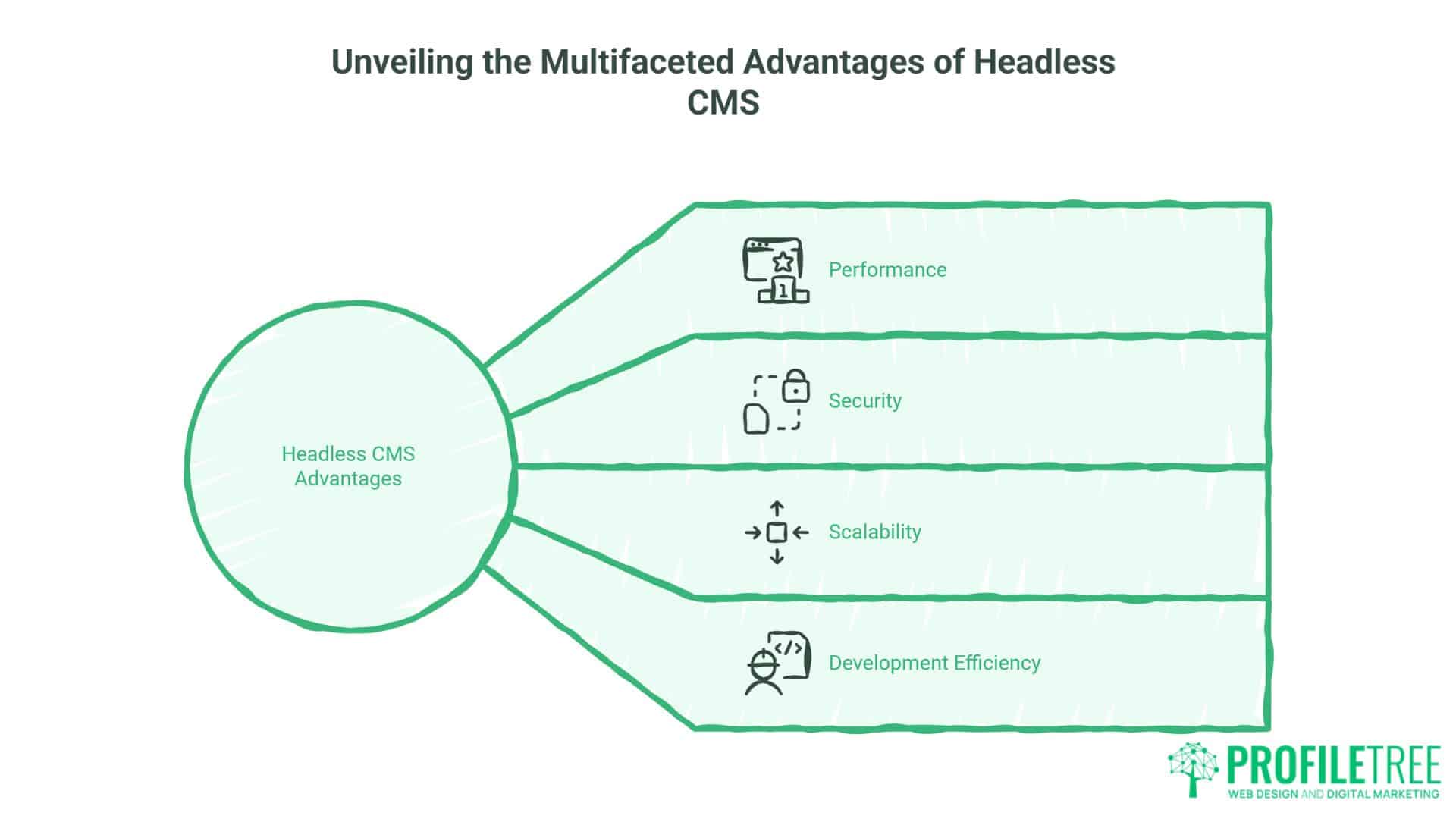
Headless CMS platforms deliver performance improvements that traditional systems struggle to match. By separating content from presentation, developers can implement sophisticated caching strategies, serve content through content delivery networks (CDNs), and build highly optimised front-ends. Static site generation—where pages are pre-rendered at build time rather than on each request—becomes straightforward, dramatically reducing server load and page load times.
Security benefits emerge from the reduced attack surface. Traditional CMS platforms expose both the administrative interface and the public website on the same infrastructure, creating multiple potential entry points for malicious actors. Headless CMS architectures keep the CMS isolated from public access, with only API endpoints exposed. This separation makes distributed denial-of-service attacks less effective and reduces vulnerability to common exploits that target monolithic systems.
Scalability improves because different components can scale independently. If your mobile app experiences sudden traffic spikes, you can scale the API infrastructure without affecting the CMS editing interface. Content delivery networks can cache API responses globally, serving content from locations nearest to users. This distributed approach handles traffic variations more gracefully than traditional systems, where every request passes through the same server infrastructure.
Development workflows become more efficient when front-end and back-end teams can work simultaneously. Content structure can be defined and content created whilst developers build the presentation layer. Teams can use version control for front-end code, implement automated testing, and deploy updates without touching the CMS. This separation accelerates development cycles and reduces the coordination overhead that slows traditional projects.
Omnichannel Content Delivery Capabilities

Modern businesses operate across multiple touchpoints—websites, mobile apps, email campaigns, digital signage, smartwatches, and voice assistants. Each channel requires content optimised for its specific context and constraints. Traditional CMS platforms designed primarily for websites struggle to serve these diverse channels effectively.
Headless CMS architecture treats all channels equally. The same content repository feeds your website, native iOS app, Android app, and smart display simultaneously. A product description entered once becomes available everywhere, maintaining consistency across channels without manual synchronisation. When content updates, all channels reflect changes immediately through their API connections. For organizations managing content across multiple physical locations and digital screens, an Enterprise Digital Signage CMS can integrate seamlessly with headless architecture, pulling dynamic content from the same API to display real-time information, promotions, and branded messaging across retail stores, corporate offices, or event venues without requiring separate content management workflows.
This omnichannel capability proves particularly valuable for retail businesses with both physical and digital presences. A Belfast retailer could manage product information, pricing, and promotional content in a single headless CMS, automatically distributing it to their e-commerce website, in-store digital displays, mobile shopping app, and social media channels. Content editors work in one place, whilst content appears everywhere it’s needed.
The API-first approach also supports future channels that don’t exist yet. When new platforms emerge—whether augmented reality interfaces, new social networks, or devices we haven’t imagined—your content remains accessible through the same API infrastructure. You’re not locked into the presentation assumptions of a platform designed years ago.
Content Modelling and Structured Data
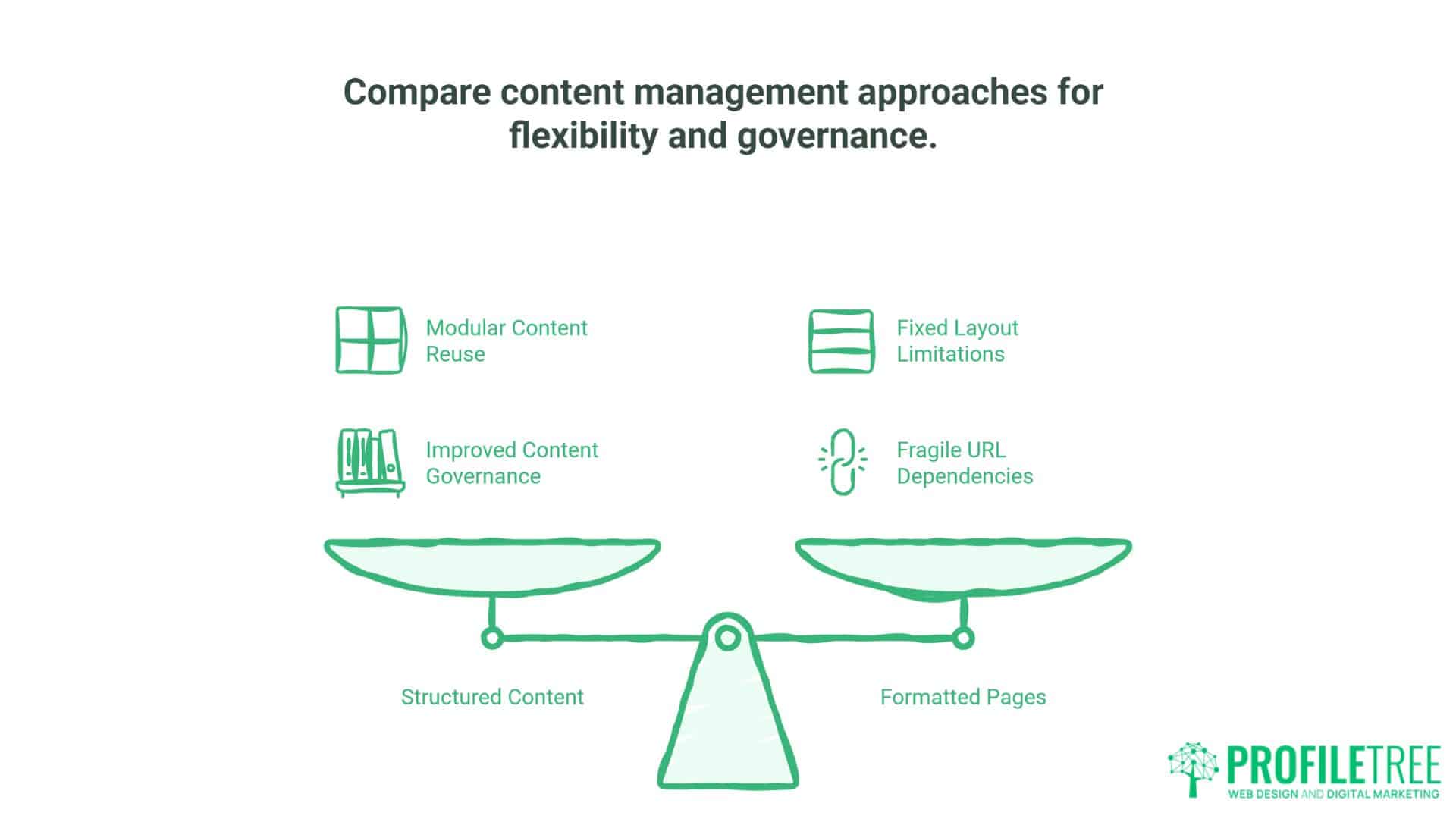
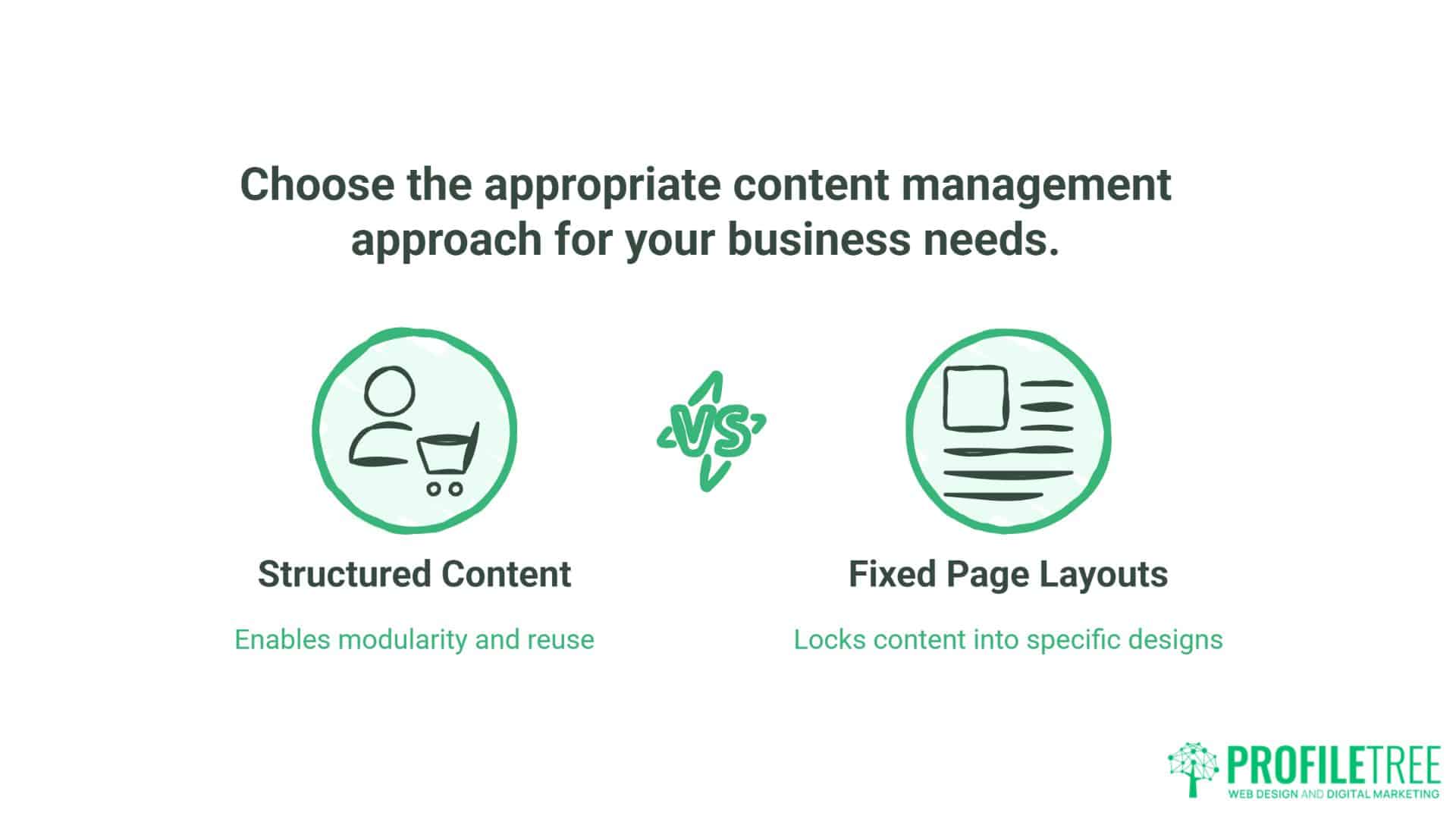
Headless CMS platforms emphasise structured content over formatted pages. Rather than creating pages with fixed layouts, content editors work with content models—structured schemas that define content types and their fields. A product might have fields for name, description, price, images, and specifications. An article contains a title, an author, a publication date, body content, and a featured image.
This structured approach separates content from presentation decisions. Content editors don’t worry about where a headline appears or how large an image displays—they simply fill in the structured fields. Presentation logic lives in the front-end code, where developers control exactly how each content type renders on different devices and screen sizes.
Structured content enables more sophisticated content reuse. A single product description can appear in search results, product pages, comparison tables, and promotional emails, with each context pulling the appropriate fields and presenting them according to its specific requirements. Content becomes modular and composable rather than locked into fixed page layouts.
For businesses managing large content volumes, this structure improves content governance and quality. Required fields prevent incomplete content from being published. Field validation helps content types remain consistent. Related content can be linked through references rather than fragile URL dependencies. The result is cleaner, more maintainable content that survives design refreshes and platform migrations.
The Developer Experience Revolution

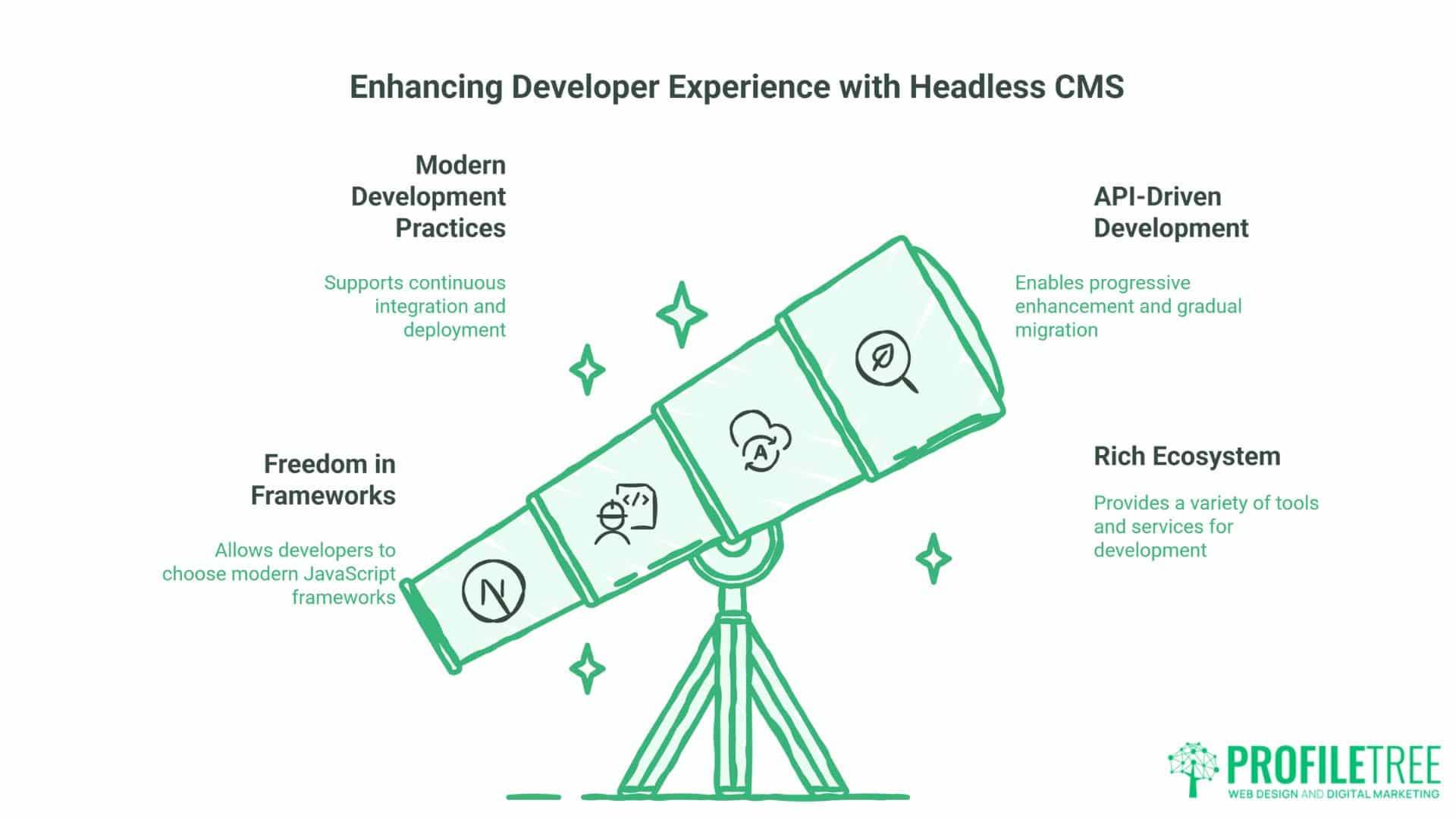
Front-end developers working with headless CMS platforms gain freedom impossible in traditional systems. They can choose modern JavaScript frameworks, implement cutting-edge design patterns, and optimise performance without CMS constraints. The separation allows teams to adopt new technologies without migrating content or retraining editors.
Modern development practices like continuous integration and deployment work naturally with headless CMS architectures. Code lives in version control systems like Git, undergoes automated testing, and deploys through CI/CD pipelines. Developers can preview changes in staging environments before production deployment. This workflow matches how modern development teams already work, eliminating the friction of traditional CMS update processes.
API-driven development also supports progressive enhancement and gradual migration strategies. Businesses can build new features using headless CMS architecture whilst maintaining existing traditional CMS pages. An e-commerce site might rebuild its product pages as a React application consuming headless CMS APIs, whilst keeping other sections in WordPress temporarily. This incremental approach reduces risk and allows businesses to validate the new architecture before full commitment.
The growing ecosystem of headless CMS platforms, JAMstack hosting providers, and supporting tools creates a rich development environment. Services like Netlify, Vercel, and AWS Amplify streamline deployment and hosting for headless architectures. Frameworks like Next.js and Gatsby provide optimised foundations for headless front-ends. This ecosystem reduces the custom infrastructure traditionally required for sophisticated web applications.
Business Benefits Beyond Technology
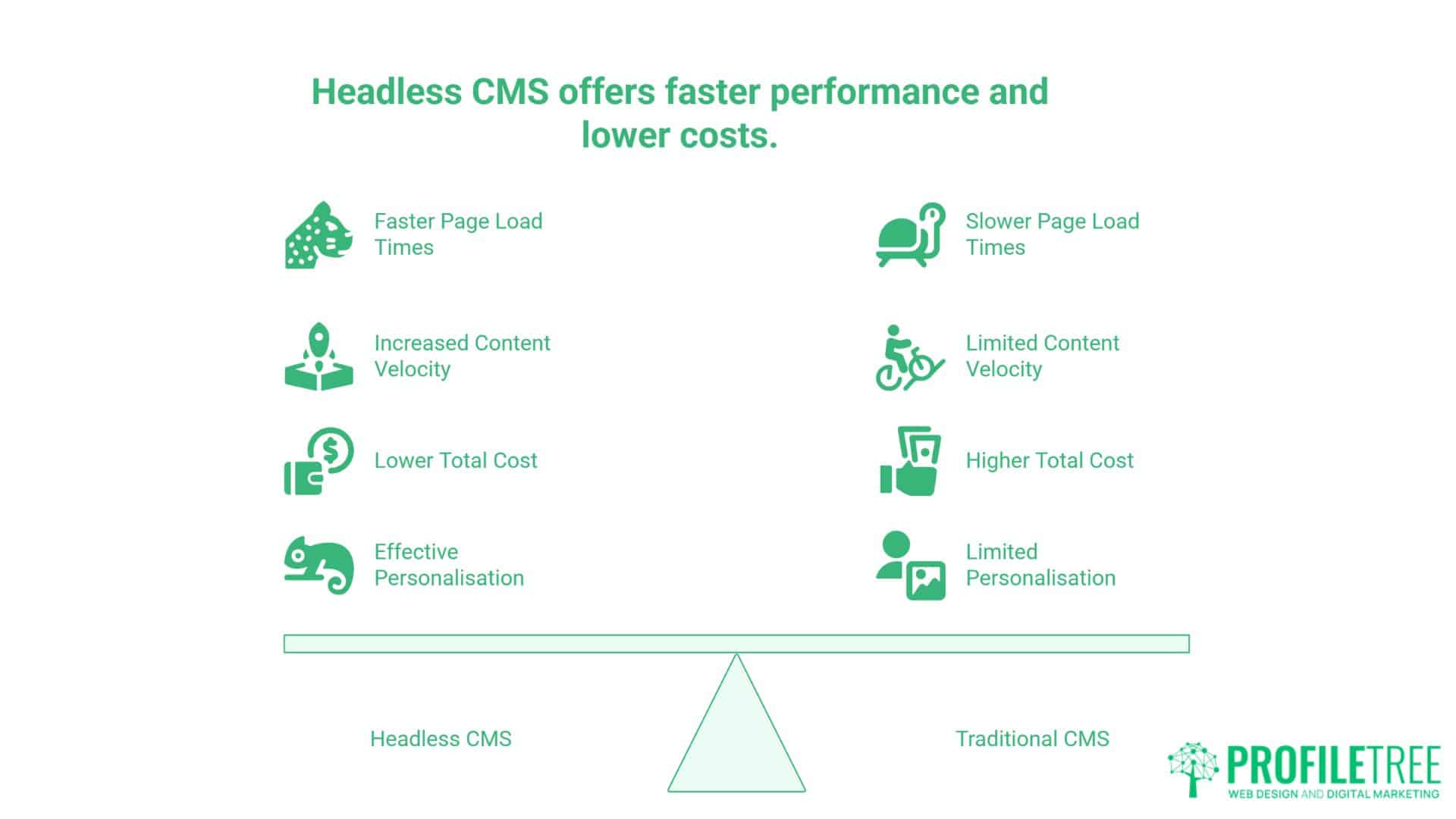
The technical advantages of headless CMS translate into tangible business benefits. Faster page load times improve search rankings and conversion rates—Google research shows that 53% of mobile users abandon sites taking longer than three seconds to load. The performance optimisations possible with headless CMS architectures directly impact revenue.
Accelerated Content Deployment
Content velocity increases when technical constraints don’t limit creativity. Marketing teams can launch campaigns across multiple channels simultaneously, knowing content entered once flows everywhere. Seasonal promotions, product launches, and content updates happen faster when the presentation layer doesn’t require developer intervention for every change.
Lower Long-Term Costs
Total cost of ownership can decrease despite initially higher development costs. Traditional CMS platforms require ongoing maintenance, plugin updates, security patches, and compatibility testing. Headless CMS architectures reduce this maintenance burden—the CMS handles content management, whilst modern hosting platforms handle infrastructure concerns. Fewer moving parts mean fewer things to maintain.
Enhanced Personalisation Capabilities
The decoupled architecture also supports more effective personalisation and experimentation. A/B testing different layouts, messaging, or user flows becomes a front-end concern that doesn’t require CMS changes. Personalisation engines can consume content from the headless CMS whilst making runtime decisions about what to show each user. This flexibility supports the data-driven optimisation that drives digital growth.
Businesses often underestimate how much their content infrastructure shapes what’s possible with digital marketing,” notes Ciaran Connolly, Director at ProfileTree. “Headless CMS removes technical barriers that prevent marketing teams from executing their vision across all the channels their customers use.”
Implementation Considerations and Challenges
Adopting a headless CMS architecture requires careful planning. The upfront development effort exceeds traditional CMS implementation because the presentation layer must be built from scratch. Businesses need development resources capable of working with modern JavaScript frameworks and API integration—skills that may require hiring or training.
Content Team Adaptation
Content editor training becomes important because headless CMS interfaces differ from traditional page editors. Content editors work with structured fields rather than visual page builders. Some team members accustomed to WYSIWYG editors may initially struggle with the abstraction. However, most modern headless CMS platforms offer intuitive interfaces that content teams adapt to quickly with proper training.
Custom Development Requirements
The lack of plugins and extensions that characterise traditional CMS platforms means custom development for features that would otherwise be plug-and-play. Need an e-commerce shopping cart? You’ll likely build it or integrate a separate service rather than install a plugin. This trade-off between flexibility and convenience requires an honest assessment of your technical capabilities and resources.
Preview and Workflow Design
Preview and content management workflows need careful design. Content editors want to see how content appears before publishing, but the presentation layer exists separately from the CMS. Modern headless CMS platforms offer preview modes, but implementing them requires front-end development. Creating editing experiences that feel familiar despite the architectural differences requires thoughtful user experience design.
Popular Headless CMS Platforms
The headless CMS market has matured significantly, offering options for different needs and budgets.
Contentful: Enterprise-Ready Pioneer
Contentful pioneered the commercial headless CMS space, providing a robust API-first platform with excellent developer documentation and a generous free tier for small projects. Its sophisticated content modelling and multi-environment support make it popular for enterprise applications.
Strapi: Open-Source Flexibility
Strapi offers an open-source alternative that businesses can self-host or use through managed cloud services. Its customisable admin panel and plugin system provide flexibility for teams wanting control over their infrastructure. Being open-source means no vendor lock-in and the ability to modify the platform to specific requirements.
Sanity: Real-Time Collaboration
Sanity provides real-time collaboration features and a highly customisable editing interface called Sanity Studio. Its focus on developer experience and flexible content modelling appeals to agencies and development teams building sophisticated applications. The platform’s approach to content versioning and history makes it attractive for content-heavy applications.
Contentstack: Enterprise Governance
Contentstack targets enterprise customers with advanced features for governance, compliance, and global content delivery. Its modular architecture allows businesses to add capabilities like personalisation, translation management, and digital asset management as needed.
WPGraphQL: WordPress Evolution
For businesses already using WordPress, WPGraphQL transforms WordPress into a headless CMS by exposing content through a GraphQL API. This approach allows organisations to maintain their existing WordPress content management workflow whilst building modern front-ends. It represents a middle ground for teams wanting headless benefits without completely abandoning WordPress.
When Headless CMS Makes Sense
Headless CMS architecture suits specific business situations better than others. Businesses with significant mobile app components benefit immediately—the same content API serves both web and native applications. Companies planning to distribute content across multiple channels find that the omnichannel capabilities justify the additional complexity.
Organisations with sophisticated development teams capable of building and maintaining custom front-ends are well-positioned to adopt headless CMS. The architecture rewards technical expertise with flexibility and performance. Companies willing to invest in modern development practices see returns through faster feature deployment and better user experiences.
Businesses with frequently changing design requirements or multiple brand websites appreciate the separation between content and presentation. Content remains stable whilst presentation can evolve independently. A holding company managing multiple brands can maintain separate front-ends consuming content from a shared headless CMS.
Projects requiring exceptional performance—whether for SEO, user experience, or technical requirements—benefit from headless CMS architecture’s optimisation opportunities. Static site generation, edge caching, and modern front-end optimisation techniques become accessible when not constrained by traditional CMS architectures.
When Traditional CMS Remains Appropriate
Headless CMS isn’t suitable for every situation. Small businesses with limited technical resources and straightforward web presence requirements often find traditional CMS platforms more practical. The ecosystem of themes, plugins, and managed hosting makes traditional platforms accessible to non-technical users.
Projects with tight budgets and timelines may not justify the higher upfront development costs. A traditional WordPress site can launch in weeks, whilst a custom headless CMS implementation might require months. For businesses where time to market matters more than architectural purity, traditional platforms deliver faster results.
Content-heavy websites where editors need visual page-building tools may struggle with headless CMS abstractions. Publishers creating complex article layouts, landing pages with varied designs, or content with significant visual formatting requirements might find traditional page builders more efficient.
Organisations without ongoing development resources should carefully consider whether they can maintain a headless CMS implementation. Traditional platforms offer straightforward updates and community support that non-technical teams can manage. Headless CMS architectures typically require developer involvement for significant changes.
Implementation Strategy and Migration Planning
Successful headless CMS adoption starts with clear objectives. What problems does your current CMS create? What capabilities do you need that your current platform doesn’t provide? These answers shape platform selection and implementation approach. Businesses should audit their current content, identify required content types, and plan their content model before selecting a platform.
A phased migration strategy reduces risk compared to a complete platform replacement. Start by identifying a discrete section of your website—perhaps a blog, product catalogue, or landing pages—to rebuild using headless CMS architecture. This pilot project validates the approach, builds team expertise, and demonstrates value before committing to full migration.
Content migration requires careful planning because structured content differs from traditional page-based content. Content may need restructuring to fit new content models. Automated migration scripts can handle bulk content, but complex or unstructured content may require manual cleanup. Budget adequate time for content preparation and migration testing.
Training programmes should address both technical teams and content editors. Developers need to understand API integration, front-end frameworks, and hosting requirements. Content editors need training on the new CMS interface and structured content principles. Creating documentation and establishing support channels helps both groups adopt the new system successfully.
The Future of Content Management
The trajectory of content management points toward greater decoupling and specialisation. Headless CMS represents one point on a spectrum that includes fully decoupled systems, hybrid approaches, and emerging architectures like content-as-a-service. The principle underlying these approaches—separating concerns to allow specialisation—continues gaining traction.
AI and machine learning integration will likely accelerate through APIs that headless CMS architectures support naturally. Content recommendations, automated tagging, translation services, and content generation tools connect easily to headless CMS through their API infrastructure. This extensibility positions headless CMS platforms well for incorporating emerging AI capabilities.
The concept of MACH architecture—Microservices, API-first, Cloud-native, and Headless—represents the next evolution, combining headless CMS with specialised services for search, personalisation, e-commerce, and other capabilities. Rather than monolithic platforms attempting everything, businesses compose best-of-breed services into custom digital experience platforms.
Edge computing and distributed content delivery continue improving performance for global audiences. Headless CMS architectures benefit directly from these infrastructure advances because their API-driven approach supports distributed deployment naturally. Content can be cached and served from locations closest to users, reducing latency for international audiences.
Conclusion
Headless CMS architecture represents a significant evolution in content management, offering genuine benefits for businesses with complex omnichannel requirements, high-traffic demands, or sophisticated development resources. The separation of content from presentation enables performance optimisation, multi-platform delivery, and development flexibility that traditional monolithic systems cannot match. However, this architectural approach requires substantial upfront investment, ongoing technical expertise, and acceptance of increased complexity.
For businesses evaluating headless CMS, the decision should rest on specific requirements rather than technological trends—organisations needing to distribute content across multiple platforms, those with dedicated development teams, or companies facing performance constraints that traditional solutions cannot address will find headless architecture worthwhile.
ProfileTree builds conversion-focused websites for businesses across Northern Ireland, Ireland, and the UK, primarily using WordPress with additional capabilities in Wix, Shopify, and Squarespace. Our web design and development services focus on creating sites that rank well, attract traffic, and generate leads and sales. We combine technical excellence with SEO knowledge, content strategy, and user experience design to deliver websites that achieve business objectives.