
SEO for Accountants and Bookkeepers: How to Get More Client Leads
Table of Contents
When a business owner needs an accountant, when someone’s starting a company and needs advice, or when tax season approaches and self-employed people need help, they search online. “Accountant near me,” “bookkeeper Belfast,” “small business accountant”, these searches happen constantly, and the accounting practices appearing in results win the new clients.
Accounting SEO operates in a trust-critical environment. Clients are handing over their financial information, relying on your expertise to keep them compliant, and trusting your advice on significant decisions. They need confidence before they’ll pick up the phone, and your online presence either builds or undermines that confidence.
The accounting profession has become increasingly competitive. Cloud accounting has lowered barriers. Online services compete on price. Businesses have more choices than ever. Strong search visibility helps practices, whether traditional firms or modern cloud-focused businesses, attract the right clients who value their specific approach.
ProfileTree works with professional service businesses across Northern Ireland, Ireland, and the UK to build search visibility that generates quality client enquiries. For accountants, that means appearing when potential clients search, demonstrating expertise and trustworthiness, and making it easy to start a conversation.
SEO for Accountants: Why Search Visibility Matters
The accounting market has evolved significantly. Understanding how clients find accountants shapes effective marketing.
The Trust-First Decision Process
Choosing an accountant involves significant trust:
- Clients share sensitive financial information
- Poor advice can have serious legal and financial consequences
- Relationships often last years or decades
- Decisions involve ongoing costs and commitments
Potential clients research carefully before making contact. Your online presence must establish professional credibility while conveying approachability, intimidating or unclear presentation discourages enquiries.
Different Clients, Different Searches
Accounting searches vary significantly:
- Business owner searches: “Small business accountant,” “accountant for contractors,” “company accounts
- Self-employed searches: “Self-assessment help,” “tax return accountant,” “freelancer accountant”
- Startup searches:“Accountant for startups,” “company formation advice,” “new business accounting
- Specific service searches: “Payroll services,” “VAT registration,” “bookkeeping services,” “tax planning”
- Local searches: “Accountant Belfast,” “bookkeeper near me,” “accountant Derry”
Each search type represents different client needs and values. Targeting your specific services and ideal clients captures relevant enquiries.
The Online Accounting Challenge
Traditional accountants increasingly compete with online services:
- Online-only providers: Lower costs, technology-focused, price-competitive
- Cloud accounting platforms: DIY options with software doing much of the work
- Offshore services: Lower-cost bookkeeping and compliance work
Local and personal service remains valuable for many clients, but your online presence must demonstrate what makes personal service worth the investment.
Google Business Profile for Accountants
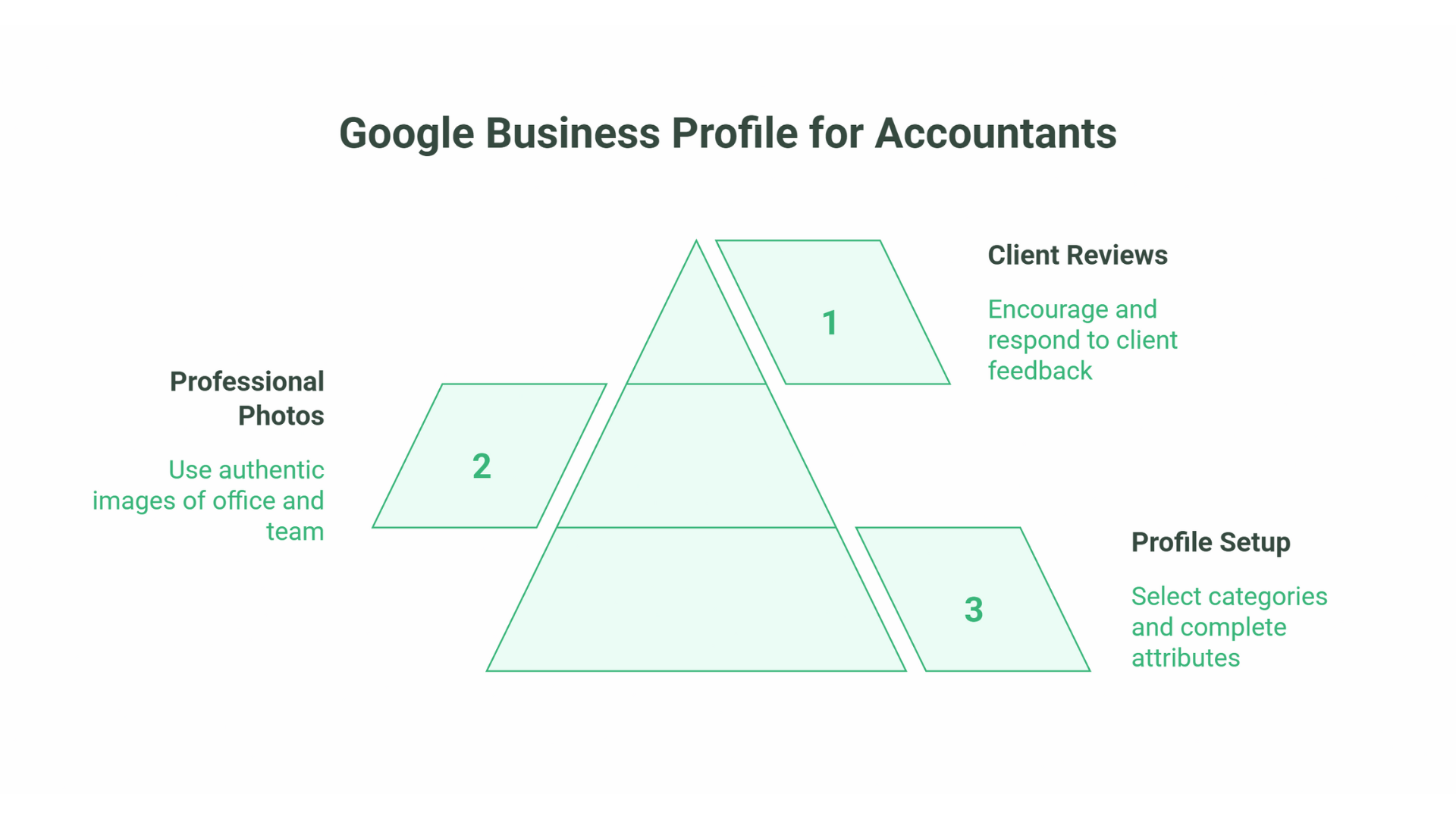
Your Google Business Profile is foundational for accounting local SEO. It appears in local searches and displays crucial information when potential clients are researching.
Essential Profile Setup
Categories: Select accurate categories:
- Accountant (primary for most practices)
- Tax Consultant
- Bookkeeping Service
- Chartered Accountant
- Tax Preparation Service
- Payroll Service
Choose your primary category based on main focus. Add secondary categories for additional services.
Attributes: Complete every relevant attribute:
- Online appointments available
- In-person appointments
- Payment methods
- Accessibility features
Business description: Use this to communicate:
- Types of clients you serve
- Key services offered
- Qualifications and memberships
- Your approach and what makes you different
Photos for Accountants
Professional imagery builds confidence:
- Office/premises: Professional, organised workspace
- Team photos: Partners, accountants, and staff looking professional and approachable
- Qualifications: Display of professional memberships and certifications
- Team at work: Natural shots showing professional activity (appropriately staged)
Avoid generic stock images. Authentic photos of your actual team and premises build trust.
Reviews: Building Professional Credibility
Reviews significantly influence accountant choice. Clients want assurance from others who’ve trusted you with their finances:
Encouraging reviews:
- Ask after successful outcomes (tax savings identified, compliance sorted, business advice that helped)
- Request reviews at natural milestones (year-end completion, successful company formation)
- Send follow-up emails after significant work
- Never offer incentives
What to encourage clients to mention:
- Type of service received
- Quality of advice and communication
- Responsiveness and availability
- Value for money
- How long they’ve been clients
Responding to reviews:
- Respond to every review professionally
- Thank clients for their trust
- Keep responses appropriately formal for professional service
- Address any concerns professionally
“Accountants face a fundamental marketing challenge: clients need to trust you with sensitive financial information before they’ve experienced your service. Strong online presence with professional presentation and genuine client reviews builds that trust at the crucial research stage.” — Ciaran Connolly, ProfileTree
Website Strategy for Accountants
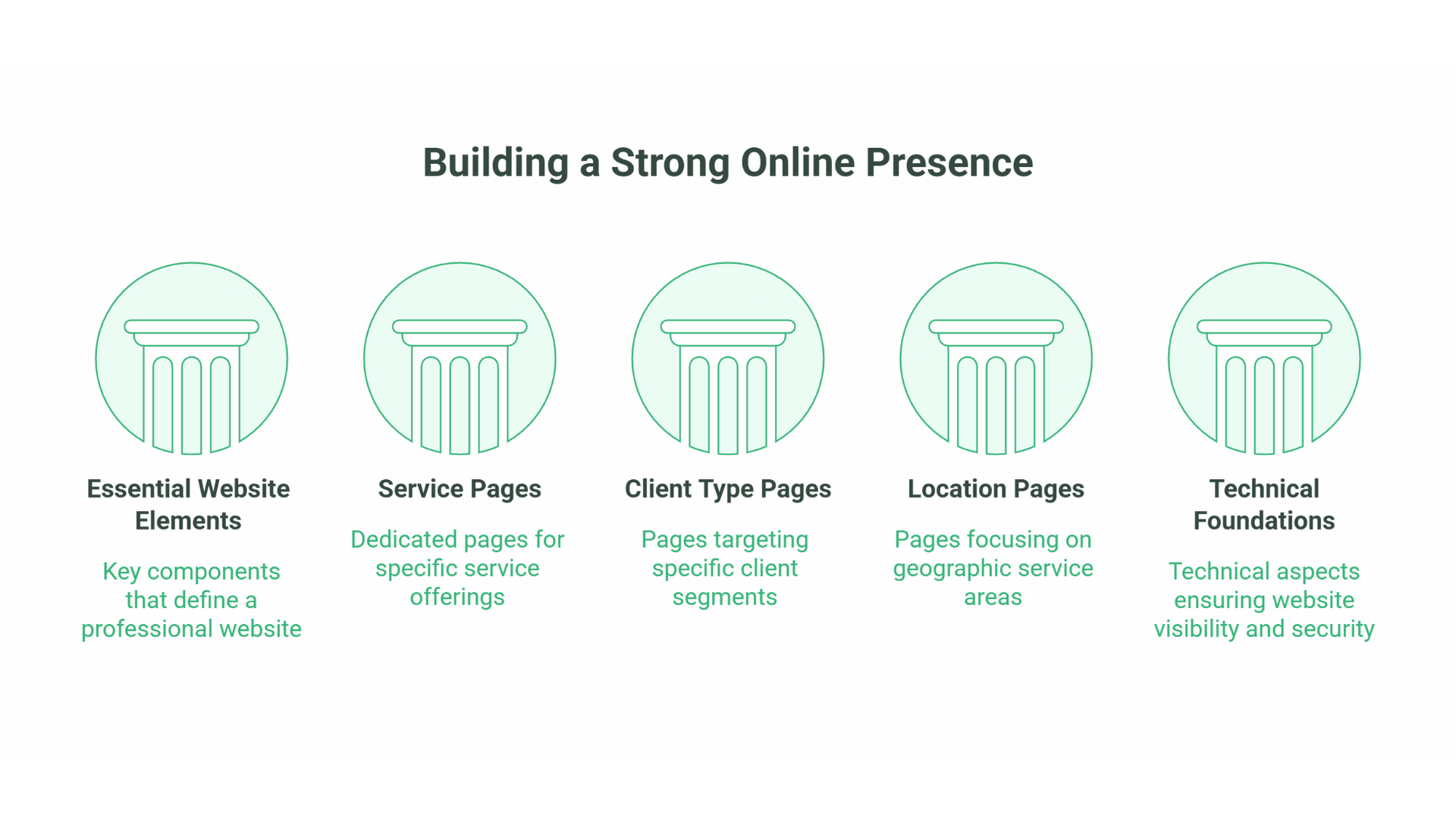
Your website demonstrates expertise and converts interest into enquiries.
Essential Website Elements
Services: Clear explanation of everything you offer:
- Accounts preparation and filing
- Tax returns (personal and business)
- Bookkeeping services
- Payroll
- VAT services
- Tax planning and advice
- Company formation
- Business advisory
- Specialist services
Who you serve: Define your ideal clients:
- Small businesses
- Sole traders and self-employed
- Contractors and freelancers
- Startups
- Specific industries you specialise in
- Landlords and property investors
Team: Introduce your accountants:
- Partner and director profiles
- Qualifications prominently displayed
- Professional memberships
- Areas of expertise
- Photos
Qualifications and memberships: Display credentials clearly:
- ACCA, ICAEW, CIMA, AAT qualifications
- Professional body memberships
- Practice licences
- Any specialisms or accreditations
Pricing guidance: Consider providing some pricing indication:
- Fixed fee examples where applicable
- Starting prices for common services
- How you charge (fixed fee vs hourly)
- Free initial consultation if offered
Contact: Multiple ways to get in touch, clear call to action.
Service Pages
Create dedicated pages for major services:
- /small-business-accounting/: Services for small businesses
- /tax-returns/: Personal and business tax return services
- /bookkeeping-services/: Bookkeeping offerings
- /payroll-services/: Payroll management
- /company-formation/: Starting a new business
Each service page should include:
- Detailed service description
- Who it’s for
- What’s included
- Pricing if appropriate
- Clear enquiry call to action
Client Type Pages
Consider pages targeting specific client types:
- /accountant-for-contractors/: Contractor-specific services
- /accountant-for-landlords/: Property and rental specialists
- /startup-accountant/: New business focus
- /accountant-for-restaurants/: Industry-specific expertise
These pages capture clients searching for specialists who understand their specific situation.
Location Pages
For practices serving defined areas:
- /accountant-belfast/: Belfast accounting services
- /accountant-lisburn/: Lisburn services
- /accountant-derry/: Derry/Londonderry services
Each location page targets geographic searches with locally relevant content.
Technical Foundations
Basic technical SEO supports visibility:
- Speed: Fast-loading pages
- HTTPS: Security essential for professional services
- Mobile: Many searches happen on mobile
- Schema markup: Implement LocalBusiness and ProfessionalService schema
Our guide at profiletree.com/seo-basics/ covers technical fundamentals.
YMYL Considerations for Accountants
Accounting content falls under Google’s Your Money or Your Life (YMYL) category, meaning it faces heightened quality scrutiny.
E-E-A-T for Accountants
Demonstrate Experience, Expertise, Authoritativeness, and Trustworthiness:
- Experience: Show real accounting experience through practical insights, common client situations, and demonstrated understanding of business challenges.
- Expertise: Display qualifications prominently. ACA, ACCA, CIMA, AAT qualifications establish professional competence.
- Authoritativeness: Professional body memberships, practice licences, any awards or recognition.
- Trustworthiness: Transparent pricing where possible, clear contact information, professional indemnity insurance mention, client testimonials.
Our detailed E-E-A-T guide at profiletree.com/seo-guide-google-e-a-t-update/ explains these factors.
Content Accuracy Requirements
Accounting content must be accurate:
- Tax information: Current and correct for relevant tax year
- Deadlines: Accurate dates for compliance requirements
- Regulatory references: Correct references to HMRC, Companies House requirements
- Disclaimers: Appropriate caveats that content is general guidance, not specific advice
Outdated or incorrect tax information damages credibility and potentially harms clients.
Local SEO Strategy for Accountants
While some accounting services can be delivered remotely, local presence remains important for many clients.
Local Keyword Targeting
Understand how potential clients search:
- Generic + location: “Accountant Belfast,” “bookkeeper near me,” “tax advisor Derry”
- Service + location: “Payroll services Belfast,” “tax returns Lisburn,” “bookkeeping Bangor”
- Client type + location: “Small business accountant Belfast,” “contractor accountant near me
Your Google Business Profile and Website content should target these patterns.
Building Professional Citations
Directory listings reinforce presence:
Professional directories:
- ICAEW Find a Chartered Accountant
- ACCA Find an Accountant
- CIMA member directory
- AAT Licensed Accountant directory
Business directories:
- Yell.com
- Thomson Local
- Bark
- Checkatrade (for some services)
Local directories:
- Local business listings
- Chamber of Commerce directories
- Local enterprise agency lists
Ensure consistent Name, Address, and Phone across all listings.
Local Link Building
Local links strengthen visibility:
- Join local business networks and chambers
- Partner with local solicitors and financial advisors
- Connect with local banks and building societies
- Speak at local business events
- Support local enterprise initiatives
Content Strategy for Accountants
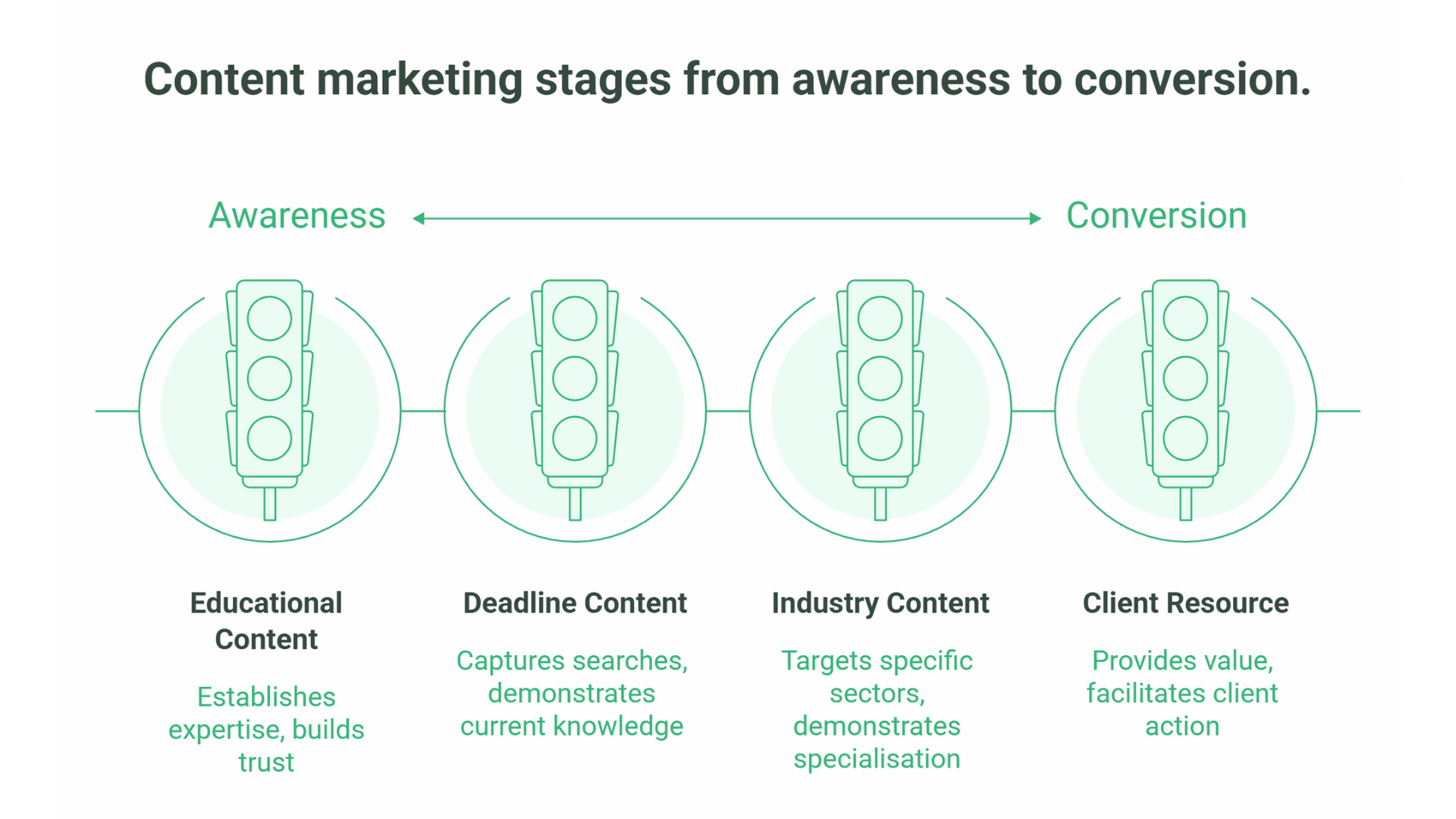
Content marketing demonstrates expertise and captures clients at different stages.
Educational Content
Helpful content establishing expertise:
- Tax guidance: “Self-assessment deadlines explained,” “Understanding Corporation Tax,” “VAT registration threshold”
- Business advice: “Choosing the right business structure,” “When to hire an accountant,” “Managing cash flow”
- Compliance help: “Companies House filing requirements,” “Making Tax Digital explained”
- Seasonal content: Tax year-end preparation, self-assessment season guidance
Deadline and Update Content
Time-sensitive content capturing searches:
- Deadline reminders: “Self-assessment deadline 2025,” “Corporation Tax payment dates”
- Budget updates: Analysis of budget changes affecting clients
- Legislative changes: New requirements, threshold changes, regulation updates
This content captures topical searches and demonstrates current expertise.
Industry-Specific Content
If you specialise in particular sectors:
- Contractor content: IR35, umbrella companies, limited company guidance
- Landlord content: Property tax, rental income, capital gains
- Startup content: Business formation, funding, early-stage finance
- Sector content: Industry-specific guidance for sectors you serve
Client Resource Content
Practical resources for clients and prospects:
- Guides: Downloadable guides on common topics
- Checklists: Year-end checklists, new business checklists
- Calculators: Tax calculators, dividend vs salary tools
- Templates: Basic templates clients might find useful
This content provides value while demonstrating expertise.
Measuring Accountant SEO Success
Track metrics connecting to actual client acquisition.
Key Metrics
Visibility:
- Google Business Profile views
- Website organic traffic
- Local keyword rankings
- Service-specific visibility
Engagement:
- Phone calls from search
- Contact form submissions
- Free consultation bookings
- Resource downloads
Business outcomes:
- New client enquiries from search
- Clients signed from search leads
- Revenue from search-acquired clients
- Client lifetime value
Client Lifetime Value
Accounting clients often stay for years:
- Ongoing relationships: Many clients stay for a decade or more
- Service expansion: Clients often add services over time
- Referrals: Satisfied clients recommend to other business owners
- Business growth: As clients grow, their accounting needs (and fees) grow
Consider lifetime value when assessing marketing investment. One good client from search may be worth substantial recurring revenue.
Seasonal Patterns
Track seasonal variations:
- January peak: Self-assessment season drives activity
- Year-end: Tax year-end prompts planning enquiries
- Company formation peaks: New year, new business starts
- Budget season: Changes prompt advice-seeking
Compare performance to same periods in previous years.
Common Mistakes Accountants Make
Avoid these frequent errors:
- Incomplete Google Business Profile: Missing services, few photos, unmanaged reviews. Complete profiles dramatically outperform basic ones.
- Hidden qualifications: Not displaying professional credentials prominently. These are major trust signals.
- Generic content: Content that could describe any accountant. Show what makes your practice different.
- No service pages: Generic website without targeting specific services or client types.
- Hidden pricing: Complete opacity about costs. Some pricing guidance builds trust.
- Outdated content: Tax information from previous years. Outdated content damages credibility and potentially misleads.
- No reviews: Not requesting reviews from satisfied clients, or not responding to feedback.
- Over-formal presentation: So formal and dry that it feels unapproachable. Professional doesn’t mean impersonal.
- Ignoring local: Neglecting local SEO for remote work focus, missing local clients who want face-to-face service.
Getting Started with Accountant SEO
If you’re beginning SEO or reviewing existing efforts:
Immediate priorities:
- Claim and complete Google Business Profile
- Display qualifications and memberships prominently
- Ensure contact information is correct and prominent
- Verify listing in professional body directories
First month:
- Respond to all existing reviews
- Create or improve service pages
- Verify consistent information across directories
- Implement review request process
First three months:
- Build citations in professional and local directories
- Create helpful tax and business content
- Add client type pages for key audiences
- Improve technical foundations
Ongoing:
- Regular content updates (deadlines, changes)
- Prompt review responses
- Budget and legislative update content
- Monitor and improve based on results
FAQs
How quickly can SEO generate accounting client enquiries?
Google Business Profile improvements often show results within weeks. Website and broader visibility typically takes three to six months. Seasonal peaks (self-assessment, year-end) can accelerate results if you’re visible when demand surges.
Should we display pricing on our website?
Some pricing guidance helps. Fixed fees for standard services, starting prices, or clear explanation of how you charge builds trust. Complete opacity makes potential clients suspicious.
How important are professional qualifications for SEO?
Very important for E-E-A-T. Display ACCA, ICAEW, CIMA qualifications prominently. Ensure professional body directory listings are correct. These are major trust signals for both Google and potential clients.
How do we compete with online accounting services?
Emphasise personal service, local knowledge, face-to-face availability, and relationship-based advice. Many clients want more than transactional compliance, highlight the advisory and personal elements online services can’t match.
What content works best for accountants?
Deadline and compliance content captures high-intent searches. Educational content (tax guidance, business advice) demonstrates expertise. Industry-specific content attracts specialist enquiries.
Should we target specific industries?
If you have genuine expertise in particular sectors, absolutely. Industry-specific pages attract clients who want specialists who understand their business.
How do we handle outdated content?
Update tax year references annually. Remove or update time-sensitive content when it expires. Consider adding “last updated” dates to show currency.
How important are reviews for accountants?
Very important. Clients are trusting you with sensitive financial information, reviews from other business owners provide crucial social proof. Request reviews consistently from satisfied clients.
Can new practices compete with established firms?
Yes. Modern approach, technology focus, and strong SEO can attract clients regardless of how long you’ve been operating. New practices often have advantages in digital presence and flexible service models.
Should we focus on local or remote clients?
Both can work, but most practices benefit from strong local presence. Even if you can serve clients remotely, local SEO captures clients who want a local accountant they can meet face-to-face.
Building Long-Term Practice Growth
Accountant SEO rewards demonstrated expertise and professional credibility. The fundamentals are clear: complete Google Business Profile, prominent qualifications, helpful content, genuine reviews, and clear service information.
Practices executing these basics attract clients from competitors who don’t. The opportunity isn’t sophisticated tactics, it’s being visible and credible when business owners search for accounting help.
The practices winning new clients aren’t necessarily the largest or longest established. They’re the ones visible when potential clients search, credible when prospects research, and easy to contact when clients decide. Make sure your practice is one of them.
If you’re ready to improve your accounting practice’s search visibility and attract more clients, ProfileTree’s team works with professional service businesses across Northern Ireland, Ireland, and the UK. We understand both the technical requirements of effective SEO and the trust-building essential for professional services. Get in touch at profiletree.com/contact-us/ to discuss how we can help your practice grow through search.