
Pay Per Click Advertising: Complete UK Guide & Strategy
Table of Contents
Pay per click (PPC) advertising delivers remarkable returns for businesses mastering this high-ROI digital marketing channel. However, many organisations struggle initially, wasting advertising budgets on poorly optimised campaigns. Understanding the fundamentals of pay-per-click marketing, tracking the right metrics, and implementing proven strategies separates successful campaigns from costly failures.
This definitive guide provides your roadmap to PPC success, revealing techniques to configure search campaigns, craft compelling adverts, track conversion metrics, and operate profitably at scale. We share actionable recommendations whether you’re launching your first campaign or seeking to expand into social and mobile channels. The frameworks and analysis presented here equip growing brands to generate qualified web traffic, calls, leads, and sales with consistent positive ROI across platforms.
Digital advertising represents a rapidly growing, constantly evolving industry. Maintaining a strong online presence has become essential for business success. Pay-per-click advertising offers excellent visibility and measurable results through its advanced targeting technology and performance-based pricing model. Modern companies gain unprecedented control over their adverts, choosing exactly where, when, and to whom each advert displays. This precision makes it significantly easier to communicate effectively with intended customers and obtain real results.
How Pay-Per-Click Works
The pay-per-click process operates through auction systems on advertising platforms. When a user searches for specific keywords or visits websites within ad networks, advertisers compete in real-time auctions for placement. Your advert position depends on factors including your bid amount, advert quality, landing page relevance, and historical account performance.
Search engines like Google evaluate multiple signals to determine which adverts appear and in what order. Higher quality adverts with better relevance to user intent often achieve better positions at lower costs than poorly optimised campaigns with higher bids. This quality-based system rewards advertisers who create relevant, valuable experiences for users while maintaining platform profitability.
Understanding the auction mechanics helps businesses optimise their pay-per-click campaigns. Each auction considers the maximum bid you’re willing to pay, your Quality Score (a measure of advert and landing page relevance), and expected click-through rates. The combination of these factors determines your Ad Rank, which ultimately dictates whether your advert appears and where it is positioned on the page.
With PPC being such an effective channel, this advertising method has been adapted to suit multiple platforms. These distinct approaches all aim towards the same goal: generating qualified clicks that convert into customers.
Businesses can explore numerous avenues with pay-per-click advertising:
- Search advertising
- Display advertising
- Social media advertising
- Remarketing
- Sequential remarketing
- Google Shopping
Understanding each type helps you select the most appropriate channels for your business objectives and target audience.
Search Advertising
Search advertising represents the most common type of pay-per-click marketing. When users search on Google or other search engines, they encounter adverts at the top and bottom of organic results. These are identifiable by their small ‘Ad’ label.
By entering the auction to have your business advert shown on results pages, you can advertise precisely when people search for your product or service. You can create your pay-per-click advert through Google’s Ads interface, where you’ll also find assistance with keyword research and audience targeting.
This form of PPC advertising delivers proven results, saving significant time by bypassing organic rankings that require months or years to earn. For businesses seeking immediate visibility for specific search terms, search advertising provides direct access to motivated buyers actively looking for solutions.
“Search advertising gives businesses immediate access to customers who are actively looking for their services,” notes Ciaran Connolly, Director of ProfileTree. “When properly optimised with the right keywords and compelling advert copy, pay per click campaigns can deliver exceptional ROI whilst building long-term brand recognition.”
Display Advertising
Display advertising shows your advert across Google partner websites throughout the internet. This differs from search advertising, as you can target specific demographics and user behaviours rather than just keyword searches.
You can select your target audience based on interests, demographics, or previous website visits. Some businesses choose to handpick relevant industry websites to showcase their adverts and appeal directly to qualified viewers. Display advertising works particularly well for building brand awareness and reaching potential customers earlier in their buyer journey.
The visual nature of display advertising allows creative flexibility. You can test different images, messages, and formats to identify which combinations resonate most effectively with your target audience. Display networks offer remarketing opportunities, showing adverts to users who previously visited your website but didn’t convert.
Social Media Advertising
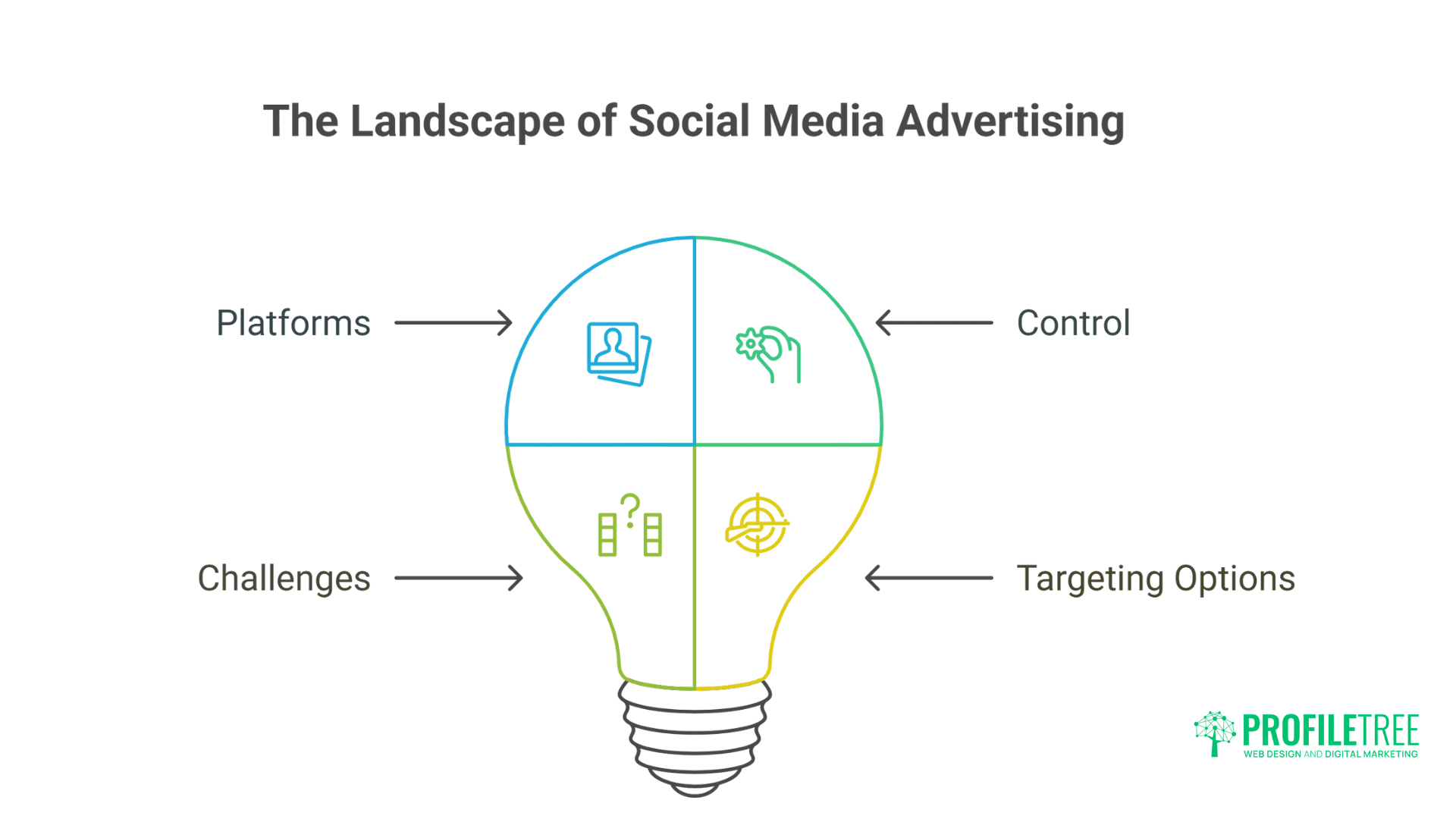
Social media platforms, including Facebook, Twitter, LinkedIn, and Instagram, offer robust pay-per-click advertising options. You can place adverts directly into your target audience’s newsfeeds or social inboxes, reaching users in environments where they actively engage with content.
Social media advertising provides significant control to advertisers. Any business can use these adverts regardless of their social media following size. You can be as selective or broad as your strategy requires, directing users to your website, encouraging form completions, or promoting specific content.
The main challenge involves creating compelling content in saturated environments. You compete against personal updates and other businesses for attention. Success requires creative, clear, and concise imagery and messaging that captures interest immediately.
Social platforms offer sophisticated targeting options based on user interests, behaviours, demographics, and connections. This granular targeting makes social media advertising particularly effective for reaching specific audience segments with tailored messages.
Remarketing
Remarketing targets people who have already shown genuine interest in your product or service by visiting your website. These users see your adverts as they browse other websites or social media platforms, reminding them of their previous interest.
This highly effective method of PPC advertising capitalises on existing intent. Users familiar with your brand are more likely to convert than cold prospects. Remarketing keeps your business top-of-mind, encouraging previous visitors to return and complete desired actions.
Proper remarketing segmentation allows different messages for different user behaviours. Someone who abandoned a shopping cart might see adverts highlighting your return policy or free shipping, whilst someone who viewed a specific service page might see testimonials or case studies related to that service.
Sequential Remarketing
Sequential remarketing extends beyond simple retargeting by creating longer-term campaigns showing previous visitors different content over time. Rather than displaying the same message repeatedly, sequential remarketing tells a story or presents a series of offers.
This approach proves useful for rolling campaigns, informing people about multiple offers, or building a narrative around your brand. It benefits campaigns targeting different audiences with varied messages or testing multiple propositions.
Sequential remarketing typically incorporates “we miss you” or “this would look good in your basket” messages after users leave your site for a period. These messages can appear on social media sites and across display networks, maintaining engagement over extended periods.
Google Shopping
Google Shopping provides highly effective PPC advertising for e-commerce websites when users search for products. A carousel of ready-to-shop items appears on search results pages, showcasing products related to the searcher’s intent alongside prices.
This format maximises convenience for customers during their search journey, significantly increasing the likelihood of advert clicks. Shopping adverts display product images, prices, and merchant information directly in search results, allowing users to compare options before clicking through.
Google Shopping campaigns require properly configured product feeds with accurate, detailed information. Optimisation involves refining product titles, descriptions, and images whilst managing bids strategically across different products and categories based on profitability and performance.<h2 id=”ppc-metrics”>Key PPC Metrics & KPIs to Track for Campaign Performance</h2>
Understanding pay-per-click statistics and metrics forms the foundation of successful campaign management. Tracking the right key performance indicators allows data-driven optimisation decisions that improve results over time.
Traffic Metrics
Impressions represent how often your advert appears, providing critical visibility data. High impressions with low clicks suggest issues with advert relevance or appeal.
- Clicks signal user interest sufficient to land on your site. Click volume indicates initial campaign effectiveness but must be evaluated alongside conversion data.
- Click-through-rate (CTR) measures the click-to-impression ratio, revealing how compelling your advert appears to users. Higher CTRs typically correlate with better Quality Scores and lower costs per click.
- Cost-per-click (CPC) tracks the average cost of each click, directly impacting campaign profitability. Managing CPC through quality improvements and strategic bidding maintains profitable campaigns.
Engagement Metrics
- Bounce rate measures single-page visits, often indicating poor landing page experiences or mismatched expectations between the advert and the destination. High bounce rates waste advertising spend on unqualified traffic.
- Pages per session reveals engagement depth. Multiple page visits typically indicate stronger interest and higher conversion probability, particularly for complex products or services requiring more information.
- Time on site and session duration metrics help assess whether users find your content valuable and engaging. Longer sessions generally indicate better alignment between traffic source and website content.
Conversion Metrics
- Form fills, signups, and purchases align directly with campaign goals, representing the ultimate success measure for most campaigns. Tracking these actions reveals true campaign effectiveness.
- Cost-per-acquisition (CPA) measures investment per conversion, directly impacting profitability. Comparing CPA against customer lifetime value determines campaign sustainability.
- Conversion rate shows the percentage of visitors converting from total traffic. Improving conversion rates delivers better results from existing traffic volumes, maximising advertising efficiency.
Advanced Metrics
- Lifetime value (LTV) captures long-term customer value beyond initial sales, revealing the true worth of acquired customers. Understanding LTV justifies higher acquisition costs for valuable customer segments.
- Attribution tracks the full conversion cycle, revealing which touchpoints and channels contribute to conversions. Multi-touch attribution provides insights into how different campaign elements work together.
- Return on investment (ROI) represents the ultimate profitability indicator, comparing revenue generated against advertising costs. Consistently positive ROI indicates sustainable, scalable campaigns.
Regularly tracking these core metrics enables assessing which messaging, keywords, and landing pages resonate best with audiences and deliver outcomes tied to campaign objectives.<h2 id=”ppc-best-practices”>Best Practices for PPC Budgeting and Strategy</h2>
PPC Budgeting Approaches
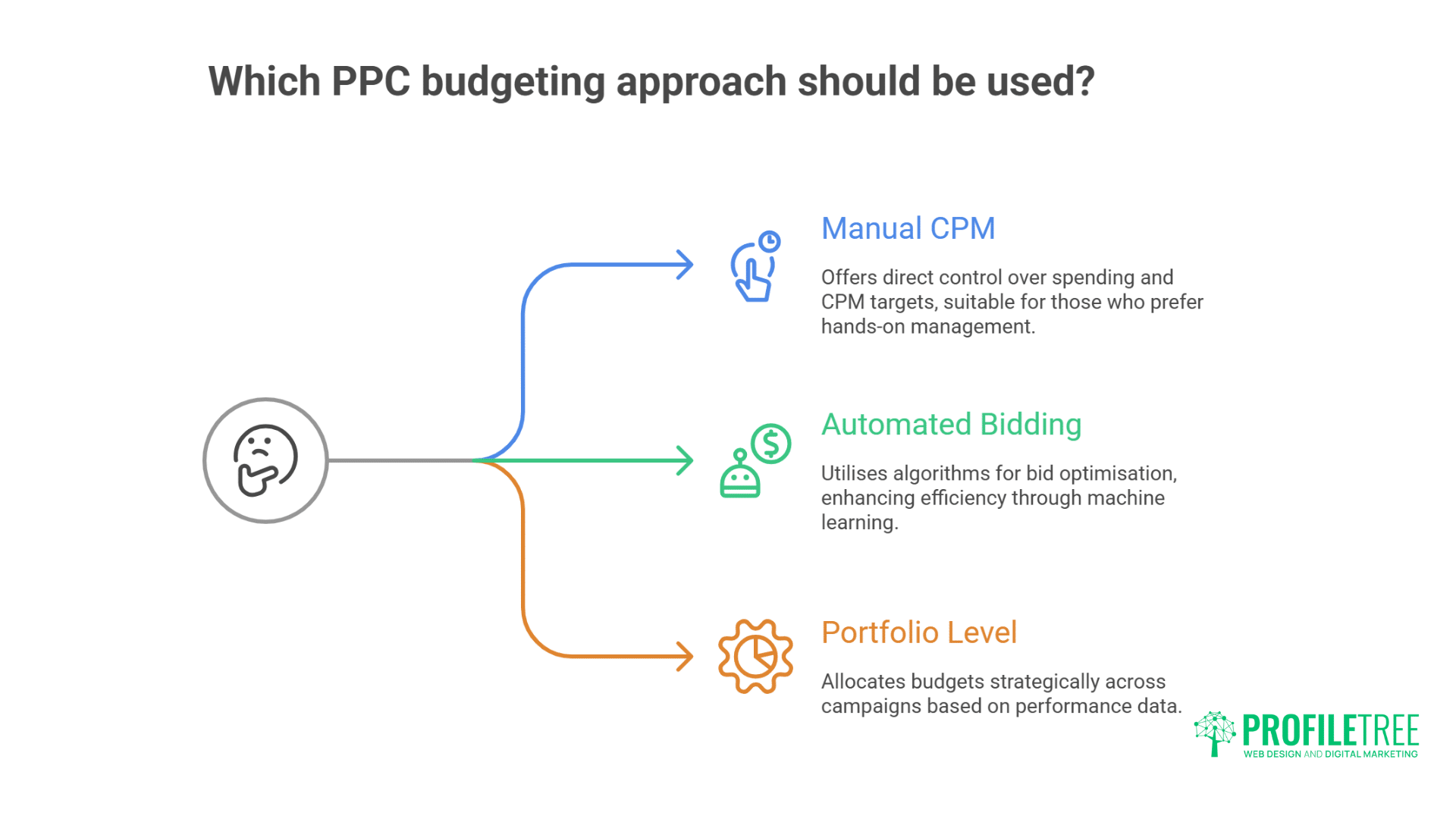
- Manual CPM: Manually set a daily budget based on volume and CPM targets, maintaining direct control over spending levels.
- Automated bidding: Allow platform algorithms to optimise bids within your overall budget, utilising machine learning for improved efficiency.
- Portfolio level: Allocate budgets evenly or strategically across campaigns based on performance data and business priorities.
ROI Calculation
Establish conversion tracking for key goals, ensuring accurate measurement of campaign outcomes. Factor in conversion value, including email signups, ecommerce orders, and lead submissions. Compare advertising costs to revenue or value generated from those conversions.
Target a minimum 3-5X ROI for profitable paid search campaigns. This benchmark accounts for additional business costs beyond advertising whilst ensuring meaningful returns on marketing investment.
Cost Control Techniques
Set daily caps by campaign to align with targets and prevent overspending. Use date-based budget scheduling for adjusting spending over time based on seasonal patterns or business cycles.
Enable bid strategies like ROAS (Return on Ad Spend) and target CPA to optimise for efficiency automatically. These automated strategies adjust bids in real-time based on conversion probability and value.
Ongoing Optimisation
Measure product and service profit margins to understand acceptable acquisition costs. Identify the highest converting keywords to guide budget allocation towards profitable areas.
Eliminate low-performing keywords that consume budget without delivering conversions. Regular pruning of underperforming elements improves overall campaign efficiency.
Allow 1-2 months to gauge true ROI potential before making major strategic changes. Early campaign data can be misleading; sufficient time enables algorithms to learn and optimisation efforts to show results.
Conducting Effective Keyword Research for Pay-Per-Click Adverts
- Seed Keywords: Identify 2-3 core product or service terms as your starting point for research.
- Keyword Groupings: Organise into advert groups around buying stages – broad awareness terms, middle-funnel research queries, and bottom-funnel transactional searches.
- Search Volume Filtering: Prioritise keywords with sufficient search volume for meaningful visibility whilst balancing competition levels.
- Competition Filtering: Factor in cost per click and advert competition when selecting keywords, balancing opportunity against expense.
- Bid Simulations: Use Google Keyword Planner to estimate traffic costs by keyword, understanding budget requirements before launching campaigns.
- Search Query Analysis: Mine your website analytics for actual previously searched terms that drove conversions, discovering valuable long-tail opportunities.
- Negative Keywords: Add non-converting terms and irrelevant queries as negatives, preventing wasted spend on unqualified traffic.
- Ongoing Expansion: Continually add closely related keywords around those converting well, building comprehensive coverage of relevant searches.
Blending seed terms with search query mining surfaces commercial search phrases with qualified traffic potential. Group similar keywords whilst initially filtering out high-competition terms to contain costs. Expand pockets that deliver converting users over time.
The Advantages of Pay-Per-Click Advertising
Pay-per-click advertising offers numerous benefits that make it an attractive option for businesses seeking measurable, controllable marketing results. Understanding these advantages helps organisations evaluate whether PPC fits their marketing mix and growth objectives.
PPC Is Performance Oriented
As a performance-oriented advertising method, pay-per-click matches the intention of the searcher with advertiser objectives. Advertisers only pay when their advert is clicked, making it cost-efficient and straightforward to communicate with potential customers.
The More You Know, The Better
Information represents a crucial business asset. All types of pay-per-click advertising provide extremely useful data, including how many people clicked the advert, how many clicks led to actual sales, optimal times of day for adverts, and geographical locations of clicking users.
This information proves invaluable for advertisers and significantly aids future campaign planning and optimisation.
You Can Localise PPC Adverts
One dominant advantage involves choosing where pay-per-click adverts appear. If a business operates in Northern Ireland, adverts appearing in distant markets would cost money when clicked without converting to sales. Businesses can target adverts specifically to areas where their expected customers are located, maximising budget efficiency.
It Boosts Your Online Presence
A business’s online presence remains crucial for modern success. Pay-per-click advertising positions your website prominently for target searches, helping maintain and grow online visibility.
The more your business name becomes familiar to audiences, the more likely people will click, especially when their first experience is positive and exceeds expectations. This creates a positive feedback loop benefiting both paid and organic visibility.
Understanding PPC Challenges
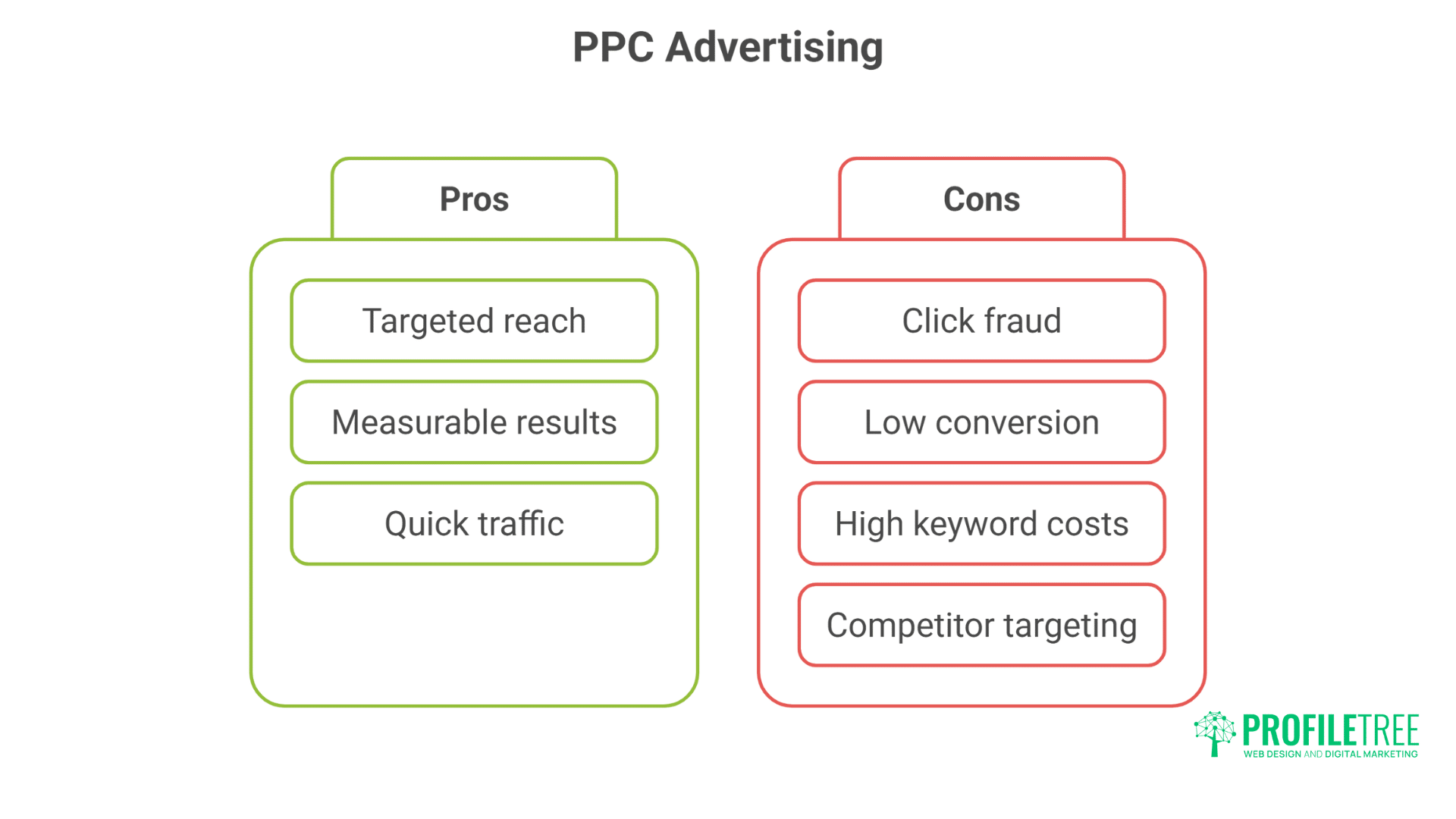
Whilst pay-per-click advertising offers substantial benefits, understanding potential challenges helps businesses prepare appropriate safeguards and realistic expectations. Awareness of these issues allows proactive management rather than reactive problem-solving.
Click Fraud
Some website publishers fraudulently use automated scripts to generate clicks on adverts posted to their pages. These clicks exhaust advertiser marketing budgets without ever leading to actual sales since bots generate the clicks.
This occurs mostly when advertisers display PPC adverts on disreputable websites. Choosing distinguished, well-known websites with proven track records minimises this risk. Major advertising platforms include fraud detection systems, though remaining vigilant about traffic quality remains important.
Not Every Click Becomes a Sale
Some users click adverts to browse without buying, others click from curiosity, and many click multiple times whilst researching without converting. This costs advertisers money that doesn’t immediately convert into sales.
Understanding this reality helps set appropriate expectations. Tracking metrics beyond clicks, including engagement and conversion data, provides a more complete picture of campaign effectiveness. Optimising landing pages and targeting improves the percentage of clicks that ultimately convert.
Increase In Keyword Prices
The more popular a keyword becomes, the higher its price rises. In competitive bidding environments, clicks can cost £50-£100 or more for highly commercial terms.
When multiple competitors bid for the same valuable keywords, prices escalate rapidly. Strategic keyword selection, including long-tail variations and less competitive alternatives, helps control costs whilst maintaining qualified traffic.
The Risk of Competitor Targeting
Some companies use competitor names as keywords, attempting to capture traffic from users searching for those competitors. When someone searches for a specific competitor, they might encounter adverts from alternative providers.
This practice raises ethical questions whilst remaining technically permissible on most platforms. Protecting your brand requires bidding on your own brand terms whilst monitoring competitor activities in your space.
Latest Mobile and Social PPC Advertising Trends
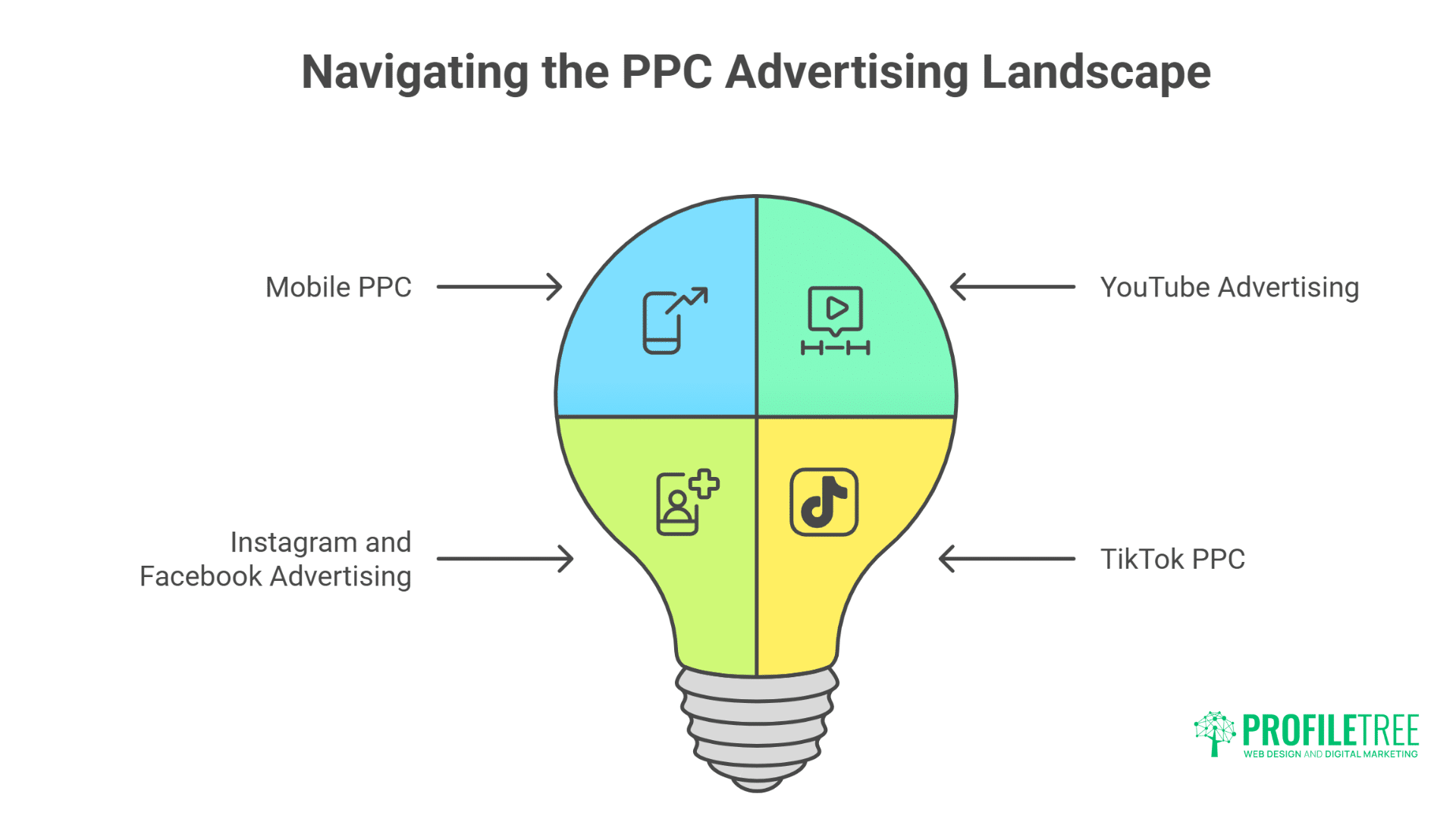
The pay-per-click landscape evolves rapidly as new platforms emerge and user behaviours shift towards mobile and social channels. Staying informed about current trends helps advertisers adapt strategies to meet audiences where they spend time and attention.
Mobile PPC
Mobile PPC spending now surpasses desktop, representing over 60% of total digital advertising spend. Mobile-first landing page experiences prove critical for conversions, as users expect fast loading times and thumb-friendly navigation.
Expanding into app traffic via app install and re-engagement campaigns opens additional channels for reaching mobile audiences. Mobile-specific advert formats and extensions improve performance by addressing unique mobile user needs.
YouTube Advertising
Video Discovery and Brand Lift campaigns represent emerging advert formats on YouTube, offering sophisticated brand awareness opportunities. Bumper Machine feeds short video adverts in Stories content, capturing attention in brief windows.
YouTube Masthead takeover adverts offer massive awareness for product launches or major campaigns. Video advertising continues to grow as consumer preferences shift towards video content consumption.
Instagram and Facebook Advertising
Full-screen Instagram Stories adverts in the Explore feed provide immersive brand experiences. Dynamic Creative Optimisation enables relevant messaging by automatically testing different advert components.
Automated multi-advert sequencing over the buyer journey tells cohesive stories across multiple touchpoints. These platforms’ sophisticated targeting capabilities make them particularly effective for reaching specific demographics and interest groups.
TikTok PPC
TikTok experiences steep growth for awareness and traffic campaigns, with new marketing technology integrations expanding capabilities. The platform’s younger demographic and unique content format require adapted strategies.
Top viewing windows under 10 seconds require compact, attention-grabbing messaging. Hashtag Challenge adverts drive video user-generated content engagement, utilising the platform’s participatory culture.
Frequently asked questions
How much should I budget for PPC adverts?
Start with £500-£1,000 per month minimum for meaningful results whilst tracking ROI on keywords. Smaller budgets may struggle to generate sufficient data for optimisation. Scale budgets based on proven performance and available customer lifetime value.
Which landing page works best for PPC traffic?
Dedicated PPC landing pages aligned with advert content and offers deliver the best conversion rates. These pages remove distractions, focus on single conversion goals, and match the messaging from the advert that brought visitors. Avoid sending PPC traffic to generic homepages.
Does pay-per-click advertising require constant management?
Expect at least weekly optimisation check-ins to maintain account performance. Successful campaigns require regular keyword adjustments, bid modifications, negative keyword additions, and ad testing. Larger accounts or competitive industries may require daily attention.
Is Google Ads the only PPC platform available?
Beyond Google, options include Microsoft Advertising (Bing Ads), Amazon Sponsored Products, and increasingly sophisticated social platforms. Each platform offers unique audiences and formats suited to different business types and objectives.
How long until PPC campaigns show results?
Initial results appear within days of campaign launch, but meaningful optimisation requires 4-8 weeks of data collection. Allow sufficient time for algorithms to learn and for testing to reach statistical significance before making major strategic changes.
Can small businesses compete with larger companies in PPC?
Absolutely. PPC advertising levels the playing field through quality-based auction systems. Smaller businesses can outperform larger competitors by creating highly relevant adverts, optimising landing pages, and focusing on niche keywords where they offer genuine expertise.
Why PPC Advertising Dominates Digital Marketing
Pay-per-click adverts were hailed as revolutionary digital marketing tools. The performance-based model, where you only pay when someone clicks your advert, helps cut unnecessary advertising costs whilst increasing online visibility simultaneously.
With PPC advertising campaigns, multiple stakeholders benefit. Advertisers operate on controlled budgets with measurable results, consumers find what they need faster, and platforms generate revenue by connecting buyers with sellers efficiently.
For businesses seeking immediate visibility, qualified traffic, and measurable returns, pay-per-click advertising remains among the top methods for marketing products and services online. The channel’s continued evolution brings new capabilities whilst fundamental principles of relevance, value, and user experience remain constant.
How ProfileTree Supports Your PPC Success
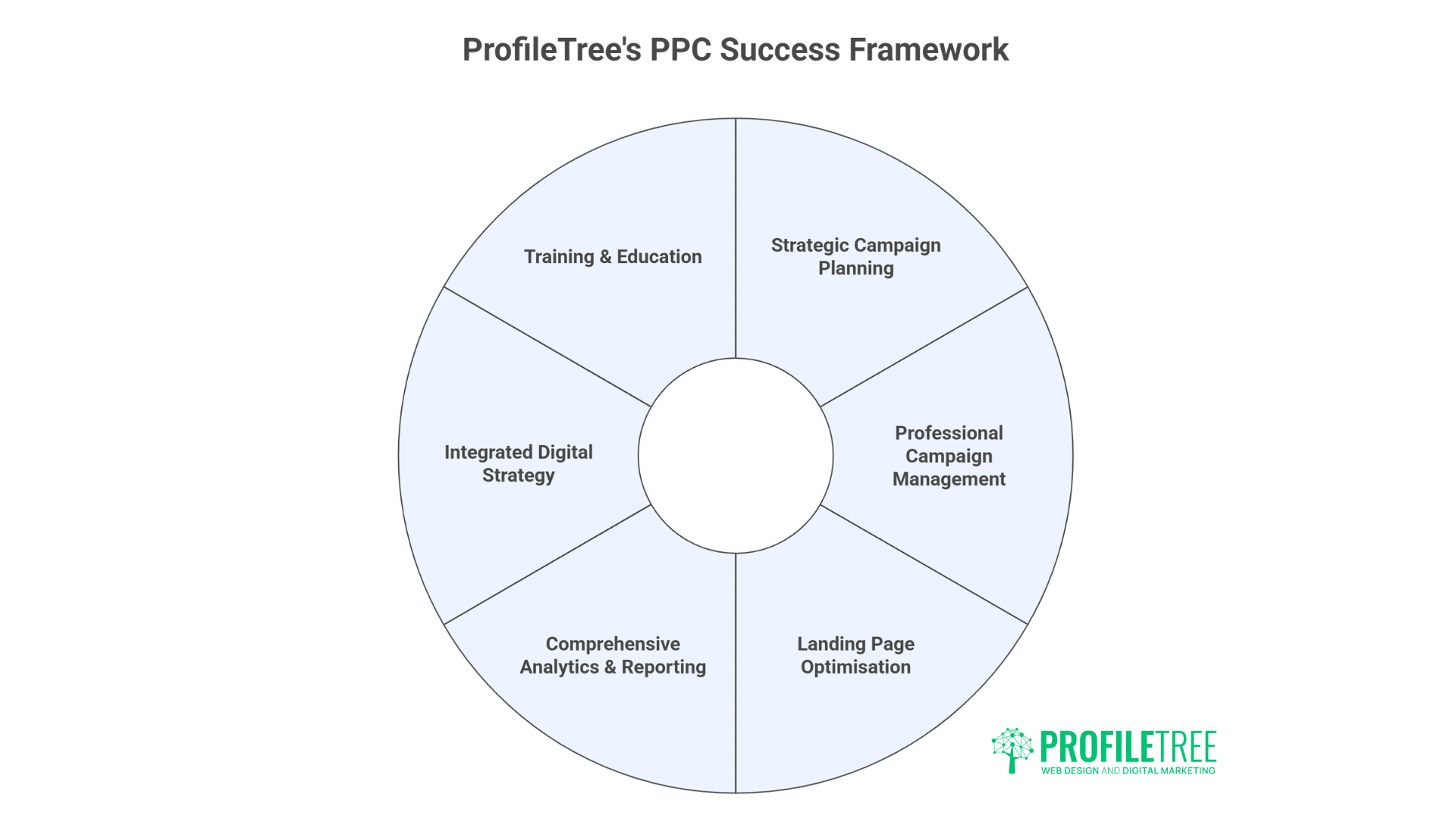
At ProfileTree, we recognise that successful pay-per-click advertising requires both technical expertise and strategic thinking. Our Belfast-based digital marketing team combines PPC management with comprehensive digital strategies, connecting paid advertising with web design, SEO, content creation, and conversion optimisation.
Our approach to PPC advertising includes:
- Strategic Campaign Planning: We develop PPC strategies aligned with your broader business objectives, identifying the right platforms, keywords, and audiences for your specific situation.
- Professional Campaign Management: Our team handles day-to-day campaign optimisation, monitoring performance, adjusting bids, testing advert variations, and implementing best practices.
- Landing Page Optimisation: We create dedicated landing pages designed specifically for PPC traffic, maximising conversion rates and improving Quality Scores for lower costs.
- Comprehensive Analytics & Reporting: We track meaningful metrics beyond vanity statistics, providing clear insights into ROI and campaign effectiveness.
- Integrated Digital Strategy: We connect your PPC efforts with SEO, content marketing, and web development for a cohesive digital presence delivering sustainable growth.
- Training & Education: We offer digital marketing training services, helping your team understand PPC fundamentals and take ownership of campaigns when ready.
For businesses across Northern Ireland, Ireland, and the UK seeking to maximise their pay-per-click advertising potential, professional implementation support often determines success. The platform’s continued evolution and expanding feature set make it an increasingly important component of modern digital marketing strategies.
Ready to generate qualified leads and measurable growth through strategic pay-per-click advertising? Our team at ProfileTree provides the expertise and local understanding necessary for sustainable PPC success. Contact us to discuss how professional PPC management can drive your business forward.