
Humanising AI Content: Avoid Generic, Robotic Social Media Copy
Table of Contents
Every marketing manager has encountered the same frustrating scenario: you input a perfectly reasonable prompt into ChatGPT or Claude, only to receive back content that screams “artificial intelligence wrote this.” The telltale signs are unmistakable—overused phrases like “elevate your brand,” “unlock potential,” and “game-changing solutions” that make even the most compelling product sound like corporate waffle.
Recent search data reveals this concern is widespread, with queries about “common AI words to avoid” generating click-through rates of nearly 12%—significantly higher than typical marketing content searches. This indicates businesses recognise that robotic AI content is actively harming their brand perception and engagement rates.
For Northern Ireland businesses competing in increasingly crowded digital spaces, the ability to create authentic, human-sounding content at scale becomes a significant competitive advantage. This comprehensive guide explores advanced prompt engineering techniques for humanising AI content whilst avoiding the generic pitfalls that plague most AI-generated content.
The Hidden Cost of Robotic AI Content
Generic AI content doesn’t just fail to engage—it actively damages brand perception and reduces audience trust. When potential customers encounter obviously artificial content, they immediately question the authenticity of the entire business operation. This psychological barrier is particularly problematic for service-based businesses where trust and expertise are fundamental to customer acquisition.
The impact extends beyond immediate engagement metrics. Search engines increasingly prioritise content that demonstrates genuine expertise, experience, authoritativeness, and trustworthiness (E-E-A-T). Robotic AI content fails these quality assessments, resulting in reduced organic visibility and lower search rankings over time.
Social media algorithms compound this problem by reducing distribution for content that generates low engagement. When your AI-generated posts sound generic and formulaic, audiences scroll past without interacting, signalling to platforms that your content lacks value. This creates a downward spiral where robotic content receives less visibility, leading to reduced reach and diminished brand awareness.
The solution isn’t avoiding AI tools entirely—it’s learning to use them strategically to amplify human creativity rather than replace it. The most successful businesses combine AI efficiency with human insight, creating content that sounds authentically personal whilst maintaining professional consistency.
Understanding Why AI Content Sounds Robotic
AI models are trained on vast datasets that include millions of marketing messages, corporate communications, and promotional content. This training data contains patterns that AI systems naturally replicate, leading to the repetitive, formulaic language that characterises robotic content.
The fundamental issue stems from AI’s tendency to gravitise towards the most common expressions in its training data. When millions of marketing messages use phrases like “cutting-edge solutions” or “seamless integration,” AI models learn these as standard marketing language. Without specific guidance to avoid such patterns, AI tools default to these overused expressions.
AI systems also lack contextual understanding of brand personality, audience relationships, and cultural nuances that inform natural human communication. They struggle to replicate the subtle personality quirks, industry-specific humour, and authentic voice that make content genuinely engaging.
Additionally, AI models often overcompensate for clarity and professionalism, resulting in unnecessarily formal language that feels distant and corporate. Real human communication includes contractions, casual phrases, and occasional imperfections that create relatability and authenticity.
Understanding these limitations enables you to craft prompts that explicitly guide AI away from robotic patterns whilst encouraging more natural, engaging output. The key lies in providing specific instructions about tone, personality, and authentic communication styles rather than relying on AI’s default responses.
The Anatomy of Authentic Social Media Voice
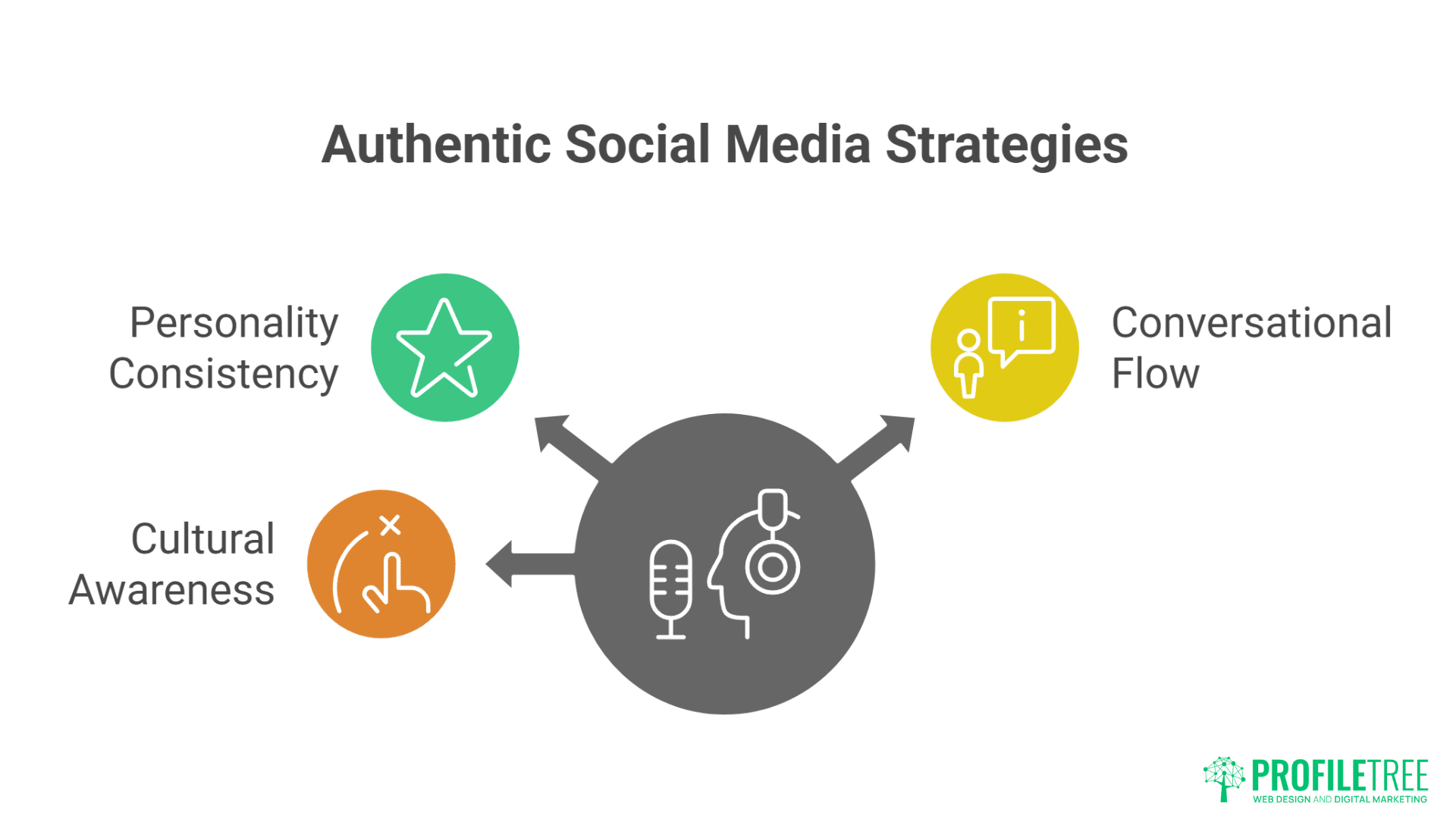
Authentic social media content reflects genuine personality whilst maintaining professional credibility. This balance requires understanding the specific elements that create natural, engaging communication across different platform contexts and audience expectations.
Personality Consistency
Authentic brands maintain consistent personality traits across all content, from witty and approachable to authoritative and educational. This consistency helps audiences develop familiarity and trust, creating the foundation for long-term engagement and loyalty.
However, personality shouldn’t be artificial or forced. The most successful social media voices reflect genuine characteristics of the people behind the brand. This might mean embracing slight imperfections, regional language patterns, or industry-specific humour that creates authentic connection.
Conversational Flow
Human social media content flows naturally between topics, incorporates relevant current events, and responds to ongoing conversations within the community. This conversational approach contrasts sharply with robotic content that feels isolated from broader context.
Authentic content also varies in structure and format, sometimes using short punchy statements, other times developing longer explanations. This variation mirrors natural human communication patterns and prevents the formulaic structure typical of AI-generated content.
Cultural Awareness
Regional businesses must reflect local communication styles whilst remaining accessible to broader audiences. Northern Ireland businesses, for example, might incorporate local expressions or references whilst ensuring content remains understandable to UK and Irish audiences.
This cultural authenticity extends beyond language to include relevant local events, business conditions, and community interests that resonate specifically with target audiences. Generic AI content lacks this localised relevance that builds genuine community connection.
Advanced Prompt Engineering Techniques for Humanising AI Content
Creating human-sounding AI content requires sophisticated prompting strategies that guide artificial intelligence toward natural communication patterns whilst avoiding robotic language traps.
Voice Injection Prompts
Instead of generic instructions, specify exact personality characteristics and communication styles that reflect your brand identity. For example: “Write this social media post in the voice of a knowledgeable but approachable Belfast marketing professional who uses occasional Irish expressions and prefers straightforward explanations over corporate jargon. Avoid words like ‘leverage,’ ‘optimise,’ or ‘cutting-edge.’ Use contractions and write as if explaining to a business owner friend over coffee.”
This approach provides specific guidance about tone, regional context, and forbidden language patterns whilst establishing a clear personality framework for authentic content generation.
Anti-Corporate Language Prompts
Explicitly instruct AI to avoid common marketing clichés and corporate buzzwords. “Rewrite this avoiding any phrases that sound like they came from a corporate brochure. Replace marketing speak with plain English explanations. If you use words like ‘revolutionary,’ ‘game-changing,’ or ‘cutting-edge,’ start over with simpler language that a 12-year-old could understand.”
This negative prompting approach actively guides AI away from robotic patterns whilst encouraging more accessible, engaging communication styles.
Context-Rich Scenario Prompts
Provide detailed context about the specific situation, audience, and desired outcome. “You’re posting on LinkedIn for a Belfast digital agency’s business page. Your audience includes SME owners who are sceptical about digital marketing claims and prefer practical advice over hype. The post should feel like helpful advice from an experienced professional, not a sales pitch. Reference a specific challenge local businesses face without naming specific companies.”
This contextual approach helps AI understand the broader communication landscape and generate content that feels naturally situated within real business conversations.
Personality Constraint Prompts
Define specific personality boundaries and communication preferences. “Write in the style of someone who’s passionate about helping businesses succeed but never uses superlatives or exaggerated claims. Prefer specific examples over general statements. Use ‘you’ frequently and write as if speaking directly to one person. Include one question that encourages genuine engagement, not just likes.”
These constraints guide AI toward specific communication patterns that feel more authentic and less promotional than standard marketing content.
Platform-Specific Authenticity Strategies
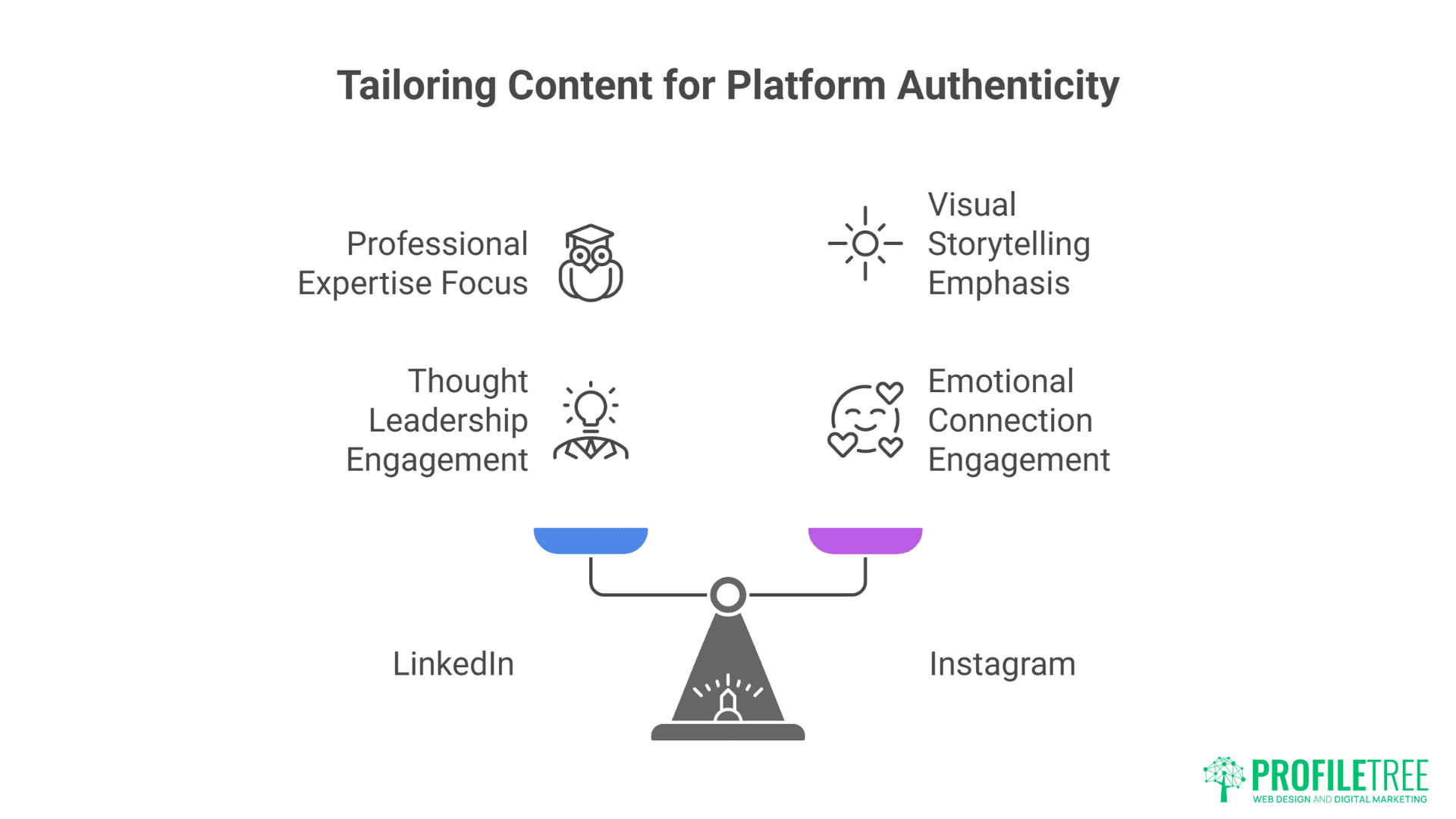
Different social media platforms reward different communication styles and content formats. Understanding these platform-specific expectations enables you to craft AI prompts that produce naturally fitting content for each environment.
LinkedIn Authenticity
LinkedIn audiences expect professional but personal content that demonstrates expertise without feeling overly promotional. The platform rewards thought leadership, industry insights, and genuine business stories that provide value to professional networks.
Effective LinkedIn prompts should specify professional context whilst encouraging personal perspective: “Write a LinkedIn post sharing an insight about digital marketing that Belfast business owners would find genuinely useful. Base it on a real challenge you’ve observed, but don’t name specific clients. Write in the first person and include a practical tip readers can implement immediately. End with a question that invites professional discussion, not just agreement.”
This approach creates content that feels like genuine professional sharing rather than disguised advertising, improving both engagement rates and network growth.
Instagram Authenticity
Instagram thrives on visual storytelling and personality-driven content that feels spontaneous and relatable. The platform rewards content that connects emotionally with audiences through authentic personality expression and behind-the-scenes glimpses.
Instagram prompts should emphasise visual context and emotional connection: “Write an Instagram caption for a photo of our team working on a client project. Capture the energy and collaboration without revealing confidential information. Use a casual, friendly tone that shows personality whilst highlighting our expertise. Include relevant hashtags naturally within the caption, not as an afterthought list.”
This approach creates captions that complement visual content whilst maintaining authentic personality and professional credibility.
Twitter/X Authenticity
Twitter rewards concise, timely observations that add value to ongoing conversations. The platform’s fast-paced environment requires content that feels immediately relevant and genuinely insightful rather than generic promotional messaging.
Twitter prompts should emphasise brevity and relevance: “Write a tweet responding to the current discussion about AI in marketing. Provide a specific insight that adds value to the conversation without being preachy or promotional. Use conversational language that sounds like someone knowledgeable sharing their perspective, not a company making announcements.”
This approach creates content that participates authentically in Twitter conversations whilst subtly demonstrating expertise and thought leadership.
Content Pattern Breaking Techniques
Robotic AI content follows predictable patterns that audiences quickly recognise and ignore. Breaking these patterns requires intentional prompting strategies that encourage variety, spontaneity, and genuine personality expression.
Structure Variation Prompts
“Write three different social media posts about the same topic, each using completely different structures. The first should start with a question, the second with a surprising statistic, and the third with a personal observation. Vary sentence lengths dramatically and use different formatting styles. Make each post feel like it came from the same person but in different moods.”
This approach prevents the repetitive structure that characterises robotic content whilst maintaining a consistent brand voice across varied presentation styles.
Perspective Shifting Prompts
“Write this social media post from three different perspectives: first as advice to someone just starting their business, second as a reflection on lessons learnt after years in the industry, and third as a prediction about future trends. Maintain the same core message but adjust language, examples, and tone to match each perspective authentically.”
Perspective shifting creates content variety whilst demonstrating range and expertise across different audience segments and communication contexts.
Emotional Range Prompts
“Create content that expresses genuine enthusiasm about this development without sounding like a press release. Then rewrite it expressing cautious optimism. Finally, version it as thoughtful analysis. Each version should sound like the same person in different mindsets, not different corporate messaging approaches.”
Emotional variation prevents the monotone quality that makes AI content feel robotic whilst maintaining an authentic brand personality across different topics and situations.
Building Your Brand’s Unique AI Voice Guide
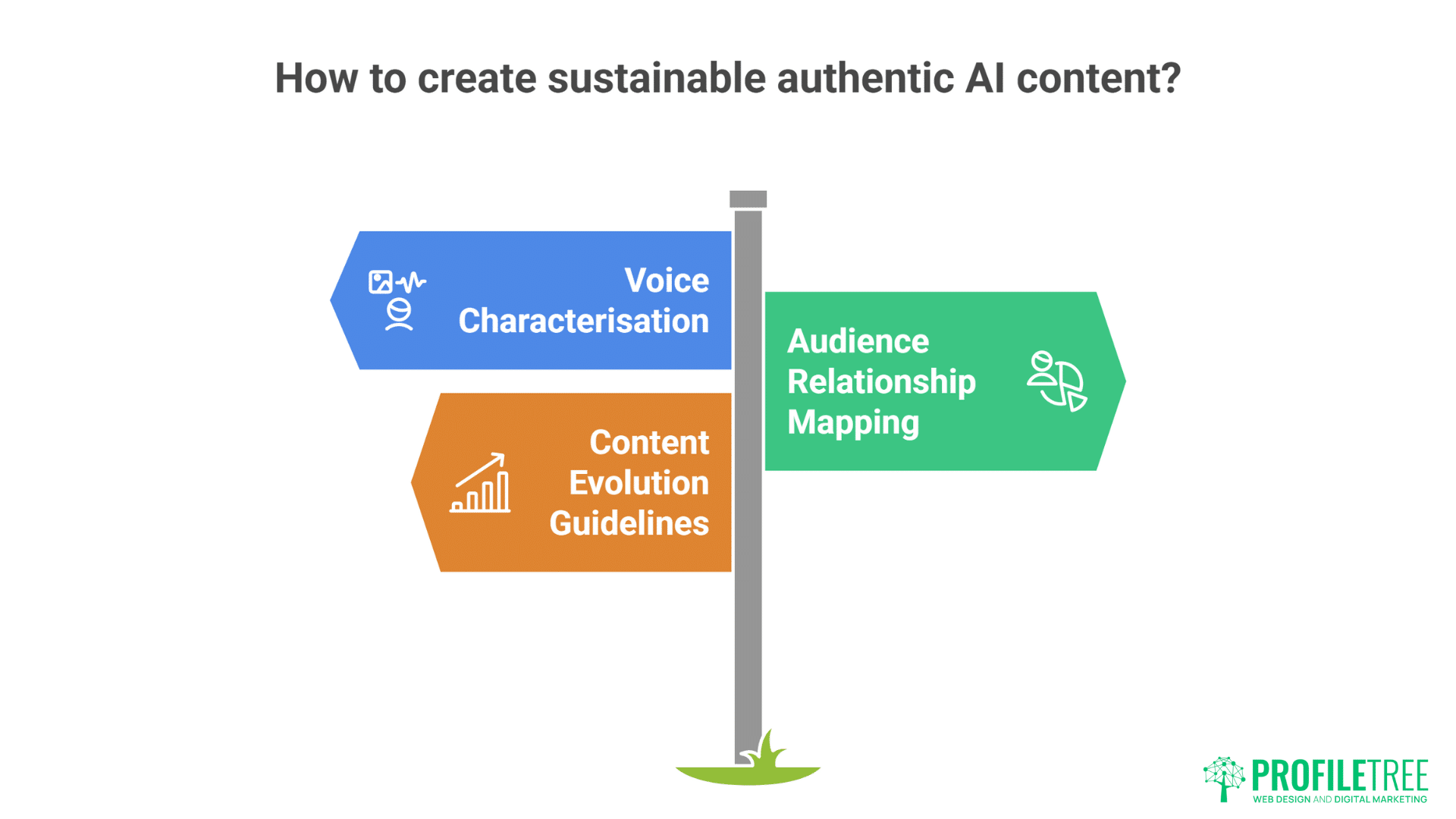
Sustainable authentic AI content requires developing systematic approaches that capture your specific brand personality, communication preferences, and audience relationships. This involves creating detailed voice guides that inform all AI content generation.
Voice Characterisation Framework
Document specific personality traits, communication preferences, and forbidden language patterns that define your brand voice. This might include preferred sentence structures, typical expressions, regional language patterns, and industry-specific terminology that feels natural for your audience.
Create example conversations, social media posts, and email communications that exemplify your desired voice. These examples provide concrete reference points for AI prompts whilst demonstrating how personality translates across different content formats and platforms.
Audience Relationship Mapping
Define the specific relationship your brand maintains with different audience segments. Are you the knowledgeable consultant, the friendly neighbour, the experienced mentor, or the innovative challenger? This relationship definition informs tone, language choices, and content approaches that feel naturally consistent.
Document how this relationship manifests across different platforms and content types. Professional LinkedIn content might emphasise expertise and industry knowledge, whilst Instagram content showcases personality and behind-the-scenes authenticity.
Content Evolution Guidelines
Establish processes for reviewing and refining AI-generated content based on audience response and engagement patterns. What content generates genuine engagement versus polite acknowledgement? Which posts spark meaningful conversations versus superficial likes?
Use this performance data to continuously refine your AI prompting strategies, updating voice guides based on what actually resonates with your audience rather than theoretical preferences.
Quality Control and Human Oversight Systems
Even sophisticated AI prompting requires human oversight to ensure content maintains authenticity, accuracy, and brand alignment. Developing systematic review processes prevents robotic content from damaging brand perception whilst maximising AI efficiency benefits.
Content Review Frameworks
Establish specific criteria for evaluating AI-generated content before publication. This includes checking for robotic language patterns, ensuring factual accuracy, verifying brand voice consistency, and confirming appropriate platform optimisation.
Create checklists that address common AI content problems: Does this sound like something our team would naturally say? Are there any obviously robotic phrases or structures? Does the content provide genuine value rather than generic advice? Would our audience find this engaging or forgettable?
Human Enhancement Processes
Develop workflows that combine AI efficiency with human creativity and insight. This might involve using AI for initial content drafts, then human editors adding personality, local context, and authentic touches that reflect genuine expertise and experience.
Consider collaborative approaches where AI handles research and initial structure whilst humans add personality, examples, and cultural relevance that create authentic connection with target audiences.
Performance Monitoring Systems
Track engagement metrics, audience feedback, and content performance to identify patterns in what works versus what feels robotic. Monitor comments, shares, and direct messages for audience responses that indicate content authenticity versus artificial generation.
Use this feedback to continuously refine prompting strategies, updating approaches based on real audience response rather than theoretical best practices.
Regional Authenticity for Northern Ireland Businesses
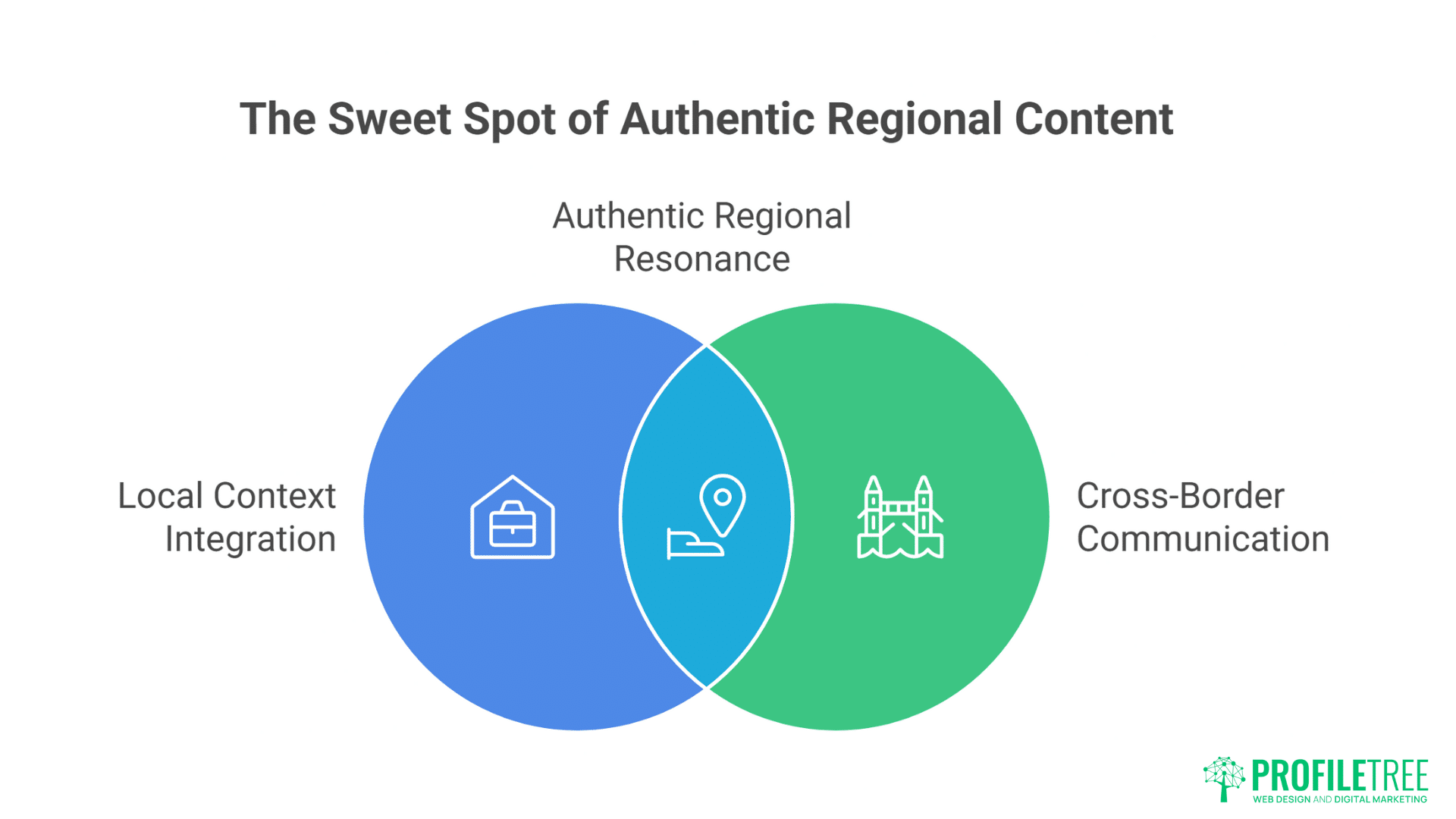
Belfast-based businesses face unique opportunities and challenges in creating authentic content that resonates across Northern Ireland, Ireland, and broader UK markets whilst maintaining local relevance and personality.
Local Context Integration
Northern Ireland businesses can differentiate through authentic local perspective whilst remaining accessible to broader audiences. This involves incorporating relevant local business conditions, cultural references, and regional communication styles without excluding non-local audiences.
Prompts should specify regional context whilst maintaining broad appeal: “Write this in the voice of a Belfast business professional who understands both local market conditions and broader UK trends. Include one subtle reference to local business culture without alienating Irish or UK audiences. Focus on insights that apply broadly but demonstrate local market understanding.”
Cross-Border Communication
Many Northern Ireland businesses serve customers across Ireland and the UK, requiring content that feels authentic to multiple cultural contexts. This involves understanding linguistic preferences, business practices, and cultural sensitivities across different regional markets.
Develop prompting strategies that acknowledge regional diversity whilst maintaining consistent brand personality: “Create content that feels natural to business owners in Belfast, Dublin, and Manchester. Avoid expressions that feel specifically regional unless they’re universally understood. Focus on shared business challenges rather than location-specific issues.”
Cultural Authenticity Balance
Authentic regional content incorporates local personality without becoming parochial or excluding broader audiences. The goal is demonstrating genuine local expertise whilst providing value that transcends geographic boundaries.
This balance requires understanding what aspects of local culture genuinely enhance content versus what might feel forced or artificially regional. Focus on authentic local perspectives that provide unique insights rather than superficial regional references.
Industry-Specific Authenticity Techniques
Different industries require different approaches to authentic content creation, reflecting varying professional cultures, audience expectations, and communication norms that influence how AI content should be crafted and refined.
Professional Services Authenticity
Law firms, accounting practices, and consulting services require content that demonstrates expertise whilst remaining accessible to non-expert audiences. This involves translating complex professional knowledge into practical insights that build trust without overwhelming potential clients.
Professional services prompts should emphasise expertise demonstration: “Write this explaining a complex business concept in language that intelligent business owners would understand and appreciate. Demonstrate expertise through insight rather than jargon. Include one practical tip that readers can implement immediately to show genuine value rather than just theoretical knowledge.”
Creative Industry Authenticity
Design agencies, marketing firms, and creative consultancies need content that showcases creativity whilst maintaining professional credibility. This requires balancing artistic expression with business acumen in ways that appeal to both creative appreciation and commercial objectives.
Creative industry prompts should encourage personality whilst maintaining professionalism: “Write this showcasing creative thinking whilst demonstrating business understanding. Use visual language and creative analogies but avoid being overly artistic or impractical. Show how creative solutions solve real business problems rather than just looking impressive.”
Technical Service Authenticity
IT companies, web developers, and technical consultancies must explain complex concepts accessibly whilst maintaining technical credibility. This involves demonstrating genuine expertise without intimidating potential clients who may lack technical background.
Technical service prompts should emphasise accessible expertise: “Explain this technical concept in language that business owners would understand and find useful. Demonstrate technical knowledge through practical applications rather than theoretical complexity. Include one specific example that shows how this technology solves real business problems.”
Advanced Content Personalisation Strategies
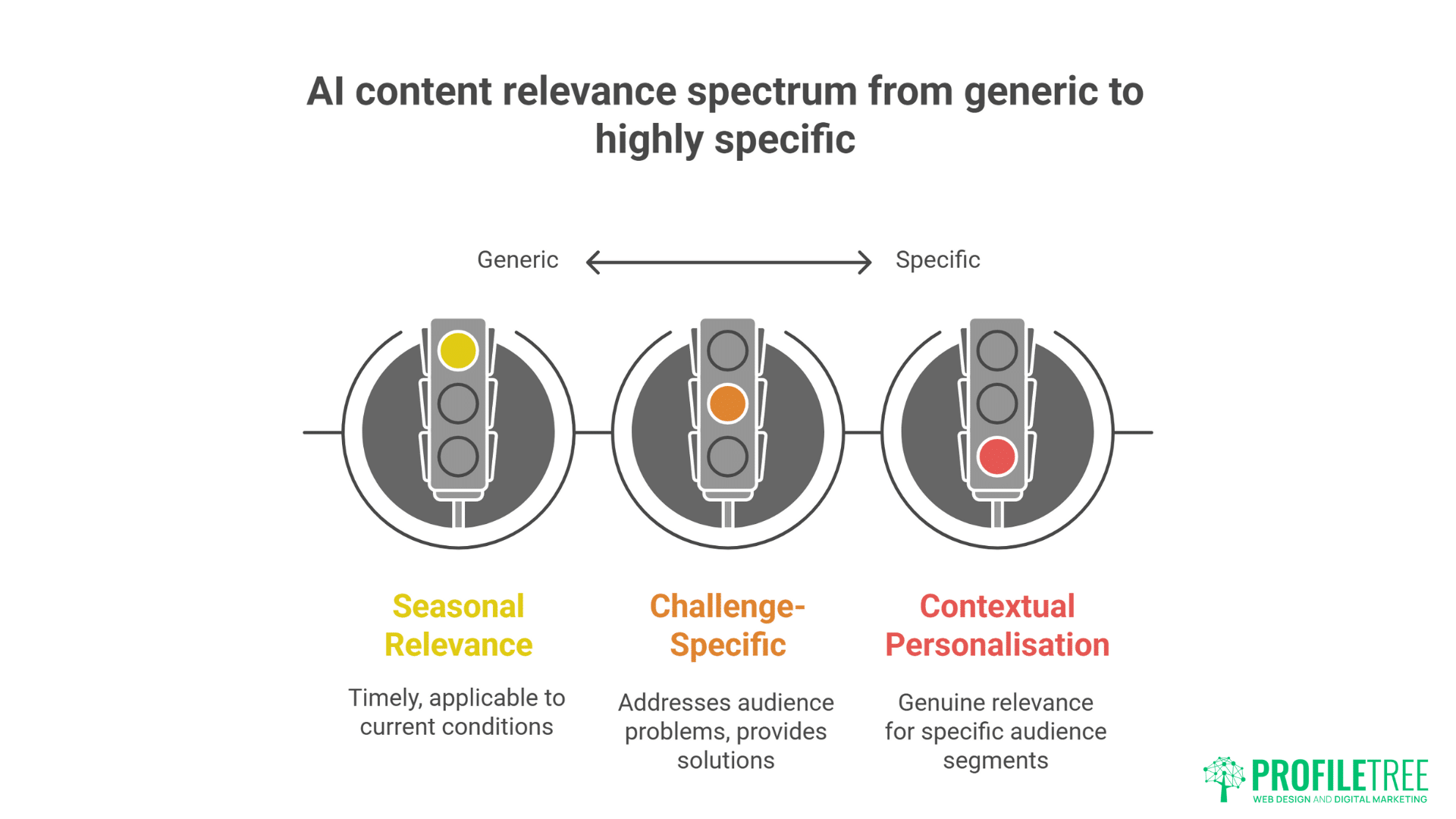
Authentic AI content often requires personalisation that goes beyond basic demographic targeting to include industry context, business challenges, and regional considerations that create genuine relevance for specific audience segments.
Contextual Personalisation Prompts
“Write this social media post for SME manufacturers in Northern Ireland who are considering digital transformation but worry about disrupting existing operations. Address their specific concern about maintaining production whilst implementing new systems. Use language that demonstrates understanding of manufacturing challenges without being overly technical.”
This level of specific targeting creates content that feels personally relevant rather than broadly generic, improving engagement rates and conversion potential.
Challenge-Specific Content
“Create content addressing the frustration Belfast retailers feel about competing with online giants whilst maintaining local customer relationships. Acknowledge the genuine difficulty of this challenge whilst providing practical strategies that work for smaller operations. Avoid generic advice that applies to all businesses everywhere.”
Challenge-specific content demonstrates genuine understanding of audience problems whilst positioning your business as a knowledgeable solution provider rather than generic service vendor.
Seasonal Relevance Integration
“Write this considering that Northern Ireland businesses are currently planning for post-holiday recovery whilst managing cash flow challenges typical of Q1. Reference these timing considerations without being overly specific about dates or financial details. Focus on practical strategies that address current business conditions.”
Seasonal relevance creates content that feels timely and immediately applicable rather than generic advice that could apply at any time of year.
ProfileTree’s Approach to Authentic AI Content Creation
At ProfileTree, we’ve discovered that the most effective AI content strategies combine sophisticated prompting techniques with deep understanding of client personality, audience relationships, and market positioning. Our Belfast-based team works with businesses across diverse industries to develop AI content approaches that maintain authenticity whilst achieving efficiency goals.
The key insight we’ve developed is that authentic AI content requires more investment in prompt development and human oversight than many businesses initially expect. However, this investment pays significant dividends in improved engagement rates, stronger audience relationships, and enhanced brand perception.
Our approach involves creating detailed brand voice guides that inform all AI interactions, developing platform-specific prompting strategies, and maintaining human oversight processes that ensure content maintains authenticity and brand alignment. We’ve found that businesses achieving the best results treat AI as a powerful tool for amplifying human creativity rather than replacing human insight.
As Ciaran Connolly, our Head of Digital Experience, explains: “The businesses generating the most engaging AI content aren’t just using better prompts—they’re investing time in understanding their audience relationships and brand personality at a deeper level. AI amplifies what you put into it, so authentic output requires authentic input.”
We regularly review client content performance to identify patterns in what generates genuine engagement versus polite acknowledgement, using these insights to continuously refine prompting strategies and content development processes.
Integration with Comprehensive Social Media Strategy
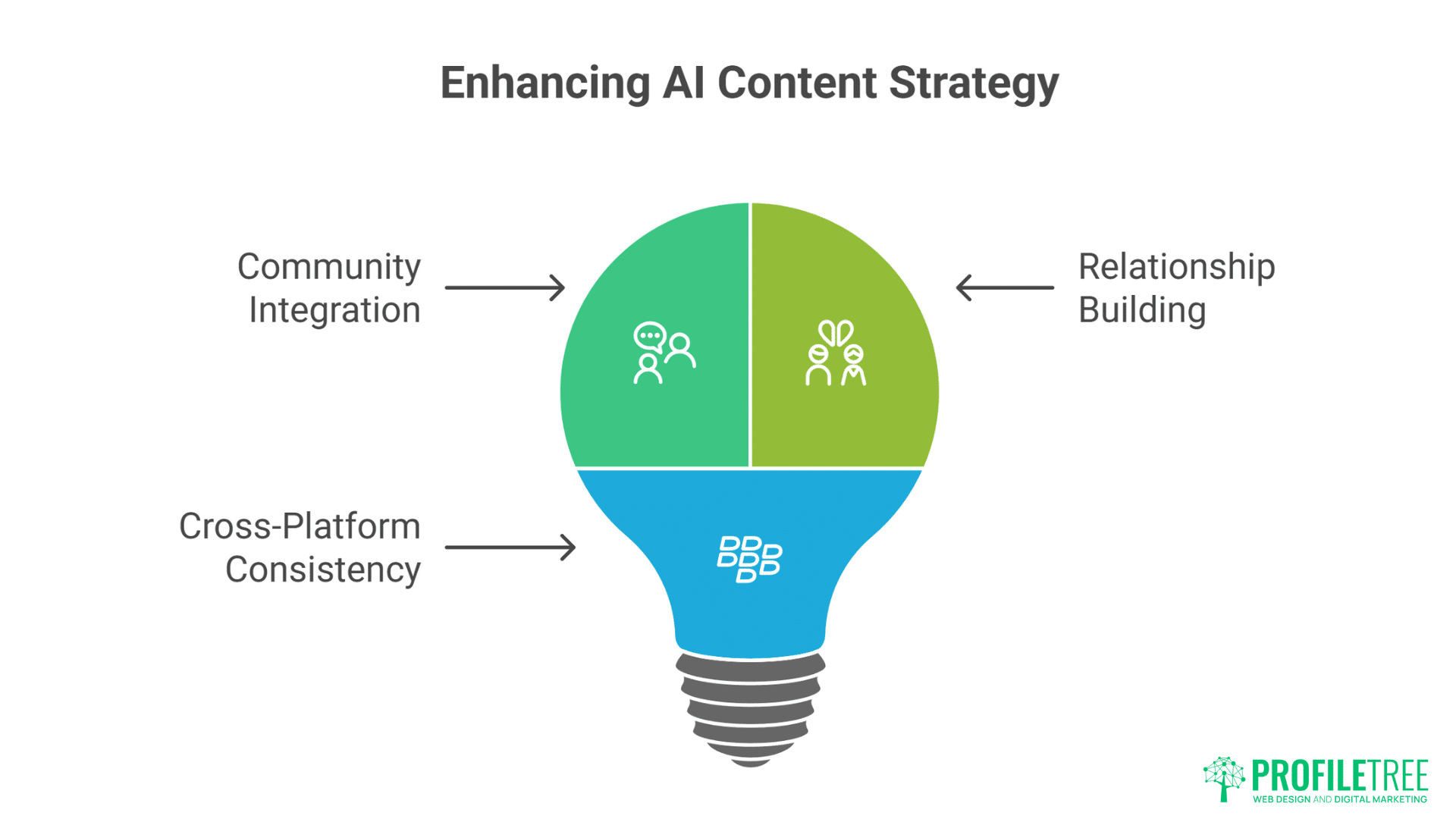
Authentic AI content works most effectively when integrated with broader social media strategies that include community building, audience development, and genuine relationship cultivation across multiple platforms and touchpoints.
Community Integration
Authentic content participates in ongoing community conversations rather than simply broadcasting messages. This requires understanding platform-specific cultures, ongoing discussions, and community expectations that inform how AI-generated content should be positioned and formatted.
AI prompts should incorporate community context: “Write this as a contribution to the ongoing discussion about digital transformation challenges facing Northern Ireland SMEs. Reference recent conversations without naming specific participants. Add genuine value to the discussion rather than just promoting our services.”
Relationship Building
Social media success depends on building genuine relationships over time rather than generating immediate sales. This long-term approach requires content that demonstrates consistent value, personality, and authentic engagement with audience concerns and interests.
Relationship-focused prompts emphasise ongoing value: “Create content that builds on our previous posts about small business challenges whilst introducing a new perspective that advances the conversation. Write as if continuing a dialogue with business owners who already know and trust our expertise.”
Cross-Platform Consistency
Authentic brands maintain consistent personality across all platforms whilst adapting to platform-specific expectations and audience behaviours. This requires understanding how your brand voice translates across LinkedIn, Instagram, Twitter, and other platforms.
Cross-platform prompts should specify adaptation requirements: “Adapt this core message for LinkedIn, Instagram, and Twitter, maintaining consistent brand personality whilst optimising for each platform’s typical engagement patterns and audience expectations.”
Measuring Authenticity and Engagement Success
Authentic content performance extends beyond basic metrics to include engagement quality, audience relationship development, and long-term brand perception improvements that may not immediately appear in standard analytics reports.
Engagement Quality Metrics
Monitor comment quality, conversation depth, and audience participation patterns rather than just likes and shares. Authentic content typically generates more thoughtful responses, longer conversations, and higher-quality audience interactions.
Look for indicators of genuine engagement: Are people asking follow-up questions? Do comments demonstrate that audiences actually read and considered your content? Are you generating meaningful professional discussions rather than superficial acknowledgements?
Relationship Development Tracking
Track how AI-generated content contributes to overall audience relationship development. Are new followers engaging with multiple posts? Do audience members reference previous content in new conversations? Are you building recognition and trust over time?
These relationship indicators often prove more valuable than immediate conversion metrics, particularly for service-based businesses where trust development precedes purchase decisions.
Brand Perception Monitoring
Monitor how AI-generated content affects overall brand perception through direct feedback, audience comments, and professional network responses. Does your content enhance or diminish your reputation for expertise, authenticity, and professional credibility?
Pay particular attention to industry peer responses and potential client reactions that indicate whether AI content successfully maintains professional standing whilst improving efficiency.
Future-Proofing Your Authentic AI Content Strategy
The AI content landscape continues evolving rapidly, with new tools, capabilities, and detection technologies emerging regularly. Building sustainable authentic content strategies requires staying informed about developments whilst maintaining focus on fundamental authenticity principles.
Technology Evolution Monitoring
Stay informed about AI content detection tools, platform algorithm changes, and audience expectations regarding AI-generated content. Understanding how these technologies develop helps maintain content strategies that remain effective as the landscape evolves.
However, focus on authenticity principles rather than just detection avoidance. Content that genuinely provides value and reflects authentic personality will remain effective regardless of detection technology developments.
Skill Development Investment
Invest in team training for advanced prompt engineering, brand voice development, and content authenticity evaluation. These skills become increasingly valuable as AI tools become more sophisticated and widespread.
Consider certification programmes, workshops, and industry training that keep your team current with best practices in authentic AI content creation and brand voice development.
Strategic Adaptation Planning
Develop strategies that can adapt to changing AI capabilities, platform expectations, and audience preferences whilst maintaining core authenticity principles. Focus on building systems and processes rather than relying on specific tools or techniques.
This adaptive approach ensures continued effectiveness as AI technology evolves and audience expectations regarding authentic content continue developing.
FAQs
How can I tell if my AI content sounds too robotic?
Read your content aloud and ask whether it sounds like something you’d naturally say in conversation. Robotic content typically uses unnecessarily formal language, overused marketing phrases, and predictable sentence structures. If you find yourself using words like “leverage,” “optimise,” or “game-changing” frequently, your prompts need refinement to encourage more natural language.
What are the most common AI words and phrases I should avoid?
The biggest culprits include “leverage,” “optimise,” “cutting-edge,” “game-changing,” “revolutionary,” “seamless,” “robust,” and “innovative.” However, the key isn’t just avoiding specific words—it’s developing prompting strategies that encourage natural, conversational language rather than corporate marketing speak. Focus on how you’d naturally explain concepts to friends or colleagues.
Should I always edit AI-generated content before publishing?
Yes, human oversight remains essential even with sophisticated prompting techniques. AI can produce excellent draft content, but humans add personality, local context, and authentic touches that create genuine connection. The goal is using AI to improve efficiency whilst maintaining the human insight that builds trust and engagement.
How do I maintain brand consistency across different AI-generated content?
Develop detailed brand voice guides that specify personality traits, communication preferences, and forbidden language patterns. Include these specifications in every AI prompt along with examples of your preferred communication style. Regularly review published content to ensure consistency and refine your prompting approaches based on what actually resonates with your audience.
Can AI content ever be as engaging as human-written content?
AI-generated content can be highly engaging when guided by sophisticated prompts that capture authentic personality and genuine expertise. The key is using AI to amplify human creativity rather than replace it. The most successful approaches combine AI efficiency with human insight, creating content that sounds naturally authentic whilst maintaining professional consistency.
Conclusion
The difference between AI content that engages and AI content that repels lies in sophisticated prompt engineering that captures authentic human voice, personality, and genuine expertise. Generic prompting produces formulaic content that audiences immediately recognise and ignore, whilst advanced techniques create naturally engaging content that builds trust and drives meaningful engagement.
Success requires understanding why AI content sounds robotic, developing specific prompting strategies that encourage authentic communication, and maintaining human oversight that adds personality and local context. The goal isn’t avoiding AI tools—it’s using them strategically to amplify human creativity whilst maintaining the authentic relationships that drive business success.
For Northern Ireland businesses competing across diverse markets, the ability to create authentic, engaging content at scale becomes a significant competitive advantage. The companies that master authentic AI content creation will build stronger audience relationships, demonstrate genuine expertise, and achieve sustainable growth whilst maintaining the efficiency benefits that AI tools provide.
The future belongs to businesses that combine AI capability with authentic human insight, creating content that sounds naturally personal whilst maintaining professional consistency. By investing in sophisticated prompting strategies and human oversight systems, you position your organisation to create consistently engaging content that builds genuine relationships and drives real business results.
Whether you’re creating LinkedIn thought leadership, Instagram personality-driven posts, or Twitter conversation contributions, the principles remain consistent: understand your audience deeply, define your authentic voice clearly, and use AI as a tool for amplifying rather than replacing human creativity and expertise.