
How to Write a Creative Brief: The Definitive Guide
Table of Contents
Knowing how to write a creative brief properly is one of the highest-return skills a marketer or business owner can develop. Writing a brief that is clear, specific, and strategically focused sets every creative project up to succeed before a single design is produced or a word of copy is written. Without one, even talented creative teams work in the dark, filling gaps in direction with their own assumptions.
This guide walks through the full process: what a creative brief is, the seven steps to writing a world-class one, how the UK and Irish context shapes what goes in it, and the pitfalls that derail even experienced teams.
What Is a Creative Brief?
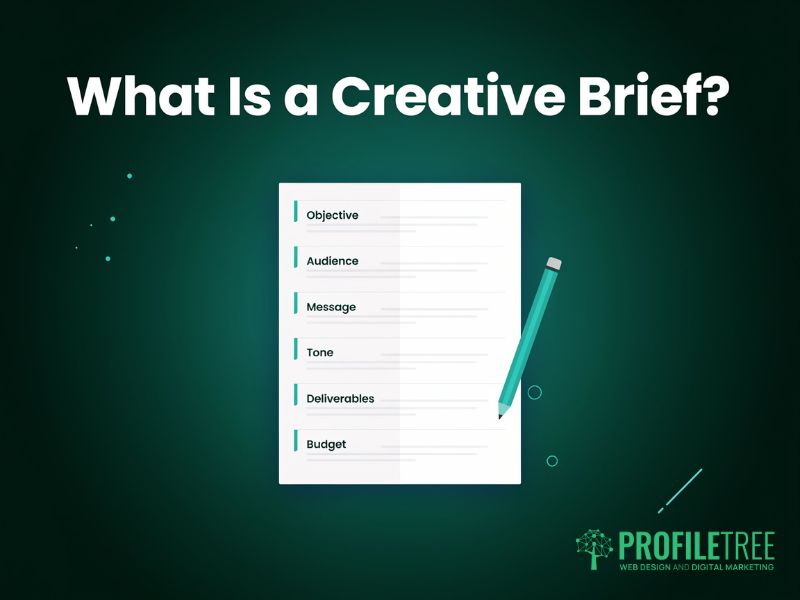
Understanding what a creative brief at a functional level is means understanding what it is, what it isn’t, and why it exists. A creative brief is a short strategic document, typically one to two pages, that defines the purpose, audience, message, and constraints of a creative project. It aligns the people commissioning the work with those creating it before execution begins.
The brief doesn’t tell a designer what to draw or a copywriter what to say. Its job is to set the destination clearly enough that the creative team can find their own best route there: the client provides the strategic direction, the agency provides the creative response.
A practical creative brief example: a Belfast SME briefing a video team would include the campaign objective, audience profile, single key message, tone, deliverable specs, and budget. Six sections, one to two pages. Everything else is noise.
7 Steps to Writing a World-Class Creative Brief
The seven steps below apply whether you’re working with an internal creative team, a freelance designer, or a full-service agency. Each step addresses a common failure point in the brief-writing process. Miss one, and the brief will have a gap that the creative team fills with their own assumptions.
Step 1: Project Background and Context
Start with the situation, not the solution. When you’re figuring out how to write a brief, this section trips up most marketers: they jump to what they want rather than explaining why the project exists. The creative team needs to understand where the brand is, what’s been tried, and what’s changed. This doesn’t need to be a history lesson, but it must give enough context for someone new to understand the challenge.
Include the product or service being promoted, any relevant recent campaign history, a picture of the competitive context, and the specific trigger for this project: a product launch, a declining metric, or a seasonal opportunity. Be candid about what is working and what is not; a brief built on a sanitised version of the situation produces a creative that solves the wrong problem.
Step 2: Define Measurable Objectives
Vague objectives are the biggest cause of off-brief work. When writing a brief, the objective section is where most clients lose the agency before anything is made. If you tell an agency you want to ‘raise awareness’, you’ll get something that looks impressive but can’t be measured.
Move from task framing to outcome framing. A task is ‘create a social media campaign.’ An outcome is ‘increase website traffic from Instagram by 20% over eight weeks.’ The table below shows the difference:
| Weak Objective | Strong Objective |
|---|---|
| Make a viral video. | Achieve a 15% increase in Gen Z brand recall via 30-second TikTok assets within 60 days. |
| Raise brand awareness. | Increase unprompted brand awareness among SME owners in Northern Ireland by 10% over Q3. |
| Get more social media engagement. | Generate 500 LinkedIn shares from a single campaign post targeting UK marketing managers. |
Each objective should be tied to a measurable outcome, a target audience, and a timeframe. If you cannot write it that way, the objective is not ready, and the brief should not go to the agency yet.
Step 3: Identify the Target Audience
Most creative briefs get the audience section wrong by being too broad. ‘Women aged 25 to 45’ tells a creative team almost nothing. What matters is psychographic detail: what does this person believe, what problem are they solving, and what does a typical day look like for them?
A strong audience profile goes beyond age and gender. It includes the person’s relationship with the product category, their awareness of your brand, the barriers to buying, and the emotional trigger that would move them to act. If you’ve got research, use it; if not, base it on your best customers and be transparent about where the insight comes from.
Step 4: Write the Single-Minded Proposition
The single-minded proposition (SMP) is where most creative briefs fall apart. It is the one message you want the audience to take away from the creative. Not three messages, not a bulleted list of benefits: one idea, expressed as clearly as possible.
Audiences don’t process multiple messages from a single piece of content. If you give a creative team six things to say, they’ll say them all weakly or pick one and ignore the rest. The SMP forces the strategic choice that only the client can make.
A useful creative brief example of a strong SMP: ‘Give busy parents a guilt-free reason to choose our product over a competitor in under five seconds.’ One audience, one tension, one resolution. Write it as a single sentence. If it runs to three, cut it until it does not.
Step 5: Define Tone of Voice and Brand Personality
Tone of voice tells the creative team how the brand sounds. Three to four adjectives are usually enough, but they need to be specific. ‘Professional and friendly’ means almost nothing. ‘Direct without being blunt, warm without being informal’ gives the team something to work with.
Your tone of voice should already be defined in your brand guidelines. If it isn’t, knowing how to write a brief that includes a working tone definition is more valuable than leaving it blank. A consistent tone across all touchpoints is one of the clearest signals of brand maturity. ProfileTree’s content marketing team helps clients develop tone of voice guidelines as part of broader digital strategy work, which feeds directly into better briefs and more consistent creative output.
Step 6: Specify Deliverables and Technical Specifications
Be precise about what you’re asking for. This is the section where many guides on how to write a brief are weakest: they say ‘define your deliverables’ without explaining what that means in practice. ‘Some social media content’ is not a deliverable. ‘Four static posts for Instagram at 1080x1080px, two 15-second Reels, and one LinkedIn article of 800 words’ is a deliverable. The more specific this section is, the less time gets wasted on format mismatches and last-minute resizes.
Include file formats, dimensions, character limits, brand assets, and mandatory elements such as logos or legal disclaimers. Specify channels for digital outputs; print specs for physical. The creative team shouldn’t need to ask for these details after the briefing meeting.
Step 7: Set the Budget, Timeline, and Hard Constraints
Budget and timeline belong in the brief. Many clients feel uncomfortable including figures, but a brief without financial parameters forces the agency to guess. A team that does not know the budget may develop a concept that requires three times what is available. That’s wasted effort on both sides.
Work backwards from the required live date. Factor in a review round, a revision round, and internal sign-off time. One reliable way to know how to write a brief that ships on time: add a 20% buffer to every timeline estimate and state it explicitly. Include hard constraints alongside the budget: regulatory requirements, brand lockup rules, and any formats that are off-limits.
The UK and Ireland Context: Regional Considerations
Most guides on how to write a creative brief are written from a North American perspective. If you’re briefing campaigns in the UK or Ireland, there are regulatory and research considerations that change what your brief needs to include. These are consistently the most overlooked sections in any UK brief.
Regulatory Compliance: ASA and BAI
In the UK, the Advertising Standards Authority (ASA) and the Committee of Advertising Practice (CAP) govern what can be claimed in advertising. If your brief involves performance claims, comparative statements, or health and wellness messaging, flag these in the mandatory constraints section and include a compliance row in your creative brief template.
In Ireland, the Broadcasting Authority of Ireland (BAI) covers broadcast advertising, while the ASAI handles non-broadcast. Briefs running across both markets need to account for the differences, particularly in financial services, food and drink, and alcohol marketing. Building compliance into the brief from the start saves expensive post-production changes.
Consumer Insight Sources for UK and Irish Markets
The quality of your audience section depends on the quality of your data sources. For UK campaigns, YouGov profiles and the TGI (Target Group Index) survey are industry standards for audience research. The Office for National Statistics (ONS) provides demographic and economic data that’s more relevant to local campaigns than US-sourced figures.
For Northern Ireland and Ireland specifically, NISRA and the CSO in Dublin produce regional data that often tells a different story to UK-wide averages. If your brief targets consumers in Belfast or across the border counties, regional data makes the audience section sharper and the creative brief more credible to a local team.
Who Is Responsible for the Creative Brief?
One of the most common questions about how to write a creative brief is who should write it. Getting accountability wrong creates gaps that damage both the document and the working relationship.
The brief originates with the client’s marketing team: a brand manager, marketing director, or digital lead. The agency account manager reviews it for completeness and flags vague sections. In larger agencies, a Creative Director or strategy lead runs the final briefing session.
A clear RACI model for brief ownership:
- Responsible: The client marketing lead writes the first draft of the brief.
- Accountable: A senior marketing decision-maker signs off on the brief before it goes to the agency.
- Consulted: The agency account manager reviews the brief for gaps and requests clarification before the briefing session.
- Informed: The creative team receives the finalised brief and raises questions in the briefing meeting, not after starting work.
The brief should never be written by the agency without genuine client input. An agency that defines the problem itself removes the accountability that makes the brief work.
The Briefing Lifecycle: From Draft to Debrief

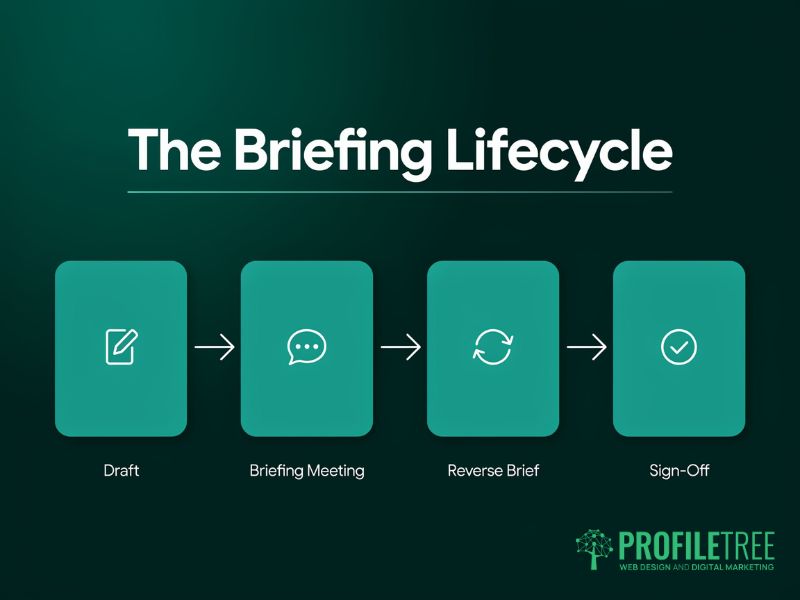
Learning how to write a creative brief is only the first stage. The briefing lifecycle covers everything from the initial draft through to the final sign-off, and understanding each stage makes for a sharper and more effective commissioner of creative work.
The Briefing Meeting
The briefing meeting is where the written brief becomes a live conversation. Both sides align on ambiguities before creative work begins. A useful creative brief example of this working well: an agency account manager flags in the meeting that the budget doesn’t cover the deliverables listed, and both sides agree on a revised scope before any work starts. A good agency will push back on unclear objectives and flag constraints that make the brief undeliverable.
Bring the people who will actually make the work into this meeting, not just the account team. A copywriter or video producer in the room will ask questions that an account manager would not. That makes the brief stronger before a single asset is produced.
The Reverse Brief
The reverse brief is one of the most valuable tools in a professional briefing process, and almost no how to write a brief guide mentions it. After the briefing meeting, the creative team presents their understanding of the brief back to the client before any creative work begins. They explain what they heard, what they plan to do, and what assumptions they’re carrying.
This step costs very little time. If the team has misread the SMP or planned work that doesn’t fit the budget, the reverse brief catches it before a single asset is produced. It also builds trust between both sides.
Handling a Rejected Brief
Sometimes the agency will push back on the brief. This is a sign of a professional relationship, not a problem. If they tell you your objectives are unmeasurable, or your SMP is unclear, engage with that feedback: it costs far less at a brief stage than discovering the same problems in a revision loop. When a brief is rejected, go back to the objectives section first. The most common source of brief failure is an objective written in output terms (‘make a video’) rather than outcome terms (‘increase product trial by 15%’).
Common Pitfalls: Why Creative Briefs Fail
Even teams that know how to write a creative brief well make the same mistakes repeatedly. These are the patterns that show up most often in professional settings, regardless of company size or sector. Understanding them is the fastest way to avoid them.
The Blank Canvas Brief
‘We’re open to anything.’ It is meant to sound collaborative. In practice, it is one of the most frustrating briefs an agency receives. Without a defined problem, a defined audience, or a defined message, the creative team is guessing. The results are either generic or wildly off-target, and the client ends up in revision loops that a clearer brief would have prevented entirely.
Writing a brief means making strategic choices before the creative team starts work. Freedom in execution is healthy; freedom from strategy produces expensive guesswork.
The Approval Brief
The opposite problem: a brief so detailed that it pre-designs the creative before the agency has had a chance to think. The client includes a visual reference, a copy draft, a layout suggestion, and a colour palette. The brief becomes a command to execute, not a problem to solve.
If you know exactly what you want, a brief for execution. If you want original thinking, build the brief around the strategic challenge. The creative brief template you use should leave the ‘how’ open and lock down only the ‘what’ and the ‘why’.
The Multi-Message Brief
Packing five messages into a single brief produces five weak executions. The discipline of committing to one SMP is uncomfortable because it forces you to deprioritise things that feel important. But it’s the discipline that separates creative briefs that produce memorable work from those that produce cluttered, forgettable content.
If you have five messages, consider whether you need five separate campaign briefs. ProfileTree’s content marketing strategy service helps clients plan campaign architectures that give each message its own creative brief and its own measurement framework.
Putting It Into Practice
Knowing how to write a creative brief is a skill that compounds. Knowing what a creative brief in theory is is not the same as using one well in practice: that only comes from writing several, reading the agency’s response, and refining your approach each time.
Writing a brief well comes down to three commitments: one objective, one audience, one single-minded proposition. Commit to all three clearly, and you’ll get better work, faster turnaround times, and fewer revision loops.
A solid creative brief template is a useful starting point, but it’s only as good as the thinking that fills it. ProfileTree’s content marketing and digital strategy services are built around structured campaign planning that starts with a well-written brief. Getting the brief right is where every project starts.
FAQs
1. Who usually writes the creative brief?
The client’s marketing team writes the first draft. This is typically the brand manager, marketing director, or whoever owns the campaign budget and objectives. The agency’s account manager reviews it for completeness and raises questions before the briefing session. The brief should always originate with the client because it contains strategic decisions only the client can make: the objective, the target audience, the message, and the budget. Agencies that write their own briefs are setting their own homework, which removes the accountability structure that makes a brief work.
2. How long should a creative brief be?
A creative brief should be one to two pages. If it runs to five, it’s a strategy document or a scope of work, not a brief. The purpose of brevity is focus: a short brief forces the writer to identify what matters most and leave out the rest. A standard creative brief template helps here: a fixed one-page format means you’re never starting from a blank page, and it prevents the common trap of writing a brief that grows in length every time a new stakeholder adds their requirements.
3. What is the single-minded proposition?
The single-minded proposition (SMP) is the one idea the target audience should take away from the creative. It is not a tagline, and it is not a list of product benefits. It is the core thought the campaign is built around. A strong SMP forces a strategic choice about what matters most and gives the creative team a specific brief to interpret rather than a list of requirements to illustrate. The best ones are short enough to remember, specific enough to guide the creative, and distinctive enough to be ownable by the brand.
4. Can a creative brief template be used for internal projects?
Yes, and it’s often more valuable internally than for external agency relationships. Internal teams frequently skip the brief stage and jump straight to execution, which leads to scope creep, misaligned expectations, and work that doesn’t serve the original objective. A short creative brief, even half a page, using a simple creative brief template, forces alignment between the person commissioning the work and the person doing it. It also creates a reference point if the scope expands or requirements change mid-project.
5. What makes a good creative brief example?
A good creative brief example is specific, strategic, and short: one measurable objective, audience described in psychographic terms, one clear SMP, precise tone, exact deliverables, budget and timeline. The best briefs, whether from global brands or Belfast agency teams, all leave the creative approach open while locking down the strategic direction. If someone with no project knowledge reads your brief and still has unanswered questions, it isn’t ready.