
Java Programming Online: A Plain-English Guide for Beginners
Table of Contents
Java programming online has never been more accessible, and that matters whether you’re a complete beginner picking up your first language or a business owner trying to understand what sits behind the applications your team relies on every day.
Java has been a cornerstone of software development since 1995. It powers Android apps, banking systems, NHS platforms, and a significant share of the enterprise software running across the UK and Ireland. If you’ve ever used an ATM, checked a train timetable, or logged into a workplace HR system, there’s a reasonable chance Java was involved somewhere in the background.
This guide covers the essentials of Java programming online: what the language actually does, how to get started without installing anything on your machine, which platforms are worth your time, and what the learning path looks like from your first line of code to something genuinely useful. There’s also a section for business owners and managers who need to understand Java well enough to have informed conversations with developers, brief a web project confidently, or evaluate whether a bespoke application is the right solution for what their business needs.
What Is Java and Why Does It Still Matter?
Java is a high-level, object-oriented programming language first released in 1995. It follows a “write once, run anywhere” principle: code written in Java runs on any device or operating system that has the Java Virtual Machine (JVM) installed. That portability is one of the main reasons Java has remained in widespread commercial use for three decades.
You will find Java at the core of much of UK enterprise software. It powers banking systems, logistics platforms, and a wide range of Android mobile applications. For businesses commissioning bespoke web applications or custom digital tools, Java is frequently the language of choice when a project demands reliability at scale.
Java’s longevity in enterprise software is not accidental,” says Ciaran Connolly, founder of Belfast digital agency ProfileTree. “When an SME comes to us needing a custom customer portal or an automated workflow tool that sits alongside their website, the underlying language matters. Java gives developers a stable, well-supported foundation that will still be maintainable five or ten years from now.”
There is also the question of which programming language is best for e-commerce websites that many business owners face before they start building. Understanding what Java does — and what it does not do — is a practical starting point for that conversation.
How Java Works: The Basics Without the Jargon
Understanding the basics of how Java works is useful even if you never intend to write a single line of code yourself. Business owners who grasp the fundamentals have far more productive conversations with developers and are better placed to evaluate quotes and project timelines.
The Java Development Kit
The JDK is the package of tools developers install to write, compile, and run Java programmes. It includes the Java compiler, which translates code into bytecode, and the JVM, which runs that bytecode on any compatible machine. For anyone learning Java programming online today, the recommended versions are Java 17 and Java 21, both long-term support releases that receive ongoing security and maintenance updates.
How Java Code Becomes a Running Programme
A developer writes Java code in an integrated development environment (IDE). The compiler converts that code into bytecode. The JVM then interprets the bytecode and executes it. This three-step process is why Java applications deploy across Windows, macOS, Linux, and enterprise servers without being rewritten for each one. It is also why Java remains the dominant language in large organisations that cannot afford to rebuild their systems every time an operating system changes.
Object-Oriented Programming
Java is built around objects: self-contained units that combine data and the functions that act on that data. This structure makes large applications easier to build and maintain, because different parts of a system can be developed and tested independently. Most modern enterprise applications, from e-commerce platforms to CRM systems, are built this way. When a developer talks about classes, methods, or inheritance in a project meeting, they are drawing on Java concepts.
Learning Java Online: What the Main Platforms Offer
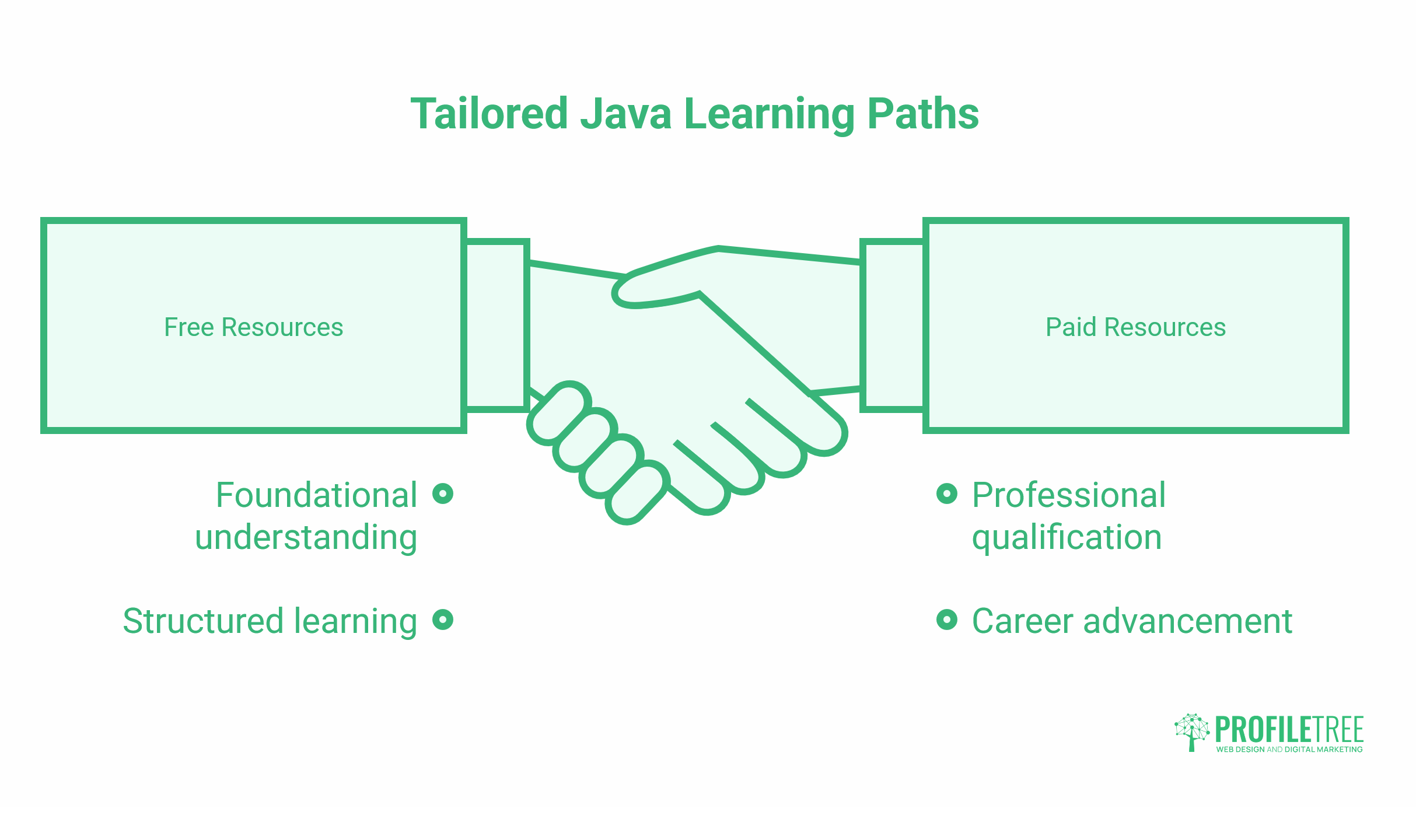
There is no shortage of resources for learning Java programming online, from entirely free tutorials to structured courses with recognised certificates. The right choice depends on your goal.
Free Platforms Worth Starting With
W3Schools provides a clear Java reference and tutorial suitable for absolute beginners. It includes a browser-based editor so you can write and run basic Java programs without installing anything locally. The University of Helsinki’s Java MOOC (mooc.fi) is a more structured free option used by universities globally; it covers core Java thoroughly and includes graded exercises.
Structured Paid Courses
Coursera’s Java Programming and Software Engineering Fundamentals specialisation, developed with Duke University, provides academic depth alongside practical exercises. Udemy offers a wide range of Java courses at accessible price points, typically with lifetime access to course materials. Both platforms issue certificates on completion.
Browser-Based Practice Environments
One practical advantage of learning Java online is access to browser-based compilers that remove the friction of local setup. Platforms like Replit allow you to write and run Java code in a browser tab without installing the JDK. This suits beginners who want to test ideas quickly before committing to a full local development environment.
| Platform | Cost | Certificate | Best For |
|---|---|---|---|
| W3Schools | Free | No | Quick syntax reference |
| Helsinki MOOC | Free | Yes (course) | Structured beginner learning |
| Coursera (Duke) | Paid / financial aid available | Yes | Academic grounding |
| Udemy | Paid (variable) | Yes | Practical, self-paced learning |
| Replit | Free tier available | No | Practice and experimentation |
Setting Up a Java Development Environment
For those learning Java programming online who also want to work locally, the setup process is straightforward on both Windows and macOS.
Installing Java
Download the JDK from Oracle’s official website or from Adoptium, which provides free open-source builds. Install Java 17 or Java 21. Once installed, open a terminal or command prompt and type java -version to confirm it worked.
Choosing an IDE
An IDE is the application you write your code in. The three most widely used for Java are IntelliJ IDEA, Eclipse, and Visual Studio Code.
| IDE | Cost | Best For | RAM Recommended |
|---|---|---|---|
| IntelliJ IDEA Community | Free | Beginners and professionals | 8GB |
| Eclipse | Free | Enterprise Java work | 4GB minimum |
| Visual Studio Code | Free | Lighter multi-language setup | 4GB minimum |
IntelliJ IDEA’s Community Edition is generally considered the most beginner-friendly option. Eclipse is open source and prevalent in enterprise environments. Visual Studio Code supports Java through extensions and suits developers who work across multiple languages.
A machine with 4GB of RAM can handle Eclipse or Visual Studio Code for beginner-level work. IntelliJ IDEA performs better with 8GB. If your hardware is limited, browser-based environments like Replit remove the constraint entirely for early learning.
What Java Is Used for in Web and Application Development
Understanding Java’s practical applications helps you identify when it is the right technology for a project, and when a simpler solution might serve you better.
Bespoke Web Applications
Java is well-suited to complex, data-driven web applications: booking systems, customer portals, inventory management tools, and multi-user platforms. These are the projects where a standard WordPress or Shopify site reaches its ceiling. If a business needs a custom quoting engine, an integration between its website and a warehouse management system, or a client-facing dashboard that pulls live data, Java-based development is often the appropriate choice.
ProfileTree’s web development services cover this ground. When an SME reaches a point where an off-the-shelf CMS no longer meets the business’s actual needs, a bespoke build becomes the more cost-effective long-term option.
Android Mobile Applications
Java was the original language for Android development and remains widely used alongside Kotlin for building Android apps. Businesses developing customer-facing mobile applications often encounter Java in their underlying codebases.
Enterprise and FinTech Systems
Java dominates the backend systems of major UK financial institutions, logistics companies, and public sector platforms. The Spring Boot framework, which sits on top of core Java, is particularly prevalent in enterprise software. Developers with Spring Boot experience are consistently in demand across London, Dublin, and Belfast’s growing tech sectors.
Backend APIs
Java is commonly used to build the APIs that connect a website’s front end to databases, third-party services, and other systems. When a web application processes a transaction, retrieves user data, or communicates with an external service, there is often a Java-based API doing that work.
A Structured Learning Roadmap
For anyone committed to learning Java programming online to a professional level, progress typically follows three distinct stages.
Level 1: Core Syntax and Logic
Start with variables, data types, conditional statements, and loops. These are the building blocks of every Java programme. Most beginners can cover this ground in four to six weeks with consistent daily practice. W3Schools and the Helsinki MOOC both cover Level 1 well.
Level 2: Object-Oriented Programming
Once you are comfortable with syntax, move to classes, objects, inheritance, and interfaces. This is where Java’s core architecture becomes clear. It is also the stage where most beginners find things click into place, because the structure starts to reflect how real applications are organised.
Level 3: Frameworks
Spring Boot is the framework employers ask about most. It sits on top of Java and provides a standardised way to build web applications and APIs. Hibernate is the other name worth knowing: it handles database interactions. A developer who can build a Spring Boot application with Hibernate integration is job-ready for a significant portion of UK enterprise roles.
ProfileTree delivers digital training for business teams across Northern Ireland and the UK, including sessions that help non-technical managers understand development processes well enough to brief agencies effectively, manage projects confidently, and evaluate technical proposals without a developer at their side.
Java Certifications: Are They Worth It in the UK?
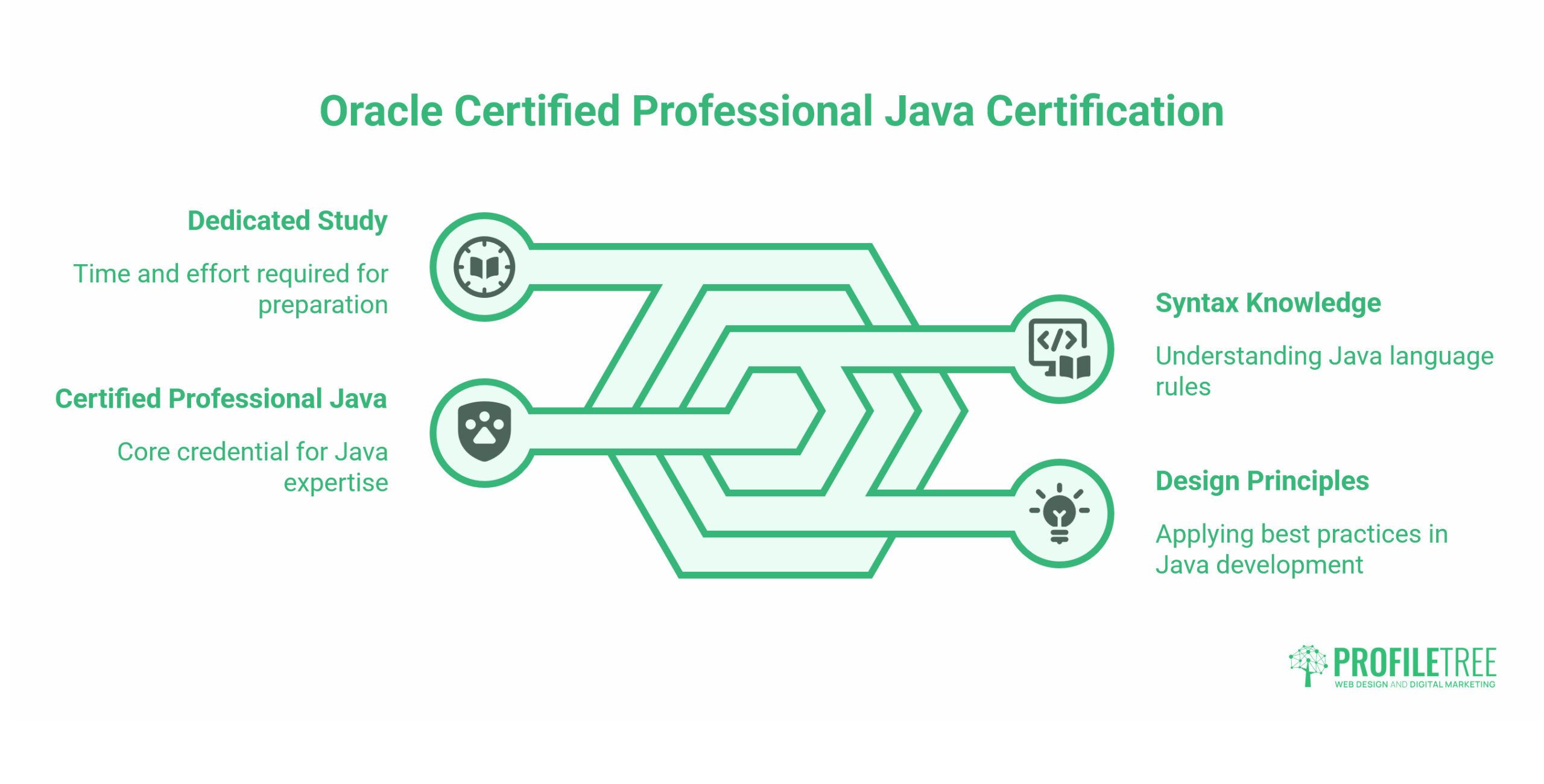
Oracle’s Certified Professional Java certification is the most widely recognised Java credential in the UK market. Preparation typically requires several months of dedicated study beyond completing introductory courses, and the exam tests both syntax knowledge and design principles.
For career changers entering the UK tech sector, certifications carry varying weight. Many UK firms, particularly outside large financial institutions, now prioritise demonstrable project work and a strong code portfolio over formal credentials. The Oracle certification is most valued in sectors where compliance and standardisation matter, including financial services and public sector IT.
For SME business owners evaluating a developer’s credentials, the most useful combination is certification, demonstrable project examples, and verifiable professional references.
Java and AI: What SMEs Should Understand
Java’s role does not stop at traditional web applications. A significant portion of enterprise AI tooling, including data processing pipelines and backend automation systems, runs on Java infrastructure. As more businesses look to integrate AI capabilities into their operations, the underlying technical stack often includes Java at some level.
ProfileTree works with SMEs across Northern Ireland and the UK on AI implementation and transformation projects. Understanding the technologies on which your digital systems are built is a prerequisite for making sound decisions about where to integrate AI and at what realistic cost.
Java for SMEs: Knowing When to Commission a Bespoke Build
Many small and medium-sized businesses in Northern Ireland and the UK reach a point where their existing website or off-the-shelf software no longer keeps up with what they actually need. A WordPress site with a handful of plugins works well up to a point. When you need real-time data processing, custom user permissions, integration with a legacy system, or a workflow that no existing tool handles cleanly, a bespoke Java-built application becomes worth considering seriously.
The decision is not purely technical. It comes down to whether the cost of a custom build is justified by the problem it solves. A useful rule of thumb: if your team is spending significant time on manual workarounds because your current tools don’t connect properly, that time has a cost. A well-scoped bespoke application can eliminate it.
Java’s Place in the UK and Ireland Tech Landscape
Belfast, Dublin, and London each have distinct tech ecosystems, and Java plays a prominent role in all three. London’s financial services sector runs heavily on Java-based backend systems; the language’s reliability and performance at scale make it the default choice for institutions where downtime carries serious consequences. Dublin’s multinational tech hub includes a significant number of enterprise software teams working in Java, particularly in companies serving European financial and pharmaceutical markets.
Belfast’s tech sector has grown steadily, with a number of software development firms and in-house teams working on Java applications for clients across the UK and Ireland. Invest Northern Ireland has identified software development as a priority growth area, and Java skills remain consistently in demand across the region’s job listings.
For businesses in Northern Ireland looking to commission development work, this matters practically. There is a local pool of experienced Java developers, which affects both availability and cost compared to markets where that talent is scarcer.
Conclusion
Java has earned its place as one of the most reliable and widely used programming languages in the world, and learning it online is a realistic goal for anyone willing to commit to a structured approach. Start with the fundamentals, work through a reputable platform at your own pace, and build towards frameworks like Spring Boot once the core language feels solid.
For business owners, the value of understanding Java is less about writing code and more about making better decisions: knowing when a bespoke application is the right answer, briefing developers with clarity, and asking the questions that protect your investment. If you’re at that stage, ProfileTree’s web development and digital training services are a practical next step.
FAQs
Can I learn Java programming online for free?
Yes. W3Schools and the University of Helsinki’s Java MOOC both provide thorough free courses. Paid platforms like Coursera and Udemy offer more structured paths and employer-recognised certificates if you need a credential at the end.
Do I need a high-spec computer to learn Java online?
Not to get started. A machine with 4GB of RAM runs Eclipse or Visual Studio Code adequately for beginner work. Browser-based environments like Replit eliminate hardware concerns entirely for the early stages.
What is Java used for in web development?
Java handles the server-side logic of web applications: processing data, managing user authentication, connecting to databases, and communicating with third-party services. It suits complex, high-traffic applications that need to stay reliable over years.
Is Java harder to learn than Python?
Java has more initial setup and boilerplate code, which makes the first few weeks steeper. For long-term career prospects in enterprise software, however, Java’s depth and ubiquity are genuine advantages.
Which Java version should I learn?
Java 17 and Java 21 are both long-term support releases and the standard recommendation. Most current tutorials and professional environments target one of these two.
Do I need a computer science degree to get a Java job in the UK?
Many UK firms now prioritise skills and portfolio over formal degrees. A strong set of Java projects combined with frameworks knowledge is sufficient for entry-level roles at a significant number of employers.