
9 Best AI Marketing Tools & Solutions for UK Business Growth
Table of Contents
The UK digital marketing sector has reached a turning point with AI tools. While 2023 saw widespread experimentation with generative AI, 2026 brings a more strategic focus: integration, compliance, and measurable ROI. For business owners and marketing managers, the challenge isn’t finding AI tools; it’s selecting platforms that integrate with existing systems whilst respecting UK GDPR requirements and delivering tangible business outcomes.
At ProfileTree, our work with SMEs across Northern Ireland, Ireland, and the UK has shown that successful AI implementation isn’t about adopting every new platform. It’s about identifying tools that address specific marketing bottlenecks, whether that’s content production, lead qualification, or customer engagement. This guide examines nine platforms that have proven their value in real-world applications, with a particular focus on how they serve UK businesses navigating the practical realities of AI adoption.
The shift from reactive AI use, treating ChatGPT as a glorified copywriting assistant, to strategic implementation requires understanding where each tool fits within your broader digital marketing infrastructure. The platforms covered here range from content optimisation solutions to conversational AI systems, each addressing distinct operational challenges that UK businesses face when scaling their marketing efforts.
Understanding AI Marketing Tool Categories
AI marketing tools serve different functions within your digital marketing strategy. Understanding these categories helps you select platforms that complement rather than duplicate your existing capabilities.
Content Intelligence & SEO Tools analyse search patterns, competitor strategies, and content performance to guide your content creation efforts. These platforms move beyond basic keyword research to provide strategic direction on what topics to cover and how to structure content for maximum search visibility.
Automation & Workflow Platforms handle repetitive tasks across multiple channels, from email sequences to social media posting schedules. The value here lies not just in time savings but in maintaining consistency across customer touchpoints whilst your team focuses on strategic work.
Conversational AI & Engagement Tools manage customer interactions across messaging platforms, providing immediate responses whilst qualifying leads before they reach your sales team. For UK businesses, the key consideration is ensuring that these tools handle data in accordance with UK GDPR requirements.
Analytics & Intelligence Platforms transform raw data from multiple sources into actionable insights. Rather than simply reporting what happened, these tools predict trends and recommend strategic adjustments based on historical patterns and current market conditions.
Ciaran Connolly, Director at ProfileTree, notes: “The businesses getting real value from AI marketing tools are those that treat them as part of a broader digital strategy, not as standalone solutions. Integration with existing systems and clear measurement frameworks separate successful implementations from expensive experiments.”
1. GrowthBar: AI-Powered SEO Content Strategy
GrowthBar positions itself at the intersection of content creation and search optimisation, addressing a specific challenge that UK digital agencies and in-house marketing teams face: producing content that ranks whilst maintaining efficiency. The platform uses natural language processing to analyse billions of data points, providing insights that inform both content strategy and execution.
The tool’s primary strength lies in its approach to content optimisation. Rather than generating generic AI content, GrowthBar imports existing articles and provides specific recommendations based on current search performance data. This makes it particularly valuable for businesses with established content libraries that need optimisation rather than starting from scratch.
For UK businesses managing WordPress sites, the platform ProfileTree specialises in, GrowthBar integrates directly with your CMS. This means you can optimise content without switching between multiple platforms, a workflow efficiency that becomes significant when managing content at scale.
The keyword research capabilities span beyond basic search volume data. GrowthBar analyses competitor content, identifies gaps in existing coverage, and suggests related terms that align with user intent. This addresses a common challenge in UK markets where search volumes are lower than US equivalents, requiring more sophisticated keyword strategies.
The platform includes features for creating product descriptions, press releases, and social media content, making it suitable for agencies serving clients across multiple sectors. However, the real value for professional users comes from its ability to maintain brand voice whilst applying SEO best practices, a balance that generic AI writing tools often miss.
From a practical implementation perspective, GrowthBar works best for businesses producing regular content as part of their digital marketing strategy. Single blog posts might not justify the investment, but for companies that publish weekly content or manage multiple client projects, the efficiency gains become substantial.
2. Customers.ai: Email Personalisation at Scale
Customers.ai takes a different approach to AI marketing, focusing specifically on email personalisation and customer data analysis. The platform addresses a persistent challenge in digital marketing: creating email campaigns that feel personal whilst operating at scale.
The tool analyses historical customer behaviour, purchase patterns, and engagement metrics to generate emails tailored to individual recipients. This approach extends beyond simple name insertion or segment-based messaging; instead, it utilises predictive analytics to determine which offers, content, and messaging will resonate with specific customers.
For UK businesses, particularly those in retail or e-commerce sectors, this capability becomes valuable during seasonal campaigns. Rather than sending the same promotional message to your entire database, Customers.ai identifies which customers are most likely to respond to specific offers, improving conversion rates whilst reducing email fatigue.
The platform’s analytics capabilities provide a deeper understanding of customer preferences and behaviours. This data feeds back into the broader marketing strategy, informing decisions beyond email campaigns. Businesses using Customers.ai report not just improved open rates but a better understanding of what drives customer actions across their entire marketing funnel.
Integration with existing CRM systems and marketing automation platforms makes Customers.ai practical for businesses already using tools like HubSpot or Salesforce. The AI layer enhances rather than replaces existing infrastructure, which matters for UK SMEs that have already invested in marketing technology.
The user interface prioritises accessibility over technical complexity. Marketing managers without data science backgrounds can create sophisticated personalisation rules, though getting maximum value requires investment in proper customer data management and segmentation strategy.
ProfileTree has observed that businesses benefiting most from tools like Customers.ai already have solid email marketing fundamentals in place. The AI adds sophistication to existing programmes rather than fixing broken processes.
3. Smartly.io: Automated Social Advertising
Smartly.io represents the evolution of social media advertising from manual campaign management to automated optimisation. The platform utilises machine learning to automate the repetitive aspects of ad creation, testing, and budget allocation across Facebook, Instagram, and other social media platforms.
The automation capabilities address a specific operational challenge: maintaining performance across multiple campaigns, ad sets, and creative variations without requiring constant manual intervention. For UK agencies managing social advertising for multiple clients, this translates to handling larger client loads without proportional increases in staff.
The platform’s predictive analytics move beyond reporting what happened to forecasting likely campaign performance based on historical data. This enables proactive budget adjustments and creative changes before performance dips, rather than reactive fixes after problems arise.
Smartly.io’s creative automation tools generate multiple ad variations from templates, adapting messaging and visuals based on audience segments. This addresses the creative production bottleneck that many businesses face when scaling social advertising, although it requires an upfront investment in template creation and brand guidelines.
The platform has achieved recognition within the ad tech industry, including inclusion in Gartner analyses of advertising technology platforms. This matters for UK businesses evaluating long-term partners, as it suggests stability and ongoing investment in development.
From a practical standpoint, Smartly.io serves businesses already running significant social advertising budgets. The platform’s sophistication and pricing structure make it less suitable for companies just beginning with social ads, but for established advertisers seeking efficiency gains, it addresses real operational challenges.
The UK market’s increasing focus on social commerce makes platforms like Smartly.io more relevant. As businesses shift from using social media solely for awareness to driving direct sales, the need for sophisticated campaign management increases in proportion.
4. ManyChat: Conversational Marketing Automation
ManyChat focuses specifically on automating two-way conversations across Instagram Direct Messages, Facebook Messenger, and SMS. The platform addresses the growing expectation for immediate responses to customer enquiries whilst qualifying leads before they reach sales teams.
The chatbot functionality goes beyond simple FAQ responses. ManyChat creates conversation flows that guide prospects through qualification processes, collect specific information, and direct serious enquiries to human team members. This filtering capability becomes valuable for businesses receiving high volumes of generic enquiries alongside genuine opportunities.
For UK businesses, particularly those in service sectors where consultation precedes purchase, ManyChat helps manage the initial engagement phase without requiring immediate human attention. This matters outside traditional business hours or during high-demand periods when response times otherwise suffer.
The platform integrates with common CRM systems, meaning that conversations initiated through chatbots are fed into existing customer records. This prevents the fragmentation that occurs when using disconnected tools, maintaining a complete view of customer interactions across channels.
ManyChat’s user interface enables marketing teams to create conversation flows without requiring programming knowledge. The visual builder displays conversation paths, making it easy to identify where prospects drop off or where additional options could improve engagement.
The platform works particularly well for businesses already active on social media platforms. If your customers engage with you through Instagram or Facebook, ManyChat extends those channels’ capabilities without requiring customers to adopt new communication methods.
ProfileTree’s experience implementing conversational AI for clients shows that success depends on thoughtful conversation design. The technology enables automation, but the quality of outcomes depends on understanding customer questions and mapping appropriate responses.
Marketing AI Tool Selection Criteria
Selecting AI marketing tools requires evaluating platforms against specific business needs rather than pursuing features that sound impressive but serve no practical purpose. UK businesses face particular considerations around data compliance, integration requirements, and return on investment.
UK GDPR Compliance should be table stakes, not an afterthought. Any AI tool processing customer data must meet UK data protection requirements. This involves understanding where data is stored, how it’s processed, and what controls are in place regarding automated decision-making. Platforms serving UK businesses should provide clear documentation about their compliance measures.
Integration Capabilities determine whether a new tool enhances your existing marketing infrastructure or creates additional complexity. Tools that require manual data transfers or operate in isolation from your CRM, analytics platforms, or content management systems generate more work rather than reducing it. Prioritise platforms with established integrations to your current technology stack.
Scalability Considerations matter more than initial pricing. A tool that serves you well at 1,000 contacts but becomes prohibitively expensive or operationally difficult at 10,000 contacts creates future problems. Understanding how pricing and complexity scale with business growth prevents the need for expensive platform changes later.
Implementation Requirements vary significantly across AI marketing tools. Some platforms offer immediate value with minimal setup, while others require substantial configuration, training, and ongoing optimisation. Be realistic about your team’s capacity to implement and maintain new systems.
Support and Training Availability become important when problems occur or when trying to maximise platform capabilities. Platforms serving UK businesses should provide support during UK business hours, with resources that address UK-specific requirements around regulations and market practices.
At ProfileTree, we’ve seen businesses succeed with AI marketing tools when they approach selection as part of a broader digital strategy rather than pursuing individual features. The question isn’t whether a tool has impressive capabilities but whether those capabilities address actual operational challenges or strategic objectives.
5. Brandwatch Consumer Intelligence: Social Listening & Analytics
Brandwatch Consumer Intelligence approaches AI marketing from a data intelligence perspective, tracking online conversations across millions of sources, including social media channels, blogs, forums, news sites, and review platforms. The platform addresses a specific business need: understanding what people say about your brand, competitors, and industry when you’re not part of the conversation.
The real-time monitoring capabilities provide early warning of emerging issues or opportunities. For UK businesses managing their reputation across multiple markets, this means identifying problems while they’re still manageable, rather than after they’ve escalated into crises.
The sentiment analysis goes beyond simple positive/negative classifications. Brandwatch identifies emotional nuances in conversations, helping businesses understand not only what people say but also how they feel about various aspects of products, services, or brand experiences.
The platform’s trend tracking capabilities help businesses identify emerging topics within their industry before they become mainstream. This enables a proactive content strategy, positioning your business as an early voice on emerging trends rather than following competitors.
Influencer identification features help businesses find individuals whose audiences align with their target markets. Rather than focusing solely on follower counts, Brandwatch analyses engagement patterns and audience characteristics, identifying influencers whose audiences actually match your customer profile.
For UK businesses, Brandwatch’s extensive data coverage is crucial because it captures conversations occurring across regional forums, local news sites, and UK-specific platforms that broader tools might overlook. This local relevance enhances the accuracy of insights for businesses primarily serving the UK market.
The platform’s algorithmic impact assessment features address UK regulatory requirements around AI use, providing transparency into how the system reaches conclusions. This is particularly important for businesses in regulated sectors, where automated decision-making requires clear documentation and justification to ensure compliance.
Major UK brands, including Unilever, have used Brandwatch to track campaign success and monitor brand health, demonstrating the platform’s applicability at enterprise scale. However, the insights prove valuable for smaller businesses willing to invest in understanding market perception and competitive positioning.
6. Beacons AI: Creator Economy Marketing Infrastructure
Beacons AI targets a specific segment of the marketing landscape: creators, influencers, and businesses that build direct relationships with their audiences. The platform provides infrastructure for managing multiple revenue streams, audience communications, and content distribution from a unified interface.
The personalisation capabilities use data analytics to help creators understand which content resonates with different audience segments. This moves beyond basic engagement metrics to provide insights about why certain content performs well and how to replicate success patterns.
The platform’s conversational AI features enable real-time monitoring of audience interactions, allowing creators to refine their approach based on immediate feedback. This rapid iteration capability is crucial in fast-moving social media environments, where trends shift quickly.
For UK businesses exploring creator partnerships or building influencer programmes, Beacons AI provides insight into how creators manage their business operations. Understanding the tools creators use helps brands structure partnership programmes that align with how creators actually work.
The hyper-automation features Beacons AI offers address the operational complexity that emerges when managing multiple platforms, products, and audience segments simultaneously. The system handles routine tasks, such as content scheduling and basic audience queries, while creators focus on content creation.
The user interface emphasises simplicity over technical complexity, recognising that creators often lack technical backgrounds or dedicated operations teams. This accessibility has driven adoption among UK content creators who are building businesses around their audiences.
ProfileTree has observed increasing overlap between traditional business marketing and creator economy strategies. As more businesses adopt direct-to-audience models, tools like Beacons AI, which originated in the creator space, become relevant for conventional marketing operations.
Strategic Implementation of AI Marketing Tools
Successfully implementing AI marketing tools requires approaching them as business systems rather than plug-and-play solutions. UK businesses that extract real value from these platforms typically follow structured implementation processes rather than rushing adoption.
The Pilot-to-Scale Methodology begins with a limited deployment focused on specific use cases. Rather than implementing a tool across all marketing operations immediately, identify one area where the tool should provide clear value. Thoroughly measure the results of this pilot before expanding its usage.
Data Foundation Requirements determine whether AI tools can function effectively. Most AI marketing platforms require clean, organised customer data to generate valuable insights. If your data exists across disconnected systems with inconsistent formatting and gaps in information, AI tools will struggle regardless of their sophistication.
Team Training Investment separates successful implementations from abandoned platforms. Even user-friendly AI tools require team members to understand their capabilities, limitations, and optimal use cases. Budget time and resources for proper training rather than expecting intuitive adoption.
Integration Planning should happen before purchase rather than after deployment. Understand exactly how a new AI tool connects with your existing website, CRM, email platform, and analytics systems. Gaps in integration capabilities often become apparent only during implementation, resulting in costly delays.
Performance measurement frameworks require a definition before deployment. What specific metrics will determine whether an AI marketing tool delivers value? How will you separate the tool’s impact from other marketing activities? Establishing measurement criteria upfront prevents post-hoc justification of purchases that don’t deliver results.
Ciaran Connolly observes: “The businesses we work with that succeed with AI marketing tools are those that treat implementation as a project requiring planning, resources, and change management. The technology itself is rarely the limiting factor; it’s the organisational readiness that determines outcomes.”
7. Ocoya: Multi-Platform Content Management
Ocoya provides AI-powered content marketing capabilities across multiple social media platforms, addressing the operational challenge of maintaining a consistent presence across Instagram, Facebook, Twitter, LinkedIn, and Pinterest simultaneously.
The platform’s multilingual content generation capabilities, supporting 26 languages, make it particularly relevant for UK businesses serving diverse markets or operating internationally. Rather than managing separate content strategies for different language markets, Ocoya provides a unified infrastructure for multi-market operations.
The AI copywriting features generate captions and post text optimised for each platform’s specific characteristics and audience expectations. This addresses a common challenge where content that performs well on LinkedIn often falls flat on Instagram, as platform audiences have different engagement patterns.
The built-in editor for creating graphical designs and short-form videos eliminates the need for separate design tools to meet basic content needs. For small marketing teams wearing multiple hats, this consolidation reduces the number of platforms requiring subscription and training.
The scheduling features allow marketing teams to plan content in advance, maintaining consistent posting schedules without requiring daily attention. This becomes particularly valuable during holidays, busy periods, or when managing multiple client accounts simultaneously.
Customer feedback on Ocoya emphasises the platform’s intuitive interface and the practical value of its automation features. Users report time savings not from any single feature but from the compound effect of reducing platform switching and streamlining content production workflows.
For UK digital agencies managing social media for multiple clients, Ocoya’s ability to handle multiple accounts from a single interface improves operational efficiency. The platform becomes more valuable as the number of accounts managed increases, justifying the investment through scale efficiencies.
8. Otter AI: Meeting Intelligence & Documentation
Otter AI takes a different approach to AI marketing, focusing on meeting transcription and collaboration rather than customer-facing activities. The platform automatically captures and summarises conversations from meetings, providing documentation that feeds into marketing strategy and campaign planning.
The real-time transcription capabilities enable meeting participants to focus on discussions rather than taking notes. This becomes particularly valuable during client meetings, strategy sessions, or brainstorming activities where ideas develop through conversation rather than prepared presentations.
The automated meeting summaries extract key points, decisions, and action items from transcripts, addressing the common problem of meetings generating good ideas that subsequently get lost in busy schedules. By capturing decisions and next steps systematically, Otter AI helps maintain momentum on projects.
The search functionality across historical meetings enables teams to find specific discussions or decisions without having to trawl through notes or rely on memory. This knowledge management capability becomes more valuable over time as the archive of transcribed meetings grows.
For UK marketing teams collaborating with distributed colleagues or remote clients, Otter AI provides documentation that ensures everyone has access to the same information, regardless of whether they attended specific meetings.
The platform integrates with common video conferencing tools, automatically capturing both audio and slides during presentations. This comprehensive documentation proves valuable when revisiting campaign strategies or understanding the context behind specific decisions.
Using Otter AI demonstrates the compound value of consistent meeting documentation. The immediate benefit comes from improved note-taking, but the longer-term value lies in being able to reference historical discussions and track how strategies have evolved over time.
9. MeetGeek AI: Conversation Intelligence for Marketing
MeetGeek focuses specifically on conversation intelligence, helping marketing teams understand customer language, pain points, and objections through analysing recorded customer interactions. The platform addresses a specific challenge in B2B marketing: maintaining awareness of what customers actually say versus what marketing assumes they care about.
The automatic recording and transcription of sales calls provides marketing teams with direct access to customer conversations without requiring presence on every call. This connection between marketing and sales conversations helps align messaging with how customers actually describe their needs.
The meeting summary emails automatically distribute key insights to relevant team members, creating shared understanding across departments. When marketing, sales, and customer success teams all access the same conversation intelligence, strategic alignment improves naturally.
The conversation highlights the importance of synchronising with other tools in your marketing technology stack, allowing insights from customer calls to inform campaign planning, content strategy, and product positioning.
For UK B2B companies where long sales cycles involve multiple conversations, MeetGeek helps maintain context across interactions. New team members can get up to speed quickly by reviewing conversation histories rather than relying on secondhand summaries.
The platform’s focus on extracting insights (understanding what customers want, the language they use, and competing solutions they consider) provides marketing teams with intelligence that shapes more effective campaigns. This moves beyond generic persona documents to real customer voices describing real problems.
MeetGeek works across departments, facilitating information sharing between marketing, sales, customer success, and product teams. This cross-functional value makes implementation easier to justify because benefits accrue beyond just the marketing team.
AI Marketing Tool ROI Measurement
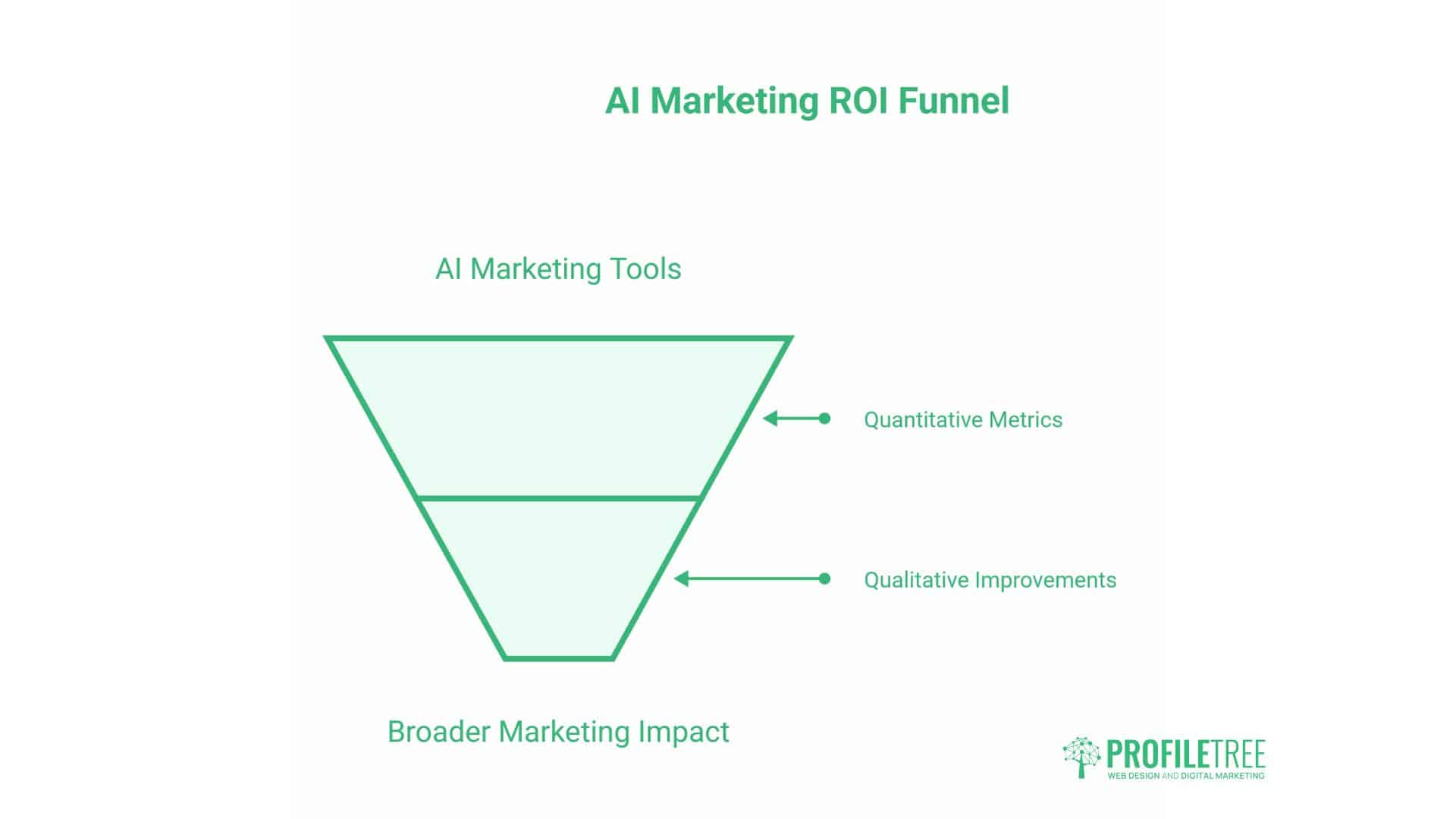
Measuring return on investment from AI marketing tools requires looking beyond simple cost calculations to understand broader impact on marketing efficiency and effectiveness. UK businesses need frameworks that capture both quantitative metrics and qualitative improvements.
Direct cost savings result from reducing the time spent on specific tasks. If a content optimisation tool reduces the time required to produce blog posts from 4 hours to 2 hours, that represents measurable savings. Multiply this by the monthly content production to calculate the total time savings, and then assign the cost based on staff rates.
Productivity Improvements extend beyond time savings to increased output. If automation tools allow a two-person team to manage work that previously required three people, that represents a productivity gain even if individual tasks don’t necessarily take less time.
Quality Enhancements prove harder to measure but matter significantly. If AI tools help produce content that ranks better, generates more engagement, or converts at higher rates, those improvements compound over time. Track content performance metrics before and after adopting an AI tool to quantify these improvements.
Opportunity Costs represent the value of work that becomes possible when AI tools handle routine tasks. If automating social media scheduling frees time for strategy development or campaign planning, the value comes from those strategic activities rather than the automation itself.
Implementation Costs must be factored into ROI calculations honestly. Account for platform subscriptions, integration development, training time, and the productivity dip that typically occurs during early adoption. Many AI marketing tools take 3-6 months to deliver a positive ROI after accounting for these initial costs.
At ProfileTree, we encourage clients to establish baseline metrics before implementing AI marketing tools, then track performance over 6-12 months. Short-term assessments often miss the compound benefits that emerge as teams become proficient with new platforms and as AI systems learn from growing data sets.
Compliance Considerations for UK Businesses
UK businesses utilising AI marketing tools must navigate specific regulatory requirements related to data protection, automated decision-making, and consumer rights. These aren’t obstacles to avoid but responsibilities to address through proper tool selection and implementation practices.
UK GDPR Requirements apply to any marketing activity involving personal data. When AI tools process customer information, businesses must understand exactly what data is used, how it’s processed, and where it’s stored. Tools that move data outside the UK require additional safeguards under data transfer regulations.
Algorithmic Impact Assessments become necessary when using AI for automated decision-making that has a significant impact on individuals. If your AI marketing tools automatically reject customers, adjust pricing, or make other consequential decisions, you need documentation showing these decisions are fair, transparent, and explainable.
Consumer Rights under UK regulations include the right to be informed when automated decision-making affects them and to request a human review of automated decisions. Marketing teams using AI tools need processes for handling these requests rather than treating them as edge cases.
Information Commissioner’s Office (ICO) Guidelines on AI provide specific direction for UK businesses. The ICO emphasises transparency, fairness, and accountability in AI systems, requiring businesses to understand and be able to explain AI-driven decisions rather than treating systems as black boxes.
Human-in-the-Loop Safeguards help mitigate risks from AI errors or hallucinations. For important customer communications or decisions, maintain human review processes rather than relying solely on AI systems to operate entirely autonomously. This protects both customers and your business from costly mistakes.
ProfileTree recommends conducting privacy impact assessments when implementing new AI marketing tools, particularly those with access to customer data or those making automated decisions about customer interactions. This proactive approach identifies compliance issues before they become problems.
Future Trends in AI Marketing Tools
The AI marketing tool landscape continues evolving rapidly. UK businesses planning AI investments benefit from understanding likely developments that will shape the next generation of marketing technology.
Agentic AI Systems represent a shift from tools that assist humans to systems that execute complete workflows autonomously with minimal intervention. Rather than generating content that requires human editing, agentic AI might research topics, produce content, optimise it based on performance data, and schedule publication—all without human involvement beyond initial instruction.
Hyper-personalisation at scale becomes possible as AI systems process increasingly granular data about individual customer preferences and behaviours. Moving beyond segment-based personalisation, next-generation tools will deliver unique experiences to individual customers based on their specific context and history.
Predictive Campaign Planning uses AI to forecast campaign performance before launch based on historical data, market conditions, and competitive activity. This allows strategic adjustments during planning rather than reactive optimisation after deployment.
Voice and visual search optimisation become necessary as more consumers use voice assistants and image search to find products and services. AI marketing tools will need capabilities for optimising content for these emerging search modalities.
Cross-platform attribution, utilising AI to track customer journeys across multiple touchpoints and channels, is becoming increasingly sophisticated. Understanding how different marketing activities contribute to outcomes helps optimise budget allocation and strategy.
Ethical AI and Transparency Requirements will likely increase as regulators respond to AI proliferation. Tools that can demonstrate fairness, explainability, and respect for consumer rights will have competitive advantages as regulations develop.
UK businesses planning long-term AI marketing strategies should select platforms that demonstrate a commitment to ongoing development and adaptation to regulatory requirements. The tools that succeed in 2026 will be those that evolve in tandem with changing business needs and regulatory frameworks.
Practical Implementation Checklist
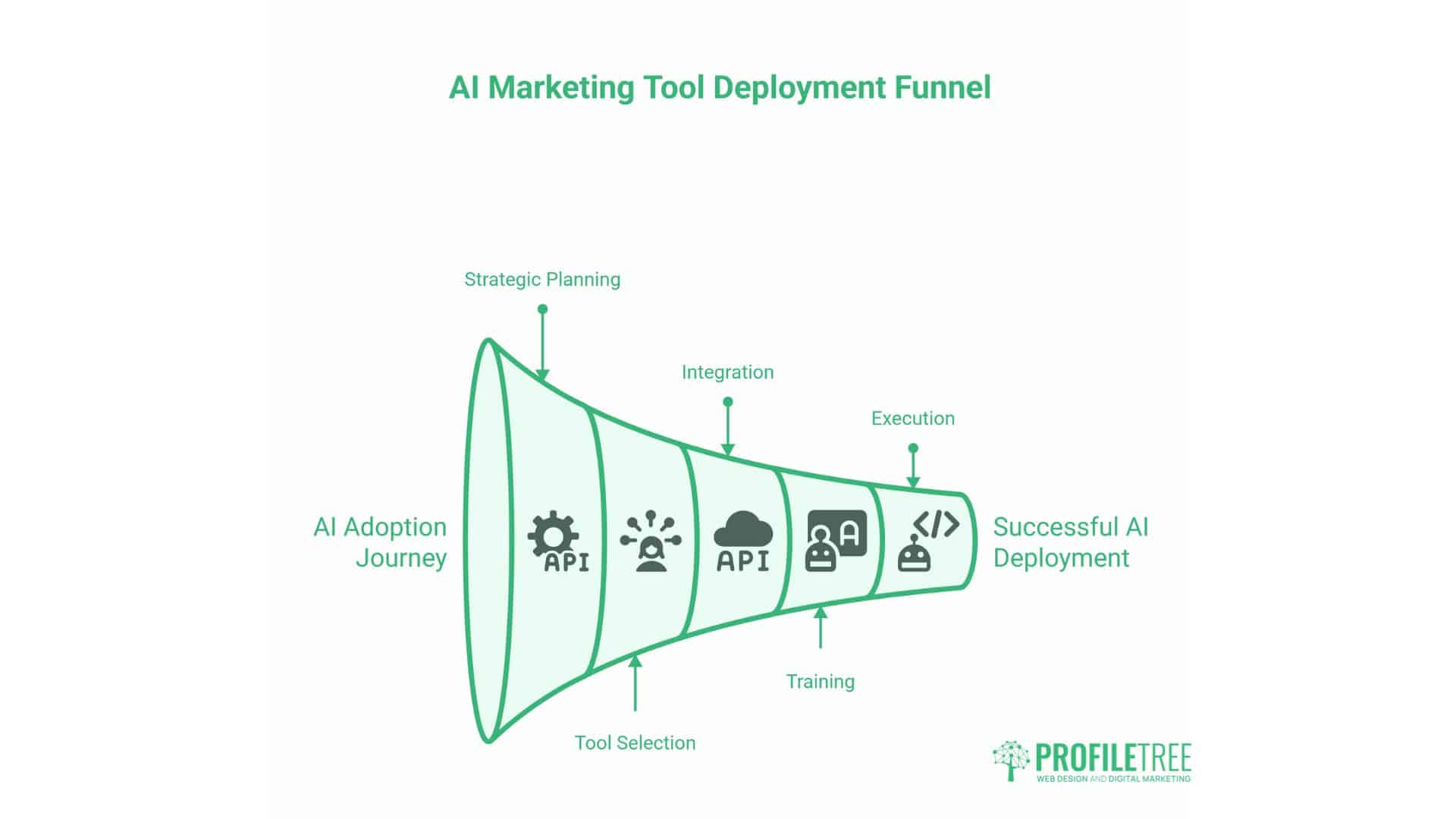
Successfully deploying AI marketing tools requires a systematic approach to preparation and implementation. This checklist provides a practical framework for UK businesses approaching AI adoption.
Pre-Implementation Phase:
- Audit current marketing processes to identify specific bottlenecks or inefficiencies
- Document existing data sources, formats, and quality issues
- Review the technology stack to understand integration requirements
- Establish baseline performance metrics for areas where AI tools will be deployed
- Research UK GDPR compliance requirements specific to planned AI use
- Allocate budget for platform subscriptions, integration work, and training
- Identify the internal champion responsible for implementation success
Tool Selection Phase:
- Create a shortlist of platforms addressing identified needs
- Request demonstrations focusing on specific use cases relevant to your business
- Test integration capabilities with your existing systems
- Review compliance documentation and data handling practices
- Check references from UK businesses using the platform
- Calculate the total cost of ownership, including hidden implementation costs
- Negotiate contracts with attention to data location and exit provisions
Deployment Phase:
- Start with a pilot project in a limited scope
- Establish integration with one or two key systems before expanding
- Train core users thoroughly on platform capabilities and limitations
- Document processes and best practices as they develop
- Schedule regular check-ins to address issues before they become blockers
- Monitor baseline metrics to track early performance impact
- Collect feedback from team members using the platform daily
Optimisation Phase:
- Review performance data against baseline metrics quarterly
- Identify underutilised features that might provide additional value
- Expand usage to additional use cases based on pilot success
- Refine integration with additional systems as needs emerge
- Conduct a formal ROI assessment at the six-month mark
- Adjust training based on actual usage patterns and challenges
- Document successful approaches to share across the team
Choosing the Right AI Marketing Partner
Implementing AI marketing tools often requires expertise beyond what internal teams possess, particularly for complex platforms or sophisticated integrations. UK businesses benefit from working with digital agencies that are experienced in AI deployment, rather than attempting to do everything internally.
Agency Experience Matters when evaluating potential partners. Look for agencies that have deployed the specific AI tools you’re considering for multiple clients rather than those offering general AI expertise. Practical experience with particular platforms provides insights that generic knowledge cannot match.
Integration Capabilities should be verified through concrete examples of previous work. Request case studies showing how an agency integrated AI marketing tools with similar technology stacks to yours. The technical complexity often lies in integration rather than platform operation.
Training and Support Offerings vary significantly across agencies. Some provide initial setup and then leave ongoing operation to clients, whilst others offer continued optimisation and support. Understand what’s included in the engagement scope versus what requires additional investment.
Understanding the UK market is crucial for agencies implementing AI marketing solutions. Platforms developed for the US market often require adaptation for UK contexts, including regulatory requirements, market size, and consumer expectations. Agencies with UK client experience understand these nuances.
Realistic Timelines and Expectations separate professional agencies from those overselling AI capabilities. Be cautious of promises that claim immediate transformation or guaranteed results. Professional agencies outline implementation timelines, acknowledge likely challenges, and set realistic expectations about when benefits will materialise.
At ProfileTree, our approach to AI marketing tool implementation centres on integration with broader digital strategy. We work with clients across Northern Ireland, Ireland, and the UK to deploy AI tools that complement existing marketing programmes, website infrastructure, and business objectives. Our experience in web design, video production, content marketing, and SEO provides context for selecting AI tools that enhance overall digital presence, rather than operating in isolation.
Common AI Marketing Tool Mistakes to Avoid
UK businesses implementing AI marketing tools commonly encounter predictable challenges. Understanding these patterns helps avoid expensive mistakes during adoption.
Tool-First Rather Than Strategy-First Thinking occurs when businesses select AI platforms before defining the problems they need to solve. This leads to the purchase of sophisticated tools that don’t address actual business needs. Begin with clear objectives, and then evaluate which tools best support those objectives.
Underestimating Data Requirements proves costly when businesses discover their customer data isn’t clean, complete, or organised sufficiently for AI tools to function effectively. Conducting data audits before platform selection helps prevent the discovery of incompatibilities after purchase.
Insufficient Training Investment results in expensive platforms being underutilised because team members don’t understand capabilities or optimal usage patterns. Budget time and resources for proper training rather than expecting intuitive adoption.
Integration Assumptions cause problems when businesses assume AI tools will easily connect with existing systems without verifying integration capabilities during evaluation. Confirm specific integration requirements before committing to platforms.
Over-automation without human oversight creates risks when businesses allow AI systems to operate autonomously in customer-facing roles without establishing clear review processes. Maintain human oversight of consequential decisions, regardless of the level of automation sophistication.
Short-term ROI Expectations lead to abandoning tools before they deliver value. Most AI marketing platforms require 3-6 months of data collection and optimisation before providing significant returns. Patient implementation typically yields better results than rushed deployment followed by quick abandonment.
Regulatory Compliance Afterthought creates legal exposure when businesses deploy AI tools without considering UK GDPR requirements, data protection obligations, or consumer rights. Address compliance during selection rather than after implementation.
ProfileTree’s experience supporting UK businesses through AI adoption shows these mistakes are preventable through proper planning, realistic expectations, and systematic implementation approaches. The technology works when deployed thoughtfully as part of a considered strategy rather than rushed adoption chasing trends.
Final Recommendations
AI marketing tools have matured from experimental technology to practical business systems. The nine platforms covered (GrowthBar, Customers.ai, Smartly.io, ManyChat, Brandwatch, Beacons AI, Ocoya, Otter AI, and MeetGeek) each address specific marketing challenges. Start with a clear understanding of what problems you need to solve. Identify specific bottlenecks in your current operations, such as content production time, lead qualification efficiency, and social media management capacity, and then evaluate which platforms address those specific challenges.
Consider integration requirements carefully. AI marketing tools deliver maximum value when connected to existing systems rather than operating in isolation. Verify the integration capabilities of any platform with your specific technology stack before committing to it. Approach implementation as a project that requires planning, resources, and effective change management. Organisational readiness (encompassing data quality, team capability, and process adaptation) determines outcomes more than platform sophistication.
Budget time and resources for training and optimisation. Most AI marketing tools require weeks or months before teams extract full value. Patient implementation with systematic optimisation typically yields better results than rushed deployment. For businesses across Northern Ireland, Ireland, and the UK seeking guidance on AI marketing tool selection and implementation, ProfileTree provides consulting and support across the complete digital marketing spectrum, helping you select and implement AI tools that strengthen your overall digital presence.
FAQs
What’s the difference between AI marketing tools and traditional marketing automation?
Traditional marketing automation follows predetermined rules and workflows set by humans. AI marketing tools learn from data, identify patterns, and optimise decisions continuously without constant human intervention. AI can handle complexity and adapt to changing conditions that would overwhelm rule-based systems.
Do I need technical expertise to use AI marketing tools?
Most modern AI marketing platforms design interfaces for marketing professionals rather than technical specialists. However, extracting maximum value typically requires an understanding of basic concepts related to data management, integration, and performance measurement. Investing in training helps non-technical teams utilise these tools effectively.
How long does it take to see ROI from AI marketing tools?
Most businesses see initial time savings within weeks, but measurable ROI typically requires 3-6 months. AI systems need time to collect data, learn patterns, and optimise performance. Patient implementation, when measured systematically, typically shows value by the six-month mark.
Are AI marketing tools compliant with UK GDPR?
Compliance depends on specific platform implementation rather than the technology itself. When evaluating tools, verify where data is stored, how it’s processed, and what controls exist around automated decision-making. Professional platforms serving UK markets provide clear compliance documentation.