
Hiring a Web Design Company: 15 Smart Questions to Ask
Table of Contents
Hiring a web design company is one of the most consequential decisions you’ll make for your business’s online presence. Done well, it results in a website that generates enquiries, builds trust, and grows with your business. Done badly, it means months of delays, a website you don’t own, and a bill that keeps growing. This guide gives UK and Irish SME owners a practical framework for evaluating agencies, asking the right questions, and avoiding the traps that catch out even experienced buyers.
The market for web design services is crowded. There are thousands of agencies, freelancers, and offshore providers competing for your budget. Most of them will tell you what you want to hear in the sales meeting. The questions to ask a web design company in this guide are designed to cut through that and reveal how a provider actually operates before you sign anything.
15 Questions to Ask Before Hiring a Web Design Company
The initial consultation is your best opportunity to assess whether a web design agency is right for your business. These 15 questions cover every stage of the relationship: web design cost, capability, the web design process, ownership, and long-term support. Work through them in sequence and pay close attention to how any agency responds to the ones they find uncomfortable.
1. How much will this cost, and how is pricing structured?
Web design cost in the UK ranges from around £1,500 for a basic template build to £50,000 or more for a fully bespoke platform. The number itself tells you little; what matters is what’s included. Ask whether the quoted price is fixed or hourly, what happens if scope changes, how additional features are charged, and whether hosting, maintenance, and SEO are included or billed separately. A reputable web design company will give you a clear, itemised proposal rather than a vague estimate. If you can’t get a straight answer on web design cost before signing, that vagueness won’t improve once the project starts.
2. Can I see examples of websites you’ve built for businesses similar to mine?
A portfolio tells you far more than a brochure. Look for projects in your sector or at a similar scale to yours. Check whether those sites load quickly, work on mobile, and reflect the kind of design quality you’re aiming for. If a web design company can’t point you to live, working examples of relevant projects, treat that as a warning sign, regardless of how impressive their pitch deck looks.
3. Who will actually work on my project?
Some agencies win projects with senior staff in the pitch and then hand the work to juniors or contractors once the contract’s signed. Ask specifically who will be your day-to-day contact, who will design the site, who will build it, and who will write any copy. Find out whether any elements are outsourced, and to whom. The answers will tell you a great deal about how the web design agency is structured and where risks might sit.
4. How do you measure the success of a website build?
A professionally built website isn’t a design exercise; it’s a commercial tool. Ask how the agency defines and measures success. Do they track keyword rankings, conversion rates, bounce rates, or revenue? Do they provide post-launch reporting? A web design company that focuses entirely on aesthetics and ignores performance metrics is unlikely to build something that generates business for you.
5. What content management system do you use, and why?
The platform your website runs on affects how easy it is to update, how well it performs in search, and how much the web design process costs long-term. Ask why the agency recommends a particular platform. Beware of agencies pushing a proprietary CMS you’ve never heard of: these lock you in indefinitely. Well-supported open platforms give you flexibility and keep your total web design cost lower.
6. Who owns the website and the code once the project is complete?
Under UK law, the creator of software typically owns the intellectual property unless a contract explicitly transfers it. Many business owners assume paying for a website means they own it outright. That isn’t always the case. When hiring a web design company, ask for written confirmation that full intellectual property transfers to you on final payment, covering both design assets and code. This single point has caused serious problems for businesses that have tried to move to a new agency and found they couldn’t take their website with them.
7. How do you approach SEO during the build?
A website that looks good but can’t be found in search is a wasted investment. Ask whether SEO is part of the web design process or bolted on later. Specifically, ask about URL structures, page speed, mobile-first development, and how metadata is handled. UK web design agencies that treat SEO as an afterthought tend to deliver sites that need considerable rework before they rank. For broader support, our search engine optimisation services cover the full picture from technical foundations through to content and authority building.
8. What is your process from brief to launch?
Ask for a written summary of every stage in the web design process: discovery, wireframes, design, development, content, testing, and launch. Find out how many revision rounds are included and what happens if a deadline is missed. A well-run web design agency will have a documented process they can walk you through clearly. Vagueness here often indicates poor project management, which shows up later as delays and disputes.
9. How will you handle GDPR compliance and data privacy?
UK and Irish businesses are subject to GDPR requirements that many generic agencies overlook. Your website must handle personal data lawfully, display a compliant privacy policy, and manage cookie consent correctly. When hiring a web designer or agency, ask specifically about cookie consent management, where form data is stored, and whether they have experience with ICO or Data Protection Commission requirements. A web design company that dismisses GDPR as a technicality creates a legal risk for your business.
10. What happens if the project runs over time or budget?
Scope creep is one of the most common causes of web design project failures. Ask how changes to the original brief are handled, whether there’s a formal change request process, and how additional costs are communicated before they’re incurred. Understand what the agency’s policy is if they miss a milestone, and what remedies are available to you. Get these answers in writing as part of the contract, because verbal assurances in a sales meeting aren’t enforceable.
11. Do you provide post-launch support and maintenance?
A website needs ongoing attention: security updates, performance monitoring, content changes, and periodic rebuilds as platforms evolve. Ask whether the web design company offers a post-launch retainer, what it covers, and what the response time is for urgent issues. Ask what happens if you don’t take a retainer. The best agencies treat launch as the beginning of the relationship, not the end of the project. A clear post-launch plan is one of the most important questions to ask a web design company before signing.
12. Can you provide three to five client references I can speak to directly?
A reputable web design agency will have no hesitation in connecting you with past clients. Speaking directly with references gives you information that no portfolio or testimonial can provide. Ask them specifically about communication during the project, how problems were handled, whether the final website met expectations, and whether they’d work with the agency again.
13. How do you stay current with web design standards and technology?
When hiring a web designer or evaluating a web design company, ask what resources they use to stay current: conferences they attend, communities they participate in, and how they handle platform updates. An agency that can’t answer this question clearly is likely using methods and tools several years behind current standards, which affects the quality of the web design process and the long-term viability of what they build.
14. What differentiates your agency from others at a similar price point?
Listen critically to the answer. Generic claims about passion, creativity, or client service aren’t differentiators. Look for specific, verifiable strengths: sector expertise, a particular technical capability, a track record in conversion rate optimisation, or a genuinely distinctive process. If the answer sounds like marketing copy, dig deeper with follow-up questions about actual results.
15. What resources will be dedicated to my project?
Understand the size of the team working on your project, their individual roles, and how their time is allocated across other accounts. A small web design agency juggling twenty clients simultaneously will give your project a fraction of the attention it needs. Ask for a timeline that shows when each resource is engaged, and confirm who your single point of contact is throughout the web design process.
UK Web Design Pricing and Agency Types
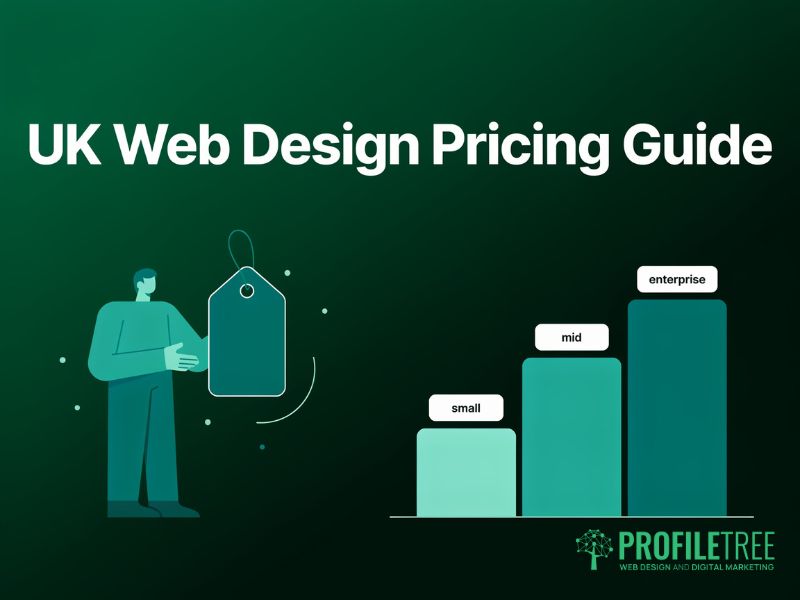
Understanding web design cost structures and the differences between provider types before entering any commercial conversation puts you in a stronger position. Whether you’re hiring a web design company for the first time or switching providers, knowing what to expect at each price point saves you time and filters out agencies that aren’t suited to your budget.
| Project Type | Typical UK Web Design Cost (£) | Timescale | Best For |
|---|---|---|---|
| Template build (freelancer or small agency) | £1,500 – £5,000 | 4 – 8 weeks | Start-ups, simple brochure sites |
| Custom SME website | £5,000 – £20,000 | 8 – 16 weeks | Growing businesses, lead generation |
| Mid-market platform | £20,000 – £50,000 | 16 – 24 weeks | E-commerce, booking systems, APIs |
| Enterprise / bespoke | £50,000+ | 6 – 12 months | Large organisations, complex integrations |
Regional variation in UK web design cost is notable. London agencies typically charge a 20 to 40 per cent premium over equivalent-quality agencies in Belfast, Manchester, or Edinburgh. Northern Ireland agencies offer a strong value proposition: lower overheads than London or Dublin, but operating under UK and Irish legal frameworks, in the same time zone, and with genuine familiarity with the local business environment. That combination is one reason ProfileTree, a Belfast-based digital agency, works with businesses across Northern Ireland, Ireland, and Great Britain.
Agency vs. freelancer vs. offshore: comparing your options
Each option carries genuine trade-offs. The right choice when hiring a web designer or a full web design agency depends on your budget, risk tolerance, and how much ongoing support you’ll need after launch. UK web design agencies bring team depth and process maturity; freelancers offer direct access and lower cost; offshore providers trade quality assurance and communication reliability for lower day rates.
| Criterion | UK Web Design Agency | Freelancer | Offshore Provider |
|---|---|---|---|
| Web design cost | Higher | Medium | Lower |
| Reliability | High (team cover) | Variable | Variable |
| Communication | Structured | Direct but limited | Time zone challenges |
| GDPR compliance | Typically strong | Depends on the individual | Often weak |
| Post-launch support | Retainer available | Limited | Often difficult |
| IP ownership clarity | Standard in contract | Must negotiate | High risk |
For most SMEs, hiring a web design company makes sense once the budget exceeds around £8,000 or the project involves e-commerce, custom integrations, or post-launch support. Below that, a freelancer with a proven web design process can deliver strong results at a lower total web design cost.
Red Flags to Watch for When Hiring a Web Design Company
Most red flags appear before the contract is signed. When hiring a web design company, knowing what to watch for can save you months of problems and real cost. Whether you’re evaluating a web designer, a full web design agency, or a freelancer, these are the patterns that consistently precede poor outcomes.
Proprietary CMS or platform lock-in
If a web design company insists on building your website on a platform it owns or controls, the risk is real. You may be unable to take your website to another provider without rebuilding it from scratch. The long-term web design cost of being locked into a proprietary system is almost always higher than choosing an open, widely supported platform from the outset. Always ask whether the platform is open-source and widely supported, and get a clear answer before committing.
No discovery phase or upfront audit
Professional agencies invest time in understanding your business, your audience, and your goals before they begin the web design process. A fixed-price quote delivered within 24 hours of first contact, with no discovery conversation, is a sign that the agency is selling a product rather than solving a problem. As Ciaran Connolly, founder of ProfileTree, explains:
“The discovery phase is where we earn the right to design anything. Without it, you’re guessing at what the client actually needs, and the client has no way of knowing whether they’re getting value. Any agency that skips it is either very experienced with an identical brief, or cutting corners.”
— Ciaran Connolly, Founder, ProfileTree
Vague contract terms on intellectual property and maintenance
Contracts that use passive language around intellectual property, or that omit post-launch support terms entirely, tend to become expensive problems later. Before signing, confirm in writing: who owns the code, what the support terms are, what happens if you want to move the site, and what constitutes a completed project. If the web design company can’t give you clear written answers to these questions, that’s a red flag in itself.
No mention of SEO or performance during the sales conversation
A web design company that doesn’t raise page speed, mobile optimisation, or basic on-page SEO during the web design process discussion is almost certainly not building with search in mind. You can end up with a visually impressive website that ranks for nothing and generates no organic traffic. If an agency doesn’t raise this proactively, ask them directly how they handle it. Their answer will tell you a great deal about their understanding of what a website is actually for.
References they can’t or won’t provide
Any web design agency confident in its work will connect you with past clients willingly. Reluctance to provide references, or providing testimonials in writing but refusing direct conversations, is a signal that the reality of working with them may differ from the sales pitch. When hiring a web design company, always speak to at least two or three past clients before committing.
Legal and Post-Launch: The Steps Most Businesses Miss
Many business owners treat launch day as the end of the project. In practice, it’s closer to the halfway point. Getting the legal and post-launch elements right protects your investment and prevents the kind of problems that force costly rebuilds. These steps matter whether you’re hiring a web design company for the first time or managing a rebrand.
Intellectual property and contract assignment
Under UK law (Copyright, Designs and Patents Act 1988), the agency owns the intellectual property it creates unless the contract explicitly assigns it to you. Even if you’ve paid in full, you may not legally own your website without a written IP assignment clause covering both design assets and code. This is non-negotiable and worth having a solicitor review. It’s one of the most important questions to ask any web design company before work begins.
GDPR compliance and data handling
UK businesses under UK GDPR and Irish businesses under EU GDPR must have a website that handles personal data lawfully. This covers contact forms, analytics, cookie consent, email sign-ups, and payment processing. Your web design agency should build cookie consent management into the web design process from the outset and document what data is collected and where it’s stored. Post-launch, you’re responsible for keeping the privacy policy current. Hiring a web designer or agency with no GDPR knowledge creates a legal liability from day one.
Hosting, backups, and security
The quality of your hosting affects page speed, uptime, and search performance. Ask whether hosting is included in any post-launch retainer, where servers are located, and how security vulnerabilities are handled. UK and Irish businesses should look for servers in the UK or the EU for GDPR data residency compliance. Our website hosting and management services cover uptime monitoring, security patching, and regular backups as part of a managed post-launch package.
Ongoing digital marketing and web design strategy
A website without traffic generates nothing. The build is the foundation; driving qualified visitors to it is what generates returns. Once your site’s live, the priorities are a structured content plan, local and technical SEO, and a consistent social presence. Our team works with businesses across Northern Ireland, Ireland, and the UK to develop long-term digital marketing strategies that connect website performance to commercial outcomes. For businesses building their internal team’s capability, we also offer practical digital training programmes covering search, content, and analytics.
FAQs
1. How much does it cost to hire a web design company in the UK?
Web design cost in the UK ranges from £1,500 for a basic template build to £50,000 or more for a fully bespoke platform. A typical SME project with a professional web design agency costs between £5,000 and £20,000 and takes eight to sixteen weeks. Northern Ireland and regional UK agencies offer lower rates than London without the communication challenges of offshore providers. Always ask for a fully itemised breakdown of web design costs before signing.
2. Is it better to hire a web design agency or a freelancer?
It depends on the scale and complexity of your project. Hiring a web designer independently can be excellent value for a straightforward brochure site with a limited budget. A web design agency brings a team of specialists and offers more continuity if a key person is unavailable. For any project involving custom functionality, e-commerce, or ongoing post-launch support, a web design agency is usually the lower-risk choice. The web design process tends to be better documented and accountability clearer with an agency structure.
3. Who owns my website once it is built?
Ownership depends entirely on your contract. Under UK copyright law, the web design company is the default owner of any code it writes unless the contract explicitly transfers intellectual property to you. Always insist on a written IP assignment clause that takes effect on final payment. Without it, you may not legally own the website you’ve paid for, which creates serious problems if you want to switch providers. This applies equally when hiring a web designer as a freelancer: intellectual property assignment must always be in writing.
4. What questions should I ask a web design company before hiring?
The most important questions to ask a web design company cover five areas: web design cost and pricing structure, intellectual property ownership, SEO approach, post-launch support terms, and GDPR compliance. Beyond these, speak directly to recent clients, ask who will actually work on your project, and ask for a written timeline before signing. Any web design agency worth hiring will welcome detailed questions rather than deflect them. The web design process should be fully documented before you commit.
5. Do I need to hire a web design company in my city?
Not necessarily. Remote working is standard across the UK web design industry, and most agencies collaborate with clients nationwide without any loss of quality. What matters more than geography is time zone, cultural familiarity with your market, and knowledge of regulations, including GDPR. Northern Ireland and regional UK agencies often provide a better combination of quality, responsiveness, and web design cost than London-based alternatives. When hiring a web design company, focus on process, portfolio, and references rather than postcode.