
Visual-First Storytelling: Driving Effective Brand Communication
Table of Contents
In an era where attention spans are increasingly limited, visual-first storytelling has emerged as a powerful approach for brands looking to make a meaningful impact. This approach prioritises visual elements as the primary vehicle for conveying messages, supported by text rather than led by it. For business owners and marketing decision-makers seeking to elevate their brand communication, understanding the principles of visual storytelling can transform how audiences perceive and engage with your content.
The shift toward visual dominance isn’t simply a passing trend but a fundamental change in how information is consumed and processed. As digital platforms evolve and competition for attention intensifies, businesses that master visual storytelling gain significant advantages in cutting through noise, establishing emotional connections, and ultimately driving conversions. For organisations across Northern Ireland and the UK, developing a sophisticated visual communication strategy has become essential rather than optional in today’s competitive landscape.
The Psychology Behind Visual-first Storytelling
The human brain processes visual information 60,000 times faster than text. This neurological preference for images isn’t simply a matter of convenience—it’s hardwired into our cognitive systems. When potential customers encounter your brand, their first impressions form within millmainly basedd primarily on visual cues.
Visual content triggers emotional responses more effectively than text alone, creating stronger memory imprints and fostering deeper connections with your audience. Research indicates that people retain approximately 10% of the information they hear, but this figure jumps to 65% when paired with relevant imagery.
“Visual storytelling isn’t just about pretty pictures—it’s about creating meaningful connections that drive business outcomes. When implemented strategically, it transforms passive viewers into active participants in your brand narrative,” says Ciaran Connolly, Director of ProfileTree.
Core Elements of Effective Visual-first Storytelling

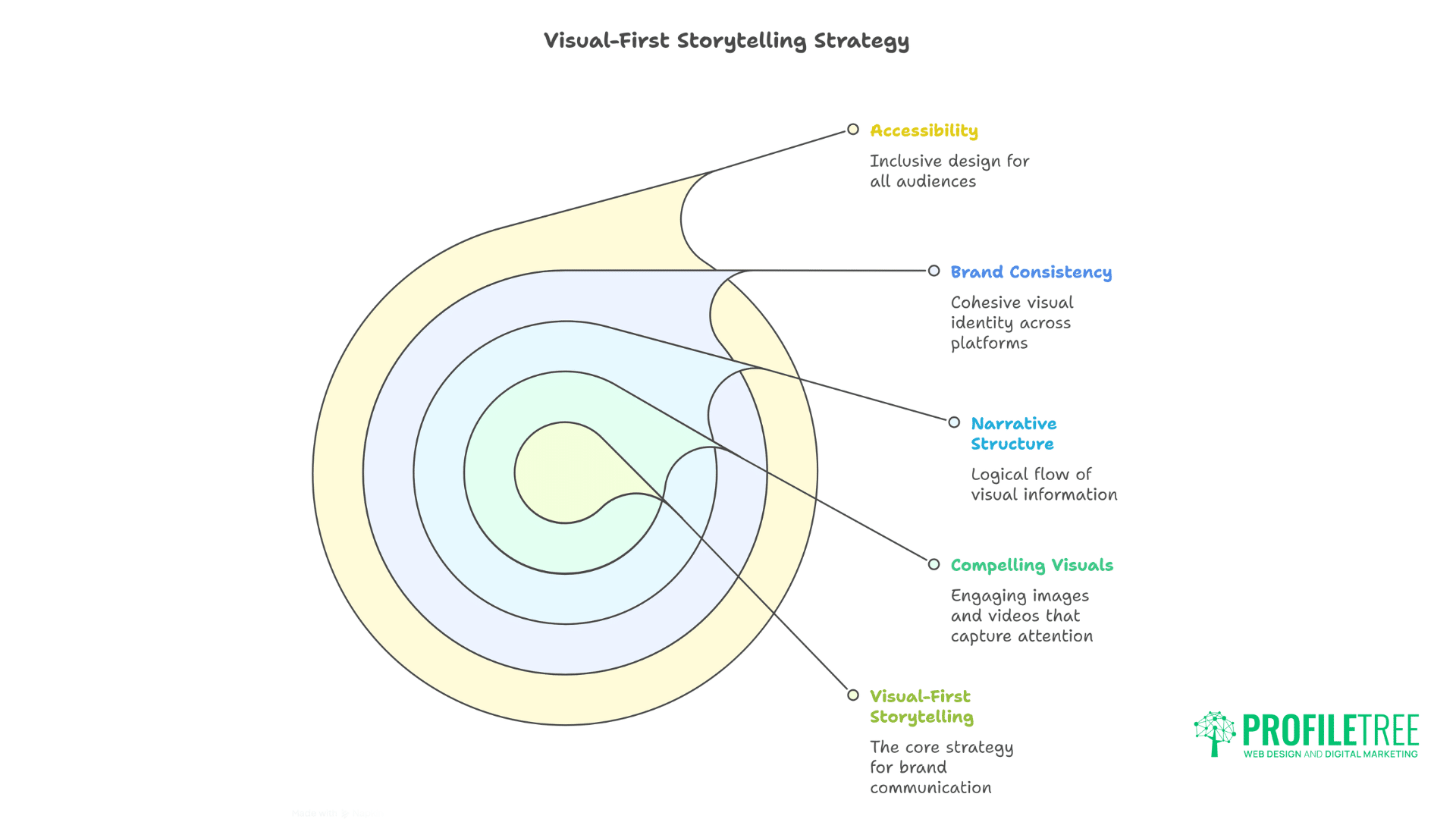
Compelling, effective visual narratives require attention to several fundamental components. Each element contributes to the overall impact and memorability of your visual communication strategy.
These core elements work together to form a cohesive visual language that speaks directly to your audience’s needs, preferences, and emotional triggers.
Consistency in Visual Identity
Successful visual storytelling begins with a cohesive visual identity. This encompasses:
- A distinctive colour palette that evokes specific emotions and reinforces brand recognition
- Typography that reflects your brand personality and maintains readability across platforms
- Imagery style (photography, illustration, or mixed media) that aligns with your brand values
Consistency across these elements helps establish visual coherence, making your content instantly recognisable to your audience regardless of where they encounter it.
Narrative Structure Through Visual Hierarchy
Just as written stories have a beginning, middle, and end, visual stories require thoughtful sequencing. Effective visual hierarchy guides viewers through content in a predetermined order, emphasising key messages while creating a logical flow of information.
This structure can be achieved through:
- Size variation (larger elements draw attention first)
- Strategic use of colour and contrast
- Directional cues that guide the eye naturally through the composition
- Spatial relationships between elements that create rhythm and balance
Authenticity and Relatability
Modern audiences have developed sophisticated filters for inauthentic content. Visual storytelling that features genuine moments, real people (when appropriate), and situations your audience can relate to fosters trust and credibility.
For businesses in Northern Ireland and across the UK, incorporating visual elements that reflect local culture, landscapes, or business environments can significantly enhance relatability and audience connection.
Visual Storytelling Across Different Platforms
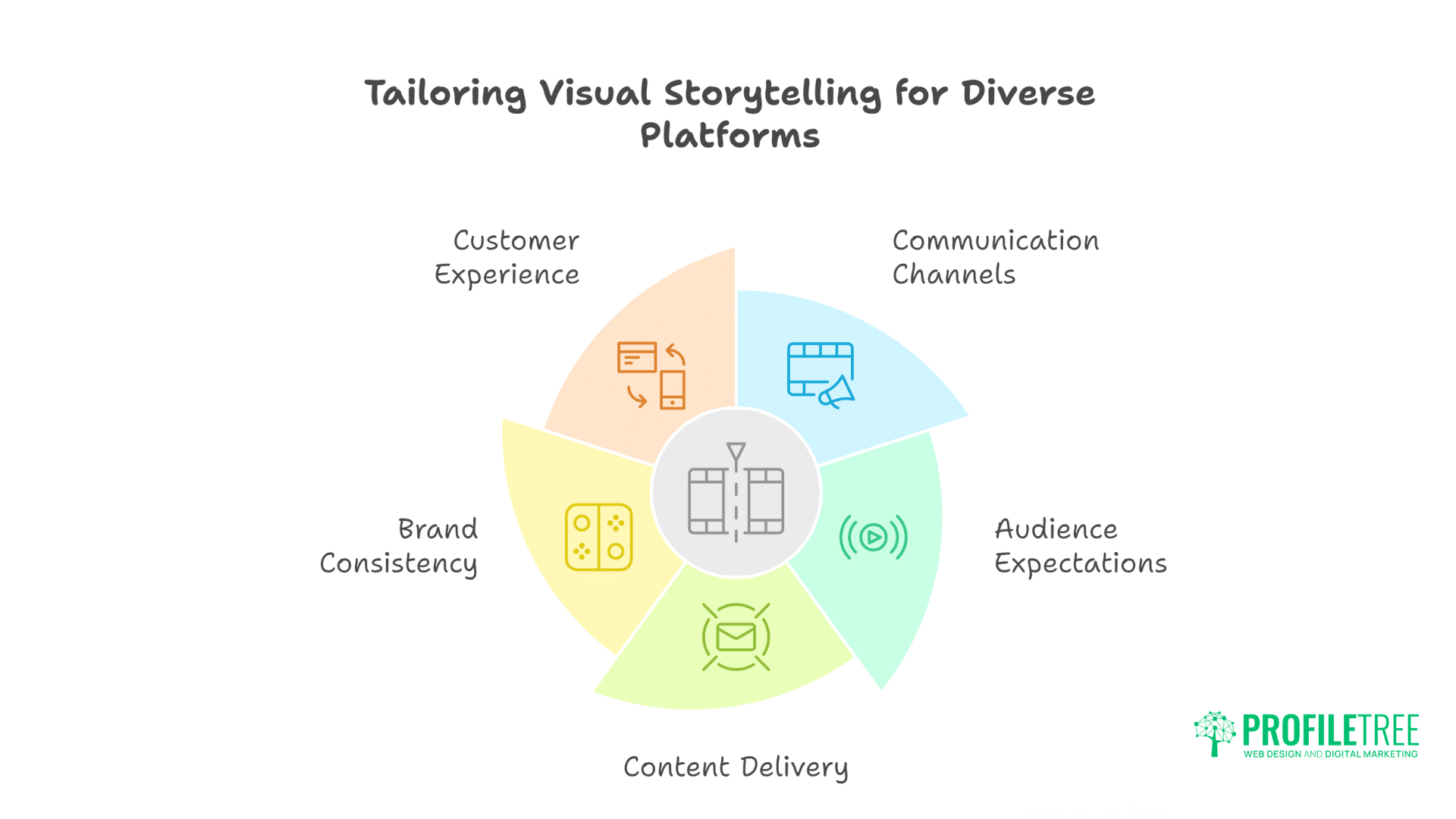
Different communication channels require tailored approaches to visual storytelling. Understanding the unique characteristics and audience expectations of each platform enables more effective content delivery.
Adapting your visual strategy while maintaining brand consistency across these diverse environments is crucial for creating seamless customer experiences.
Social Media
Each social platform has distinct visual requirements and audience expectations:
- Instagram demands high-quality, aesthetically pleasing imagery with careful attention to composition
- LinkedIn audiences respond to professional, value-driven visuals that demonstrate industry expertise
- TikTok and YouTube require video content that captures attention within seconds and maintains engagement
Successful brands adapt their visual storytelling approach to each platform while maintaining consistent brand identity elements across all channels.
Website Design
Your website serves as the central hub of your digital presence, making it a critical vehicle for visual storytelling. Effective websites use:
- Hero images or videos that immediately communicate your value proposition
- Visual journey mapping that guides visitors toward desired actions
- Interactive elements that encourage active participation rather than passive viewing
- Visual case studies that demonstrate real-world applications of your products or services
Email Marketing
Even in email marketing, traditionally text-heavy, visual storytelling principles can dramatically improve performance:
- Carefully selected header images that capture attention and communicate the primary message
- Visual segmentation of content that enhances scanability and information retention
- Animated GIFs or video thumbnails that increase engagement without overwhelming inbox limitations
Measuring Visual Storytelling Effectiveness
Implementing visual-first strategies requires ongoing assessment and refinement. Key metrics to track include:
- Engagement metrics (time spent, interaction rates, social shares)
- Conversion actions following exposure to visual content
- Brand recall and recognition improvements
- Emotional sentiment analysis from audience feedback
For businesses in Belfast and broader UK markets, gathering region-specific feedback can help fine-tune visual approaches to better resonate with local audiences.
Visual Storytelling Tools and Resources
Creating compelling visual stories doesn’t necessarily require extensive in-house capabilities. Businesses can leverage:
- Stock photography and video platforms with curated, high-quality visual assets
- User-generated content that provides authentic perspectives while reducing production costs
- Template-based design tools that maintain visual consistency while enabling quick content creation
However, for truly distinctive visual storytelling, partnering with specialists who understand both creative principles and business objectives delivers optimal results.
The Role of Video in Modern Visual Storytelling
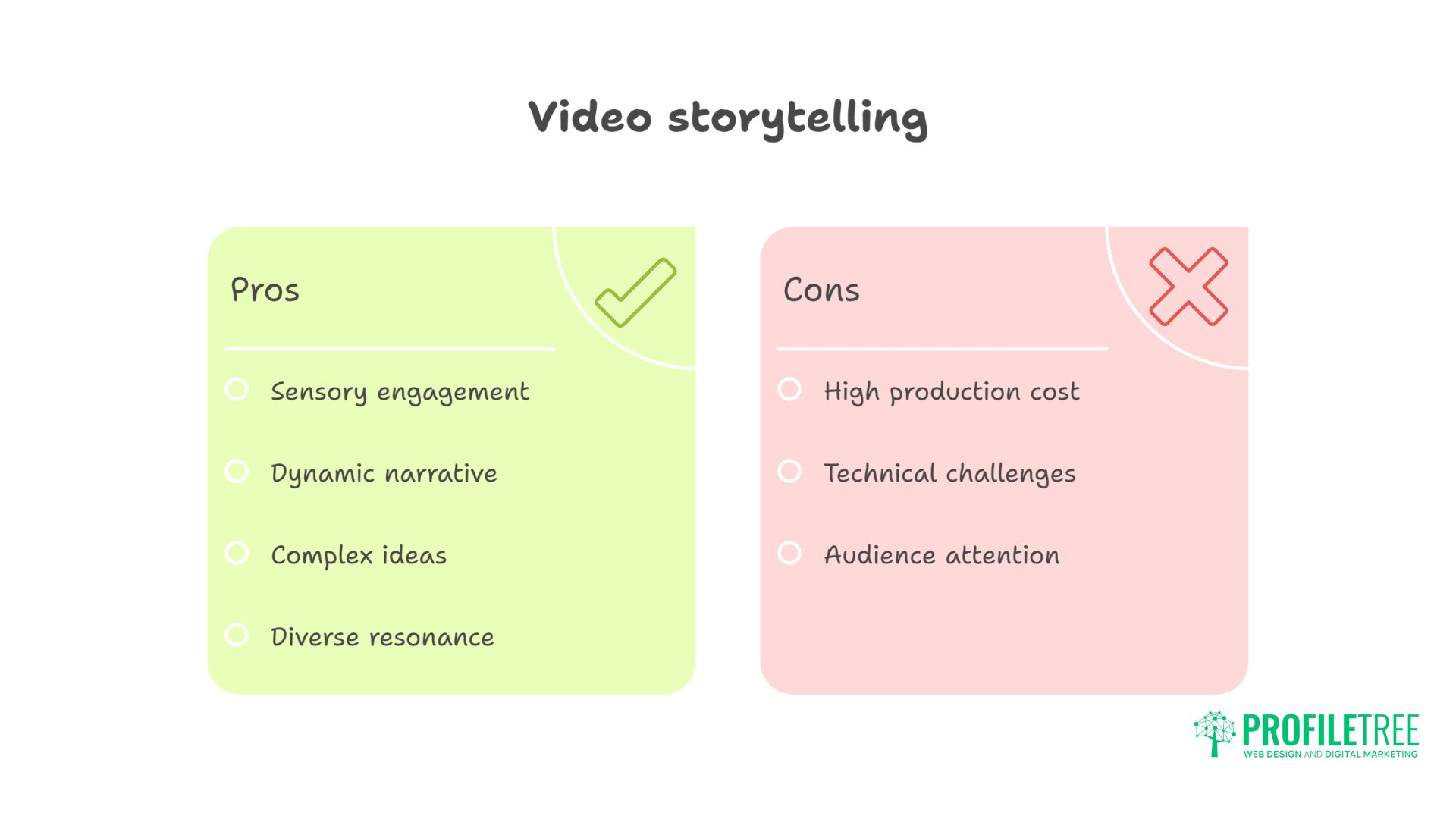
Video has become the dominant format for visual storytelling, combining movement, sound, and narrative in ways static imagery cannot match. Effective video storytelling:
- Captures attention within the first three seconds
- Communicates core messages even without sound (critical for social feeds)
- Maintains optimal pacing that respects audience attention spans while delivering complete narratives
- Incorporates subtle branding elements that reinforce identity without overwhelming content
For SMEs in Northern Ireland and throughout the UK, even modest video production investments can yield significant returns when guided by sound storytelling principles.
Accessibility Considerations in Visual Storytelling
Inclusive visual storytelling ensures your message reaches all potential customers, including those with disabilities. Best practices include:
- Alt text for images that accurately describes visual content for screen readers
- Captions and transcripts for video content
- Sufficient colour contrast for viewers with visual impairments
- Avoiding flashing content that might trigger photosensitive conditions
These considerations not only expand your audience reach but also demonstrate corporate responsibility and compliance with accessibility guidelines.
Integrating Visual Storytelling with Your Marketing Strategy

Visual storytelling shouldn’t exist in isolation from your broader marketing efforts. Integration points include:
- Aligning visual narratives with campaign objectives and messaging
- Coordinating release timing across channels for maximum impact
- Developing visual content that supports each stage of the customer journey
- Creating visual assets that sales teams can leverage in client interactions
This integrated approach ensures consistent experiences as potential clients move through their buying process.
Common Visual Storytelling Pitfalls to Avoid
Many businesses make common mistakes when implementing visual storytelling:
- Prioritising aesthetics over strategic messaging
- Creating visual content disconnected from brand identity guidelines
- Neglecting mobile optimisation for visual assets
- Overloading visuals with too much information
- Failing to adapt visual approaches for different audience segments
Avoiding these pitfalls requires balancing creative expression with disciplined strategy and audience understanding.
How ProfileTree Can Transform Your Visual Storytelling
ProfileTree specialises in helping Northern Ireland and UK businesses develop and implement powerful visual storytelling strategies that drive tangible business results. Our Belfast-based team combines creative expertise with strategic marketing knowledge to deliver visual content that truly resonates with your target audience.
Our Visual Storytelling Services Include:
- Professional Video Production: From concept to final edit, our video team creates compelling content that tells your brand story across social platforms, websites, and marketing campaigns.
- Custom Animation: We develop engaging animated content that simplifies complex concepts and creates memorable brand moments.
- Website Design with Visual Impact: Our web design team creates visually striking, user-centric websites that guide visitors through carefully crafted visual journeys leading to conversion.
- Strategic Content Planning: We help businesses identify key visual storytelling opportunities and develop cohesive plans for implementation across all channels.
- Visual SEO Optimisation: Our specialists ensure your visual content contributes positively to your search visibility and ranking performance.
- Visual Content Training: We provide hands-on training for your team to maintain consistent visual storytelling after implementation.
Why Choose ProfileTree for Visual Storytelling?
Our approach combines creative excellence with commercial pragmatism. We understand that visual storytelling must not only look impressive but also deliver measurable business outcomes. With expertise spanning web design, video production, SEO, and content marketing, we provide integrated solutions rather than isolated visual assets.
As a Belfast-based agency serving clients across Northern Ireland, Ireland and the broader UK, we understand local market dynamics and cultural nuances that affect how visual stories resonate with regional audiences. This local knowledge, combined with our technical capabilities, positions us to deliver visual storytelling that connects authentically with your target market.
Take the Next Step in Your Visual Storytelling Journey
Ready to explore how visual-first storytelling can transform your brand communication and business results? Contact ProfileTree today for a consultation tailored to your specific needs and objectives.
Our team at the McSweeney Centre in Belfast is available to discuss your visual storytelling requirements and how our services can help you achieve your business goals. Whether you’re looking to refresh your brand’s visual approach or develop a comprehensive visual content strategy, we’re here to guide you through the process.
Phone: 028 9568 0364
Email: info@profiletree.com
Visit: ProfileTree, McSweeney Centre, 29 Henry Place, Belfast, BT15 2AY
Transform your brand communication through the power of visual storytelling with ProfileTree—where compelling visuals meet strategic marketing expertise.