
Social Signals and SEO: What Actually Drives Search Visibility
Table of Contents
Social signals are the collective interactions your content earns across social media platforms: shares, likes, saves, comments, and reposts. They are not a direct Google ranking factor, but dismissing them entirely is a mistake SME owners frequently make when trying to understand why their organic traffic is stalling.
The real value of social signals lies in what they trigger downstream. Content that spreads on social platforms attracts the kind of attention that does influence rankings: brand searches, referral traffic, and backlinks from other publishers. Understanding that the chain of cause and effect is more useful than arguing whether social signals “count.”
What Are Social Signals in SEO?
Social signals encompass any measurable interaction that your content or brand receives on a social platform. The most commonly cited types include shares, retweets and reposts, likes and reactions, comments, saves, and brand mentions (tagged and untagged).
Search engines like Google cannot log into social platforms to read private engagement data. What they can do is observe the downstream effects: if a piece of content is widely shared, it tends to generate more branded searches, more inbound links, and more direct traffic. These are factors Google actively measures.
The distinction matters because it changes where you should focus your effort. Building a strategy around raw likes is unlikely to move your rankings. Building a strategy around creating content worth sharing, and then distributing it where your audience actually spends time, produces effects that do.
The Debate: Direct vs. Indirect Ranking Factor
Google has stated consistently, most recently confirmed by John Mueller, that social media shares are not a direct input into its ranking algorithm. Social pages are not treated as backlinks. A post going viral on LinkedIn does not automatically push your website up the search results.
The data shows a strong correlation between social engagement and search visibility. The explanation is not mysterious.
| Effect | Mechanism | Ranking Impact |
|---|---|---|
| Brand search volume | Shares drive people to search your brand name directly | Google treats brand search as a trust signal |
| Backlink acquisition | Widely shared content is more likely to be cited by other publishers | Backlinks remain a confirmed ranking factor |
| Referral traffic | Social traffic increases time-on-site and reduces bounce rates | User engagement metrics influence ranking |
| Content indexation speed | Google crawls pages linked from social sources faster | Faster indexation for fresh content |
| Entity recognition | Consistent brand mentions build semantic associations | Supports E-E-A-T signals over time |
For SMEs in Northern Ireland, Ireland, and the UK, this distinction is practically important. Time spent buying followers or chasing vanity metrics is time not spent on content marketing and SEO work that produces verifiable outcomes.
Social Search: TikTok, Threads, and the Changing Discovery Landscape
The framing of “social signals vs SEO” has become more complicated as the boundary between social platforms and search engines blurs. TikTok now functions as a primary discovery engine for a significant portion of under-35 users in the UK. Instagram’s search function has become the primary way to discover local businesses in some sectors. Threads’ posts are indexed by Google and appear in standard web search results.
The Role of Video Engagement in Search Discovery
Short-form video has changed what social engagement means for SEO in a specific way. A video published on TikTok or YouTube Shorts can appear directly in Google’s mobile search results via the Short Videos carousel. That means a well-optimised video post on a social platform is not just a social asset; it is a potential organic search placement.
This is particularly relevant for businesses investing in video production and YouTube marketing. A video explaining a service, answering a customer question, or demonstrating a process can earn placement in both YouTube search results and Google SERPs simultaneously. The social engagement that video accumulates (saves, shares, comments) feeds the platform’s recommendation algorithm, which, in turn, increases its search visibility on the platform.
ProfileTree’s work in video production and YouTube marketing is directly connected to this principle. A professionally produced video optimised for a specific search query gives a business two discovery channels from a single piece of content.
Dark Social: The Hidden Signals Google Can’t Fully See
Dark social refers to content sharing that happens through private channels: WhatsApp messages, Telegram groups, Slack workspaces, and direct messages on Instagram and LinkedIn. This traffic reaches your website but appears in analytics as direct traffic rather than social referral, making it invisible to most standard reporting.
For B2B businesses in Ireland and the UK, dark social is significant. Professional services, manufacturing companies, and trade businesses frequently share useful content through industry WhatsApp groups or internal Slack channels before anyone publicly links to it. The traffic it generates is real; the attribution is just missing.
The practical implication is that social sharing creates more brand discovery than your analytics dashboard suggests. Content that circulates through professional networks often leads to brand searches that appear in Google Search Console as direct or organic traffic.
A sensible content marketing strategy accounts for dark social by creating content that is genuinely worth passing on privately: sector-specific guidance, clear explainers for complex topics, and practical tools that a professional would want to share with a colleague.
Platform Breakdown: Where UK and Irish Businesses Should Focus
Not all social platforms generate the same downstream SEO effects. The right platform depends on your audience, your content format, and your commercial goals.
LinkedIn for B2B Authority
LinkedIn remains the most effective platform for B2B businesses in the UK and Ireland seeking to generate social signals with genuine SEO consequences. LinkedIn articles are indexed by Google. Posts that earn substantial engagement from professional accounts generate brand searches from people who discover the author or company for the first time. For professional services, training providers, and digital agencies, a consistent LinkedIn presence creates a compounding authority effect over time.
TikTok and Instagram for Consumer-Facing Businesses
For B2C businesses targeting younger demographics in Northern Ireland and the Republic, TikTok and Instagram generate the highest reach per piece of content. The SEO benefit comes from brand discovery: a potential customer sees your content, searches your brand name on Google, finds your website, and converts. That branded search is a trust signal to Google, even if the social platform never passed a direct ranking signal.
The rise of short-form video has accelerated this pattern, particularly in the hospitality, retail, and food sectors, where visual content travels furthest.
Threads vs. X (Formerly Twitter)
X’s declining UK user base and changes to link-preview behaviour since 2023 have reduced its SEO utility for most SMEs. Threads’ posts are indexed by Google and have a cleaner indexation track record at present. For businesses already active on Instagram, Threads requires minimal additional effort and offers indexation benefits. For most SMEs in Northern Ireland and Ireland, it is not a primary platform but a sensible secondary one.
UK and Ireland Context: What Domestic Businesses Need to Know
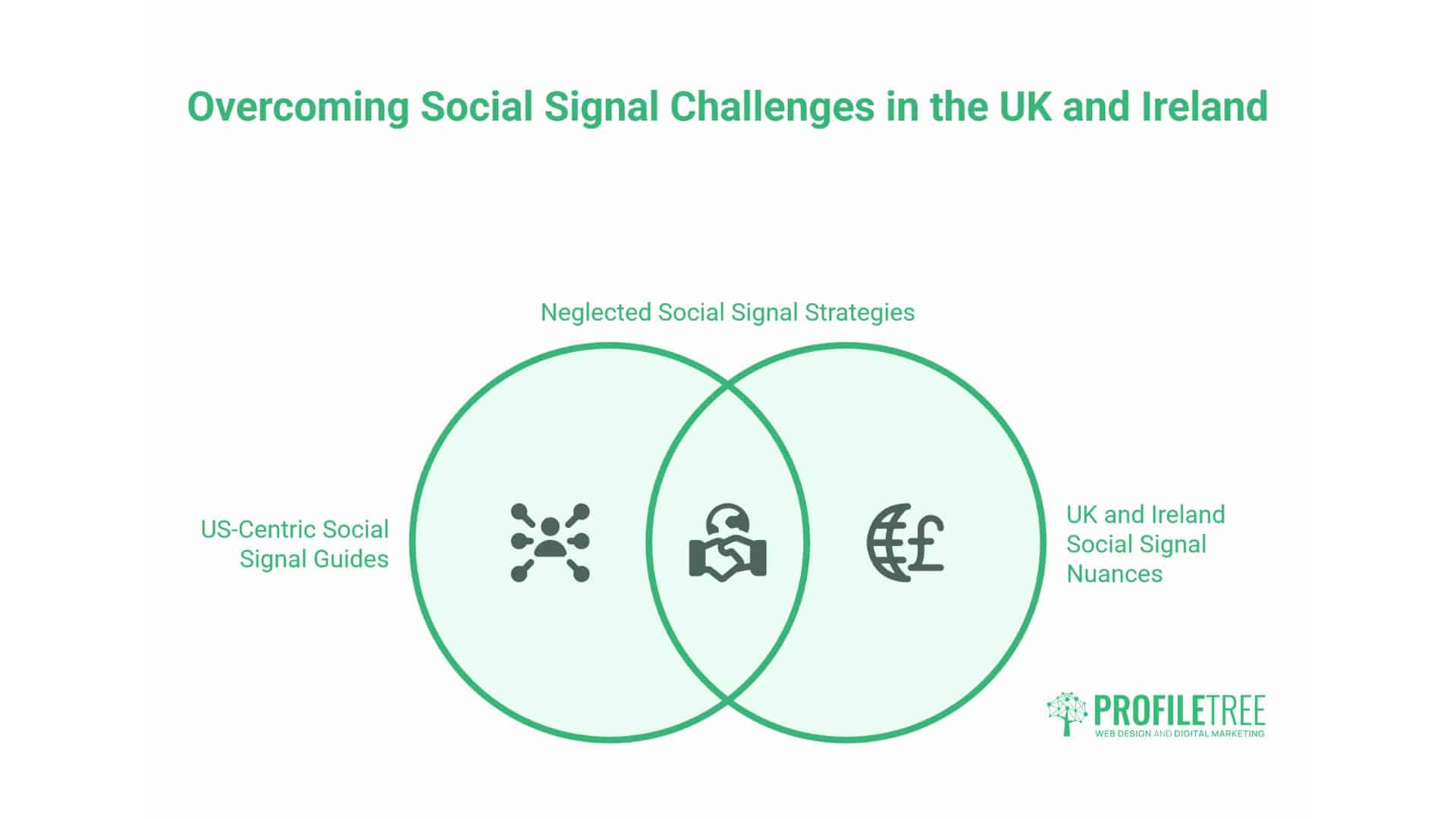
Social signals carry specific complications for UK and Irish businesses that US-centric guides consistently overlook.
The ASA (Advertising Standards Authority) requires clear disclosure when content has been paid for, gifted, or produced in exchange for any benefit. This applies to influencer partnerships, seeded content, and brand ambassador arrangements. Undisclosed promotional content that spreads socially is not generating authentic social signals in Google’s terms; it is generating manufactured engagement that carries regulatory and reputational risk.
Authentic social signals, the kind that carry genuine long-term SEO value, come from content that people choose to share because it is useful, surprising, or directly relevant to a problem they have. For SMEs across Northern Ireland, Ireland, and the wider UK, that typically means producing content that addresses specific local or sector-specific questions rather than generic advice that could apply to any business anywhere.
LinkedIn engagement within regional professional networks (Belfast Chamber of Commerce, InterTradeIreland networks, sector-specific groups on LinkedIn) generates brand associations that national SEO tools do not capture but that matter for local search visibility and referral business simultaneously.
How to Optimise Content for Social Signals That Support SEO
The practical work of building social signals with SEO consequences comes down to content quality and distribution discipline. A piece of content needs to attract attention before it can generate downstream search benefits.
Content formats that earn genuine social sharing in the UK B2B market:
Blog posts and guides that answer a specific, common question in a sector (not generic “top tips” content, but something like “how Northern Irish manufacturers can use LinkedIn to reach procurement managers”)
Original data or compiled research that journalists, bloggers, and industry publications want to reference and link to
Video content that explains a complex topic in under three minutes, distributed on YouTube and repurposed as short-form for TikTok and Instagram Reels
Practical tools, calculators, or checklists that a professional would bookmark and return to
For businesses without the in-house resource to produce this consistently, a structured content marketing strategy is the starting point. Content produced ad hoc, without an editorial plan, rarely earns the kind of sustained social engagement that compounds into SEO benefits.
Technical Social Optimisation
Before any content goes out, verify that your Open Graph tags are correctly set. Open Graph tags control how your page appears when shared on Facebook, LinkedIn, and other platforms: title, description, and image. A poorly configured Open Graph tag means your content appears as a blank or broken preview when shared, and click-through rates from social shares drop significantly.
Twitter Cards (now X Cards) serve the same function for X. Both are straightforward to implement with any modern WordPress SEO plugin and take minutes to check, yet are missing on a surprisingly high proportion of SME websites.
Tracking Social Signals: Tools for UK Marketers
Measuring social signal impact requires looking beyond follower counts and like totals. The metrics that connect social activity to SEO outcomes are:
Branded search volume: Monitor in Google Search Console whether searches for your brand name increase after major content distributions or campaigns. A rising trend in branded search following social activity is evidence that the signals are working.
Referral traffic from social platforms: Track in GA4 under Traffic Acquisition > Referral. Social referral traffic that generates low bounce rates and meaningful engagement time is producing the user behaviour signals that Google can observe.
Brand mentions: Tools such as Google Alerts (free), Mention, or Brand24 track when your brand name appears on the web without a direct link. These unlinked mentions are a form of entity signal that Google’s systems can process.
Backlink acquisition rate: Check in Google Search Console or a third-party tool whether your link profile grows in the weeks following major content distributions. If social sharing is functioning as intended, new referring domains should follow.
A working knowledge of these tools is part of the ProfileTree in digital training for SMEs. For business owners who want to understand their own data rather than rely entirely on an agency, training in GA4 and Search Console is usually the highest-return investment in the first year.
Social Signals and ProfileTree’s Approach to SEO for SMEs
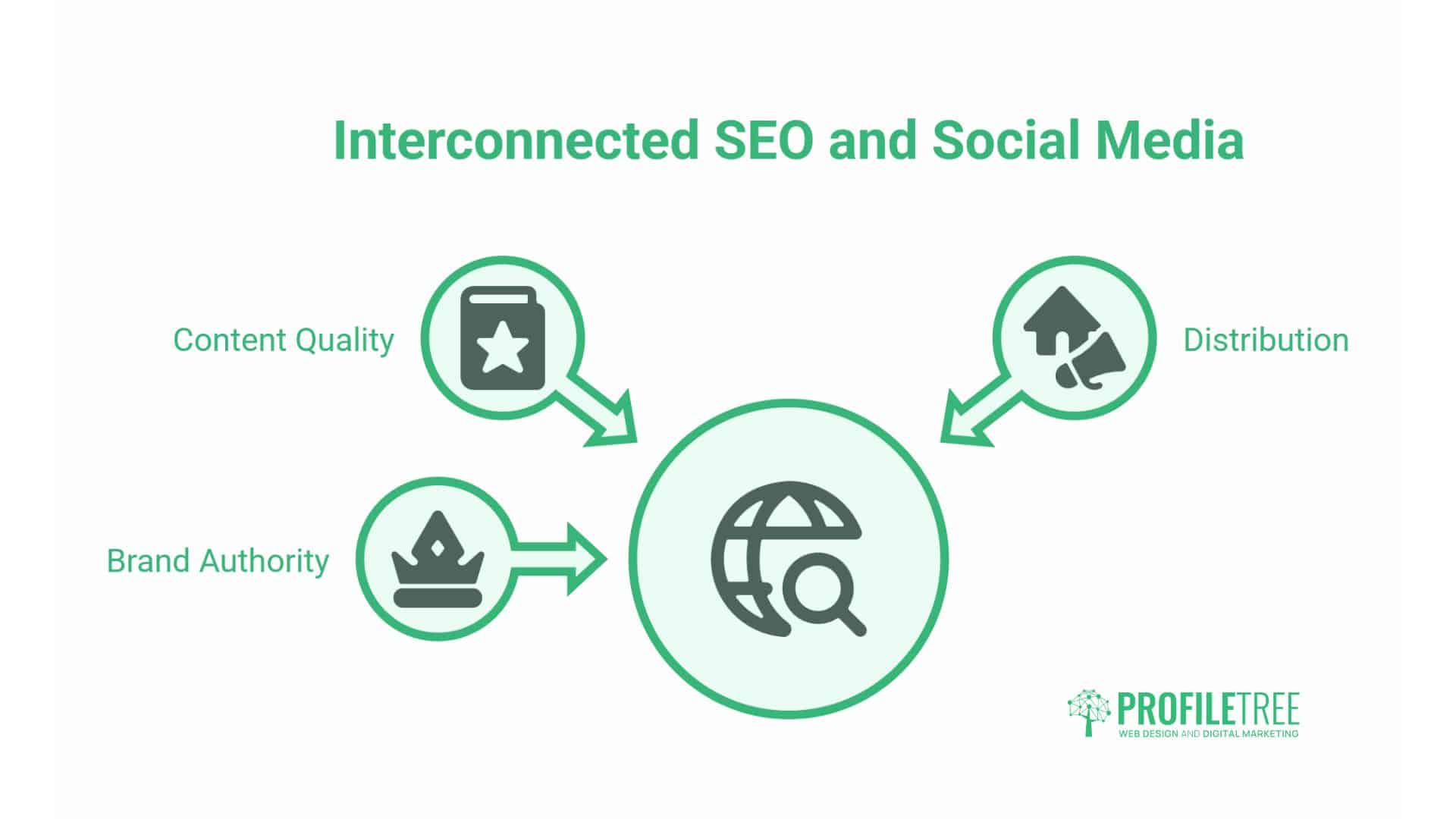
An SEO strategy for an SME in Northern Ireland or Ireland that treats social media as entirely separate from search is leaving part of the picture blank. The two disciplines overlap at the point where content quality, distribution, and brand authority intersect.
ProfileTree’s approach to SEO services for SMEs accounts for social signals as one component of a broader visibility strategy. That means advising on what content formats generate genuine engagement in a given sector, which platforms are worth the time investment for a specific business type, and how to connect social activity to measurable search outcomes rather than treating them as separate budget lines.
As Ciaran Connolly, founder of ProfileTree, notes: “For most SMEs, the question isn’t whether social signals matter for SEO. The question is whether the content you’re producing is good enough to earn any signals worth having. Fix the content first, then worry about the distribution.”
Common Mistakes SMEs Make With Social and SEO
Understanding the theory is one thing. Where most small businesses lose time and budget is in the execution. These are the most common errors to avoid.
Treating social media and SEO as separate workstreams. When the person managing Instagram has no visibility into what the SEO team is targeting, content is produced with no keyword intent and distributed with no plan to generate search-relevant outcomes. A joined-up digital marketing strategy aligns both disciplines around the same content calendar and business objectives.
Publishing without Open Graph tags configured. Every time a page is shared on LinkedIn or Facebook without a properly configured title, description, and image in the Open Graph metadata, engagement drops. Broken previews reduce click-through rates from social shares, which reduces the referral traffic that feeds SEO signals. This is a five-minute fix on any WordPress site and is missed more often than it should be.
Measuring the wrong things. Follower growth and total likes are not SEO metrics. The numbers that connect social activity to search performance are branded search volume (visible in Google Search Console), referral sessions from social sources (visible in GA4), and new referring domains acquired in the weeks following major content pushes. If you are not tracking these, you cannot tell whether your social activity is producing any search benefit at all.
Ignoring LinkedIn for B2B. Many Northern Irish and Irish B2B businesses treat LinkedIn as a secondary channel or a place to repost blog articles. LinkedIn posts from company pages and personal profiles are indexed by Google. A well-written post that answers a specific industry question can appear in Google search results within hours of publication. For professional services and trade businesses, this is an underused advantage.
Chasing platform volume rather than audience fit. A hospitality business spending its content budget on LinkedIn while its customers are on TikTok, and a B2B consultancy doing the reverse, are both generating social activity that produces no meaningful downstream search effect. Platform selection should be driven by where your specific audience actually spends time, not by which platform has the largest overall user base.
Conclusion
Social signals will not rescue a weak SEO strategy on their own, but ignoring them leaves a genuine gap in how your brand builds visibility over time. The indirect path from social engagement to search ranking is real and measurable: content that earns shares generates brand searches, attracts backlinks, and drives the referral traffic that Google can observe. For SMEs in Northern Ireland, Ireland, and the UK, the priority is producing content worth sharing in the first place, then distributing it on the platforms where your specific audience is active. Get in touch with ProfileTree to discuss how social media activity can be integrated into a broader SEO and content marketing strategy that delivers results you can track.
FAQs
What are social signals in SEO?
Social signals are interactions your content earns on social platforms: shares, likes, saves, and comments. They are not a direct Google ranking factor, but drive brand searches, referral traffic, and backlinks that are.
Does Google use social media shares as a ranking factor?
No, not directly. Google has confirmed this repeatedly. The SEO value comes from what social sharing triggers: branded searches, referral traffic, and increased visibility among publishers who may link to your content.
Which social media platform is best for SEO in the UK?
LinkedIn for B2B: Its articles are indexed by Google, and its audience generates high-intent referral traffic. TikTok and Instagram for B2C: they drive brand discovery that converts into branded search volume. Platform choice should follow your audience, not platform size.
Are social signals direct or indirect ranking factors?
Indirect. Google does not read social engagement data as a ranking input. The value flows through the downstream effects: brand searches, content referrals, and backlink opportunities.