
SEO vs PPC Statistics: UK Benchmarks and ROI Compared
Table of Contents
SEO vs PPC statistics give marketing managers and business owners a factual basis for deciding where search budgets actually belong. The decision is rarely straightforward: organic search builds authority over time, while paid search delivers measurable traffic within days. Knowing which performs better, and in which circumstances, changes the shape of an entire digital strategy.
This guide draws on verified 2024 and 2025 data to compare click-through rates, conversion rates, cost-per-lead, and long-term ROI. It includes UK-specific benchmarks that most US-centric comparisons overlook, a practical budget-allocation framework, and analysis of how AI-powered search results are already shifting the value of an organic click. All prices and figures in this guide are indicative UK examples and correct at the time of writing; use them as a benchmark rather than fixed quotations.
The sections below cover core performance metrics, organic and paid-search statistics separately, long-term ROI economics, integrated campaign data, and a decision framework for choosing the right channel at the right time.
The Core Comparison: Key Metrics at a Glance
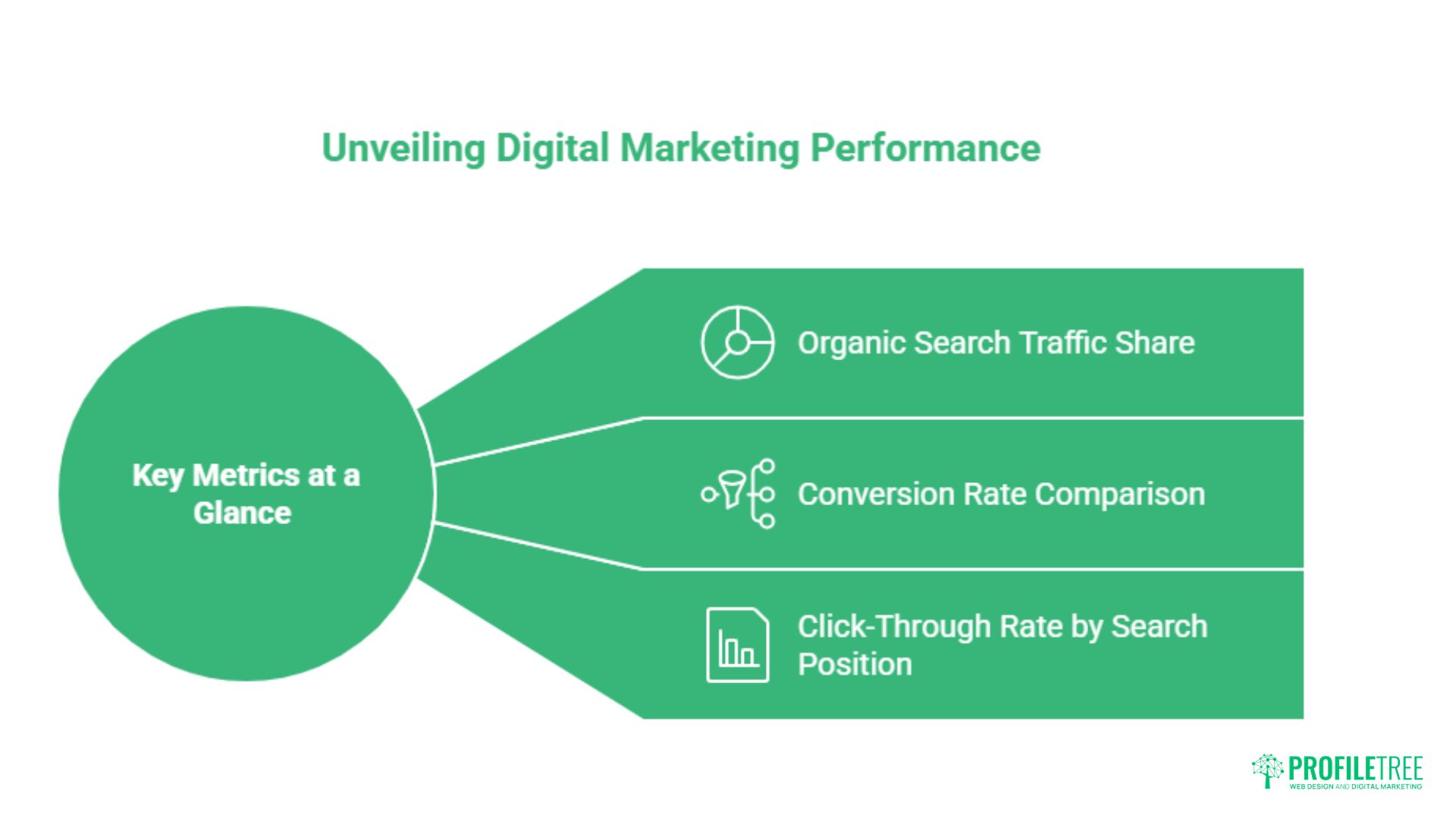
Before drilling into individual channel data, it helps to see the two strategies side by side. The table below compares SEO and PPC across the dimensions that matter most to SMEs planning annual budgets.
| Metric | SEO (Organic) | PPC (Paid) |
|---|---|---|
| Speed of results | 3 to 12 months | 24 to 72 hours |
| Average conversion rate | 14.6% | ~10% |
| Share of total web traffic | ~53% | ~15% |
| Cost structure | Fixed (content, technical) | Variable (per click) |
| Long-term asset value | High (content compounds) | Low (stops when budget stops) |
| User trust signal | Higher (organic bias) | Lower (labelled as ad) |
| Data feedback speed | Slow (weeks to months) | Fast (days) |
Neither channel is universally superior. The right choice depends on cash-flow position, the competitiveness of target keywords, and how quickly a business needs qualified traffic. The table above provides the starting point; the sections that follow explain what each row actually means for a UK SME.
Organic Search Traffic Share
Organic search drives approximately 53% of all trackable website traffic, according to data published by WebFX. This figure dwarfs direct traffic, social media referrals, and paid search combined, which makes SEO the single largest traffic channel for most websites.
The implication is significant. A business that depends entirely on paid ads is competing for roughly 15% of available clicks while paying for every single one. A business with strong organic rankings draws from a far larger pool at a marginal cost per visit that falls month by month as content matures. For a fuller picture of how organic traffic behaviour patterns break down, the AI-enhanced marketing service page covers how ProfileTree helps clients adapt to AI-powered search changes.
Conversion Rate Comparison
Organic search records an average conversion rate of approximately 14.6%, compared to roughly 10% for PPC campaigns (Adcore). The gap exists because organic visitors have typically done more research before clicking; they arrive with higher purchase intent and greater baseline trust in the result they chose.
PPC conversion rates vary widely by industry and campaign quality. A well-structured Google Ads campaign targeting transactional keywords, such as “web design Belfast quote” or “accountant Northern Ireland pricing,” can produce conversion rates well above the 10% average. The 10% figure is a broad cross-sector mean and should be treated as a floor, not a ceiling.
Click-Through Rate by Search Position
CTR data from Backlinko’s analysis of 4 million Google search results shows the first organic result averages an 27.6% click-through rate, falling sharply to 15.8% for position two and 11% for position three. By position ten, CTR sits below 2.5%. Paid ads, by contrast, receive between 2% and 6% CTR on average, depending on ad format and keyword competition.
These figures make a compelling case for the top three organic positions, but they also explain why PPC remains attractive for businesses that cannot yet achieve page-one organic rankings. A 2% to 6% paid CTR on a high-volume keyword still delivers measurable traffic within days of campaign launch.
Organic Search Statistics: CTR in the AI Era
The organic search landscape shifted materially with the rollout of Google’s AI Overviews in 2024. Understanding how AI-generated answers affect organic clicks is now essential to building realistic traffic forecasts, particularly for informational queries where an AI answer may satisfy the user without a single click.
How AI Overviews Are Redefining Organic Clicks
AI Overviews appear at the top of the SERP for a wide range of informational queries. Research from BrightEdge found that the introduction of AI Overviews reduced organic click-through rates on affected queries by an estimated 25% to 30% in certain informational categories. The scale of impact depends heavily on query type: transactional searches (“buy,” “quote,” “pricing,” “near me”) remain largely unaffected, while definitional or research queries show the steepest declines.
For SMEs that rely on informational content to generate top-of-funnel traffic, this represents a meaningful change. Blog posts that previously drew thousands of monthly visitors from queries like “what is SEO” or “how does PPC work” may now see lower click volumes as AI summaries answer those questions directly on the results page. The content formats least affected are those that go beyond simple definitions: original data, specific examples, step-by-step guides, and case studies with real-world outcomes.
Pages covering multiple sub-questions within a topic are 161% more likely to be cited in AI Overviews, according to Ahrefs data, with a Spearman correlation of 0.77. This means well-structured pillar content that anticipates follow-up questions is simultaneously more likely to earn organic clicks and to appear as a source within AI-generated summaries. The content marketing services page explains how ProfileTree structures content for both traditional rankings and AI citation.
Zero-Click Searches and What They Mean for Budgets
Approximately 65% of Google searches now end without a click, according to SparkToro’s analysis. This “zero-click” phenomenon is driven by featured snippets, knowledge panels, Google Maps packs, and AI Overviews. For PPC, zero-click searches are largely irrelevant because paid ads require a click to generate cost. For SEO, zero-click searches mean that impressions may not translate into sessions the way they once did.
The practical response is to focus organic content on transactional and commercial intent queries where zero-click rates are lower, and to treat informational content primarily as an awareness tool rather than a primary traffic driver. Pair this with structured data markup so that content that does appear in AI answers retains brand attribution.
The 2025 Organic CTR Breakdown by Position
The CTR landscape by position has become less predictable than it was before 2023, because AI Overviews and rich features now sit above traditional organic results for many queries. A position-one ranking that would historically have attracted 27% of clicks may now deliver materially less if an AI summary, featured snippet, or paid ad block sits above it.
Position stability remains valuable; a page consistently in positions one to three retains disproportionate click share even as absolute CTRs adjust. The priority is still to rank highly, but forecasting traffic from position alone without accounting for SERP feature competition will produce inflated estimates.
Paid Search Statistics: UK Industry Benchmarks
Most published PPC benchmarks are drawn from American market data, which makes them a poor basis for UK campaign planning. UK cost-per-click figures differ significantly across sectors, driven by differences in competition density, consumer behaviour, and the relative size of the local market. The data points below draw on UK-specific sources and agency experience.
Average CPC and CPA Across UK Sectors
UK average cost-per-click figures vary considerably by sector. The legal services sector typically sees CPCs of £8 to £35 for competitive terms such as “personal injury solicitor” or “employment law advice.” Financial services, including insurance and mortgage brokering, regularly exceed £10 per click in major UK markets. By contrast, e-commerce and retail categories often sit between £0.50 and £3.00, while professional services such as accountancy and HR consultancy typically fall in the £3 to £8 range.
Cost-per-acquisition follows a similar pattern. A legal firm paying £20 per click and converting at 5% on its landing page faces a CPA of £400 before factoring in lifetime client value. The same maths applied to an e-commerce business paying £1 per click at a 3% conversion rate produces a CPA of £33, which may sit comfortably within product margins. Knowing your sector’s CPA ceiling before launching a PPC campaign prevents the budget from being consumed without a viable path to profitability.
The Impact of Privacy Updates on PPC Attribution
The deprecation of third-party cookies, Apple’s App Tracking Transparency changes from iOS 14.5 onwards, and the gradual shift to server-side tracking have all made PPC attribution less precise. Campaigns that previously tracked a clear path from ad click to sale now rely on modelled conversions and enhanced data protocols, which introduce measurement uncertainty.
The practical effect is that PPC costs have increased for campaigns that depended on granular audience data for retargeting. Privacy-compliant first-party data strategies, such as CRM-based audience uploads and email list matching, partially compensate for the loss of cookie data but require a larger existing customer base to be effective. For businesses earlier in their growth cycle, this gives SEO a relative advantage: organic traffic attribution, while imperfect, is not subject to the same cookie-driven measurement gaps.
Understanding digital marketing tools that support both channels is valuable here. The digital strategy service covers how ProfileTree helps SMEs select and manage the right platforms for both channels.
PPC Return on Investment: What the Numbers Show
Google’s own economic research has estimated that businesses earn an average of £2 for every £1 spent on Google Ads, though this figure varies enormously by sector, campaign quality, and how revenue is attributed. For industries with high customer lifetime values, such as financial services, legal, and B2B software, the ROI ceiling is considerably higher. For commoditised product categories with thin margins, PPC profitability is harder to achieve without sophisticated bid management.
The 200% average return is useful as a market-level benchmark, but individual campaign performance depends on landing page quality, keyword match type discipline, negative keyword management, and the degree to which ad copy aligns with the search intent that triggered the impression. Poorly configured campaigns routinely produce negative ROI despite healthy click volumes.
SEO vs PPC ROI: The Long-Term Economics
The ROI comparison between SEO and PPC cannot be made at a single point in time. PPC produces returns immediately, but stops the moment the budget is withdrawn. SEO builds slowly but creates an asset that continues to generate traffic without proportional ongoing spend. The critical question is not which delivers better ROI in month one, but which produces a lower blended cost-per-lead over a 24 to 36-month horizon.
The digital marketing services page outlines the measurement frameworks ProfileTree uses to track cross-channel returns.
Customer Acquisition Cost Comparison
PPC customer acquisition cost is largely fixed per period: spend £5,000 per month and acquire X customers, spend £0 and acquire zero. The relationship is linear, which makes scaling straightforward but expensive.
SEO customer acquisition cost behaves differently. In the first six to twelve months, the cost is high relative to traffic generated because the investment in content, technical improvements, and link acquisition precedes any meaningful ranking gain. By months thirteen to twenty-four, traffic typically grows while the cost per additional visit falls as existing content continues to rank without ongoing spend.
Research from FirstPageSage estimates that SEO produces a long-term ROI of between 500% and 700% for most industries when measured over a three-year period, compared to 200% for Google Ads. The difference is compounding: content published in year one still generates traffic in year three, effectively reducing its real cost-per-visit with every passing month.
The Compounding Effect vs Linear PPC Growth
A useful way to frame the economics: imagine a business investing £3,000 per month over twelve months. A PPC-only approach spends £36,000 and generates traffic for twelve months, after which all visibility disappears when the budget stops. An SEO-only approach spends the same £36,000, generates modest traffic in months one to six, meaningful traffic by month nine, and continues to generate traffic in months thirteen through thirty-six and beyond without additional spend. The traffic curve for SEO starts below PPC and crosses it at a “tipping point” that typically falls between months six and twelve, depending on keyword competitiveness.
In practice, the most cost-effective strategy uses PPC to generate immediate revenue and test which keywords convert, while SEO is built in parallel using that conversion data to prioritise content creation. This avoids the “valley of low returns” in early-stage SEO by keeping a revenue pipeline open through paid search.
Scaling vs Sustaining: The Tipping Point Statistic
BusinessDIT data indicates that small and medium-sized businesses, on average, spend seven times more on PPC than on SEO. This allocation is often driven by the immediacy of PPC results rather than a deliberate long-term strategy. A business spending £7,000 per month on Google Ads and £1,000 on SEO is buying short-term visibility at the expense of the compounding asset that would, over time, reduce its dependence on paid spend.
The tipping point, where SEO begins to generate more leads per pound spent than PPC, typically arrives between six and twelve months for moderately competitive keywords. For highly competitive sectors such as UK financial services or legal, the timeline extends to eighteen to twenty-four months. The implication for budget allocation is that the earlier a business begins investing in SEO, the sooner the tipping point arrives.
The Search Synergy Strategy: Statistics on Integrated Campaigns
The most productive question is not whether SEO or PPC wins, but how they work together. An integrated search strategy uses each channel’s strengths to compensate for the other’s weaknesses: PPC delivers immediate data and revenue while SEO is built; SEO provides sustainable traffic and authority while PPC is refined. The statistics on integrated campaigns consistently show that businesses running both channels outperform those relying on either alone.
How PPC Data Improves SEO Keyword Targeting
PPC campaigns generate keyword-level conversion data within days of launch. A business running Google Ads for four weeks knows which exact search terms produced enquiries and which generated clicks, but no action. This data is invaluable for SEO prioritisation: rather than building content around keywords that look attractive in a research tool but have unknown commercial intent, the SEO team can focus on the specific phrases already proven to convert.
This approach is significantly more efficient than keyword research alone. Search volume tells you how many people search for a phrase; PPC conversion data tells you how many of them actually buy. Targeting SEO content at high-converting PPC terms accelerates the ROI of both channels simultaneously. For businesses operating in Northern Ireland and the broader UK market, local search intent variations, such as “web design Belfast” versus “web design Northern Ireland,” often produce materially different conversion rates that only paid campaign data reveals.
The SEO services page explains how ProfileTree uses paid keyword data to sharpen organic content targeting.
Statistics on Brand Trust: Dual Presence Effects
Research from Google’s own Consumer Surveys found that when a brand appears in both a paid ad and an organic listing on the same search results page, click-through rates on the organic result increase by approximately 20% to 30%. This “halo effect” occurs because dual presence reinforces credibility: a searcher who sees a business in both positions perceives it as more established than one appearing in only one slot.
The halo effect also operates at the brand-awareness level. Repeated paid ad impressions, even those that do not generate clicks, increase the likelihood that a user will click the same brand’s organic result on a future search. Paid search and organic search are not competing for the same click; they are building on each other’s visibility to increase total engagement with the brand.
Building the Search Synergy Flywheel
“The businesses we work with that grow search traffic fastest are rarely using one channel in isolation,” says Ciaran Connolly, founder of ProfileTree, the Belfast-based digital agency. “PPC data tells us where conversions actually happen, and we use that to direct SEO content investment. Over time, the organic rankings we build from that data reduce the paid spend needed to maintain the same lead volume.”
This flywheel model, where PPC funds immediate revenue, SEO data informs content decisions, content rankings reduce PPC dependency, and reduced CPA frees budget for further SEO investment, describes the search strategy that consistently produces the lowest blended cost-per-lead over a 24 to 36 month horizon. The digital strategy service covers how to build an integrated SEO and PPC approach into a coherent annual plan.
Decision Framework: When to Invest in Which Channel
The data above points to a nuanced answer: most businesses benefit from both channels, but the balance should shift depending on stage, budget, and competitive position. The framework below provides a practical starting point for UK SMEs making allocation decisions whether you’re building a digital training service from scratch or reassessing an existing one, the questions below narrow down the right starting position.
When to Prioritise PPC
PPC makes sense as the primary or sole channel when a business needs traffic within days rather than months, for example, around a product launch, a seasonal promotion, or a new market entry where organic authority does not yet exist. It also suits businesses entering highly competitive markets where organic rankings take eighteen months or longer to achieve, because PPC provides a revenue bridge during that period.
PPC is the stronger choice for testing. If a business is unsure which keywords, audiences, or value propositions convert, a paid campaign produces that data in weeks rather than months. Once the converting terms are identified, SEO content investment can be directed at those proven phrases rather than theoretical opportunities.
When to Prioritise SEO
SEO should be the foundation for any business with a medium to long-term digital strategy. The compounding economics outlined earlier mean that delaying SEO investment always has an opportunity cost. A business that starts building organic authority in month one will reach the tipping point earlier than one that waits until paid spend becomes unsustainable.
SEO is particularly well-suited to businesses where the sales cycle is longer than a few days, for example, professional services, B2B, or high-consideration consumer purchases. In these categories, a potential customer may research a topic for weeks before making contact. Content that appears at multiple points in that research journey builds familiarity and trust that a single paid ad impression cannot replicate.
For SMEs across Northern Ireland, Ireland, and the wider UK, professional SEO services offer a structured path to organic authority that avoids the common pitfalls of inconsistent content production and technical oversight.
The Balanced Allocation Framework
For most UK SMEs with a monthly search budget of £2,000 to £10,000, a practical starting allocation is 60% to PPC and 40% to SEO in months one to six, shifting to 40% PPC and 60% SEO in months seven to twelve, and reaching 20% PPC and 80% SEO from month thirteen onwards as organic rankings begin to reduce paid dependency.
These ratios are indicative; businesses in highly competitive paid markets may need to sustain a higher PPC proportion for longer, while those in less contested niches may be able to shift to organic dominance faster.
The key principle is that neither channel should be abandoned entirely. Even when organic rankings are strong, a modest PPC presence maintains the halo effect, provides ongoing keyword intelligence, and maintains visibility for time-sensitive offers that cannot wait for content to rank.
Conclusion
SEO vs PPC is not a binary choice. Organic search offers superior long-term ROI, higher conversion rates, and compounding asset value. Paid search delivers speed, precision, and keyword intelligence that shortens the SEO learning curve. The data consistently supports an integrated approach: use PPC to generate immediate leads and test which terms convert, then direct SEO investment at those proven opportunities to build a sustainable, lower-cost traffic base over time.
If you would like a clear picture of where your current search budget is performing and where it should be directed, get in touch with the team for a no-obligation conversation about your specific situation. You can also explore more about the cities and business environments across Northern Ireland at Connolly Cove’s Northern Ireland city guide.
FAQs
Which is better for small businesses, SEO or PPC?
It depends on the cash flow position and the urgency. If a business needs enquiries within weeks, PPC is faster. If the budget allows for a six to twelve-month build, SEO produces a lower cost-per-lead over time and creates an asset that continues delivering without ongoing spend. Most small businesses benefit from running a modest PPC budget alongside SEO rather than choosing between the two.
What is the average ROI for SEO vs PPC?
PPC averages approximately 200% ROI based on Google’s own economic research, meaning businesses typically recover £2 for every £1 spent. SEO ROI, measured over a three-year horizon, is estimated at between 500% and 700% by FirstPageSage, reflecting the compounding value of content that continues to rank without proportional ongoing investment.
Does PPC help SEO rankings?
Not directly. Google has confirmed that spending on Google Ads has no influence on organic rankings. However, PPC indirectly supports SEO by providing keyword conversion data that improves content prioritisation, and the dual presence of paid and organic results increases total brand visibility and organic CTR through the halo effect.
Is SEO free compared to PPC?
No. SEO requires investment in content production, technical development, and, in competitive markets, link acquisition. The distinction is that SEO costs are largely fixed and front-loaded, while PPC costs are variable and ongoing. Once organic rankings are achieved, the marginal cost per additional visitor falls over time, whereas PPC cost-per-click does not.
How long does it take for SEO to beat PPC in lead volume?
For moderately competitive keywords, SEO typically reaches equivalent or higher lead volume than PPC between six and twelve months after consistent investment begins. For highly competitive UK sectors such as legal, financial services, or national e-commerce, the crossover may take eighteen to twenty-four months. Starting SEO earlier shortens the timeline regardless of the sector.