
Social Media Marketing for Northern Ireland and UK Businesses
Table of Contents
Social media marketing works for an SME when two or three platforms are chosen deliberately, posted to consistently, and measured against commercial goals rather than follower counts. Businesses that see no return are rarely on the wrong platforms. They are usually publishing without a defined objective and tracking numbers that never connect to revenue.
The audience is not in question. Ofcom’s Adults’ Media Use and Attitudes research found that 89% of UK adult internet users are on at least one social platform, rising to 97% of 16 to 34-year-olds. What has shifted is behaviour. Just 49% of adult social media users now actively post, share or comment, down from 61% a year earlier. Reaching people has never been easier. Getting a reaction out of them is harder than it was.
This guide covers the strategic side of social media marketing for SMEs: what a proper approach looks like, which platforms suit different business types, how to measure what matters, and how a social media agency in Northern Ireland can help you move from activity to outcomes. Most ProfileTree client work starts with an organic social media strategy tied to commercial goals, because platform choice and content format are downstream decisions that only make sense once the objective is fixed.
What Social Media Marketing Actually Involves
Social media marketing is the use of platforms like Instagram, LinkedIn, Facebook, TikTok, and YouTube to build brand visibility, attract potential customers, and drive actions that support business growth. The term covers a wide range of activities, from organic content and community management through to paid social advertising, influencer partnerships, and customer service.
For most SMEs, the practical scope breaks into three areas:
Organic social covers everything you publish without paying for distribution: posts, stories, reels, comments, and direct messages. Organic reach has declined across most platforms over the past decade, but it still does real work for brand credibility. A business with no recent posts or an inconsistent presence reads as inactive, even to someone already considering buying from it.
Paid social involves spending a budget to extend reach, retarget website visitors, or drive specific conversions. Facebook and Instagram ads remain among the most cost-effective paid channels available to small businesses in the UK, particularly for local and regional targeting. LinkedIn advertising commands higher costs per click but typically delivers better-qualified leads for B2B companies and professional services.
Community and conversation are the parts most businesses underinvest in, and the Ofcom figures above explain why that now costs more than it used to. When the share of social media users who actively post, share or comment falls from 61% to 49% inside a year, the audience left commenting on your posts is a smaller and more valuable group than it was. Responding to comments, answering DMs promptly, engaging with customers who tag you, and joining relevant conversations in your sector build trust in ways that scheduled posts cannot replicate.
A coherent SME social strategy brings all three together under shared objectives rather than treating them as separate activities.
Why SMEs in Northern Ireland Need a Different Approach
Generic social media advice tends to be written for large brands with dedicated teams, six-figure ad budgets, and audiences in major metropolitan markets. None of that applies to most businesses in Northern Ireland or the wider island of Ireland.
The Northern Ireland business environment has specific characteristics that shape how social media works here. The market is smaller and more relationship-driven than London or Manchester. Local credibility carries more weight. Word of mouth, both offline and online, has an outsized influence on buying decisions. A business that is genuinely known and trusted in Belfast or Derry will outperform a polished but impersonal national brand in its local market, and social media is one of the main mechanisms for building that local credibility at scale.
There are also practical audience considerations. Ofcom’s Online Nation 2025 research puts YouTube, Facebook and Messenger, and Instagram as the three most widely used social services among UK online adults, with YouTube reaching 94% of them and Facebook and Messenger together reaching 93%. Those reach figures are national rather than regional, so treat them as a starting hypothesis for a Northern Ireland audience and confirm against your own analytics before committing budget. In practice, Instagram performs well for food, hospitality, retail, and trades. LinkedIn is relevant for professional services, recruitment, and B2B companies targeting markets in Dublin, London, or further afield. TikTok has grown fast as a discovery channel, particularly for businesses targeting under-35 audiences.
Understanding TikTok UK data and platform-specific behaviour is worth doing before committing budget to any channel.
Choosing the Right Platforms
One of the most common mistakes SMEs make is trying to maintain an active presence on every platform simultaneously. The result is thin, inconsistent content everywhere rather than a strong, engaged community anywhere.
Platform selection should be guided by audience research, not assumptions. The table below summarises where each platform tends to earn its place for a Northern Ireland or UK SME, with the detail underneath.
| Platform | Strongest fit | Main advantage | Main cost or constraint |
|---|---|---|---|
| Consumer-facing local businesses | Precise local ad targeting; Groups for community building | Organic reach is low without paid support | |
| Food, hospitality, retail, trades, property, beauty | Stories and Reels drive discovery beyond followers | Requires a steady supply of usable visual assets | |
| Professional services, manufacturing, logistics, B2B | Best-qualified B2B leads; builds founder credibility | Highest cost per click of the major platforms | |
| YouTube | Any business able to produce video regularly | Acts as a search engine; content keeps earning views | Highest production cost and slowest to compound |
| TikTok | Brands targeting under-35 audiences | Reach is not capped by follower count | Needs a distinct content style and posting cadence |
Facebook suits most consumer-facing businesses. Its advertising tools are the most developed available to small businesses, its local targeting is precise, and its audience skews toward purchasing-age adults. Facebook Groups also offer community-building opportunities that pure broadcast platforms cannot match.
Instagram works well for any business where visual content is naturally strong: food and hospitality, interior design, retail, events, fitness, beauty, construction and trades (finished project photography), and property. Stories and Reels now drive more discovery than standard feed posts for most accounts.
LinkedIn is the channel of choice for professional services, manufacturing, logistics, recruitment, and any business selling to other businesses. A Northern Ireland company selling services to clients in Dublin, Edinburgh, or London should be more active on LinkedIn than on any other platform. The platform also builds the personal profiles of founders and directors, which supports credibility in ways a company page alone cannot.
YouTube has become a search engine in its own right, and Ofcom’s reach data puts it ahead of every other social service among UK online adults. For businesses that can invest in video, a consistent YouTube presence builds long-term discoverability in a way that no other platform offers. ProfileTree’s YouTube channels cover web development and digital marketing topics, offering practical examples of how a Belfast digital agency uses video to build authority.
TikTok is worth considering for any brand targeting younger adults or looking to reach new audiences through short-form video. The algorithm rewards novelty and relevance over follower count, which means new accounts can build real reach quickly if the content connects. The trade-off is that TikTok requires a different content style and cadence than any other platform, and it should only be approached with a genuine commitment to the format.
For most SMEs starting from a limited base, the right answer is to do two or three platforms well rather than six platforms poorly. Social platform lists help clarify where your audience is actually spending time.
The Four Pillars of Social Media Performance
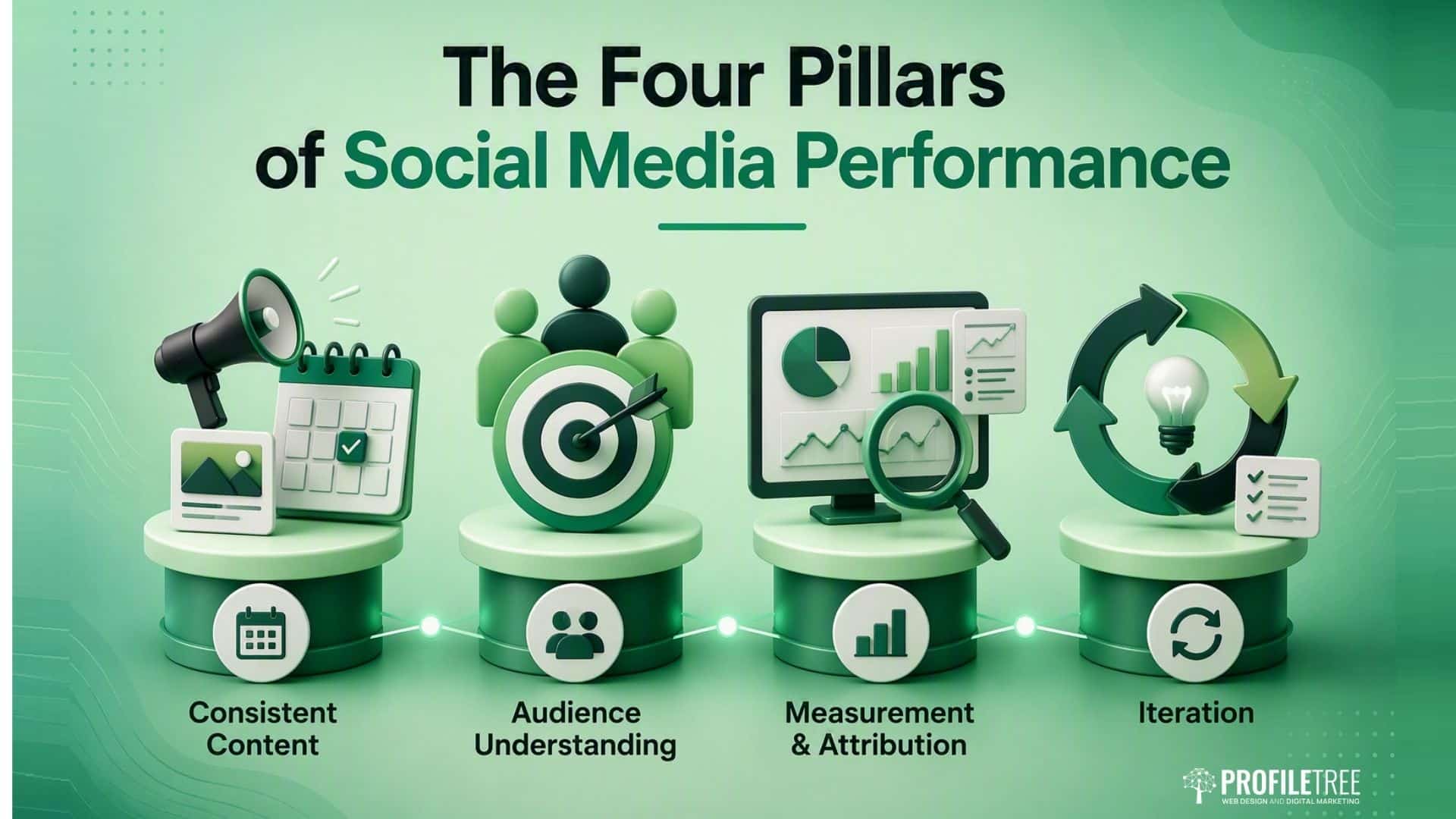
Regardless of platform, effective social media marketing for SMEs rests on four things: consistent content, audience understanding, measurement, and iteration.
Consistent Content
Algorithms on every major platform reward accounts that post regularly. Consistency matters more than frequency. A business posting three times a week, every week, will outperform one posting twelve times in a burst and then going quiet for a month. The content itself needs to offer something: information, entertainment, demonstration of skill, behind-the-scenes access, or social proof. Posts that exist only to say “we are here” add little value.
Content themes worth building around for most SMEs include: process and craft (showing how you do what you do), customer outcomes (with permission), team and culture, topical commentary relevant to your industry, and direct responses to questions your customers actually ask.
Audience Understanding
Social media platforms generate extensive data about who is engaging with your content, when they are active, and what resonates. Most businesses focus on follower counts and ignore more useful signals. Engagement rate, the proportion of people who interact with a post relative to reach, is more informative than raw reach alone. Save and share rates indicate content people find genuinely valuable. Reach on non-follower accounts shows how well your content travels beyond its existing audience.
Platform interaction data changes how you interpret platform data and make decisions about what to produce.
Measurement and Attribution
The most common measurement failure in SME social media is tracking vanity metrics: follower growth, total likes, and total impressions. These numbers feel meaningful but rarely correlate with commercial outcomes. The metrics that matter are those connected to your actual business goals.
For awareness campaigns, reach among your target audience and profile visits are relevant. For consideration, website clicks, time on page, and content saves matter more. For conversion campaigns, you need to track actions taken after someone arrives from social: enquiry forms submitted, phone calls made, and purchases completed.
Social and sales require a proper tracking setup, including UTM parameters on all social links and conversion tracking on your website. Without this, you cannot distinguish which platform is driving business and which is consuming budget without return.
Closing that gap does not have to mean buying software. Platform API changes have quietly killed a lot of the free tools that older guides still recommend, so it is worth checking what survived before planning a reporting routine around it. The guide to free X/Twitter analytics sets out which native and third-party free tiers still work, and which widely cited tools no longer exist.
Iteration
The content that works for one business in one sector at one point in time will not work indefinitely. Platforms change their algorithms. Audience preferences shift. Competitors adjust their approach. Effective social media marketing is an iterative process: produce, measure, learn, adjust.
This is also why monthly reporting matters. A monthly review of what worked, what did not, and what to test next is more valuable than a quarterly deep-dive or an annual review that is too infrequent to act on anything.
Organic vs Paid Social: Getting the Balance Right
A question that repeatedly comes up for SMEs is whether to invest time in organic content, spend money on paid advertising, or do both.
The honest answer is that organic social alone is rarely sufficient for growth, but paid social without a strong organic presence tends to underperform because it lacks credibility signals. Someone who sees your ad and then visits a Facebook page with three posts from 2023 is unlikely to follow through.
The most effective approach treats organic and paid as complementary. Organic content builds the community, demonstrates expertise, and gives paid campaigns something credible to amplify. Paid activity extends reach to new audiences, retargets people who have shown interest, and accelerates results that would otherwise take much longer to achieve organically.
For SMEs with limited budgets, starting with a consistent organic programme before committing paid spend tends to yield better results. Once content is performing well organically, paid amplification of those proven posts is a lower-risk way to scale than running purely cold paid campaigns from a standing start.
Social Media and the Wider Digital Marketing Picture
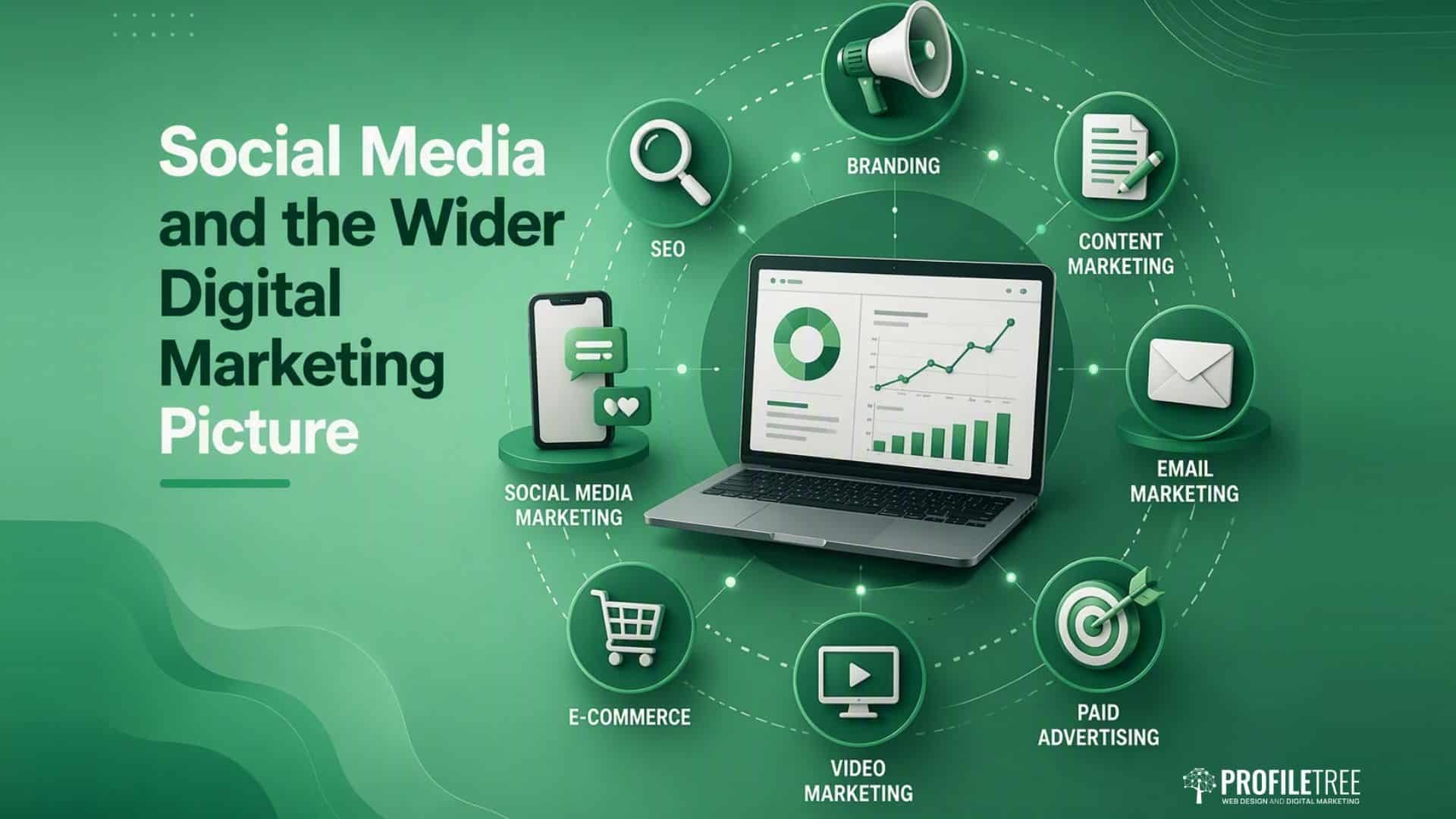
Social media does not operate in isolation from the rest of your digital presence. It feeds into and draws from everything else you are doing.
Content produced for your blog, for example, can be adapted and distributed across social channels to extend its reach. Video content produced for YouTube can be repurposed for Instagram Reels, LinkedIn, and TikTok. Case studies from your website make strong social proof posts. Events you attend or host generate real-time social content.
In the other direction, social media can indirectly support SEO performance: a strong social presence builds brand search volume, which is a positive signal to search engines. Social content drives traffic to your website. Content that gets shared organically earns links over time.
Content marketing and social media work best when planned together from the start rather than run as separate workstreams. That coordination is far easier when both sit inside a single digital marketing strategy rather than being owned by different people working to different targets. If your content team and your social team, whether internal or external, are not sharing information about what is working, you are leaving efficiency on the table.
The Ethics and Legalities of Social Media Marketing
Several legal and ethical considerations apply to social media marketing in the UK and Northern Ireland that are worth being aware of before running campaigns.
UK GDPR applies to how you collect and use data from social advertising. Custom audiences built from email lists or website visitor data must comply with your privacy policy and the original consent under which that data was collected. The Information Commissioner’s Office sets out what a lawful basis looks like in practice, and the responsibility sits with the advertiser rather than the platform.
The Advertising Standards Authority governs social media advertising in the UK, including influencer content. Paid partnerships, gifted products, and affiliate arrangements must be clearly disclosed. The scale of the problem is documented: the ASA’s influencer ad disclosure report assessed more than 50,000 pieces of Instagram and TikTok content using automated monitoring and found roughly 57% of likely advertising was adequately disclosed. Of the content judged undisclosed or inadequately disclosed, the large majority carried no disclosure attempt at all.
Enforcement has hardened alongside that monitoring. The ASA can publicly name non-compliant influencers, and the Competition and Markets Authority gained direct consumer-protection fining powers under the Digital Markets, Competition and Consumers Act in April 2025. For an SME running a gifting or ambassador programme, the practical implication is that disclosure is a contractual matter to be agreed in writing before anything is posted, not something to correct afterwards.
Digital marketing legalities extend beyond social media, but social is increasingly the enforcement front line, particularly for influencer marketing and targeted advertising to under-18 audiences.
What to Look for in a Social Media Agency in Northern Ireland
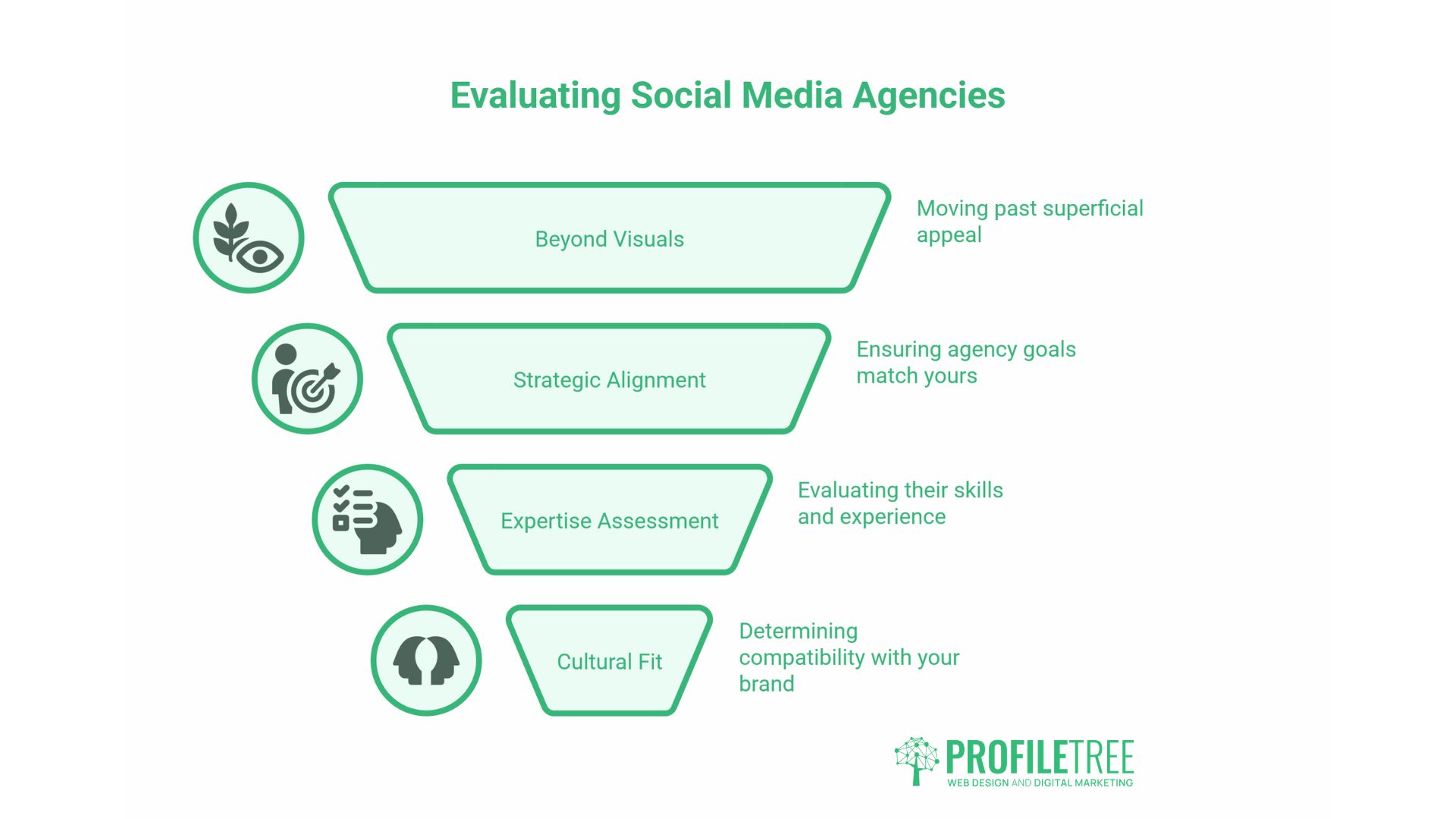
If you are considering working with a social media agency in Northern Ireland or Belfast, the questions to ask go beyond who has the best-looking portfolio.
Does the agency understand your sector? Social media for a hospitality business in Belfast operates completely differently from social media for a manufacturing company selling to clients in England. An agency that understands the nuances of your industry, including its regulations, its buyer behaviour, and its seasonal rhythms, will produce more relevant work than a generalist agency applying a template approach.
Can they demonstrate commercial outcomes? Any agency can produce posts and report follower growth. Fewer can show clear lines between their social activity and actual business results: leads generated, website traffic driven, enquiries attributed to social campaigns. Ask to see how they report to clients and what metrics they prioritise.
Do they involve you in strategy? Social media is more effective when it draws on genuine company expertise: founder knowledge, real customer stories, information only your business holds. An agency that operates entirely at arm’s length, posting generic content without meaningful input from your business, will struggle to differentiate your brand from anyone else in your sector.
Are they transparent about what they do not do? Paid social advertising is a specialist skill that sits alongside, not within, content creation and community management. Some agencies are strong at creative content but have limited paid media expertise. Others are strong at performance advertising but produce weak organic content. Understanding what any agency is actually good at helps set realistic expectations.
ProfileTree has worked with businesses across Northern Ireland, Ireland, and the UK since 2011, helping SMEs build social media strategies that connect to commercial goals rather than simply maintaining an online presence. The team combines content creation, paid social management, and digital training to help in-house teams own more of their social activity over time.
As Ciaran Connolly, founder of ProfileTree, puts it: “The businesses that get the best results from social media are the ones that treat it as a customer relationship tool, not a broadcast channel. That shift in thinking changes everything about what you post and how you respond.”
Building a Social Media Plan That Lasts
A durable social media plan for an SME does not need to be complex. The elements that matter are:
Clear objectives. What do you actually want social media to do for your business? Generate enquiries, build local brand awareness, recruit staff, retain existing customers, or support a specific product launch? Objectives shape everything else: platform choice, content format, posting frequency, and what you measure.
A realistic content calendar. Map out content themes and post types four to six weeks in advance. Leave room for reactive and real-time content, which tends to perform well, but have a planned backbone so that quiet weeks do not result in silence.
Platform-appropriate formats. Posting the same image and caption to every platform simultaneously is a visible sign of low effort. Each platform has its own optimal formats, aspect ratios, caption lengths, and hashtag conventions. Adapting content for each platform is not the same as creating everything from scratch, but it does require an extra step in the production process.
A response protocol. Decide in advance how quickly you will respond to comments and messages, who is responsible for responses, and how you will handle negative feedback. Handled well, a public complaint can build more trust than it costs. Handled badly or ignored, it can cause sustained reputational damage.
Monthly review. Set a recurring time each month to review performance, identify what worked, and adjust the plan for the following month. Without this step, social media becomes an activity for its own sake rather than a managed channel for improving returns.
For businesses in Northern Ireland and the wider UK market, social media marketing done well is one of the most cost-effective ways to build brand recognition, generate qualified leads, and retain existing customers. The challenge is not access to the platforms; everyone has access to them. The challenge is strategy, consistency, and the discipline to measure what matters and act on what the data tells you.
Making Social Media a Commercial Channel
Social media marketing works best when it is treated as a commercial activity rather than a communications exercise. Choosing the right platforms, publishing content your audience actually finds useful, tracking outcomes that connect to revenue, and reviewing performance monthly: these are the habits that separate businesses that grow through social from those that stay busy without results.
The shift in audience behaviour makes that discipline more valuable, not less. With active participation falling and passive scrolling rising, reach on its own tells you very little. The businesses that keep winning on social are the ones measuring what happens after the click. For Northern Ireland SMEs, a local-first approach combined with a strategy built around buyer intent remains the most reliable path to making social media a genuine business asset.
FAQs
What does a social media agency in Northern Ireland typically charge?
A basic package covering two platforms typically starts at £400 to £600 per month. Full-service management, including paid social and monthly reporting, ranges from £1,000 to £3,000 per month for an SME. Prices vary by agency, sector, and scope, so always ask for a line-by-line breakdown before comparing quotes. Prices shown are indicative.
How long does it take to see results from social media marketing?
Organic social typically takes three to six months to show meaningful audience growth. Paid social can deliver measurable results within a few weeks when campaigns are well-targeted. Most agencies recommend a minimum three-month commitment before drawing conclusions about what is and is not working.
Which social media platforms are most popular with businesses in Northern Ireland?
Ofcom’s Online Nation 2025 research ranks YouTube, Facebook, Messenger, and Instagram as the most widely used social services among UK online adults. Facebook has the broadest reach for consumer businesses targeting adults, Instagram suits visual industries, and LinkedIn is the primary channel for B2B and professional services. TikTok is growing with younger audiences. Those national figures are a starting point rather than an answer, since the right platforms depend on where your specific customers spend time.
What is the difference between organic and paid social media?
Organic social is content you publish without paying for distribution. Paid social uses a budget to reach new audiences, retarget website visitors, or drive conversions. Most effective strategies combine both: organic builds credibility, paid extends reach.
Do I need to label gifted products and paid partnerships on social media?
Yes. Any post made in return for payment, a gift, a loaned product, free services, or affiliate commission is advertising under the CAP Code, and it has to be clearly and prominently identified as such. ASA monitoring found that only around 57% of likely influencer advertising was adequately disclosed, and enforcement has tightened since the CMA gained direct fining powers in April 2025. Agree on disclosure wording in writing with any creator before the campaign starts, rather than correcting posts afterwards.