
SEO for Solicitors: Win More Clients Through Search
Table of Contents
When someone needs a solicitor, they increasingly turn to Google first. Whether it’s a business owner seeking commercial legal advice, a family going through divorce, or someone buying their first home, the search bar has become the starting point for finding legal help. If your law firm doesn’t appear when potential clients search, you’re invisible at the exact moment people are actively looking for your services.
Legal services sit firmly within Google’s YMYL (Your Money or Your Life) category, meaning search engines apply heightened scrutiny to law firm websites. Content about legal matters can significantly impact someone’s financial stability, family situation, or freedom. Google wants to ensure searchers find qualified, trustworthy professionals, which creates both challenges and opportunities for solicitors willing to invest in their online presence.
Many law firms still rely primarily on reputation and referrals, and those remain valuable. But the firms growing fastest have recognised that search visibility compounds over time, delivering a steady stream of enquiries from people actively seeking legal help. ProfileTree works with professional services firms throughout Northern Ireland, Ireland, and the UK, and we consistently see that solicitors who commit to SEO for Solicitors gain a measurable competitive advantage.
Why Search Visibility Matters for Law Firms
The legal profession is experiencing a fundamental shift in how clients find and choose solicitors. While personal recommendations still carry weight, research shows that most people now begin their search for legal services online.
Consider the client journey. Someone discovers they need legal help—perhaps they’ve received a letter about a boundary dispute, their employer has treated them unfairly, or they’re planning to buy a business. Their first action is almost always to search. They want to understand their situation, learn about their options, and identify solicitors who can help.
This research phase represents an enormous opportunity. Potential clients are actively seeking information, and firms that provide helpful, authoritative content build trust before any direct contact. When that searcher is ready to instruct a solicitor, the firm that educated them has a significant advantage.
Local search matters enormously for legal services. Despite the rise of remote working, most clients prefer solicitors they can meet in person, particularly for significant matters. Someone searching “employment solicitor Belfast” or “conveyancing solicitor Derry” wants local expertise and accessibility. Appearing in Google’s Map Pack for these searches puts your firm directly in front of motivated prospects.
The competitive landscape varies significantly by practice area. Personal injury remains intensely competitive online, with large firms and claims management companies spending heavily on advertising. Conversely, many specialist practice areas—commercial property, immigration, agricultural law—have far less online competition, creating opportunities for firms willing to create targeted content.
Google Business Profile for Law Firms
Your Google Business Profile determines whether you appear in local search results and the Map Pack. For solicitors, a complete, well-managed profile builds credibility while generating direct enquiries.
Choosing Categories
Google offers several relevant categories for law firms:
- Solicitor (appropriate for most general practices)
- Law Firm
- Legal Services
- Barrister (if applicable)
- Notary Public (if offering notarial services)
Specialist categories also exist:
- Immigration Attorney/Solicitor
- Family Law Attorney
- Criminal Justice Attorney
- Real Estate Attorney (for conveyancing-focused firms)
Select your primary category based on your main focus. A general high street practice should typically use “Solicitor” or “Law Firm.” Add secondary categories reflecting your practice areas—but only select categories that genuinely represent significant services you offer.
Profile Optimisation
Complete every available field thoroughly:
Business Description: Summarise your firm, practice areas, and the types of clients you serve. Mention your location and any particular expertise. Include your regulatory status—being SRA-regulated in England and Wales or Law Society of Northern Ireland-regulated —because it matters to potential clients.
Services: List each practice area with clear descriptions. Use terms clients actually search for alongside legal terminology. “House buying and selling” alongside “residential conveyancing,” for instance.
Attributes: Mark relevant attributes, including accessibility features, appointment requirements, and whether you offer initial consultations.
Photos: Upload professional images of your offices, meeting rooms, and team. Legal services are trust-based—clients want to see who they’ll be working with. Authentic images of your actual premises and people build confidence far more effectively than stock photography.
Managing Reviews
Reviews influence both rankings and client decisions. Legal clients who’ve had positive outcomes often appreciate prompting to share their experience. Effective approaches include:
- Sending a follow-up email after successful case completion
- Mentioning reviews during final meetings with satisfied clients
- Training staff to request reviews when clients express gratitude
Respond to every review professionally. Thank positive reviewers without revealing case details. For negative reviews, respond calmly and offer to discuss concerns privately. Never reveal confidential information or confirm that someone was a client in public responses.
The Law Society and SRA have guidance on solicitor advertising and testimonials—ensure your review practices comply with professional conduct rules.
Website Architecture for Law Firms
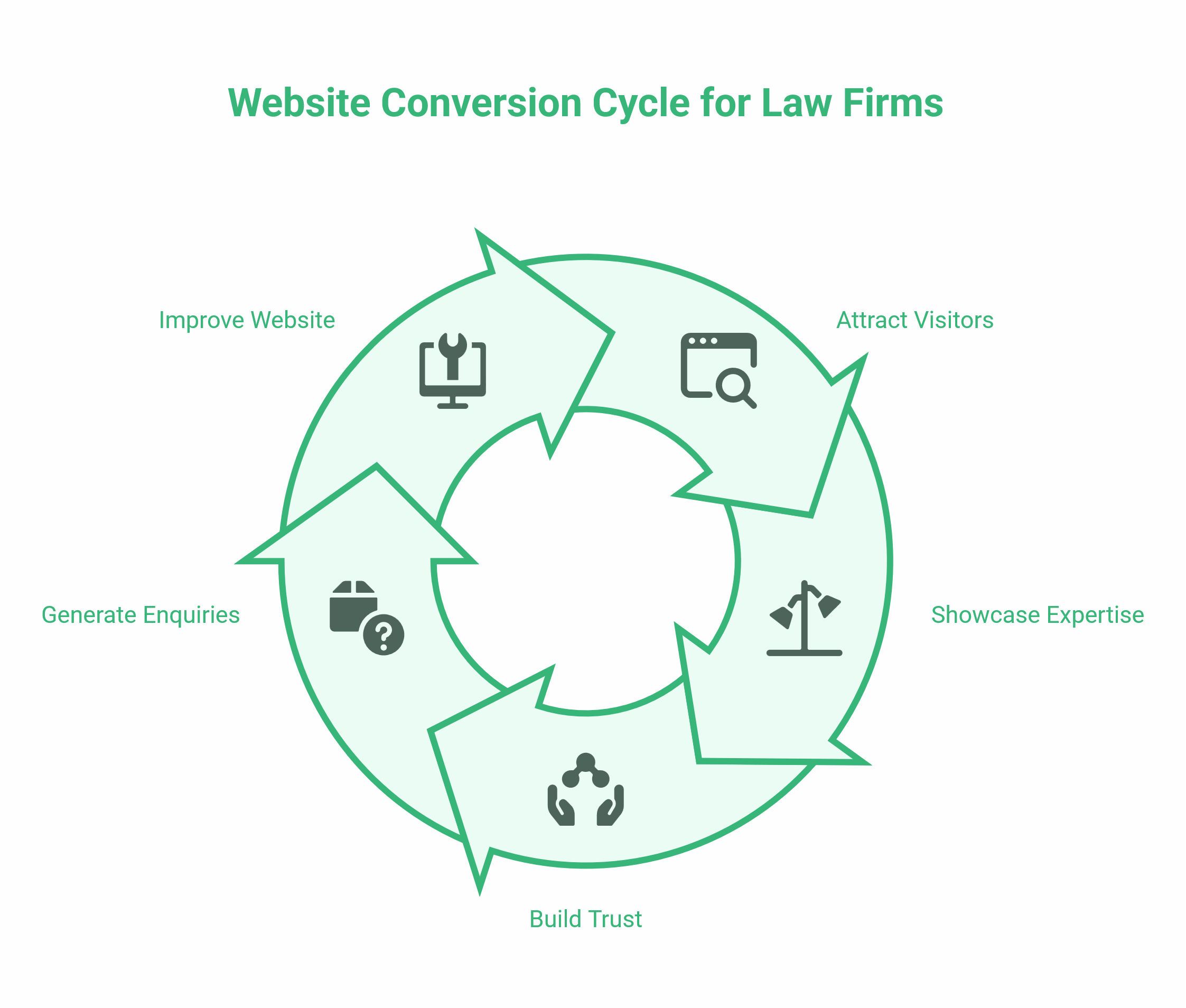
Your website needs to convert visitors into enquiries while demonstrating the expertise and trustworthiness that Google requires for legal content.
Essential Page Structure
Practice Area Pages: Create dedicated, comprehensive pages for each practice area rather than brief listings. Separate pages for:
- Conveyancing (residential and commercial)
- Family law (divorce, children matters, cohabitation)
- Wills and probate
- Employment law (employer and employee focused)
- Commercial law and contracts
- Litigation and dispute resolution
- Personal injury
- Criminal defence
- Immigration
Each practice area page should explain the types of matters you handle, your approach, what clients can expect from the process, and clear next steps for making contact.
Service-Specific Pages: Within practice areas, create targeted pages for specific services. Under family law, you might have separate pages for:
- Divorce and separation
- Financial settlements
- Child custody and access
- Prenuptial agreements
- Cohabitation agreements
This structure allows you to target specific search terms while providing comprehensive information for people with particular needs.
Location Pages: For firms with multiple offices, create individual pages for each location with unique content about serving that area’s legal needs. Include local contact details, parking information, and any practice-area specialisms for each office.
Solicitor Profiles: Create detailed profiles for each solicitor. Include qualifications, practice areas, experience, and professional memberships. Clients often search for solicitors by name after receiving recommendations—ensure these searches find comprehensive, professional profiles.
Insights or Blog Section: A resource area for legal guides, case studies (anonymised appropriately), and commentary on legal developments serves multiple purposes: attracting search traffic, demonstrating expertise, and providing value to existing clients.
Technical Requirements
Law firm websites need solid technical foundations. Clients expect professionalism, and technical problems undermine confidence.
Page speed matters significantly. Legal content often involves substantial text, but that’s no excuse for slow loading. Compress images, use efficient hosting, and ensure pages load quickly on mobile devices.
HTTPS security is non-negotiable for any firm handling sensitive client information. Beyond security benefits, Google uses HTTPS as a ranking signal, and clients increasingly notice (and distrust) unsecured sites.
Mobile experience deserves particular attention. Many people search for legal help on phones, often during stressful moments. If your site is difficult to navigate on mobile, potential clients will find a competitor who’s made the effort.
Clear navigation helps visitors quickly find relevant practice areas. Someone searching for divorce solicitors shouldn’t need to hunt through menus—make the path to relevant information obvious.
Our guide to SEO fundamentals at profiletree.com/seo-basics/ covers these technical foundations in more detail.
Content Strategy for Solicitors
Content marketing builds authority, attracts search traffic, and demonstrates the expertise that sets your firm apart. For solicitors, content opportunities span educational resources, commentary on legal developments, and practical guides for people facing common legal situations.
Educational Content
People searching for legal information often become clients. Creating helpful content that addresses their questions builds trust and positions your firm as knowledgeable and approachable.
Explainer content: Clear explanations of legal processes, rights, and obligations. “What happens during a divorce,” “Understanding your employment rights,” or “The conveyancing process explained step by step.”
FAQ content: Direct answers to common questions. “How long does probate take?” “Can I change my will?” “What counts as unfair dismissal?” These questions drive significant search volume and serve people at the beginning of their legal journey.
Guides and checklists: Practical resources people can use. “Checklist for selling your house,” “What to do if you’re made redundant,” or “Documents needed for a will.”
Topical and Timely Content
Legal developments create natural content opportunities:
Legislative changes: New laws affecting your practice areas warrant clear explanations of what’s changing and how it affects clients.
Case law updates: Significant court decisions in your practice areas, explained in accessible terms.
Budget and policy announcements: Changes to stamp duty, inheritance tax thresholds, or employment regulations.
Seasonal content: Tax year-end planning, summer holiday contact arrangements for separated parents, and year-end business housekeeping.
Publishing timely, accurate content around legal developments captures search traffic while demonstrating your firm stays current with changes affecting clients.
Local Content
Content with local relevance strengthens your position in geographic searches:
Local property market insights: For conveyancing practices, commentary on local market conditions demonstrates local expertise.
Regional business content: For commercial practices, content addressing local business community needs and opportunities.
Local court information: Practical information about local courts, tribunals, and legal processes in your area.
For Northern Ireland firms, content addressing the distinct legal system—different from England and Wales in important respects—targets relevant searches while demonstrating genuine local expertise.
E-E-A-T for Legal Content
Google’s E-E-A-T guidelines (Experience, Expertise, Authoritativeness, Trustworthiness) apply with particular force to legal content. Every piece should:
Show expertise: Include author information with qualifications. Content written by qualified solicitors carries significantly more weight than anonymous articles. Name the author and link to their profile.
Demonstrate experience: Reference practical experience handling matters similar to what readers face. Real-world perspective distinguishes your content from generic legal information.
Build authority: Link to official sources—legislation.gov.uk, court services, professional bodies—and demonstrate current knowledge of your practice areas.
Establish trust: Display regulatory information prominently. Include clear contact details. Maintain accurate, up-to-date content—legal information must be current.
Our comprehensive guide to E-E-A-T at profiletree.com/seo-guide-google-e-a-t-update/ explains how these factors influence rankings for professional services.
“Solicitors are natural experts in their practice areas—the challenge is translating that expertise into content that helps potential clients while satisfying Google’s quality requirements. The firms that do this well build a sustainable competitive advantage that compounds over time.” — Ciaran Connolly, ProfileTree
Local SEO for Law Firms
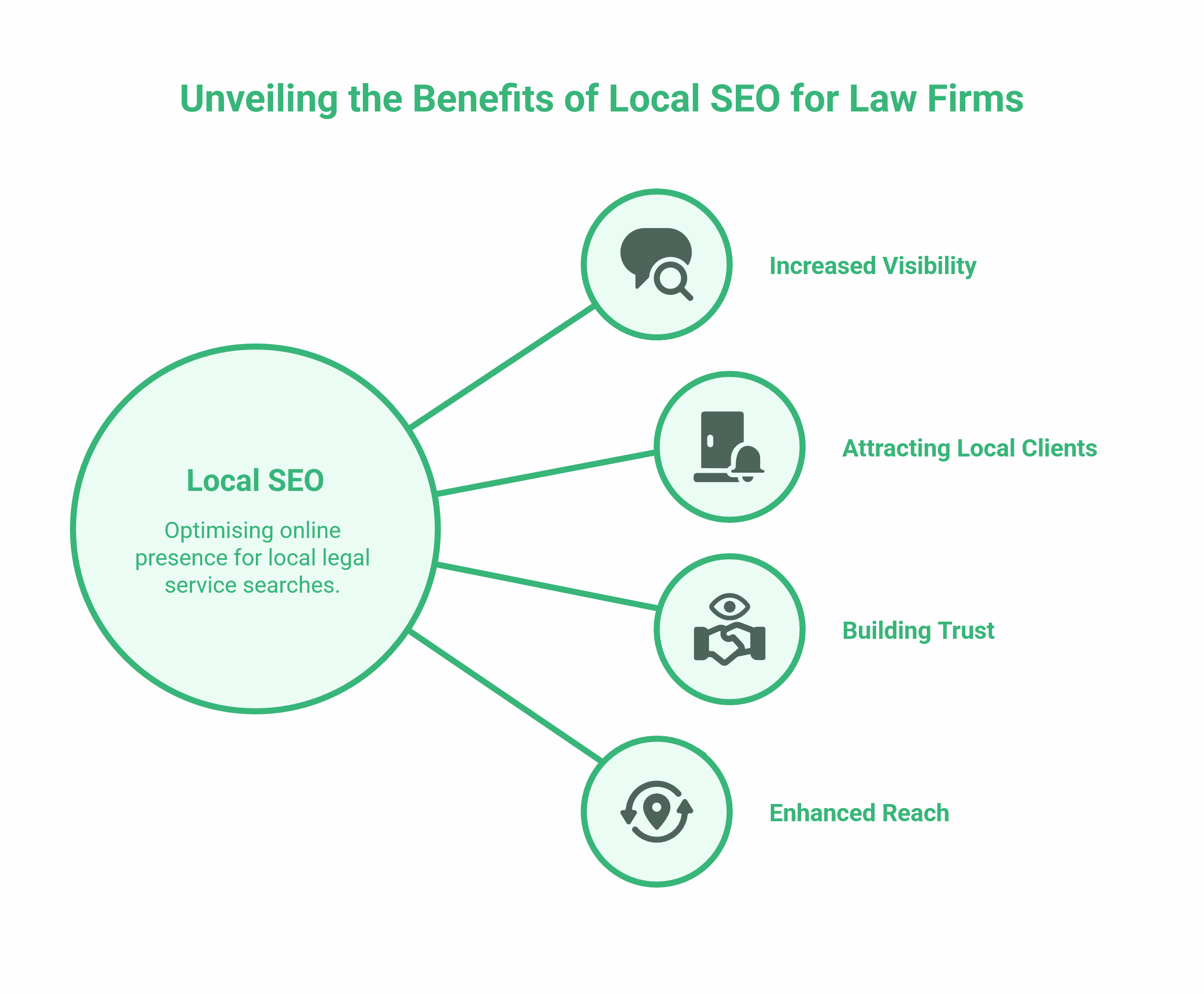
Most legal clients prefer local solicitors. Local SEO ensures visibility when potential clients search for legal services in your area.
Citation Building
Directory listings reinforce your local presence and build trust signals. Prioritise:
Legal directories:
- Law Society Find a Solicitor
- The Legal 500
- Chambers and Partners
- Solicitors.guru
- FindLaw UK
Professional directories:
- Thomson Reuters legal directory
- Martindale-Hubbell
General business directories:
- Yell.com
- Thomson Local
- Yelp
- Local chamber of commerce
Regional directories:
- Law Society of Northern Ireland (for NI firms)
- Local council business directories
- Regional business networks
Ensure Name, Address, and Phone number consistency across all listings. Our guide at profiletree.com/check-backlinks/ explains how to audit your citation profile and identify inconsistencies.
Geographic Targeting
Consider creating content targeting specific areas you serve:
Town and area pages: If you serve multiple towns from one office, create pages explaining how you help clients in each location.
Service area combinations: “Employment solicitor Ballymena” or “Conveyancing solicitor Bangor” pages targeting specific combinations of service and location.
Local legal information: Guides specific to local courts, local property markets, or regional legal considerations.
Our hyperlocal SEO guide at profiletree.com/hyperlocal-seo/ covers geographic targeting strategies in detail.
Local Link Building
Local links strengthen geographic search presence:
- Sponsor local business awards or community events
- Contribute legal commentary to local news publications
- Partner with complementary local professionals (accountants, financial advisors, estate agents)
- Participate in local business networks and organisations
- Offer educational seminars for local business groups
These activities build links while establishing your firm within the local professional community.
Practice Area SEO Considerations
Different practice areas present different SEO challenges and opportunities.
Conveyancing
Conveyancing is highly competitive online, with national firms and comparison sites dominating many searches. Local focus provides differentiation:
- Target location-specific searches (“conveyancing solicitor [town]”)
- Create content about local property markets and buying/selling in your area
- Emphasise personal service and local knowledge versus faceless national operations
- Build relationships with local estate agents who can refer clients
Family Law
Family law clients often search during emotional, difficult times. Content should be:
- Empathetic and reassuring in tone
- Clear about processes and what to expect
- Practical and action-oriented
- Careful about legal accuracy while remaining accessible
Target both practical searches (“how to get a divorce”) and service searches (“divorce solicitor [location]”).
Employment Law
Employment law offers opportunities from both employer and employee perspectives:
- Create separate content streams for each audience
- Target searches around specific issues (redundancy, unfair dismissal, discrimination, settlement agreements)
- Provide timely content when employment law changes
- Consider whether you want to target both sides or focus on one
Commercial and Corporate
Commercial clients often search differently from individuals:
- Target industry-specific searches where you have sector expertise
- Create content addressing business legal needs at different stages (startup, growth, exit)
- Consider B2B content marketing approaches
- Build visibility through business networks and directories
Personal Injury
Personal injury is extremely competitive online, dominated by large firms with substantial marketing budgets:
- Consider whether competing is worthwhile for smaller firms
- If pursuing, focus on specific injury types or local targeting
- Ensure compliance with SRA rules on personal injury advertising
- Build content around the process and what to expect, rather than pure claims and encouragement
Technical SEO for Law Firm Websites
Technical foundations ensure search engines can properly understand and rank your content.
Schema Markup
Structured data helps search engines understand your content. Implement:
LegalService schema: Specify the types of legal services you offer and areas served.
Attorney schema: For individual solicitor profiles, including credentials and practice areas.
LocalBusiness schema: Your firm’s address, contact details, and opening hours.
FAQPage schema: For FAQ content, potentially generating rich results.
Article schema: For blog posts and legal guides, including author information.
Content Organisation
Structure content logically:
- Clear hierarchy from practice areas to specific services
- Logical internal linking between related content
- Hub pages for major practice areas linking to detailed service pages
- Consistent navigation helping users find relevant information
Site Health
Maintain technical health:
- Regular crawl error monitoring via Google Search Console
- Broken link identification and fixing
- Mobile usability testing
- Page speed optimisation
- Security certificate maintenance
If your current website needs technical improvement, ProfileTree’s development team builds sites designed for both user experience and search performance—details at profiletree.com/services/website-development/.
Compliance Considerations
Solicitor marketing is regulated. Ensure SEO activities comply with professional conduct rules.
SRA Standards (England and Wales)
The SRA Code of Conduct requires that publicity:
- Is not misleading
- Is accurate and not likely to mislead
- Doesn’t make comparisons with other firms’ charges without adequate information
- Identifies the firm clearly
Law Society of Northern Ireland Rules
Similar principles apply in Northern Ireland. Marketing must be:
- Dignified and in good taste
- Not likely to bring the profession into disrepute
- Accurate and not misleading
Practical Compliance
For SEO specifically:
- Ensure all website content is accurate and current
- Don’t make claims about outcomes you cannot substantiate
- Be careful with testimonials—ensure they comply with rules on publicity
- Keep qualifications and regulatory information accurate
- Don’t disparage competitors
Review your website and content against professional conduct rules periodically, particularly when making significant changes.
Measuring SEO Performance
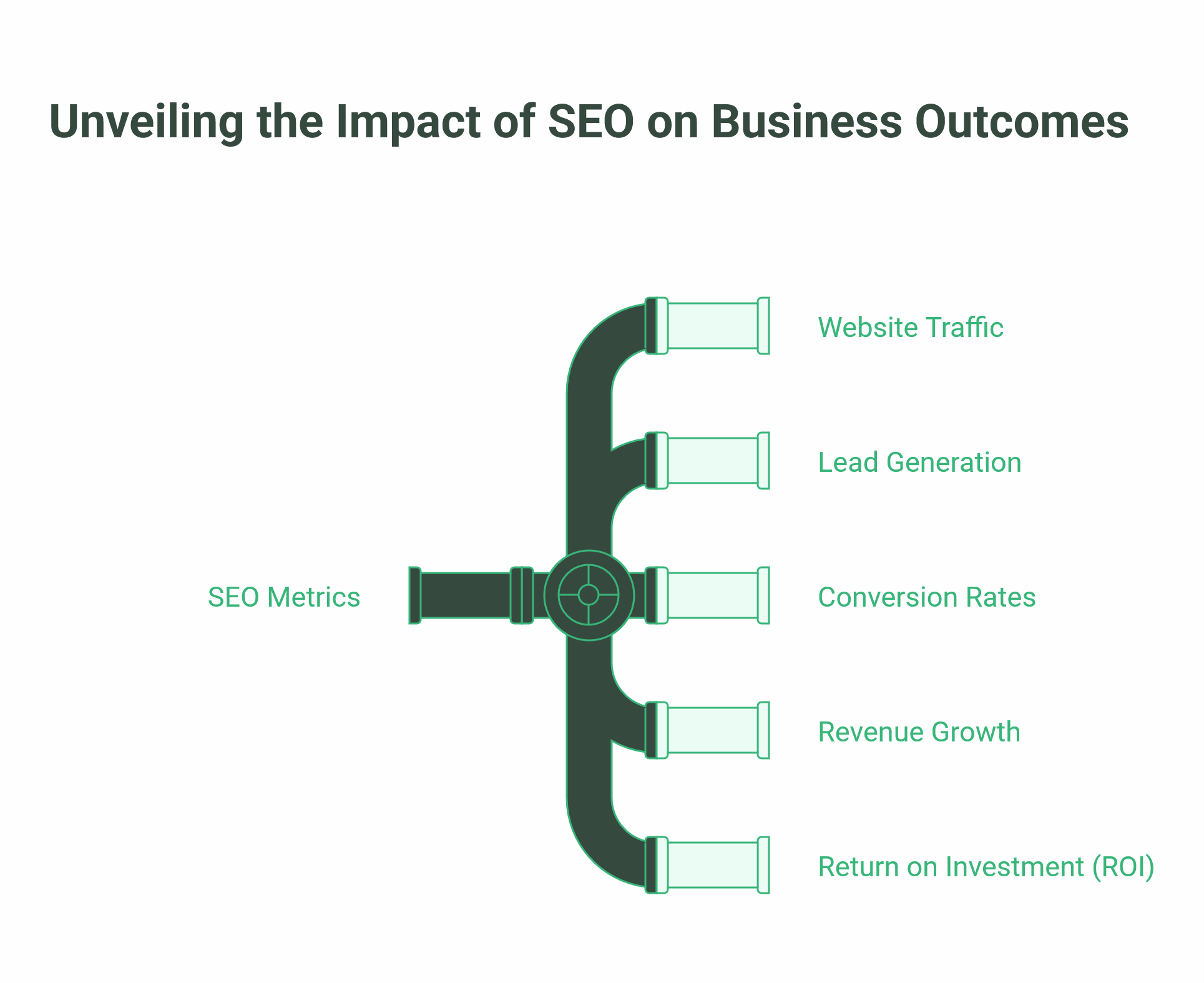
Track metrics connecting SEO activity to business outcomes.
Key Metrics
Visibility:
- Rankings for target practice area and location keywords
- Organic traffic to service pages
- Impressions and clicks from Search Console
- Local pack appearances
Engagement:
- Time on page for key content
- Pages per session
- Content downloads
- Video views (if applicable)
Conversions:
- Contact form submissions
- Phone calls from the website
- Email enquiries
- Consultation bookings
Business outcomes:
- New client matters opened from organic search
- Revenue from search-acquired clients
- Client quality (are search clients good fits for your firm?)
Attribution
Legal clients often research extensively before making contact. Track:
- First touch attribution (how clients initially found you)
- Multi-touch journeys (SEO’s role alongside other channels)
- Time from first visit to enquiry
Ask new clients how they found you during intake. I searched online” or “I found your website” confirms SEO’s contribution.
Common Mistakes Law Firms Make
Avoid these frequent errors:
Thin practice area pages: Brief descriptions don’t rank or convert. Develop comprehensive pages demonstrating genuine expertise.
Neglecting Google Business Profile: Set-and-forget profiles miss opportunities. Regular updates, photos, and review responses improve performance.
Generic content: Content that could appear on any law firm’s website provides no competitive advantage. Include your perspective, your experience, your local knowledge.
Ignoring mobile: Many legal searches happen on phones, often during stressful moments. Poor mobile experience loses clients.
Outdated information: Legal information must be up to date. Outdated content damages credibility and potentially misleads clients.
No clear calls to action: Make it obvious how to contact you. Phone numbers, contact forms, and consultation booking should be prominent throughout.
Compliance oversights: Ensure all marketing complies with professional conduct rules. The cost of non-compliance far exceeds any SEO benefit.
Getting Started with Law Firm SEO
If you’re beginning SEO or reviewing existing efforts:
Immediate priorities:
- Claim and complete your Google Business Profile
- Ensure your website clearly explains each practice area
- Verify regulatory information is accurate and prominent
- Check NAP consistency across directories
First three months:
- Develop comprehensive content for priority practice areas
- Build citations in legal and local directories
- Implement schema markup
- Establish review request processes
Ongoing:
- Publish regular content on legal developments and client questions
- Respond to reviews promptly
- Update content when the law changes
- Monitor performance and adjust strategy
FAQs
How competitive is SEO for solicitors?
It varies enormously by practice area and location. Personal injury is intensely competitive nationally. Many specialist areas and local searches have far less competition. Most firms identify opportunities by combining practice-area focus with local targeting.
How long before SEO generates new client enquiries?
Typically, three to six months for initial improvements, with stronger results building over six to twelve months. Legal clients often research extensively, so there’s usually a lag between ranking improvements and enquiry increases.
Should we focus on local or national SEO?
For most firms, local SEO offers a better return on investment. You’re more likely to rank for “solicitor Newry” than “solicitor UK,” and local searches indicate clients you can actually serve. National focus makes sense only for firms genuinely serving clients regardless of location.
How much content do we need?
Quality over quantity. One thorough, well-researched article per month is better than weekly, superficial content. Focus on topics with genuine search demand where you can demonstrate real expertise.
Building Sustainable Search Visibility
SEO for solicitors isn’t about gaming search engines. It’s about building a genuine online presence that reflects your firm’s expertise and helps potential clients find you when they need legal help.
The fundamentals are clear: maintain an accurate, complete Google Business Profile; build a website with comprehensive practice area information; create helpful content demonstrating your expertise; and ensure consistent information across online directories.
Firms executing these basics gain a significant advantage over competitors still relying entirely on traditional channels. In many local markets, simply being visible and helpful online differentiates you from firms that haven’t made the investment.
If you’re ready to improve your law firm’s search visibility, ProfileTree’s SEO team works with professional services firms across Northern Ireland, Ireland, and the UK. We understand both the technical requirements of effective SEO and the professional context that shapes marketing for solicitors. Get in touch at profiletree.com/contact-us/ to discuss how we can help your firm attract more clients through search.