
Gen Z Marketing: A Practical Guide for UK Brands
Table of Contents
Generation Z, born roughly between 1997 and 2012, now holds real spending power and shapes what households buy. For brands across Northern Ireland, Ireland and the UK, Gen Z marketing has become a test of trust rather than a test of budget. Reach them with the old playbook, and you get ignored.
This generation grew up online. They research before they buy, cross-check claims across sources, and drop brands that feel fake. What worked on Millennials often falls flat here.
This guide covers the Gen Z marketing trends that matter now: who this generation actually are, the UK and Ireland context most global advice skips, where they spend their time in 2026, the content that earns their trust, and the quiet opportunity of Gen Z as B2B buyers.
Who Gen Z Really Are: Values Before Tactics
Before choosing a platform or a format, get the mindset right. Gen Z judges brands on behaviour, not slogans. Their values shape every scroll, search and purchase, so any Gen Z marketing plan starts with understanding what they care about and how that differs from the generation before them.
The Generation That Grew Up Online
Gen Z have never known a world without smartphones, streaming and social feeds. They move between apps in seconds and filter content fast. The often-quoted “eight-second attention span” is disputed and probably overstated, but the underlying behaviour is real: if something feels irrelevant, they scroll past without a second thought.
That habit rewards clarity. Say the useful thing early, show it plainly, and skip the wind-up. Our guide to short-form video explains why the first two seconds now decide whether the rest gets watched.
Growing up online brought pressure as well as convenience. Gen Z report higher levels of anxiety and stress than earlier generations, and they switch off fast from marketing that manufactures panic or preys on insecurity. Countdown timers, shame tactics and false urgency tend to push them away rather than win the sale.
The practical takeaway is calm confidence. Lead with genuine usefulness, respect the reader, and let the product earn attention on merit. Brands that feel steady and honest hold Gen Z attention far longer than brands that shout.
Authenticity, Advocacy and Accountability
Three traits define how Gen Z treat brands. They want authenticity, meaning real people and honest messaging. They expect advocacy, meaning a clear stance on issues they care about. And they demand accountability, checking whether a company’s actions match its words.
This is why heavy-handed advertising backfires. Gen Z have watched data scandals and influencer controversies during their formative years, so they approach marketing with built-in scepticism. Brands that show their working, including the messy parts, earn more credit than brands that look flawless.
Privacy sits inside this, too. Gen Z understand how their data is collected and traded, and intrusive personalisation makes them uneasy. Clear cookie policies and light-touch data collection can become a selling point rather than a compliance chore, signalling respect to an audience that notices.
Gen Z Versus Millennials: The Consumption Gap
The two groups are often lumped together, but they buy and browse differently. The table below sets out the practical gaps that change how you plan a campaign.
| Factor | Millennials | Gen Z |
|---|---|---|
| Content preference | Polished, aspirational | Raw, useful, fast |
| Key value | Experience | Authenticity and ethics |
| Primary search | TikTok, Instagram, YouTube | |
| Response to ads | Tolerant | Sceptical, ad-avoidant |
| Loyalty driver | Rewards, habit | Shared values, trust |
For a deeper read on how platforms shape younger audiences, our breakdown of Gen Z statistics covers time spent and platform habits in detail.
The UK and Ireland Lens: Money, Trust and Local Nuance
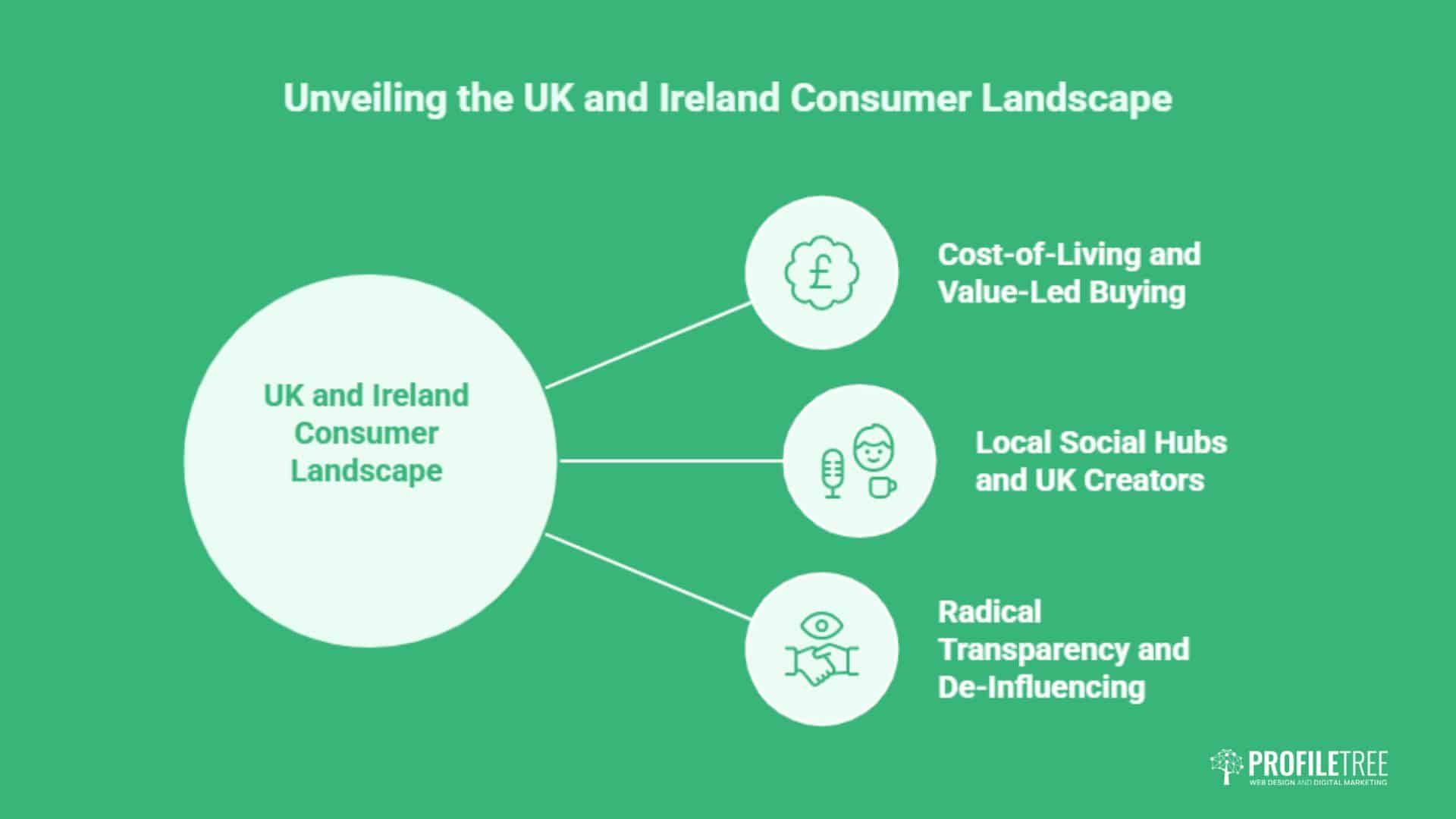
Most Gen Z marketing advice is written for a US audience and misses the local picture. In the UK and Ireland, economic pressure and a sharper distrust of polished influence are changing what actually works. This section covers the regional factors that global guides skip.
Cost-of-Living and Value-Led Buying
UK and Irish Gen Z came of age through economic wobbles and a long cost-of-living squeeze. They are price-conscious, but not simply cheap. They will pay more for quality and for brands whose values match theirs, as long as the value is obvious.
That means pricing has to be transparent and justified. Hidden fees and vague packages lose this audience quickly. Clear breakdowns of what a customer pays for, backed by reviews and detail, do more than any discount code. A well-planned digital strategy puts value and values side by side.
In a high-inflation market, value for money and brand values have to travel together. A cause-led message with a high price and no justification reads as tone-deaf. The brands that win here prove quality in plain terms, then let their ethics reinforce the decision rather than replace it.
Local Social Hubs and UK Creators
Gen Z in Belfast, Dublin or Manchester follow different creators from their US peers, and they trust local voices more. Micro-influencers with small, engaged communities tend to outperform big names because they feel real and relatable.
Local relevance matters offline too. Younger audiences respond to brands that know their patch, from city references to regional events. Travel and lifestyle content such as this guide to the top cities in Northern Ireland shows how place-based storytelling builds a genuine local connection. To go deeper on partnerships, compare how influencer types perform for reach and trust.
Radical Transparency and De-Influencing
The defining Gen Z marketing trend of 2025 and 2026 is “de-influencing”, where creators tell followers what not to buy. Honest, critical reviews now carry more weight than glossy promotion. For brands, that flips the old logic: admitting a limitation can build more trust than hiding it.
“Gen Z buy into belief systems, not just products,” says Ciaran Connolly, founder of ProfileTree. “The brands that admit their flaws and show real change earn a level of trust that no advertising budget can buy.”
Practical honesty wins here. Show real customers, share behind-the-scenes work, and correct mistakes in public. An ethical marketing strategy is now a commercial advantage, not a nicety.
It helps to picture how Gen Z move from first contact to purchase. They discover a brand through a creator or a short video, then verify it by reading reviews and checking claims across sources, and only then buy, often through the same social app. Marketing that supports every stage of that journey, rather than just the first ad, is what converts.
Where Gen Z Spends Time in 2026
Reaching Gen Z means meeting them on the platforms they actually use, in the style each platform expects. A single message pushed everywhere fails. This section maps the main channels and the behaviour that comes with each.
TikTok and Reels for Reach
Short-form video remains the front door to Gen Z attention. TikTok and Instagram Reels reward entertainment and relevance over follower counts, so even small brands can reach large audiences with the right idea.
Content that works here feels native, not repurposed. A polished TV-style advert dropped onto TikTok usually flops. Our overview of TikTok statistics shows how UK usage patterns should shape your posting and format choices.
Discord, Twitch and Gaming Communities
Most guides stop at TikTok, which is a mistake. Gen Z increasingly gather in gaming and community spaces such as Discord, Twitch, Roblox and Fortnite. These are their “third places”, where they hang out rather than just scroll.
Marketing here is about presence and participation, not interruption. Brands that sponsor creators, host servers or build genuine experiences earn goodwill. Those that drop in with a banner ad get ignored. Community building is a slow game that rewards consistency, as our piece on community engagement explains.
Small businesses can take part without a large budget. A niche Discord server for customers, a regular presence in a relevant community, or a sponsored stream with a trusted local creator can all build loyalty. The point is to add value to a space Gen Z already care about, not to hijack it.
The Search Behaviour Shift
Gen Z increasingly search on TikTok, Instagram and YouTube before they touch Google. They ask a question, watch a few short answers, and decide. This changes what your content needs to do.
Video with clear, searchable titles and captions now works as discovery, not just entertainment. Local search still matters for immediate needs, so businesses serving Northern Ireland and Ireland should keep SEO services and local visibility high on the list.
Almost all of this happens on a phone. Gen Z reach the internet mobile-first, and a slow or clumsy mobile experience loses them before your message lands. Fast loading, thumb-friendly navigation and clean layouts are the baseline, not a bonus.
Content That Earns Gen Z Trust
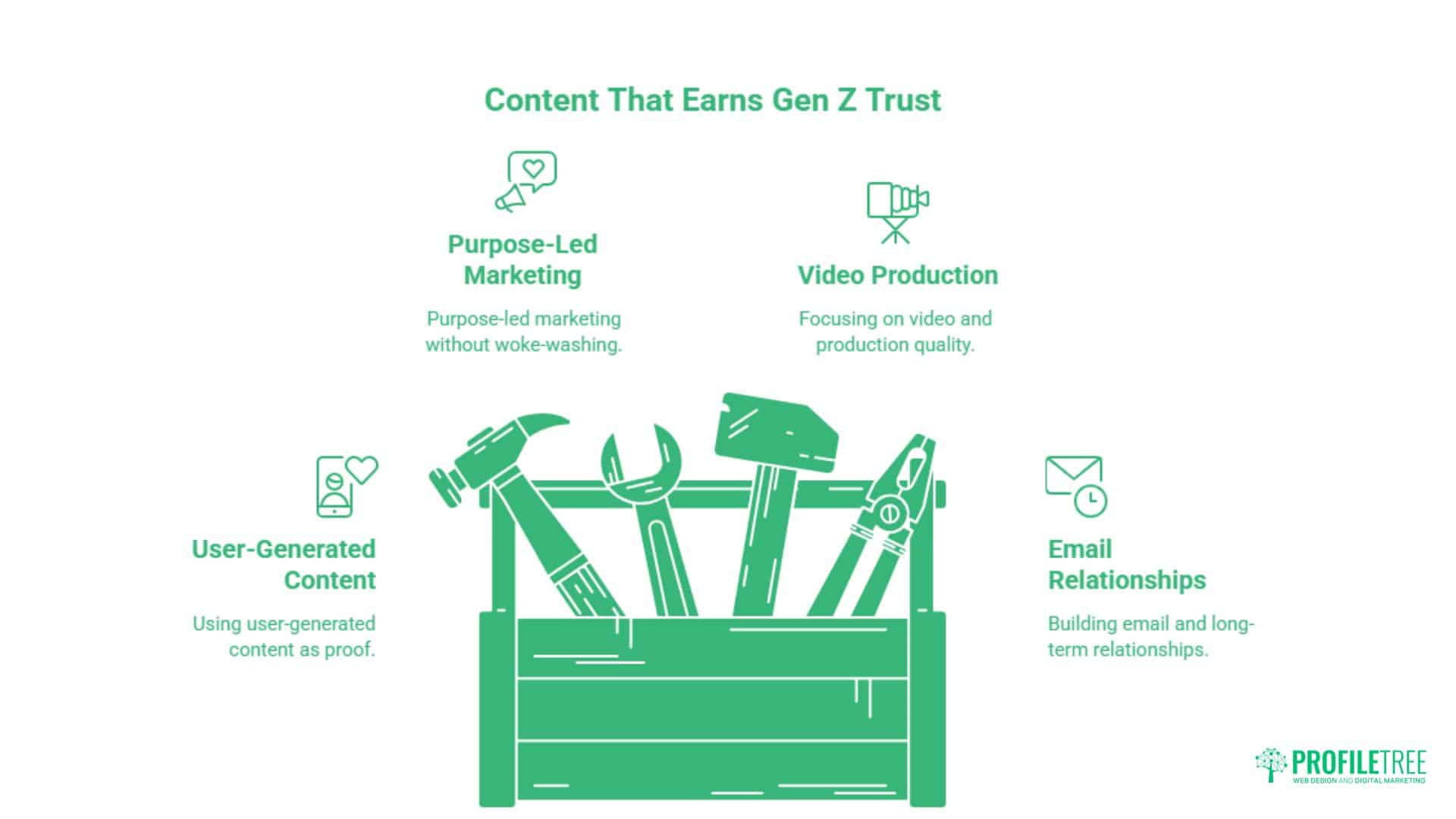
Gen Z reward useful content and punishes empty promotions. The formats below turn scepticism into trust and, over time, into sales. Each one gives the audience something before it asks for anything back.
User-Generated Content as Proof
Real customers are your best marketers. User-generated content and honest testimonials carry far more weight with Gen Z than any branded message, because they read as evidence rather than advertising.
Build simple systems to collect and share genuine customer experiences. A single unpolished clip from a real user often outperforms an expensive studio shoot. That trust signal is hard to fake and easy to spot when it is missing.
Educational content works the same way. Gen Z use platforms like YouTube as search engines for learning, so tutorials, how-to guides and honest explainers position a business as a knowledge source long before a sale. Well-planned content marketing turns that curiosity into trust.
Purpose-Led Marketing Without Woke-Washing
Gen Z supports brands that stand for something, but they spot “greenwashing” and “values-washing” instantly. A claim without proof does more harm than staying quiet.
The fix is to embed values into operations, then talk about them plainly. If you claim to be sustainable, show the evidence. Our look at sustainability in marketing covers how to make claims you can defend.
Before you publish a values-led campaign, run a quick five-point check. Is the claim specific rather than vague? Can you prove it with data or a named action? Does it reflect how the business actually operates? Would it survive a sceptical customer digging into it? And are you prepared to answer honestly if challenged? If any answer is no, fix the practice before the marketing.
Video and Production Quality
Gen Z grew up on professionally made content, so their quality bar is high even for small businesses. Weak video and clumsy design read as a warning sign about the whole company.
This does not mean big budgets. It means clear thinking, good sound, and content built for the platform. Strong video marketing and thoughtful animation explain complex ideas in a way this audience actually enjoys.
Email and Long-Term Relationships
Email still reaches Gen Z, as long as every message earns its place. Generic newsletters get ignored, but personalised, useful, low-pressure emails keep a relationship warm between purchases.
Give control over frequency and content, and treat the inbox as a privilege rather than a right. Practical advice on getting this balance right sits in our guide to email marketing.
The Hidden Opportunity: Gen Z as B2B Buyers
Almost every Gen Z guide treats them as fashion and beauty shoppers, ignoring a bigger shift. The oldest members are now in their late twenties and making business decisions. Reaching them well is where many brands can pull ahead.
Gen Z Decision-Makers in Business
Gen Z are moving into procurement, management and founder roles. They bring the same instincts to work: they research suppliers, check ethics, and distrust hard-sell tactics. A supplier’s website and content now face the same scrutiny as a consumer brand.
That raises the bar for B2B marketing. Clear proof, transparent pricing and a credible online presence matter as much in a sales cycle as they do in a shopping cart.
For B2B brands, the same values-first thinking applies. Case studies with real numbers, honest content that teaches rather than sells, and evidence of ethical practice all carry weight with younger buyers. A polished sales deck alone no longer closes the deal with a Gen Z decision-maker who has already researched you.
Building a Gen Z Ready Digital Presence
Whether your buyer is a consumer or a business, the foundations are the same: a fast, mobile-first website that loads quickly and communicates plainly. Gen Z abandon slow or awkward sites without hesitation.
Good website design here means transparent information, accessible layouts and genuine value on the page. The site is your headquarters, and this audience judges the whole business by it.
Where ProfileTree Fits
ProfileTree, a Belfast-based digital agency, helps businesses across Northern Ireland, Ireland and the UK connect with Gen Z through strategy, content and technical work. That spans platform-specific social campaigns, video, and websites built to convert a sceptical visitor.
Reaching a fragmented audience takes a channel-by-channel plan rather than one broadcast message. Focused social media marketing works out which platforms your Gen Z customers actually use, then builds content that feels native to each, from TikTok and Reels to community spaces.
Gen Z also expect tailored experiences, yet they guard their privacy closely. Used well, AI in marketing can personalise content and recommendations while keeping data collection light and transparent, striking the balance that this audience rewards.
For teams that want to build the skill in-house, digital training covers platform content, Gen Z behaviour and measurement. The aim is simple: honest marketing that respects this generation and still drives results.
See how ProfileTree can help your brand reach Gen Z with content that earns trust. Get in touch about your next campaign.
Conclusion
Gen Z marketing rewards honesty over hype. This generation checks claims, values transparency, and backs brands whose actions match their words. Win them with clear pricing, platform-native content, real proof and genuine values, and you build loyalty that outlasts any single campaign. Treat them as an opportunity rather than a problem to solve, and the payoff reaches every generation your business serves, from cautious Millennials to the Gen Alpha buyers coming next.
FAQs
What is the most effective platform for Gen Z marketing in the UK?
TikTok gives the widest reach for discovery, while Discord and Twitch offer a deeper community. The best choice depends on your audience and goals, so most UK brands use TikTok and Instagram Reels for awareness and community platforms for loyalty.
What is de-influencing, and how does it affect brands?
De-influencing is the trend of creators telling followers what not to buy, favouring honest and critical reviews over promotion. For brands, it means transparency wins. Admitting limitations and showing real improvement builds more trust than polished claims.
How does Gen Z search behaviour differ from older generations?
Gen Z often search on TikTok, Instagram and YouTube before Google, looking for quick visual answers. Brands should optimise video titles and captions for discovery, while keeping traditional and local search strong for immediate needs.
Is email marketing still effective for Gen Z?
Yes, but only when it is personalised and low-pressure. Generic newsletters get ignored. Useful, well-timed messages that give control over frequency keep a relationship warm and respect the reader’s time.
How can small UK businesses market to Gen Z on a budget?
Focus on user-generated content, community engagement and honest storytelling rather than expensive production. A single genuine customer clip or a helpful short video often beats a costly advert with this audience.