
Video, Done by AI: Easy, Trendy, Viral—Even for Small Teams
Table of Contents
The days of needing expensive equipment, large production crews, and Hollywood budgets to create compelling video content are over. Today, a single person with a laptop and the right AI tools can produce videos that rival agency output—and sometimes even outperform them. At ProfileTree, we’ve tested every AI video tool worth knowing about across our five brands, generating millions of views while dramatically reducing production time and costs.
This isn’t about replacing creativity with automation. It’s about amplifying your creative capacity, allowing small teams to compete with large agencies, and helping businesses finally achieve the video presence they’ve always wanted but could never afford. After producing thousands of videos and achieving 100 million+ views across our channels, we’re sharing exactly how AI transforms video production from overwhelming burden to competitive advantage.
The AI Video Revolution: What’s Actually Changed
Video marketing has always been powerful but painfully resource-intensive. Traditional video production requires scriptwriters, videographers, editors, motion designers, voice actors, and significant time investment. A single two-minute video could easily cost £2,000-£5,000 and take weeks to produce. For small businesses and lean marketing teams, this made consistent video content impossible.
AI changes everything about this equation. Not through magic or hype, but through practical tools that handle the heavy lifting while you focus on strategy and creativity. We’re not talking about fully automated, soulless content. We’re talking about AI as your production assistant, editor, scriptwriter, and optimizer—multiplying your capabilities without multiplying your costs.
The transformation happens across every stage of production. AI writes scripts based on your bullet points. It generates realistic voiceovers without recording studios. It edits footage automatically, finding the best moments and cutting dead space. It creates animations and graphics without design skills. It optimises content for different platforms automatically. Most importantly, it learns what works and helps you create more of it.
The Tools Transforming Video Production
Through extensive testing across our brand portfolio, we’ve identified the AI tools that actually deliver results, not just promises. Each tool serves specific purposes, and understanding their strengths helps you build an efficient production workflow.
Script and Content Generation
ChatGPT and Claude have revolutionised scriptwriting, but most creators use them wrong. Instead of asking for complete scripts, use them as creative partners. Feed them your main points and ask for hook variations. Give them successful video transcripts and ask for similar structures with your message. Request platform-specific adaptations of existing content.
For Learning Mole’s educational content, we input curriculum points and receive engaging narratives that teach complex concepts simply. The AI doesn’t replace our expertise—it helps us communicate it more effectively. A process that took hours now takes minutes, allowing us to produce daily content rather than weekly.
Jasper AI excels at marketing-focused video scripts. It understands conversion psychology and creates scripts that sell without sounding salesy. We’ve used it to transform product descriptions into compelling video narratives that actually convert viewers into customers.
Visual Content Creation
Midjourney and DALL-E 3 eliminate the need for stock footage in many cases. Need a specific scene that doesn’t exist in stock libraries? Generate it. Want consistent visual style across your videos? Create it. These tools produce images that feel custom-made because they are.
For Amazing Food & Drink, we generate stylised food photography that would cost hundreds per image from photographers. The results are unique, on-brand, and infinitely customisable. When stock footage feels generic, AI-generated visuals make your content stand out.
Runway ML takes this further with video generation from text or images. While not perfect for realistic human footage, it excels at creating abstract backgrounds, transitions, and conceptual sequences. We’ve used it to create dream sequences, time-lapses, and visual metaphors that would be impossible to film traditionally.
Canva’s AI features democratise motion design. Their Magic Design for Video creates complete videos from raw footage and basic instructions. While professionals might scoff, we’ve seen Canva videos generate millions of views. The key is understanding its limitations and playing to its strengths—templates, consistency, and speed.
Editing and Post-Production
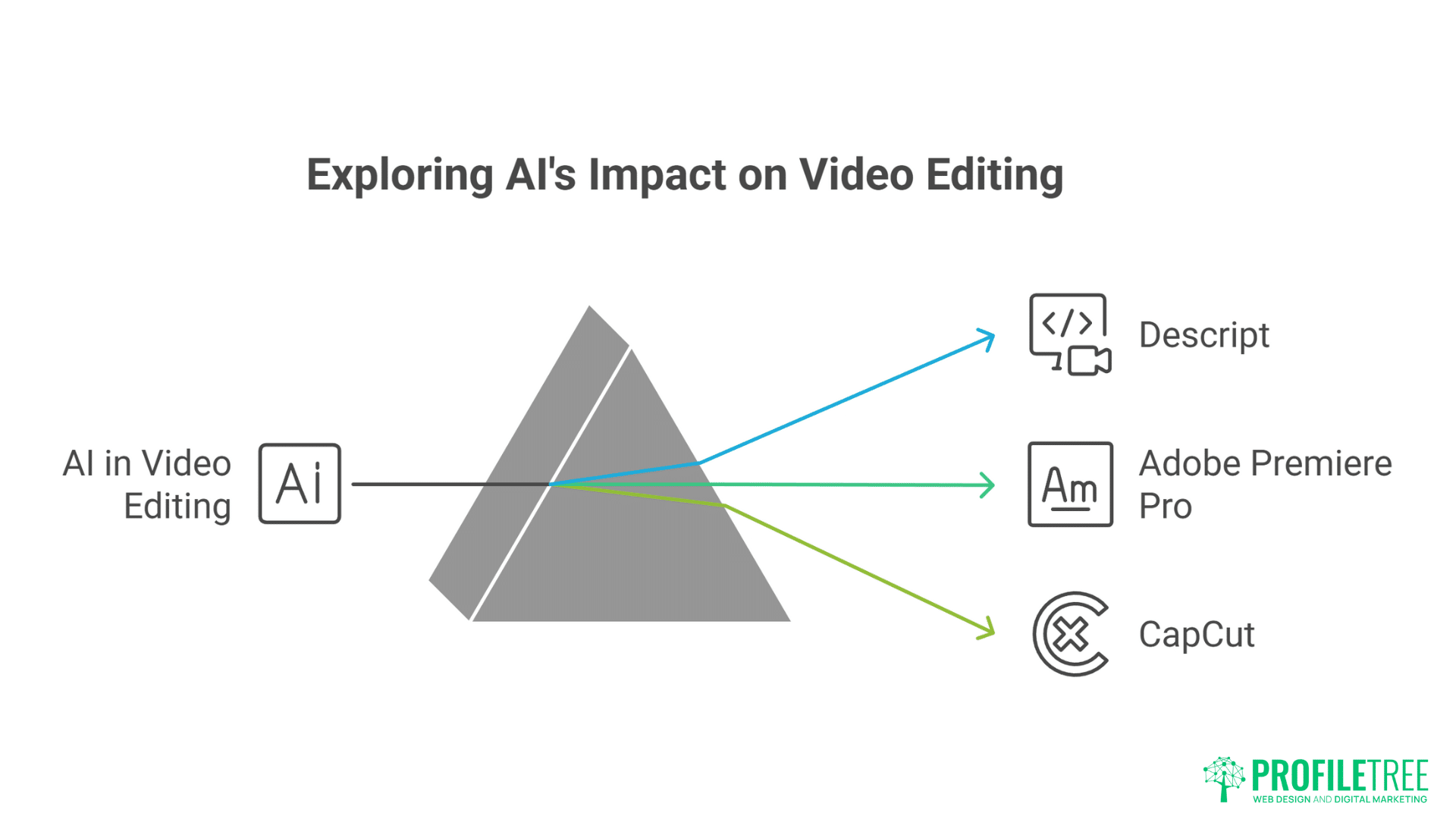
Descript changed how we approach editing entirely. Upload your footage, and it transcribes everything, allowing you to edit video like you edit text. Delete a sentence from the transcript, and it disappears from the video. Remove all “ums” and “ahs” with one click. Generate realistic overdubs when you need to fix mistakes without re-recording.
We’ve cut our editing time by 70% using Descript for talking-head videos and podcasts. The ability to edit video through text means anyone who can edit a document can edit video. This democratisation of editing skills has allowed our entire team to contribute to video production.
Adobe Premiere Pro’s AI features handle the heavy lifting for more complex productions. Auto Reframe intelligently crops horizontal videos for vertical platforms. Scene Edit Detection finds cut points automatically. Auto Colour matches footage from different sources. These features don’t replace editors—they eliminate tedious tasks so editors can focus on creativity.
CapCut, despite being free, offers AI features that rival paid alternatives. Auto captions with 95% accuracy. Background removal without green screens. Voice enhancement that makes phone recordings sound professional. We’ve produced viral TikToks entirely in CapCut that competitors spent thousands creating in professional software.
Voice and Audio
ElevenLabs produces AI voices indistinguishable from human recording. We’ve created entire educational series using AI narration, and viewers can’t tell the difference. The key is choosing the right voice for your content and adding natural pauses and emphasis through punctuation and formatting.
For multi-language content, AI voice generation is transformative. Learning Mole reaches global audiences by creating versions in Spanish, French, and Mandarin without hiring native speakers. The cultural nuances might not be perfect, but the accessibility improvement is massive.
Murf AI excels at commercial voiceovers with emotional range. Need excitement for a product launch? Concern for a problem-focused video? Authority for educational content? Murf’s voices convey emotion convincingly, eliminating the need for expensive voice talent for most business videos.
Adobe Podcast’s Enhance Speech transforms poor audio into professional quality. Record on your phone in a noisy room, and it sounds like a studio recording. This single tool has eliminated the “we don’t have good audio equipment” excuse for video creation.
Platform-Specific Strategies That Actually Work
Creating great videos means nothing if they don’t perform on their intended platforms. Each platform has unique requirements, audiences, and algorithms. AI helps optimise for these differences without creating entirely separate content.
LinkedIn: Professional Polish Without the Price
LinkedIn rewards native video with massive organic reach, but the audience expects professional quality. AI helps achieve this balance between authenticity and polish.
What works on LinkedIn: Videos between 30 seconds and 5 minutes perform best, with the sweet spot around 90 seconds. AI helps condense longer content into these timeframes by identifying and extracting key points. Descript’s AI identifies the most impactful moments, while ChatGPT helps restructure narratives for brevity.
Professional appearance matters, but perfection feels inauthentic. We use AI to enhance quality while maintaining personality. Background blur from any video editor. Automatic colour correction to maintain consistency. AI-generated lower thirds and graphics for credibility. The result looks professional but approachable.
Captions are essential since most LinkedIn videos play muted. AI transcription tools achieve 95%+ accuracy, and automated styling ensures readability on mobile devices. We’ve found that videos with captions receive 40% more engagement than those without.
The hook determines everything on LinkedIn. AI helps generate dozens of opening variations to test. “Most businesses waste 50% of their marketing budget. Here’s why…” performs better than “Today I want to talk about marketing efficiency.” AI understands these patterns and helps craft openings that stop scrolling.
TikTok: Authenticity Amplified
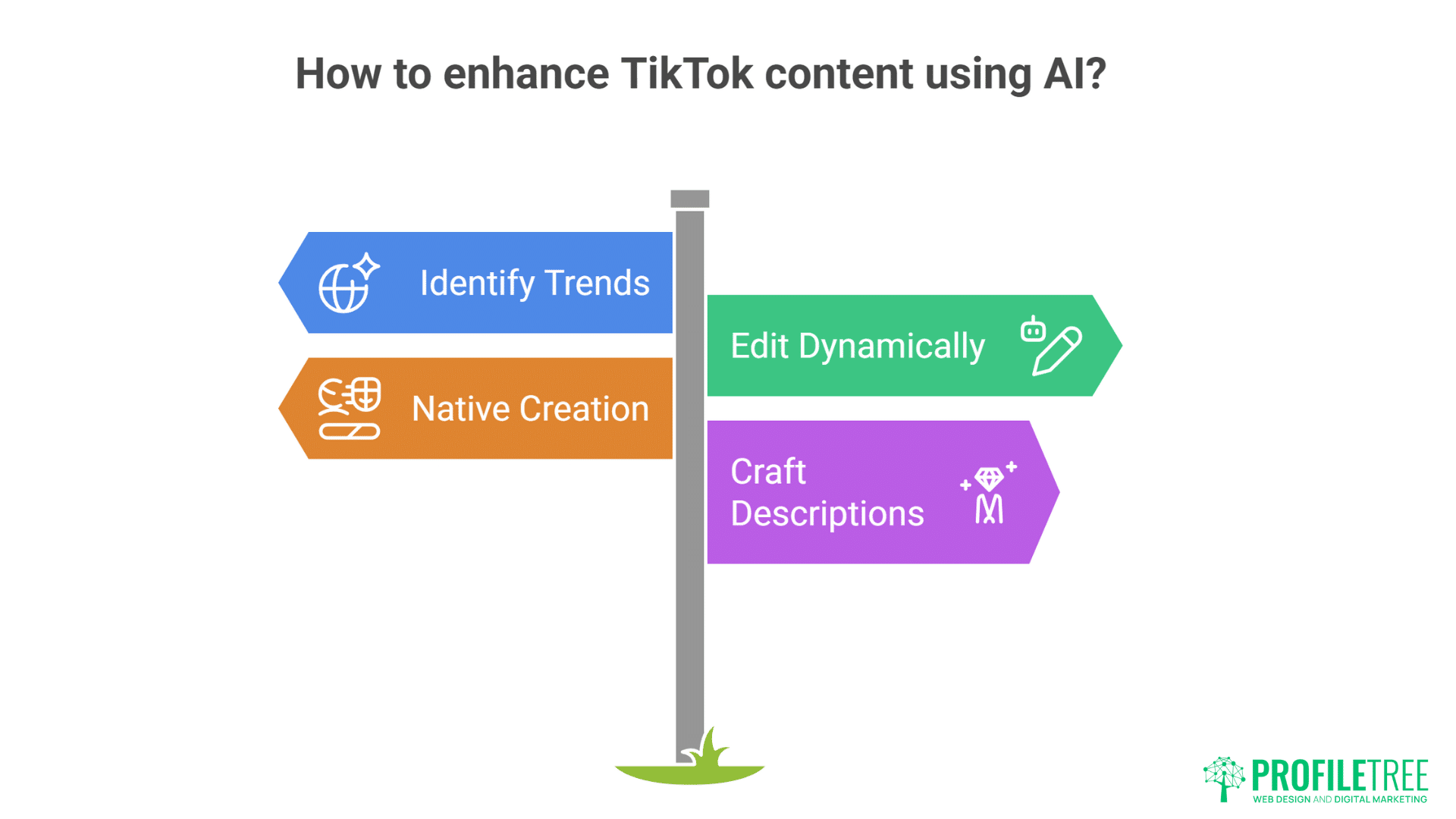
TikTok’s algorithm rewards authenticity and entertainment over production value, but AI helps ensure your authentic content gets seen.
TikTok success factors: Speed is everything. Trends last days, not weeks. AI helps identify trending sounds, effects, and formats in real-time. Tools like Tokboard and TrendTok (AI-powered trend analysers) alert us to emerging opportunities before they peak. By the time humans spot trends, they’re often already declining.
Quick cuts and constant visual interest keep viewers watching. AI editing tools automatically identify and remove dead space, ensuring something happens every 2-3 seconds. CapCut’s AI features excel here—auto-velocity for dynamic speed ramping, auto-beat sync for music synchronisation, and motion tracking for engaging text animations.
Native creation matters more than external production. Videos created in TikTok’s editor perform better than uploaded content. AI helps maximise native features—automated green screen effects, AI avatars, and voice filters that make content feel platform-native rather than advertiser-imposed.
The description strategy on TikTok differs from other platforms. AI helps craft descriptions that encourage comments without begging for engagement. “Wait for the end” is overdone. “The third tip surprised me too” creates curiosity without cliché.
YouTube Shorts: The Algorithm’s Favourite Child
YouTube Shorts receives preferential treatment from YouTube’s algorithm, but success requires understanding its unique dynamics.
Shorts optimisation tactics: The loop is king. Videos that viewers watch multiple times get promoted aggressively. AI helps identify natural loop points in your content. The ending should connect seamlessly to the beginning, creating infinite viewing potential. We’ve seen 15-second Shorts generate millions of views through perfect loops.
Retention graphs determine reach. YouTube shares detailed analytics showing exactly where viewers drop off. AI helps identify patterns across successful Shorts and restructure content to match winning formulas. If most viewers leave at 8 seconds, AI helps front-load value into those crucial moments.
Shorts Shelf placement requires specific formatting. Vertical video at 9:16 ratio. Less than 60 seconds duration. Clear, readable text for mobile viewing. AI tools automatically reformat longer content for Shorts specifications, ensuring technical eligibility for maximum distribution.
Cross-promotion between Shorts and long-form content creates compounding growth. AI helps identify moments from longer videos that work as standalone Shorts, automatically extracting and reformatting highlights. One long-form video can become 5-10 Shorts, multiplying reach without additional creation effort.
Real Examples: Micro-Content That Went Mega-Viral
Theory means nothing without results. Here’s how businesses are using AI to create viral content on minimal budgets.
The Restaurant Revival
A Belfast restaurant struggling with foot traffic used AI to transform their social presence. Using just smartphones and free AI tools, they created daily TikToks showcasing their kitchen process. Descript removed background noise from busy kitchen recordings. CapCut added trending music and effects. ChatGPT wrote engaging captions that encouraged visits.
One video—staff attempting to flip a giant pancake—generated 2 million views. The editing took 15 minutes using AI tools. The result: queues outside their door and bookings weeks in advance. Total cost: £0 beyond staff time.
The Solicitor’s Transformation
A traditional law firm believed video marketing was beyond their capabilities and inappropriate for their industry. AI changed their perspective. Using ElevenLabs, they created educational videos explaining common legal issues without lawyers appearing on camera. Canva’s templates provided professional graphics. ChatGPT simplified complex legal language into understandable explanations.
Their “5 Things to Know Before Buying a House in Northern Ireland” video generated 50,000 views and dozens of enquiries. Created entirely with AI in two hours, it outperformed their entire previous year’s marketing efforts.
The One-Person E-commerce Empire
An online fashion retailer with one employee uses AI to maintain presence across all platforms. Runway ML generates model shots without photoshoots. ChatGPT writes product descriptions optimised for each platform. Descript creates unboxing videos from customer footage. Adobe’s AI removes backgrounds for product shots.
They post 5-10 videos weekly across TikTok, Instagram Reels, and YouTube Shorts. Monthly video views exceed 500,000. Sales increased 300% within six months. The entire video operation requires 10 hours weekly—previously impossible for a solo entrepreneur.
Building Your AI Video Workflow
Success with AI video creation requires systematic approaches, not random tool usage. Here’s the workflow we’ve refined across thousands of videos.
Pre-Production: Strategy Before Creation
Start with platform research. What’s working in your industry? Which formats generate engagement? What problems does your audience discuss? AI accelerates this research. ChatGPT analyses competitor content transcripts. TubeBuddy identifies high-performing keywords. Google Trends reveals rising topics.
Script development begins with key points, not complete narratives. List your main messages. Feed them to AI with successful video examples. Request multiple versions optimised for different platforms. Edit and personalise AI output—never use it verbatim. The goal is efficiency, not automation.
Asset preparation determines production speed. Organise existing footage, images, and graphics. Generate missing visuals with AI image tools. Create templates for consistent branding. Prepare multiple music options for different moods. Organisation multiplies AI’s effectiveness.
Production: Capture With Purpose
Recording for AI editing differs from traditional capture. Speak clearly with deliberate pauses between sentences—this helps AI transcription and editing. Record room tone (silence) for AI to use in audio processing. Capture multiple takes of key segments for AI to choose best performances. Leave handles (extra footage) at beginnings and endings for AI transitions.
Lighting and audio matter more than camera quality. AI can enhance poor video but struggles with terrible audio. Natural window light beats expensive lighting setups. Phone cameras with good light beat professional cameras in darkness. Clean audio recording beats everything—AI enhancement has limits.
Batch recording maximises efficiency. Record multiple videos in one session. Change shirts/backgrounds for variety. Maintain energy through session momentum. AI handles the segmentation and editing later.
Post-Production: Where AI Shines
Import everything into your chosen AI platform. Let transcription complete fully before editing. Review and correct any transcription errors—accuracy here determines editing efficiency. Remove filler words and dead space automatically. Identify and extract highlight moments.
Platform optimisation happens through AI automation. Generate versions for each platform’s specifications. Create captions with platform-appropriate styling. Adjust pacing for platform preferences. Add platform-specific elements (hashtags, stickers, effects).
Enhancement layers add professional polish. Colour correction across all clips. Audio normalisation and enhancement. Background music at appropriate levels. Animated text and graphics where needed. Thumbnail generation for maximum click-through.
Distribution: Strategic Deployment
Publishing strategy matters as much as content quality. AI helps identify optimal posting times through audience analysis. Schedule posts when engagement peaks. Coordinate across platforms for maximum impact. Adjust timing based on real-time performance data.
Cross-promotion multiplies reach. AI generates platform-specific promotional content. Instagram Story previews of YouTube videos. LinkedIn posts about TikTok successes. Twitter threads from video transcripts. Each piece of content becomes multiple touchpoints.
Performance analysis guides iteration. AI tools track metrics across platforms. Identify patterns in successful content. Understand drop-off points and engagement triggers. Apply lessons to future content systematically.
The Economics: Real Costs, Real Returns
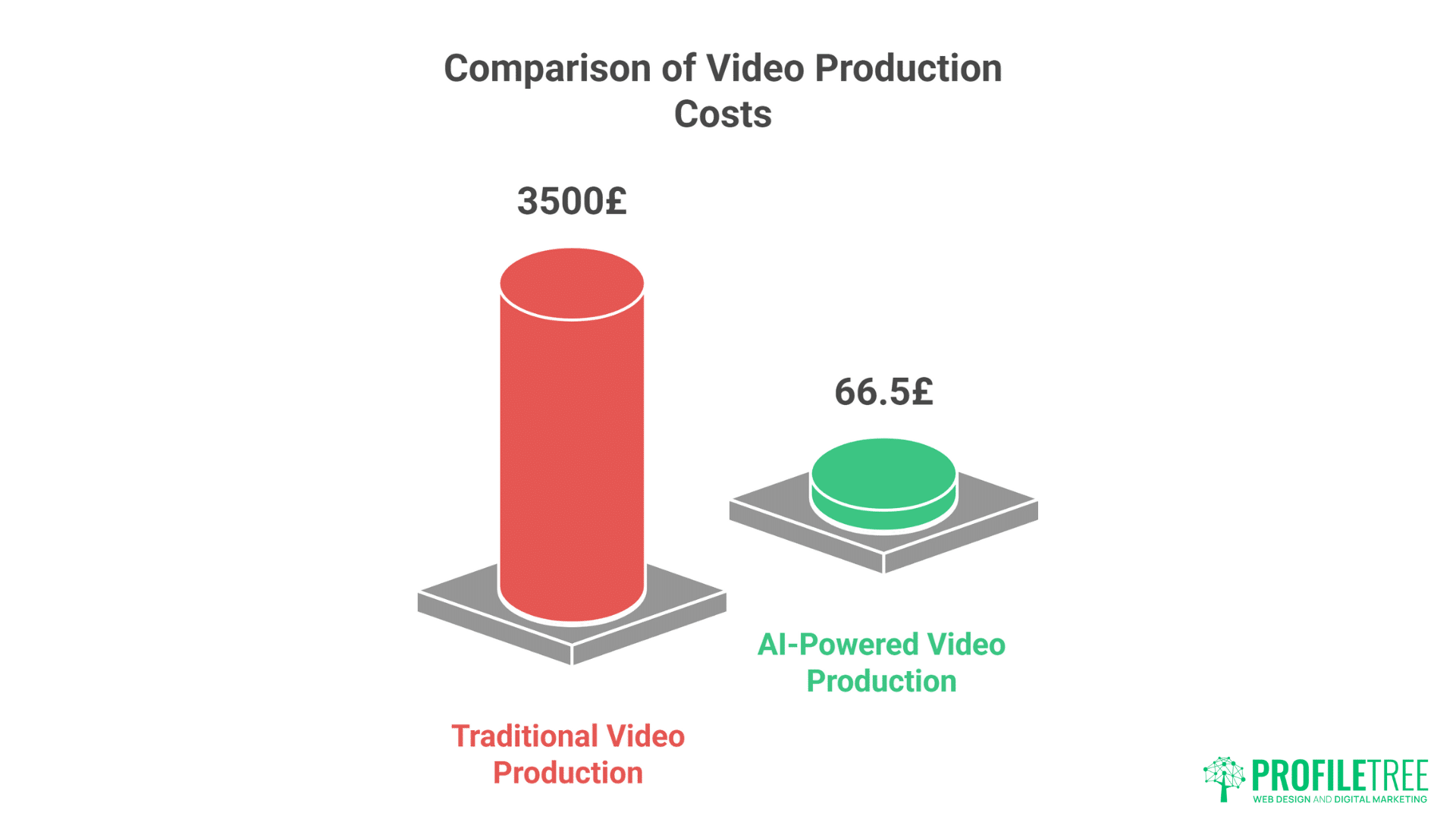
Let’s discuss actual numbers, because ROI determines sustainability.
Traditional Video Production Costs:
- Professional videographer: £500-£1,500 per day
- Video editor: £300-£500 per video
- Motion designer: £500-£1,000 per video
- Voice actor: £200-£500 per script
- Studio rental: £300-£800 per day
- Total per video: £2,000-£5,000 minimum
AI-Powered Production Costs:
- ChatGPT Plus: £20/month
- ElevenLabs: £5-£30/month
- Descript: £12-£24/month
- Canva Pro: £11/month
- CapCut: Free
- Total monthly: £48-£85 for unlimited videos
The mathematics are undeniable. For the cost of one traditional video, you can access AI tools for an entire year. But tools are only part of the equation.
Time Investment: Traditional 2-minute video: 20-40 hours total AI-assisted 2-minute video: 2-4 hours total
This 10x time reduction means small teams can maintain consistent video presence. Daily posting becomes possible. Testing and iteration accelerate. Learning happens through doing, not planning.
Real Returns We’ve Measured:
- Video content generates 1200% more shares than text and images combined
- Landing pages with video convert 80% better
- Email click-through rates increase 200% with video
- Social media posts with video receive 48% more views
For ProfileTree’s brands, video content drives 40% of total engagement despite representing only 15% of published content. The leverage is extraordinary.
Common Pitfalls and How to Avoid Them
AI video creation isn’t without challenges. Here’s what we’ve learned from thousands of videos.
- Over-Automation Syndrome: The temptation to automate everything leads to soulless content. AI should enhance human creativity, not replace it. Always add personal touches. Review and edit AI output. Inject personality and brand voice. Remember that authenticity beats perfection.
- Platform Blindness: Creating one video for all platforms wastes opportunity. Each platform has unique requirements and audiences. What works on LinkedIn fails on TikTok. Success requires platform-native optimisation, not lazy cross-posting.
- Quality vs Quantity Imbalance: AI enables massive content production, but volume without value annoys audiences. Focus on consistent quality rather than maximum quantity. Better to post three great videos weekly than 20 mediocre ones.
- Ignoring Analytics: AI provides unprecedented testing capability, but only if you measure results. Track performance religiously. Test variations systematically. Apply lessons immediately. Let data guide creativity.
- Tool Dependency: Relying on single tools creates vulnerability. Platforms change, prices increase, features disappear. Maintain alternative workflows. Export and backup everything. Own your content, don’t rent it.
The Future: What’s Coming Next
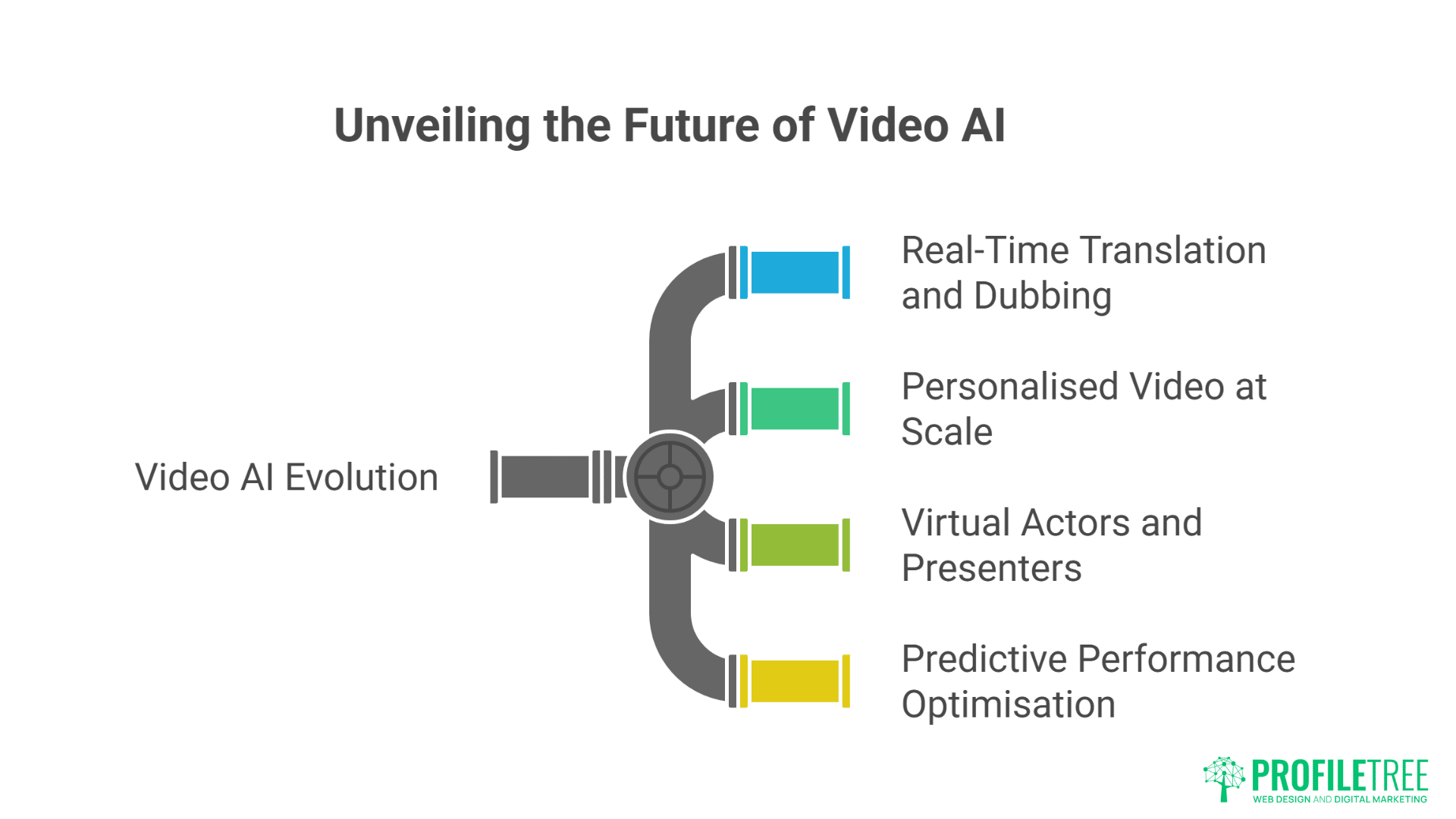
Video AI evolution accelerates monthly. Here’s what’s approaching.
- Real-Time Translation and Dubbing: AI will translate and dub videos instantly, maintaining lip-sync and emotional tone. Global markets become accessible to small businesses. Language barriers dissolve. Local content reaches worldwide audiences.
- Personalised Video at Scale: AI will generate personalised videos for individual viewers. Product demonstrations customised to browsing history. Educational content adapted to learning styles. Marketing messages tailored to individual preferences.
- Virtual Actors and Presenters: Photorealistic AI avatars will present content convincingly. Consistent brand representatives without human limitations. 24/7 content creation possibility. Controversy and opportunity in equal measure.
- Predictive Performance Optimisation: AI will predict video performance before publication. Adjust content for maximum engagement automatically. Test thousands of variations simultaneously. Remove guesswork from content creation.
Your Next Steps: From Theory to Action
Reading about AI video creation means nothing without implementation. Here’s your practical pathway to video success.
Start with one platform and master it before expanding. Choose based on where your audience already engages. LinkedIn for B2B. TikTok for younger consumers. YouTube for education and expertise. Instagram for lifestyle and visual brands.
Select your core AI toolkit. Begin with free tools to understand capabilities. CapCut for editing. ChatGPT for scripts. Canva for graphics. Upgrade to paid tools as volume and sophistication increase.
Create your first AI-assisted video this week. Don’t overthink—done beats perfect. Test the complete workflow from script to publication. Learn through doing, not planning. Iterate based on performance.
Develop systematic processes that scale. Document what works for future reference. Create templates for consistent quality. Build asset libraries for quick access. Automate repetitive tasks.
Measure everything but obsess over nothing. Track views, engagement, and conversions. Identify patterns in successful content. Apply lessons without paralysis. Progress beats perfection.
The ProfileTree Approach: Tested, Proven, Shared
Our 100 million+ video views didn’t come from theory—they came from relentless testing across our brand portfolio. Every strategy shared here has been validated through real content achieving real results.
We’ve failed with countless videos so you don’t have to. We’ve tested every tool, technique, and platform. We’ve learned what works through doing, not reading. This knowledge transforms how our clients approach video marketing.
Whether you need complete video marketing services, want to learn through our training programmes, or require strategic consulting, ProfileTree brings battle-tested expertise that accelerates your success. We don’t guess what might work—we know what does work because we do it daily.
The video revolution is here. AI makes it accessible to everyone. The only question is whether you’ll embrace it or watch competitors pass you by. The tools exist. The knowledge is available. The opportunity is massive.
Start creating. Start testing. Start growing. Your audience is waiting.
Ready to transform your video marketing with AI? Whether you need hands-on services, comprehensive training, or strategic guidance, ProfileTree’s proven expertise accelerates your video success.
“AI hasn’t replaced creativity in video production—it’s amplified it. Small businesses can now compete with unlimited budgets through smart tool usage and strategic thinking. We’ve proven this across millions of views. Now it’s your turn.” – Ciaran Connolly, ProfileTree Founder