
Technology System: 5 Easy Steps Any Business Can Follow
Table of Contents
Selecting the right technology system for your business is one of the most critical decisions modern organisations face. With thousands of software solutions available and new technologies emerging constantly, the technology selection process can feel overwhelming. However, following a structured approach helps businesses make informed decisions that drive growth, improve efficiency, and deliver measurable returns on investment.
Why Technology Selection Matters: Poor technology choices cost businesses time, money, and competitive advantage. Research shows that 70% of technology implementations fail to deliver expected results, often due to inadequate selection processes. Conversely, businesses that follow systematic technology selection guidance report 40% higher success rates and significantly better ROI from their technology investments.
What This Technology Selection Guide Covers: This comprehensive guide provides a proven 5-step framework for technology selection that businesses across Northern Ireland, Ireland, and the UK have used successfully. Whether you’re choosing project management software, implementing CRM systems, or selecting enterprise solutions, these technology selection criteria and processes apply universally.
The Technology Selection Challenge: Modern businesses face unique pressures when selecting technology systems:
- Overwhelming Options: Thousands of software solutions compete for attention
- Integration Complexity: New systems must work with existing technology infrastructure
- Cost Considerations: Technology investments represent significant financial commitments
- Change Management: Successful adoption requires careful planning and user buy-in
- Future-Proofing: Solutions must adapt to evolving business needs and technological advances
Understanding which technology system best serves your specific requirements requires systematic evaluation, stakeholder input, and careful consideration of both immediate needs and long-term objectives.
Types of technology systems
- Artificial Intelligence (AI) Systems: Artificial intelligence systems are being developed and implemented within many different companies and industries to deliver value to customers. For example, within the retail industry, many large retail brands have online chat bots capable of delivering end users feedback and information based on their requirements, which in return is improving customer service for that business.
- Customer Relationship Management (CRM) Systems: The most common type of customer relationship management (CRM) system which is being used is the likes of HubSpot. This system is built in a way to allows organisations to deal with and manage their customer requests more effectively. Companies now have the option to integrate their CRM with text messaging for faster communication. This could boost responsiveness and build stronger customer relationships.
- Project Management Systems: Those businesses which find themselves dealing with large amounts of clients at a given time will normally have a project management system developed or implemented within the business. This type of system allows businesses to manage their resources more effectively, and improve productivity and performance by scheduling employees and allocating tasks accordingly.
- Enterprise Resource Planning(ERP) Systems: Enterprise Resource Planning systems are set up in a way to manage the operations of a business. The tools within these technology systems will allow you to make better use of the key areas within your business, such as human resources, supply chain management, finance and project management. Therefore having all these key resources within the one system will allow you to become more efficient and flexible with your time and decision making.
- Communication Systems: Many businesses use online communication systems as their approach in speaking with their customers, and in most cases their employees as well. Direct messaging can be seen through the likes of email, or chat boxes such as Slack. In addition, the need for voice over systems has grown massively in recent years where zoom or microsoft teams are used by business for many different reasons such as meetings, training purposes or conferences.
- Cyber Security Systems: Many businesses run the risk of being faced with cyber attacks and for those businesses which hold a high amount of confidential employee or customer data, it may be worthwhile deploying a system which mitigate this risk and prevent any data being lost or stolen.
Technology Selection Criteria: Key Factors for Business Decision-Making
Effective technology selection requires evaluating multiple criteria simultaneously. Understanding these factors before beginning your technology selection process helps ensure you choose systems that deliver lasting value and support business growth.
Essential Technology Selection Criteria:
1. Functional Requirements
- Core Features: Does the technology address your primary business needs?
- Workflow Integration: How well does it fit with existing business processes?
- Customisation Options: Can the system adapt to your specific requirements?
- Reporting Capabilities: Does it provide the analytics and insights you need?
- User Interface: Is the system intuitive for your team members to use?
2. Technical Compatibility
- System Integration: Will it connect with your current technology stack?
- Data Migration: How easily can you transfer existing data?
- Security Standards: Does it meet your industry’s security requirements?
- Performance Requirements: Can it handle your expected user load and data volume?
- Mobile Accessibility: Does it support remote work and mobile device usage?
3. Vendor Evaluation
- Company Stability: Is the vendor financially stable with a proven track record?
- Support Quality: What level of technical support and training is available?
- Development Roadmap: How does the vendor plan to evolve the product?
- Customer References: What do existing customers say about their experience?
- Local Presence: Do they have support capabilities in your geographic region?
4. Financial Considerations
- Total Cost of Ownership: Include licensing, implementation, training, and maintenance costs
- ROI Projections: How quickly will the technology pay for itself?
- Budget Flexibility: Can you scale costs with your business growth?
- Hidden Costs: Are there additional fees for support, upgrades, or integrations?
- Payment Terms: Do they offer flexible payment options?
Which Technology System Questions to Ask:
- How does this technology solve our specific business challenges?
- What measurable improvements can we expect from implementation?
- How will this system grow with our business over the next 3-5 years?
- What resources will we need for successful implementation and adoption?
- How does this option compare to alternatives in terms of value delivered?

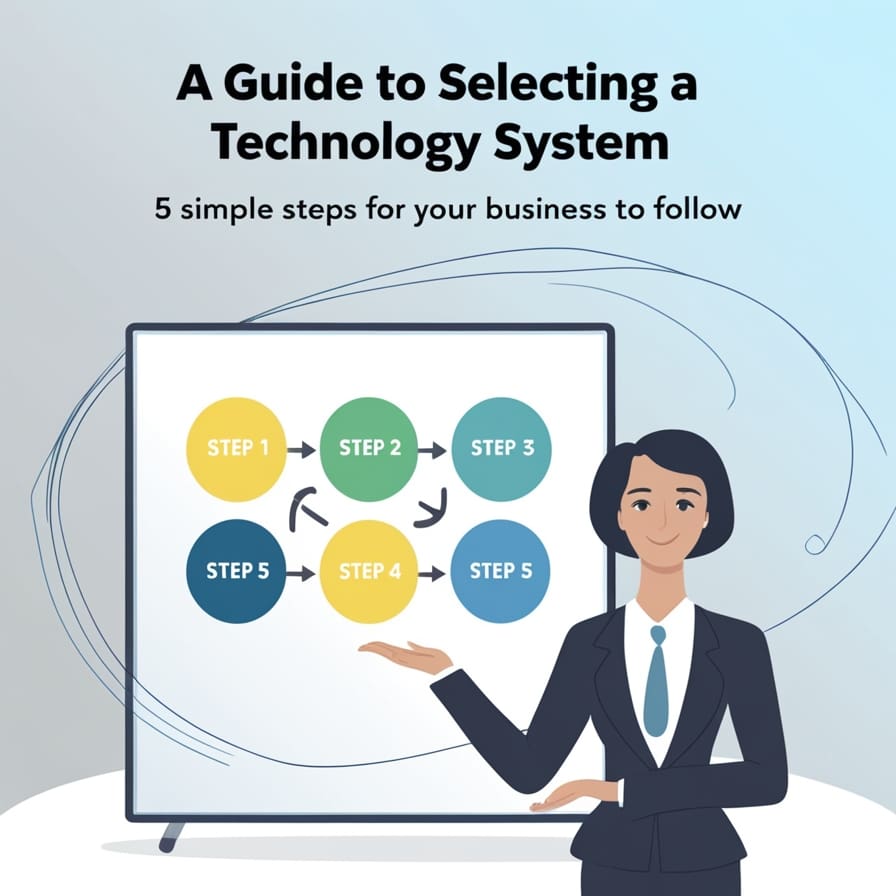
5 Steps to Selecting Technology
Identify your needs
Within this step, you want to take a step back and consider your vision. You want to be thinking about what we are setting out to achieve, and what the end result will look like. An individual with company experience and knowledge will likely carry out this process as they will have a good understanding of what areas of the business needs improving and what the end outcome should look like. Below lists some of the actions which could be taken during this step;
- Conduct an external analysis: Looking at the Political, Economic, Social, Technological, Environmental and Legal (PESTEL) factors that could impact your business will be a good starting point towards becoming aware of any future threats that may impact your decisions towards selecting an appropriate piece of technology.
- Carry out a SWOT Analysis: Understanding the strengths and weaknesses of your businesses, then having awareness of the opportunity and threats which currently exist will allow you to become proactive and make more informed decisions.
- Analyse your current business processes and workflows: Understanding the internal operations of the business will also be key to both deciding which areas of the business require change, and how the new technology will match or change your current business processes and operational workflows.
- Communicate with your stakeholders: Understanding who this technology will affect most will be key to the overall process. For example, speaking internally to your employees, understand their frustrations or any other they feel needs improvement, as well as collaborating with forms of management to discuss what the ideal outcome or scenario to selecting the correct technology would look like will create awareness and a vision to how the technology can impact the company.
- Set SMART goals: When you have communicated with your key stakeholders, you will want to set goals which are specific, measurable, attainable, realistic and time-bound, clearly identifying what you want to achieve through the technology which is being implemented.
Technology Selection Process: A Systematic Approach to Decision-Making
The technology selection process requires systematic evaluation to ensure you choose solutions that deliver measurable business value. Following a structured approach reduces implementation risks and improves the likelihood of successful adoption.
Phase 1: Requirements Definition and Stakeholder Alignment
Business Requirements Documentation:
- Current State Analysis: Document existing workflows, pain points, and inefficiencies
- Future State Vision: Define what success looks like after technology implementation
- Functional Specifications: List specific features and capabilities required
- Performance Expectations: Establish metrics for measuring technology success
- Integration Requirements: Identify systems that must connect with the new technology
Stakeholder Input Collection:
- End User Interviews: Gather input from people who will use the system daily
- Management Requirements: Understand reporting and oversight needs
- IT Team Assessment: Evaluate technical requirements and constraints
- Customer Impact Analysis: Consider how changes will affect customer experience
- Vendor Relationship Review: Assess current vendor performance and preferences
Technology Selection in Project Management Context: When selecting technology for project management specifically, consider:
- Team Collaboration: How well does the system support distributed teams?
- Resource Management: Can it effectively allocate and track resources?
- Timeline Visibility: Does it provide clear project progress tracking?
- Client Reporting: Can it generate professional reports for stakeholders?
- Integration Capabilities: Will it connect with existing business systems?
Phase 2: Market Research and Vendor Identification
Comprehensive Market Analysis:
- Solution Categories: Understand different types of available technologies
- Vendor Landscape: Research leading providers in your technology category
- Feature Comparison: Create detailed comparison matrices of key capabilities
- Pricing Analysis: Understand typical costs and pricing models
- Industry Trends: Consider emerging technologies and future developments
Vendor Qualification Process:
- Initial Screening: Apply basic criteria to create a preliminary vendor list
- Detailed Evaluation: Conduct thorough assessment of top candidates
- Reference Checks: Speak with existing customers about their experiences
- Financial Stability: Verify vendor viability and long-term prospects
- Support Assessment: Evaluate training, implementation, and ongoing support quality
Do your research
The second step is completing research into the technology you aim to implement within your business. If we take things into perspective, if you were planning to buy a car, you are likely to consider all your options before deciding what one suits you best in terms of price and quality. The same applies with selecting technology. Some key questions you want to ask your during this stage have been listed below;
- Does the technology match your processes and workflows or are there ways to use the technology to improve current ways of doing things?
- Does the new technology support the growth and development of your company?
- What are other companies or customers saying about the technology?
- Are there any risks associated with implementing the technology?
Technology Selection Guidance: Expert Strategies for Business Success
Professional technology selection guidance helps businesses avoid common pitfalls and make decisions that deliver sustainable value. Understanding proven strategies and best practices significantly improves your chances of successful technology implementation.
Strategic Technology Selection Approaches:
1. Vendor-Agnostic Evaluation
- Objective Comparison: Evaluate all options fairly without vendor bias
- Independent Research: Use third-party reviews and analyst reports
- Proof of Concept: Test capabilities before making final decisions
- Total Cost Analysis: Consider all costs, not just initial licensing fees
- Risk Assessment: Evaluate potential downsides and mitigation strategies
2. Stakeholder-Driven Selection
- User-Centric Design: Prioritise systems that users will actually adopt
- Change Management: Plan for training and adoption from the beginning
- Executive Sponsorship: Ensure leadership support throughout the process
- Communication Strategy: Keep all stakeholders informed about progress and decisions
- Feedback Integration: Incorporate input from all affected groups
3. Future-Focused Planning
- Scalability Assessment: Choose systems that can grow with your business
- Technology Roadmap: Understand vendor development plans and industry trends
- Integration Strategy: Plan for future system connections and data sharing
- Flexibility Requirements: Ensure systems can adapt to changing business needs
- Exit Strategy: Understand data portability and contract termination options
Implementation Factors to Consider When Implementing New Technology:
Technical Preparation:
- Infrastructure Assessment: Ensure your IT environment can support new systems
- Data Migration Planning: Develop strategies for transferring existing information
- Security Review: Verify that new systems meet your security standards
- Backup Procedures: Establish data protection and recovery processes
- Performance Testing: Validate system performance under realistic conditions
Organisational Readiness:
- Change Management: Prepare your team for new ways of working
- Training Development: Create comprehensive user education programmes
- Support Structure: Establish internal expertise and external support relationships
- Timeline Planning: Set realistic expectations for implementation and adoption
- Success Metrics: Define how you’ll measure implementation success
ProfileTree helps businesses across Northern Ireland, Ireland, and the UK navigate complex technology selection decisions. Our digital transformation expertise includes technology assessment, vendor evaluation, and implementation planning that ensures successful outcomes.
Evaluate ROI and Scalability
The price of technology is going to be a major factor when deciding upon selecting and implementing new technology within your business. It is also important to calculate the return on investment (ROI) and scalability capability, factoring in the price of service implementation support and any future maintenance or upgrading costs. Some key questions you should ask yourself have been listed below;
- How many users will be impacted by this technology, and how does this affect the price?
- Do you have the financial capability to implement this technology?
- Do you have the financial capability to support the implementation if this takes longer than you expected?
- Does this technology support the growth and employment of new employees within the workplace?
Test and Pilot
In most case scenarios, there are different versions or types of technology when deciding upon a technology software system. For example, if you were to select a project management software system for your business there are many different options such as Monday.com, ClickUp, Asana and Teamwork.
Therefore, the best method to select a piece of technology is to begin by shortlisting each of your options down to around 1-3 based on your needs which you have identified, then test and pilot each within the business to identify which one suits your business the most.
Key considerations within this steps;
- Involvement: This step offers the opportunity to involve your key stakeholders in terms of your customers or employees within the testing of the technology system. These groups of individuals will know the business the best and will be able to offer transparent review and feedback on the new technology being selected.
- Communication: You will want to create clear communication opportunities, whether it be through group feedback meetings or instant messaging, the easier it is for your key stakeholders find it to communicate how they feel about the new technology during the testing and piloting stage will have an effect on how successful the end outcome will be.
- Scoring Analysis: Creating an in-depth scoring analysis sheet to analyse each of the technologies strengths and weaknesses will be critical to concluding and deciding which system is best suited towards your goals and objectives. The end outcome of which technology you choose should be backed with both data analysis results, and communication feedback from your stakeholders.
- Create Milestones: As a leader on this process you will want to create milestones and look for opportunities to celebrate success when testing each of the systems. The more motivated your customers or employees are during this process, the easier it will be for them to become embedded in the new ways of working. Therefore, showing your praise and communicating the positive impact of their involvement in testing and piloting the new system will be important.
IT System Selection: Enterprise-Grade Evaluation for Business Systems
IT system selection requires additional considerations beyond basic software evaluation. Enterprise systems impact multiple business functions and require comprehensive assessment of technical, operational, and strategic factors.
Enterprise IT System Selection Criteria:
1. Architectural Considerations
- System Architecture: How does the solution fit within your existing IT infrastructure?
- Database Requirements: What are the data storage and management implications?
- Network Impact: How will the system affect network performance and bandwidth?
- Server Requirements: What hardware resources are needed for optimal performance?
- Cloud vs On-Premise: Which deployment model best serves your business needs?
2. Integration and Interoperability
- API Availability: Does the system provide robust integration capabilities?
- Data Standards: Can it work with your existing data formats and structures?
- Single Sign-On: Will users be able to access multiple systems seamlessly?
- Workflow Integration: How well does it connect with existing business processes?
- Third-Party Connections: Can it integrate with industry-specific tools and services?
3. Security and Compliance
- Access Controls: Does it provide appropriate user permission management?
- Audit Trails: Can it track and report on all system activities?
- Data Protection: How does it handle sensitive business information?
- Regulatory Compliance: Does it meet industry-specific legal requirements?
- Disaster Recovery: What backup and recovery capabilities does it provide?
Choosing the Right Technology for Complex Business Environments:
Multi-Department Impact Assessment:
- Cross-Functional Requirements: How will the system affect different business areas?
- Workflow Dependencies: What business processes rely on system integration?
- Reporting Consolidation: Can it provide unified reporting across departments?
- User Role Management: How well does it handle different permission levels?
- Change Management: What training will be required across the organisation?
Technology Systems for Businesses: Scaling Considerations:
- User Growth: How easily can the system accommodate additional users?
- Feature Expansion: Can you add capabilities as your business needs evolve?
- Geographic Distribution: Will it support multiple locations effectively?
- Performance Scaling: How does it maintain performance as usage increases?
- Cost Scaling: Do pricing models support sustainable growth?
Implementing Technology in Business: Success Factors:
- Executive Sponsorship: Strong leadership support throughout implementation
- Project Management: Dedicated resources for managing the implementation process
- User Champion Network: Identify enthusiastic adopters to help drive change
- Phased Rollout: Implement gradually to minimise disruption and risk
- Continuous Improvement: Plan for ongoing optimisation after initial deployment
Negotiate Terms
Now you have come to the conclusion to which technology is best suited to your business and your overall needs, you are in a position to negotiate the terms. Many technology providers have a fixed monthly rate per user however depending on how flexible you are, or your provider is, you may be in a position to come to an agreement on the terms.
The 5 Steps of Technological Process: Complete Implementation Framework
Understanding the complete technological process helps businesses move from technology selection through successful implementation and ongoing optimisation. This comprehensive framework ensures sustainable technology adoption.
Step-by-Step Technology Implementation Process:
Step 1: Strategic Planning and Preparation
- Business Case Development: Document expected benefits and ROI projections
- Resource Allocation: Assign budget, personnel, and time requirements
- Risk Assessment: Identify potential challenges and mitigation strategies
- Timeline Development: Create realistic implementation schedules
- Stakeholder Communication: Establish regular updates and feedback channels
Step 2: Technical Preparation and Infrastructure
- Environment Setup: Prepare technical infrastructure for new systems
- Data Migration Planning: Develop strategies for transferring existing information
- Integration Testing: Verify connections with existing systems
- Security Configuration: Implement appropriate access controls and protections
- Backup Procedures: Establish data protection and recovery processes
Step 3: User Training and Change Management
- Training Programme Development: Create comprehensive education materials
- User Onboarding: Implement systematic user introduction processes
- Change Communication: Keep stakeholders informed about progress and changes
- Support Structure: Establish help desk and ongoing assistance capabilities
- Adoption Monitoring: Track user engagement and system utilisation
Step 4: Deployment and Go-Live
- Phased Rollout: Implement gradually to minimise risk and disruption
- Performance Monitoring: Track system performance and user experience
- Issue Resolution: Rapidly address problems that arise during deployment
- User Support: Provide intensive assistance during initial adoption period
- Feedback Collection: Gather input on system performance and user satisfaction
Step 5: Optimisation and Continuous Improvement
- Performance Analysis: Regular review of system effectiveness and business impact
- Process Refinement: Ongoing improvement of workflows and procedures
- Feature Utilisation: Expand use of system capabilities over time
- ROI Measurement: Track actual returns against initial projections
- Future Planning: Prepare for system updates, expansions, and replacements
How to Choose the Right Technology for Your Business: Decision Framework
Evaluation Matrix Development: Create scoring systems that weight different factors according to your business priorities:
- Functionality: How well does it meet your specific requirements? (Weight: 30%)
- Cost: Total cost of ownership compared to budget availability (Weight: 25%)
- Vendor Support: Quality of implementation and ongoing assistance (Weight: 20%)
- Integration: Compatibility with existing systems and processes (Weight: 15%)
- User Experience: Ease of use and adoption likelihood (Weight: 10%)
Decision Validation Process:
- Stakeholder Review: Ensure all affected groups support the final choice
- Financial Approval: Confirm budget availability and ROI projections
- Technical Verification: Validate that technical requirements can be met
- Timeline Confirmation: Verify that implementation schedule is realistic
- Contract Negotiation: Finalise terms that protect your business interests
ProfileTree’s digital transformation services help businesses throughout the UK implement this comprehensive technology selection and implementation framework, ensuring successful outcomes that drive measurable business growth.
Frequently Asked Questions About Technology Selection
Q: What is the technology selection process? A: The technology selection process is a systematic approach to evaluating and choosing software or systems for business use. It involves identifying needs, researching options, evaluating vendors, testing solutions, and implementing the chosen technology with proper change management.
Q: What are the key technology selection criteria? A: Key criteria include functionality (does it meet your needs), cost (total ownership costs), vendor stability (long-term viability), integration capabilities (works with existing systems), user experience (ease of adoption), and security (protects your data).
Q: How long does the technology selection process typically take? A: Simple software selection can take 4-8 weeks, while complex enterprise systems may require 3-6 months. The timeline depends on system complexity, stakeholder involvement, vendor evaluation depth, and organisational decision-making processes.
Q: What factors should I consider when implementing new technology? A: Consider technical compatibility, user training needs, change management requirements, data migration complexity, integration with existing systems, ongoing support needs, and realistic timeline expectations for adoption.
Q: How do I choose the right technology for my business? A: Start by clearly defining your business needs and objectives. Research available options, evaluate vendors against your specific criteria, test top candidates through demos or pilots, and choose based on best fit for your requirements, budget, and long-term goals.
Q: What is technology selection in project management? A: Technology selection in project management involves choosing software tools that help teams plan, execute, and monitor projects effectively. This includes evaluating collaboration features, resource management, timeline tracking, reporting capabilities, and integration with other business systems.
Q: What are the 5 steps of the technological process? A: The 5 steps are: 1) Strategic planning and needs assessment, 2) Research and vendor evaluation, 3) Testing and piloting, 4) Implementation and deployment, 5) Optimisation and continuous improvement. Each step builds on the previous to ensure successful technology adoption.
Q: How can ProfileTree help with technology selection? A: ProfileTree provides technology selection guidance through digital transformation consulting, helping businesses evaluate options, manage implementation, and ensure successful adoption. Our experience with UK businesses ensures local expertise and understanding of specific market requirements.
Summary
That summarises an overview of the 5 types of technology your business could potentially leverage and use to exploit opportunities and grow in the future. If you enjoyed this article and want to view more content like this, make sure and check ProfileTree’s Youtube out for more. Thank you!