
Restaurant SEO: Filling Tables Through Local Search
Table of Contents
ProfileTree provides specialist restaurant SEO services helping restaurants, cafes, pubs, and food businesses across Northern Ireland, Ireland, and the UK attract more customers through improved local search visibility. When hungry diners search for somewhere to eat, your restaurant needs to appear; restaurant SEO makes that happen.
Finding somewhere to eat now starts with a search. Whether someone wants dinner tonight, a special occasion venue, the best coffee nearby, or takeaway options, they search online first. The restaurants appearing prominently in Google’s local results and maps capture the diners. If your restaurant isn’t visible when potential customers search, you’re losing covers to competitors who are.
Understanding Restaurant SEO
What makes SEO different for food businesses:
The Restaurant Search Landscape
How diners search for restaurants:
Search Categories:
| Category | Example Searches |
| Cuisine type | “Italian restaurant Belfast”, “Thai food near me” |
| Location-based | restaurants Belfast city centre”, “cafes near me |
| Occasion | “romantic restaurants Belfast”, “birthday dinner venue” |
| Time-specific | “lunch near me”, “late night food Belfast” |
| Feature-based | “restaurants with outdoor seating”, “dog-friendly cafes” |
| Price point | “cheap eats Belfast”, “fine dining Belfast” |
Diner Search Journey:
| Stage | Search Behaviour |
| Inspiration | “best restaurants Belfast”, “where to eat tonight” |
| Narrowing | “Italian restaurants city centre”, cuisine + location |
| Evaluation | “[Restaurant name] reviews”, “menu [restaurant name]” |
| Decision | “[Restaurant name] booking”, “phone number” |
| Navigation | “[Restaurant name] directions”, “how to get to” |
Mobile and “Near Me” Dominance
Restaurant searches are heavily mobile and immediate:
Mobile Search Patterns:
| Factor | Implication |
| Mobile majority | Most restaurant searches on phones |
| “Near me” common | Location-based intent dominant |
| Immediate intent | Often searching when hungry |
| Maps integration | Google Maps primary discovery tool |
“Near Me” Search Examples:
| Search Type | Example |
| General | “restaurants near me”, “food near me” |
| Cuisine-specific | “pizza near me”, “Chinese near me” |
| Meal-specific | “breakfast near me”, “lunch near me” |
| Feature-specific | “outdoor dining near me” |
The Platform Landscape
Multiple platforms compete for restaurant discovery:
Competitive Platforms:
| Platform | Role |
| Google Search/Maps | Primary discovery, local results |
| TripAdvisor | Reviews, rankings, bookings |
| Yelp | Reviews, discovery |
| OpenTable/Resy | Reservations, discovery |
| Deliveroo/UberEats | Delivery discovery |
| Instagram/TikTok | Visual discovery, influence |
| Local pages, reviews, events |
What This Means:
Your SEO strategy must consider the broader ecosystem:
| Approach | Implementation |
| Google primary | Core local SEO focus |
| Platform presence | Profiles on relevant platforms |
| Review management | Active across key platforms |
| Social integration | Visual platforms for food businesses |
Local Pack Dominance
Google’s local pack dominates restaurant searches:
Local Pack Importance:
| Factor | Impact |
| Prime visibility | Top of search results |
| Map integration | Directions, navigation |
| Quick information | Hours, rating, photos |
| Mobile prominence | Dominates mobile screen |
Local Pack Elements:
| Element | Optimisation Focus |
| Business name | Accurate, consistent |
| Rating | Review generation, quality |
| Category | Correct cuisine/business type |
| Hours | Accurate opening times |
| Photos | High-quality food and venue images |
| Distance | Location accuracy |
Our Restaurant SEO Services
Comprehensive optimisation for food businesses:
Google Business Profile Optimisation
GBP is the foundation of restaurant SEO:
GBP Optimisation Elements:
| Element | Restaurant Focus |
| Primary category | Restaurant type (Italian, Cafe, etc.) |
| Additional categories | All relevant categories |
| Attributes | Cuisine, dining options, accessibility |
| Menu | Complete menu integration |
| Photos | Food, interior, exterior, team |
| Posts | Specials, events, seasonal menus |
| Products | Dishes, meal deals, offers |
Restaurant-Specific Attributes:
| Attribute Type | Examples |
| Dining options | Dine-in, takeaway, delivery |
| Accessibility | Wheelchair access, accessible toilet |
| Amenities | Wi-Fi, parking, outdoor seating |
| Crowd | Good for families, groups, romantic |
| Highlights | Great cocktails, cosy atmosphere |
| Dietary | Vegetarian options, vegan options, halal |
GBP Menu Integration:
| Approach | Implementation |
| Google menu | Add menu directly to GBP |
| Menu URL | Link to website menu |
| Menu photos | Upload menu images |
| Dish photos | Individual dish images |
GBP Post Strategy:
| Post Type | Frequency |
| Specials | Weekly specials, daily dishes |
| Events | Live music, theme nights |
| Seasonal | Seasonal menus, holiday offerings |
| Offers | Promotions, discounts |
| Updates | New dishes, chef features |
Website Optimisation for Restaurants
Creating a website that ranks and converts:
Essential Restaurant Pages:
| Page Type | Target Keywords |
| Homepage | “[Restaurant name]”, “[cuisine] restaurant [location]” |
| Menu | “menu [restaurant name]”, “[cuisine] menu” |
| Location/Contact | “directions to [restaurant]”, “phone number” |
| About | “[Restaurant name] story”, chef background |
| Reservations | “book table [restaurant name]” |
| Private dining | “private dining [location]”, “party venue” |
| Events | “restaurant events [location]” |
Menu Page Optimisation:
| Element | Approach |
| Text-based menu | Searchable, accessible menu |
| PDF menu | Supplement, not replace text |
| Dish descriptions | Detailed, appetising descriptions |
| Dietary information | Clear allergen, dietary labelling |
| Pricing | Transparent pricing |
| Images | Food photography |
Page Structure Best Practices:
| Element | Content |
| H1 heading | Clear page title with keywords |
| Introduction | Compelling restaurant overview |
| Location | Clear address, map embed |
| Hours | Opening times prominently displayed |
| Contact | Phone, email easily accessible |
| Booking | Clear reservation call-to-action |
| Schema markup | Restaurant structured data |
Restaurant Schema Markup:
{
“@context”: “https://schema.org”,
“@type”: “Restaurant”,
“name”: “Restaurant Name”,
“image”: “https://example.com/photo.jpg”,
“address”: {
“@type”: “PostalAddress”,
“streetAddress”: “123 Main Street”,
“addressLocality”: “Belfast”,
“postalCode”: “BT1 1AA”,
“addressCountry”: “GB”
},
“servesCuisine”: “Italian”,
“priceRange”: “££”,
“openingHoursSpecification”: [
{
“@type”: “OpeningHoursSpecification”,
“dayOfWeek”: [“Monday”, “Tuesday”, “Wednesday”, “Thursday”, “Friday”],
“opens”: “12:00”,
“closes”: “22:00”
}
],
“menu”: “https://example.com/menu”,
“acceptsReservations”: “True”,
“telephone”: “+44 28 1234 5678”
}
Local Content Strategy
Creating content that attracts diners:
Content Types for Restaurants:
| Content Type | Examples |
| Menu updates | Seasonal menu launches |
| Behind the scenes | Chef stories, sourcing |
| Local content | Best restaurants guides, food scene |
| Event content | Food events, theme nights |
| Recipes | Signature dish recipes |
| Food guides | Cuisine guides, ingredient features |
Keyword Opportunities:
| Topic Area | Example Keywords |
| Cuisine | “best Italian Belfast”, “[cuisine] food Belfast” |
| Occasion | “birthday dinner Belfast”, “romantic meal” |
| Meal type | “brunch Belfast”, “Sunday lunch” |
| Features | “rooftop dining Belfast”, “waterfront restaurant” |
| Dietary | “vegan restaurants Belfast”, “gluten-free dining” |
| Price | “affordable dining Belfast”, “fine dining” |
Content Calendar:
| Month | Content Focus |
| January | New year dining, healthy eating |
| February | Valentine’s Day dining |
| March | St Patrick’s Day, spring menus |
| April | Easter dining, spring produce |
| Summer | Al fresco dining, summer menus |
| September | Autumn menus, food festivals |
| October | Halloween events |
| November | Christmas party bookings |
| December | Christmas dining, New Year |
Review Management
Reviews are critical for restaurants:
Review Platform Priority:
| Platform | Importance |
| Primary for local SEO | |
| TripAdvisor | Key for tourism, restaurants |
| Social proof, local discovery | |
| Yelp | Discovery platform |
| OpenTable | Booking platform reviews |
Review Generation Strategy:
| Timing | Approach |
| Post-meal | Table tent cards, bill inserts |
| Follow-up | Email for bookings with email capture |
| Social | Instagram followers to Google reviews |
| Staff | Team trained to request reviews |
Review Response:
| Review Type | Response Approach |
| Positive | Thank warmly, personalise, invite return |
| Neutral | Thank, address concerns, invite back |
| Negative | Apologise, address specifics, offer resolution |
Review Response Best Practices:
| Element | Approach |
| Timeliness | Respond within 24-48 hours |
| Personalisation | Reference specific details |
| Professional tone | Never defensive or argumentative |
| Resolution focus | Offer to make things right |
| Keywords natural | Include relevant terms naturally |
Technical SEO for Restaurant Websites
Platform and technical considerations:
Restaurant Website Platforms:
| Platform | Considerations |
| WordPress | Flexible, SEO-friendly |
| Squarespace | Design-focused, decent SEO |
| Wix | Improved SEO, template-based |
| Custom builds | Full control, cost considerations |
| Restaurant-specific | Varies in SEO capability |
Technical Priorities:
| Element | Restaurant Focus |
| Mobile experience | Critical for restaurant searches |
| Site speed | Fast loading essential |
| Menu accessibility | Text-based, not just PDF |
| Booking integration | Online reservations |
| Schema markup | Restaurant structured data |
Common Technical Issues:
| Issue | Solution |
| PDF-only menu | Add HTML menu version |
| Slow image loading | Optimise food photography |
| Poor mobile experience | Responsive design priority |
| Missing schema | Implement restaurant markup |
| No booking option | Add online reservation |
Multi-Location Restaurant SEO
For restaurant groups and chains:
Multi-Location Strategy:
| Element | Approach |
| Individual GBP profiles | Separate profile per location |
| Location pages | Unique page per restaurant |
| Local menus | Location-specific if different |
| Local team | Staff at each location |
| Consistent branding | Same brand, local presence |
Location Page Content:
| Element | Content |
| Location address | Full address with map |
| Location hours | Specific opening times |
| Location contact | Direct phone, email |
| Location menu | If varies by location |
| Location features | Unique aspects of that venue |
| Local reviews | Location-specific testimonials |
Restaurant SEO by Business Type
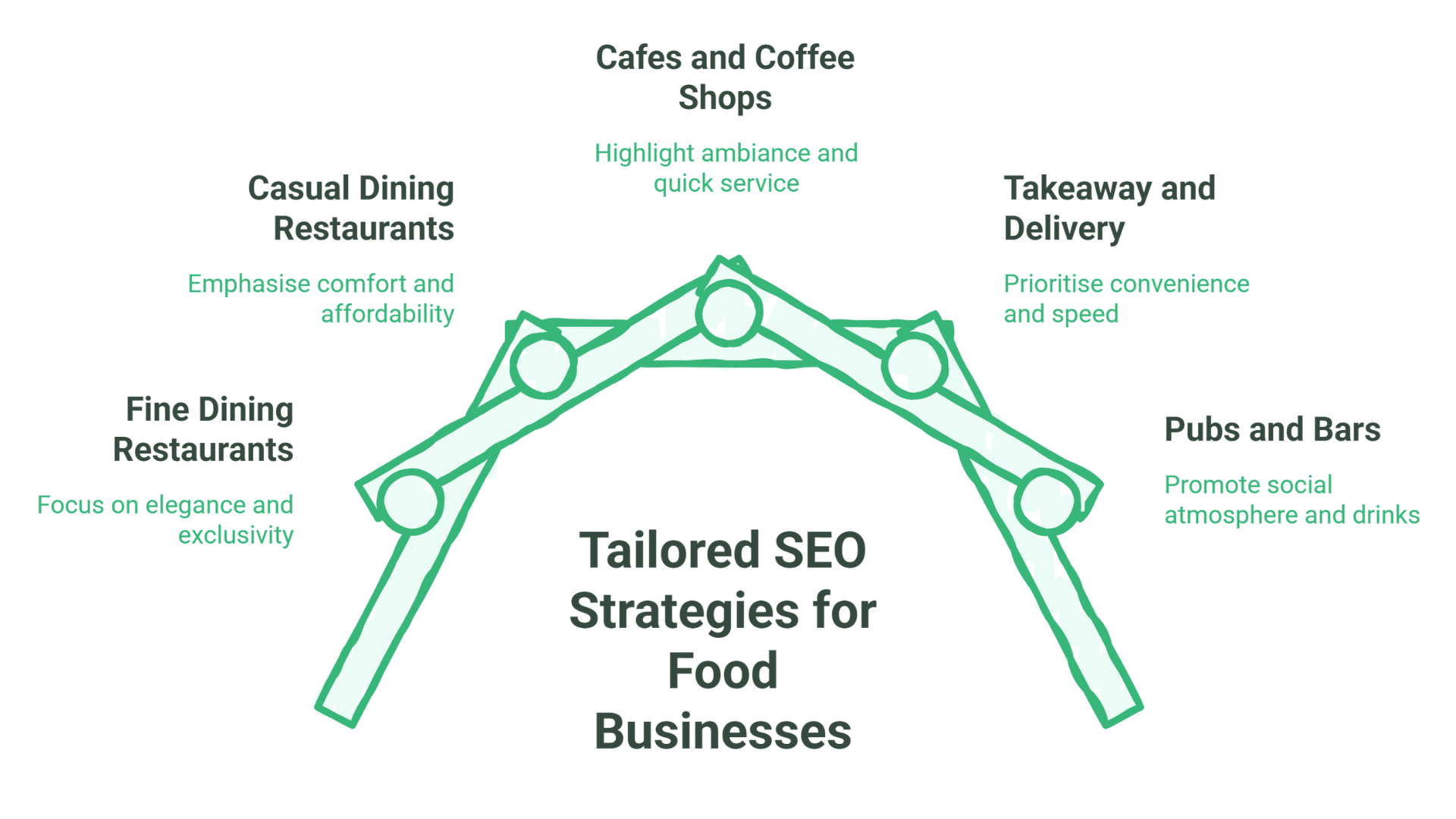
Strategies for different food businesses:
Fine Dining Restaurants
High-end dining establishments:
Key Considerations:
| Factor | Approach |
| Quality positioning | Premium experience emphasis |
| Occasion focus | Special occasions, celebrations |
| Chef profile | Chef reputation, background |
| Awards/recognition | Accolades, press coverage |
SEO Focus:
| Priority | Implementation |
| Quality content | Beautiful imagery, compelling copy |
| Occasion targeting | “anniversary dinner”, “fine dining” |
| Chef content | Chef profile, philosophy |
| Press/awards | Recognition page, media coverage |
Casual Dining Restaurants
Mid-market, family-friendly venues:
Key Considerations:
| Factor | Approach |
| Accessibility | Welcoming, approachable |
| Value proposition | Quality at reasonable prices |
| Family appeal | Kids menu, family-friendly |
| Consistency | Reliable experience |
SEO Focus:
| Priority | Implementation |
| Local dominance | Strong local SEO |
| Family content | Family dining keywords |
| Menu accessibility | Clear, comprehensive menu |
| Value communication | Price point clarity |
Cafes and Coffee Shops
Coffee and casual food venues:
Key Considerations:
| Factor | Approach |
| Daytime focus | Breakfast, brunch, lunch |
| Coffee quality | Specialty coffee positioning |
| Work-friendly | Laptop-friendly, Wi-Fi |
| Quick service | Takeaway, grab-and-go |
SEO Focus:
| Priority | Implementation |
| “Near me” targeting | Cafe near me, coffee near me |
| Daytime keywords | Brunch, breakfast, lunch |
| Feature targeting | Work-friendly, outdoor seating |
| Review volume | High volume, positive reviews |
Takeaway and Delivery
Delivery-focused food businesses:
Key Considerations:
| Factor | Approach |
| Delivery platforms | Deliveroo, UberEats presence |
| Direct ordering | Own website ordering |
| Speed emphasis | Quick delivery, collection |
| Menu clarity | Easy online ordering |
SEO Focus:
| Priority | Implementation |
| Takeaway keywords | “[cuisine] takeaway [location]” |
| Delivery content | Delivery areas, times |
| Online ordering | SEO-friendly ordering system |
| Platform optimisation | Delivery platform profiles |
Pubs and Bars
Drink-focused venues with food:
Key Considerations:
| Factor | Approach |
| Drink selection | Beer, cocktails, wine |
| Food offering | Pub grub, gastro pub |
| Entertainment | Live music, sports, events |
| Atmosphere | Social venue positioning |
SEO Focus:
| Priority | Implementation |
| Pub keywords | “pub near me”, “bar [location]” |
| Event content | Live music, sports schedules |
| Food content | Pub food, gastro offerings |
| Atmosphere | Photos, description of vibe |
Measuring Restaurant SEO Success
Tracking performance for food businesses:
Key Metrics
Visibility Metrics:
| Metric | What It Shows |
| Local Pack rankings | Position for local searches |
| Maps visibility | Presence in Google Maps |
| GBP impressions | Profile visibility |
| Website rankings | Organic position for keywords |
Engagement Metrics:
| Metric | What It Shows |
| GBP actions | Calls, directions, website clicks |
| Website traffic | Visitors from search |
| Menu views | Menu page engagement |
| Time on site | Content engagement |
Conversion Metrics:
| Metric | What It Shows |
| Phone calls | Direct enquiries |
| Direction requests | Intent to visit |
| Online bookings | Reservation conversions |
| Order clicks | Online ordering engagement |
Attribution
Connecting SEO to covers:
| Challenge | Solution |
| Walk-ins | “How did you hear about us?” |
| Phone bookings | Call tracking |
| Online bookings | Booking source tracking |
| Multi-touch | Attribution modelling |
Reporting
Monthly Restaurant SEO Reporting:
| Element | Included |
| Local Pack position | Ranking for key searches |
| GBP metrics | Impressions, actions, photos |
| Review summary | New reviews, rating trends |
| Website traffic | Organic traffic trends |
| Booking/call tracking | Conversion metrics |
| Competitor comparison | Relative visibility |
| Recommendations | Next period priorities |
Common Restaurant SEO Challenges
Addressing typical food business SEO problems:
High Local Competition
The Challenge: Many restaurants competing in same area.
Solutions:
| Approach | Implementation |
| Niche targeting | Specific cuisine, style, occasion |
| Review excellence | More, better reviews than competitors |
| Content differentiation | Unique content competitors lack |
| Feature targeting | Specific features (outdoor, etc.) |
Limited Time and Resources
The Challenge: Restaurant operators are busy running restaurants.
Solutions:
| Approach | Implementation |
| Priority focus | GBP optimisation first |
| Efficient systems | Automated review requests |
| Template content | Repeatable content formats |
| Agency support | Outsource SEO execution |
Menu Changes and Updates
The Challenge: Menus change frequently, keeping website current.
Solutions:
| Approach | Implementation |
| Easy update system | CMS that’s simple to update |
| Core menu stability | Keep stable pages for SEO |
| Specials handling | Separate specials section |
| Last updated dates | Show menu currency |
Negative Reviews
The Challenge: Negative reviews can impact visibility and bookings.
Solutions:
| Approach | Implementation |
| Dilution strategy | Generate more positive reviews |
| Professional response | Address concerns publicly |
| Operational improvement | Fix underlying issues |
| Review monitoring | Quick response to issues |
Why Choose ProfileTree for Restaurant SEO
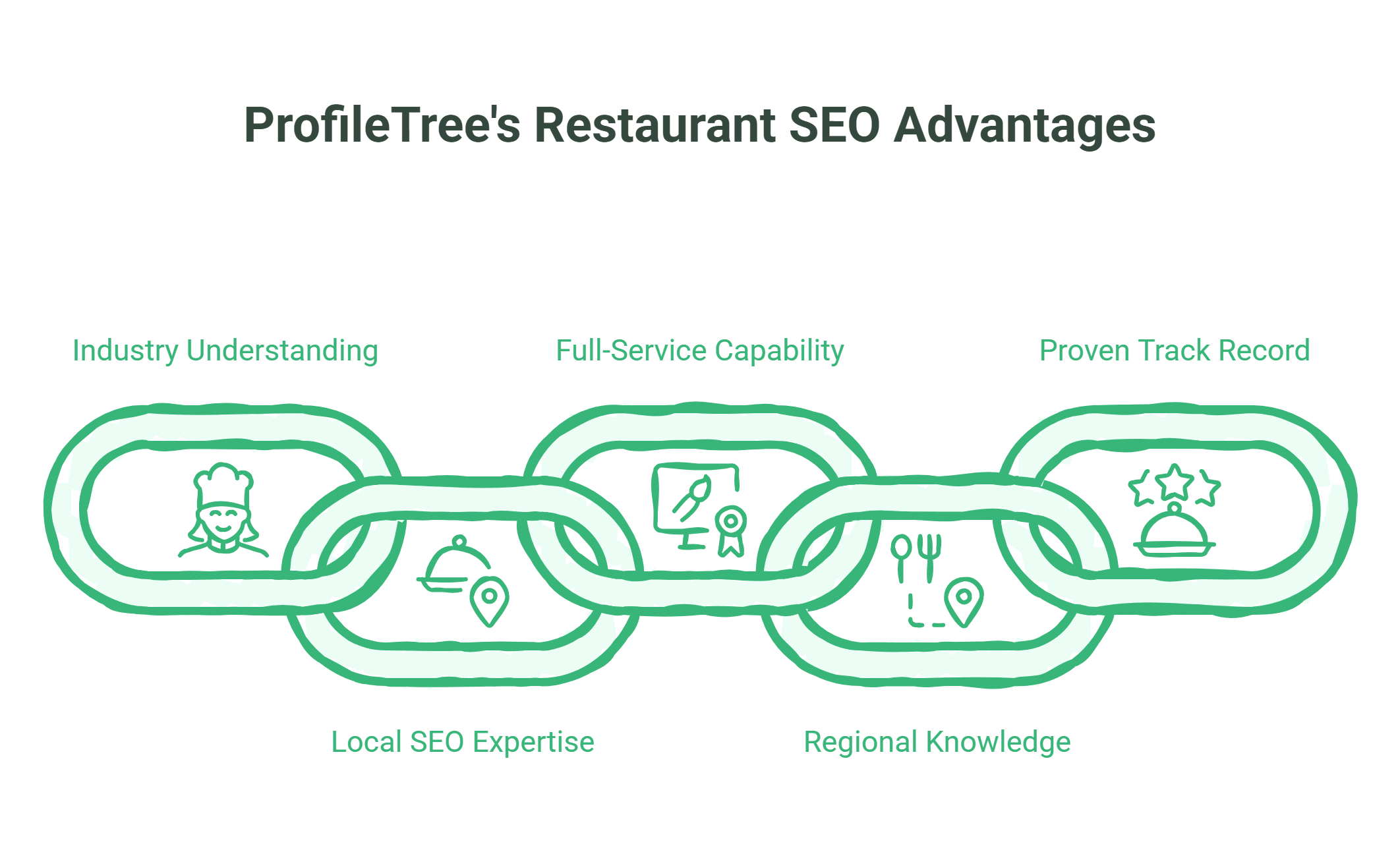
What differentiates our food business SEO services:
Industry Understanding
Knowledge of hospitality sector requirements:
- Restaurant operations awareness
- Food business marketing understanding
- Hospitality platform landscape
- Seasonal patterns familiarity
Local SEO Expertise
Strong local optimisation capability:
- Google Business Profile mastery
- Local Pack ranking expertise
- Review strategy
- Maps optimisation
Full-Service Capability
SEO integrated with broader services:
- Web design for restaurant websites
- Video production for food content
- Content marketing for food businesses
- Local SEO specialisation
Regional Knowledge
Understanding of Northern Ireland, Ireland, and UK food scenes:
- Local dining culture
- Regional food trends
- Tourism and hospitality dynamics
- Event and seasonal patterns
Proven Track Record
Our 5-star rating from over 450 Google reviews demonstrates consistent delivery across sectors, including hospitality and food businesses.
FAQs
How long does restaurant SEO take to work?
Restaurant SEO can show results relatively quickly compared to other industries, often within 1-3 months for local visibility improvements. Google Business Profile optimisation impacts visibility fast. Review generation shows results as reviews accumulate. However, sustainable rankings and consistent visibility require ongoing effort. The hospitality industry is competitive, so continuous optimisation maintains your position.
How much does restaurant SEO cost?
Restaurant SEO typically ranges from £500-£1,500/month depending on competition, number of locations, and scope. For restaurants with limited budgets, focusing on Google Business Profile optimisation and review generation provides the best return. Given that filling additional tables generates immediate revenue, even modest SEO improvements can deliver positive ROI quickly.
How important are Google reviews for restaurants?
Extremely important, possibly more than any other industry. Reviews directly impact Local Pack rankings and are one of the first things potential diners check. Star ratings appear prominently in search results, influencing click-through rates. Volume matters too; restaurants with more recent reviews appear more trustworthy. Active review generation should be an ongoing priority.
Should we have a text menu, or is a PDF okay?
Both, ideally. A text-based HTML menu is essential for SEO; search engines can’t read PDF content effectively. Text menus also provide better accessibility and a mobile experience. However, a downloadable PDF can supplement your web menu for guests who prefer it. Never use PDF as your only menu format.
How do we compete with Deliveroo and UberEats in search?
For delivery searches, competing with platforms is difficult; they have massive authority. However, you can rank for brand searches, local dining searches (not delivery-specific), and build direct ordering through your own channels. Consider delivery platforms as discovery tools that complement your SEO strategy rather than compete with it. Encourage customers discovered through platforms to order directly next time.
Do we need a website, or is Google Business Profile enough?
Both. GBP is essential for local visibility and often drives immediate actions (calls, directions). However, a website provides more space for your story, full menu, booking capability, and captures searches GBP alone won’t. Restaurants with strong websites and GBP profiles outperform those with only one. At a minimum, you need a basic website with a menu, hours, location, and booking information.
How often should we post on Google Business Profile?
Weekly posting is ideal for restaurants. Share specials, new dishes, events, seasonal offerings, and behind-the-scenes content. Posts remain visible for seven days and signal to Google that your business is active. Consistent posting correlates with better local visibility. Even one quality post per week is better than sporadic activity.
Conclusion
Diners find restaurants through search, whether planning a special occasion, looking for lunch nearby, or searching for delivery tonight. The restaurants appearing prominently in Google’s local results capture the covers. Those invisible in search lose business to competitors who’ve invested in local visibility.
Restaurant SEO is fundamentally about local optimisation: Google Business Profile excellence, review generation and management, mobile-friendly websites with accessible menus, and content that positions your restaurant for the searches that matter.
ProfileTree provides specialist restaurant SEO services, helping restaurants, cafes, pubs, and food businesses across Northern Ireland, Ireland, and the UK build the local search visibility that fills tables.
Ready to attract more diners through search? Contact ProfileTree to discuss how restaurant SEO can help your food business grow.