
How New Age SEO Transforms Digital Marketing in 2026
Table of Contents
When did keyword stuffing and link schemes stop working for your website? The truth is, search engine optimisation has fundamentally transformed, leaving many businesses wondering why their once-successful tactics now deliver diminishing returns or, worse, penalties.
The strategies that drove rankings five years ago—mechanical keyword insertion, mass link building, and technical manipulation—have given way to what industry professionals call ‘New Age SEO’. This comprehensive approach combines technical excellence, content quality, and user-centric design to achieve sustainable search visibility.
At ProfileTree, our Belfast-based team has guided businesses across Northern Ireland, Ireland, and the UK through this transformation. We’ve seen firsthand how companies that adapt to modern SEO principles outperform competitors still relying on outdated tactics. This article examines the strategies, techniques, and mindset required to succeed with New Age SEO.
Understanding Traditional SEO Foundations
Before exploring New Age SEO strategies, understanding the evolution from traditional practices provides essential context. For years, search engine optimisation followed predictable patterns centred on mechanical processes rather than genuine value creation.
Traditional SEO relied heavily on keyword research, where practitioners identified specific search terms and systematically inserted them throughout website content, meta descriptions, and title tags. The assumption was straightforward: match the keywords people search for, and your page will rank. This approach often resulted in awkward, repetitive content that served search engine crawlers rather than human readers.
Link building formed another cornerstone of traditional strategies. The quantity of backlinks pointing to a website served as a primary authority indicator, leading many businesses to pursue links through questionable methods—directory submissions, link exchanges, and paid schemes that offered little genuine editorial value.
On-page optimisation focused on technical elements: title tags, header tags, image alt text, and URL structures all had to contain target keywords. This checklist approach often created rigid, formulaic content that lacked personality or genuine usefulness.
However, search engine algorithms have evolved dramatically. Google’s Panda update in 2011 targeted low-quality content, penalising sites with thin or duplicate material. The 2012 Penguin update addressed manipulative link schemes, causing rankings to collapse for sites relying on artificial link building. These changes forced a fundamental reassessment of SEO strategy.
“The businesses that thrive in search results now are those willing to invest in genuine quality,” says Ciaran Connolly, Director at ProfileTree. “We work with clients to build sustainable strategies that deliver value to their audience first, which naturally improves their search performance.”
Search engines began prioritising user experience signals—bounce rates, time on site, and engagement metrics. Websites that kept visitors engaged and satisfied their search intent received ranking boosts, whilst those that sent frustrated users back to search results saw their visibility decline. This shift set the foundation for what we now recognise as New Age SEO.
Defining New Age SEO and Its Critical Importance
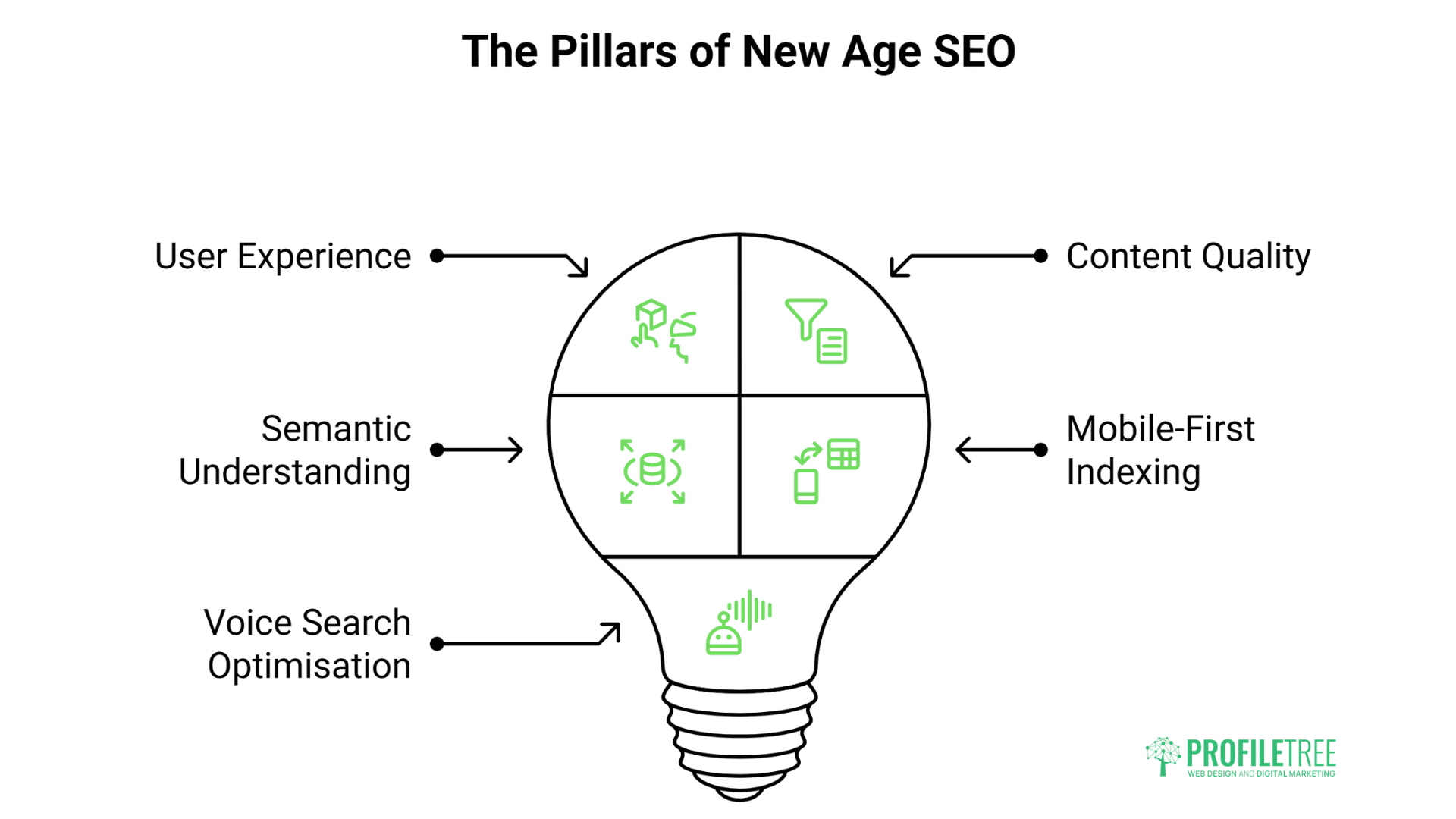
New Age SEO represents a fundamental paradigm shift from optimising for search engine crawlers to creating exceptional experiences for human users. This approach acknowledges that modern search engines have become remarkably sophisticated, capable of understanding context, interpreting intent, and evaluating content quality in ways that would have seemed impossible a decade ago.
Three pillars define New Age SEO: user experience, content quality, and semantic understanding. Each element interconnects, creating a holistic strategy that delivers results across multiple metrics.
User Experience as a Ranking Signal
Search engines now analyse how visitors interact with websites. If users quickly return to search results after visiting your site—a signal called “pogo-sticking”—it indicates poor content relevance or experience. Conversely, sites that engage visitors, encourage exploration, and satisfy search intent receive ranking advantages.
This makes website design and development critical to SEO success. At ProfileTree, we build WordPress sites specifically optimised for both search engines and user experience, recognising that these goals are now inseparable. Fast loading times, intuitive navigation, mobile responsiveness, and accessible design all contribute to the signals search engines evaluate when determining rankings.
Content Quality Beyond Keywords
Content quality has evolved beyond keyword density to encompass depth, accuracy, originality, and genuine usefulness. Search engines want to deliver the most relevant, comprehensive information for each query. This means content must thoroughly address user questions, provide actionable insights, and demonstrate expertise.
Our content marketing and strategy services at ProfileTree focus on creating material that establishes authority whilst genuinely helping your target audience. This approach builds trust with both search engines and potential customers, creating a foundation for long-term visibility.
Semantic Search and User Intent
Semantic search represents one of the most significant developments in modern SEO. Rather than simply matching keywords, search engines now strive to understand the meaning and context behind queries. This allows them to deliver relevant results even when exact keyword matches aren’t present.
A robust user intent SEO strategy becomes central to this approach. Understanding whether someone searching for “website design” wants to learn about design principles, hire a designer, or compare design tools allows you to create content that precisely matches their needs. At ProfileTree, we analyse user intent across all our digital marketing training programmes, teaching SMEs how to align their content with what their audience actually wants to discover.
The Mobile-First Reality
Mobile-first indexing fundamentally changed how search engines evaluate websites. Google now primarily uses the mobile version of your site for indexing and ranking decisions. This means mobile optimisation isn’t optional—it’s the baseline requirement for search visibility.
Our web design and development team builds responsive sites that deliver excellent experiences across all devices. This technical foundation supports your content strategy, allowing your valuable material to reach audiences regardless of how they access your site.
Voice Search Optimisation
The proliferation of smart speakers and virtual assistants has created new optimisation challenges. Voice searches tend to be longer and more conversational than typed queries. Someone might type “weather Belfast” but ask their voice assistant, “What’s the weather going to be like in Belfast this weekend?”
Optimising for voice search requires content that answers questions directly and conversationally. Structured data markup helps search engines extract and present this information in voice search results, making it essential for comprehensive New Age SEO strategies.
The importance of adapting to New Age SEO cannot be overstated. Businesses maintaining traditional approaches increasingly find themselves invisible in search results, whilst those embracing modern strategies see improved visibility, higher-quality traffic, and better conversion rates. This transformation affects every industry, from local retailers in Belfast to professional services across the UK.
Creating User-Centric Content That Ranks
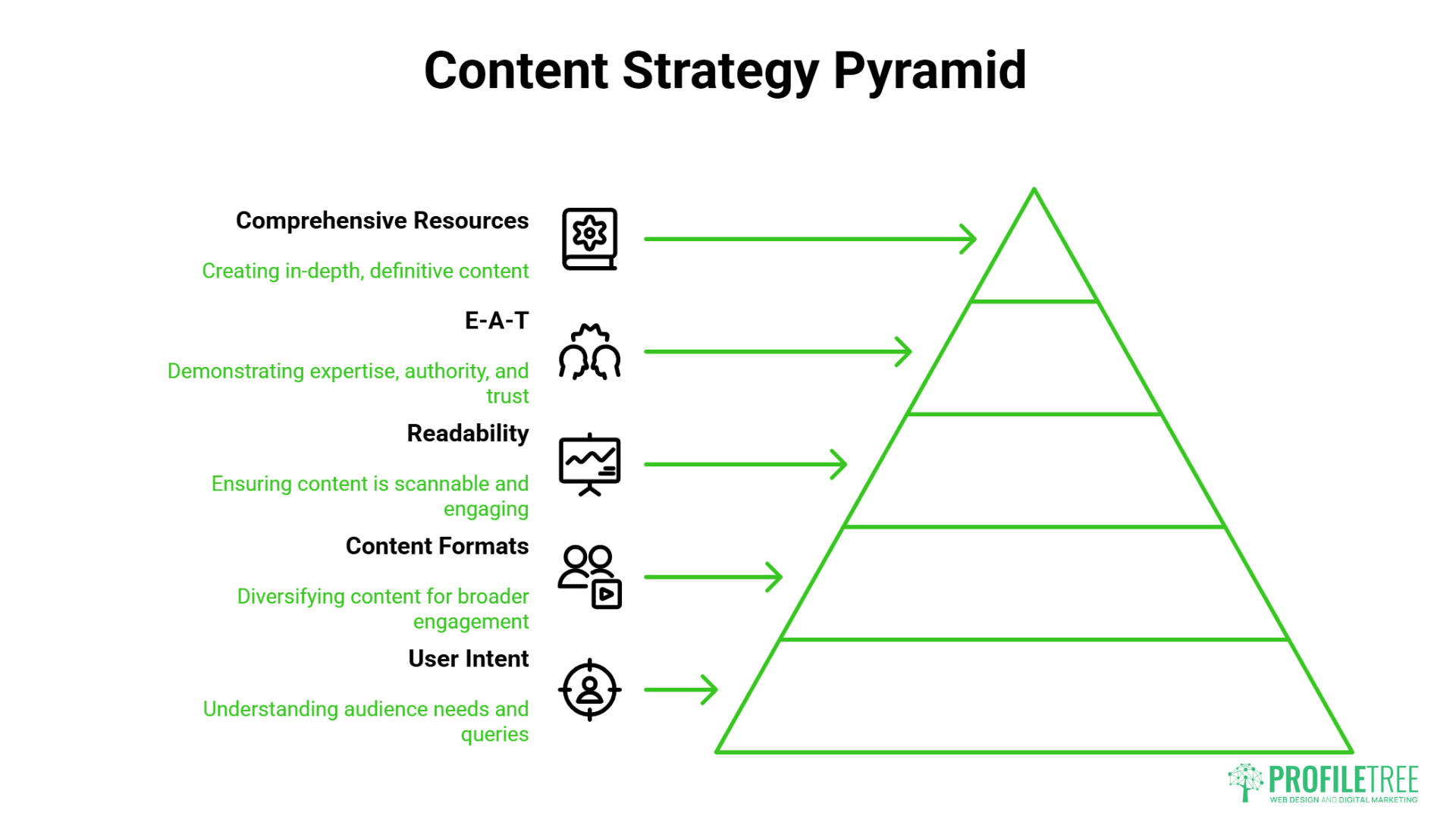
Content remains the foundation of effective SEO, but the definition of quality content has transformed completely. New Age SEO demands content created with audience needs, questions, and preferences as the primary focus, with search optimisation flowing naturally from this user-centric approach.
Understanding and Matching Search Intent
Every search query reflects an underlying intent. Someone searching “website design Belfast” might want to hire a designer, learn about design principles, or compare local agencies. Matching this intent determines whether your content satisfies the user and earns rankings.
Search intent generally falls into four categories:
- Informational Intent: Users seeking knowledge or answers to questions. Content should educate, explain, or provide insights. Examples include “what is semantic SEO” or “how does AI improve search.”
- Transactional Intent: Users ready to take action or make a purchase. Content should facilitate conversion with clear calls-to-action and compelling reasons to choose your service. Examples include “hire SEO consultant Belfast” or “WordPress hosting packages.”
- Commercial Investigation: Users comparing options before making decisions. Content should provide comparisons, reviews, and detailed information that helps with evaluation. Examples include “best digital marketing agencies Northern Ireland” or “WordPress vs Shopify for small business.”
- Navigational Intent: Users trying to reach a specific website or page. These queries often include brand names or specific page references.
At ProfileTree, our SEO services begin with comprehensive intent analysis. We examine what your target audience actually wants when they search for keywords in your industry, then create content that precisely addresses those needs. This alignment between content and intent dramatically improves both rankings and conversion rates.
Diversifying Content Formats
Different audiences consume information in different ways. Whilst blog posts and articles remain valuable, diversifying into multiple formats increases your reach and engagement.
- Video Content: Visual demonstrations, tutorials, and explanations often communicate complex concepts more effectively than text alone. Our video production services help businesses create content that ranks in both traditional search results and YouTube.
- Infographics: Data visualisations and process diagrams make complex information accessible and highly shareable. These visual assets often earn backlinks naturally as other sites reference your research.
- Interactive Tools: Calculators, assessments, or configurators provide immediate value whilst keeping users engaged with your site. These tools create memorable experiences that encourage return visits and brand recall.
- Podcasts: Audio content allows audiences to consume your expertise during commutes or whilst multitasking. Podcast transcripts also provide valuable text content for search engine indexing.
- Animation: Explaining abstract concepts or processes through animation can clarify ideas that text struggles to convey. Animation services create engaging explainer videos that improve both user understanding and time-on-site metrics.
- Case Studies: Detailed examinations of how you’ve solved specific problems demonstrate expertise whilst providing proof of your capabilities. These work particularly well for commercial investigation queries.
ProfileTree’s content marketing approach integrates multiple formats strategically, ensuring your expertise reaches audiences through their preferred consumption methods.
Optimising for Readability and Engagement
Even exceptional information fails if presented poorly. Content must be scannable, digestible, and engaging to satisfy modern users who often skim before committing to detailed reading.
Clear, concise language beats complex vocabulary. Whilst demonstrating expertise matters, accessibility ensures your knowledge reaches the widest possible audience. Short paragraphs, descriptive subheadings, and logical content flow help readers navigate your material efficiently.
Breaking up text with visual elements—images, diagrams, pull quotes, or data visualisations—creates natural rest points that prevent reader fatigue. These elements also provide opportunities to reinforce key concepts through different modalities.
Strategic use of formatting improves scannability:
- Bullet points highlight key takeaways
- Numbered lists provide sequential processes
- Bold text emphasises critical concepts
- Tables organise comparative information
However, overusing formatting creates visual clutter. The goal is to guide readers through your content naturally, not overwhelming them with competing visual elements.
Our digital training programmes teach business owners how to structure content for maximum engagement, combining readability principles with SEO requirements to create material that serves both audiences and search engines effectively.
Demonstrating E-A-T: Expertise, Authoritativeness, Trustworthiness
Google’s Quality Rater Guidelines emphasise E-A-T, particularly for “Your Money or Your Life” (YMYL) topics that can impact health, finances, or safety. However, these principles apply across all content categories.
Expertise means demonstrating genuine knowledge through detailed, accurate information. Author credentials, professional experience, and depth of coverage all signal expertise. At ProfileTree, our team’s combined decades of experience in web design, SEO, and digital marketing provide the foundation for authoritative content.
Authoritativeness comes from recognition within your industry. This includes mentions and links from reputable sources, speaking engagements, published research, and thought leadership. Building this recognition requires consistent, high-quality output over time.
Trustworthiness encompasses accuracy, transparency, and security. Factual content backed by credible sources, clear author attribution, secure HTTPS websites, and transparent business practices all contribute to trustworthiness signals.
For local businesses serving Belfast, Northern Ireland, and the surrounding areas, local authority matters significantly. Demonstrating community involvement, local expertise, and regional knowledge builds trust with both local audiences and search engines evaluating local relevance.
Creating Comprehensive, Definitive Resources
New Age SEO rewards depth over breadth. Rather than creating multiple thin pieces on related topics, comprehensive guides that thoroughly examine subjects from multiple angles tend to rank better and provide more value.
These pillar pieces should address beginner questions whilst also providing advanced insights for experienced readers. This approach serves mixed-knowledge audiences whilst demonstrating comprehensive subject mastery.
When ProfileTree develops content strategies for clients, we identify opportunities for definitive resources that establish their websites as go-to references in their industries. These cornerstone pieces then support shorter, more focused content that addresses specific queries whilst linking back to comprehensive guides.
Technical SEO Requirements for New Age Search
Whilst compelling content attracts and engages users, robust technical foundations make that content accessible to both search engines and visitors. New Age SEO places significant emphasis on technical optimisation, particularly metrics that directly impact user experience.
Core Web Vitals: Measuring User Experience
Google’s Core Web Vitals represent a fundamental shift toward quantifying user experience through specific, measurable metrics. These signals directly influence rankings, making them essential priorities for any serious SEO strategy.
Largest Contentful Paint (LCP) measures loading performance by tracking when the largest content element becomes visible. This should occur within 2.5 seconds of when the page starts loading. Slow LCP frustrates users who expect immediate access to content.
Improving LCP typically involves:
- Optimising and compressing images
- Implementing lazy loading for below-the-fold content
- Minimising render-blocking JavaScript and CSS
- Using content delivery networks (CDNs) to reduce server response times
- Upgrading hosting infrastructure for faster processing
First Input Delay (FID) measures interactivity by tracking the time between a user’s first interaction (clicking a link, tapping a button) and when the browser responds. This should be less than 100 milliseconds.
Improving FID requires:
- Breaking up long JavaScript tasks
- Removing unnecessary third-party scripts
- Using browser caching
- Implementing code splitting to load only the necessary JavaScript
- Minimising main thread work
Cumulative Layout Shift (CLS) measures visual stability by quantifying unexpected layout shifts that occur during page loading. This should be less than 0.1 to prevent frustrating experiences where users accidentally click on the wrong elements because the content has moved.
Improving CLS involves:
- Including size attributes for images and videos
- Reserving space for dynamically-loaded content
- Avoiding inserting content above existing content
- Using transform animations rather than properties that trigger layout shifts
At ProfileTree, our web development process prioritises Core Web Vitals from initial design through deployment. We build WordPress sites with optimised themes, efficient plugins, and proper configuration to deliver excellent performance metrics without sacrificing functionality or visual appeal.
Mobile Optimisation as Standard Practice
Mobile-first indexing means Google predominantly uses the mobile version of your website for indexing and ranking. If your mobile site lacks content, functionality, or performance compared to your desktop version, your rankings suffer across all devices.
Mobile optimisation requires:
- Responsive Design: Your site must adapt seamlessly to different screen sizes, from smartphones to tablets to desktops. This goes beyond simply shrinking content—navigation, interactive elements, and layouts should optimise for touch interaction and smaller viewports.
- Touch-Friendly Navigation: Buttons and links need adequate spacing to prevent accidental taps. Touch targets should be at least 48×48 pixels with sufficient spacing between interactive elements.
- Readable Typography: Text should be legible without zooming. This typically means using at least 16-pixel font sizes for body text, with appropriate line spacing and contrast ratios for accessibility.
- Simplified Forms: Mobile users struggle with complex forms. Minimise required fields, use appropriate input types (email keyboards for email fields, number pads for phone numbers), and implement autofill where possible.
- Fast Mobile Load Times: Mobile users often access sites on slower connections. Aggressive optimisation becomes even more critical for mobile performance.
ProfileTree’s web design services deliver fully responsive websites that provide excellent experiences across all devices. We test extensively on real devices and various screen sizes to confirm functionality and performance meet modern standards.
Site Speed Optimisation
Whilst Core Web Vitals address specific aspects of loading performance, overall site speed remains critically important. Slow websites frustrate users, increase bounce rates, and limit how many pages search engine crawlers can efficiently process.
Key optimisation strategies include:
- Image Optimisation: Images often constitute the largest payload on web pages. Proper compression, modern formats (WebP), and responsive images that serve appropriate sizes for different devices can dramatically reduce load times without sacrificing visual quality.
- Caching Implementation: Browser caching stores static resources locally, allowing repeat visitors to load pages much faster. Server-side caching generates static versions of dynamic pages, reducing processing requirements.
- Code Minimisation: Removing unnecessary characters from HTML, CSS, and JavaScript files reduces file sizes. Combining multiple files where appropriate reduces the number of server requests required.
- Content Delivery Networks: CDNs distribute your content across multiple geographic locations, serving resources from servers closest to each user. This reduces latency and improves load times for international audiences.
- Hosting Infrastructure: Server quality fundamentally impacts site speed. Shared hosting environments with limited resources can’t compete with dedicated or managed hosting solutions optimised for performance.
ProfileTree offers managed WordPress hosting packages (£35/month) specifically configured for optimal performance. Our hosting infrastructure includes caching, CDN integration, and security measures that protect speed whilst maintaining site functionality.
Schema Markup and Structured Data
Schema markup represents a powerful technical SEO tool that helps search engines understand your content’s context and meaning. By adding structured data to your HTML, you provide explicit information about what your content represents—products, recipes, events, articles, reviews, local businesses, and dozens of other types.
This markup enables rich snippets in search results, making your listings more prominent and informative. Rich snippets might include:
- Star ratings and review counts
- Recipe cooking times and calorie information
- Event dates and locations
- Product prices and availability
- Article publication dates and author information
- FAQ accordions directly in search results
Implementing schema markup requires technical knowledge but delivers significant advantages. Local businesses particularly benefit from the Local Business schema, which provides search engines with precise information about location, hours, contact details, and services.
Our SEO services include comprehensive schema implementation, ensuring your content qualifies for relevant rich snippets that improve click-through rates and visibility.
HTTPS Security
Secure connections via HTTPS encrypt data between users’ browsers and your server, protecting privacy and preventing data interception. Whilst HTTPS represents a minor direct ranking signal, it impacts user trust significantly and is now expected as standard practice.
Modern browsers display warnings for non-secure sites, particularly those collecting any user information. These warnings deter visitors and damage credibility. Additionally, many advanced features—geolocation, service workers, progressive web apps—require HTTPS to function.
SSL certificates, which enable HTTPS, are widely available and often included with quality hosting packages. Implementation requires proper configuration but provides essential security and trust signals.
Crawlability and Indexability
Technical SEO fundamentals still matter. Search engines must be able to crawl your site efficiently and index your content correctly. This requires:
- Clean Site Architecture: Logical hierarchy with clear categorisation and internal linking helps both users and crawlers navigate your content.
- XML Sitemaps: These provide search engines with a complete inventory of your site’s pages, helping them discover and index content efficiently.
- Robots.txt Configuration: Proper robots.txt implementation guides crawlers toward valuable content whilst preventing them from wasting resources on unimportant pages.
- Canonical Tags: These signal the preferred version of duplicate or similar content, consolidating ranking signals and preventing duplicate content issues.
- Proper URL Structure: Clean, descriptive URLs that reflect content hierarchy improve both user understanding and search engine interpretation.
ProfileTree’s technical SEO audits identify and resolve crawlability issues that prevent search engines from properly accessing and understanding your content. We implement best practices that ensure your valuable content receives the visibility it deserves.
Understanding Semantic Search and User Intent
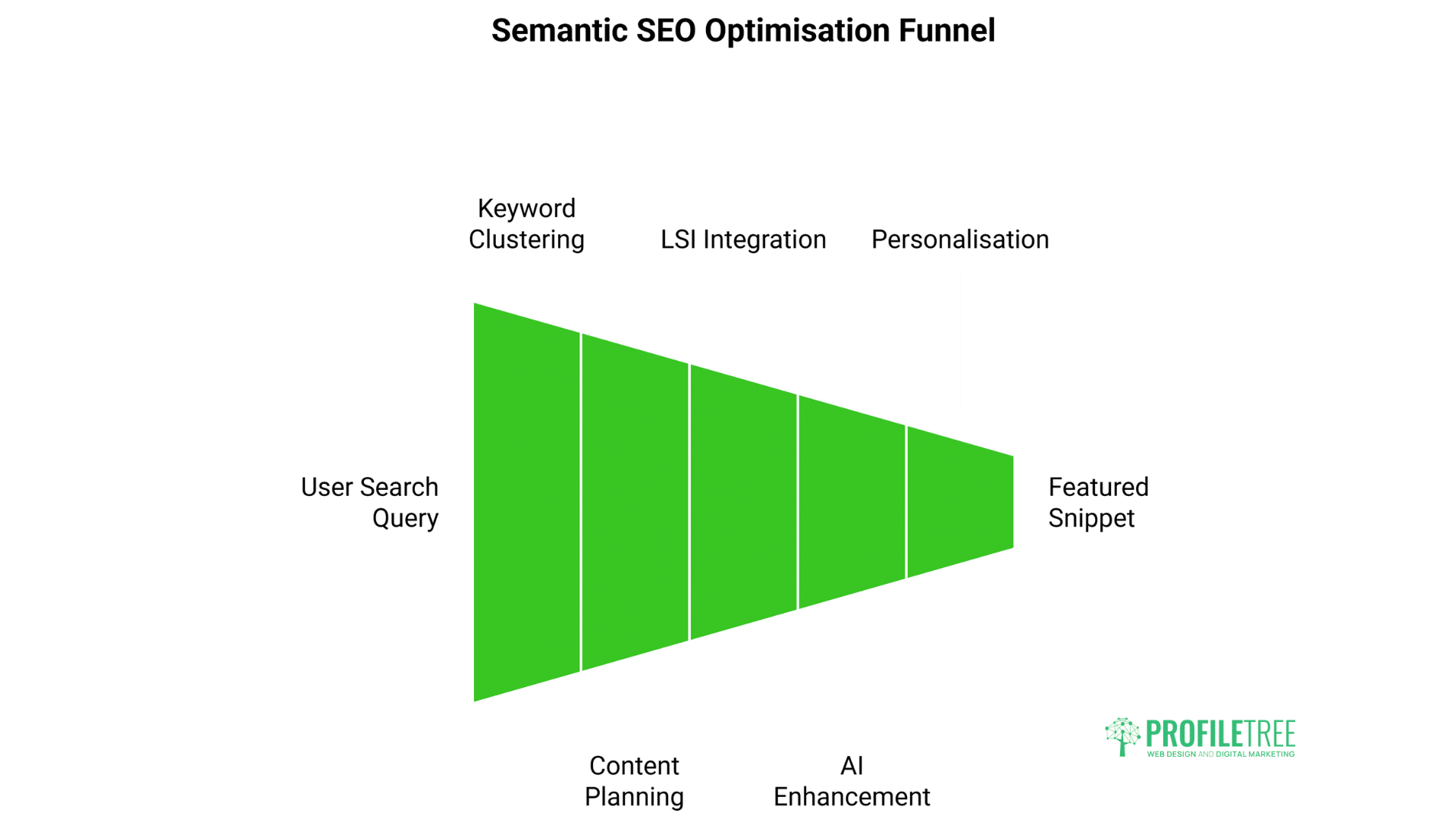
New Age SEO moves decisively beyond individual keyword optimisation toward understanding the broader topics, concepts, and relationships that define subject areas. This semantic approach aligns with how modern search engines interpret queries and evaluate content relevance.
From Keywords to Topics
Traditional SEO targeted specific keywords with dedicated pages. A business might create separate pages for “web design Belfast,” “website design Belfast,” and “web designers Belfast,” despite these terms representing essentially the same user intent.
Semantic SEO recognises these terms as variations within a broader topic. Instead of fragmenting your content across multiple thin pages, you create comprehensive resources that address topics thoroughly, naturally incorporating related terms and concepts.
This approach builds topical authority—search engines recognise your website as a comprehensive resource on particular subjects. When you consistently produce in-depth content covering various aspects of a topic, search engines gain confidence in your expertise and are more likely to rank your content for related queries.
At ProfileTree, our content strategy services help businesses identify their core topics and create comprehensive resources that establish authority. Rather than chasing individual keywords, we develop content ecosystems that thoroughly cover relevant subjects, building sustained visibility across related searches.
Keyword Clustering and Content Planning
Keyword clustering groups related search terms based on shared intent and topic relevance. This technique allows you to create single, authoritative pieces that satisfy multiple related queries rather than producing numerous separate pages competing with each other.
For example, searches for “AI implementation for small business,” “introducing AI to SMEs,” “AI transformation for companies,” and “business AI adoption” all share similar intent. A comprehensive guide addressing AI implementation for businesses would naturally rank for all these variations.
Clustering analysis examines:
- Search results overlap (queries showing similar pages)
- Semantic relationships between terms
- User intent alignment
- Search volume and competition data
This analysis informs content planning, helping you create pieces that maximise relevance across keyword groups whilst avoiding keyword cannibalisation where multiple pages compete for the same rankings.
ProfileTree’s AI training and implementation services extend to content strategy, helping businesses understand how artificial intelligence can improve their content planning, identify clustering opportunities, and optimise for semantic relevance.
Latent Semantic Indexing and Related Terms
Latent Semantic Indexing (LSI) refers to search engines’ ability to understand relationships between terms and concepts. Whilst “LSI keywords” isn’t technically accurate terminology, the underlying concept remains valuable: using semantically related terms naturally throughout content helps search engines understand depth and relevance.
For content about web design, related terms might include:
- User experience (UX)
- User interface (UI)
- Responsive design
- Mobile optimisation
- Accessibility standards
- Conversion rate optimisation
- Visual hierarchy
- Typography
- Colour theory
- Wireframing
Including these terms naturally demonstrates comprehensive coverage of the subject. This isn’t about keyword stuffing—it’s about thorough exploration of topics that naturally incorporates related concepts and terminology.
The AI Impact on Semantic Search
Artificial intelligence has dramatically enhanced search engines’ semantic understanding capabilities. Machine learning models can analyse vast amounts of text to identify patterns, relationships, and nuances that traditional algorithms miss.
Google’s BERT (Bidirectional Encoder Representations from Transformers) update marked a significant advancement in understanding conversational queries and context. The MUM (Multitask Unified Model) update further improved capabilities, allowing search engines to understand complex queries, make connections across languages, and interpret multimodal information (text, images, video).
The impact of generative AI on SEO extends beyond search engines themselves. AI tools can now assist content creation, helping identify semantic relationships, suggest related topics, and optimise content structure. However, maintaining human oversight remains essential—AI-generated content often lacks the genuine expertise, original insights, and authentic voice that distinguishes exceptional material.
At ProfileTree, our AI implementation and training services help businesses understand where AI adds value to their content processes without sacrificing quality or authenticity. We teach SMEs to use AI as a tool for enhancement rather than the replacement of human expertise.
Personalisation and Search Context
Search engines increasingly personalise results based on user context—location, search history, device, time of day, and numerous other signals. Two people searching for identical terms may see different results based on their unique contexts.
This personalisation makes semantic optimisation even more important. By creating comprehensive, contextually rich content, you increase relevance across diverse user contexts rather than optimising narrowly for specific scenarios.
Local businesses particularly benefit from understanding location context. Someone searching “web design” from Belfast should see different results than someone searching from London. Incorporating local relevance—serving specific geographic areas, understanding regional business challenges, demonstrating community involvement—improves visibility for location-qualified searches.
ProfileTree’s services span Belfast, Northern Ireland, Ireland, and the UK. We build location context into our clients’ content strategies, helping them capture geographically relevant traffic whilst maintaining authority across broader markets.
Optimising for Featured Snippets and Answer Boxes
Featured snippets—the boxed answers appearing above traditional search results—represent prime semantic SEO opportunities. These prominent placements dramatically increase visibility and traffic.
Earning featured snippets requires:
- Clear Question Answering: Structure content to directly answer common questions. Using the question as a subheading followed immediately by a concise answer improves your chances.
- Proper Formatting: Lists, tables, and step-by-step instructions often appear in featured snippets. Formatting content in these structures increases eligibility.
- Concise Definitions: For definitional queries, providing clear, brief explanations in 40-60 words optimises for snippet selection.
- Structured Data: Schema markup helps search engines identify and extract relevant information for featured snippets.
Our SEO services include featured snippet optimisation, identifying opportunities where your content can capture these valuable positions and structuring information to maximise selection chances.
Building Authority Beyond Traditional Link Building
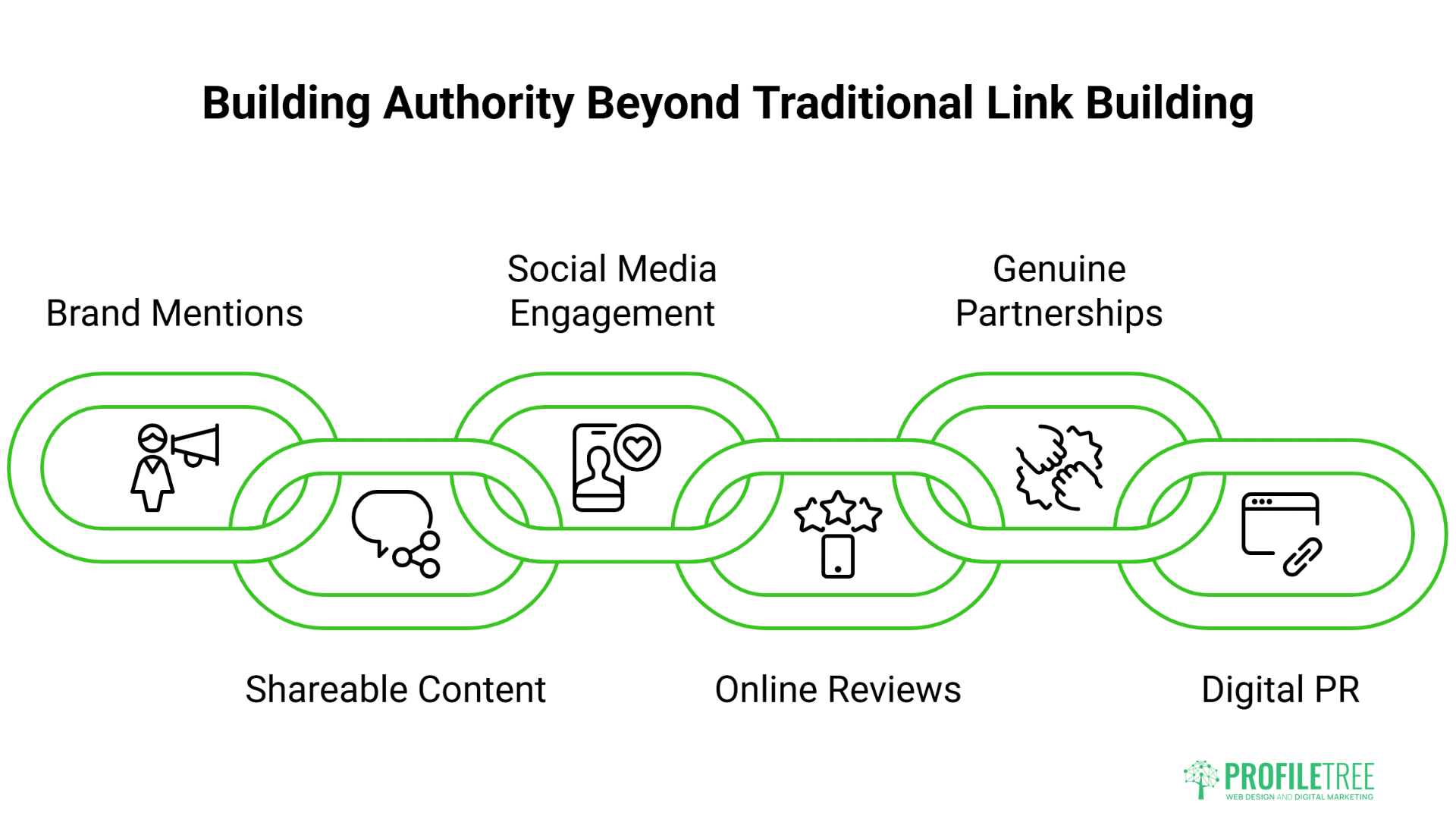
Whilst backlinks remain important ranking signals, New Age SEO recognises that genuine authority emerges from diverse signals that collectively demonstrate expertise, credibility, and trustworthiness. Building authority now requires a holistic approach that extends far beyond acquiring links.
Earning Brand Mentions and Recognition
Brand mentions—instances where other websites, publications, or platforms reference your business without necessarily linking—contribute to authority signals. Search engines can identify these unlinked mentions and use them to assess brand prominence and relevance within your industry.
Earning mentions requires:
- Thought Leadership: Contributing expert perspectives on industry developments, trends, and challenges positions you as a go-to source. This might involve publishing original research, providing expert commentary for journalists, or speaking at industry events.
- Media Relationships: Building relationships with journalists and publications in your sector increases chances of being quoted or featured when relevant stories develop.
- Community Involvement: Active participation in professional communities, forums, and discussions keeps your brand visible and associated with your expertise areas.
- Unique Data and Insights: Original research, surveys, or data analysis often get cited by other sources, generating mentions and potentially links as others reference your findings.
At ProfileTree, we’ve built recognition through consistent thought leadership in digital marketing, AI implementation, and web design. Our Director, Ciaran Connolly, regularly contributes expertise to industry discussions, establishing ProfileTree as an authoritative voice in these areas.
Creating Highly Shareable Content
Content that naturally encourages sharing extends your reach organically, building brand awareness and generating traffic without paid promotion. Shareable content typically exhibits several characteristics:
- Practical Value: Content that solves problems, provides actionable advice, or teaches valuable skills motivates sharing. People share content that makes them look helpful or knowledgeable to their networks.
- Emotional Resonance: Content that evokes strong emotions—inspiration, surprise, amusement—gets shared more frequently than purely informational material.
- Visual Appeal:Well-designed infographics, compelling images, and engaging videos attract more shares than text-only content.
- Original Perspectives: Unique viewpoints, contrarian takes backed by evidence, or fresh angles on familiar topics stand out in crowded content landscapes.
- Comprehensive Resources: Definitive guides and thorough examinations of topics get bookmarked, referenced, and shared as go-to resources.
Our video production services help businesses create visually engaging content that stands out in social feeds and encourages sharing. Combined with our content marketing expertise, we develop comprehensive strategies that maximise shareability whilst maintaining strategic business objectives.
Social Media Engagement and Authority
An active social media presence contributes to authority building in several ways. Whilst social signals aren’t direct ranking factors, they influence awareness, traffic, and other metrics that impact search performance.
- Audience Building: Growing engaged followers interested in your expertise creates distribution channels for your content, amplifying reach beyond organic search.
- Conversation Participation: Answering questions, providing insights, and engaging thoughtfully in discussions demonstrates expertise and accessibility.
- Customer Interaction: Responding to customer inquiries and feedback publicly shows responsiveness and commitment to satisfaction.
- Content Distribution: Sharing your content through social channels generates immediate traffic whilst potentially attracting links from others who discover your material through social platforms.
- Community Building: Creating spaces where your audience can connect, share experiences, and learn from each other establishes your brand as a community hub rather than just a service provider.
ProfileTree’s comprehensive social media strategy service helps businesses build authentic engagement that supports broader marketing and SEO objectives.
Online Reviews and Reputation Management
Customer reviews significantly impact both local SEO and broader authority signals. Reviews on Google Business Profile, industry-specific platforms, and third-party review sites all contribute to your digital reputation.
- Review Generation: Systematically requesting reviews from satisfied customers builds a substantial review portfolio. This requires processes that make leaving reviews easy whilst remaining compliant with platform guidelines.
- Review Response: Thoughtfully responding to all reviews—positive and negative—demonstrates active engagement and commitment to customer satisfaction. How you handle criticism particularly impacts perception.
- Review Monitoring: Actively tracking reviews across platforms allows quick responses and helps identify recurring issues that might require operational changes.
- Reputation Repair: Addressing negative reviews constructively and implementing changes based on feedback can turn criticism into opportunities for demonstrating responsiveness.
For local businesses serving Belfast and Northern Ireland, Google Business Profile reviews particularly impact local search visibility. Our local SEO services include reputation management strategies that build review volume whilst maintaining authenticity.
Building Genuine Partnerships and Relationships
Strategic partnerships with complementary businesses, industry organisations, and professional associations create natural opportunities for mentions, links, and co-marketing initiatives.
- Guest Content Contributions: Writing for reputable industry publications builds authority whilst generating quality backlinks and expanding your audience reach.
- Podcast Appearances: Participating in relevant podcasts allows detailed discussion of your expertise, reaching engaged audiences whilst generating brand mentions.
- Collaborative Projects: Partnering with complementary businesses on resources, research, or events creates mutual value whilst expanding both organisations’ visibility.
- Industry Association Involvement: Active participation in trade organisations and professional groups builds recognition whilst providing networking and visibility opportunities.
- Speaking Engagements: Presenting at conferences, workshops, or webinars establishes subject matter expertise whilst generating publicity and mentions.
These relationship-building activities contribute to authority in ways that purely mechanical link-building tactics cannot replicate. They demonstrate genuine industry participation and recognition by peers.
Digital PR and Link Earning
Modern link building emphasises earning links through genuine value creation rather than requesting or exchanging them. Digital PR applies public relations principles to online visibility, generating coverage that naturally includes links.
- Newsworthy Content: Creating content tied to current events, publishing original research, or offering expert commentary on industry developments increases newsworthiness and coverage potential.
- Resource Creation: Developing tools, calculators, templates, or comprehensive guides that others find valuable naturally attracts links as people reference your resources.
- Data Journalism: Analysing existing data to reveal insights or trends appeals to journalists seeking supporting information for their stories.
- Expert Positioning: Making yourself available as an expert source for journalists covering your industry increases chances of being quoted and linked in articles.
ProfileTree’s content marketing services incorporate digital PR principles, helping businesses create content that naturally attracts links whilst building brand recognition and authority across digital channels.
Measuring New Age SEO Performance and ROI
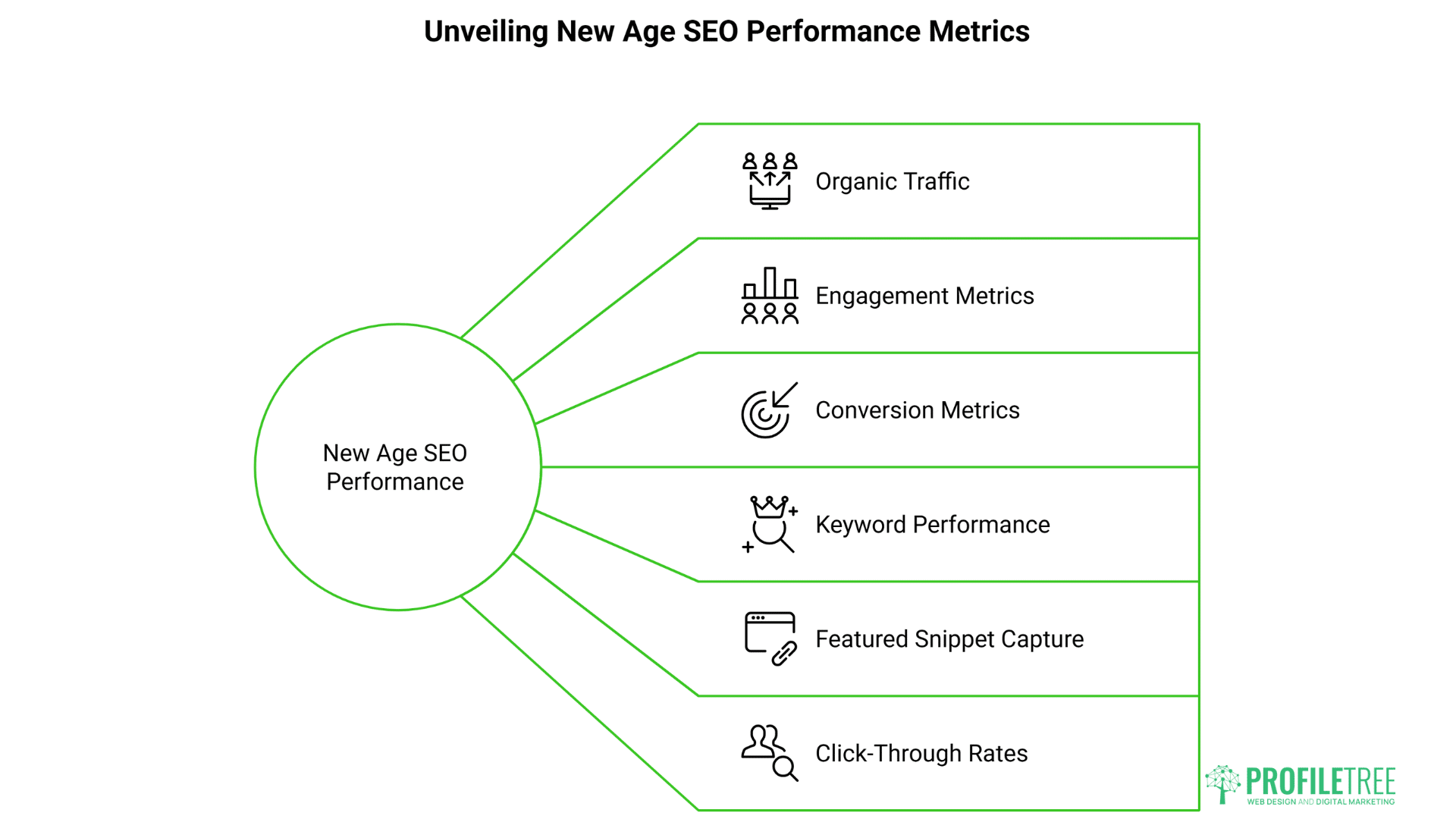
Effective New Age SEO requires comprehensive measurement that extends beyond basic ranking tracking. Understanding the full impact of your strategies demands analysis across multiple metrics that reflect user behaviour, engagement quality, and business outcomes.
Essential Performance Metrics
Organic Traffic Volume and Quality: Total organic visitors provide a baseline visibility metric, but traffic quality matters more than quantity. Analyse which pages attract traffic, how visitors engage with content, and whether traffic sources align with target audiences.
Engagement Metrics: These reveal how users interact with your site:
- Bounce Rate: The percentage leaving after viewing only one page indicates content relevance and user experience quality
- Pages Per Session: Average pages viewed during visits reflects content interconnectedness and user engagement
- Time on Page: Duration spent engaging with content suggests value and relevance
- Scroll Depth: How far down pages users scroll reveals whether content maintains attention
Conversion Metrics: Ultimately, SEO should drive business results. Track conversions, including:
- Lead form submissions
- Phone calls
- Email inquiries
- Quote requests
- Resource downloads
- Newsletter signups
- Purchase completions
Understanding which organic traffic sources convert best helps optimise content and targeting strategies.
Keyword Performance: Whilst not the sole focus, tracking rankings for strategic keywords provides insight into visibility trends and competitive positioning. Monitor not just rankings but also search volume, competition levels, and how rankings correlate with actual traffic.
Featured Snippet Capture: Track how many featured snippets your site owns and which queries trigger them. These prominent positions significantly impact click-through rates.
Click-Through Rates: The percentage of searchers who click your listing when it appears indicates how compelling your titles and descriptions are. Low CTR despite good rankings suggests optimisation opportunities.
Tools and Platforms for Comprehensive Analysis
Google Search Console: This free tool provides direct insight into how Google views your site, including:
- Queries driving impressions and clicks
- Average ranking positions
- Click-through rates
- Coverage issues preventing proper indexing
- Mobile usability problems
- Core Web Vitals performance
- Manual action notifications
Google Analytics: Detailed traffic analysis, including:
- User demographics and interests
- Traffic sources and channels
- Behaviour flow through your site
- Conversion tracking and goal completion
- Content performance metrics
- Site speed analysis
Third-Party SEO Platforms:Tools like SEMrush, Ahrefs, and Moz provide:
- Comprehensive keyword research
- Competitive analysis and benchmarking
- Backlink profile monitoring
- Site audit capabilities
- Rank tracking across locations
- Content optimisation recommendations
PageSpeed Insights and Lighthouse: These tools measure Core Web Vitals and provide specific optimisation recommendations for improving page performance.
At ProfileTree, we use comprehensive analytics to inform our SEO strategies for clients. Regular reporting helps businesses understand not just what’s happening but why, enabling informed decisions about resource allocation and strategic priorities.
A/B Testing and Continuous Optimisation
New Age SEO requires ongoing experimentation and refinement based on real user data. A/B testing allows systematic comparison of different approaches to identify what works best for your specific audience.
Elements to test include:
- Headlines and title formats
- Meta descriptions
- Call-to-action placement and wording
- Content layouts and structures
- Internal linking strategies
- Image selection and placement
- Featured snippet optimisation formats
Testing requires adequate traffic volume to reach statistical significance, patience to allow tests to run long enough, and disciplined implementation of successful variations.
Competitive Benchmarking
Understanding your performance relative to competitors provides essential context. Track competitors’ rankings for shared keywords, analyse their content strategies, monitor their backlink profiles, and identify opportunities where you can differentiate or outperform.
Competitive analysis reveals:
- Content gaps where competitors haven’t addressed topics thoroughly
- Keyword opportunities competitors are overlooking
- Technical advantages or disadvantages relative to competition
- Content formats or approaches that resonate with shared audiences
This intelligence informs strategic decisions about where to invest resources for maximum competitive advantage.
Reporting and Stakeholder Communication
Effective reporting translates complex data into actionable insights that support decision-making. Reports should:
- Focus on metrics aligned with business objectives
- Provide context for changes and trends
- Highlight both successes and challenges
- Include specific recommendations for improvement
- Compare performance against goals and benchmarks
At ProfileTree, we provide clients with regular, comprehensive reporting that demonstrates SEO’s contribution to business growth whilst identifying opportunities for continued improvement. This transparency builds trust and ensures alignment between our strategies and client objectives.
Implementing New Age SEO: Practical Steps Forward
Understanding New Age SEO principles matters little without effective implementation. The following framework provides actionable steps for businesses ready to transform their search performance.
Conduct Comprehensive Site Audits
Begin with a thorough assessment of your current state:
- Technical Audit: Identify crawlability issues, page speed problems, mobile optimisation gaps, broken links, duplicate content, and schema markup opportunities. This establishes your technical foundation priorities.
- Content Audit: Evaluate existing content for quality, relevance, depth, and search intent alignment. Identify content that needs updating, consolidating, or removing. Highlight gaps where valuable content could be created.
- Backlink Analysis: Assess your current link profile for quality and relevance. Identify toxic links requiring disavowal and opportunities for earning quality links.
- Competitive Analysis: Understand how your site compares to top competitors in technical performance, content depth, backlink profiles, and search visibility.
ProfileTree’s SEO services begin with comprehensive audits that provide clear roadmaps for improvement, prioritising actions based on potential impact and implementation difficulty.
Develop User-Centric Content Strategies
Based on audit findings and user research:
- Create Buyer Personas: Develop detailed profiles of your target audiences, including their challenges, questions, preferences, and decision-making processes.
- Map Content to User Journey: Identify what information different audience segments need at various stages—awareness, consideration, decision—and create content addressing these needs.
- Prioritise Content Creation: Focus first on high-impact opportunities—topics with substantial search volume, gaps in competitor coverage, or direct alignment with your core services.
- Establish Content Calendars: Plan consistent content production that maintains momentum whilst allowing flexibility for timely topics.
Our content marketing and digital strategy services help businesses develop comprehensive content plans that align with both SEO objectives and broader marketing goals.
Optimise Technical Foundations
Address technical issues identified in audits:
- Improve Core Web Vitals: Optimise images, minimise code, implement caching, and upgrade hosting if necessary to meet performance thresholds.
- Enhance Mobile Experience: Review your site on actual mobile devices, addressing navigation issues, touch target sizes, and mobile-specific usability problems.
- Implement Schema Markup: Add appropriate structured data to help search engines understand your content and qualify for rich snippets.
- Fix Crawlability Issues: Resolve broken links, improve site architecture, create or update XML sitemaps, and optimise robots.txt configuration.
ProfileTree’s web development and WordPress hosting services provide the technical infrastructure needed for excellent SEO performance, combining optimised code, fast servers, and proper configuration.
Build Authority Through Genuine Value
Move beyond transactional link building toward sustained authority development:
- Create Linkable Assets: Develop comprehensive resources, original research, useful tools, or compelling visualisations that naturally attract links.
- Engage in Digital PR: Proactively reach out to relevant publications with newsworthy content, expert commentary, or collaborative opportunities.
- Build Industry Relationships: Participate actively in professional communities, contribute to industry discussions, and develop partnerships with complementary businesses.
- Encourage and Manage Reviews: Implement systems for requesting customer reviews whilst responding thoughtfully to all feedback.
Monitor, Measure, and Refine
Establish ongoing processes for tracking performance and optimising based on data:
- Set Up Comprehensive Tracking: Implement Google Analytics, Google Search Console, and any third-party tools needed for complete visibility into performance.
- Define KPIs: Establish clear metrics aligned with business objectives—traffic growth, lead generation, conversion improvements, or specific ranking achievements.
- Schedule Regular Reviews: Conduct monthly or quarterly analysis sessions reviewing performance against goals, identifying trends, and adjusting strategies accordingly.
- Test and Iterate: Systematically test different approaches, measure results, and implement winning variations. Treat SEO as an ongoing optimisation process rather than a one-time project.
ProfileTree’s digital marketing training equips businesses with the knowledge and frameworks to implement effective SEO processes independently, whilst our done-for-you services provide comprehensive execution for businesses preferring expert management.
Partner With ProfileTree for New Age SEO Success
Search engine optimisation has transformed from a technical checklist into a comprehensive digital strategy encompassing user experience, content quality, technical excellence, and genuine authority building. New Age SEO succeeds by prioritising human users whilst understanding the sophisticated algorithms that serve them.
The businesses achieving sustained search visibility share common characteristics: they invest in genuine quality, they understand their audiences deeply, they build technical foundations that support excellent experiences, and they create content that genuinely helps people solve problems or make decisions.
ProfileTree has guided businesses across Belfast, Northern Ireland, Ireland, and the UK through this transformation. Our comprehensive services—from web design and development to SEO, content marketing, video production, and AI implementation—provide the full spectrum of expertise needed for New Age SEO success.
Whether you need technical optimisation, content strategy, digital training to build internal capabilities, or comprehensive done-for-you services, ProfileTree’s Belfast-based team brings proven expertise to your digital transformation.
Contact ProfileTree at the McSweeney Centre in Belfast to discuss how our New Age SEO strategies can drive measurable growth for your business. Visit profiletree.com or call to schedule a consultation and discover what’s possible when you combine technical excellence with genuine audience focus.