
Featured Snippet Optimisation: Win Position Zero
Table of Contents
Featured snippets are the boxed answers that sit at the top of search engine results pages, above every organic result and every paid ad. Winning one is the goal of featured snippet optimisation: your content gets position zero, your brand gets the visibility, and your page earns authority it can use to build on. For UK businesses the picture has shifted. AI Overviews have taken much of the space featured snippets used to occupy, but the content that wins a snippet is largely the same content that gets cited in an overview, which is why the work still pays.
This guide covers what featured snippets are, the four main types, a five-step optimisation framework, how voice search connects to snippet behaviour, and what to do when you lose a snippet you worked hard to earn.
What Is a Featured Snippet?
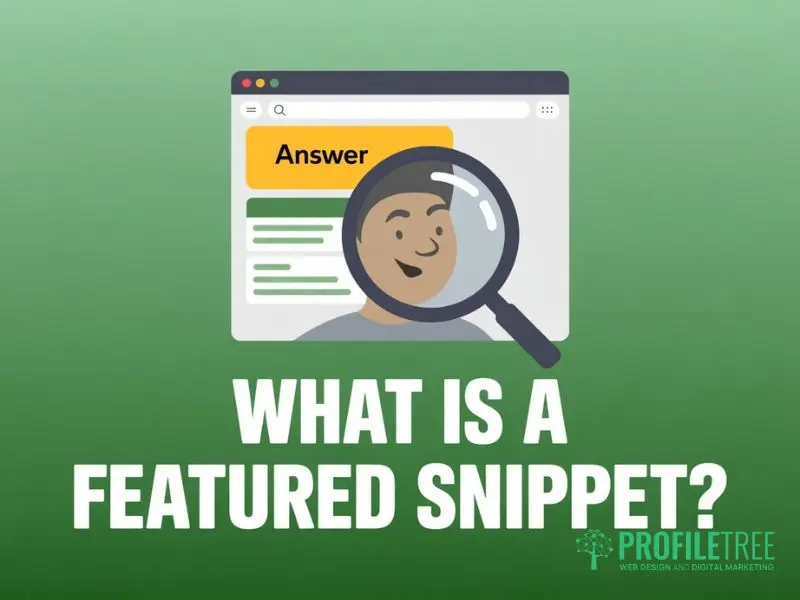
Featured snippet optimisation starts with understanding exactly what Google is looking for. A featured snippet is a passage extracted from a webpage and displayed in a formatted box at the top of the search engine results page to directly answer a user’s query. The content comes from an organic result (not a paid placement), and Google selects it algorithmically based on how well it answers the question, how clearly it’s structured, and how credible the source appears.
The term ‘position zero’ describes where featured snippets sit on the page: above the numbered organic results, in a space that doesn’t exist in the traditional 1–10 ranking sequence. Ranking in position three or five for a query doesn’t prevent you from winning the snippet. A well-structured answer from a lower-authority page can leapfrog a higher-authority competitor if the formatting is more extractable.
For SMEs across Northern Ireland and the UK, this creates a real opportunity. A focused website targeting specific service-area queries or professional-advice topics can take position zero from a national competitor simply by answering the question more directly.
What Is ‘Snippet Bait’?
Snippet bait is the core technique in featured snippet optimisation. It’s a deliberately formatted short answer, typically 40 to 60 words, placed immediately below a question-style heading. Google’s systems scan each page for passages that match user queries in the SERP; a well-crafted snippet-bait paragraph is the signal that tells Google this section contains the answer being sought. The heading frames the question; the paragraph answers it without preamble, padding, or throat-clearing.
Good snippet bait is concise, factual, and written in plain language. It doesn’t try to be clever. It answers the query in the simplest possible terms, leaving the supporting content to provide context.
Featured Snippets vs AI Overviews: What’s the Difference?
Google’s AI Overviews now appear above featured snippets for many queries across search engine results pages. Understanding how they interact is one of the most important questions in current SEO strategy, and the answer has real implications for how you approach featured snippet optimisation.
| Featured Snippet | AI Overview | Rich Snippet | |
|---|---|---|---|
| Goal | Direct answer from a single page | Synthesised answer from multiple sources | Structured metadata from your page |
| Source | One extracted webpage passage | Multiple pages combined | Schema markup on your page |
| Click potential | Moderate: answer visible without clicking | Lower: less reason to click through | Higher: adds visual cues like stars, prices |
| Effort to win | Content structure and clarity | Topical authority plus AI citation signals | Schema implementation |
The honest position is that featured snippets are a shrinking prize on their own. Their SERP visibility fell from 15.41% of results in January 2025 to 5.53% by June, a 64% decline in six months, and that drop tracks almost exactly against the rise of AI Overviews, which now appear on around 58% of queries. The two rarely appear together; Google generally shows one or the other.
That does not make the work pointless. It changes what the work is for. Pages that held featured snippets correlate strongly with pages cited as sources inside AI Overviews, because the signals are the same ones: a question framed clearly in the heading, a direct answer in the first sentence, properly formatted lists and tables. Google also falls back to a featured snippet when it cannot generate an AI Overview, which its own team confirmed in January 2026.
So the practical case in 2026 is not that you will win position zero as often. It is that the formatting discipline required to win one is the same discipline that gets you cited when an AI Overview appears instead. You are optimising for two outcomes with one piece of work, and one of them is growing while the other shrinks.
“The businesses that panicked when featured snippets started disappearing were the ones treating position zero as the goal,” says Ciaran Connolly, founder of ProfileTree. “It was never the goal. The goal was always being the clearest answer on the page. That still wins, it just gets displayed differently now.”
The Four Types of Featured Snippets
Effective featured snippet optimisation requires knowing which format Google is likely to select for your target query. Google serves featured snippets in four main formats across search engine results pages, and the format it chooses depends on the nature of the query and the structure of the content it finds. Getting the format right is as important as getting the content right.
Paragraph Snippets
Paragraph snippets are the most common type. They answer ‘what is’, ‘who is’, and ‘why’ queries with a short block of text, ideally 40-60 words. If your target query is definitional or explanatory, structure your content with a question-style heading followed immediately by a direct paragraph answer. Avoid introductory padding; Google favours content that answers the query in the first sentence.
Examples of paragraph snippet queries: ‘What is featured snippet optimisation?’, ‘What does schema markup do?’ ‘Why does Google show position zero results?’
List Snippets
List snippets appear for ‘how to’ queries and step-by-step instructions. Google extracts bullet or numbered lists from the page and displays them in the snippet box. To target list snippets, use a numbered list for sequential processes and a bulleted list for unordered items. Keep each item to one or two lines and lead with an action verb. The heading should directly mirror the user’s query, and the list should follow immediately with no intervening paragraph.
Table Snippets
Table snippets appear for comparison and data queries. If your content contains a well-structured HTML table with clear column headers and concise cell content, Google may extract it as a table snippet. Place the table close to the top of its section and introduce it with one sentence containing your target keyword. Avoid merged cells and complex formatting; Google needs a clean, machine-readable structure to extract tables reliably.
Video Snippets
Video snippets pull from YouTube and display a video with a timestamp pointing to the specific moment that answers the query. They appear frequently for voice search queries, where users ask conversational questions and expect direct, spoken-style answers. To optimise for video snippets, use chapter markers in your video description with clear timestamps and keyword-relevant chapter titles. The video title should closely match the query phrase.
Voice search and featured snippet optimisation are closely connected: the same formatting principles that help Google extract a paragraph answer also help voice search systems identify the spoken response to deliver. This connection is covered in the tracking section below.
How to Optimise for Featured Snippets: A Five-Step Framework
Featured snippet optimisation is a practical, repeatable process. It doesn’t require high domain authority or a large technical team. What it does require is methodical keyword research, deliberate content formatting, and consistent monitoring. The following five phases cover the full workflow from identifying opportunities to maintaining the snippets you win.
Phase 1: Identify Snippet-Eligible Keywords
Start with keyword research targeted specifically at queries that already trigger a featured snippet in search engine results pages. Not every query shows one, so focus your featured snippet optimisation efforts where the format is already in play. Use Google Search Console to find keywords where your page ranks in positions 4-15. These represent your best opportunities: you’re already close to the top but haven’t yet taken the snippet position.
Filter for question-type queries (what, how, why, which) and long-tail phrases with clear informational intent. Queries between five and twelve words are most likely to trigger snippets. In Search Console, look at the ‘Queries’ tab filtered to your target page and sort by impressions to identify where you’re visible but not yet winning.
For a fuller approach to keyword research, ProfileTree’s guide to keyword research for UK businesses explains how to prioritise queries based on search intent and competition level.
Phase 2: Analyse the Current Snippet Winner
Before changing any content, analyse what Google has already selected for your target query on the SERP. A key part of featured snippet optimisation is understanding why the current winner holds the position. Look at the winning snippet format (paragraph, list, or table), the approximate word count, the heading structure on the source page, and how directly it answers the question.
Your goal is not to copy the winner’s content but to answer the same question more clearly and in a more extractable format. If the current SERP snippet is a paragraph of 80 words, test a tighter 45-word version. If it’s a list without clear action verbs, rewrite it with stronger construction. Small structural differences are often enough to shift the selection.
Phase 3: Format Content for High Extractability
Extractability is central to featured snippet optimisation: it describes how easily Google’s systems can identify and lift a passage from your page. The principles are direct: put the question in the heading, put the answer immediately below it, and don’t bury key information inside long paragraphs or behind qualifying sentences.
For paragraph snippets: write 40 to 60 words immediately after an H2 or H3 heading that mirrors the query. Use simple sentence construction and active voice. For list snippets: use proper HTML list markup (ordered or unordered), keep each item under 20 words, and start with a verb. For table snippets: use clean HTML table markup with descriptive column headers and introduce the table with a single sentence containing your focus keyword.
Google favours content that answers the query within the first two or three sentences below the heading. If your best answer is buried three paragraphs down, move it up.
Phase 4: Implement Schema Markup Correctly
Schema markup doesn’t directly determine which page wins a featured snippet, but it improves how Google understands your page across search engine results pages and can increase your chances of appearing in both snippets and AI Overviews. For informational content, the Article schema type is appropriate. For question-and-answer content, the FAQPage schema marks up individual questions and answers in a machine-readable format that Google can extract easily.
Most SEO plugins handle FAQPage markup for you, which is safer than hand-coding it into the article body where it can break on a theme update.
Phase 5: Monitor and Iterate
Featured snippet optimisation is not a one-time task. Snippets are volatile: Google doesn’t stick to one format for a query indefinitely, and the format it prefers for a given query can shift after a core update. Make monitoring part of your regular SEO workflow. Check performance weekly in Google Search Console, filter to your target pages, and track position data for your snippet-target queries.
If you win a snippet, note which changes you made and replicate the approach on other pages. If you’ve lost one, don’t make broad changes blindly; work through the troubleshooting framework in the next section before making changes. Systematic iteration is the difference between holding snippets long-term and winning them briefly, then losing them to a competitor.
Troubleshooting: Why Did You Lose Your Featured Snippet?
Losing ground in featured snippet optimisation is common and rarely permanent. Most losses fall into one of four categories. Identifying which one applies to your situation is faster than making broad content changes and hoping something works.
Freshness Decay
Featured snippet optimisation depends on content staying current. Google applies a freshness signal to certain query types, particularly those related to fast-moving topics. If your snippet-winning content hasn’t been updated in 12 months or more, a competitor with a more recently refreshed version of the same answer may displace it. Update the page with new information, check that any statistics are current, and confirm your snippet bait paragraph still reflects the most accurate answer available.
Format Mismatch
Google sometimes switches the snippet format for a query. A page that previously won with a paragraph answer may find that Google now shows a list snippet instead. When this happens, your paragraph format is no longer what Google’s looking for on the search engine results page. Add a properly formatted list version of the same answer beneath your existing paragraph, or restructure the section as a list if that format better serves the query intent.
Competitor Out-Optimisation
The most common reason for losing a featured snippet is that a competitor has published a better-formatted answer to the same query. Run the SERP analysis from Phase 2 again and compare the new snippet winner against your content. Look for differences in word count, heading structure, list formatting, and directness of the answer. In featured snippet optimisation, small structural differences matter more than overall authority; you don’t need to rewrite the whole page; usually, the snippet bait paragraph alone needs adjusting.
Algorithm Updates and Re-evaluation
Core algorithm updates can reassign featured snippets across search engine results pages simultaneously for large numbers of queries. The clearest example was Google’s March 2025 core update, when AI Overviews jumped from roughly 3% to over 8% of results in a single month and featured snippet visibility fell sharply at the same time. If you lose multiple snippets at the same time and around a known update date, the cause is likely algorithmic re-evaluation rather than a competitor action. Focus on broader content quality signals: depth of coverage, heading structure, internal linking, and E-E-A-T indicators. Featured snippet optimisation recovery after a core update typically takes two to six weeks.
Tracking Featured Snippet Performance
Effective featured snippet optimisation depends on knowing what’s working and what isn’t. Monitoring your snippet performance gives you the data to make informed decisions about where to invest effort. Voice search performance is a useful parallel signal here: because voice search systems draw answers from the same position zero results as featured snippets, pages that perform well in both tend to share the same structural strengths. Three tools cover most of what you need.
Google Search Console
Search Console is the primary tool for tracking featured snippet optimisation performance on your own site. The ‘Search Results’ report shows impressions, clicks, click-through rate, and average position for each query. Filter by your target page to see which queries are driving impressions and where your position sits. Queries where you rank between positions 4 and 15 with high impressions and low clicks are your best remaining snippet opportunities.
Voice search queries follow a conversational pattern that frequently triggers featured snippets in search engine results pages. ProfileTree’s guide to voice search SEO explains how to structure content for the conversational queries that most often produce position zero results.
Third-Party Tools
SEMrush and Ahrefs both offer dedicated featured snippet optimisation tracking. SEMrush’s Position Tracking feature monitors your rankings for specific keywords and alerts you when a snippet is won or lost. Ahrefs’ Site Explorer shows which queries across your site currently produce featured snippets in the SERP. Both tools provide a historical view that Search Console lacks, making them useful for identifying patterns after algorithm updates and measuring the impact of your optimisation work over time.
Key Metrics to Watch
Track these four data points consistently to assess the health of your featured snippet strategy:
- Snippet impressions: how often your snippet appears in search engine results pages
- Click-through rate on snippet queries: how many searchers click through versus getting the answer directly from the snippet box
- Position movement on snippet-target queries: progress from positions 4–15 toward position zero
- Total pages with snippets: the number of pages across your site currently holding a featured snippet
A falling CTR on snippet queries may indicate that Google is showing an AI Overview above your snippet, reducing its visibility in the SERP. In that case, the priority shifts to becoming a cited source within the AI Overview itself, achieved through the same content quality and structure signals that drive featured snippet optimisation.
Where This Leaves You
Featured snippet optimisation rewards consistency more than authority. You don’t need the biggest domain on the SERP to win position zero; you need the clearest, most extractable answer to the query you’re targeting. That’s a realistic goal for any UK business willing to apply a structured approach.
The core principles are straightforward: identify queries that already show featured snippets, study what the current winner is doing, format your answer to be more extractable, implement schema markup correctly, and monitor performance on a regular cycle. When you lose a snippet, diagnose the cause before changing anything. When you win one, document what worked and replicate it.
Voice search, AI Overviews and traditional featured snippets draw from the same pool of well-structured content. That is the real argument for this work in 2026. Featured snippets themselves are appearing less often than they did two years ago, but the formatting that wins them is the formatting that gets you cited when an AI Overview takes their place.
Frequently Asked Questions
What is a featured snippet, and how does it differ from a rich snippet?
A featured snippet is a passage Google extracts from a webpage and displays in a box at the top of search engine results pages to directly answer a query. Featured snippet optimisation is about content formatting and answer relevance: how clearly and directly your page answers the question. A rich snippet works differently, using schema markup to add visual enhancements to a standard listing (such as star ratings or pricing) rather than extracting a passage from your content.
How long should a featured snippet answer be?
For paragraph snippets, the optimal length is 40 to 60 words: short enough to fit cleanly in the snippet box, specific enough to answer the query completely. List snippets can run longer, with Google typically showing up to eight items before adding a ‘More items’ link, and table snippets work best with four or five rows visible. In all cases, prioritise clarity over length; the goal of featured snippet optimisation is extractability, not thoroughness.
Can I have a featured snippet and an AI Overview at the same time?
Occasionally, on what is called a hybrid SERP, but it is uncommon. Google usually shows one or the other. What holds reliably is that pages strong enough to win a featured snippet are also more likely to be cited inside an AI Overview for the same query, because the signals overlap: directness, clear structure, topical authority. Optimising for one improves your chances of the other, even though you will rarely get both at once.
Do featured snippets reduce click-through rates?
Featured snippets can reduce CTR on informational queries where the snippet provides a complete answer with no reason to click further (known as a zero-click search), but for process, decision-support, and voice search queries, they act as a preview that drives higher CTR than a standard organic result. Whether they help or hurt your traffic depends on the query type: fact-based lookups tend toward zero-click behaviour; decision-support queries tend to drive clicks. Featured snippet optimisation is most valuable when targeting the latter.
Is it possible to lose a featured snippet to a lower-ranking page?
Yes, and it happens frequently. Google prioritises formatting quality and answer clarity over domain authority when selecting featured snippets, which means a lower-authority site with a precisely formatted snippet-bait paragraph can displace a higher-authority competitor that buries its answer in long paragraphs. A competitor doesn’t need to outrank you in the SERP overall; they just need to provide a more extractable answer to your target query.