
AI Prompts for Email Marketing Campaigns and Automation
Table of Contents
The difference between emails that get deleted and those that drive action lies in sophisticated prompt engineering that understands psychology, timing, and personalisation at scale. Modern email marketing demands more than generic templates—it requires intelligent automation that feels personally crafted for each recipient.
This comprehensive guide reveals the precise prompt frameworks that email marketers across Northern Ireland, Ireland, and the UK are using to create campaigns that consistently achieve above-industry-average engagement rates. You’ll discover how to engineer prompts that generate compelling newsletters, sophisticated automation sequences, and hyper-personalised content that converts subscribers into customers.
AI Prompts for Email Marketing: Building Consistent Reader Engagement
Effective newsletter prompts balance informational value with commercial objectives, creating content readers anticipate rather than avoid.
Your newsletter represents a direct line to engaged audiences, but only if you consistently deliver value. The right prompts help AI generate newsletters that maintain brand voice whilst adapting to subscriber preferences and behaviour patterns.
Subject Line Optimisation Through Strategic Prompts
Subject lines determine whether emails get opened or overlooked. Structure your prompts for maximum impact: “Generate ten subject lines for a B2B newsletter about digital marketing trends. Include five using curiosity gaps (‘The SEO strategy McDonald’s doesn’t want you to know’), three using specific benefits (‘Reduce your PPC costs by 40% this month’), and two using urgency without being spammy (‘Last chance: Free audit spots closing’). Each should be under 50 characters, avoid spam triggers, and include personalisation tokens where appropriate.”
Test different psychological approaches: “Create subject lines targeting different motivations. Fear of missing out: highlight what subscribers lose by not reading. Social proof: reference how many businesses are already using these strategies. Authority: position exclusive insights from industry leaders. Practical value: promise specific, implementable tactics. For each approach, generate three variations testing different emotional intensities.”
ProfileTree’s email campaigns consistently achieve 28% open rates—well above the industry average of 21%—by systematically testing subject line formulas tailored to Belfast and broader UK business audiences.
Newsletter Structure and Content Flow Prompts
Guide AI to create engaging newsletter layouts: “Design a newsletter structure for professional services firms. Opening: personal note from founder (100 words) establishing human connection. Featured article: in-depth analysis of industry trend (400 words) demonstrating expertise. Three quick tips: actionable advice (50 words each) providing immediate value. Client spotlight: success story (200 words) building social proof. Resources section: curated links with context (150 words total). Call-to-action: soft-sell service promotion (75 words). Maintain conversational tone whilst demonstrating authority.”
For different industries, adapt your prompts: “Create a retail newsletter template balancing product promotion with lifestyle content. 40% educational content (styling tips, trend reports), 30% product highlights (new arrivals, bestsellers), 20% customer features (reviews, user-generated content), 10% exclusive offers (subscriber-only discounts). Each section should flow naturally into the next, avoiding hard sales transitions.”
Dynamic Content Personalisation Frameworks
Modern newsletters adapt to individual subscribers: “Generate newsletter content with five personalisation variables: industry (retail/services/manufacturing), company size (1-10/11-50/50+ employees), engagement level (new/active/dormant), geographic location (Belfast/Dublin/London), and interest tags (SEO/PPC/social media). Create rules for combining variables: new retail subscribers in Belfast get local success stories, dormant service businesses receive re-engagement content with case studies, active manufacturers see technical deep-dives.”
Build progressive personalisation: “Develop a newsletter evolution strategy across subscriber lifecycle. Month 1: educational content establishing expertise. Month 2-3: case studies demonstrating results. Month 4-6: advanced strategies for engaged readers. Month 7+: exclusive insights and community building. Include re-engagement triggers for declining activity. Each stage should naturally progress relationships toward conversion.”
Newsletter Voice and Tone Calibration
Maintain consistency whilst avoiding monotony: “Write newsletter copy that feels like advice from a knowledgeable colleague, not marketing material. Use ‘you’ more than ‘we’. Include specific examples from real business scenarios. Reference current events or seasonal factors affecting readers. Add personality through relevant observations or gentle humour. Avoid corporate clichés and excessive enthusiasm.”
According to Ciaran Connolly, ProfileTree founder, “Newsletters succeed when they feel like valuable correspondence rather than advertising. Your AI prompts should generate content readers would genuinely miss if you stopped sending.”
Email Sequence Development: Orchestrating Customer Journeys
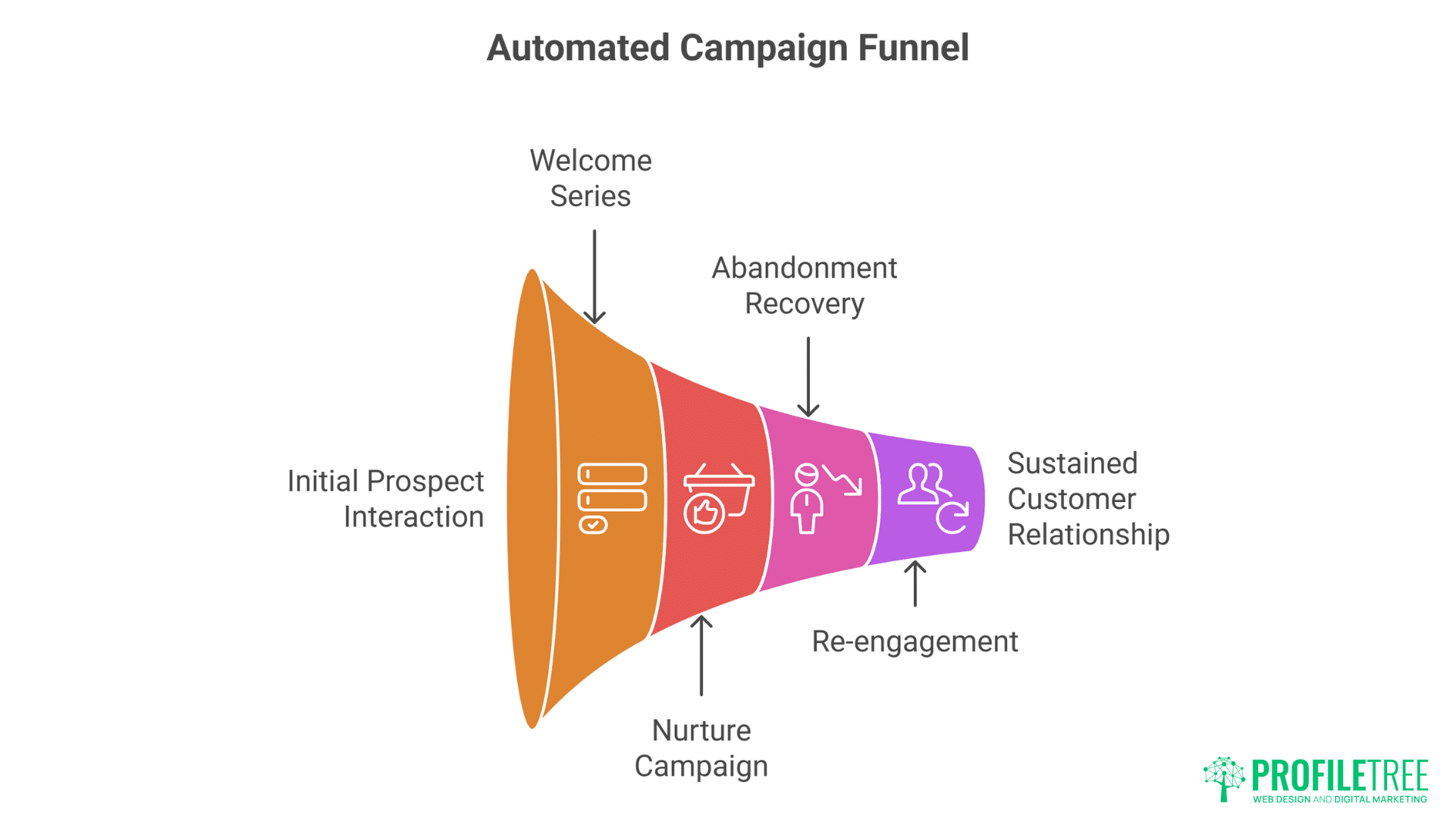
Sophisticated sequence prompts create automated campaigns that guide prospects through consideration to conversion with perfect timing.
Email sequences transform one-time interactions into sustained relationships. Your prompts should generate interconnected messages that build upon each other whilst adapting to recipient behaviour.
Welcome Series Architecture and Messaging
First impressions shape entire relationships: “Create a five-email welcome sequence for new SaaS trial users. Email 1 (immediate): warm welcome, set expectations, quick win tutorial. Email 2 (day 2): feature highlight addressing primary use case. Email 3 (day 4): case study demonstrating ROI. Email 4 (day 7): overcome common objections, offer support. Email 5 (day 10): trial expiration reminder with exclusive upgrade offer. Each email should reference previous interactions and adapt based on user activity.”
For e-commerce sequences: “Develop a welcome series for fashion retailers. Email 1: brand story and values connection. Email 2: style quiz for preference learning. Email 3: personalised product recommendations based on quiz. Email 4: customer testimonials and social proof. Email 5: first-purchase incentive with urgency. Include browse abandonment triggers and cross-sell opportunities.”
Nurture Campaign Prompt Engineering
Guide prospects through complex buying decisions: “Design a 12-week nurture sequence for B2B software consideration. Weeks 1-4: educational content establishing problem awareness. Weeks 5-8: solution exploration with comparison guides. Weeks 9-11: implementation planning and ROI calculation. Week 12: decision facilitation with risk reversal offers. Each email should include engagement tracking and behavioural triggers for sequence acceleration or pause.”
Address different buyer personas: “Create parallel nurture tracks for technical and business decision-makers. Technical track: feature deep-dives, integration guides, security documentation. Business track: ROI calculators, case studies, competitive advantages. Include crossover points where content overlaps. Generate rules for track switching based on engagement patterns.”
Abandonment Recovery Sequences
Recapture lost opportunities strategically: “Develop a cart abandonment sequence for UK e-commerce sites. Email 1 (1 hour): gentle reminder with cart contents. Email 2 (24 hours): address common purchase concerns (shipping, returns). Email 3 (72 hours): limited-time discount or free shipping offer. Email 4 (1 week): final reminder with urgency. Include dynamic elements: product images, reviews, stock levels. Adapt messaging based on cart value and customer history.”
For service businesses: “Create a quote abandonment sequence for professional services. Email 1: acknowledge quote receipt, offer clarification. Email 2: share relevant case study addressing likely concerns. Email 3: provide comparison framework for evaluating options. Email 4: offer consultation or modified proposal. Maintain consultative tone without appearing desperate.”
Re-engagement Campaign Strategies
Revive dormant subscribers intelligently: “Design a win-back sequence for inactive email subscribers. Segment by inactivity duration (3/6/12 months). 3-month inactives: ‘We’ve missed you’ with content highlights. 6-month inactives: preference update request with re-onboarding option. 12-month inactives: explicit re-consent with compelling reason to stay. Include sunset policy for non-responders. Test emotional triggers: nostalgia, exclusivity, loss aversion.”
Automation Workflow Prompts: Building Intelligent Email Systems
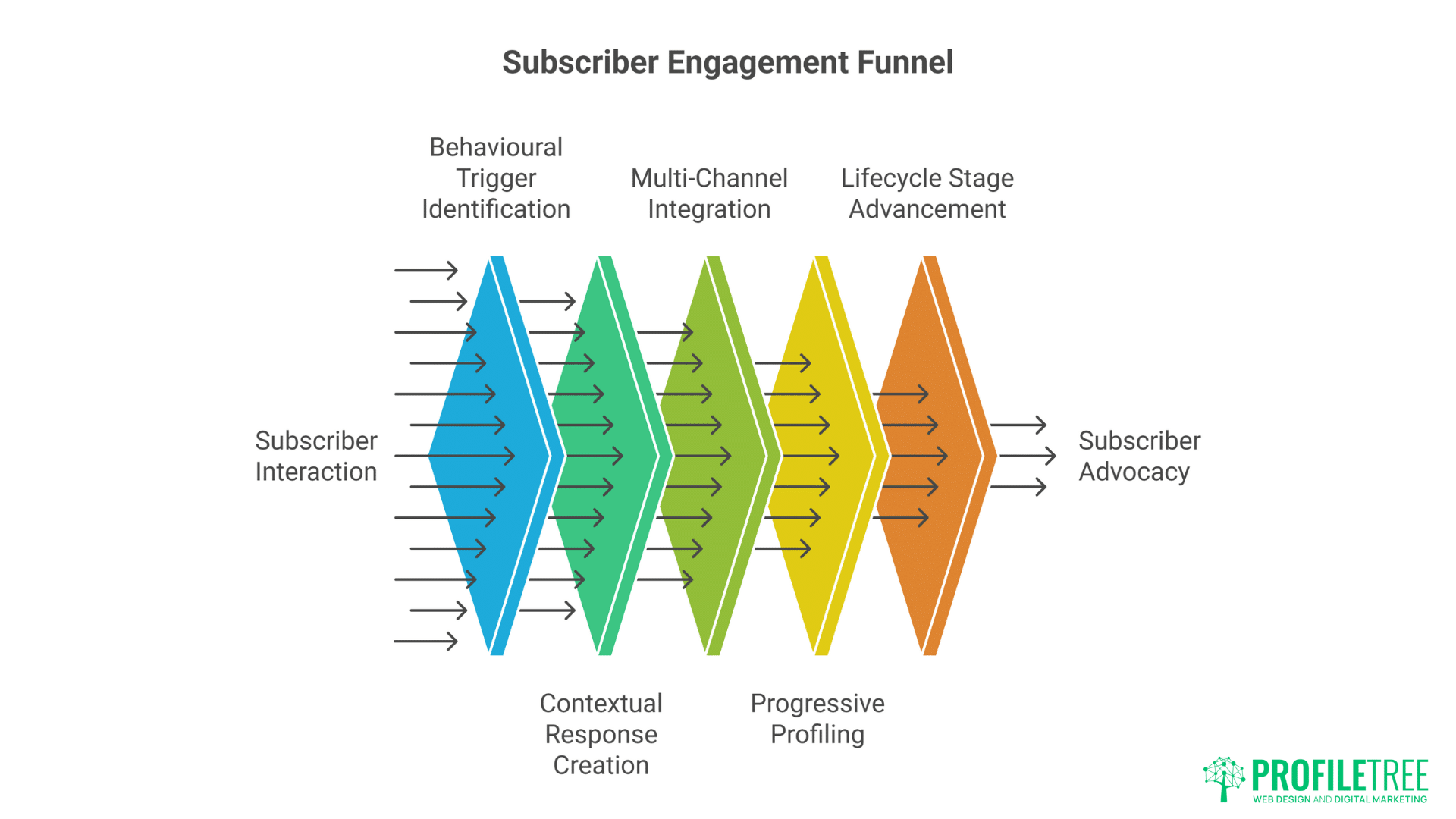
Advanced automation prompts create self-optimising campaigns that respond to subscriber behaviour in real-time.
Email automation extends beyond simple autoresponders. Your prompts should generate sophisticated workflows that feel thoughtfully timed rather than mechanically triggered.
Behavioural Trigger Identification and Response
Map actions to appropriate responses: “Identify fifteen behavioural triggers for email automation: website visits, email opens, link clicks, purchase history, support tickets, feature usage, content downloads, webinar attendance, social media engagement, referral activity, subscription changes, milestone achievements, inactivity periods, preference updates, and seasonal patterns. For each trigger, generate three email response options varying in urgency and offer intensity.”
Create contextual responses: “Develop behaviour-based email content that acknowledges specific actions. ‘We noticed you were looking at [product category]’—provide helpful buying guide. ‘Thanks for downloading our guide’—offer related resources. ‘Congratulations on your first month’—share advanced tips. Each message should feel timely and relevant, not creepy or invasive.”
Multi-Channel Integration Workflows
Coordinate email with other touchpoints: “Design an omnichannel workflow connecting email, SMS, and retargeting. Email introduces offer, SMS provides urgent reminder, retargeting reinforces message. Create rules for channel selection based on engagement history and preference settings. Include frequency caps preventing overwhelm. Generate message variations maintaining consistency across channels whilst optimising for each medium’s strengths.”
Progressive Profiling and Data Collection
Build subscriber understanding gradually: “Create a progressive profiling strategy across twelve months. Month 1: basic preferences (frequency, topics). Month 3: business challenges survey. Month 6: budget and timeline indicators. Month 9: decision-making process. Month 12: satisfaction and referral potential. Each data request should offer immediate value in return. Generate email templates making requests feel natural, not intrusive.”
Lifecycle Stage Advancement Prompts
Guide subscribers through maturity stages: “Map subscriber lifecycle stages: stranger, subscriber, engaged reader, qualified lead, opportunity, customer, advocate. Generate transition triggers between stages based on engagement scoring. Create stage-appropriate content: strangers get value demonstration, subscribers receive education, engaged readers see case studies, qualified leads get consultations, opportunities receive proposals, customers get onboarding, advocates earn rewards.”
Personalisation at Scale: Individual Relevance Through Smart Prompts
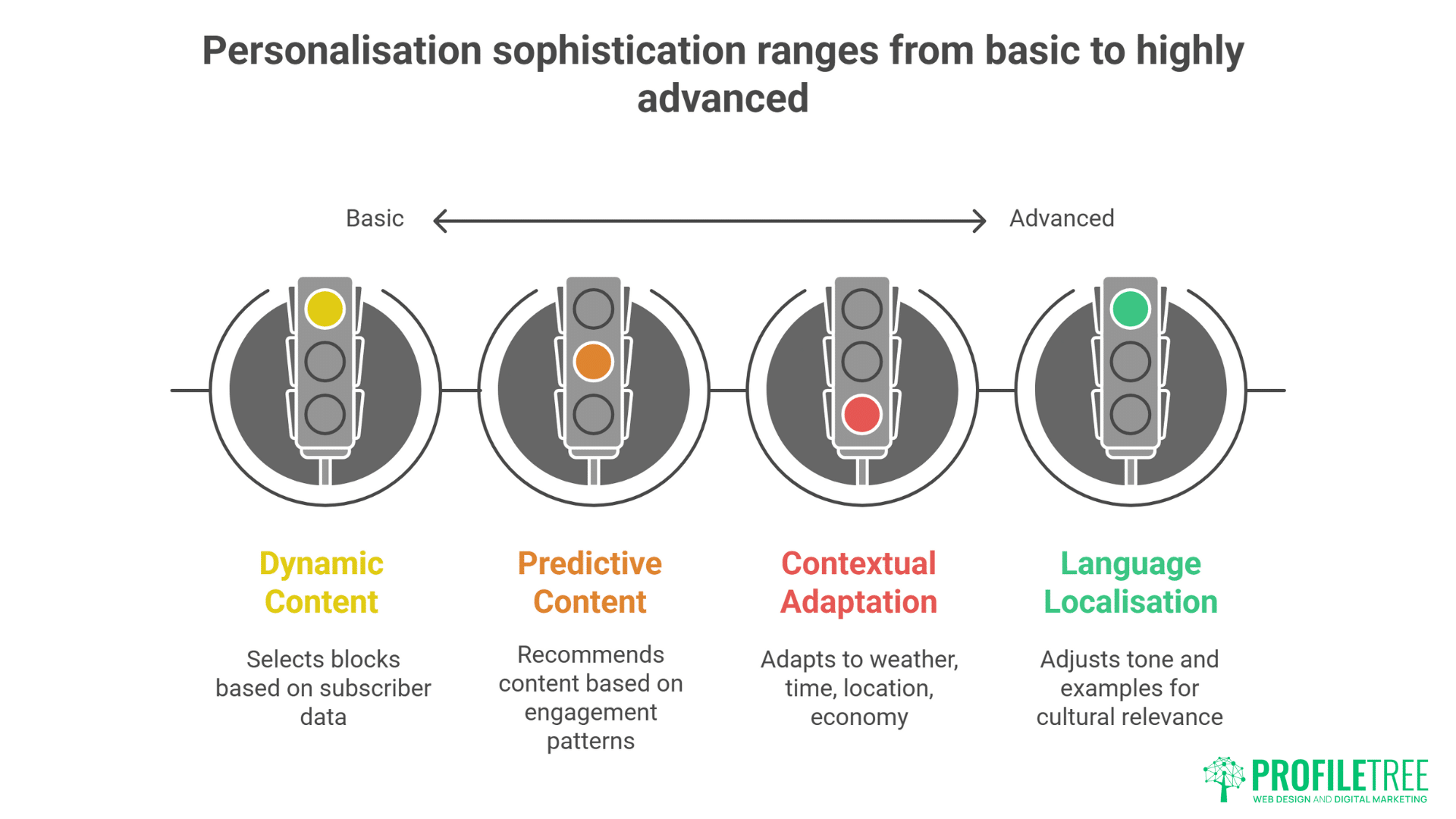
Sophisticated personalisation prompts create unique experiences for thousands of subscribers without manual intervention.
True personalisation goes beyond mail merge tags. Your prompts should generate content that adapts to individual preferences, behaviours, and contexts whilst maintaining efficiency.
Dynamic Content Block Generation
Create modular content systems: “Generate ten content blocks for each newsletter section: headers (seasonal/evergreen), introductions (formal/casual), product features (technical/benefit-focused), testimonials (industry-specific), calls-to-action (soft/direct). Establish rules for block selection based on subscriber data: job title, engagement history, purchase stage, geographic location. Ensure smooth transitions between dynamically selected blocks.”
Predictive Content Recommendations
Anticipate subscriber interests: “Based on these engagement patterns (email opens, click topics, purchase history), generate content recommendation rules. Subscribers opening SEO content get technical guides. Those clicking pricing information receive ROI calculators. Recent purchasers see implementation tips. Create fallback content for unclear preferences. Weight recent behaviour more heavily than historical data.”
Contextual Adaptation Strategies
Respond to external factors: “Develop email variations responding to context: weather (rainy day product suggestions), time of day (morning productivity tips vs evening relaxation), day of week (Monday motivation vs Friday celebration), local events (Belfast festivals, Dublin conferences), economic conditions (budget-conscious messaging during downturns). Generate rules for context combination and priority when multiple factors apply.”
Language and Cultural Localisation
Adapt for diverse audiences: “Create email variations for different English-speaking markets. UK version: British spelling, cultural references, pound sterling. Irish version: local expressions, euro pricing, regional examples. American version: simplified spelling, dollar amounts, relevant comparisons. Maintain core message whilst adjusting tone, examples, and calls-to-action for cultural relevance.”
Testing and Optimisation Prompt Frameworks
Strategic testing prompts generate variations that reveal what truly drives subscriber engagement and conversion.
Effective email marketing requires continuous experimentation. Your prompts should create testable variations that provide meaningful insights whilst maintaining campaign performance.
A/B Testing Content Variations
Structure systematic tests: “Generate A/B test variations for this promotional email. Test 1: subject line length (short vs detailed). Test 2: opening line (question vs statement). Test 3: value proposition (save money vs save time). Test 4: social proof (testimonials vs statistics). Test 5: call-to-action (button colour and copy). Test 6: urgency level (soft vs strong). Ensure only one variable changes per test. Include hypothesis for each test.”
Multivariate Testing Strategies
Test complex interactions: “Create multivariate test combinations for welcome emails. Variables: sender name (person vs company), subject line approach (benefit vs curiosity), content length (concise vs comprehensive), personalisation level (basic vs advanced), image usage (hero image vs text-only). Generate sixteen combinations testing interactions. Predict which combinations will perform best for different segments.”
Performance Analysis Prompts
Extract insights from results: “Analyse these email performance metrics: 25% open rate, 3% click rate, 1.5% conversion rate, 2% unsubscribe rate. Generate hypotheses for below-average click-through rate despite good open rate. Suggest five specific improvements targeting click-through improvement. Identify potential issues in conversion funnel. Recommend testing priorities based on potential impact.”
Industry-Specific Email Marketing Prompts
Tailored prompts address unique challenges and opportunities across different business sectors.
Different industries require distinct email marketing approaches. Your prompts should account for sector-specific regulations, customer expectations, and competitive dynamics.
B2B Professional Services Email Strategies
Address complex, considered purchases: “Create email content for accountancy firms targeting SME owners. Balance professional expertise demonstration with approachable tone. Include regulatory updates, tax-saving tips, and planning reminders aligned with financial calendar. Address common concerns: cost, disruption, confidentiality. Generate trust through credentials whilst avoiding intimidating jargon.”
For technology companies: “Develop email campaigns for software companies selling to enterprises. Include technical specifications for IT evaluators and business benefits for executives. Create content addressing long sales cycles: awareness, consideration, evaluation, procurement, implementation. Include proof points: security certifications, integration capabilities, support SLAs.”
E-commerce and Retail Email Optimisation
Drive immediate action: “Generate promotional emails for online fashion retailers. Create urgency without desperation. Showcase products with lifestyle context. Include size guides and return policy reminders. Segment by shopping behaviour: browsers, single purchasers, loyal customers. Develop seasonal campaigns aligned with fashion cycles and shopping events.”
For local retailers: “Create email campaigns for Belfast independent shops. Emphasise community connection and personal service. Include local event tie-ins and neighbourhood references. Balance online promotion with driving foot traffic. Generate content fostering loyalty beyond price competition: expertise, curation, experience.”
Non-Profit and Charity Campaign Development
Inspire action through emotion: “Develop donation campaign emails for Northern Ireland charities. Tell impactful stories without exploitation. Show concrete outcomes from contributions. Create urgency through matching gifts or campaign deadlines. Segment by donation history: first-time, regular, lapsed, major donors. Include volunteer opportunities and non-monetary support options.”
Education and Training Sector Prompts
Support learning journeys: “Create course promotion emails for online training providers. Address skill development goals and career advancement. Include social proof through student success stories. Generate urgency through cohort starts and early-bird pricing. Develop nurture sequences supporting decision-making: free resources, taster sessions, funding options, outcome guarantees.”
Advanced Segmentation and Targeting Strategies
Sophisticated segmentation prompts create hyper-relevant campaigns that dramatically outperform broadcast emails.
Effective segmentation transforms email marketing from mass communication to precision targeting. Your prompts should generate nuanced segments and appropriate messaging for each group.
Demographic and Firmographic Segmentation
Define precise audience segments: “Create ten email segments for B2B campaigns: company size (micro/small/medium/large), industry vertical (professional services/retail/manufacturing/technology), job function (marketing/sales/operations/executive), geographic region (Northern Ireland/Republic of Ireland/Great Britain/International), growth stage (startup/growth/mature/enterprise). Generate distinct value propositions and messaging approaches for each segment.”
Behavioural and Engagement-Based Segmentation
Group by actions and interactions: “Develop behavioural segments based on email engagement patterns. Segment 1: Opens everything, rarely clicks—need stronger calls-to-action. Segment 2: Selective openers, high click rate—quality over quantity. Segment 3: Forward emails frequently—potential advocates. Segment 4: Only opens promotional emails—price-sensitive. Generate appropriate content strategies for each behaviour pattern.”
Predictive Segmentation Models
Anticipate future behaviour: “Create predictive segments based on early indicators. Identify likely high-value customers through initial engagement patterns. Spot churn risks through declining activity. Recognise upgrade opportunities through feature usage. Generate early intervention campaigns for at-risk segments. Develop acceleration strategies for high-potential subscribers.”
Dynamic Segment Evolution
Allow subscribers to move between segments: “Design fluid segmentation allowing natural progression. New subscribers start in onboarding segment. Engaged readers graduate to consideration segment. Purchasers enter customer segment. Inactive members shift to re-engagement segment. Generate transition triggers and appropriate messaging for segment changes. Include manual override options for sales-identified opportunities.”
Email Design and Accessibility Prompts
Inclusive design prompts ensure your emails reach and resonate with all subscribers, regardless of device or ability.
Modern email marketing must work across diverse devices and accessibility needs. Your prompts should generate content optimised for every recipient.
Mobile-First Email Design Strategies
Optimise for small screens: “Create email content optimised for mobile devices. Subject lines under 30 characters. Preheader text that complements without repeating. Single-column layouts with touch-friendly buttons (minimum 44×44 pixels). Short paragraphs (2-3 sentences maximum). Scannable with clear hierarchy. Test rendering on iPhone, Android, and tablet devices.”
Accessibility and Inclusive Design
Ensure universal access: “Generate email content following accessibility best practices. Include descriptive alt text for all images. Maintain colour contrast ratio of 4.5:1 minimum. Use semantic HTML for screen readers. Avoid relying solely on colour for meaning. Include text versions of critical information. Write clear, simple language avoiding idioms and jargon.”
Dark Mode Optimisation
Adapt to user preferences: “Create email designs that work in both light and dark modes. Use transparent backgrounds where possible. Select colours that remain legible when inverted. Test image visibility in both modes. Include fallback styling for email clients that force dark mode. Generate preview text that makes sense in either display mode.”
Compliance and Deliverability Optimisation
Strategic compliance prompts ensure your emails reach inboxes whilst respecting regulations and subscriber preferences.
Email marketing success requires both legal compliance and technical deliverability. Your prompts should generate content that satisfies both requirements without sacrificing engagement.
GDPR and Privacy Regulation Compliance
Navigate legal requirements: “Create GDPR-compliant email templates for UK and EU audiences. Include clear consent language for data processing. Provide transparent unsubscribe options. Explain data usage in plain language. Include privacy policy links. Generate re-consent campaigns for unclear permissions. Develop preference centres allowing granular control.”
Spam Filter Avoidance Strategies
Ensure inbox delivery: “Review email content for spam triggers. Avoid excessive capitalisation, multiple exclamation marks, and trigger words (‘free’, ‘guarantee’, ‘act now’). Balance image-to-text ratio. Include proper authentication (SPF, DKIM, DMARC mentions). Generate alternative phrasings for promotional content. Create test variations checking spam scores.”
List Hygiene and Management
Maintain healthy subscriber lists: “Develop list cleaning workflows. Identify and remove invalid addresses. Segment inactive subscribers for re-engagement attempts. Create sunset policies for non-responders. Generate re-confirmation campaigns for old lists. Establish bounce handling procedures. Design preference update campaigns maintaining engagement.”
Integration with Marketing Technology Stack
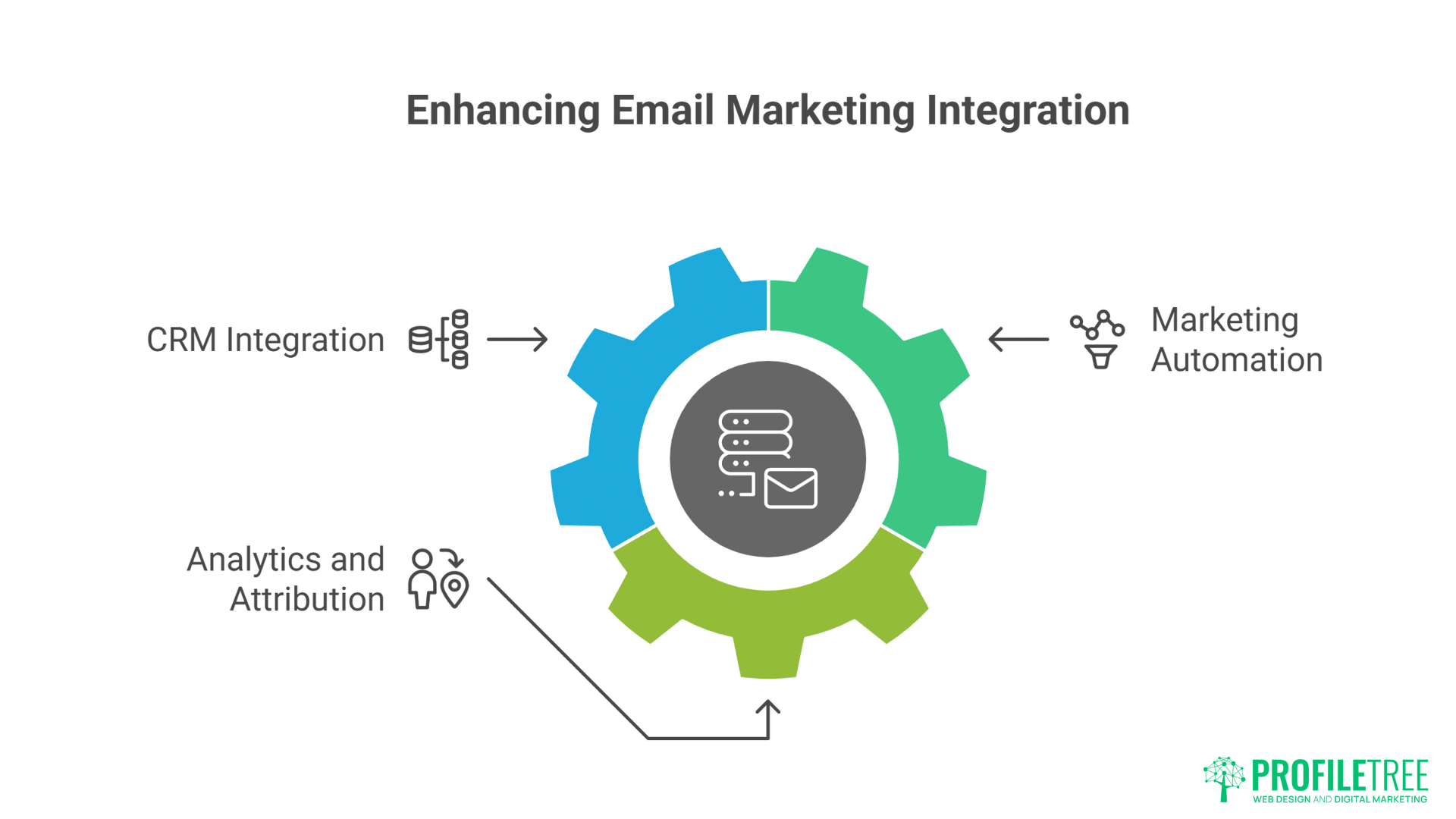
Sophisticated integration prompts create emails that work seamlessly with your broader marketing ecosystem.
Email marketing doesn’t operate in isolation. Your prompts should generate content that integrates with CRM systems, analytics platforms, and other marketing tools.
CRM Integration and Data Utilisation
Connect email with customer data: “Generate emails that reference CRM data dynamically. Pull in purchase history for relevant recommendations. Reference support ticket status in follow-ups. Include account manager names in B2B emails. Show loyalty point balances in customer emails. Create rules for data freshness and fallback content when data unavailable.”
Marketing Automation Platform Optimisation
Maximise platform capabilities: “Design campaigns utilising advanced platform features. Create lead scoring rules based on email engagement. Develop workflows triggering sales notifications. Build progressive profiling forms within emails. Generate dynamic content rules using platform variables. Establish conversion tracking for ROI measurement.”
Analytics and Attribution Modelling
Track complete customer journeys: “Create email campaigns with comprehensive tracking. Include UTM parameters for traffic attribution. Generate unique promotion codes for source tracking. Design micro-conversion events for engagement scoring. Develop multi-touch attribution models. Create dashboard templates for performance monitoring.”
AI-Powered Email Innovation
Future-focused prompts prepare your email marketing for emerging technologies and changing subscriber expectations.
The evolution of AI opens new possibilities for email marketing. Your prompts should explore innovative applications whilst maintaining practical value.
Predictive Send Time Optimisation
Perfect timing through AI: “Analyse subscriber behaviour patterns to identify optimal send times. Generate rules for time zone adjustment. Create send time experiments by segment. Develop day-of-week preferences by industry. Account for seasonal variations. Build machine learning models predicting individual optimal times.”
Natural Language Generation Enhancement
Create genuinely personal messages: “Generate email variations that feel individually written. Adapt vocabulary to match subscriber sophistication. Reference previous interactions naturally. Include relevant local information. Adjust formality based on relationship stage. Create conversation continuity across campaigns.”
Sentiment Analysis and Response
Adapt to subscriber emotions: “Analyse email response sentiment (replies, survey feedback, support tickets). Generate appropriate follow-up messaging. Identify frustrated customers needing special attention. Recognise advocates for referral requests. Spot confused users requiring clarification. Create emotional journey maps guiding response strategies.”
Professional Implementation Support
ProfileTree helps businesses across Northern Ireland, Ireland, and the UK implement sophisticated email marketing automation that drives measurable results.
Whilst this guide provides comprehensive prompt engineering frameworks, many organisations benefit from professional implementation support. Our team combines email marketing expertise with advanced AI capabilities to create custom automation strategies that align with your business goals.
We offer email marketing workshops teaching prompt engineering and automation best practices. Our consulting services include audit, strategy development, and platform optimisation. For businesses seeking complete solutions, we provide managed email marketing services handling everything from strategy to execution.
FAQs
What’s the optimal frequency for email newsletters using AI-generated content?
Frequency depends on audience expectations and content value. B2B audiences typically prefer weekly or fortnightly emails with substantial insights. B2C subscribers might accept daily emails if highly personalised and valuable. Test different frequencies by segment. Monitor unsubscribe rates and engagement metrics. AI can help maintain quality at higher frequencies, but respect subscriber preferences over volume.
How can AI prompts improve email deliverability rates?
AI prompts can identify and avoid spam triggers, optimise subject lines for engagement, and maintain consistent sending patterns that build sender reputation. Include deliverability checks in your prompts: spam word avoidance, authentication protocol references, and engagement optimisation. Regular list cleaning prompts ensure you’re mailing engaged subscribers, improving overall deliverability.
What personalisation level is appropriate for GDPR compliance?
GDPR permits personalisation based on legitimate interest or explicit consent. Use AI prompts to create transparent personalisation that adds value. Always explain data usage, provide opt-out options, and respect preferences. Avoid invasive personalisation that might concern subscribers. Focus on improving relevance rather than demonstrating data knowledge.
How do I measure ROI from AI-enhanced email campaigns?
Track both direct conversions and influenced revenue throughout customer journeys. Calculate time savings from AI automation versus manual creation. Measure improvements in key metrics: open rates, click-through rates, conversion rates. Include lifetime value calculations for email-acquired customers. Compare performance against pre-AI baselines and industry benchmarks.
Should every email be AI-generated or should some remain manually written?
Combine AI efficiency with human creativity strategically. Use AI for scalable content: newsletters, automated sequences, personalisation. Maintain human touch for sensitive communications: apologies, major announcements, personal CEO messages. Review and edit AI output for critical campaigns. The goal is augmentation, not replacement.
Elevating Your Email Marketing Through Strategic AI
Mastering AI prompts for email marketing transforms how organisations communicate with audiences at scale whilst maintaining personal relevance. The frameworks and strategies outlined here enable sophisticated automation that feels genuinely human, driving engagement and conversion rates that outperform traditional approaches.
Success requires treating AI as a powerful tool within broader email strategy, not a complete solution. Your prompts should encode marketing expertise, maintain brand voice, and respect subscriber preferences. The combination of AI efficiency and human strategy creates email programmes that build lasting customer relationships whilst delivering measurable business results.
The email marketing landscape continues evolving rapidly, with subscribers expecting greater relevance and value from every message. Sophisticated prompt engineering enables smaller marketing teams to compete effectively, delivering personalised experiences previously possible only for enterprise organisations. Whether you’re launching your first email campaign or optimising established programmes, mastering AI prompt engineering provides the competitive advantage needed for sustainable growth in digital marketing.